Win an election and implement your manifesto – that’s novel!

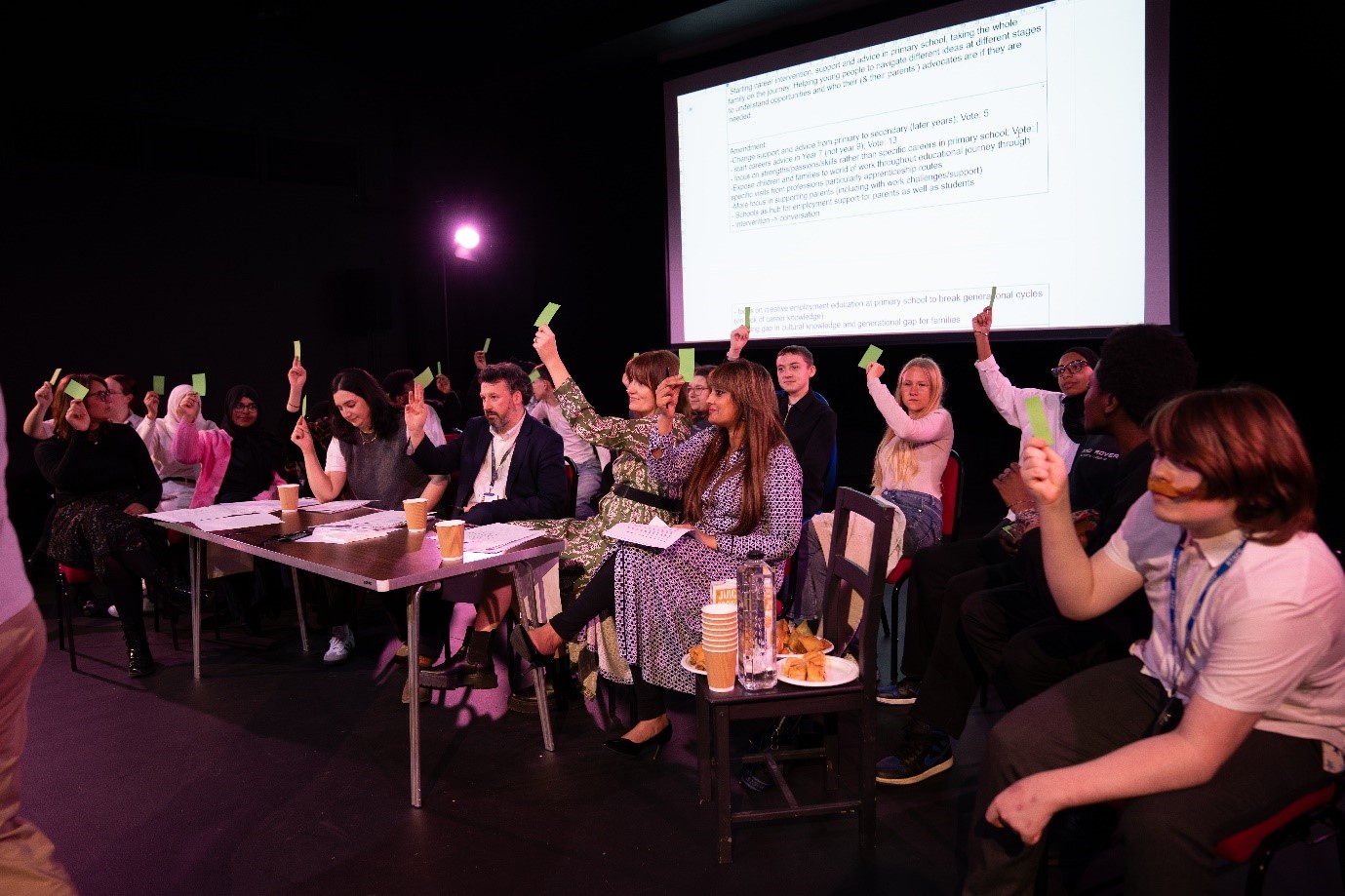
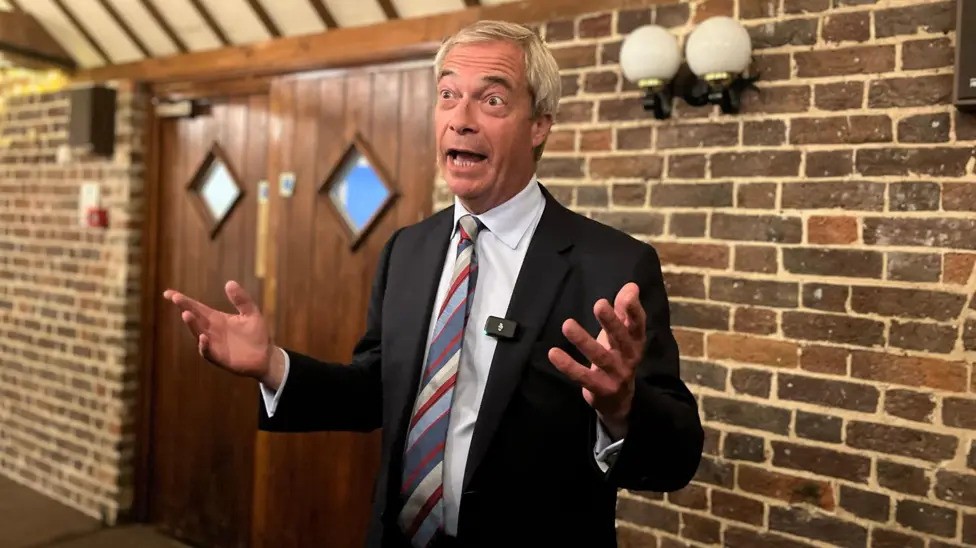
Image: Emily Sinclair/BBC https://www.bbc.co.uk/news/articles/c367lry5ypxo

Chris Game

First, a reader alert. What follows is in essence an only marginally revised column written for and hopefully published in this week’s Birmingham Post, to which for many years now I’ve been a regular contributor. Thanks, at least in part, to the “many years”, I’m permitted a wide scope of subject matter, but for obvious reasons local government in some form or other is what I tend to resort to most frequently – not least around local election season.

With the Post’s Thursday publication date, this is a mixed blessing, knowing that most readers interested in these matters would very likely have learned the results of the elections before they read one’s prognostications and predictions. What follows here, then, is my third column focused on this year’s local (County/Unitary Council) elections, which were, of course, limited to just 24 of England’s 317 local authorities (plus the Isles of Scilly) and precisely none in, never mind Birmingham, the whole metropolitan West Midlands.

Faced with the alternative option of ignoring the topic altogether, I decided to focus on the four West Midlands County Councils: three with biggish, if declining, Conservative majorities – Shropshire, Worcestershire and Warwickshire – plus STAFFORDSHIRE: Labour for decades, but Conservative since 2009, and, until the May council elections, with 55 Conservative councillors out of 62, almost as Tory as they come.

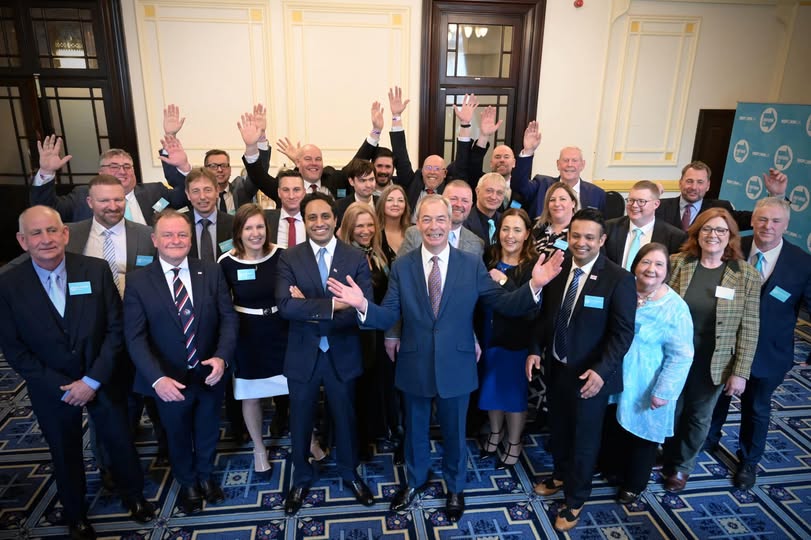
However … since last July, when the county’s parliamentary constituencies all went Labour, Nigel Farage’s Reform UK Party had been energetically hoping to build in Staffordshire on what statistically had been among its most promising performances. And indeed it did: Reform UK: 49 of the 62 County Council seats, leaving the previously controlling Conservatives with 10, and Labour, Greens and Independents 1 each. The Lib Dems, along with UKIP, the Workers Party of Britain and others, failed to score.

It typified results across the country. On what nationally was an exceptionally quiet election day, Reform UK increased its nation-wide base of just two councillors (both on Hampshire’s Havant Borough Council), to a relatively massive 677 (39% of the total seats contested) and gained majority control of no fewer than 10 of the 23 councils.

One can only speculate at some of the results that a fuller involvement of, say, the 130 unitary authorities, metropolitan districts and London boroughs might have produced. I concluded that Election Day column, though, not with any numerical predictions, but with Farage’s most publicised campaign observation/pledge: “We probably need a DOGE for every single county council in England”.

Which could have sounded a touch presumptuous from the Leader of a party who had approached that Election Day holding just two of the 1,700+ seats ‘up for grabs’ – but not from Farage.

I did wonder, though, what onlookers would make of that DOGE acronym (or, in some versions, D.O.G.E. – that’s how novel it is). Indeed, even Reform candidates, who probably knew at least that it stood for the love child of President Trump and the recently very departed Elon Musk’s Department Of Government Efficiency, trod carefully.

Created, they could possibly parrot, to “modernise information technology, maximise productivity and efficiency, and cut wasteful spending”, but did they have any real idea of how the function and office might work in a UK political context? Or did they possibly assume that, like so many campaign pledges, even if, rather incredibly, a DOGE majority did emerge, it would find itself, at least for the present, on the ‘too hard just now …. we’ve only just elected our Leader’ pile?

Certainly I, while having at least some idea of what county councils having an English DOGE might entail, would definitely NOT have predicted that, within just one month of those county elections, one of England’s biggest and traditionally most Conservative counties, KENT, would be preparing to face an ‘Elon Musk-style’ DOGE audit by a team of technical experts assembled specifically to analyse its £2.5 billion-plus budget spending and assess its financial efficiency.

Since the past weekend, the ‘Elon Musk-style’ bit will possibly have been played down, but not, seemingly, the ongoing implementation. With LANCASHIRE – £1.2 billion budget – already announced as next on the list, this just could prove insightful and potentially serious stuff.

Until May 1st, Kent County Council comprised 62 Conservatives, 12 Lib Dems, 4 Greens, 0 Reform UK.  Since then, it’s been 10 Conservatives, 6 Lib Dems, 5 Greens, and 49 Reform UK. If dramatic change is to be the agenda, Kent seemed an apt and attention-guaranteeing choice. 

By any measure, and almost whatever happens next, that – in my book, anyway – is an impressive achievement. There’s been, predictably enough, ‘Establishment’ outrage – “a superficial response to the deep problems of local government” … “initiating a review of local authority spending misunderstands the circumstances facing local authorities … All councils have been caught in an iron triangle of falling funding, rising demand, and legal obligations to deliver services. In that context every local authority has had to make difficult choices to cut services …” (Institute for Government).

On the other hand, win an election and implement your party manifesto! – a demonstration that turning out and voting in local elections, even in our exceedingly non-proportional electoral system – can produce policy action.

Or, rather, especially in our exceedingly non-proportional electoral system. Two of the new Combined Authority mayors (outside the West Midlands) were elected on under 30% of the votes cast, and obviously a much smaller percentage still of the registered electorate.

This follows the recent ditching of the Supplementary Vote in favour of ‘First-Past-The-Post’, where voters pick just one candidate, and the one with the most votes wins – even if, as this time in the West of England, that percentage was under a quarter of an already very modest turnout.

To me, anyway, it’s arguably even more important in these local/Mayoral elections than in parliamentary ones – for us, the elected Mayors, and democracy generally – that voters can indicate their first AND SECOND Mayoral preferences, thereby ensuring that, however low the turnout, the finally elected winner can claim the support of at least a genuine majority of voters.  Which means electoral reform – but that’s another column/blog.

Chris Game is an INLOGOV Associate, and Visiting Professor at Kwansei Gakuin University, Osaka, Japan.  He is joint-author (with Professor David Wilson) of the successive editions of Local Government in the United Kingdom, and a regular columnist for The Birmingham Post.

Equipping local governments to deliver national and local priorities

Jason Lowther

Today we launched our latest report, Equipping local government to deliver national and local priorities. Local government is critical to the delivery of the new government’s five key missions, and to improving life across the country. We argue that, once a series of critical reforms are in place, government should have confidence to equip local authorities with more power and (when public finances allow) prioritise additional resources there, enabling local and national priorities to be delivered. But critical reforms are needed in financial management, audit and performance management, and in community power and participation.

The new government inherited many challenges. Council budgets per person in England have been cut by 18% in real terms since 2010. Councils are hitting financial crises: twelve have issued section 114 notices in the last six years, compared with zero in the previous 17 years. Representative institutions at all levels of government are suffering from declining legitimacy and increasing polarisation. Local government plays a vital role in increasing democratic relationships and trust.

But councils’ wide remit, local knowledge, democratic accountability, public service ethos, and key roles in working with partners and shaping local places make them critical to the delivery of all five of the government’s key missions. Local governments are best placed to operationalise solutions to interconnected problems, for example, improving public transport and encouraging more cycling and walking helps meet net zero targets. It can also deliver health benefits, reducing the burden on the NHS, as well as increasing productivity by giving businesses access to a wider and healthier workforce.

Action is required to ensure that councils are fit for purpose to make the type of contribution that central government requires of them. Underlying this is a lack of confidence in local government on the part of ministers and civil servants.  We have identified three areas in which the government must be confident if it is to equip the local level with more power: financial sustainability, performance standards, and community power and participation. 

Policy recommendations

Financial arrangements

  1. Provide multi-year funding.
  2. End competitive bidding and deliver a “single funding pot” for each council/ local area that has been allocated fairly and sensitively to the needs and assets of the community.
  3. Abolish council tax capping.


Audit and performance management

  1. Strengthen the evaluation of councils’ performance management.
  2. Make OFLOG independent and extend its remit and approach.
  3. Reintroduce effective management and support of council external audit by independent bodies.


Community power and participation

  1. Strengthen the role of councillors as facilitators and catalysts of community-driven change.
  2. Embed participatory governance to ensure lived experience and marginalised voices drive policy and service delivery.
  3. Develop public-commons partnerships and community-wealth building to support community-driven sustainable economies.

As the Layfield Commission concluded 50 years ago, local government funding should promote responsible and accountable government. Beyond welcome recognition of acute financial challenges and commitment to multi-year funding settlements, there is a pressing need for additional immediate and longer-term action to improve Councils’ financial position and strengthen local accountability.

Local authorities have different needs for funding, depending for example on levels of population and its composition, deprivation, and spatial factors. Central and local government should develop updated funding formulae and funding models which are as simple as practicable whilst capturing the key elements of local need, and as transparent as practical in operation.  There are many reports researching available options for fairer funding, approaches to fiscal devolution, and local government funding options

Local audit, performance regimes and regulation each have a part to play. Both a parliamentary select committee and the Redmond Review into the Oversight of Local Government have sought to investigate the failings in local government audit.  The latter in 2020 critiqued market driven audits, stating that the new audit arrangements have undermined accountability and financial management. 

The adoption of the Redmond Review’s proposal for an Office for Local Audit Regulation would provide oversight on procurement, management, and regulation of external audits of local authorities. The government could extend the oversight of local government performance management processes while avoiding the creation of an overly powerful national regulator, by adopting key recommendations on the future arrangements of OFLOG (the Office for Local Government).

Proximity means that local government can play a crucial role in improving relationships between government and citizens. By creating conditions to mobilise the diverse expertise and resources of communities, local government can ensure that public policies and funding are informed by the assets, priorities and needs of local people and places.  There are already many examples where local government has made progress with innovations such as citizens’ panels and juries, the delegation of power to the hyper-local level and in building inclusive economies

We have over thirty years’ worth of research on deliberative democracy, social innovation, and co-production evidencing the value of collaboration with diverse communities and stakeholders. Participatory governance is less about finding perfect solutions and more about transforming organisations to engage with communities in processes of co-producing mutual understanding, shared solutions, and a sense of collective ownership.  

Our work on the 21st Century Councillor can help with enabling the role of councillors not just as democratic representatives but also as facilitators and boundary spanners between institutions, communities, civil society and local businesses.

Community-wealth building, pioneered in Preston and several London boroughs, can help strengthen the local economy with insourcing, linking public procurement to local cooperatives and social enterprises. These novel forms of governance can be formalised through Public-Commons Partnerships.

Equipping local government to deliver national and local priorities will leave a long-lasting legacy of a well-resourced, effective, accountable, and engaged local government.

The full report is available here

The report was edited by Jason Lowther and Philip Swann, with particular thanks to the following contributors (alphabetically by last name): Dr Koen Bartels, Dr Sonia Bussu, Prof Nicole Curato, Dr Timea Nochta and Dr Philip Whiteman. With thanks to other colleagues and associates in INLOGOV.

Councillors: Engage more and engage differently, but not at the expense of the basics

Karin Bottom, Catherine Mangan and Thom Oliver

This month saw the ‘Communities and Local Government Committee’ release its report on the role of the modern councillor. Focusing on  the impact of the Localism Act (and associated  developments in recent years),  Clive Betts MP,  Chair of the Committee,  suggested that local representatives are now spending less time in council and more in the community. As a result, they now shoulder the majority of responsibility for ensuring that  that their local communities have the tools to make the most of the localities in which they live. While the Report’s findings held few surprises, it did suggest that those we elect to be the local democratic voice of our communities must embrace this challenge and meet it head on. This position resonates with early findings from an INLOGOV project concerned with local engagement and the role of the local representative.

Firmly grounded in the belief that councillors’ responsibilities and remits vary, the current climate suggests they require a more nuanced and responsive skill set than ever.  In this sense, elected representatives must be outward looking, open to new ideas and welcoming of new approaches, but they must take care not to throw out the baby with the bath water.  Instead, our research suggests that what councillors need to do is integrate new learning into their existing repertoire of behaviours, while at the same time being more dynamic and responsive in their increasingly frontline role.[i]

For respondents, one of the main challenges they felt they faced was engagement. Whereas it is natural for all councillors to ‘do engagement’, a variety of approaches were evident in our research and for those who had moved into executive positions, the role shift was accompanied by community activities having to be curtailed. Respondents were very clear that the Localism Act was beginning to have an impact, for example in the mediating role that  has now been allocated to councillors: this meant developing skills as a community organiser and ultimately being on top of a great volume of information while managing a number of resources and contacts. This form of community engagement, though hard, was thought to have clear  rewards: a number saw the benefits of having shared aims and  a deeper understanding of the people they represented,  which in turn provided greater insight into the experience of being on the receiving end of council services; in contrast others thought wider community engagement created opportunities to lead opinion and ultimately change behaviour, for example one councillor worked with environmental groups to shape the ward’s attitude towards refuse collections and recycling.

Our interviews also surfaced information suggesting that that the majority of traditional communication methods continue alongside a slow evolution to greater online engagement and use of social media. While one councillor referred to sending regular email shots and creating a web page to articulate local information, activities and updates,  another described  how Facebook had enabled him to engage with people – often young people – who  generally chose not to participate in politics and local policy conversations. Finally, a number of councillors explained that twitter enabled them to aggregate opinions en mass, engage in debates and learn information they would otherwise be unaware of,  while some with cabinet responsibilities stated that this particular medium was unique in that it enabled them to keep on top of their portfolio while also providing opportunities to build and consolidate relationships they would otherwise not have had time to address..

One factor that was evident in almost every interview was that councillors always needed to be aware of the bigger picture: different methods worked in different situations and knowing a ward’s story or the history behind a particular community group could make the difference between successful and unsuccessful engagement. Just because a particular approach might work in one instance, there is no assurance it will work in another, despite apparent similarities. So, while councillors may see their responsibilities increasing and their community role broadening, it is vital that they maintain depth in their representative activities: if they don’t, potentially successful initiatives run the risk of failing.  

The authors are grateful to the School of Government and Society, University of Birmingham, for providing funds to assist in this research. With thanks also to NLGN for their contribution to this work.  For further information about the research project, contact Karin A. Bottom: [email protected]

bottom-karin

Karin Bottom is Lecturer in British Politics and Research Methods at INLOGOV, University of Birmingham.  Her core research areas comprise parties (particularly small and the BNP), party systems and party theory.  She is particularly interested in concepts of relevance and how national level theories can be utilised at the sub-national level.

Portrait of OPM staff member

Catherine Mangan is a Senior Fellow at INLOGOV.  Her interests include public sector re-design, outcomes based commissioning and behaviour change.  Prior to joining INLOGOV she managed the organisational development and change work for a not-for-profit consultancy, specialising in supporting local government; and has also worked for the Local Government Association, and as Deputy Director of the County Councils Network.  She specialises in adult social care, children’s services and partnerships.

thom

Thom Oliver is a Postdoctoral Research Fellow at Oxford Brookes Business School.  He completed his PhD, exploring the representative role of councillors on appointed bodies, at INLOGOV in 2011. He currently lives in Bristol and has recently rejoined INLOGOV as an Associate.  Follow his Twitter account here, and read his own blog here.


[i] Research to date provides initial findings from interviews in three councils (one London Borough and two Metropolitan).  Interviews comprised a broad mix of age, seniority, roles and experience. Approximately equivalent numbers of men and women were interviewed.

Elected Mayors: The Wrong Solution to the Wrong Problem

Catherine Durose

Only one eligible voter in every three participated in the local elections in May 2012, the lowest turnout since 2000 and despite a context of austerity and swingeing public spending cuts. The recent elections for Police and Crime Commissioners saw turnout slump to a record low for a national poll, averaging at 15%. To quote a Guardian editorial, ‘lack of engagement is the most eloquent of all the political messages…. and one that the parties need to take most seriously. Voters are fed up, not fired up’. Collapsing turnout is perceived as part of a wider decline in traditional forms of political participation, this trend has been labelled as a ‘democratic deficit’ and it is this ‘problem’ that elected mayors are seen as offering a fix to by as simplifying local democratic accountability and offering greater visibility for citizens.

In the referenda held in May 2012, the rejection of elected mayors was near unanimous. The average turnout was low at 32% with over 60% of those who participated, voting for the status quo. The turnout can be, in part, explained by the uncertainty and confusion amongst the electorate about what they were being asked to vote on (the powers which elected mayors would have was, and remains, unclear). But, the size of the ‘no’ vote suggests, at the least, a lack of enthusiasm about electing more politicians. Indeed, voters in Hartlepool have now decided to scrap the position of a directly elected mayor after three terms of office.

Bristol is an exception, by a narrow margin of 7%, it was the only one of the ten cities to vote in favour of an elected mayor. Yet, the Bristol mayoral election, held on 15 November 2012, only received a turnout of 27.92%. Of the fifteen candidates who contested the elections, only one was female and one was non-white. The newly elected mayor of Bristol, George Ferguson, whilst depicting himself as an independent, has previously sat as a Liberal councillor and contested a seat at two General Elections for the Liberal Democrats.

In thinking about why citizens are ‘fed up’ with local democracy and why the idea of elected mayors was a turn-off, perhaps we should take a look at those contesting and winning these elections. As in Bristol, mayors do not represent a radical departure from the professionalised political class or indeed the mainstream political parties which citizens are increasingly dis-engaged from: Boris Johnson in London, Ian Stewart in Salford and Peter Soulsby in Leicester, are all former MPs; Joe Anderson in Liverpool is a former Leader of the council.

I would argue that elected mayors are the wrong solution to the wrong problem. The currently proposed fixes in the constitutional reform agenda, including elected mayors, to deal with the ‘democratic deficit’, are clearly not producing changes which citizens are interested in engaging with. Perhaps this is because the assumption that underpins such fixes – that citizens are apathetic about politics – is incorrect. If we challenge this thinking, then many of the proposed fixes seem like the wrong solution to the wrong problem. If we instead recognise that many people feel that representative politics doesn’t represent them or indeed engage with the important issues that affect their everyday lives, then a different problem with a potentially different solution emerges.

One means of responding to a decline in traditional forms of political participation is to offer different opportunities to engage democratically. Broadening the range of democratic engagement fits with re-thinking what citizenship means: it’s less a ‘status’ which people possess and more a ‘practice’ that people participate in. Looking at data on levels of different forms of civic activity in the UK suggests there is a healthy base of existing participation and an appetite for more. The Hansard Audit of Political Engagement suggested that 14% of people are already active, but 51% felt that getting involved could make a difference; 14% of these were considered as ‘willing localists’, people who were not actively involved but were willing and likely to do so locally.

But how can we tap into this latent demand? First, local authorities and other public bodies need to stop ‘second-guessing’ citizens.  Recent research highlighted that whilst two thirds of local councils felt that the community would be unmotivated to participate more locally, less than 20% of them had formally assessed communities’ interest.  Second, we need to acknowledge that a lot of current opportunities for ‘participation’ replicate some of the problems of local representative democracy by acting as ‘mini town halls’ offering only tokenistic consultation of citizens, failing to recognise Sherry Arnstein’s seminal observation that “there is a critical difference between going through the empty ritual of participation and having the real power needed to affect the outcome of the process”. Third, to look for alternative ways to mobilise citizens and communities. I recently attended Locality’s annual convention – the organisation now recruiting and training 500 senior community organisers, along with a further 4,500 part-time voluntary organisers, over four years spent working with community host organisations. For Locality, this initiative is about ‘building a movement’. Speaking to organisers, they see their challenge as mobilising social action and generating a sense that change is possible. I have seen the impact of organising first-hand in Chicago, and it was inspiring to hear the impact the programme is already making there. If an elected mayor is to make a difference to local democracy, it won’t be as a visible manifestation of Politics, it will be about embracing and supporting these new social movements.

Catherine Durose is Senior Lecturer and Director of Research in the Institute of Local Government Studies at the University of Birmingham.  Catherine’s research focuses on the changing relationships between the state, communities and citizens.

A ‘no’ vote for city mayors does not have to shut down discussion on how local political leadership can be strengthened

Dr. Karin Bottom

Last week, ten English cities voted on whether  to alter the dynamics of leadership in their authorities and replace the current leader and cabinet formula with that of elected mayor, deputy and cabinet.  The rejection was almost unanimous, only Bristol registered a yes vote – but with a majority of less than seven per cent – and more than 60% of voters in Coventry, Leeds, Newcastle, Sheffield and Wakefield   prioritised the status quo above change.   To some this outcome was a surprise, yet  polls prior to the referenda were inconclusive at best and taken in conjunction with the uncertainty surrounding elected mayors, it is hardly surprising that the majority of the electorate chose to stay at home or vote no, average turnout being recorded at a particularly  low 32 per cent.

With a focus on what the office of mayor could do to regenerate cities  and enhance local democracy,  ‘yes’ campaigns were beset with problems from the  start, not least for the reason that pre election, the role of the elected mayor was to be broadly similar to that of council leader: specifics were to be negotiated after taking office and worryingly for some, a substantial amount of the role’s leverage would be the product of personality and an ability to maximise what are often termed as ‘soft’  powers.  Compounding these factors, the office’s confinement to cities – as opposed to regions – suggested that capacity for real change was somewhat more limited than proponents suggested.

Analysis in the aftermath of the referenda suggests that a number of factors contributed to the ‘no’ votes but it  is clear that the overriding sentiments within the electorate were uncertainty and confusion.  Voters were unsure about what they were being asked to endorse or reject and some argue that this explains why the   ‘no’ campaigns were particularly successful at tapping into and harnessing public sentiment.  Taken in the context of austerity, ongoing public service cuts and a generalised dissatisfaction with the political class, it is easy to speculate and suggest that the electorate was unenthusiastic about electing more politicians, especially when the nature of the role was unclear and guidelines for removing poorly performing mayors were minimal to say the very least: to many the office seemed nothing other than a risky and unnecessary expense.

Yet, the results on May 3rd should not shut down discussion on local political leadership. The mayoral model may have been rejected but the issue has not gone away; arguments for stronger more visible city leadership persist and the government has made it clear that it now sees the move towards elected mayors as incremental, cumulative and progressive: in this sense the debate continues.  Yet, now it might be useful to shift the focus somewhat and think about how leadership can be nurtured and maximised in the 339 non mayoral authorities in England because there is nothing to suggest that the qualities which comprise strong leadership sit only within the purview of  an elected mayor.  While  Joe Anderson and Ian Stewart take up their new mayoral posts  in Liverpool and Salford, they do so alongside 124 other English authorities which also underwent some form of political reconfiguration last week: it will be interesting to see  whether  the issues which catalysed the mayoral referenda will impact on future leadership dynamics in those local  authorities.

Karin Bottom is Lecturer in British Politics and Research Methods at INLOGOV, University of Birmingham.  Her core research areas comprise parties (particularly small and the BNP), party systems and party theory.  She is particularly interested in concepts of relevance and how national level theories can be utilised at the sub-national level.

Go Back to Committees – and Use All the Talent of Elected Councillors

Andrew Coulson

A recent centre spread in the LGC has the headline “Committee System may be Outdated, Councils Warned”, even though the option to return to government by committees is one of the main planks of the Localism Act and a central plank of Conservative and especially LibDem policy.

The research reported on, by Ed Hammond of the Centre for Public Scrutiny, reports that four councils are expected to make the change in May 2012.  There will also be some “hybrid” arrangements, such as that likely to come into effect in Kent, where advisory committees are given greatly strengthened powers, even though technically decisions will remain in the hands of individual cabinet members, and the cabinet, though that is not expected to meet very often.

Up to 40 councils are believed to be giving serious consideration to making the change, including some of those where there will be mayoral referenda on 3 May.  If those referenda are lost, some of these councils may well revert to committee governance in May 2013.

Why?  Because, as they see it, committees are much more inclusive than any other form of governance. They give a voice to all the elected councillors, and potentially bring to the table all their talents. They make it harder to take decisions in secret. They give councillors a means of putting into effect the commitments they make when they stand for election, and they keep council officers on their toes because they can never be quite sure what will happen when they attend a committee – even if most of the major changes that might be made to a report will have been agreed in the group meeting of a majority party beforehand.  They also allow backbench councillors to specialise, and provide a means to induct them into how council services are run. They develop leadership – many strong leaders emerged over the years from the committee system.

This is not to say that committees were perfect or are inevitably the best solution. They can, and often were, criticised – for being slow to make decisions, leaving it unclear who was responsible for decisions, and for sustaining silos (such as Education authorities) which at times seemed to have little involvement with other parts of the council.  The criticisms can be answered. The committee system can be fast, and keep confidences, when it matters. With a cabinet, or indeed an elected mayor, leadership is still distributed – with chief executives or chief officers often the real leaders. Silos can be broken down if there is the political will to do so. But none of this is easy, and there were plenty of disillusioned and frustrated councillors and officers in the past. All we can say with confidence is that no system is perfect and that each council needs to work out what is best for its own purposes.

There are different forms of committee systems, ranging from a single committee with important decisions taken in full council (as in a number of the present Fourth Option councils, with populations less than 85,000, who have never given up their committees) to the massively complex structures in some counties and metropolitan districts before 2000 which had committees or sub-committees for almost everything that a councillor could become involved in – over 50 in total in one case. No-one is proposing to go back to that.

There have to be means of dealing with cross-cutting issues, urgent business between meetings, the size of committees and sub-committees, how often they meet, systems of councillors’ allowances, and policy review, to take but some of the issues of detail that must be addressed. Scrutiny will for most councils remain a function that needs to be done, and there are different ways of integrating it into a committee system. Maybe there is much to be said for not rushing into making the changes, and learning from what is happening now.

A day workshop at INLOGOV on 6 July will present a balanced picture and facilitate a discussion of the pros and cons of making the change and the detail issues that need to be taken into account in any new constitution.  Several of the councils making the change will be represented or make presentations. Ed Hammond, the researcher who wrote the Centre for Public Scrutiny report, will speak.  There will be comment from the Local Government Association, and support from FOSIG, the group that represents fourth option councils.

It will provide a unique opportunity to listen to the enthusiasts for making a change, and cross question them, and to understand the alternatives, and the possible downsides,  and the need to address the detail.  More about this workshop, including a booking form, can be found by clicking here.

Dr. Andrew Coulson is Lead Consultant on Overview and Scrutiny at INLOGOV,University of Birmingham, with wide experience of Overview and Scrutiny.  He has recently launched one of the first assessed qualifications on the subject.  His further research interests include partnerships and governance, economic and environmental strategies, and local government in Central and Eastern Europe.