Aksaraphak Tansakul
Most of us have received an emergency alert on our phones. As extreme weather becomes more frequent and severe, the public needs to know when they are at risk and what they should do to stay safe.
Local governments have a crucial role in getting that information to the public. Digital tools have made sending warnings much quicker, as information can be posted on official social media pages or sent via text alerts within minutes. But the job is not done once the message is sent. The question is how the message is received. And who receives them.
Message received?
Last summer, I conducted research that surveyed over 200 people and interviewed residents and local officials across seven villages in Khuekkhak, southern Thailand, about the floods that swept through their communities in October 2025. As heavy monsoon rains fell, the municipality issued warnings through Facebook and its official website, sharing forecasts of heavy rain and urging residents to be careful.
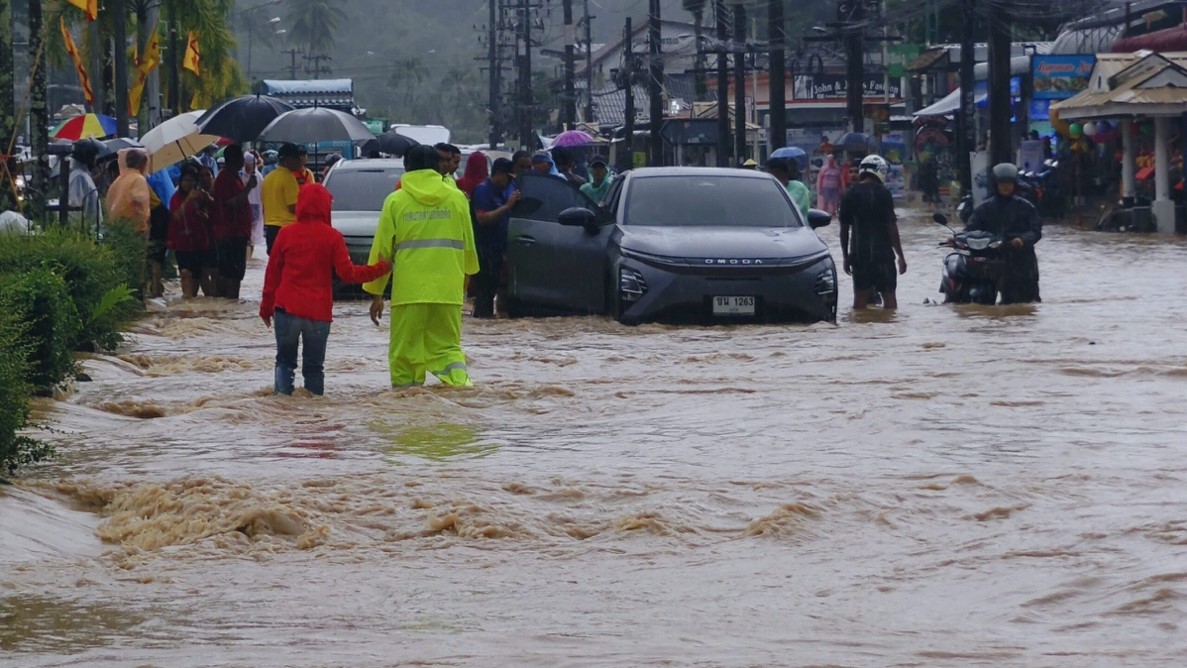
Source: Matichon Online
But how many people actually learned about the flood risk from their local government? My research found that only 16% of surveyed residents first learned of the flood risk through the municipality’s official channels. More than a third first noticed the danger themselves, watching the rain fall or the water rise, while nearly a quarter first heard through Facebook posts from personal contacts. Rather than relying on a single warning, residents pieced together information from neighbours, community LINE groups and people they trusted. Disaster research has long shown that social networks and local knowledge are crucial to how communities prepare for and respond to emergencies. What happened in Khuekkhak reflects this broader trend, where residents relied on people they knew to make sense of the danger and decide what to do.
But what happens to those who lack these connections, or the local knowledge that comes from years of living in a flood-prone area? This is precisely where local government has a vital role to play. Ensuring people’s safety must not depend on who they know or how long they have lived in a community.
The work ahead
The work ahead is not simply about increasing the 16% who first heard about the floods through official municipal channels. Local government is only one of many sources of information during a disaster, and its role is not to replace or override the information delivered by local networks. As public administration research on co-production shows, communities and public officials already work together to deliver essential services, especially during emergencies. The challenge for councils is to support these networks with clear responsibilities and reliable information, while ensuring that those without local knowledge or personal connections are not left behind.
My research offers three lessons for managing disaster preparedness.
First, local government can work with existing community networks and make them more accessible. In Khuekkhak, village heads, health volunteers and municipal staff already participate in community LINE groups, helping residents share and verify information. Public authorities could build on these networks by creating an official LINE channel that anyone can join, while establishing clear rules on what local officials can share before a formal warning is confirmed. This would help residents receive timely information without relying entirely on personal connections.
Second, plan for people outside these networks. My interviews suggested that older and housebound residents often depended on family members or neighbours to pass on warnings. People living in Khuekkhak without being officially registered could also miss out on community groups that rely on personal invitations. The municipality should identify households needing additional support, extend loudspeaker coverage to villages without it and arrange direct contact through community leaders or caregivers. In the UK, councils could similarly work with social care providers, housing organisations and local charities to reach people who may be isolated or lack reliable internet access.
Finally, make warnings specific and useful, especially for newcomers and visitors. Long-term residents could draw on experience of rainfall, tides and flood-prone roads. Newcomers may not be able to do the same. This matters particularly in Khuekkhak, which includes the Khao Lak tourist area. Although my research did not survey tourists, my analysis of municipal communications found no English-language updates, raising questions about how foreign visitors could access official warnings. Municipalities could also use local flood records to issue more geographically specific warnings that explain where flooding is expected, when people should act and what they should do.
Khuekkhak already has local knowledge, trusted community leaders and networks that help residents respond to floods. What it needs is a system that connects these strengths while reaching people outside them. The lesson for local governments elsewhere is simple. Warnings alone will not make communities safer. What matters is whether everyone, not just those with the right connections, has the information they need to act.

Aksaraphak Tansakul is an MSc Public Management student at the University of Birmingham, interested in government communication, crisis management, and political parties. She previously worked at Thailand’s Ministry of Foreign Affairs. This blog draws on her dissertation, “Flood Risk Communication and Community Response in Khuekkhak Subdistrict, Phang Nga, Thailand in 2025”, supervised by Professor Nicole Curato. This article was edited by Dr Jingwen Jiang and Prof Nicole Curato.

