Claire Dhami
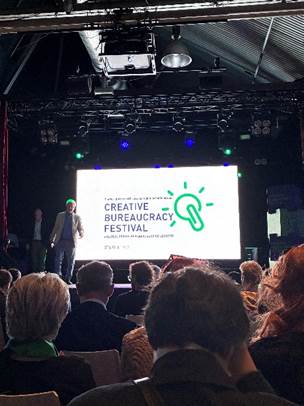
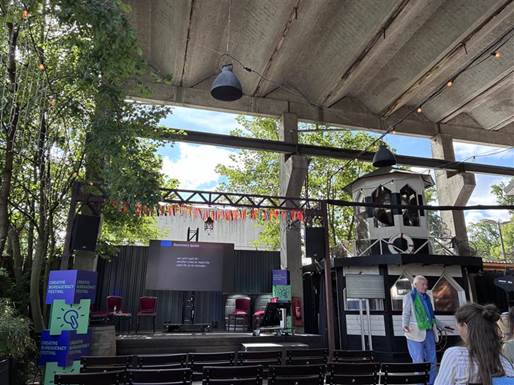
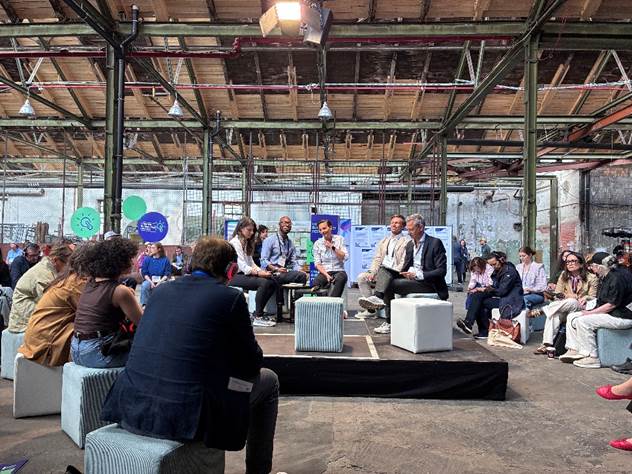
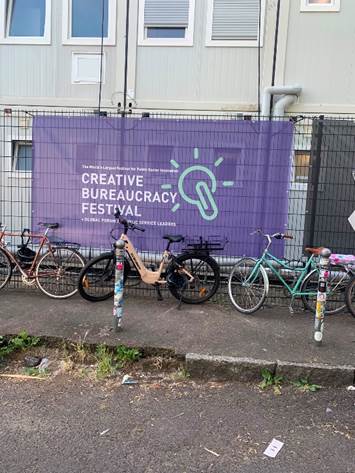
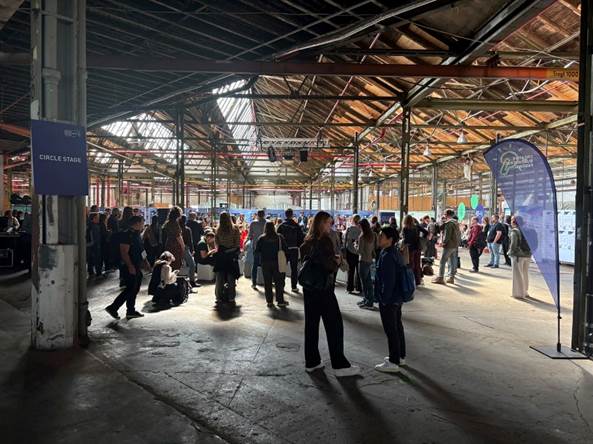
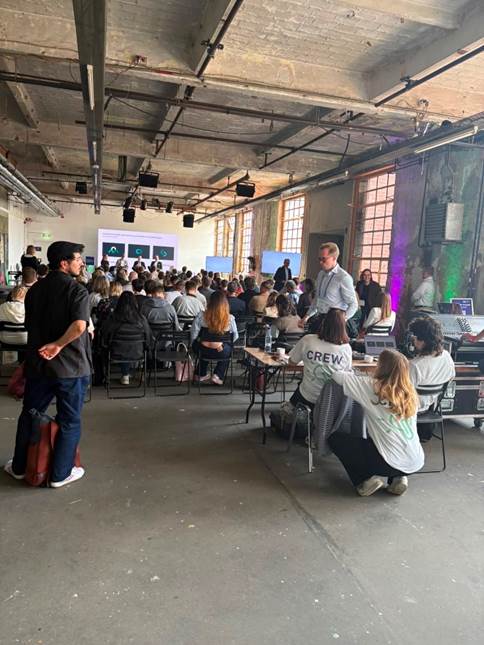
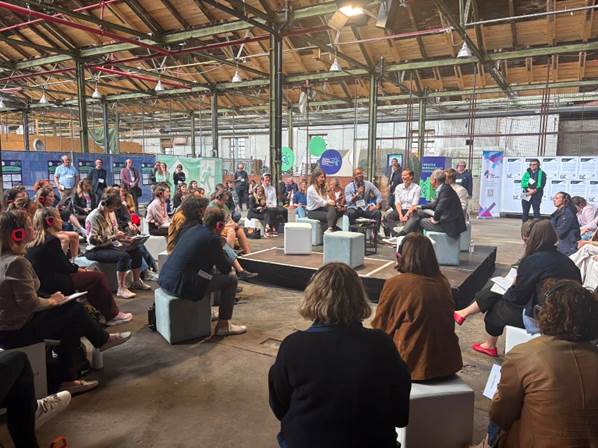
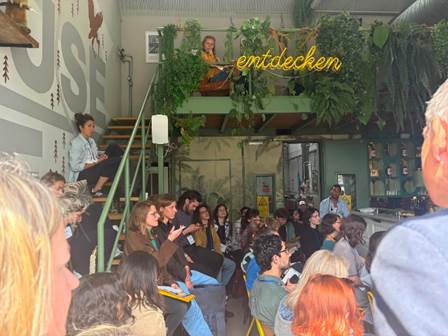
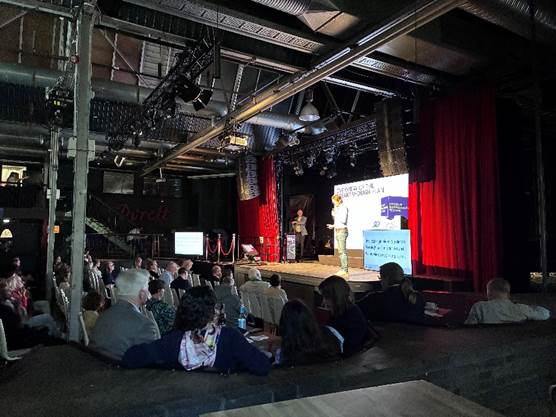
I was fortunate enough to attend the Creative Bureaucracy Festival in Berlin this June, bringing together public servants, leaders and practitioners from across the world who are grappling with the same fundamental challenge: how do we make public services work better for people in increasingly complex and uncertain times.
The festival itself has an interesting origin. It was founded by Charles Landry and others as a provocation. The term ‘creative bureaucracy’ deliberately challenges the stereotype of bureaucracy as rigid, slow and rule bound. Instead, it puts forward a different idea that public institutions, at their best, can be imaginative, humane and capable of solving complex problems.
What began as a provocation has now become a global movement. The festival has grown into a space where thousands of public servants come together each year to share what is actually working in practice, often in spite of system constraints, and to learn from each other.
What struck me most, both from the festival and from our work in the West Midlands, is that the issues we face are remarkably consistent across countries. There is a growing recognition that many of the challenges in public services are not about marginal service gaps. They are about how the system itself is designed.
We have built systems that are logically organised around institutions, but in practice expect people to navigate multiple disconnected pathways. Responsibility is too often passed between organisations, rather than shared. The result is fragmented, transactional experiences, particularly for those with the most complex needs.
This is not a capability problem. It is a design problem.
One of the most powerful shifts discussed at the festival is moving from improving individual services to improving life outcomes. That may sound like a subtle change, but it fundamentally alters how we think about reform.
Instead of asking how to optimise what already exists, we start by asking what people actually need to thrive and then work backwards to shape the system around that. In our own work, this means focusing less on creating new interventions and more on redesigning the pathways between education, health, employment and community support, particularly at the points where people are most at risk of falling through the gaps.
This is where relational public services become essential. When support is organised around trusted relationships and continuity, rather than organisational boundaries and eligibility criteria, the experience for residents changes completely. It becomes earlier, more consistent and more human.
But perhaps the most important insight for me was how we think about innovation.
There is a tendency in the public sector to equate innovation with new programmes or pilots. The festival challenged that directly. A more effective model is to see innovation as a small but deliberate part of the system, around 10 percent of activity, designed to influence the other 90 percent.
The pilots themselves are not the outcome. They may succeed or fail. The real value lies in the learning they generate and whether that learning changes how the system behaves. That means influencing mainstream commissioning, policy decisions and how resources are actually deployed.
This requires discipline. Without a clear link between experimentation and system change, innovation remains interesting but peripheral. With it, innovation becomes a lever for reform.
It also clarifies the role of organisations like the Combined Authority. Our role is not to direct delivery or create new services. It is to influence how the system behaves. That means convening partners, aligning incentives, building shared ownership of outcomes and creating the conditions for change.
At the same time, the festival highlighted a fundamental contradiction that we see locally. We talk about partnership, prevention and place-based working, but continue to fund services in ways that reinforce fragmentation. If we are serious about system outcomes, we have to fund them differently, aligning resources around shared cohorts and goals rather than organisational silos.
The message I took away from Berlin is that the future of public services will not be defined by new initiatives. It will be defined by our ability to redesign systems so that good people are able to do the right thing, consistently.
When we get that right, innovation is no longer something separate. It becomes part of how the system learns, adapts and improves over time. And that is where meaningful, lasting change happens.
Claire Dhami is Head of systems change and inclusion at West Midlands Combined Authority.

