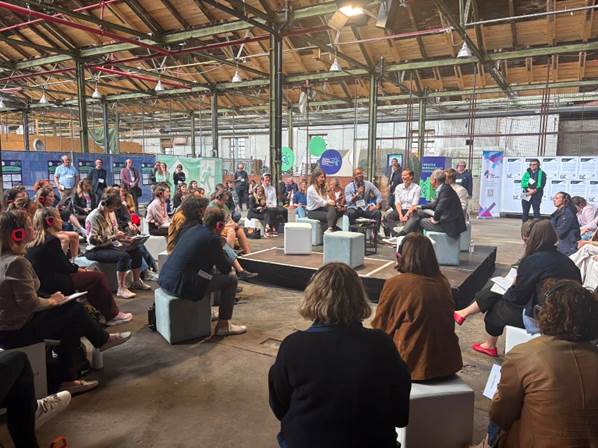
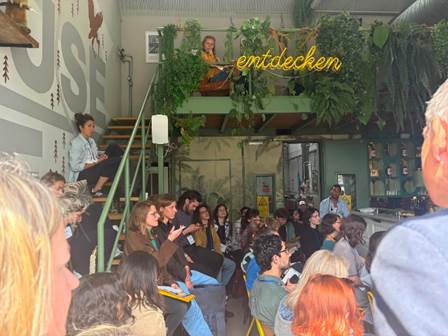
From democratic resilience to systems resilience – Perspectives from the Inaugural Conference of the European Network for Public Administration 2026

Dr. Elke Loeffler

The European Network for Public Administration (ENPA) is a newly founded independent learned society led by public administration academics for the theoretical and practical improvement of public administration.

I attended its inaugural conference, held at the top University ASE in Bucharest, in my role as co-founding Board Member and co-chair of the ENPA Research Group on Public Participation and Co-Production. There was also a strong representation of UKAPA – the UK Association for Public Administration. This event showcased a number of innovative formats, including a plenary in interview format on democratic resilience and a highly interactive ‘collaborative discussion’ session on systems resilience, as well as providing a highly-valued Conference Buddy Scheme for Doctoral Researchers.

During the conference it became clear that resilience is now a major emerging theme in public management research and practice. For many local councils this concept has so far been mainly used in relation to emergency response and planning. However, the LGA in the UK considers this to be a ‘whole council effort’, going beyond small emergency teams.

Moreover, the discussions at the ENPA Conference revealed that resilience is not just about sudden, extreme emergencies but about creeping crises such as democratic backsliding and and prolonged failures such as delayed access to public healthcare. While robust governance (Ansell, Torfing and Trondal, 2025, Robust Public Governance in a Turbulent Era) – the ability of a system to maintain its operations despite disruption – is important, resilience is more demanding – it is about the capacity for adaptation in the service system to recover to the same or high outcomes after a disturbance – or as a former UK Prime Minister expressed it “building back better”.

The keynote speakers also discussed the need for public administration scholars to strengthen resilience. Don Moynihan from the University of Michigan highlighted that rule-bound public administration and independent academic research often become targets for populist leaders. He suggested that, in times of democratic backsliding, delivering evidence-based descriptions of current situations and contexts may be more effective than sophisticated, time-consuming causal analysis. While not as analytically powerful, making it clear what is actually happening may make a greater impact on public attitudes, and eventually on public policies, than complex modelling. This argument gave rise to considerable debate in the coffee breaks!

The collaborative session in our Research Group demonstrated that local government resilience is not enough – we also need resilient communities, service users and markets. This brings in the potential role of user and community co-production in strengthening systems resilience. For example, Jan Dumkow from the Helmut Schmidt University Hamburg provided a current action-research project involving co-design of an app for and with people with learning disabilities so that service providers would be able to provide tailored information in the case of emergencies.


The ‘whole systems resilience network’ depends on each element in the network of user-community-provider-market resilience being sound and well-balanced with the other elements (Bovaird and Loeffler 2024). The resilience network constitutes a dynamic system, in which each of the stakeholder groups is always looking to learn and to improve, with the consequence that a weak link in the network reduces the overall capability of the system. However, a systematic literature review which I undertook with Sanneke Kuipers (Leiden University) and Marie-Christine Therrien (Ecole Nationale D’Administration Publique, Montreal), on the role of co-production in strengthening resilience in extreme crisis, revealed that user and community involvement is largely absent in current evaluations of crisis interventions. This is cause for concern and highlights the urgent need for more engaged research with local communities and local councils on how to strengthen all links in the whole systems resilience network. INLOGOV is well situated to work with local councils and communities on this issue, given its expertise on co-production and social prescribing.

Dr. Elke Loeffler is an Associate of INLOGOV and Director of Governance International. She undertakes applied research on local public services and has research interests in community co-production and resilience. Elke is Board Member of the European Network of Public Administration, Vice-Chair for Doctoral Research in UKAPA and Chair of the Public & Nonprofit Management Group at EURAM.

What Works?  Local Government is Finding Out

Jason Lowther

At last month’s Smith Square debate, we had an interesting discussion (among other themes) on how innovation spreads.  I mentioned that I was frustrated at the lack of traction that many evaluation reports seem to get, and that so many basically say “we don’t know so probably do more research”.  However, over the last 18 months, government has released a wave of evaluation evidence across multiple themes that are priorities for local government.  Partly in answer to my challenge, over the next few weeks we’ll be looking at what each of these can tell us about “what works” in their area: homelessness and rough sleeping, local growth and skills programmes, mental health and employment support, the Community Outcomes Fund, and the London Vanguards project on supporting young people affected by violence.

This week, I’ll have a go at seeing the story the collection as a whole might be telling us about the pressures, strengths and future direction of local government systems. They reveal a landscape where councils are doing a great deal right, but also where structural conditions, funding models and capacity constraints limit what even the best local practice is able to achieve.

A shared diagnosis: rising demand, systemic pressure and fragmented delivery

Most of the recently published evaluations echo the same system‑level diagnosis: demand is rising faster than capacity. In homelessness, systems‑wide analysis shows local authorities facing increasing crisis presentations driven by housing shortages, welfare constraints and cost‑of‑living pressures. In UKSPF and Multiply, compressed timeframes and short‑term funding cycles created operational strain and restrict innovation.  The Community Ownership Fund interim evaluation suggests that without the fund many pubs, community centres, sports facilities and heritage buildings would likely have been lost from community use, but also highlights long lead‑in times, complex project management demands, and volunteer burnout as recurring challenges.

Prevention consistently outperforms crisis response, but funding architectures still favour the latter

Across homelessness evaluations, the conclusion is clear: prevention is more humane, more effective and delivers better value for money than crisis response. Yet central‑local funding arrangements often reward short‑term, visible ‘rescue’ rather than long‑term preventative investment. Skills and economic development evaluations show similar dynamics. Multiply deep dives find that providers would benefit from multi‑year cycles that allow them to embed contextualised numeracy provision and build trusted relationships. Instead, annualised funding introduces uncertainty and forces a focus on quick (rather than effective) delivery.

The COF evaluation also surfaces a version of this problem. It shows that community ownership has deep preventative value, protecting assets before they disappear, strengthening social infrastructure, and avoiding long‑term local decline. But early rounds of COF were more accessible to groups with high pre‑existing capability, meaning communities most at risk were sometimes least able to prevent asset loss. Later rounds have improved this, lowering match‑funding requirements, widening eligibility, and offering stronger pre‑application support to disadvantaged communities. The lesson resonates across sectors: preventative systems require accessible, stable and equitable funding frameworks.


Local flexibility and community empowerment are major drivers of success

One of the clearest conclusions across the recent evaluations is that local flexibility works. UKSPF’s devolved decision‑making has been widely praised for enabling councils to design interventions aligned to local priorities. Multiply’s flexible design allowed councils to embed numeracy learning in real‑world contexts that resonated with learners.  The COF interim report finds that COF has been “uniquely positioned” to meet community needs, enabling groups to save valued assets and renew pride in place. Communities report increased participation, stronger local identity and early signs of improved social cohesion following COF‑supported interventions.

Workforce, capacity and governance: the quiet constraints shaping outcomes

A recurring thread across the evaluations is the impact of workforce shortages and operational capacity. Staff churn, fragile volunteer bases, rising caseloads and short‑term contracts constrain delivery, limit innovation and prevent organisations from embedding learning. Investing in capacity (skills, governance, leadership and organisational resilience) is critical for successful place‑based policy.

Partnerships make the biggest difference, but they need careful stewardship

From rough sleeping multi‑disciplinary teams to UKSPF delivery partnerships with VCSE organisations, strong collaboration emerges as one of the most important influences on success. Evaluations show that where councils act as effective system convenors (aligning partners, coordinating case management, sharing data and creating shared goals), outcomes improve.

What does all this mean for local government?

Three big implications stand out across the evaluations.

First, councils are increasingly system‑shapers, not simply programme‑managers.  The evaluations underline that successful outcomes depend on how councils orchestrate local systems (such as housing, economic development, VCSE partners and community groups) rather than on the quality of any single programme.

Second, stable, long‑term funding is essential for prevention, equity and innovation.  Short‑term cycles undermine prevention, limit strategic planning and exhaust delivery partners. The COF findings show how programme design changes can increase equity, but also how instability can disadvantage the communities most in need.

Finally, capacity‑building is central to reducing inequality, even when the policy focus is capital investment.  Across the board, councils, community groups and VCSE partners need investment in skills, leadership and organisational resilience. It’s essential that as a sector we develop systematic and accredited processes to deliver the necessary education and training.

The emerging picture is of local government doing extraordinary work under extraordinary pressure. But the future of place‑based policy will depend on giving councils and communities the tools, stability and capacity to shape local systems, rather than firefighting the consequences of systemic constraints.

Next time I will be diving in more detail into what the evaluations tell us about “what works” in tackling homelessness and rough sleeping.

Rewiring Public Spending: Why Place-Based Budgets Are a Game Changer

Jason Lowther

Today’s announcement of five new pilots of place-based budgets is to be welcomed, particularly if we are able to learn the lessons of previous incarnations of this approach.

For at least two decades, reformers have argued that public money should be organised around people and places rather than the siloed lines of departmental spending. The Total Place pilots at the end of the 2000s offered an early glimpse of what a whole-area approach could achieve: count everything that is spent in a place, identify duplication and misalignment, and then redesign services around users and prevention instead of institutions and costly reactive services. The initiative was short-lived, but it started a body of learning that has grown through subsequent programmes and analyses (Kings Fund 2010; Leadership Centre 2010).

The case for place-based budgets is if anything stronger than in the 2000s. Despite recent increases in funding, local government finance is under intense strain, with parliamentary scrutiny concluding that the funding system is perilously complex and increasingly dominated by mandatory, high-cost services. As demand for social care, homelessness support and special educational needs and disabilities (SEND) has accelerated, councils have had less fiscal room for prevention or early intervention (Public Accounts Committee 2025). Contemporary policy analysis likewise contends that austerity-era dynamics have created a ‘doom-loop’ of short-term firefighting, and that pooling budgets locally and focusing on shared, place-level outcomes offers a realistic route to break it (New Local 2024).

What, then, does the available evidence on place-based budgets demonstrate? I would highlight three key lessons.

First, integration pays. Total Place’s ‘high-level count’ and service ‘deep dives’ gave leaders a common picture of spending, surfacing duplication and transactional costs that fall between organisational boundaries. That visibility enabled local partners to experiment with redesign, supported by cultural work and customer insight, pointing to improved value and user experience, even though formal causal evidence remained emergent due to the initiative’s brevity (Leadership Centre 2010; Kings Fund 2010).

Second, place-based approaches work best as portfolios, not isolated projects. Evaluations of ‘single-pot’ style funding, such as the Local Growth Fund and Getting Building Fund, found synergistic effects when local partners curated integrated suites of interventions, although capacity constraints, time pressure and administrative burdens often limited impact (MHCLG 2025).  To quote: “A place-based approach, underpinned by joined-up strategic planning and strong partnerships, enhanced the effectiveness of interventions, while the flexibility of funding design encouraged innovation”.

Third, process quality matters.  For example, the UK Community Renewal Fund evaluation recorded achievements but highlighted design and delivery lessons, especially around streamlining and enabling local capability (DLUHC 2023).

Each of the service areas targeted in the new pilots have clear potential benefits from place-based budgets. For SEND, with demand surging and statutory duties paramount, money gravitates to crisis responses, while coordination across education, health and care is hampered by mismatched rules and timelines. Fragmentation and pressure are crowding out prevention, strengthening the argument for pooled, place-level budgets with shared outcomes that enable early help (Public Accounts Committee 2025).   For young people at risk of offending, short-term cycles and centralised decision-making weaken continuity and trust (ICON 2025). For adolescent mental health, prevention depends on integrating multiple local services around a common, place-based outcomes framework.  For adults facing multiple disadvantage, evidence from the Troubled Families and similar programmes showed how place‑based, whole‑family approaches can more effectively support adults experiencing multiple disadvantage.

The literature suggests five practical design features. First, begin with a whole-place account of spending, including deep dives where duplication and hand-offs are greatest, then use that map to re-route resource into prevention (Leadership Centre 2010). Second, fix governance and outcomes before money moves: agree a small set of shared, population-level outcomes and decision rules that prevent old silos from re-emerging inside pooled funds (New Local 2024). Third, commit to multi-year settlements; the stop-start rhythms of competitive funds correlate with weaker delivery, thinner partnerships and lost learning (MHCLG 2025; DLUHC 2023). Fourth, invest in local analytical and commissioning capacity. A systematic review of 134 place-based business cases found surprisingly low rates of SMART objectives and limited place-sensitive value-for-money analysis (University of Birmingham 2025). Fifth, align central missions with local flexibility: national outcomes frames can be compatible with local choice on delivery (University of Liverpool 2026).

When budgets follow place and purpose rather than departmental programme labels, partners collaborate more, duplication falls, transaction costs reduce and services are redesigned nearer to the lives they intend to improve. The empirical evidence base is not fully robust since few initiatives have enjoyed the time and design stability that gold-standard evaluations require, but the direction of travel is remarkably consistent across evaluations, parliamentary scrutiny and academic commentary. Building in proper evaluation this time round could really help strengthen this evidence base.

The new pilots are a chance to “stand on the shoulders” of all the hard work local and central governments have done to date, learning the lessons so that this time we can genuinely change the system.

References

Department for Levelling Up, Housing and Communities (DLUHC) (2023) UK Community Renewal Fund evaluation. Available at: https://www.gov.uk/government/publications/uk-community-renewal-fund-evaluation-report (Accessed 17 March 2026).

ICON (2025) Mapping the Landscape of Place‑Based Initiatives. Available at: https://www.neighbourhoodscommission.org.uk/wp-content/uploads/2025/07/10957-Mapping-the-Landscape-ICON-Report-V2.pdf (Accessed 17 March 2026).

Institute for Government (2025) The case for Total Place 2.0. Available at: https://www.instituteforgovernment.org.uk/publication/total-place-2.0 (Accessed 17 March 2026).

King’s Fund (2010) Place‑based approaches and the NHS: Lessons from Total Place. Available at: https://assets.kingsfund.org.uk/f/256914/x/74928b3392/place-based_approach_nhs_total_place_event_write-up_2010.pdf (Accessed 17 March 2026).

Leadership Centre (2010) Total Place: A whole area approach. Available at: https://www.leadershipcentre.org.uk/total-place/ (Accessed 17 March 2026).

Ministry of Housing, Communities and Local Government (MHCLG) (2025) Local Growth Fund and Getting Building Fund: Place‑based case studies – Executive summary. Available at: https://www.gov.uk/government/publications/local-growth-fund-and-getting-building-fund-place-based-case-studies/local-growth-fund-and-getting-building-fund-place-based-case-studies-executive-summary (Accessed 17 March 2026).

New Local (2024) Place‑Based Public Service Budgets: Making Public Money Work Better for Communities. Available at: https://www.newlocal.org.uk/publications/research-reports/place-based-budgets/ (Accessed 17 March 2026).

Public Accounts Committee (2025) Local Government Financial Sustainability. Available at: https://publications.parliament.uk/pa/cm5901/cmselect/cmpubacc/647/report.html (Accessed 17 March 2026).

University of Birmingham (2025) Business Cases and Place‑Based Funding. Available at: https://blog.bham.ac.uk/lpip/2025/11/26/business-cases-and-place-based-funding/ (Accessed 17 March 2026).

University of Liverpool (2026) Place‑based policy. Available at: https://www.liverpool.ac.uk/media/livacuk/publicpolicyamppractice/innovationsinpublicpolicy/place,based,policy.pdf (Accessed 17 March 2026).

Understanding Mayoral Accountability: Insights from Japan and the UK

Jason Lowther

What makes a directly elected mayor genuinely accountable to the public? How do contrasting political and administrative systems shape the conduct, choices, and leadership styles of those entrusted with substantial local authority? These questions were central to a recent Inlogov seminar led by Akinari Takehisa, former mayor of Setouchi City in Japan, and as part of his PhD studies at Kwansei Gakuin University in Japan, visiting researcher at Nottingham Business School. Drawing on a rare combination of long mayoral experience and rigorous academic research, Aki offered a compelling comparative exploration of how accountability is constructed and enacted within Japan and the United Kingdom.

Aki’s work centres on executive mayors, leaders who uniquely embody both political and managerial authority. Unlike council leaders or ministers, who operate within more layered decision-making structures, executive mayors face the dual responsibility of providing political direction and ensuring the effective, lawful, and ethical delivery of public services. This dual role offers the promise of coherence and visibility in leadership, while simultaneously demanding a careful balance between responsiveness, organisational discipline, professional values, and legal boundaries.

Why Compare Japan and the UK?

Although Japan and the UK represent different political traditions, their local government systems share notable similarities. Both countries are advanced democracies with historically strong central oversight of municipal administration. Both have grappled with questions of local leadership and experimented with models aimed at enhancing the authority and public visibility of mayors.  Japan has adopted the directly elected mayor model across all of its 1,718 municipalities, embedding it deeply into local governance. The UK, by contrast, has applied the model selectively, introducing executive mayors in just 13 principal local authorities since 2002. This contrast creates a rich basis for comparison: one system fully institutionalised, the other still evolving.

But the most significant insights emerge from how each country structures accountability. Japan’s governance arrangements involve vertically layered responsibilities shared between national, prefectural and municipal governments. This can foster helpful coordination, but it can also confuse responsibility when things go wrong. The UK, meanwhile, relies heavily on arm’s-length accountability mechanisms, with statutory roles such as Section 151 Officers and Monitoring Officers acting as key guardians of financial integrity and legal compliance. These institutional safeguards create clearer boundaries around mayoral authority.

Three Core Questions

Aki’s research explores three interrelated questions. The first concerns how institutional environments in Japan and the UK shape mayoral accountability. The second looks at how personal characteristics (leadership styles, professional backgrounds, and the use of performance information) influence accountable behaviour. The third examines the behavioural traits that support or undermine accountability, identified through interviews and narrative analysis.

To address these questions, Aki conducted extensive fieldwork: interviews with 15 mayors and six key stakeholders in Japan, and with six mayors and six stakeholders in the UK. This qualitative evidence was supplemented with a literature review and advanced comparative techniques, including fuzzy-set Qualitative Comparative Analysis (fsQCA), which allows researchers to understand complex relationships across multiple cases.

What the Early Findings Reveal

A first major insight concerns the impact of institutional contexts. In Japan, accountability reforms have unfolded gradually since the 1990s, driven by incremental devolution and efforts to improve transparency. The use of performance information has grown, though its uptake varies significantly between municipalities. In the UK, accountability has evolved in more dramatic cycles. Reforms associated with New Public Management in the 1980s, followed by the Best Value regime in the late 1990s and 2000s, significantly expanded performance oversight before many national requirements were rolled back during the austerity era after 2010.

A second key finding arises from the fsQCA analysis. Mayors who demonstrated consistently high levels of political, hierarchical, professional and legal accountability were far more likely to sustain long and stable careers. By contrast, those whose professional or legal accountability was weak were more likely to experience short or troubled terms, particularly in Japan where mayors enjoy substantial personal discretion. Interestingly, extensive use of performance information did not necessarily correlate with stronger accountability. Its effectiveness depended on how thoughtfully and transparently it was applied.

Aki also found that behavioural characteristics play a decisive role. Inclusive leadership, transparency, ethical judgement, and constructive collaboration with professional officers strengthened accountability in both countries. Conversely, secrecy, impulsive or populist decision‑making, and blurred boundaries between political campaigning and administrative neutrality frequently undermined it. Japan and the UK each demonstrated examples of positive “synergies” between political and managerial roles, such as the ability to commit to long‑term policies or communicate strategy clearly to the public. But both also exhibited negative synergies when these roles clashed or overlapped in unhelpful ways.

Conclusions

Aki’s emerging conclusions highlight the importance of recognising accountability as a multidimensional and dynamic practice. Japan continues to advance its approach through gradual decentralisation, while the UK contends with the legacies of shifting reform agendas. Yet in both countries, the success of directly elected mayors rests not only on the formal powers they hold, but on the quality of leadership they exercise and the institutional structures that guide and constrain them.

The research offers valuable lessons for policymakers, practitioners and scholars. It suggests that accountability must be intentionally designed and continuously reinforced. Clear institutional roles, better training and development for mayors, and stronger professional support structures can all contribute to more effective local leadership. As debates about mayoral systems continue in both countries, the insights from Aki’s work provide a timely and thoughtful contribution to understanding what truly makes local democratic leadership accountable.

You can view the whole (50 mins) seminar here:
https://bham.cloud.panopto.eu/Panopto/Pages/Viewer.aspx?id=76530fc7-ce2a-4884-964a-b3fd00c80704&start=1315.148058

Jason Lowther is director of Inlogov, the Institute of Local Government Studies, at the University of Birmingham

Job half done, it’s time to tackle council tax

Jason Lowther

It’s hard to deny that the local government finance settlement this month marks big achievements for the ‘new’ (now almost two years old) government.  Labour’s manifesto promised that “to provide greater stability, a Labour government will give councils multiyear funding settlements”, and the new finance settlement duly covers three years.  By the end of this multi-year Settlement in 28-29, Core Spending Power will have increased by over 24% compared to 2024-25, equivalent to £16.6 billion.  And this increased amount is distributed in line with a new formula designed better to match resources to needs (albeit with £440m last minute tinkering).  There is much to celebrate here, which should give the government confidence to tackle another elephant in local government’s room: council tax.

Everyone knows that the council tax system is bad.  It’s outdated (based on 1991 values, before an eighth of current housing was built), highly regressive (people in cheaper homes often pay a higher proportion of their property value than those in expensive homes), regionally unfair (a recent article in the i newspaper found 292 council areas across England paying higher rates of council tax than they would in the wealthy Royal Borough of Kensington and Chelsea), and over centralised.

As Inlogov recommended to last year’s Select Committee on The Funding and Sustainability of Local Government Finance, the Government should start to improve council tax by amending council tax bandings and giving discretion on the details of the scheme’s design locally, such as the rates in each band and discount/subsidy arrangements.  The committee’s chair commented that “councils are trapped in a straitjacket by central government, with local authorities lacking the flexibility or control to devise creative, long-term, preventative solutions which could offer better value-for-money”.

There are already tentative moves to reform Council Tax in the different nations of the UK.  The Scottish Government no longer caps council tax increases but leaves this decision to local elected representatives.  This year’s Scottish Government budget also funded a revaluation of the highest value properties, with higher bands for properties valued over £1m (compared to the current highest band of £212,000), a change expected to affect around 1% of properties.  This is less radical than most of the options considered in the IFS report the Scottish Government commissioned to inform its decision.  In Wales, properties were revalued in 2003 and an additional council tax band above the highest band in England introduced.  In Northern Ireland, domestic rates are based on 2005 prices and a percentage rate applied.

In the long term major transformation of local government funding is required, as the Select Committee concluded:

In the long term, only true transformation, supporting a clear vision of what the role of local government should be, can make the local government funding system fair and effective. Beyond mere stabilisation, the Government must consider approaches to strengthen the system, including allowing councils to set their own forms of local taxes such as tourist levies, and placing stronger responsibility on central government to fund the services it requires local authorities to deliver. Central government, so used to its tight control of local government’s purse strings, must learn to ease its grip and let councils have more power to control their own affairs, accountable not to Westminster, but to their own local electorates.

As the government enters its third year, agreeing long term plans for local taxes could make a big contribution to the “change” they promised and turbo charge the real devolution we need.

Dr Jason Lowther is director of the Institute of Local Government Studies (INLOGOV) at the University of Birmingham. He was previously Assistant Director (Strategy) at Birmingham City Council and has worked at the West Midlands Combined Authority, Audit Commission and Metropolitan Police.

Are deferred local elections the real threat to UK democracy?

Jason Lowther

With dozens of English councils and hundreds of councillors facing delays to this year’s May elections, opponents claim the move could undermine public trust in democracy.  History shows deferral of elections in similar circumstances is rare but not exceptional.  There are however far bigger threats to the UK’s democracy.

Media reports today are suggesting that more than a third of eligible English councils have requested to delay their planned May 2026 local elections, potentially requiring around 600 councillors to serve an additional year.  These councils state that the Government’s ongoing local government restructure makes it difficult to run the polls effectively at the planned dates, and central government claims holding elections for councils that are soon to be abolished would waste time and money.  

But the delays have sparked criticism, and even led to unrest at this week’s Redditch council meeting. Opponents argue the move weakens democratic accountability.  Reform UK leader Nigel Farage denounced the proposal as “monstrous”, claiming that “denying elections is the behaviour of a banana republic” and threatening a judicial review.  Conservative and Liberal Democrat MPs have also criticised the move.  The Electoral Commission’s chief executive said: “As a matter of principle, we do not think that capacity constraints are a legitimate reason for delaying long planned elections. Extending existing mandates risks affecting the legitimacy of local decision making and damaging public confidence.”

Delays to local elections in England have occurred previously.  During the Second World War, all local elections were suspended between 1939 and 1944, making this the most extensive postponement in modern history.  In peacetime, delays have largely been tied to local government reorganisation, most notably in the 1990s, when Parliament approved major structural reforms that abolished counties such as Avon, Cleveland, and Humberside and created 46 new unitary authorities.  These reforms led to altered or cancelled election dates to align with the establishment of new councils and avoid electing councillors to authorities that were about to be dissolved.  In 2025, nine councils had their elections delayed by one year to support transitions to new unitary structures.

But even though there are clear precedents for the current electoral postponements, there are other longer-term, more significant and worrying trends which risk seriously undermining our democracy.  Academic commentary shows growing concern among constitutional scholars that the UK’s democratic safeguards have weakened in recent years.  

Scholars at the UCL Constitution Unit  warned in 2022 that the UK faced a real risk of “democratic backsliding,” defined as a gradual erosion of checks and balances, growing executive dominance, attacks on civil liberties and the weakening of political norms that traditionally safeguarded constitutional stability.  Their analysis emphasised that democratic decline can occur incrementally through the actions of elected leaders, especially in systems like the UK’s where constitutional rules are flexible and can be rapidly altered.  

Further alarm was raised by Professor Alison Young at the University of Cambridge, who described the UK as standing on a “constitutional cliff‑edge.”  In her 2023 book, she argued that a series of constitutional changes and executive‑centric reforms have strengthened government power while weakening the political and legal checks that previously constrained it.  Young warned that without reforms to reinforce accountability, transparency, and oversight, the UK risks drifting towards “unchecked power,” eroding the democratic norms that underpin good governance.  

Last year, Dr Sean Kippin of the University of Stirling argued that recent Conservative governments engaged in “democratic backsliding” by deploying what he calls an “illiberal playbook,” using both lawful and legally dubious tools to weaken institutional checks, restrict protest rights, and compromise the independence of the Electoral Commission. His research concludes that “between 2016 and 2024, the Conservatives used power to diminish, weaken, and compromise Britain’s already imperfect democracy”.

There have been some positive moves by the ‘new’ Labour government to improve the functioning of our democratic system, such as the widening of voter ID criteria and promises to lower the voting age to16. However, overall there hasn’t yet been commitment to fundamental reforms to address the issues identified in the above reports, such as the impact of donations on political impartiality, and there have been some worrying developments, for example around civil liberties and the right to protest

A year’s deferral of elections to a disappearing council doesn’t fundamentally undermine our democracy, but failing to address the longer term and serious issues of democratic backsliding could prepare the way for those who will.

Dr Jason Lowther is director of INLOGOV (the Institute of Local Government Studies) at the University of Birmingham.  

References

Kippin, S., 2025. Democratic backsliding and public administration: the experience of the UK. Policy Studies, pp.1-20.

Russell, M., Renwick, A. and James, L., 2022. What is democratic backsliding, and is the UK at risk. The Constitutional Unit Briefing.

Young, A.L., 2023. Unchecked power?: How recent constitutional reforms are threatening UK democracy. Policy Press.

Picture credit: https://www.facebook.com/events/898249983102646/