The LGC100: what it does and doesn’t measure

Chris Game

I used, years ago, to have a whole Pol Sci 1 lecture about power and influence, their similarities and differences. By one of life’s synchronicities, I’ve been reminded of it twice in the past week. Don’t go – I’m not about to disinter it, although I will share the six-word summary that I could, if really pushed, get it down to: Power’s a tool, Influence a skill.

Actually, I will elaborate a bit, at least to the 16-word précis: I is a form of P, but P can be exercised through means other than I. Power, in other words, trumps influence, as was demonstrated in Wednesday evening’s feverish purchasing of high-price London homes following George Osborne’s introduction of stamp duty bands.

To adapt my lecture illustration: estate agents spent possibly months trying to influence wavering purchasers’ views of the great bargain their £2 million Myleene Klass garage/apartment would represent; then along comes George and suddenly the hesitants are desperate to exchange contracts by midnight and save themselves (I think) £55,000. The Chancellor had the power to change the whole deal – as could the garage owners, had they decided to drop their price. The estate agent – yes, I can feel your pity – has, at most, influence.

Power is supposedly sexy – period, and certainly sexier than influence, which is why magazines with circulation-boosting ‘Top 100’ lists will generally try for ‘Most Powerful’, even if they have to resort to sophistry. Forbes, the US business magazine, does both the World’s Most Powerful People: Putin, Obama, Xi Jinping, Pope Francis, Angela Merkel; and Most Powerful Women: Merkel, Janet Yellen (Chair, Federal Reserve), Melinda Gates, Dilma Rousseff (President, Brazil).

I’ve no argument with any of these. The Putin vs. Obama thing’s interesting, but, if you annexe Crimea and do a $70 billion gas pipeline deal with China – well, for me that’s right up there with banded stamp duty. But then at 17 in the Women’s list there’s Beyoncé Knowles, personification of the power vs. influence problem.

Sure, have her No.1 in Forbes’ Celebrity 100 List. I’d even grudgingly accept her heading Time magazine’s 100 Most Influentials, or, to be accurate, being their Top Titan – Time fudging its listing by grouping its 100 into Titans, Pioneers, Artists, Leaders and Icons, presumably to avoid, say, Miley Cyrus embarrassingly outranking Pope Francis.

But, whatever Titans are/do, Beyoncé sings, and, even if she does release her songs exclusively on iTunes, that’s essentially popularity, not power. It’s the same with cats. The cat food Friskies’ Most Influential Cat on the Internet – ‘Grumpy Cat’ (aka Tardar Sauce, and apparently it’s feline dwarfism, not perpetual pet petulance) – has 250,000 followers, which is also popularity and could even be influence, but it ain’t power.

Which brings us to the LGC100, the Local Government Chronicle’s periodic listing and ranking of the most influential people in local government – and in which we at INLOGOV have the pleasant responsibility to declare an interest, in all senses.

The LGC100 obviously differs from the Friskies 50 index, but there are similarities. First big difference is the complete absence of cats from even the long list. Second, selection is by a nine-judge panel, with “vast experience across the sector” – apart, apparently, from that of being elected members. Third, it’s forward-looking: those most likely to exert influence over the sector in the next 12 months.

Yes, the big similarity with the Friskies 50 is that it’s very definitely about influence, in the sense that I’ve been trying to suggest, rather than power. Out of hopefully excusable exuberance, INLOGOV’s official announcement stated that our Director, Catherine Staite, had been ranked the 45th “most powerful” person in the world of local government, which wasn’t the actual citation and, given that world’s diverse and highly political character, risked being potentially misleading – prompting this intendedly explanatory blog.

As I see it, LGC could have taken the sophists’ soft option, have pretended theirs is a Power Index, but, like Time, with separate groupings for mayors and council leaders, chief execs, national politicians, civil servants and officials, consultants, commentators, etc. Which would have risked being little more interesting than the proverbial wet weekend in Wigan – which, I’d better emphasise, isn’t boring at all, and moreover has a still comparatively rare female CE in Donna Hall (No 55).

Instead, they’ve taken the braver and inevitably more provocative path of having a single sector-wide set of reputational rankings, and it behoves us to recognise that those rankings are assessments of likely future influence, and not of current or recent power.

If they were current power rankings, then, whatever we might think of him, Eric Pickles’ dramatic slide from 1 in 2011 to 15 would take some explaining – although it does remain noteworthy for at least two reasons. First, all previous listings have been headed by the senior local government minister: John Healey in 2007 and 2008, and Pickles in 2011. This time, the only minister in the top 10 is Danny Alexander, Chief Secretary to the Treasury, at 7 [The PM and Chancellor are excluded from consideration, as is the Leader of the Opposition].

Second, Alexander’s relatively high position suggests Pickles’ fall can’t be attributed entirely to next May’s election, as he’s also adrift of Health Secretary, Jeremy Hunt (11), and Greg Clark, Minister for Universities, Science and Cities (13), who may also have lost their ministerial red boxes before the year’s half through. A comparable consideration – imminent retirement – surely does, however, largely explain DCLG Permanent Secretary Sir Bob Kerslake’s apparently lowly 85. Incidentally, the actual local government minister, Kris Hopkins, may or may not be grateful that LGC have extended their list from 50 to 100, as his perceived future influence has him down at 93 – just below Watford elected mayor, Dorothy Thornhill (92), and just ahead of Nan Sloane, Director of The Centre for Women and Democracy (95).

I’ve now mentioned four ranked women and six men, and it would be good if that 40% female representation or the 40% in the top 10 were reflections of the list overall. They aren’t. There are 11 women in the top 50 and 21 in the full 100, which proportionately is lower than in either 2011 or 2008 – and, yes, I do know Doncaster’s CE, Jo Miller (27), and Centre for Cities’ Alex Jones (83) are women, while Localis’ Alex Thomson (54) is definitely male.

If those figures are disappointing, those for ethnic diversity are worse. An important new survey was published in September into the diversity of staff working in the top 5,000 leadership roles within the public and voluntary sectors. Conducted by a team headed by Trevor Phillips, former chair of the Equality & Human Rights Commission, the Green Park Public Service Leadership 5,000 survey found that ethnic diversity in local authority leadership is so low that it “almost defies analysis” – and that was before Lambeth CE Derrick Anderson announced his impending departure. Though obviously not itself a statistical exercise, the LGC100 reinforces that sad conclusion.

Important as that conclusion is, though, it would be wrong for this particular blog to end on anything but a more upbeat note. First, there’s the overall picture, with local government people not only heading the list – the Manchester City Council duo of Leader, Sir Richard Leese, and CE Sir Howard Bernstein – but comfortably outnumbering, as they jolly well should, national politicians and officials by 46 to 33. And, if you forget the messy election business and count members of the Upper House as politicians – Lords Adonis (26) and Shipley (69) – then they just pip officials by 40 to 39. No amount of fiddling, though, will prevent the biggest single group in the top 20 being, by a distance, national politicians.

Finally and closer to home, INLOGOV Director Catherine Staite’s 45th position is, by any standards, a proud achievement – for her and collectively for those academic and other Institute colleagues with whom she works (I can say that, being nowadays extremely semi-detached and, at least in that sense, no longer among that number). It doesn’t mean LGC panellists have judged her more powerful or important than, say, Birmingham City Council Leader, Sir Albert Bore (50), or London Mayor, Boris Johnson (57), or even former INLOGOV Director, Sir Michael Lyons (70), author of the recent Labour-commissioned Lyons Housing Review of the underlying causes of the housing crisis.

It does, on the other hand, seem to suggest that those panellists see INLOGOV as already, and perhaps increasingly, prominent in the local government world, and – particularly through collaborative work with other public sector and international organisations – like the recent 2020 Vision report with Grant Thornton, Exploring finance and policy futures for English local government – – an increasingly influential player.

Chris Game - picChris Game is a Visiting Lecturer at INLOGOV interested in the politics of local government; local elections, electoral reform and other electoral behaviour; party politics; political leadership and management; member-officer relations; central-local relations; use of consumer and opinion research in local government; the modernisation agenda and the implementation of executive local government.
Preaching to the choir: reflections on key leadership skills for local authority chief executives – part 3: courage

Catherine Staite

Leadership is not a sprint – it’s a marathon. You are in it for the long haul and that is why courage is so important.

Maya Angelou argued that courage is the most important of all the virtues because without courage you can’t practice any other virtue consistently and that is certainly evident in the role of chief executive. Not only do you need to keep yourself going through challenging times, you also need to be able to demonstrate courage to your staff and members. If you falter, so will they.

staite 1

Don’t make the mistake, though, of thinking that you have to go it alone. True, it can be lonely at the top and you can sometimes feel that you should keep your doubts, fears and frustrations to yourself. That’s a big mistake – and so many leaders make it. You are only human – very clever human, but human nonetheless.

Not only do you need support, you also need someone to tell you when you are wrong. If you isolate yourself in your leadership castle, you could be very wrong without knowing it. There’s a saying that ‘a lawyer who acts for himself has a fool for a client’ and that is just as true of chief executives who only take their own advice. You need a critical friend you can turn to, someone who will help you focus, learn from your mistakes and laugh about the sometimes crazy world that you inhabit.

Some chief executives have really strong relationships with their Leaders and each can be a good critical friend to the other. For others, their Leader is the source of many of their troubles. They definitely need to go elsewhere for support.

You need all your energy to be a strong and courageous leader, so don’t waste energy on what you can’t change. Do let go of the past. Only look back to learn from your mistakes, not to wallow in nostalgia for a misremembered past. Times may seem particularly hard –but then they always do when you are living through them. As Heraclitus said, the only thing that is constant is change. I observe the very different ways that chief executives respond to change, from seeing it as a threat to greeting it as an opportunity. The best at using the prevailing challenges of austerity to make the sort of bold changes that would never have been possible in times of plety.

Focus on building a better future for your Council and the people you all serve. To do that you should keep searching for better ways of doing things. Support your staff to do that now and they’ll carry on doing it when you are no longer there. The more talent you can develop in others, the more support you can draw on now and the better the legacy of your leadership.

staite

Catherine Staite
Catherine Staite is the Director of INLOGOV. She provides consultancy and facilitation to local authorities and their partners, on a wide range of issues including on improving outcomes, efficiency, partnership working, strategic planning and organisational development, including integration of services and functions.

Democracy in The Circle: a route to reconnection and engagement?

Frank Hendriks

One of the theme’s at INLOGOV’s 2014 summer symposium is “Strengthening democracy and participation: routes to re-connection and engagement.” One of the possible routes is tellingly sketched in Dave Eggers’s recent novel The Circle (2013).

I will not try to summarize this rich, dystopian novel which is in the tradition of Orwell’s 1984 and Huxley’s Brave New World, brimming with ideas as well as fears. The vision of democracy presented in The Circle is what I focus on here. It is called ‘demoxie’, and it might be a better prediction of future democracy than many theorists would think.

In the book, demoxie is quite typically introduced as a hitherto unthought-of ‘next step’ in a development process. It starts with the idea to make everyone with a Circle account automatically a registered voter. In the brave new world of The Circle, virtually everyone has such an account, as it is the merger of all other accounts. Think of Google, Twitter, Facebook, and all that coming together in one big company, with a monopoly on the internet and all connected data. One of the company founders, Bailey, first sees this as an opportunity to perfect electoral democracy, to close ‘the circle’ between electors and elected so to speak. “Now think,” he says at a company meeting, “if we can get closer to full participation in all elections (…) As we know here at the Circle, with full participation comes full knowledge. We know what Circlers want because we ask (…) if we observe the same model nationally, electorally, then we can get very close, I think, to 100 percent participation. One hundred percent democracy.”

There is applause, but the fatal heroine of the book, Mae Holland, has a brainwave and suggests to take the whole thing one step further. Why not oblige everyone to vote? “Everyone would agree that 100 percent participation is the ideal.” Until the requested vote has been cast, a circle account will simply be blocked. “And then we can take the temperature of everyone at any time.” The developers at the firm are so excited that within a week they have a beta version of what now is called ‘demoxie’ – “It’s democracy with your voice, and your moxie. And it’s coming soon.” The first try-out question is “Should we have more veggie options at lunch?” In no time the demoxie result appears: “75% of respondents want more veggie options. More veggie options will be provided.” The company’s founders are excited, they want more of these direct votations and promise to implement the majority ‘moxie’ within a day. Demoxie would be the best shot at ‘pure’, direct democracy the world ever had.

Is this unreal ‘science-fiction’, completely detached from our world? I don’t think so. Like everything in The Circle, demoxie is a radical extrapolation of developments already visible. It’s actually quite close to what the Five Star Movement, one of Italy’s biggest parties nowadays, envision. It’s very close to what pirate parties around the world call ‘liquid feedback’ – heeding the voice of constituencies on a permanent basis, feeding it back directly to political processes at hand. It’s an extrapolation of consumer polls, internet surveys, facebook counts, and the like, now with the promise of swift take-up, and response rates that can hardly be ignored.

I see ‘demoxie’ as a radicalized version of what I call, less poetically, ‘voter democracy’. I tried to give it due attention in my book ‘Vital Democracy’, but quite honestly it needs much more. Democratic theory is traditionally focused on the distinction between Westminster (indirectly-aggregative) and consensus (indirectly-integrative) democracy. More recently the attention has been extended to communicative and deliberative democracy of the directly-integrative type. Surely, these are routes to re-connection and engagement, and we should continue to study them. However, we should also realize that these routes are followed more often in theory than in practice. Democratic theorists are intrigued by experiments with mini-publics, deliberation days, and the like, but the wider public quite often just prefers to quickly vote, and see their votes aggregated directly and efficiently.

There is not only a popular pull in this direction, but also a strong technological push, which are two reasons to take this other, directly-aggregative, route to re-connection and engagement more seriously than we do. Because whether we like it or not as democratic theorists, it is here to stay and it is bound to grow.

COPYRIGHT WWW.TONTOEMEN.COM

Frank Hendriks is full professor and research director at the Tilburg School of Politics and Public Administration, and co-director of the Demos-Center for Better Governance and Citizenship at Tilburg University. His current research is focused on the design and quality of democratic governance – on political leadership and active citizenship, on public decision-making and participation, on reform and innovation in democratic institutions – at the level of the city and the state at large. Frank is also a Fellow at the Montesquieu Institute in the Hague and Visiting Fellow at St Edmunds College, Cambridge University.

Building communities to bridge the gap

Daniel Goodwin

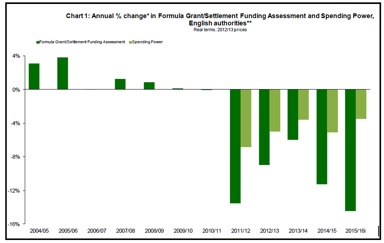
England is around halfway through significant reductions in public expenditure and heading for a ‘new normal’ at much lower levels, whilst seeing demographic and other pressures rise. Local Government is currently projected to see a £10.5bn funding drop between 2010
and 2020. Pressures on services are projected to rise by around £6bn, resulting in a £16.5bn total gap, under-resourcing services by around 30%. This average masks a wide variation – the LGA predicts that some of the poorest areas are projected only to be around 55% funded by 2020, whilst some shire districts will be 100% funded.

This shortfall is highly unlikely to be closed by efficiencies, voluntary redundancies, shared services, linking up with other parts of the public sector, outsourcing, or other changes on the supply side alone. New ways of thinking about the demand for public services are therefore needed. This challenge is political because it derives from what politicians and the media consider to be an acceptable level of taxation and the public service priorities of the national government; and it is cultural because it reflects the changing assumptions that people make about what it means to be a citizen, our overlapping roles as patients, taxpayers and citizens, and the ability of public service institutions to completely reconsider how they operate.

For ‘the gap’ is actually in the operation of society as a whole and what constitutes public service need. In looking to unlock resources to bridge the gap we should not just think of local government finance, but of the wide range of financial, logistical and human capital resources available in the public, private and civic spheres of society. That means that we cannot consider local government, or even public services in isolation, but we need to think more widely about the social contract and to look at what everyone’s contribution ought to be to the community. It’s a clear choice: personal tax to pay for services or time spent to build more resilient communities that need lower public service levels.

The big question for the future is therefore not simply about public services. In fact, there is a range of questions we need to answer about the deal between people and state. Who is really talking about it? How does it translate into personal, household, neighbourhood, city, regional or societal rights, responsibilities and realities? What are the respective (and respected) mandates of politicians at the national, regional and local level? How does all this relate to ideas of a good life in a good community in a good place? If it works at the individual level why should I engage at all? Isn’t that what politicians should be stewards of? Can we use the democratic system and the resources of the community to change the point at which publicly funded services intervene? Are we scared of having a view about what ‘good’ means, or of having a debate in a pluralist culture on what our underpinning societal values are?

Local government has a vital role to play in shaping this debate. For the responsibility for the development of a new discourse on the strengths, warp and weft of a community and its public service needs (and responsibilities) must surely be with its leaders and set within the political mandate. I consider that this mandate should logically extend to all public services and other activities that impinge on the locality.

Such a mandate also carries with it the responsibility to ensure that a community is in turn playing its part in wider society. A traditional view of the role of the politician is one of holding public services to account on behalf of the community. And yet the value of what people should be bringing through their own strengths and abilities, to benefit the common good, suggests that there is a need for politicians to engage in new ways and to develop a dialogue with the community to hold it to account too. That is the trickier dimension of the political mandate, one which is perhaps understated. It is a very tall order for the many politicians of goodwill who came into local politics to sort out bad planning decisions or because they were the only one prepared to be a communication link with the council.

These thoughts point me towards some new form of social settlement based upon ideas of community and prosperity, which is adaptive, emergent, co-produced, strength- or asset-based, and where local government is not a byword for the dead hand of bureaucracy. This cannot be a technocratic solution – it requires astute political and managerial leadership which helps to form truly meaningful communities that play their part in national life, and public services which support the development of social strengths rather than papering over the gap.

Know your local Councillor Photographs - St Albans - May 2008

Daniel Goodwin’s career has mainly been in local government, starting in libraries and cultural services and progressing through policy and corporate services. He is particularly interested in policy into practice issues, largely relating to local leadership and the politics of communities and place, and is a regular contributor to journals, conferences and seminars. Daniel was chief executive of St Albans City & District Council for 2006 to 2012 where he oversaw significant corporate improvements and budget reductions. He was Executive Director of Finance & Policy at the Local Government Association from January 2013 to March 2014, where he oversaw the LGA’s Rewiring Public Services campaign and the refinement of its public finance strategies. He is currently on sabbatical having decided to return to an operational leadership role and is pursuing personal projects, consultancy assignments and writing. He plans to return to a chief executive role in 2014.


Towards a people-centred language of demand management

Gavin Jones

I’m regularly asked to make presentations to groups of people (the last one being to 22 Deputy Lord Lieutenants!) to set out the issues and opportunities facing local government in the light of increasingly painful budget cuts. Of the pictorial slides I use to tell the story, the one guaranteed to have the greatest impact and make people hold their heads in their hands and mutter depressing words of despair is my ‘motivational’ slide that alarmingly shows demand outstripping resources at a frightening pace – often known as the ‘’ or ‘Map of Misery’.

I’ve often thought that the word demand in this context seems very impersonal and almost dehumanising, whereas what lies behind much of this demand are real people, many of whom are vulnerable and in need of our help. When I am in need (and it is possible my time will come) will I simply be an input to someone’s demand curve? An unhelpful driver of financial pressure? Or instead could I be seen and valued as a human being with capabilities but also in need of some help and support? This, I believe, is the danger of expressing difficult financial circumstances in impersonal corporate speak. Too often the emotionless language of costs and reducing budgets facilitates a culture that ignores or forgets that at the heart of this technically phrased conundrum are human beings – increasing numbers of whom find themselves at the heart of diminishing resources.

This use of de-personalised language, with the current issues often only framed as a financial problem, creates enormous and unnecessary organisational conflict which puts the bureaucrats (tasked with the corporate objective of cutting spend) at odds with the service professionals. One sees it as a financial problem, the other a social one. A dangerous knock-on effect of this is the internal friction that is caused with the resentment of other Council departments that see themselves as financial victims of ‘uncontrolled’ spend by the demand-led services.

I’m not for a minute suggesting that bureaucrats (financial or otherwise) are any less caring or empathetic towards the plight of vulnerable people, but a more intelligent use of language and a considered framing for tackling the issue of rising demand and reducing resources, is more likely to build a sense of organisational collaboration to tackle real issues of how public services can continue to help people to cope with vulnerability with more dignity and independence.

Doesn’t it feel better to talk about the need for organisational change in terms of how a smaller state can be more creative in helping people to age well and to retain their dignity and capability, rather than with a negative rhetoric of cuts and declining spend? I think the former is so much more engaging and invites us to think creatively and positively as opposed to the more defeatist approach of reducing spend and squashing demand.

At the end of the day, using a more people-centred language and approach to ‘managing demand’ is far more likely to result in the design of collaborative sustainability solution to support an ageing population that ‘how do we get the money out and fast?’!

jones

Gavin joined Swindon Borough Council (SBC) in 2004, having previously worked in a variety of private sector organisations and market sectors and has been Chief Executive since 2006. Gavin was listed as one of the top 50 New Radicals in the Sunday Observer’s national campaign for Britain’s most innovative leaders and voted one of the most influential leaders in Local Government. Gavin is a Board Member of the national think tank the New Local Government Network, (NLGN), a Trustee of the Prospect Hospice, a Board Director of Forward Swindon Ltd and a Board Director of SOLACE Enterprises,.

Gerrymandering in Northern Ireland local government? Surely not.

Chris Game

It seemed obvious from the outset that Gerry Adams’ arrest in connection with the 1972 murder of Jean McConville was a momentous event with potentially massive implications: long-term, short-term, north and south of the border. So I was slightly surprised the following morning to hear a Sinn Fein spokesperson, protesting about the timing of the arrest, highlight its impact specifically on the Northern Ireland local elections. Still, with the subject having been raised, I couldn’t help recalling the gerrymandering – or even Gerrymandering – controversies that were the chief reason why these elections on 22nd May for 11 new, larger and somewhat strengthened councils hadn’t taken place, as planned, in 2011.

The postponement was regrettable, given that the process of replacing the 1973 structure of 26 emasculated district councils had already been going on for years. The NI Executive had started a comprehensive review of NI public administration in 2002, shortly before its longest period of suspension. In 2005 Secretary of State Peter Hain announced a scheme for seven politically balanced ‘super-councils’ – three nationalist-controlled, three unionist, with Belfast and its politically mixed electorate swinging between the two – which did succeed in uniting most of the parties, except Sinn Fein, but unfortunately only in opposition to the whole idea.

In 2008 the restored Executive split the difference between Sinn Fein and the unionists’ generally preferred 15-council structure by opting for 11, with a significant transfer of powers from central to local government, and the additional virtue of recognizable, if convoluted, place names, instead of vapid compass points: Armagh, Banbridge & Craigavon rather than ‘South’, and so on. The first elections would take place in May 2011 – or should have done, had it not been for the arguments over boundaries.

game

Traditional NI political wisdom has it that, if you want more than about, say, seven areas with roughly equal populations, no matter what number you choose, slightly more than half will have a unionist majority, and virtually all the remainder a nationalist majority. Changing demography is challenging this axiom, as may well be demonstrated in the compositions of the new councils. But, if the last elections to the old councils in 2011 had been contested on the new district boundaries, the best guesstimates are that the DUP would have been the largest party on six councils – those in the north and east, with the exceptions of Belfast and Newry, Mourne & Down – and Sinn Fein the largest party on the other five.

In one sense, these things have mattered less than might be supposed, partly because of councils’ limited powers, but also because a majority of them have long operated under similar responsibility- or power-sharing principles as the NI Assembly in, for example, their proportional allocation and rotation of committee places and chairmanships. No amount of responsibility-sharing, though, was able in 2012-13 to defuse the incendiary issue of flying the Union flag on town halls. Nor, as the details of the new districts emerged in 2008-09, did it prevent heated disputes about the proposed boundaries – particularly in, though certainly not confined to, Belfast, with its sheer size, centrality, and changing religious and political make-up.

Over the years the city’s electorate has shrunk and, like NI as a whole, has become steadily more nationalist. As a result, the once strongly Protestant council has become politically more balanced – the current make-up being 24 nationalists (Sinn Fein + SDLP), 21 unionists (Democratic, Ulster and Progressive), and 6 Alliance – although the unreformed ward structure means that it took roughly 1,700 votes to elect each nationalist member, against 1,500 for each unionist.

Almost any proposed configuration of larger reformed councils, therefore, would have been likely to produce a more nationalist Belfast.  Predictably enough, though, when it appeared actually to do, so too did the headline accusations of gerrymandering, particularly over the extension of the city’s southern boundaries.

game

In fairness to the relevant sub-editors, at least they were using the provocative term in more or less its correct sense – manipulating electoral boundaries for partisan advantage – even though, as the map shows, no new improbably shaped districts, resembling salamanders or any other tetrapods, were involved. In fact, the map is possibly slightly misleading, for the main added areas – parts of Lisburn in the west and of Castlereagh in the east – are mostly quite densely populated and represent an increased population of over 50,000 or nearly one-fifth, bringing the city’s total to 334,000. There was undoubtedly an argument, on the basis of the existing built-up area, for pushing the boundaries significantly further in both directions and possibly also in the north – but not one with anything like enough political traction to gain it serious consideration.

With the religious affiliation of all the city’s wards and electoral areas being available down to decimal places – from 94%+ Protestant along the Shankhill and Crumlin Roads to 97%+ Catholic in the Upper and Lower Falls, perhaps the easiest way of describing the significance of the city’s actual expansion is in the same terms. The three wards that revert from Lisburn to Belfast – Poleglass, Twinbrook and Dunmurry – are between 80 and 95% Catholic and are also larger than the two transferred wards from Castlereagh – Gilnahirk and Tullycarnet – which are 81 to 86% Protestant. These two wards are situated due south of the Stormont Parliament (see the red star on the second map) and are part of the Belfast East Parliamentary constituency – as, a little further east along Upper Newtownards Road, are Dundonald and the Ballybeen housing estate. The 8,500 Ballybeen residents, however, who constitute three wards on their own, all overwhelmingly Protestant, are not being transferred.

The gerrymandering accusations, though, that contributed most to the three-year postponement of the introduction of the new councils were made across the other side of the city, in respect of the village of Dunmurry and the multi-hatted Edwin Poots: DUP Member of the NI Assembly, Minister (in 2009) for the Environment and responsible therefore for local government, and a longstanding member of Lisburn City Council.

In a nutshell, Councillor Poots claimed the administration of which Minister Poots was a member was ‘Gerrymandering’ to the advantage of Sinn Fein in Belfast. He proposed that said Minister Poots use his authority to make what Councillor Poots claimed would be a “modest adjustment” to the recommendations of the independent Local Government Boundary Commissioner and allow Dunmurry residents to remain within what would become a comfortably unionist Lisburn & Castlereagh – a proposal that, not surprisingly, some commentators also saw as gerrymandering.

Dunmurry was not the only boundary dispute, and boundaries were not the only matters of contention. But it was key sticking point. For, until Poots and his unionist colleagues eventually backed down, there could be no final settlement of district boundaries, and no progression to the determination of ward boundaries or, unique to NI because of the requirements of proportional representation, to the grouping of wards into District Electoral Areas. In the end it seemed to come as no great surprise when in June 2010 it was announced that the 2011 local elections would be to the existing authorities – which is perhaps itself unsurprising in a state whose very existence, many would say, is a product of gerrymandering.

Chris Game - pic


Chris Game is a Visiting Lecturer at INLOGOV interested in the politics of local government; local elections, electoral reform and other electoral behaviour; party politics; political leadership and management; member-officer relations; central-local relations; use of consumer and opinion research in local government; the modernisation agenda and the implementation of executive local government.