Why and how do municipalities merge? A view from the cognitive perspective

[Photo: https://www.linkedin.com/pulse/mental-virus-flipside-covid-pandemic-dr-abha-bhartia/%5D

Dr. Veronika Vakulenko

Among all public sector reforms initiatives, those appearing on the municipal level are the most tangible. This is because in modern democracies citizens can observe and (if willing to) trace changes in, for example, city planning, local infrastructure, education and many other spheres. Let’s be honest, everyone likes to visit a clean park, modern library, drive perfect roads or celebrate an opening of a new school. Meaning that local governments need to use financial recourses on creating a comfortable place for all to live in. However, it becomes rather common that local governments are not able to balance their budgets, due to a higher per capita spending, lower public service provision, or limited infrastructural capacity, which is the case particularly for smaller rural areas.

Seeking to improve local financial condition, many countries worldwide launched local government reforms, which still remain on the top of agenda among academia and practitioners. Pursuing mainly the objective to enhance local financial efficiency and quality of local public services, the reforms can vary from contractual inter-municipal cooperation to mergers or amalgamations. Mergers are the most drastic reforms as they require alterations of territorial boundaries, changes in administrative responsibilities and routines, and adjustment of financial management practices, all of which affects significantly the lives of citizens.

Several European countries, e.g., Finland, Switzerland, Ukraine, selected to implement voluntary mergers, allowing local governments to celebrate the freedom in deciding whether to initiate the territorial reform. While some municipalities recognized merger’s benefits (i.e., improvement local governments’ economic condition and quality of local public service delivery), others resisted merger. In this situation, it becomes interesting to approach municipal amalgamations from a dynamic perspective to understand behaviour and interactions between different actors, which can result in diverging reform outcomes.

In our recent study published in open access at Local Government Studies, we use an interdisciplinary concept of cognitive style, to explore the psychological aspect of mergers. By mobilizing cognitive literature, we could take a closer look at local actors’ behaviour, to argue that a merger is not a simple ‘marriage of convenience’ of local actors to increase their economic efficiency. Rather, it is a complex cognitive process, which requires local actors’ mental work in taking decisions and creating (or not) a new merged municipality. Thus, a final decision “to merge or not to merge” depends not only on financial benefits, but also on the way local actors perceive and process information about financial incentives and how they operationalize their decisions.

In a story of two neighbouring local governments in Ukraine studied during 2015-2019, we approached two local political leaders, who were drivers of changes on the local level. By studying very carefully their behaviour and actions, we found that their initial perceptions of merging were completely the opposite. While the first one was viewing this as an opportunity and was able to convincingly explain the need and future benefits of this change, as well as introducing new practices to engage local citizens. Despite several other local actors were supporting this initiative, the second leader was acting in a discouraging way and always emphasized risks for their community, which in the end resulted in collective inaction.  To summarize, new interdisciplinary approaches can be used to better understand the success stories or failures of municipal mergers. Cognitive theory in public administration has a significant potential in this field as well as implications for practice. As our case showed, better mapping the sceptics and addressing perceptions of local leaders before initiating voluntary mergers could facilitate better results from territorial reforms.

Dr. Veronika Vakulenko is an Associate Professor at Nord University Business School, Norway. Their research interests include interdisciplinary public sector accounting research; budgeting and financial management in local governments; national and supra-national public sector audit; reforms particularly in the context of developing countries.

The Winding Stair: half a century of local government

Sir Rodney Brooke

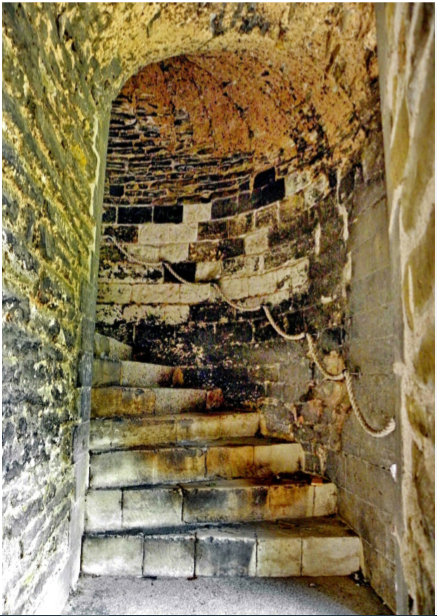
Image: https://talesoftimesforgotten.com/2019/12/18/no-medieval-staircases-werent-designed-to-give-right-handed-defenders-an-advantage/

My memoir, The Winding Stair, chronicles over half a century of my service in local government, a period which coincided with the decline in the importance and independence of local government as well as the biggest social changes since the industrial revolution. As a local authority chief executive, I experienced these changes at first hand.

Post-war local government attempted to tackle the problems of deprivation. Increasingly the emphasis shifted to the problems of affluence. The three post-war decades saw rising living standards, falling inequality, greater freedom and expanding welfare provision. The following decades saw the opposite. The belief that problems would be solved by spending more money evaporated.

Public expectations rose with the decline of faith in post-war remedies, such as urban motorways, multi-storey flats and town centre redevelopments. Communal services were privatised. Ministers introduced innovations before any assessment could be made about the effectiveness of their precursors. Rather than tackle a problem, governments changed the structure of the agency dealing with it. Responsibilities of the state were transferred to the private sector. An underclass of casual workers was created. My local government career placed me in the middle of these changes and my memoir chronicles them.

In my youth local authority chief executives were great men. Among them knighthoods were ten-a-penny. [Not one serving local government officer now has a knighthood]. The London train would be held for the county chief executives, who traced their authority to the Courts of Quarter Sessions for which they were responsible until 1972. They would expect the Permanent Secretary of the Ministry to call on them when they went to London.

The Councils they ran were fundamental in the life of their residents. During my service I was central to some of the most newsworthy issues of the day. I

  • prosecuted for riot;
  • was the last person ever to be responsible for reading the Riot Act;
  • was responsible for the construction of the last municipal reservoir before water supply was stripped from local government in 1974;
  • warned Bradford City football club of the danger before 56 fans burnt to death in front of the TV cameras;
  • enabled the inquest into the notorious death of Helen Smith in Jeddah;
  • challenged the police belief in Wearside Jack’s claim to be the Yorkshire Ripper;
  • refused Willie Whitelaw’s secret request to sack the West Yorkshire Chief Constable over his failure to catch the Yorkshire Ripper;
  • as emergency controller for Yorkshire in the event of nuclear war, was to shelter in an underground bunker in the Pennines before emerging when Geiger counters showed that it was safe;
  • discovered that three Westminster cemeteries had been sold for 15p;
  • found the press camped on the lawn of our house when I resigned before Dame Shirley Porter began her Homes for Votes gerrymandering – which resulted in her being surcharged £42.5m.
  • acquired a knighthood, a CBE and decorations from France, Germany and three other countries.

Sir Rodney Brooke worked for Morley Council (1955-62); Rochdale Council (1962-63); Stockport Council 1963-73; West Yorkshire County Council 1973-1984 (Chief Executive 1980-84); Chief Executive of Westminster City Council (1984-89); Secretary of the London Boroughs’ Association 1984-90; and Secretary of the Association of Metropolitan Authorities (1990-1997). He remains involved with local government on a non-executive basis.

The Winding Stair is available online or from booksellers at £13.99. ISBN 9781838489977

The role of scrutiny in navigating our new health and care economy

Picture credit: https://www.gponline.com/deadline-extended-gp-access-cover-england-brought-forward/article/1456385

Cllr Ketan Sheth

Mortality rates during the pandemic laid bare the health inequalities that exist across the country. Behind these figures lie human stories and grieving families that should remind us of the urgency and importance of understanding and addressing these inequalities.

In Brent, an ethnically diverse North West London borough, we recently set out to do just that.

Systems thinking

We know that Brent residents, who are from ethnic minority communities, disabled, or who are in poverty, experience significant health inequalities; but what does that look like in practice? How are our healthcare systems contributing to and/or compounding inequality? And what can be done to resolve this challenge?

Usually, GPs are the first point of call when someone is not feeling quite right. They ought to help everyone to access timely and safe healthcare. Therefore, reviewing access to GP services is critical and we decided to focus a dedicated scrutiny task group for eight months to report.

By giving ourselves time to understand this complex area in detail, we developed a deep comprehension of the landscape we were going to scrutinise. Patient voices are at the heart of our work, and we worked closely with Brent Healthwatch to ensure those from communities that have been under-represented in these conversations in the past, as well as those experiencing the worst health outcomes, were able to articulate and share their experiences.

Also, the task group held a number of evidence sessions over the course of six months, which were attended by stakeholders across Brent’s health economy. This included council officers, local commissioners and service providers.

All of this enabled the team to make a number of practical recommendations to  Brent Council and NHS partners.

Our work focused on three pivotal areas: Demand, Access and Barriers

With the dynamics of our healthcare and well-being landscape changing locally as well as nationally, it is more vital than ever to ensure all our residents have equality of access and consumption of healthcare services.

We found repeatedly that some groups of patients experience significant, and unnecessary, barriers, specifically:

• Patients of low-income

• Patients with a disability

• Older patients

• Patients whose first language is not English

• Children and young people

• Refugees and asylum seekers

• Patients who cannot access digital technology

Knowing this, GP services must seek to reduce and resolve the barriers experienced by patients, with a focus on deprivation, ethnicity, disability, and other protected characteristics as described in the Equalities Act 2010, if we are to execute our duties under the Act.

We recognise that rising demand, changing patient expectations and workforce retention issues continue to place pressures on primary care. Therefore, it is essential that the NHS continues to plan for this and uses the expertise of healthcare professionals across the system.

The digital transformation to healthcare, brought about by the pandemic, although helpful to some, introduced additional barriers for other people and communities.

In acknowledging the varying levels of ease in which patients access GP service, we strongly believe an access and treatment standard ought to be developed. This will ensure that Brent residents experience consistent and high levels of service: whether their requests are routine or urgent, focused on physical or mental wellness; or made via the telephone, online or in-person.

Our work has been conducted in the spirit of cooperation and partnership, and particularly, we look forward to continuing our dialogue and work with our partners across Brent’s health economy to evolve our shared vision of GP access across Brent.

Cllr Ketan Sheth is Chair of Brent Council’s Community and Wellbeing Scrutiny Committee

Can drama “Help” social care?

Jason Lowther

Photo credit: https://www.youtube.com/watch?v=5Z2ufAl2lko

Fresh from winning the Grand Jury Prize at the Banff Rockie Awards on Monday, Channel Four’s drama Help was yesterday nominated for Best Drama in the Edinburgh TV awards, with its lead actor Jodie Cromer also nominated for Best Actor.  The drama was one of the most watched on the channel, bringing to millions of viewers the plight of care homes and their residents during the pandemic.  Whilst the Help storyline is fictional, it is based on hard and devastating facts.

In my view, Help could be criticised for its farfetched ending and sometimes unsympathetic rendering of the care home manager, however its characterisation of care home staff and residents is both caring and revealing.  Clearly emotionally affected researching the programme, writer Jack Thorn said: “hearing the stories of those at the frontline, having people break down in tears on zoom in front of us has been incredibly moving and galling”.   

My two favourite parts of the programme (no spoilers) are the endless recorded message of a hopelessly over-run “NHS 111” call centre in the background for several minutes, and Jodie Cromer’s wrenching speech to camera (1:34 on the video) demanding “…underlying health conditions, eh?  When did all lives stop being worth the same?”  The programme ends highlighting some stunning research findings: 40% of Covid deaths in the early pandemic (from March to June 2020) were in care homes; the average wage of a care home worker is £8.50 per hour; whilst government provided 80% of PPE needs for the NHS, it only met 10% of adult social care’s needs. 

This last claim is based on the National Audit Office analysis published in November 2020, which found that the adult social care sector received approximately 331 million items of PPE from central government between March and July (10% of their estimated need) whereas NHS trusts received 1,900 million items sent to NHS trusts (80% of estimated need).  Whilst both fell significantly short of what was required, there is an apparent imbalance here.  Data collected by the Care Quality Commission (CQC) showed that, throughout April and May 2020, more than a fifth of domiciliary care providers had no more than a week’s supply of PPE. 

This situation was well known to the Secretary of State, not least because the LGA and the Association of Directors of Adult Social Services wrote stating “we continue to receive daily reports from colleagues that essential supplies are not getting through to the social care front-line. Furthermore, national reporting that equipment has been delivered to providers on the CQC-registered list does not tally with colleagues’ experience on the ground”.  Nevertheless, in a scene included in Help, during a Downing Street press conference on 15 May, 2020, Mr Hancock said: “right from the start, it’s been clear that this horrible virus affects older people most. So right from the start, we’ve tried to throw a protective ring around our care homes”, repeating in the House of Commons on 18 May that “we absolutely did throw a protective ring around social care”. 

Understanding the human costs of these central government failures is difficult, with the effects on staff, residents and their family impossible to measure objectively.  Help does a good job in illustrating some of the pressures on care staff and the pain of relatives unable to visit dying residents, made all the more poignant now that we know some of the behaviour during the pandemic of senior central government actors such as Hancock’s affair and Johnson’s multiple parties forensically examined in Sue Gray’s recent report. 

Perhaps the most basic measure is in human lives.  Last year researchers used the national death registry of all adult (aged ≥18 years) deaths in England and Wales between January 1, 2014, and June 30, 2020 to compare daily deaths during the COVID-19 pandemic against the expected daily deaths.  They estimated that during the early pandemic, about 26,000 excess deaths (almost half of the total excess deaths) occurred in care homes and hospices.  This is likely to be an underestimate since early in the pandemic, testing of suspected cases was available only in the hospital, whereas routine testing of staff and residents in care homes was not implemented until May 2020.

The latest ONS statistics, issued in February 2022, suggest that since the beginning of the coronavirus (COVID-19) pandemic, there have been over 274,000 deaths of care home residents (wherever the death occurred) registered in England and Wales; of these, 45,632 involved COVID-19 accounting for 17% of all deaths of care home residents. 

Intriguingly, The Lancet reported in March that “COVID-19 has had a disproportionate impact on the mortality of care home residents in England compared to older residents of private homes, but only in the first wave. This may be explained by a degree of acquired immunity, improved protective measures or changes in the underlying frailty of the populations.” Meanwhile, last month the Care Quality Commission finally published data on deaths in each care home during the first year of the pandemic (April 2020 to March 2021).

Whatever the precise figures, it’s clear that adult social care residents and staff were badly let down by central government, far from the Secretary of State’s “protective ring” narrative. This despite the best efforts of care managers, local commissioners and councils discussed in Luke Bradbury’s blog here last week.  Help does a fantastic job of showing the impact of these critical central failures – and recognising the incredible work care staff did in such difficult circumstances with so little financial reward.

‘The Great Parliamentary Resistance’ – some of the outcomes

Chris Game

Back in early February, I wrote a blog dissecting one of two big and controversial Government Bills involved in what I slightly hyperbolically termed the “historic Monday evening of the Great Parliamentary Resistance” – Monday, 17th January, when the Elections Bill received its Third Commons Reading, while across the way the Lords were savaging the ‘flagship’ Police, Crime, Sentencing and Courts Bill by defeating the Government a Parliamentary record 14 times in the same sitting[1].

Both Bills, in being big and controversial, were fiercely contested throughout their Parliamentary progress and significantly amended – to the extent that my initial idea of highlighting and summarising such amendments in two linked blogs in, say, February and March, proved ludicrously unrealisable. Not least because neither received their Royal Assent until 28th April.

On the ball, as ever, Jason Lowther blogged immediately about the particular aspects of the now Elections Act with which he had been particularly concerned – the Government’s ‘solution’ to the undemonstrated ‘problem’ of ‘personation’, of having in future to show counter-signed photo ID at UK Parliamentary and English local and PCC elections.

This single blog, therefore, will attempt two ludicrously daunting tasks: (a) to at least mention some of the additional, less publicised, measures in or out of the Elections Act, and (b) similarly, but even more summarily, for the considerably more complex Police, Crime etc. Act.

There were two key and particularly controversial Elections Act proposals, that went down to the proverbial wire at the so-called Ping pong stage of the Parliamentary process (pp.79ff. of the H/Commons Library briefing noted by Jason).

First, obviously, the several proposed age-discriminatory and non-photographic forms of ID that had been in and out of the Bill throughout – mentioned again here frankly as a pretext for reminding anyone who needs it of just how long and how implacably opposed the PM himself has been to ID cards of any description, and accordingly what we can presumably look out for come Election Day.

election1

The other long-running dispute concerned the Act’s provision for the Government to set a “strategy and policy statement” for the constitutionally independent Electoral Commission.  Some suspicious Parliamentarians suggested this might go beyond scrutiny and accountability, and “potentially into providing guidance about how [the Commission carries out its] functions on a day-to-day basis”.

They wanted it “not bound by” the Government’s “statement”, but apparently they were guilty of a “mischaracterisation” of the Government’s intentions, and the relevant amendments were defeated.

The Government’s listing of the Act’s additional benefits appears, of course, on the relevant Gov.UK page – summarised under the comfort blanket of the several “greater protections” it provides for voters, and also for candidates and campaigners.

Protection from fraud through photo ID, of course, but also from intimidation at the ballot box – the latter by fines, up to 5-year bans, and even imprisonment for offenders convicted of attempting an extended definition of ‘undue influence’.

Voters with disabilities must in future be provided with specialist equipment, and may be accompanied by an adult.  And the 15-year limit on the voting rights of British ex-pats, retired or working abroad, will be removed. An estimated 3 million potential voters are currently affected by the limit, and – read into this what you will – it fulfils a pledge in three recent Conservative manifestos.

Finally – although it was actually the first bit of the legislation I blogged about, back last April – the Act will change the voting system for both Mayoral and Police & Crime Commissioner elections from the ‘transferable’/choice-extending Supplementary Vote to First Past The Post – on the basis of “no other plausible argument” than it might fractionally reduce the numbers of rejected ballots”.

I have views – as doubtless do Mayors Tracy Brabin (Lab – West Yorkshire), Ben Houchen (Cons – Tees Valley) and Andy Burnham (Lab – Greater Manchester), all recently elected after transfers – but not here.

And so to the Police, Crime, Sentencing and Courts Act – a real pantechnicon of a Bill/Act, highly technical in places, with even the ‘short’ and definitely the ‘long’ (150-word) titles signalling how impossible it is seriously to summarise.

It makes major changes across the criminal justice system, significantly extending police powers and the treatment of suspected, arrested, charged and convicted offenders. Again, there is a substantial (100+ pages) Commons Library summary of the whole legislative process; also a detailed House of Lords account – presented, slightly disconcertingly, in reverse chronological order – covering the fate of at least some of the Lords’ 17th Jan. amendments.

I was never keen on listing Wiki on student reading lists, but in this case I might well make an exception.  For this blog, though, I have borrowed (sounds so much better than plagiarised!) the content of the next few paragraphs from the BBC’s summary –mainly because it focuses, as many of those Lords motions did, on the implications for and threats to the right to protest.

Until now, it has generally been the police’s responsibility, if they want to restrict a protest, to show it may result in “serious public disorder, property damage, or disruption to the life of the community” (emphasis added). They can also change/restrict the routes of marches. For major events, like the COP26 protests, details are typically agreed with the organisers weeks in advance.

The new Act enables particular measures to be designed for ‘static protests’, like those of Extinction Rebellion, whose modus operandi is to force governmental action on the “climate and ecological emergency” through non-violent civil disobedience, the occupation of roads and bridges, etc.  Start and finish times and noise limits will now be set, even for protests involving just one person, with fines up to £2,500.

Edward Colston, the C18th merchant/slave trader whose statue was pushed into Bristol docks gets his own clause, with damage to memorials earning up to 10 years’ imprisonment.

Shadow Home Secretary Yvette Cooper has described the “rushed” legislation as creating “incredibly widely drawn” powers …”, allowing the police to stop and search anyone in the vicinity of a protest, including passers-by, people on the way to work and peaceful protesters.”

The Government/Home Office/Police viewpoint is set out in a Home Office Policy Paper.

[1] It appeared on 4th February, at the start of what proved a particularly active blogging month, with the consequence that, to access it, you may need to key ‘Older Posts’ at the end of the February 2022 selection.

Photo

Chris Game is an INLOGOV Associate, and Visiting Professor at Kwansei Gakuin University, Osaka, Japan.  He is joint-author (with Professor David Wilson) of the successive editions of Local Government in the United Kingdom, and a regular columnist for The Birmingham Post.

Developing our team

INLOGOV is entering an exciting phase of development.

Building on our rich history of research addressing the institutional and political life of local government and public management, our research now reaches beyond these traditional structures and actors to address governance, democracy, leadership, participation, policy-making and service delivery at and across multiple scales and issues. This month’s REF results showed over 80% of our research is world-leading or internationally excellent.

We have simplified and enhanced our teaching programmes, delivering an exciting range of postgraduate degree programmes, with a thriving doctoral research community.  Our postgraduate programmes include a full-time on-campus Public Management MSc, an on-line Master of Public Administration, a blended Executive Apprenticeship in Public Leadership and Management, MOOCs and micro-credentials, and postgraduate research degrees.

With over 50 years of experience working with local and (inter)national governments and the public sector, INLOGOV creates new thinking with public practitioners and is the leading UK centre for the study of public management, policy and governance. 

INLOGOV is part of the School of Government, one of the largest in the United Kingdom – home to more than 80 full-time academic staff, more than 1,200 undergraduate and taught postgraduate students, and more than 70 doctoral researchers. The School is intellectually vibrant with an excellent record in both research and teaching.

We are therefore looking for new colleagues who can undertake pioneering research, develop exciting and intellectually stimulating teaching, and develop significant impact in local government. In return, INLOGOV provides a supportive and collegial environment, enabling colleagues to engage internationally, strengthen networks and deliver excellent teaching, research and impact. We also have a lovely campus in one of the youngest, most diverse and exciting cities in the country.

If you would like to join us, please take a look at our advertisements (links below). We will be taking a first look at applications at the end of June, so please apply early. We welcome informal discussions and visits, our contact details are in the adverts below.

Links to adverts for: Chair and Associate Professor