Learning from the 2026 elections

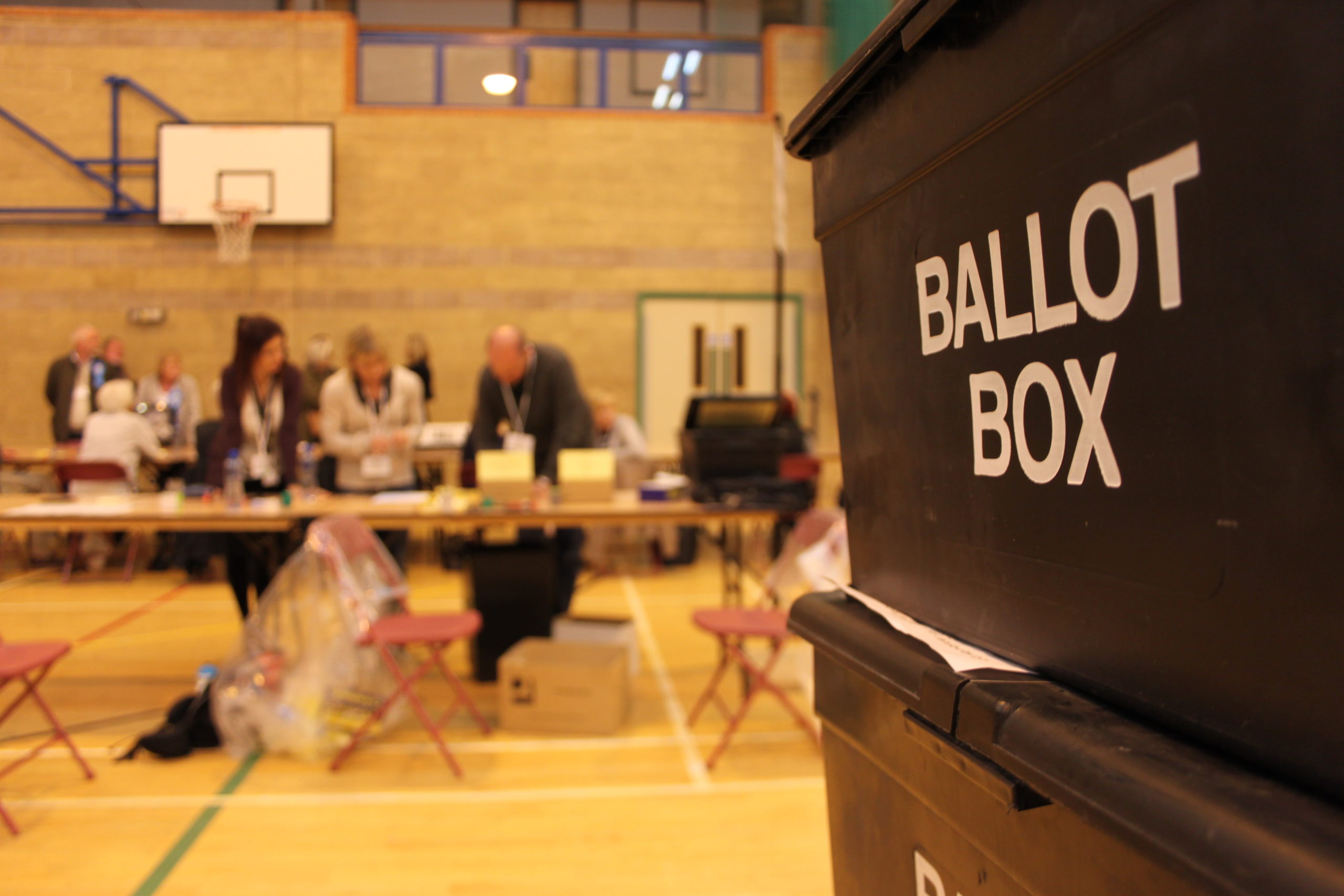
Photo credit: https://www.southoxon.gov.uk/south-oxfordshire-district-council/local-democracy-and-elections/elections-and-voting/first-time-voters-guide/what-happens-at-an-election-count/

Jason Lowther

The Electoral Commission’s new report on the 2026 English local government and mayoral elections provides largely positive picture of local democracy. Turnout was the highest seen at comparable local elections for a decade, public confidence in the electoral process remained strong, and the overwhelming majority of voters reported satisfaction with both registration and voting. At the same time, the report highlights several challenges that local authorities, elected members and policymakers will need to address if they are to further strengthen local democracy.

Perhaps the most striking finding is the increase in voter turnout. Participation reached 41.2% in metropolitan, London borough, unitary and district council elections and 45.2% in county council elections. The latter represents the highest county council turnout for three decades outside elections held alongside a general election or referendum. These figures suggest that local government increasingly matters to citizens and that many voters remain willing to engage when they feel local issues have real consequences for their communities.

The report also points to generally high levels of public confidence in election administration. Around 94% of voters were satisfied with the voting process.  While 73% of eligible voters expressed confidence that the elections were well run, 9% were not satisfied – reasons for this include the perceived lack of useful information about candidates and/or parties, the voting system being seen as unfair, or the belief that the process of voting is not secure. Local authorities and electoral administrators should take credit for delivering elections effectively despite continuing operational pressures and resource constraints.

However, the report identifies several areas where citizen engagement could be improved. One concerns voter registration. Although most people were satisfied with the registration process, younger voters were less positive, and a significant proportion of dissatisfied respondents argued that registration should be automatic. The Electoral Commission reiterates its support for a consistent automated voter registration system and urges governments across the UK to coordinate reforms.

Accessibility is another continuing concern. Despite very significant efforts by returning officers to provide equipment and support in polling stations, disabled voters still face barriers to participation. Awareness of available assistance remains relatively low, even among people who could benefit from it. This finding highlights the importance of ongoing public communication and inclusive service design.

The report also raises important questions about information quality and democratic engagement. While awareness of the elections was high, many voters remained concerned about misinformation. More than half of respondents reported seeing misinformation during the campaign and around one in ten reported encountering deepfake material. Although the Commission’s pilot work found no evidence that political deepfakes were widespread, the findings underline growing risks associated with digital campaigning.

A major challenge concerns the experience of candidates. Abuse, intimidation and harassment, especially online, continue to affect many people standing for election. Candidates who were female, from an ethnic minority background, had a disability or were standing for Reform UK were more likely to experience abuse and intimidation.  The report warns that these experiences are influencing how some individuals campaign, for example avoiding canvassing alone, and one third of respondents considered not standing for election because of harassment, intimidation or concerns about future abuse.

The report also highlights a wider issue for local democracy: the availability of reliable information about candidates and parties. Although large majorities found it easy to obtain information about voter ID requirements and voting methods, fewer found it easy to access information about candidates. This suggests that there remains a gap between procedural information and substantive information about political choices.

Finally, the report notes the pressures facing electoral administrators. Recruitment challenges, supplier issues and uncertainty surrounding potential electoral reforms all created difficulties for those delivering the elections. While these problems were largely managed successfully, councils and government need to address the long-term capacity and resilience of local electoral services. Effective citizen engagement ultimately depends on electoral systems that remain adequately resourced and capable of adapting to future reforms.

Overall, the 2026 elections offer grounds for cautious optimism. Higher turnout, strong voter satisfaction and confidence in election administration suggest that local democracy remains resilient. Yet the report also shows that participation cannot be taken for granted. Improving accessibility, modernising voter registration, combating misinformation and protecting candidates from abuse will all be central to sustaining citizen engagement and local democracy.

When accountability fails to bite: governance, democracy and the 2026 Tower Hamlets elections

Dr Gulay Icoz, Visiting Research Fellow, Middlesex University London

In theory, the 2026 Tower Hamlets local elections should have been a test of democratic accountability in action. The borough entered election year under active statutory intervention. A Best Value Inspection published in November 2024 had documented serious governance failings under Mayor Lutfur Rahman’s Aspire administration: weak internal controls, a culture of concentrated executive authority, poor transparency, and slow responses to statutory recommendations. A further written ministerial statement in January 2026 confirmed ongoing failures and deteriorating financial governance. In March 2026 — just two months before polling day — the Secretary of State escalated the intervention, granting ministerial envoys enhanced powers to step in directly if the council continued to breach its Best Value Duty.

Then voters went to the polls and Aspire won 33 of 45 council seats. Lutfur Rahman was re-elected as Executive Mayor for a third time. Labour was reduced to five seats — its lowest total in the borough’s history.

I stood as the Labour candidate for Bethnal Green West in those elections. What I observed — during the campaign and in the results — reveals a deeper tension between statutory accountability and community-level democratic legitimacy: one with implications that reach well beyond Tower Hamlets.

The structural picture

The results reveal a distortion that deserves wider attention. Aspire secured 73 per cent of council seats with just over 32 per cent of the vote. Labour and the Green Party each received just under 23 per cent of the vote, yet each won only 11 per cent of seats. In ward after ward, the combined Labour and Green vote exceeded Aspire’s total — yet the block voting system used in multi-member wards — where each voter casts as many votes as there are seats and the top candidates win — converted vote fragmentation into a decisive seat bonus for the incumbent. This is sometimes called plurality block voting, and it rewards coordinated slate-voting, which incumbent parties with strong voter loyalty are structurally better placed to exploit.

The ward-level picture sharpens this further. In Bethnal Green West, Labour entered polling day with an estimated core vote of around 540; Aspire’s coordinated bloc was already three times that size, with split votes running into the thousands. Green candidates who had run no sustained local campaign outpolled every Labour candidate standing — a pattern repeated across wards throughout the borough. The block voting system had no mechanism to reward breadth of engagement or effort: it simply rewarded the most organised and unified voting bloc.

It is worth distinguishing block voting in multi-member wards from single-member first-past-the-post. The coordination premium is structurally higher: a cohesive 32 per cent bloc can sweep three seats simultaneously in a way that would not occur in a series of individual contests. The question this blog is asking is not primarily about proportionality per se, but whether the electoral system can transmit accountability signals when a council is under active statutory intervention for documented governance failure.

This points to a question the electoral systems literature and the local democracy literature have rarely addressed together: when opposition parties are structurally disadvantaged by electoral mechanics, what additional tools does a democratic accountability framework need?

The accountability paradox

A long line of research — from Fiorina’s retrospective voting model through Powell and Whitten’s clarity-of-responsibility framework — establishes that electoral punishment for governance failure is neither automatic nor uniform. Recent scholarship sharpens this further: voters weigh integrity against perceived competence and community delivery (Breitenstein and Hernández, 2024); punishment weakens when opposition is fragmented and alternation unclear (Otjes and Stiers, 2022); and elections are in any case a blunt accountability instrument compared to courts, oversight bodies, and civic challenge (Papadopoulos, 2023). The established literature identifies three conditions that must be met for punishment to occur: voters must have clear information about failure; they must be able to attribute responsibility to the correct actor; and accountability must not be crowded out by competing loyalties or trade-offs. Tower Hamlets 2026 illustrates the failure of all three conditions simultaneously.

Yet the Tower Hamlets case also points to a fourth condition, largely absent from the existing retrospective voting literature: the accountability mechanism itself must be seen as legitimate by the communities it is meant to protect. This is the accountability paradox at the heart of the 2026 result — and it is a contribution that the standard retrospective voting framework is not equipped to capture.

For intervention to function as a democratic corrective, it must be perceived by the electorate — and particularly by the communities most affected by governance failure — as rational, impartial, and operating in their interests. Where that perception fails, intervention becomes politically legible as external imposition, and voting for the incumbent becomes an act of community solidarity rather than an endorsement of governance failure. This dynamic is not accidental: it is actively constructed through political framing, and incumbents with strong identity-based bonds with their electorate are structurally well-placed to construct it.

Recent research on statutory intervention in English local government proposes a five-stage model — crisis revelation, delegitimisation, imposed reforms, capacity building, and restoration — and argues that interventions must be carefully designed to appear rational rather than political if they are to maintain rather than undermine faith in local democracy (Lowther, Joyce and Whiteman, 2025). That model’s second stage — delegitimisation — describes central government’s work to undermine the legitimacy of the council being intervened in. What the Tower Hamlets 2026 election reveals is that delegitimisation can also operate in the opposite direction: the incumbent successfully turned the intervention itself into the object of delegitimisation in the eyes of the electorate, making the accountability mechanism the thing that lacked legitimacy rather than the council it was designed to hold to account.

Conversations on the doorstep revealed the depth of this reframing. Many Aspire supporters had not engaged with the contents of the Best Value report because they had already concluded the report itself was politically motivated — a tool of mainstream parties who disapproved of what Aspire represented rather than a genuine accountability mechanism. More striking still, when specific governance failures were raised — including nepotism and unqualified appointments — some voters had internalised a counter-narrative in which such practices represented community protection rather than misconduct.

It would be reductive to dismiss these perceptions as simply the product of misinformation. Communities with long experience of political marginalisation may have genuine historical grounds for scepticism toward central government intervention, and those experiences shape how accountability claims are received. What the Tower Hamlets case illustrates is the extent to which this pre-existing disposition was mobilised and amplified through deliberate political communication — producing not political apathy but the successful reconstruction of what accountability itself means.

This is not unique to Tower Hamlets. It is a dynamic that researchers of democratic resilience and local governance are increasingly attentive to, and it raises important questions about how accountability mechanisms are designed, communicated, and embedded — questions that are as much about institutional culture and civic trust as they are about statutory frameworks.

Tower Hamlets in context

Tower Hamlets did not stand alone in 2026. The elections produced historic Green gains across inner London — in Hackney, Waltham Forest, Lewisham and Southwark — and a significant realignment of the progressive vote away from Labour. What makes Tower Hamlets distinctive is that this regional realignment intersected with the specific dynamics of the Aspire incumbency, the governance intervention, and the structural incentives of block voting, producing an outcome more disproportionate than anywhere else in the capital.

Understanding whether Tower Hamlets represents an outlier or an advance indicator requires systematic comparison. Several English councils have been subject to statutory intervention in recent years — including Birmingham, Croydon, Slough, Sandwell, and Thurrock — yet the relationship between intervention, governance accountability, and subsequent electoral outcomes has received little comparative attention. Whether the accountability paradox identified here is specific to Tower Hamlets or reflects a broader pattern in how statutory intervention interacts with local political culture is a question that future comparative research must address.

The stakes

What the Tower Hamlets elections confirm, above all, is that democratic resilience is not reducible to electoral outcomes. The borough’s communities — residents navigating overcrowded housing, fractured services, and the cumulative pressures of one of England’s most deprived urban environments — continue to engage, organise, and hold their representatives to account through multiple channels. That engagement, not any single election result, is the foundation on which accountable local governance must ultimately be rebuilt.

What forms of accountability can work when statutory intervention loses legitimacy in the eyes of the very communities it is meant to protect?

Dr Gulay Icoz is a Visiting Research Fellow at Middlesex University London and stood as the Labour candidate for Bethnal Green West in the May 2026 local elections and Former Councillor in Hackney (2006–2014). She researches democratic resilience, local governance, and progressive voter realignment in inner London.

References

Academic sources

Breitenstein, S. and Hernández, E. (2024) ‘Too Crooked to be Good? Trade-offs in the Electoral Punishment of Malfeasance and Corruption’, European Political Science Review. doi:10.1017/S175577392400016X

Fiorina, M.P. (1981) Retrospective Voting in American National Elections. New Haven: Yale University Press.

Lowther, J., Joyce, P. and Whiteman, P. (2025) ‘Intervention 3.0: Designing a Responsive Model for Local Government Support in England’, INLOGOV Blog, 4 November 2025. Available at: https://inlogov.com/2025/11/04/intervention-3-0-designing-a-responsive-model-for-local-government-support-in-england/ [Also published as ‘How not to damage democracy’, Municipal Journal, 16 October 2025.]

Otjes, S. and Stiers, D. (2022) ‘Accountability and alternation: How wholesale and partial alternation condition retrospective voting’, Party Politics, 28(3), pp. 457–467.

Papadopoulos, Y. (2023) Understanding Accountability in Democratic Governance. Cambridge: Cambridge University Press (Elements in Public Policy).

Powell, G.B. and Whitten, G.D. (1993) ‘A Cross-National Analysis of Economic Voting: Taking Account of the Political Context’, American Journal of Political Science, 37(2), pp. 391–414.

Government documents

Ministry of Housing, Communities and Local Government (2024) Best Value Inspection Report: London Borough of Tower Hamlets. London: MHCLG. November 2024.

Ministry of Housing, Communities and Local Government (2026) Written Ministerial Statement: Tower Hamlets Best Value Intervention. London: MHCLG. January 2026.

Secretary of State for Housing, Communities and Local Government (2026) Enhanced Intervention Powers: Tower Hamlets. Ministerial Announcement. March 2026.
Understanding Mayoral Accountability: Insights from Japan and the UK

Jason Lowther

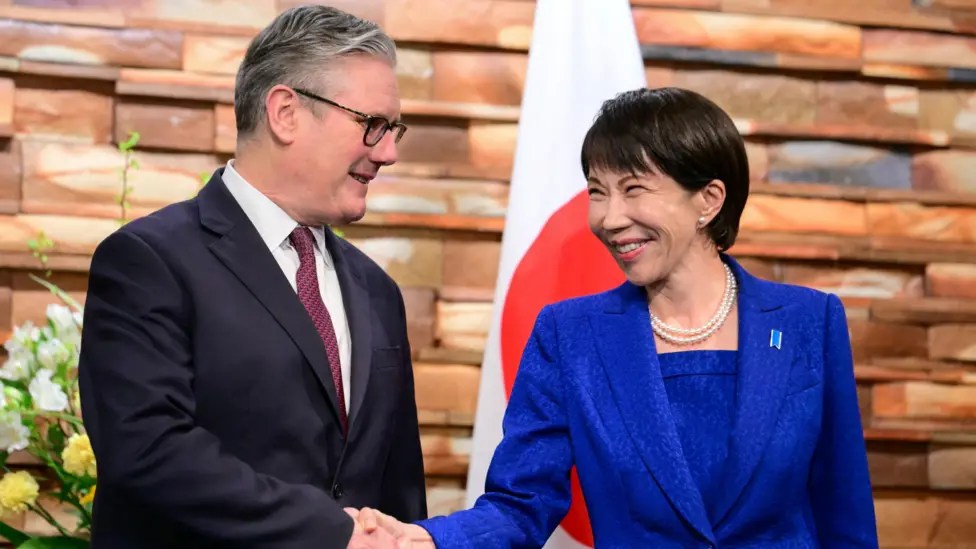
What makes a directly elected mayor genuinely accountable to the public? How do contrasting political and administrative systems shape the conduct, choices, and leadership styles of those entrusted with substantial local authority? These questions were central to a recent Inlogov seminar led by Akinari Takehisa, former mayor of Setouchi City in Japan, and as part of his PhD studies at Kwansei Gakuin University in Japan, visiting researcher at Nottingham Business School. Drawing on a rare combination of long mayoral experience and rigorous academic research, Aki offered a compelling comparative exploration of how accountability is constructed and enacted within Japan and the United Kingdom.

Aki’s work centres on executive mayors, leaders who uniquely embody both political and managerial authority. Unlike council leaders or ministers, who operate within more layered decision-making structures, executive mayors face the dual responsibility of providing political direction and ensuring the effective, lawful, and ethical delivery of public services. This dual role offers the promise of coherence and visibility in leadership, while simultaneously demanding a careful balance between responsiveness, organisational discipline, professional values, and legal boundaries.

Why Compare Japan and the UK?

Although Japan and the UK represent different political traditions, their local government systems share notable similarities. Both countries are advanced democracies with historically strong central oversight of municipal administration. Both have grappled with questions of local leadership and experimented with models aimed at enhancing the authority and public visibility of mayors.  Japan has adopted the directly elected mayor model across all of its 1,718 municipalities, embedding it deeply into local governance. The UK, by contrast, has applied the model selectively, introducing executive mayors in just 13 principal local authorities since 2002. This contrast creates a rich basis for comparison: one system fully institutionalised, the other still evolving.

But the most significant insights emerge from how each country structures accountability. Japan’s governance arrangements involve vertically layered responsibilities shared between national, prefectural and municipal governments. This can foster helpful coordination, but it can also confuse responsibility when things go wrong. The UK, meanwhile, relies heavily on arm’s-length accountability mechanisms, with statutory roles such as Section 151 Officers and Monitoring Officers acting as key guardians of financial integrity and legal compliance. These institutional safeguards create clearer boundaries around mayoral authority.

Three Core Questions

Aki’s research explores three interrelated questions. The first concerns how institutional environments in Japan and the UK shape mayoral accountability. The second looks at how personal characteristics (leadership styles, professional backgrounds, and the use of performance information) influence accountable behaviour. The third examines the behavioural traits that support or undermine accountability, identified through interviews and narrative analysis.

To address these questions, Aki conducted extensive fieldwork: interviews with 15 mayors and six key stakeholders in Japan, and with six mayors and six stakeholders in the UK. This qualitative evidence was supplemented with a literature review and advanced comparative techniques, including fuzzy-set Qualitative Comparative Analysis (fsQCA), which allows researchers to understand complex relationships across multiple cases.

What the Early Findings Reveal

A first major insight concerns the impact of institutional contexts. In Japan, accountability reforms have unfolded gradually since the 1990s, driven by incremental devolution and efforts to improve transparency. The use of performance information has grown, though its uptake varies significantly between municipalities. In the UK, accountability has evolved in more dramatic cycles. Reforms associated with New Public Management in the 1980s, followed by the Best Value regime in the late 1990s and 2000s, significantly expanded performance oversight before many national requirements were rolled back during the austerity era after 2010.

A second key finding arises from the fsQCA analysis. Mayors who demonstrated consistently high levels of political, hierarchical, professional and legal accountability were far more likely to sustain long and stable careers. By contrast, those whose professional or legal accountability was weak were more likely to experience short or troubled terms, particularly in Japan where mayors enjoy substantial personal discretion. Interestingly, extensive use of performance information did not necessarily correlate with stronger accountability. Its effectiveness depended on how thoughtfully and transparently it was applied.

Aki also found that behavioural characteristics play a decisive role. Inclusive leadership, transparency, ethical judgement, and constructive collaboration with professional officers strengthened accountability in both countries. Conversely, secrecy, impulsive or populist decision‑making, and blurred boundaries between political campaigning and administrative neutrality frequently undermined it. Japan and the UK each demonstrated examples of positive “synergies” between political and managerial roles, such as the ability to commit to long‑term policies or communicate strategy clearly to the public. But both also exhibited negative synergies when these roles clashed or overlapped in unhelpful ways.

Conclusions

Aki’s emerging conclusions highlight the importance of recognising accountability as a multidimensional and dynamic practice. Japan continues to advance its approach through gradual decentralisation, while the UK contends with the legacies of shifting reform agendas. Yet in both countries, the success of directly elected mayors rests not only on the formal powers they hold, but on the quality of leadership they exercise and the institutional structures that guide and constrain them.

The research offers valuable lessons for policymakers, practitioners and scholars. It suggests that accountability must be intentionally designed and continuously reinforced. Clear institutional roles, better training and development for mayors, and stronger professional support structures can all contribute to more effective local leadership. As debates about mayoral systems continue in both countries, the insights from Aki’s work provide a timely and thoughtful contribution to understanding what truly makes local democratic leadership accountable.

You can view the whole (50 mins) seminar here:
https://bham.cloud.panopto.eu/Panopto/Pages/Viewer.aspx?id=76530fc7-ce2a-4884-964a-b3fd00c80704&start=1315.148058

Jason Lowther is director of Inlogov, the Institute of Local Government Studies, at the University of Birmingham

Supporting councillors to thrive: the 21st Century Councillor Revisited

Catherine Needham

In our research on the 21st Century Councillor, we’ve found that elected members are facing a barrage of challenges:

  • Perma-austerity has deepened with sustained underfunding of public services  
  • Complexity of place has intensified, through combined authorities and integrated care systems, alongside local government reorganisation.   
  • Communities are in distress, moving from the pandemic straight into the cost-of-living crisis   
  • Incivility in public life has grown with rising issues of abuse and harassment for councillors in particular 
  • The rising profile of equality, diversity and inclusion has drawn attention to how public services systematically fail some workers and citizens  
  • Remote and hybrid working can enhance individual flexibility but can make it more difficult for councillors to build the relationships they need to function effectively. 

From interviews with councillors, we heard about the strategies they use to cope with these challenges and to support their communities to thrive. They are keeping the system human on behalf of communities. They are zooming in and out, from the micro issues facing residents to the big strategic issues of place. They act as a lightning rod, absorbing hostility whilst keeping themselves grounded and safe. You can read more about the research findings here.

If you’re a councillor – or you work in a role supporting councillors – come and join us in Andover on 4 November to hear more about this research and chat to peers about how best to manage these challenges. You’ll also hear from the Local Government Chronicle about their new campaign to support councillors.

Click here to register: 21st Century Councillors Tickets, Tue, Nov 4, 2025 at 10:00 AM | Eventbrite

Dusting down the cautious welcome: Initial reflections on the devolution white paper

Phil Swann

When I was director of strategy and communications at the LGA I was frequently criticised, by the late professor John Stewart among others, for issuing press releases “cautiously welcoming” one Blairite initiative or another.

The criticism was probably justified, but I would definitely have deployed that phrase in response to the government’s recently published devolution white paper.

There is undoubtedly a lot to welcome, not least the stated commitment to devolution, the additional powers for metro mayors, the revival of strategic planning, its reference to struggling small unitary councils and the focus on audit and standards.

There are, however, at least four reasons to be cautious.

First, every serious reformer of local government since George Goschen in the 1860s has argued that local government finance and structures should be reformed together. No government has ever had the political will or energy to do so. This government has also ducked the opportunity. As a result, this white paper will not fulfil its potential.

Second, the current mess and confusion in the structure of English local government is the result of incremental change. Just think of Peter Shore’s “organic change” and Michael Heseltine’s ill-fated Banham Commission. There is a real danger that this government will run out of restructuring energy or time. The contrast with Scotland and Wales, where local government was reorganised in one go, could not be starker.

Third, the effectiveness of the structures being proposed will depend on the quality of the relationships between mayors and councils, between councils and parishes and between ministers and mayors, councils and parishes. In England we are not good at relationships like these and there is precious little in the white paper to signal the trust, effort and imagination that will be needed to make these relationships work better than the previous ones did.

Finally, key to the revival of local government and effective devolution is a revival of citizen engagement in local politics and local governance. Word has it this will be addressed in a forthcoming white paper, but it should be central to this one.

So, a very cautious welcome it is.

Phil Swann is studying for a PhD on central-local government relations at INLOGOV.

When paradiplomacy becomes a performative act: Istanbul’s Imamoglu and his quest against competitive-disharmony

Dr. Ahmet Cemal Erturk & Dr. Nur Sinem Kourou

Paradiplomacy involves multi-level actors in global politics and allows for local governance even within strict unitary state borders. These borders are sharper when regional or sub-national entities diverge from the central government’s policy position. Moreover, political constraints can be intimidation tactics, with authoritarian measures tightening control over municipal autonomy. Therefore, sub-national entities may adopt various strategies to bypass these limitations. Paradiplomacy could become a way out. Sub-national actors may take paradiplomacy as an outlet to counter political pressure and push back against central government authoritarianism. The opportunities created through paradiplomacy also bring local leaders to the forefront of foreign policy. Post-2019 Turkey stands as a benchmark for analysing this issue.

It would not be wrong to describe paradiplomacy as the lifeline of some local governments not aligned with Turkey’s ruling party after the 2019 local elections. Let us look at the background of the situation. AKP’s leading position in national and local governments since its first elections (2003 national, 2004 local) was shaken by the loss of metropolitan municipalities such as Istanbul and Ankara to the main opposition CHP in the 2019 local elections. Since then, a competitive-disharmony phase has opened between the CHP municipalities and the AKP government. In a pattern of competitive-disharmony, local leaders turn foreign relations into a political performance on stage. By strategically communicating and leveraging foreign ties for political gain, sub-national entities can demonstrate their ability to fulfill the needs of both domestic constituents and international partners, thereby positioning themselves to compete with the central government effectively.

The most notable politician in this respect has been Ekrem Imamoglu, the Mayor of Istanbul. This is not only because İmamoğlu is a skilful leader. In the absence of the backing of the national government to run a Megapolis like Istanbul, he has had to pursue other possibilities, making him the actor of paradiplomacy. Disharmony naturally emerges in these relationships, driven by state officials viewing sub-national authorities as existential threats. In centralized and authoritarian contexts, paradiplomacy within competitive-disharmony emerges in two critical areas of foreign policymaking: economic and political. Local leaders build reputations by overcoming these constraints while forging their path through diplomacy. In a sense, they endeavour to become actors in the game to avoid appearing as mere recipients of international actors. By doing so, they become the legitimate, albeit unofficial, government representative in the vacant areas.

The most recent example of this occurred last summer. President Erdoğan’s decision not to attend the 2024 Paris Olympics provided a diplomatic opening for İmamoğlu, who has consistently expressed his desire to host international events like the Summer Olympics. Riding the momentum of his victory in the March 2024 local elections, İmamoğlu travelled to Paris with nearly all CHP district mayors, supporting the national athletes and carving out a new space for diplomacy as he sets his sights on bringing the 2036 Olympics to Istanbul. Imamoğlu’s intention and diplomatic endeavours are also physically present in Paris under the name ‘İstanbul House.’ ‘İstanbul House’ was founded to showcase Istanbul’s sporting and cultural heritage and share the city’s future vision with the world. İmamoğlu’s high-profile involvement in the Paris Olympics and the opening of ‘Istanbul House’ was criticized as a ‘wasteful’ effort by people in Turkey who have struggled with the current economic crisis, yet from a diplomatic perspective, it was another step in the paradiplomacy he has been pursuing in since 2019.

Since the beginning of İmamoğlu’s tenure, instances such as the example of Paris have been evident. Economically, his first term has been marked by a persistent pursuit of external funding, with a focus on leveraging foreign sources such as Deutsche Bank and the French Development Agency. This strategy was designed to bypass the obstacles imposed by domestic funding authorities. Politically, İmamoğlu has also tested the limits of competition with the central government. In a highly unprecedented move in Turkish political history, he appeared as a guest speaker at the 2022 Munich Security Conference, where he outlined an agenda that directly challenged the government’s official foreign policy stance. His speech highlighted the growing democratic regression both domestically and globally, transforming his address into a cautionary narrative for those in attendance.

Although İmamoğlu still has four years remaining as Istanbul’s mayor, experts widely agree that his ambitions extend far beyond his current position. These aspirations are clearly reflected in his approach to paradiplomacy. While the volatility of Turkish politics leaves little room for certainty, one expectation remains clear: the longstanding tension between Erdoğan’s increasingly centralized government and İmamoğlu’s municipality is unlikely to dissipate. Considering the ambitious goals of both parties—one driven by a quest for power, the other by an insatiable pursuit of total hegemony—it is reasonable to expect that competition between the two will persist over the coming half-decade.

This blog post is based on Ertürk, A.C. and Kourou, N.S., 2024. Unlocking pathways in constrained local governance: exploring paradiplomacy under competitive-disharmony through the case of Istanbul. Local Government Studies, pp.1-22. Available here: https://www.tandfonline.com/doi/pdf/10.1080/03003930.2024.2377223

Dr. Ahmet Cemal Erturk is an Assistant Professor of International Relations at Istanbul Kultur University. He completed his Bachelor of Science degree in International Relations at Middle East Technical University, followed by a Master’s degree from the the University of Manchester and a second Master’s degree from the London School of Economics. Dr. Erturk further pursued his academic journey by obtaining a Ph.D. from the European Institute of Marmara University. Dr. Erturk’s research focuses on pivotal areas such as EU-Turkey relations, sustainable transport policies within the EU framework, and the process of Europeanization in Turkey.

Dr Nur Sinem Kourou is a lecturer at Istanbul Kültür University. She conducts research on the relationship between gender and politics, gender opposition, and women’s political participation in Turkey. Kourou completed Ph.D at Boğaziçi University in 2022. During their doctoral studies, she was a visiting researcher at Yale University. In 2022, Kourou received the Dicle Koğacıoğlu Article Award from Sabancı University’s Center for Gender and Women’s Studies Excellence, ranking first. Currently, she is a Postdoctoral Researcher on a research project supported by the British Academy