Healthy Neighbourhoods

Cllr Ketan Sheth

Brent Healthy Neighbourhoods have been making headlines and indeed these were debated at a special Full Council meeting a few days ago.

So what are these “emergency” Covid road closures and “low-traffic neighbourhoods” all about? Well these are a group of residential streets where vehicle traffic, which is not local to the area, is either discouraged or removed. These areas are commonly referred to as low-traffic neighbourhoods. Brent plans to roll out a series of these initiatives between August 2020 and February 2021, in partnership with Transport for London and the Department for Transport. So, how can we make this innovative initiative better and benefit all?

I love where I live. It is rich in the elements that make for a vibrant, connected community. There is a bus stop near my home, there are nearby parks, I visit with my two young sons, and neighbours who represent a wide range of ethnicities, ages, and incomes.

These are all elements of healthy neighbourhoods. Brent aims to create neighbourhoods, and communities that better support residents’ physical, social, and emotional wellbeing. A lot of living happens between buildings and we are starting to realise that reactive healthcare is not sustainable. We need to move to a more proactive mind-set and break down the silos between planners, healthcare, and governments. Then we can develop environments that improve health outcomes and help alleviate the burden of treating chronic conditions at a macroeconomic level.

This involves working with our communities and various stakeholders. At the individual and community levels, the more attention policy makers, planners, and developers pay to these principles, the more likely it is that we will all be able to proclaim our love for our neighbourhoods — and the healthy, supported, and connected lives they enable us to lead.

We know that stress plays a vital role in undermining health and wellness — whether it is caused by commuting, isolation, congestion, lack of exercise, or estrangement from nature — so it is not surprising that stress reduction and connecting residents, both young and old, with their streets is at the heart of healthy neighbourhoods’ initiative.

So, to enhance Brent’s innovative Healthy Neighbourhoods we should:

1. Think Smart location

We must reflect on how people have safe and easy access to public transport. Residents should be able to meet basic needs without using a car, which saves money, and walking on errands provides routine physical movement and social interaction.

2. Nature is integrated

Green spaces are abundant, or at least present. Natural landscapes help maintain and cleanse the environment by removing harmful toxins from the air and water, while open space promotes physical activity and psychological wellbeing.

3. Land use is mixed

Combining housing, schools, shops, and places of worship in a compact area provides easy access to services and decreases reliance on cars. This supports physical and social well-being.

4. Includes a variety of housing types

A mix of apartment buildings, small homes, and larger homes that can accommodate multi-generational families naturally encourages economic and demographic diversity. Combining incomes and generations decentralises poverty, enables “aging in place,” and encourages attainable housing for community members of all backgrounds, income levels, and ages.

5. Offers alternatives to driving

People in pedestrian- and bicycle-friendly communities have a reduced risk of obesity and cardiovascular disease and enjoy more routine social interaction.

6. Encourages pride of place

Healthy neighbourhoods host high-quality public spaces that encourage residents to come out of their homes to exercise, meet, and mingle (in post Covid times). This builds social capital and a sense of community.

7. Provides access to healthy foods

Community gardens, farmers’ markets, food co-ops, and shops that offer a wide range of fresh vegetables and fruits are critical amenities that support wellness.

8. Enables lifelong learning Community members of all ages and backgrounds have opportunities to share their skills, knowledge, and experience with others through mentoring, book clubs, informal lectures, classes, and workshops, all of which promote feelings of growth, self-sufficiency, and connectedness.

9. Incorporates sustainable development

Low-impact development and green building technologies yield positive benefits for human health as well as the environment.

Like other councils, we are taking the opportunity to “de-stress” our local area.  Local councils have the unique democratic mandate and place-shaping ability to make these difficult and complex decisions about conflicting perspectives, needs and preferences.

Cllr Sheth chairs the Brent Council Community and Wellbeing Scrutiny Committee

The £3 Billion Pound Question

Jason Lowther

The Institute for Fiscal Studies’ latest review of English council finances documents why so many chief executives and treasurers have been having sleepless nights since “whatever it takes to tackle Covid” transformed into “as little as we can get away with giving you”.

On Wilkins Micawber’s “income” side, Covid has hit councils’ commercial activities, notably around retail rents, as well as fees for facilities such as leisure centres, and revenue from local taxes.   On the expenditure side, councils are seeing persistent cost increases.  As Micawber predicted: “result misery”.

In social care alone, expenditure on the care of older people will need to increase substantially and quickly.  Adult social care has faced a combination of pressures arising from demographic change and increased costs, rising need and demand, and short-term funding settlements. 

The IFS recognises the huge uncertainties involved in predicting financial and economic issues at present, addressing this by analysing a range of scenarios.

The bottom line across all council services is a £3bn+ shortfall in 2020–21, with the IFS concluding this may well be an optimistic estimate, and a middle scenario projecting a gap of over £3bn a year by 2024-25.  Not surprisingly they conclude that “without additional funding and/or flexibility over council tax rates, it is highly likely that councils will have insufficient revenues to keep pace with rising spending needs”.

What to do about this?  Aside from yet more austerity, the IFS identifies changing the rules on council tax rises (which would increase inequalities between rich and poor areas), increasing government grants, or giving councils additional tax powers such as new local taxes.

Austerity, the sustained and widespread cuts to government budgets which characterised Britain’s public policy from 2010, has already shrunk the capacity of the local state, increasing inequality between local governments and exacerbating territorial injustice[ii].

Greater local freedom on taxation is well overdue in the UK, where a larger proportion of local government spending is financed through grants from central government, and much less use is made of local and regional taxation than in almost all other European countries[iii]

Although the body of existing academic evidence about the impact of devolving fiscal powers is inconclusive[iv], comparative research on how municipal governments function in a number of major international cities demonstrates that British cities have very low levels of fiscal autonomy[v] and lower productivity than these cities.  There are also positive effects on economic outcomes when powers are held at the appropriate level and when local authorities are incentivised to create pro-growth planning regimes[vi] 

It’s also worth noticing again that much local government funding is still distributed through competitions which place considerable pressures upon local authorities and partners[vii], and result in wasted effort and ineffective use of resources.  And, whilst councils and other public bodies can share resources and pool funds to deliver joint outcomes more effectively and efficiently, there are still legal, cultural, governance and other barriers to this collaboration. 

In the short term, government should cull competitive funding and address the barriers to resource sharing.  They must plug the £3bn+ funding gaps over this and the next few years.  And in the medium term much more local freedom on taxation and autonomy are needed to give local government a sustainable future.

Jason Lowther, Director – Institute for Local Government Studies


[i] Ogden, K. et al, 2020, COVID-19 and English council funding: what is the medium-term outlook?, Institute for Fiscal Studies

[ii] Gray, M. and Barford, A., 2018. The depths of the cuts: the uneven geography of local government austerity. Cambridge Journal of Regions, Economy and Society11(3), pp.541-563.

[iii] Loughlin, J. and Martin, S., 2003. Options for Reforming Local Government Funding to Increase Local Streams of Funding: International Comparisons. Lyons Inquiry into Local Government Funding.

[iv] London Finance Commission, 2013. Raising the capital: The report of the London Finance Commission. London, the Commission.

[v] Slack, E., 2016. International Comparison of Global City Financing: A Report to the London Finance Commission. Institute on Municipal Finance and Governance Munk School of Global Affairs. University of Toronto.

[vi] Cheshire, P.C. and Hilber, C.A., 2008. Office space supply restrictions in Britain: the political economy of market revenge. The Economic Journal118(529), pp.F185-F221.

[vii] Loader, K., 2002. What price competition? The management of competitive funding in UK local government. International Journal of Public Sector Management.

The Transformative Politics of the European Green Deal

by Jon Bloomfield

COVID 19 has highlighted our fragile relationship to the planet. But it represents a minor challenge compared to the permanent havoc that runaway climate change threatens. Politicians and governments – some at least – are beginning to recognise the scale of the danger. In this article we assess the evolution of policy thinking on how to make climate transitions happen; the potential of the European Green Deal; and how progressives need to shape it and any UK counterpart to meet the challenges of modern society.

The European Green Deal initiative launched in December 2019 arose from a broad coalition spanning the political spectrum. Yet its central thrust of active government offers the prospect of reviving a battered social democracy. Green Deal politics failed to cut through after the 2008 financial crisis. Post COVID19 offers a second chance. There is a greater consensus around the need for active government and public investment to help the economy, underpinned by a recognition of the importance of equity to address issues of inequality and disadvantaged regions. This is moving politics onto traditional social democratic terrain, even when it is German Christian Democracy and French centrism that is taking it there. The politics of climate transition needs to be developed on a broad, cross-party basis but it offers major opportunities for social democracy, if it is able to embrace a pluralist and environmentalist approach suited to the challenges of the 21st century.

So what can a ‘social democracy re-born’ offer?  The starting point has to be a recognition that the climate crisis requires a re-making of everyday politics, on the Left as well as the Right. The 19th and 20th century model of high-carbon, fossil fuel intensive economies where the core task is for ‘man to conquer nature’ has run its course. To safeguard our common future a new low carbon model of sustainable development has to become the ‘common sense ‘of the age. That’s what the policy specialists and architects of the European and the US Green Deal have formulated. Politicians and parties across the spectrum are trying to catch up. The anticipated post-Covid, green recovery programmes in the run-up to COP 26 will show which political forces are best able to translate this thinking into everyday politics and to make low or zero-carbon initiatives the golden thread that runs through their policy proposals.

The elements of active government, collective goods, and social inclusion chime with the social democratic tradition yet it needs to overcome the contradictory baggage of utopianism on the one hand, and industrialism on the other. There are four areas in particular where a shift in social democratic thinking is needed.

Firstly, it needs to adopt a 21st Century modernity. The Green Industrial Revolution should no longer be the metaphor of choice. It speaks to a technocratic, top-down model of traditional Keynesianism.  This conjures images from the past while constricting the imagination of the present and future. The potential of a mix of social innovation and digital revolution to transform ‘soft’ infrastructure needs to be at the heart of green deal proposals.  Currently they play second fiddle to ‘hard’ infrastructure investment. Yet new tech opens new vistas.

Secondly, the potential widespread attractiveness of changes in lifestyle through sustainability transitions should be highlighted.

Thirdly, pluralism has to be at the heart of any effective, green deal movement. Successful sustainability transitions rely on a wide alliance of social actors with a shared vision.

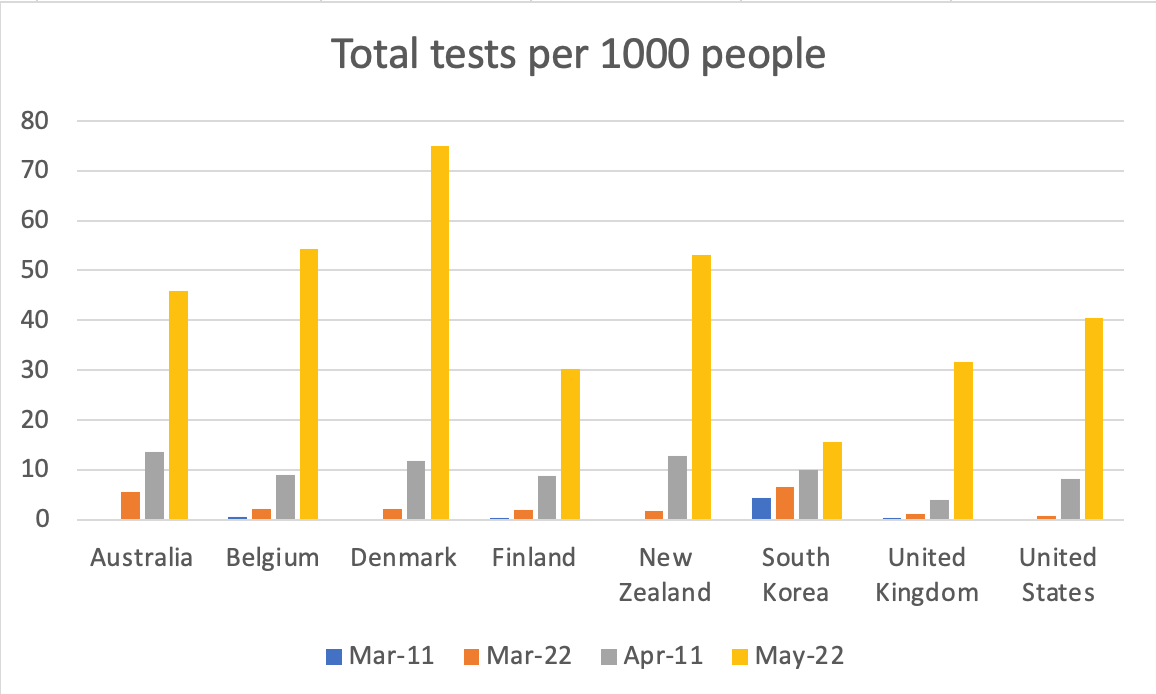
Fourthly, the 21st century world is interdependent. We live in a world where the local and regional overlap and are intertwined with the national, Continental and global.   The interconnections are all the stronger when it comes to tackling a great societal challenge like climate change which is why centralised, top-down methods are not the answer. Rather than reheat an old, mission-driven approach, sustainability transitions need a challenge-led approach where national government specifies the broad direction but acknowledges that experimentation around a diversity of solutions must be nurtured with groups of stakeholders at local and city level.  The classic big national projects find this very difficult. They favour national ‘rollout’ with budgets held in Whitehall and local authorities administering central government decisions. The debacle on the UK’s COVID test and trace programme has served to highlight the limitations of this model of politics. Central to the green deal should be transition programmes which set clear sustainability targets but where budgets are devolved to enable localities to design initiatives appropriate to their needs in partnership with local stakeholders.

Our article indicates the openings here for a pluralist, ecological Left. The run-up to the next global climate conference –COP26- will be a vital period which will show whether parties and governments across the world are prepared to meet the climate change challenge.

Jon Bloomfield HeadDr. Jon Bloomfield. Honorary Research Fellow, Institute of Local Government Studies, University of Birmingham.

Policy Advisor on EU Climate Knowledge Innovation Community (KIC) programme; writes on cities, governance and migration as well as climate change.

Simon Clarke – first his speech goes, then him

Chris Game

Boris Johnson didn’t start the modern trend of hyper-rapid ministerial turnover, but he did ratchet it up.  His election last July produced a larger ministerial cull than in any other recent transition between ministers of the same party, the Ministry of Housing, Communities and Local Government being no exception.

So, were you paying attention?  Can you recall who was the minister specifically responsible for English local government on the first day of Boris Johnson’s Premiership, and how many there have been since?

For a department not traditionally one of the most sought-after steps on the ministerial promotion ladder, 18 months in Marsham Street evidently did Rishi Sunak no lasting career damage. For he it was who was junior Local Government Minister when Johnson arrived and was promoted by him to Chief Secretary to the Treasury.

The number of Sunak’s successors is less straightforward, as, following Simon Clarke’s recent resignation, he is replaced by Luke Hall, the man he himself at least formally succeeded in the role barely six months ago. This was interesting, as back in February it had apparently been necessary for an MHCLG “spokesperson” to dismiss as “nonsense” rumours that Hall was being “quietly moved aside” because Secretary of State Robert Jenrick “does not rate him”.

Interesting, but marginal, for this blog, although again featuring MHCLG in a key role, is about Clarke’s resignation and its possible policy ramifications. In the BBC’s rather odd choice of library photo he himself looked positively delighted.  But his letter to the PM cited “purely personal reasons”, so, if distressing circumstances are involved, one must obviously sympathise.

I don’t know Clarke, but from a distance he seemed one of the more committed, interested and listening Local Government ministers (as opposed to Secretaries of State) we’ve had recently.  And, given the limited options, I felt reasonably positive about his taking lead responsibility for the local government part of the Government’s anticipatedly radical ‘Devolution and Recovery’ White Paper, long expected sometime this month, but now at the Conservatives’ virtual annual conference in early October – possibly, or possibly not.

I wasn’t expecting to like what the White Paper had/has in store for the future gargantuan structure of what we could once meaningfully call local government. Clarke, though, almost from the outset, enthused – talking of producing a “genuinely seminal document … helping the process of unlocking devolution everywhere and empowering communities on a scale never seen before.”

The ”everywhere” and “communities” seemed perhaps that bit more meaningful, given Clarke’s having apparently made a point of meeting personally with the National Association of Local Councils, acknowledging the role parish and town councils had played in responding to Covid, and talking of strengthening that role in the future – along, albeit, with the extensive unitarisation.

His departure does, therefore, leave several question marks.  First, the resignation’s sheer hint-less suddenness.  Second, Clarke’s personal – and very recently well publicised – centrality to both the content and presentation of the White Paper.  And third, almost inevitably, the ‘Was he pushed, or at least nudged?’ conspiracy theory – and ‘The Mystery of the Disappearing Speech”.

The Local Government Chronicle (LGC) recalled Clarke’s ‘ground-breaking’ July speech to a Northern Powerhouse audience, promising “a roadmap for establishing a series of new mayors within the next ten years – representing the greatest decentralisation of power in our modern history.”

The speech duly appeared on the Ministry of Housing, Communities and Local Government website … then suddenly disappeared.  A manifestly crass piece of business, whatever the motive, and, of course, guaranteeing immensely greater interest and speculation than it initially attracted.

Happily, therefore, LGC was able to satisfy this ramped-up curiosity by publishing the full speech on its website (see preceding link).  Which means, if any pushing from No.10 were involved in Clarke’s resignation, we can at least speculate about possible prompts.

“A new deal for the North”?  A £5 billion ‘New Deal’, rebuilding public infrastructure, creating thousands of new jobs, helping our regions “build back and bounce forward” – no, that rallying vagueness is almost straight Boris.

“New mayoral devolution”?  “Responsible and effective mayors representing 100% of the north of England.”  Again, Johnson playbook stuff.  He proved Londoners would elect a Conservative mayor, despite most boroughs being Labour-run, as have Andy Street in the West Midlands and Ben Houchen in Tees Valley.

Remember in December how voters in those North and Midlands ‘red wall’ – now ‘blue wall’ – constituencies elected Conservative MPs for the first time?  They should have a similar chance next April to elect a Conservative metro mayor in the new but traditionally very Labour West Yorkshire Combined Authority.

This is the Government’s apparent strategy: abolishing – sorry, combining – large numbers of already big city, borough and district councils into, by any traditional and international standards, huge unitary ‘Combined Authorities’ headed by directly elected and hopefully Conservative mayors, thereby simultaneously saving money and providing more ‘streamlined’, if hardly local, government.

All of which leaves at least as many questions as it answers.  Why the apparent rush, mid-Covid?  This seems best explained by the Winston Churchill/Rahm Emanuel injunction to “Never let a good crisis go to waste”.  Councils have been hit massively by Covid, with County Finance Directors especially warning throughout the summer of budget shortfalls and the looming necessity to issue Section 114 (Bankruptcy) Notices.

Housing, Communities and Local Government Secretary, Robert Jenrick, made it clear from the start that he saw no “long-term future” for two-tier local government and especially for all those pesky ‘lower tier’ Labour councils. Unitary councils with directly elected mayors would be “strongly preferred” by the Government in considering devolution deals – the major issue for debate being the preferred and maximum permitted size of said unitaries.

Minimum size seems likely to be 300,000.  The arguments will be over the maximum: the District Councils Network’s preferred 500,000; the 1 million+ that whole-county unitaries could involve; or something in between?  Clarke’s position seemed flexible, but not that flexible: definitely closer to the former than the latter.

These things are already under vigorous discussion, but, if elections to new authorities are to be held as early as 2022 or even 2023, the legislation needs to be in place by summer 2021. Without even mentioning the Br…. word, and Covid clearly not going away any time soon, could the departure of the key minister signal at least a slowing-down of the timetable?  Which would also postpone the point at which, along with all those Labour district councillors who would lose their seats, there would be plenty of disgruntled Conservatives.

On the other hand, and returning to the ‘Missing Speech Conspiracy’, could it be that Clarke was going just a touch too far for ultra-centralisers Johnson/Cummings and had started seriously to believe in his “greatest decentralisation of power in our modern history”?

Photo

Chris Game is an INLOGOV Associate, and Visiting Professor at Kwansei Gakuin University, Osaka, Japan.  He is joint-author (with Professor David Wilson) of the successive editions of Local Government in the United Kingdom, and a regular columnist for The Birmingham Post.

NHS that involves and listens to local people is in all our interests

Cllr Ketan Sheth

Readers may be aware that the way in which the local NHS is run is likely to see big changes in the months ahead. Part of the NHS Long Term Plan is for local NHS bodies in each area to work in partnership with local councils as part of an ‘Integrated Care System’ (ICS). In North West London, this will mean a huge partnership across eight boroughs, including Brent – my Local borough. It may also mean a merger of the eight clinical commissioning groups (CCGs) across these areas into a single CCG for North West London (subject to a vote of GPs in each borough).

NHS leaders assure us that this is not a change to services, but to how their staff are organised. They say that any changes that are proposed under the new working arrangements will be subject to the same – or more – consultation and scrutiny. We need to hold them to this promise. The biggest concern for me, as a Brent councillor, is that the voice of Brent residents is not lost in a new system covering a huge geographical area (the North West London ICS and the single CCG would be the biggest in the country).

At a recent Joint Overview and Scrutiny Committee, we had the chance to question managers and GPs about the single CCG merger. There were certainly encouraging words about their future approach to involving local people in shaping health services. They have put in place a new programme, rather grandly called ‘EPIC’ (Engage, Participate, Involve, Collaborate), which they say is a direct response to the challenge of maintaining the voices of local residents in a much bigger system.

Working with local patient groups and Healthwatch organisations, they are co-producing an ‘Involvement Charter’ setting out how the public can get involved and setting standards we can hold them to. They have expressed a commitment to strengthening the current approach and involving more people, reaching deeper into our communities than ever before. They have promised to work with councillors and others to reach the most vulnerable and isolated people, who the NHS does not have a good track record of engaging. And alongside this ‘qualitative’ engagement, they have set up a 4,000-strong Citizens’ Panel, representative of local communities, allowing them to test public opinion through surveys and focus groups on a range of issues.

The programme is ambitious and no one could argue with its stated objectives. But as ever, the proof of the pudding is in the eating. The NHS is facing big challenges right now, not least in getting services up and running again in the wake of Covid-19. Getting public engagement right is going to be more important than ever. If this programme really does see a step change in how the local NHS works with our residents – and most importantly, if it acts on what people tell them – it will have my support. My message to NHS colleagues is simple: the goals you have set out are welcome, but we will need swift and tangible evidence that things are really changing for the better. The National Health Service that involves and listens to local people is in all our interests.


ketan

Cllr Ketan Sheth

Chair, Brent Council Community and Wellbeing Scrutiny Committee

When Alice Paul came to Birmingham University

Chris Game

On August 18th, much of America celebrated the centenary of women finally gaining the vote, when Tennessee became the decisive 36th state to ratify the US Constitution’s 19th Amendment.

With some property-owning women in the Northern colonies having been voting before the United States was created – then having that right removed by the new all-male state legislatures – it took a long, sometimes bitter and unedifying, battle, but one absolutely worth commemorating.

Some perspective: that eventual 19th Amendment had been first introduced to Congress in 1878, seven years before one of the most militant and mostly admirable leaders of the final struggle was even born. I refer to Alice Paul, around whom PBS America’s excellent recent TV documentary, ‘The Vote’, was structured.

Paul was joint founder in 1916 of the National Woman’s Party – with her friend and equally radical contemporary, Lucy Burns – and its leader for decades. She/they instigated countless laws furthering women’s equality, secured equal rights guarantees in both the UN Charter and 1964 Civil Rights Act, and drafted the Equal Rights Amendment, which could theoretically have been the US Constitution’s 20th.

It doesn’t sound outlandish for a supposed democracy: equality of rights under the law shall not be denied or abridged by the US or any state on account of sex.  Yet, introduced in 1923, it took 49 years for Congress to approve it, then a further 49 for Virginia to become, in January this year, the required 38th state to ratify it.

Now, in football parlance, it seems likely to be ruled ‘aaet’ – after ‘after extra time’ – a sad, if in no way diminishing, postscript to Alice Paul’s long and exceptional campaigning career.  Back quickly, then, to that career’s start, for her suffragette epiphany, her radical realisation, owed everything to her brief stay in her early twenties in Birmingham.  No, not the Alabama one. Our Birmingham.

Alice – no, I’m not at all sure she’d excuse the familiarity – came from New Jersey, near the Quaker state of Philadelphia. Bright eldest daughter of a successful businessman/gentleman farmer and college-educated mother, she was raised as a Hicksite Quaker – same Orthodox Quaker emphasis on simplicity, perseverance and social improvement, less on the Bible, much more on gender equality.

Despite, or possibly because of, a first degree in biology, she was increasingly attracted to applied social work. This prompted a Master’s thesis entitled ‘Towards Equality’, followed in 1907 by a one-year fellowship at the Woodbrooke Quaker Study Centre in Selly Oak.

Recently founded by George Cadbury as – still, I believe – Europe’s only Quaker study and training centre, Woodbrooke also had links almost from the outset with the University of Birmingham, and Alice would certainly at least have attended lectures there.

But here’s the tricky bit.  A summation of the numerous available accounts would be that the totally transformative event in Alice’s early life was attending a Women’s Suffrage meeting in Birmingham. There she heard the ‘charismatic’ Christabel Pankhurst – also still in her twenties – lucidly putting the case for militant action for women’s suffrage, and dealing simultaneously with a predominantly male, hostile, abusive audience. Following which – sometime, somewhere – Alice met Christabel personally and was, apparently, “converted, heart and soul” to the militant Suffragette cause.

But where exactly?  And, assuming it did happen, could that key personal meeting and Alice’s Pauline/Damascene conversion have taken place in the University of Birmingham, a retrospective highlight of its early Edgbaston years?

Most accounts, unsurprisingly, are vague, obviously embellished, or demonstrably inaccurate. One seemingly indisputable fact, though, is that Christabel Pankhurst and her mother, Emmeline, did speak and were heckled at a Women’s Social and Political Union (WSPU) meeting at Birmingham Town Hall on November 20th, 1907.

That had to be it, surely.  Besides, that is the occasion extensively described in former Boston Globe journalist Tina Cassidy’s recent full, if florid, Alice Paul biography – Mr. President, How Long Must We Wait?  – from the opening pages of which I apologise in advance for quoting at appallingly self-indulgent length, partly because it’s loosely evidential, but mainly because it’s such fun.

November 20, 1907 – Birmingham, England.  Alice Paul finished dinner with classmates at Woodbrooke [and] excused herself …  Gathering up her long, heavy skirt, she mounted a rented bike and began the four-mile pedal … through the fog to Town Hall in Birmingham.

Hundreds of people were inside.  Many were male students from the University of Birmingham, where Paul was taking classes. She was the first and only woman enrolled in the University’s Department of Commerce. She was fearless among them; unabashed, she strove for what she wanted.

Paul had come to listen to a mother-daughter team talk about their Votes for Women campaign. The men, however, had a different agenda …  Like most of their peers, they believed women belonged at home … and that these Pankhurst women needed to be silenced … they began to shake rattles, ring bells, and blow whistles and toy trumpets.

Unfazed by the chaos, Christabel Pankhurst stepped on to the stage with striking poise. She seemed effortlessly confident … the men, however, were not softened by her affect.  They roared for several minutes, waving their hats, sticks and handkerchiefs provocatively as she patiently endured.

“We have come to explain our tactics,” Christabel asserted, trying to pierce the pandemonium.  The crowd hushed briefly before someone hurled a dead mouse into the air, causing the hall to erupt into hysteria as the rodent was squeamishly caught and tossed like a hot potato.

Inspired and disturbed, Paul was riveted … until her senses were suddenly overwhelmed by the offensive odour of rotten eggs. Someone had released a hydrogen-sulfide (sic) stink bomb, creating an atmosphere so foul that the room emptied within seconds … Paul climbed back on her bicycle and returned to Woodbrooke.  She felt the electricity in her body. It was unlike anything she had felt before.”

Clearly no one-to-one meeting there.  But anyway, why would Christabel be chatting to, say, a university student seminar when venues like the Town Hall were available to her?

The answer, I tentatively suggest, is to be found in another quite recent American account – this time from Clark Edwards, a former graduate student at an Indiana liberal arts college, who, searching for a possible thesis topic, discovered his paternal grandmother had been appointed legal guardian of Alice Paul’s papers.  Nice one!

Among other ‘goodies’, Edwards reveals that Sir Oliver Lodge, distinguished physicist and Birmingham University’s first Chancellor, concerned by his students’ role in Christabel’s earlier hostile reception, invited her back – this time to the University – “to give a second speech, apologised and required all students to attend and listen.”

It’s not exactly unassailable evidence, but it satisfies me personally that the two young women did meet meaningfully at ‘my’ University, and that the encounter inspired or re-inspired Alice’s conversion to the Suffragettes’ militant campaign methods.

Delaying her planned return to the US, she joined the Pankhursts and became one of the most dedicated militants. She marched, protested, physically attacked leading politicians, smashed Parliamentary windows, got arrested (seven times), imprisoned (three times), sentenced to ‘hard labour’, went on hunger-strike, was forcibly fed through her nostrils (55 times) – all before even starting on amending the US Constitution. Exceptional woman!

Photo

Chris Game is an INLOGOV Associate, and Visiting Professor at Kwansei Gakuin University, Osaka, Japan.  He is joint-author (with Professor David Wilson) of the successive editions of Local Government in the United Kingdom, and a regular columnist for The Birmingham Post.