What are the career backgrounds of city managers in the United States?

Wesley Meares, Beth M. Rauhaus and William Hatcher

In our recent Local Government Studies article, we report the career paths of city managers from a nationwide survey of 345 chief administrative officers leading cities throughout the United States (U.S.). We sought to understand who the chief administrative officers are, how they arrived in their current position, and the significant challenges they face. Exploring these topics helps us describe the composition of local government managers, and knowing the career paths of these public administrators helps our field in preparing future managers for their service. While these topics have been researched in the past, for example, by Watson and Hassett (2004) and Folz and French (2005), an updated view of chief administrative officers of U.S. cities was needed. To explore these questions, a survey was sent to chief administrative officers of small, medium, and large cities throughout the U.S. From our survey, we learned three key takeaways.

Who: The Make-Up

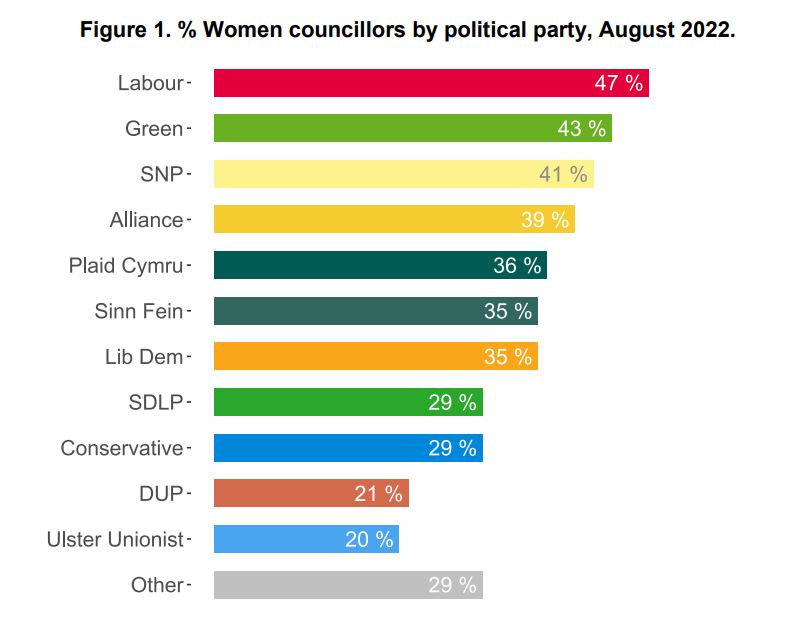
Local government management in the U.S. needs to diversify. Most survey respondents reported being white males, with nearly half being 55 or older and only slightly over 18% reporting as female. Public administrators must reflect and mirror the communities they serve, and local government management in the U.S. does not represent the nation’s diverse population. Thus, diversity needs to be a focus of the field in the future. There will soon be an opportunity with the impending retirements of many in local government management – what the ICMA has labeled a “silver tsunami.” This oncoming wave shows up in our survey’s findings. Over 50% of those surveyed indicated they intended to retire in the next ten years, and 30% said they would retire within five years. The need to hire the next generation of local government managers is an excellent opportunity to increase gender and racial diversity in local government.

How: Career Pathways

Local government management is more stable than in the past. Of those surveyed, the average tenure in their current positions was a little over seven years. One career pathway to local government management is having prior work experience in the area. Most of those surveyed were hired into their current positions as external candidates, often making lateral moves in their careers. Another career pathway to local government is having experience in budgeting and planning. City managers identified developing negotiation skills, having a mentor, and earning an MPA as other critical pathways to local government management.  

What: Major Challenges

Local government management is more concerned with technical aspects of the job (time management, leading teams, human resource actions, etc.) than political conflict and relations with the public. This is a surprising finding. On the one hand, it is positive that city managers are concerned with the nuts and bolts of their jobs. However, on the other hand, many of the challenges they face will surround issues of politics. For our field of public administration to advance democratic governance, we need public administrators to be concerned about politics and community outreach.

With the fast-approaching retirement of many within local government, there is an opportunity for U.S. cities to diversify their workforce, particularly those leading cities. Our study’s data on career pathways provide a roadmap to help public administration scholars and instructors help achieve effective, efficient, and equity in local government management.

Wesley L. Meares is an Associate Professor of Public Administration in the Department of Social Sciences at Augusta University, where he serves as the graduate program director for the Master of Public Administration program. His research focuses on housing policy, community development, sustainability, and local government administration.

Beth M. Rauhaus is an Associate Professor of Public Administration and the MPA Program Coordinator in the Department of Social Sciences at Texas A&M University, Corpus Christi. Her research explores issues of gender and diversity in the public sector.

William Hatcher, Ph.D. is a professor of public administration and chair of the Department of Social Sciences at Augusta University. His research explores the intersections of public administration and healthy policy, public administration education, and public budgeting.

References:

Folz, D. H., & French, P. E. (2005). Managing America’s small communities: People, politics, and performance. Rowman & Littlefield.

Watson, D. J., & Hassett, W. L. (2004). Career Paths of City Managers in America’s Largest Council‐Manager Cities. Public Administration Review, 64(2), 192-199.

Picture credit:Luis Marina

“The Greatest Political Party on Earth” – Prime Ministerial hyperbole

Chris Game

Reader alert!  This blog’s sole excuse is its loose topicality. Its connection with local government, certainly, is tenuous in the extreme, and needs rationalising right away.

My chief role in INLOGOV, throughout most of my time as a full-time employee, was as Convenor of its undergraduate degree, latterly entitled the BSc in Public Policy, Government & Management. When we launched its predecessor in the early 1980s, ICT was in its youth, if not infancy. PowerPoint presentations, when they arrived, were seriously challenging, and one was constantly looking out for new IT developments that might illustrate current events and generally enhance the student learning experience.

The technology left me behind years ago, but the fascination with entertaining visual aids remained. Meanwhile, we quickly learnt that casually deployed, but now much more easily checkable, references and assertions, particularly superlatives, were a gift to the evolving technology. I was naturally aroused, therefore, by our new PM’s extraordinary phraseology in acknowledging her leadership victory: “Thank you for putting your faith in me to lead our great Conservative Party, the greatest political party on Earth.”

Never mind that she hadn’t had the faith of even half of that party’s modest-sized 170,437-member electorate.  Why the senseless GPPoE bit?  ‘Oldest PPoE’ might just have worked – by treating the C17th Tory Party’s demise in the 1830s and 1840s as an evolution, rather than dissolution, into the Conservative Party.

‘Great’, though – definitionally, etymologically – is chiefly and initially about large size. But accuracy, etymology, or even common sense clearly aren’t what Liz Truss is about, and I half-thought, therefore, of trying to make a blog out of it.

At that point, though, I hadn’t fully grasped, in addition, the extreme limitation of the Truss vocabulary, and there was suddenly more material to work with: the PM’s apparently considered evaluation, to her fellow MPs, of the late Queen as “one of the greatest leaders the world has ever known”.

Apart from the “one of”, no qualification or explication in sight. No “constitutional”, or “peacetime”, or even “modern-day”. Not “one of the world’s most recognisable faces”, possibly after Hitler. Or one of the most photographed. Not even one of the greatest women leaders, which would get rid of all those tricky men – Jesus Christ, Muhammad, Buddha, Confucius, Gandhi, Einstein, Mandela and the rest of the usual crew.

Actually, “one of the greatest women leaders” might at least have generated some informative debate. Elizabeth II’s chief competition would then have been merely Elizabeth I (obviously), Russia’s Catherine the Great, Austria’s Maria Theresa, and, with perhaps 30 seconds Googling, probably Ancient Egypt’s Pharoah Hatshepsut, and China’s C19th Empress Dowager Cixi.

If there really has to be a QEII superlative, there’s possibly “the most recognisable face in the world”. “Head of the world’s most effective democratic monarchy” could have done – interesting, and still a pretty big deal – but might have required a few seconds’ thought. And, pleasingly, that’s just what it got – even including a superlative. Not from Truss, but from local government, or, more specifically, LGIU Chief Executive, Jonathan Carr: “Her Majesty Queen Elizabeth II – our country’s greatest public servant”.

Sadly, though, it seems we’re simply going to have to get used to these ludicrous hyperboles as a Truss ‘thing’, though hopefully, PLEASE, not on a twice weekly basis. Meanwhile, back to her “greatest political party on Earth”, and, while there’s no knowing what, if anything much, she may have had in mind, it almost certainly wasn’t anything measurable or internationally comparable.

‘Great’, though, remains in the first instance a size adjective; so, as they say, needs must. Membership size of national parties is one of the many countable phenomena nowadays measured and compared – skilfully, entertainingly, and literally movingly by YouTube Ranking Charts. Other providers are available, but in my limited, amateurish judgement, these are the most comprehensive, user-friendly, and have the better background music tracks.

I’m a fan, and, were I still lecturing, the charts would be an early student recommendation. Not, sadly, in most cases for any immediate relevance to the world of local government, but for their sheer fun – and, by my reckoning, the products of often quite impressive research. 

The above link will get you to a whole catalogue of charts, usually headed by the ever popular ‘Top 10 Largest Armies in the World, 1816-2021’, which will serve as a brief illustration – yes, that’s 205 years of annual rankings, Napoleon to Putin.  Actually, Putin would be dead envious. In 1816 Russia’s 800,000 ‘Active Military Personnel’ easily outnumbered the world’s next four largest armies – the UK (255,000), Austrian Empire, France and Prussia – combined.

A century later in WWI we had 4.4 million troops, behind only the German Empire, Russia and France, and in WWII that increased to over 5 million – modest compared to the US and the Soviet Union (10 million+), but comparable to Nazi Germany and Japan, and, unsurprisingly, way ahead of France.

We finally dropped off the Top 10 chart altogether in 1963, as eventually did France in 1991. And today, if you were wondering … Russia’s I million+ troops rank them in a rather modest 5th place, behind China 2.1 mill., India 1.5 mill., the US 1.4 mill., and North Korea 1.3 mill.

Apologies for that even further digression. Back to “the greatest political party on Earth” – by registered party membership. The principle is the same as for ‘Largest Armies’ – annually reported, with the totals, bar lengths and positions constantly changing, starting here in 1950, rather than 1816; checked and validated as much as possible, which explains the present-day absence of the Communist Party of the Soviet Union. Missing too is the UK Conservative Party – because, well, you can guess from all the other figures running into the several millions how far down the list its 172,437 would be.

To summarise: largest parties in 1950 were the US Democrats and Republicans (7.2 and 6.5 million members respectively), followed by the Communist Party of China (CCP) (6.5m) and the Indian National Congress. Not making the chart, but impressive in their way, the Conservatives’ membership would have been in the high 2 millions (including at least my father, not sure about mother) with Labour, excluding affiliated TU members, around 1 million.

Within two years the CCP had overtaken both US parties individually, and by the mid-1970s both combined. By 2019 it had 90,000 members, the two US parties 77,000 between them.  All three combined, however, had long since been massively overtaken by India’s Baratiya Janata Party (BJP), Narendra Modi’s Hindu nationalist party.

Founded in a 1970s multi-party merger, the BJP had grown gradually, topping 5 million members for the first time in 1993, compared to the Indian National Congress Party’s 13 million. By 2002, however, its then 15 million members had overtaken the Congress Party, following which it grew fast and steadily, reaching 38 million in 2006, overtaking the Chinese Communist Party’s 78 million in 2010, and in 2014, with 129 million members sweeping to national power under Modi, who remains PM today.  

And that, Prime Minister, is what the currently “Greatest Political Party on Earth” looks like.

Chris Game is an INLOGOV Associate, and Visiting Professor at Kwansei Gakuin University, Osaka, Japan.  He is joint-author (with Professor David Wilson) of the successive editions of Local Government in the United Kingdom, and a regular columnist for The Birmingham Post.

Voter ID gets Code Red

Picture credit: https://www.electoral-reform.org.uk/why-the-governments-mandatory-voter-id-plans-are-a-terrible-idea/

Jason Lowther & Chris Game

‘Code Red’, for anyone even approaching the generation of this blog’s more senescent author, has to cue the memorable final Tom Cruise/Jack Nicholson courtroom scene in Aaron Sorkin’s film, A Few Good Men. Indeed, said author has actually adapted and used it previously in these very columns:

Lieut. Kaffee (Cruise): “Did you order the Code Red?”  Col. Jessup (Nicholson): “YOU’RE GODDAMNED RIGHT I DID!!!”

In the film, ‘Code Red’ is a term used for any extra-judicial punishment or action taken against US marines for the purposes of humiliation or worse. Its function is, essentially, to deal with issues that can’t be solved using the normal legal framework.

In substantial contrast, the UK Government’s Code Red, though hardly a regular feature of our media’s political reporting, is at the very core of our modern-day governmental system. It is a (arguably the) key instrument of the Infrastructure and Projects Authority (IPA), the Government’s centre of expertise for infrastructure and major projects, reporting to the Cabinet Office and HM Treasury.

Formed in 2016, the IPA’s intended function is to increase government efficiency and save public money by monitoring and ‘scoring’ the viability of its literally hundreds of infrastructure and major projects … and does so with an effectiveness that has some Ministers in the present Government viewing it as more of a PI(the)A.  

This already substantial introduction does have a local government-relevant point – promise!  And it is no blog’s function to deliver lecturettes, which in this instance are both available and well illustrated, from the Institute for Government and the IPA itself in its very recent 2022 Annual Report.

What follow, therefore, are a few shortish paragraphs outlining the IPA’s work, and two graphics from that 2022 Report worth, if not the proverbial thousand words, certainly a good many. We then focus on the issue of voter ID in England, reporting the government’s own assessment on the risks involved, and conclude that Government has still not yet shown how voter ID will operate in England without adversely affecting certain minority and disadvantaged groups.

The focus of the IPA’s work is the Government Major Projects Portfolio (GMPP), comprising this year 235 projects with a total Whole Life Cost of £678bn and estimated “monetised benefits” of £726bn, delivered by 18 departments and their arm’s-length bodies.

The projects are divided functionally into four categories, biggest-spending being Infrastructure & Construction (70 projects: £339 bill. whole life cost; £356 bill. “monetised benefits”) – high investment projects, including improving the UK’s energy, environment, transport, telecoms, sewage and water systems, and constructing new public buildings. Dominated financially, and in the IPA’s ‘unfeasible’ delivery confidence rankings, by the Dept for Transport’s HS2 (£72 – 98 billion) and Crossrail (£19 billion+) projects.

Transformation and service delivery covers projects changing ways of working to improve the relationship between government and the UK people, and harnessing new technology. Example: Vaccines Task Force.

Military Capability ispretty self-explanatory. Example: the Future Combat Air System – clever, mid-2030s stuff like uncrewed aircraft and advanced data systems.

ICT projects enable the “transition from old legacy systems to new digital solutions” to equip government departments for the future. Example: Emergency Services Mobile Communications.

Now to the interesting bit: the actual ‘confidence rankings’, or in the above cases of HS2 and Crossrail ‘no confidence rankings’. The official term is Delivery Confidence Assessments (DCAs): judgements of the likelihood of a project delivering its objectives to time and cost.

In essence, it’s a basic traffic light system. Green represents high likelihood of successful delivery of the project on time, budget and quality; amber: successful delivery feasible, but significant issues already exist, requiring management attention; and ‘Code Red’: unachievable, not a cat in hell’s chance; major issues everywhere, with project definition, schedule, budget, benefits – all at this stage apparently irresolvable.

Given the variables involved, it sounds more than a touch crude, and two additional ratings were added: amber/green – successful delivery probable, if given constant attention; and amber/red – successful delivery doubtful, major risks apparent in numerous key areas, urgent action needed.

Usefully added, it seemed, as unqualified amber regularly took between 40% and 50% of ratings (see Fig.7 below). But no, looked at another way, the “average project rating worsened from Amber/Green in 2013 to Amber in 2020” (p.16). It obviously couldn’t possibly be the quality of the proposed projects, so it had to be the assessment system, which accordingly for the 2022 assessments was changed.

But oops! The number of red assessments nearly quadrupled, almost equalling the previous four years’ red totals between them – but that’s OK, because the average project rating, we are assured, “has improved over the past two years”, though it’s not entirely transparent in the second flow chart.

Which brings us back to Code Reds.  Unlock Democracy, the democratic reform campaign group – and also the Daily Mirror – reported last week that “the Government’s own rating system has given the Elections Bill implementation a code red, which is defined as successful delivery of the project appear[ing] to be unachievable.”  Followed by the Association of Electoral Administrators announcing that it “no longer believes it is possible to successfully introduce Voter ID in May 2023.”

The Government’s “Electoral Integrity Programme (EIP)” has been red rated in the IPA’s annual report (see page 58).  The report summarises the Programme as ‘implementing changes arising from the Elections Bill. The Elections Bill makes provision about the administration and conduct of elections, including provision to strengthen the integrity of the electoral process. Reforms will cover: overseas electors; voting and candidacy rights of EU citizens; the designation of a strategy and policy statement for the Electoral Commission; the membership of the Speaker’s Committee; the Electoral Commission’s functions in relation to criminal proceedings; financial information to be provided by a political party on applying for registration; preventing a person being registered as a political party and being a recognised non-party campaigner at the same time; regulation of expenditure for political purposes; disqualification of offenders for holding elective offices; information to be included in electronic campaigning material’.

DLUHC’s commentary on this result noted the deteriorating assessment and added: ‘The IPA Gate 0 Review of February 2022 concluded that the programme Delivery Confidence Assessment is rated Red and that the programme needs to address key risks related to the suitability of the structure, approach and governance given its complexity and delivery focus, suitability of its minimum viable and digital products, and its lack of contingency to deliver against immovable deadlines’.

Reassuringly, the department felt that ‘the programme is addressing these points’.   Meanwhile, the estimated ‘whole life costs’ of the programme jumped from just under £120m to over £145m.

Unlock Democracy’s Tom Brake has reportedly written to Levelling Up SoS Greg Clark saying ‘It would be highly risky to attempt the first roll out of photo voter ID for the largest election in the UK, without having tested it on lower turnout elections beforehand’.  This echoes Jason Lowther’s comment on this blog almost a year ago that ‘The Government has not yet shown how voter ID will operate in England without adversely affecting certain minority and disadvantaged groups.  Until issues such as costs and access are fully addressed, it needs to proceed with caution’.

Chris Game is an INLOGOV Associate, and Visiting Professor at Kwansei Gakuin University, Osaka, Japan.  He is joint-author (with Professor David Wilson) of the successive editions of Local Government in the United Kingdom, and a regular columnist for The Birmingham Post.

Jason Lowther is the Director of INLOGOV. His research focuses on public service reform and the use of “evidence” by public agencies.  Previously he worked with West Midlands Combined Authority, led Birmingham City Council’s corporate strategy function, worked for the Audit Commission as national value for money lead, for HSBC in credit and risk management, and for the Metropolitan Police as an internal management consultant. He tweets as @jasonlowther

Why and how do municipalities merge? A view from the cognitive perspective

[Photo: https://www.linkedin.com/pulse/mental-virus-flipside-covid-pandemic-dr-abha-bhartia/%5D

Dr. Veronika Vakulenko

Among all public sector reforms initiatives, those appearing on the municipal level are the most tangible. This is because in modern democracies citizens can observe and (if willing to) trace changes in, for example, city planning, local infrastructure, education and many other spheres. Let’s be honest, everyone likes to visit a clean park, modern library, drive perfect roads or celebrate an opening of a new school. Meaning that local governments need to use financial recourses on creating a comfortable place for all to live in. However, it becomes rather common that local governments are not able to balance their budgets, due to a higher per capita spending, lower public service provision, or limited infrastructural capacity, which is the case particularly for smaller rural areas.

Seeking to improve local financial condition, many countries worldwide launched local government reforms, which still remain on the top of agenda among academia and practitioners. Pursuing mainly the objective to enhance local financial efficiency and quality of local public services, the reforms can vary from contractual inter-municipal cooperation to mergers or amalgamations. Mergers are the most drastic reforms as they require alterations of territorial boundaries, changes in administrative responsibilities and routines, and adjustment of financial management practices, all of which affects significantly the lives of citizens.

Several European countries, e.g., Finland, Switzerland, Ukraine, selected to implement voluntary mergers, allowing local governments to celebrate the freedom in deciding whether to initiate the territorial reform. While some municipalities recognized merger’s benefits (i.e., improvement local governments’ economic condition and quality of local public service delivery), others resisted merger. In this situation, it becomes interesting to approach municipal amalgamations from a dynamic perspective to understand behaviour and interactions between different actors, which can result in diverging reform outcomes.

In our recent study published in open access at Local Government Studies, we use an interdisciplinary concept of cognitive style, to explore the psychological aspect of mergers. By mobilizing cognitive literature, we could take a closer look at local actors’ behaviour, to argue that a merger is not a simple ‘marriage of convenience’ of local actors to increase their economic efficiency. Rather, it is a complex cognitive process, which requires local actors’ mental work in taking decisions and creating (or not) a new merged municipality. Thus, a final decision “to merge or not to merge” depends not only on financial benefits, but also on the way local actors perceive and process information about financial incentives and how they operationalize their decisions.

In a story of two neighbouring local governments in Ukraine studied during 2015-2019, we approached two local political leaders, who were drivers of changes on the local level. By studying very carefully their behaviour and actions, we found that their initial perceptions of merging were completely the opposite. While the first one was viewing this as an opportunity and was able to convincingly explain the need and future benefits of this change, as well as introducing new practices to engage local citizens. Despite several other local actors were supporting this initiative, the second leader was acting in a discouraging way and always emphasized risks for their community, which in the end resulted in collective inaction.  To summarize, new interdisciplinary approaches can be used to better understand the success stories or failures of municipal mergers. Cognitive theory in public administration has a significant potential in this field as well as implications for practice. As our case showed, better mapping the sceptics and addressing perceptions of local leaders before initiating voluntary mergers could facilitate better results from territorial reforms.

Dr. Veronika Vakulenko is an Associate Professor at Nord University Business School, Norway. Their research interests include interdisciplinary public sector accounting research; budgeting and financial management in local governments; national and supra-national public sector audit; reforms particularly in the context of developing countries.

The Winding Stair: half a century of local government

Sir Rodney Brooke

Image: https://talesoftimesforgotten.com/2019/12/18/no-medieval-staircases-werent-designed-to-give-right-handed-defenders-an-advantage/

My memoir, The Winding Stair, chronicles over half a century of my service in local government, a period which coincided with the decline in the importance and independence of local government as well as the biggest social changes since the industrial revolution. As a local authority chief executive, I experienced these changes at first hand.

Post-war local government attempted to tackle the problems of deprivation. Increasingly the emphasis shifted to the problems of affluence. The three post-war decades saw rising living standards, falling inequality, greater freedom and expanding welfare provision. The following decades saw the opposite. The belief that problems would be solved by spending more money evaporated.

Public expectations rose with the decline of faith in post-war remedies, such as urban motorways, multi-storey flats and town centre redevelopments. Communal services were privatised. Ministers introduced innovations before any assessment could be made about the effectiveness of their precursors. Rather than tackle a problem, governments changed the structure of the agency dealing with it. Responsibilities of the state were transferred to the private sector. An underclass of casual workers was created. My local government career placed me in the middle of these changes and my memoir chronicles them.

In my youth local authority chief executives were great men. Among them knighthoods were ten-a-penny. [Not one serving local government officer now has a knighthood]. The London train would be held for the county chief executives, who traced their authority to the Courts of Quarter Sessions for which they were responsible until 1972. They would expect the Permanent Secretary of the Ministry to call on them when they went to London.

The Councils they ran were fundamental in the life of their residents. During my service I was central to some of the most newsworthy issues of the day. I

  • prosecuted for riot;
  • was the last person ever to be responsible for reading the Riot Act;
  • was responsible for the construction of the last municipal reservoir before water supply was stripped from local government in 1974;
  • warned Bradford City football club of the danger before 56 fans burnt to death in front of the TV cameras;
  • enabled the inquest into the notorious death of Helen Smith in Jeddah;
  • challenged the police belief in Wearside Jack’s claim to be the Yorkshire Ripper;
  • refused Willie Whitelaw’s secret request to sack the West Yorkshire Chief Constable over his failure to catch the Yorkshire Ripper;
  • as emergency controller for Yorkshire in the event of nuclear war, was to shelter in an underground bunker in the Pennines before emerging when Geiger counters showed that it was safe;
  • discovered that three Westminster cemeteries had been sold for 15p;
  • found the press camped on the lawn of our house when I resigned before Dame Shirley Porter began her Homes for Votes gerrymandering – which resulted in her being surcharged £42.5m.
  • acquired a knighthood, a CBE and decorations from France, Germany and three other countries.

Sir Rodney Brooke worked for Morley Council (1955-62); Rochdale Council (1962-63); Stockport Council 1963-73; West Yorkshire County Council 1973-1984 (Chief Executive 1980-84); Chief Executive of Westminster City Council (1984-89); Secretary of the London Boroughs’ Association 1984-90; and Secretary of the Association of Metropolitan Authorities (1990-1997). He remains involved with local government on a non-executive basis.

The Winding Stair is available online or from booksellers at £13.99. ISBN 9781838489977

‘The Great Parliamentary Resistance’ – some of the outcomes

Chris Game

Back in early February, I wrote a blog dissecting one of two big and controversial Government Bills involved in what I slightly hyperbolically termed the “historic Monday evening of the Great Parliamentary Resistance” – Monday, 17th January, when the Elections Bill received its Third Commons Reading, while across the way the Lords were savaging the ‘flagship’ Police, Crime, Sentencing and Courts Bill by defeating the Government a Parliamentary record 14 times in the same sitting[1].

Both Bills, in being big and controversial, were fiercely contested throughout their Parliamentary progress and significantly amended – to the extent that my initial idea of highlighting and summarising such amendments in two linked blogs in, say, February and March, proved ludicrously unrealisable. Not least because neither received their Royal Assent until 28th April.

On the ball, as ever, Jason Lowther blogged immediately about the particular aspects of the now Elections Act with which he had been particularly concerned – the Government’s ‘solution’ to the undemonstrated ‘problem’ of ‘personation’, of having in future to show counter-signed photo ID at UK Parliamentary and English local and PCC elections.

This single blog, therefore, will attempt two ludicrously daunting tasks: (a) to at least mention some of the additional, less publicised, measures in or out of the Elections Act, and (b) similarly, but even more summarily, for the considerably more complex Police, Crime etc. Act.

There were two key and particularly controversial Elections Act proposals, that went down to the proverbial wire at the so-called Ping pong stage of the Parliamentary process (pp.79ff. of the H/Commons Library briefing noted by Jason).

First, obviously, the several proposed age-discriminatory and non-photographic forms of ID that had been in and out of the Bill throughout – mentioned again here frankly as a pretext for reminding anyone who needs it of just how long and how implacably opposed the PM himself has been to ID cards of any description, and accordingly what we can presumably look out for come Election Day.

election1

The other long-running dispute concerned the Act’s provision for the Government to set a “strategy and policy statement” for the constitutionally independent Electoral Commission.  Some suspicious Parliamentarians suggested this might go beyond scrutiny and accountability, and “potentially into providing guidance about how [the Commission carries out its] functions on a day-to-day basis”.

They wanted it “not bound by” the Government’s “statement”, but apparently they were guilty of a “mischaracterisation” of the Government’s intentions, and the relevant amendments were defeated.

The Government’s listing of the Act’s additional benefits appears, of course, on the relevant Gov.UK page – summarised under the comfort blanket of the several “greater protections” it provides for voters, and also for candidates and campaigners.

Protection from fraud through photo ID, of course, but also from intimidation at the ballot box – the latter by fines, up to 5-year bans, and even imprisonment for offenders convicted of attempting an extended definition of ‘undue influence’.

Voters with disabilities must in future be provided with specialist equipment, and may be accompanied by an adult.  And the 15-year limit on the voting rights of British ex-pats, retired or working abroad, will be removed. An estimated 3 million potential voters are currently affected by the limit, and – read into this what you will – it fulfils a pledge in three recent Conservative manifestos.

Finally – although it was actually the first bit of the legislation I blogged about, back last April – the Act will change the voting system for both Mayoral and Police & Crime Commissioner elections from the ‘transferable’/choice-extending Supplementary Vote to First Past The Post – on the basis of “no other plausible argument” than it might fractionally reduce the numbers of rejected ballots”.

I have views – as doubtless do Mayors Tracy Brabin (Lab – West Yorkshire), Ben Houchen (Cons – Tees Valley) and Andy Burnham (Lab – Greater Manchester), all recently elected after transfers – but not here.

And so to the Police, Crime, Sentencing and Courts Act – a real pantechnicon of a Bill/Act, highly technical in places, with even the ‘short’ and definitely the ‘long’ (150-word) titles signalling how impossible it is seriously to summarise.

It makes major changes across the criminal justice system, significantly extending police powers and the treatment of suspected, arrested, charged and convicted offenders. Again, there is a substantial (100+ pages) Commons Library summary of the whole legislative process; also a detailed House of Lords account – presented, slightly disconcertingly, in reverse chronological order – covering the fate of at least some of the Lords’ 17th Jan. amendments.

I was never keen on listing Wiki on student reading lists, but in this case I might well make an exception.  For this blog, though, I have borrowed (sounds so much better than plagiarised!) the content of the next few paragraphs from the BBC’s summary –mainly because it focuses, as many of those Lords motions did, on the implications for and threats to the right to protest.

Until now, it has generally been the police’s responsibility, if they want to restrict a protest, to show it may result in “serious public disorder, property damage, or disruption to the life of the community” (emphasis added). They can also change/restrict the routes of marches. For major events, like the COP26 protests, details are typically agreed with the organisers weeks in advance.

The new Act enables particular measures to be designed for ‘static protests’, like those of Extinction Rebellion, whose modus operandi is to force governmental action on the “climate and ecological emergency” through non-violent civil disobedience, the occupation of roads and bridges, etc.  Start and finish times and noise limits will now be set, even for protests involving just one person, with fines up to £2,500.

Edward Colston, the C18th merchant/slave trader whose statue was pushed into Bristol docks gets his own clause, with damage to memorials earning up to 10 years’ imprisonment.

Shadow Home Secretary Yvette Cooper has described the “rushed” legislation as creating “incredibly widely drawn” powers …”, allowing the police to stop and search anyone in the vicinity of a protest, including passers-by, people on the way to work and peaceful protesters.”

The Government/Home Office/Police viewpoint is set out in a Home Office Policy Paper.

[1] It appeared on 4th February, at the start of what proved a particularly active blogging month, with the consequence that, to access it, you may need to key ‘Older Posts’ at the end of the February 2022 selection.

Photo

Chris Game is an INLOGOV Associate, and Visiting Professor at Kwansei Gakuin University, Osaka, Japan.  He is joint-author (with Professor David Wilson) of the successive editions of Local Government in the United Kingdom, and a regular columnist for The Birmingham Post.