Politicians’ conceptions of fairness

Clive Stevens

“You won’t find many of them”, people quip when I tell them the title of my PhD; and my riposte, “that’s why I asked councillors”. And I was right; interviews with 17 councillors across four parties have revealed over 2,000 examples. Conceptions include: equality, proportionality, equity, fair opportunity, market fairness, fair administrative process and more. These conceptions were collected during the semi-structured interviews based on four carefully crafted vignettes (case studies). Thematic coding assisted their allocation into eight broad types (Realms) along with sub-categories like reciprocity, merit and efficiency. Sometimes the councillor denied they were talking about fairness, but they were; a simple reframing, usually changing a point of view, clarified the analysis, for example, council efficiency can be reframed as value for money and thus fairness to the taxpayer.

My PhD can be likened to an exploration. With me, the explorer, finding snippets of theory from various academic sources each describing a type of fairness and sometimes disagreeing with another. Thus equipped, I ventured into the jungle, Bristol City Council, and witnessed, watched and registered actual conceptions coming from actual politicians. I returned relatively unscathed and after analysis discovered much that agreed with theory but also much else. I now have a clear report to deliver about the eight, strange, fairness-beasts that rule their Realms and what happens when they mix.

Combinations

The findings map out the Realms more accurately and show that in certain circumstances a combination of Realms can elicit quite strong responses. For example, in one vignette, six councillors wanted to request a breach of council-house regulations to allow a tenant to sublet her flat. Reasons varied, but many were drawn to the description of her disadvantage, escaping an abusive relationship, and were impressed that despite all her problems she had not only sought work but actually landed a job. “Respect” and “this is the type of person we should be helping” were two of many responses. However, an equal number of councillors were totally unimpressed and thought she should be served notice as per the tenancy. 

Another vignette, about a large donation to the Children in Care Service, offered councillors three policy options. Eight wanted to make policy changes; and every one of those changes was based on making the choices fairer.

Fair Process or Outcome?

With this more reliable set of fairness definitions, the data can be analysed in many ways. For example, there is debate about whether fairness in Local Government should be about fair process or fair outcome, some arguing one way and some the other. I recall a council officer telling me that if a decision follows fair process from a fairly formulated policy, then it must be right whatever the outcome. But is that fair?

This data lets me measure the number of conceptions of fair process and the number of conceptions of fair outcome; there was little difference whether the councillors were male or female, new or experienced, and from different parties. But it did change and dramatically, if the councillor was or recently had been in a cabinet or committee chair position compared with backbench councillors. The latter group were much more interested in fairness of outcome. This is a finding from a qualitative study, so not definitive, but I’ve already had a number of conversations saying “that’s not surprising” each with suggested reasons. Perhaps a more rigorous study could be done.

Party Dogma?

Another question I’m asked is about the influence of parties. The interviews were conducted singly and confidentially; I hope I reached the councillors’ true views. One vignette asked them to come to a conclusion and vote based on their values, and then asked whether their vote might change if it were whipped. Many said they might change out of loyalty. Loyalty, like fairness, is a moral value and clearly quite powerful.

Wicked Problems

One of many potential uses is in understanding intractable “wicked” problems. These are made more wicked if there are value differences between the stakeholders. Fairness is a human value, so perhaps an understanding of fairness could assist in some small way to make headway with such problems that seem nowadays to be popping up everywhere.

What next?

I have just entered the final year; out of the jungle but not quite out of the woods, yet; there’s a lot of writing up to do, and then I’d like to use the findings and meet up with people interested in better understanding other councillors’ or parties’ values.

An ex-councillor in Bristol and author of the book on Local Government, After the Revolution, Clive followed up on politicians’ conceptions of fairness. He is now his final year of a PhD at the University of Bristol, interviews complete and writing it up. His personal blog site is: https://sageandonion.substack.com/

Openness of council finances is key for a functioning democracy

Matty Edwards, Research For Action

Local authorities are under immense pressure to find savings whenever they can. After more than a decade of austerity, the collective deficit in the sector is expected to reach £9.3bn by next financial year. Local authority finances have also become increasingly speculative, as budgets are prepared on the basis of unpredictable grant allocations and single-year financial settlements, sometimes without audited accounts. Pressures to find new sources of income through commercial investments and private sector partnerships have also increased the complexity of council funding.

This creates a challenge: scrutiny of local government finance is more important than ever. Yet even with the best intentions, local authorities struggle to produce open and accessible financial information. 

In a research collaboration between Research for Action and the University of Sussex, we set out to explore how financial information — such as council budgets and accounts — could be made more accessible to the public. Our research found that even experienced researchers, accountants and councillors struggle to find and understand local authority financial information.

We spoke to 26 people from the local government sector over three months this spring to examine barriers to making local authority financial information accessible to councillors and the wider public. Interviewees included councillors from a range of authorities, council officers, academics, accountants, journalists and key sector bodies like CIPFA. 

Our key findings were a lack of standard reporting requirements, strained council capacity after years of austerity and a fragmented data landscape with no standard formats for publishing financial information. These barriers make it difficult to understand a single council’s finances and make comparisons across the sector, hindering effective scrutiny by councillors and journalists, and democratic participation by the public. 

Some interviewees argued that accessibility was less of a priority in the face of a mounting crisis in local authority finances, but in our view, openness is not a luxury. It is key to effective local democracy. 

How to improve open up council finances

Based on our findings, we set out a series of recommendations for greater transparency and openness. 

The government should introduce new data standards for local government to improve accessibility, potentially via a Local Government Finance Act. This should include making financial information machine readable where possible and using accessible file formats. An easy win in this area would be to create a single repository for all local government financial information.

Local audit reforms are also an important piece of the puzzle. The new Local Audit Office (LAO) should be made responsible for local government financial data, including making it publicly available with tools to enable comparison and oversight. A more ambitious idea for the new LAO could be to create a traffic light warning system for the financial health of local authorities based on indicators that are timely and easy to understand, taking inspiration from Japan

Council accounts were highlighted as a particularly technical and opaque part of local government finance. That’s why councils should be mandated to attach a narrative report to their annual accounts, as previously recommended by the Redmond Review.

We think that the Local Government Data Explorer, recently scrapped, should be replaced with a data visualisation that is genuinely accessible and interactive, perhaps taking inspiration from a dashboard created by academics in Ireland. There should also be funding for local open data platforms, because there have been isolated examples of successes, such as the Data Mill North. 

The other part of the problem is that councillors often don’t have the knowledge and skills to properly scrutinise the complicated world of local government finance. That’s why we’re calling for greater support and training for councillors to enable better financial scrutiny, as well as public resources to improve literacy around local government.

While the sector faces great upheaval in the next few years through local government reorganisation and English Devolution, these reforms also present an opportunity to improve transparency – whether that’s at unitary or combined authority level. 

We believe that greater openness will ultimately facilitate better public participation and healthier local democracies.

Matty Edwards is a freelance journalist based in Bristol who also works for Research For Action, a cooperative team of researchers that in recent years has investigated PFI, LOBO loans, the local audit crisis and scrutiny in local government.

Equipping local governments to deliver national and local priorities

Jason Lowther

Today we launched our latest report, Equipping local government to deliver national and local priorities. Local government is critical to the delivery of the new government’s five key missions, and to improving life across the country. We argue that, once a series of critical reforms are in place, government should have confidence to equip local authorities with more power and (when public finances allow) prioritise additional resources there, enabling local and national priorities to be delivered. But critical reforms are needed in financial management, audit and performance management, and in community power and participation.

The new government inherited many challenges. Council budgets per person in England have been cut by 18% in real terms since 2010. Councils are hitting financial crises: twelve have issued section 114 notices in the last six years, compared with zero in the previous 17 years. Representative institutions at all levels of government are suffering from declining legitimacy and increasing polarisation. Local government plays a vital role in increasing democratic relationships and trust.

But councils’ wide remit, local knowledge, democratic accountability, public service ethos, and key roles in working with partners and shaping local places make them critical to the delivery of all five of the government’s key missions. Local governments are best placed to operationalise solutions to interconnected problems, for example, improving public transport and encouraging more cycling and walking helps meet net zero targets. It can also deliver health benefits, reducing the burden on the NHS, as well as increasing productivity by giving businesses access to a wider and healthier workforce.

Action is required to ensure that councils are fit for purpose to make the type of contribution that central government requires of them. Underlying this is a lack of confidence in local government on the part of ministers and civil servants.  We have identified three areas in which the government must be confident if it is to equip the local level with more power: financial sustainability, performance standards, and community power and participation. 

Policy recommendations

Financial arrangements

  1. Provide multi-year funding.
  2. End competitive bidding and deliver a “single funding pot” for each council/ local area that has been allocated fairly and sensitively to the needs and assets of the community.
  3. Abolish council tax capping.


Audit and performance management

  1. Strengthen the evaluation of councils’ performance management.
  2. Make OFLOG independent and extend its remit and approach.
  3. Reintroduce effective management and support of council external audit by independent bodies.


Community power and participation

  1. Strengthen the role of councillors as facilitators and catalysts of community-driven change.
  2. Embed participatory governance to ensure lived experience and marginalised voices drive policy and service delivery.
  3. Develop public-commons partnerships and community-wealth building to support community-driven sustainable economies.

As the Layfield Commission concluded 50 years ago, local government funding should promote responsible and accountable government. Beyond welcome recognition of acute financial challenges and commitment to multi-year funding settlements, there is a pressing need for additional immediate and longer-term action to improve Councils’ financial position and strengthen local accountability.

Local authorities have different needs for funding, depending for example on levels of population and its composition, deprivation, and spatial factors. Central and local government should develop updated funding formulae and funding models which are as simple as practicable whilst capturing the key elements of local need, and as transparent as practical in operation.  There are many reports researching available options for fairer funding, approaches to fiscal devolution, and local government funding options

Local audit, performance regimes and regulation each have a part to play. Both a parliamentary select committee and the Redmond Review into the Oversight of Local Government have sought to investigate the failings in local government audit.  The latter in 2020 critiqued market driven audits, stating that the new audit arrangements have undermined accountability and financial management. 

The adoption of the Redmond Review’s proposal for an Office for Local Audit Regulation would provide oversight on procurement, management, and regulation of external audits of local authorities. The government could extend the oversight of local government performance management processes while avoiding the creation of an overly powerful national regulator, by adopting key recommendations on the future arrangements of OFLOG (the Office for Local Government).

Proximity means that local government can play a crucial role in improving relationships between government and citizens. By creating conditions to mobilise the diverse expertise and resources of communities, local government can ensure that public policies and funding are informed by the assets, priorities and needs of local people and places.  There are already many examples where local government has made progress with innovations such as citizens’ panels and juries, the delegation of power to the hyper-local level and in building inclusive economies

We have over thirty years’ worth of research on deliberative democracy, social innovation, and co-production evidencing the value of collaboration with diverse communities and stakeholders. Participatory governance is less about finding perfect solutions and more about transforming organisations to engage with communities in processes of co-producing mutual understanding, shared solutions, and a sense of collective ownership.  

Our work on the 21st Century Councillor can help with enabling the role of councillors not just as democratic representatives but also as facilitators and boundary spanners between institutions, communities, civil society and local businesses.

Community-wealth building, pioneered in Preston and several London boroughs, can help strengthen the local economy with insourcing, linking public procurement to local cooperatives and social enterprises. These novel forms of governance can be formalised through Public-Commons Partnerships.

Equipping local government to deliver national and local priorities will leave a long-lasting legacy of a well-resourced, effective, accountable, and engaged local government.

The full report is available here

The report was edited by Jason Lowther and Philip Swann, with particular thanks to the following contributors (alphabetically by last name): Dr Koen Bartels, Dr Sonia Bussu, Prof Nicole Curato, Dr Timea Nochta and Dr Philip Whiteman. With thanks to other colleagues and associates in INLOGOV.

The Ups and Downs of Robert Jenrick

Chris Game

When I joined INLOGOV in 1979, to launch its first undergraduate degree, I was, at best, passably fluent in spoken and written ‘academic’. As for ‘professional local government’, though, I’d barely have trusted myself to speak or write a decent-length paragraph.

Forty years on, thanks to the demanding but rewarding incentive for INLOGOV academic staff to become passably bilingual, I have the nerve to open this blog with the extreme generalisation that, in my personal experience and taken collectively, local government officers and councillors are a pretty fair, credit-where-it’s-due crowd.

Unfortunately, when it comes to those ministerially responsible for the sector, the past decade’s bunch just haven’t been that creditworthy.

Eric Pickles (2010-15) would openly attack local government, its personnel, and, as a former council leader himself, just couldn’t stop interfering in local issues – bin collections, council newspapers, spending on biscuits, anything.

Sajid Javid (2016-18) virtually flaunted his boredom with the latter part of what became a Housing and Local Government portfolio, then publicly blamed the whole sector for the Grenfell Tower fire tragedy, in seeking apparently to absolve his central government chums.

James Brokenshire (2018-19) had perhaps the best pedigree – son of Peter B, a council chief exec and Audit Commission director – and most instinctive positivity towards local government. Indeed, exactly a year ago he was advocating a revolutionary ‘New Deal’ between central and local government – for about five minutes until it disappeared down the gap between May and Johnson.

However, ask local government people for the best of the bunch, and my guess is that they’ll talk most warmly of Greg Clark (2015-16), who made clear both his interest in and commitment to decentralised government and, had the Treasury permitted, to serious devolution of powers from Whitehall.

There were others, of course, but none, I’d bet you, would seriously have even contemplated: (1) acting unlawfully and (2) overruling his own Government’s advice, in order simultaneously (3) to benefit financially a substantial funder of his own party, (4) to the immediate and substantial financial cost of an individual local council. Until Robert Jenrick.

Jenrick looked initially a typical Johnson-Cummings neophyte appointee: youngest Cabinet member, but at least feigning an interest in his assigned brief and an eagerness to learn.

That his sole ministerial experience was at the Treasury would have concerned some, and he seemed an unduly swift convert to unitaries and elected mayors for all. But, come February and having survived the PM’s two post-election cabinet reshuffles, he was doing OK, both the local finance settlement and his extension of councils’ audit deadlines receiving general approval. His personal Covid opened promisingly too, as an impressively early choice to front a Downing Street press briefing.

There followed a tricky patch with his lockdown travel confusions – doing ‘a Cummings’ (twice), thinking apparently that ‘stay at home’ meant interchangeably at any of his several domiciles.

Come mid-April, though, he was announcing an initially well received doubling of Government Covid funding to councils to £3.2 bn, and that “local government would have the resources they need to meet this challenge”. “Unwavering” backing to do “whatever is necessary”, echoed Local Government Minister, Luke Hall, to fellow MPs.

Except they wouldn’t. For within weeks the Minister changed his mind – or had it changed for him – telling MPs that the second £1.6 bn grant was to compensate councils for income losses as well as an unspecified list of direct Covid-related costs, and that, if they thought what they were doing was guaranteed funding by central government, well, forget it.

Bad – except compared with the next chapter. To summarise: Jenrick has publicly admitted “acting unlawfully” and showing “apparent bias” in overruling the Government’s own Planning Inspectorate’s advice and approving a highly controversial £1 bn redevelopment project, thereby saving, by 24 hours, a billionaire tycoon and major Conservative Party donor an estimated £30-50 million due as a Community Infrastructure Levy to Tower Hamlets Council.

Whereupon the beneficiary – businessman and newspaper/magazine publisher Richard Desmond – donated a further £12,000 to the party, a good day’s business satisfactorily concluded. Well, not quite. Rather than release relevant documentation, Jenrick allowed his own – though not ministerial – planning permission to be quashed.

[As a story that has unfolded quite quickly but in stages, there have been various accounts in the national and trade media. Rather than cite several, covering different sections of the story, I have picked one – not a natural choice, but one of the more recent and comprehensive]

The Conservative Party insists Government policy is not influenced by donations, and the PM insists that Jenrick “did the right thing”. However, he is currently the bookies’ 4/1 favourite to be the next Cabinet exit, overtaking long-time front runner, Priti Patel, and you could have got very much longer odds at any time over the past few months against anyone achieving that.


Chris Game is an INLOGOV Associate, and Visiting Professor at Kwansei Gakuin University, Osaka, Japan.  He is joint-author (with Professor David Wilson) of the successive editions of Local Government in the United Kingdom, and a regular columnist for The Birmingham Post.


The success of Police and Crime Commissioners in drug harm reduction in the West Midlands

Megan Jones

Police and Crime Commissioners (PCCs) were introduced in 2012, (2011 Police Reform and Social Responsibility Act), representing one of the most radical changes to governance structures in England and Wales. PCCs are directly elected by the public and their statutory functions require them to (1) hold their own police force to account on behalf of the public, (2) set the policing priorities for the area through a police and crime plan and (3) appoint a Chief Constable.

They replace the former Police Authority committee style structure, which was criticised for their lack of visibility and accountability to the public and communities they were designed to serve. The emergence of PCCs was therefore a result of the failings of the previous governance mechanism and a political shift of focus from national to local governance.

In my research, I look at the impact that PCC governance has on drug policy, using the West Midlands police force area as a case study. Drugs policy, and specifically a harm reduction approach*, is just one area of policing and priorities that was used to explore the statutory role of PCC and more broadly, how the role can be interpreted or used wider than its statutory framework.

In August 2019, the latest drug-related death figures were announced by the ONS. They are now the highest on record, with 4,359 deaths in England and Wales recorded in 2018 (ONS, 2019). In the West Midlands, there is a drug-related death every 3 days (West Midlands PCC 2017a). Over 50% of serious and acquisitive crime is to fund an addiction and the cost to society is over £1.4 billion each year (West Midlands PCC 2017a). This topic often divides opinion and can be politicised. However, these debates rarely prevent the considerable damage caused by drugs to often very vulnerable people and wider society. The official national response is focused on enforcement of the law, criminalising individuals for drug possession.

By interviewing a number of key actors within the drug policy arena and as leaders in policing both within forces and PCC’s offices, I looked at how the PCC structure can enable a change in policy. This was combined with desk-based document study of public available document into the drugs policy approach taken in the West Midlands. Four key themes were explored: the statutory role of the PCC; the individual PCC; governance and public opinion; and the approach taken.

My results showed that the PCC role and this new form of civic leadership benefitted from: convening power and their ability to draw upon key partners from across the public sector, lived experience, and third sector. This is an informal mechanism of governance strengthened by public mandate. PCCs have the ability to prioritise by setting their strategic priorities in the police and crime plan. For example, in the West Midlands, the approach to drug policy has been narrowed to focus on high harm drugs (heroin and crack cocaine), thus ensuring ‘deliverability’. This means that limited resources available are more narrowly focused and can have a greater impact. The statutory role of a PCC allows work at pace and decisions to be made quickly, which means that trial and pilot new approaches and innovations.

Of course, there are limitations. PCCs vary across the country and often do not speak with one voice, particularly on drug policy. There are also huge advantages of a good working relationship between Chief Constable and PCC, demonstrated through the joint approach in the West Midlands.

Figure 1: Drivers to drug policy, derived from the findings

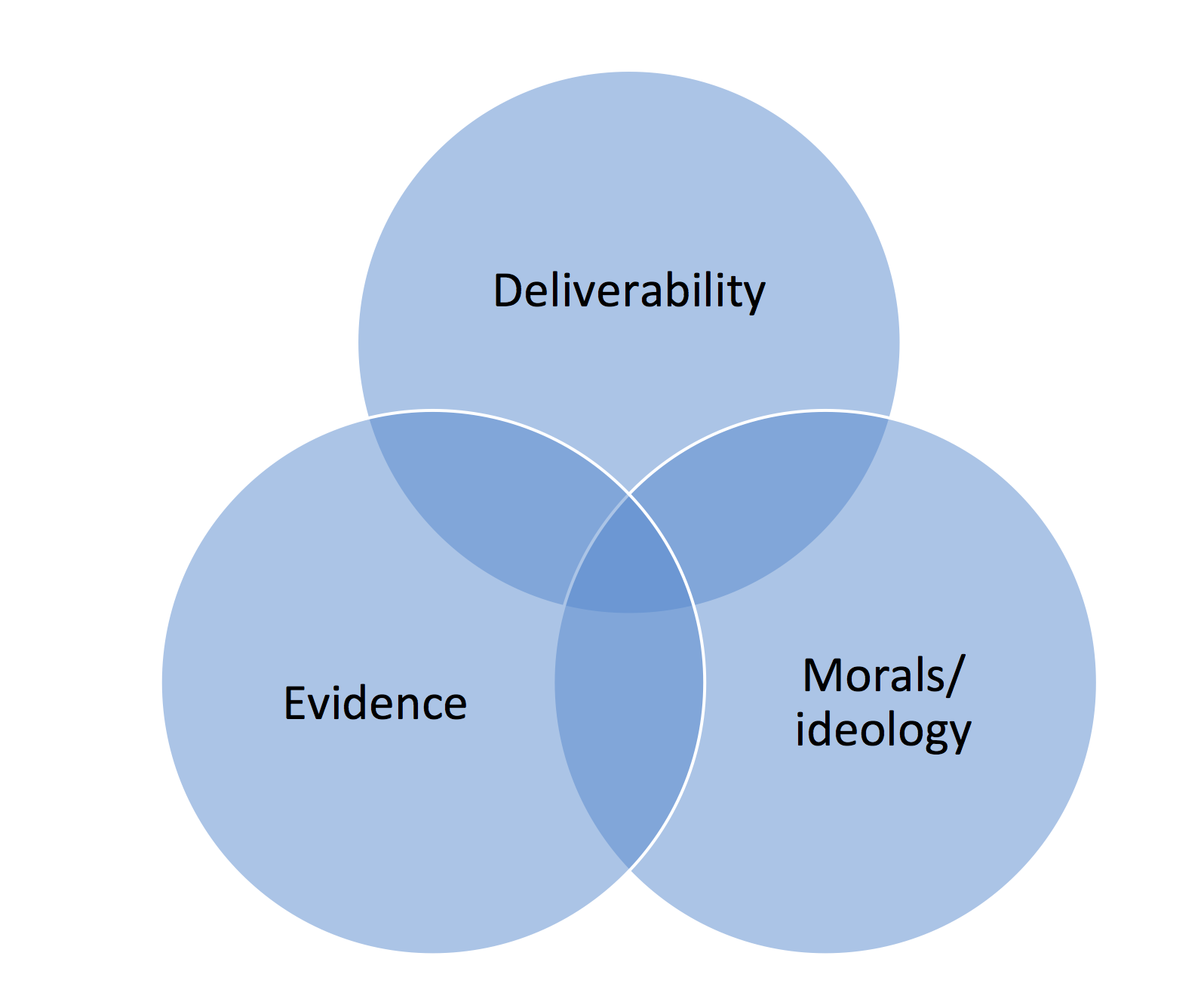
My research allowed me to concluded that three key drivers are optimum for delivery of a PCC-led harm reduction approach: using the levers at their disposal, such as the statutory functions, and informal governance mechanisms, such as convening power, which are able to provide the strategic and political coverage required to deliver at pace.

PCCs are unique in the landscape of UK governance and whilst weaknesses in mechanisms designed to reign in their power could be viewed as worrying, in the drug policy space this has allowed for the development of a new approach in the West Midlands, one that is evidence-based and has the ability to save lives, reduce costs and reduce crime.

The potential of PCCs is arguably still being explored, but their ability to test new approaches and work effectively with partners will be essential in other areas of policy, such as the response to serious violence and the potential for an increasing role across the criminal justice system.

PCCs have a number of levers at their disposal, and are able to use informal and formal governance mechanisms to foster real change at the local level and drive forward evidence-based policy.

Megan Jones is the Head of Policy for the West Midlands Police and Crime Commissioner and is a former INLOGOV student, studying on the MSc Public Management programme. She tweets at @MegJ4289.


What Do We Miss out on When Policy Evaluation Ignores Broader Social Problems?

Daniel Silver and Stephen Crossley

With local government funding being stretched to breaking point over the last decade, it is more important than ever to know whether investment into policy programmes is making a difference.

Evaluation draws on different social research methods to systematically investigate the design, implementation, and effectiveness of an intervention. Evaluation can produce evidence that can be used to improve accountability and learning within policy-making processes to inform future decision making.

But is the full potential of evaluation being realised?

We recently published an article in Critical Social Policy that demonstrated how the Troubled Families programme evaluation remained within narrow boundaries that limited what could be learnt. The evaluation followed conventional procedures by investigating exclusively whether the intervention has achieved what it set out to do. But this ‘establishment oriented’ approach assumes the policy has been designed perfectly. Many of us recognise that the Troubled Families programme was far from perfect (despite what initial assessments and central government announcements claimed).

The Troubled Families programme set out to ‘turn around’ the lives of the 120,000 most ‘troubled families’ (characterised by crime, anti-social behaviour, truancy or school exclusion and ‘worklessness’) through a ‘family intervention’ approach which advocates a ‘persistent, assertive and challenging’ way of working with family members to change their behaviours but, crucially, not their material circumstances.

Austerity, mentioned in just two of the first phase evaluation reports, was not considered as an issue that might have had an impact on families. Discussions of poor and precarious labour market conditions, cuts to local authority services for children, young people and families, and inadequate housing provision are almost completely neglected in the reports. Individualised criteria such as ‘worklessness’, school exclusion and crime or anti-social behaviour were considered but structural factors such as class, gender, and racial inequalities were not; nor were other issues such as labour market conditions, housing quality and supply, household income or welfare reforms.

The first phase outcome of ‘moving off out-of-work benefits and into continuous employment’ did not take into account the type of work that was secured, or the possible impact that low-paid, poor quality or insecure work may have on family life. Similarly, the desire by the government to see school attendance improve did not necessarily seek to improve the school experience for the child, and there is no evidence of concern for any learning that did or did not take place once attendance had been registered. Such issues were outside of the frames in which the policy had been constructed and so were considered to be outside of the boundaries of investigation for the evaluation. The scope for learning was therefore restricted to within the frames that had been set by national government when the programme had been designed.

So what can be done?

While large-scale evaluations of national programmes will still take place, local councils can add to these with independent, small-scale evaluations. These can adopt a more open approach that examined what happened locally and contextualise the programme within the particular social problems that residents experience.

A more contextualised form of evaluation can broaden the scope of learning beyond the original framing of a policy intervention. Collaboration between councils and participants who have experienced an intervention through locally situated programme evaluations can explore people’s everyday problems and the tangible improvements that have been delivered by an intervention (and what caused these outcomes to happen). Such an approach with ‘troubled families’ would recognise the knowledge, expertise and capabilities of many families in dealing with the vicissitudes of everyday life, including those caused by the government claiming to be helping them via the Troubled Families programme. Analysis of the data can be used to identify shared everyday problems and narratives of impact that show improvements to people’s everyday lives. By building up a picture about what approaches have been successful, an incremental approach to improving policy and culture within local institutions can be developed – based on the ethos of learning by doing.

In addition to learning about what works, we can also develop our knowledge of what problems have been left unresolved. Of course, no single policy intervention can possibly solve every dimension of our complex social problems. This does not necessarily mean a failure of the intervention, but rather that there are broader issues that need to be addressed. Knowing about these issues can produce useful evidence to find out about social needs in the local community that are not being met, and which the Council might be able to address or use the new knowledge to inform future strategies.

Evaluation is often seen as a bolt-on to the policy-making process. But re-purposing evaluation to learn more about social problems and the effectiveness of tailored local solutions can create evidence and ideas that can be used to improve future social policy.


Daniel Silver is an ESRC Postdoctoral Fellow in the Institute of Local Government Studies (INLOGOV) at the University of Birmingham. He previously taught politics and research methods at the University of Manchester. His research focuses on evaluation, social policy, research methods, and radical politics.

Stephen Crossley is a Senior Lecturer in Social Policy at Northumbria University. He com- pleted his PhD from Durham University examining the UK government’s Troubled Families Programme in August 2017. His most recent publications are Troublemakers: the construction of ‘troubled families’ as a social problem (Policy Press, 2018) and ‘The UK Government’s Troubled Families Programme: Delivering Social Justice?’, which appeared in the journal Social Inclusion.