Splitting up the Second City is a third-rate idea

Andrew Coulson            

Relations between first and second cities are often strained, especially when those who live in the Second City elect leaders from a political party that is not running the national government – as has been the case with Birmingham for much of its life.

After the Second World War, Birmingham was prosperous. It had avoided most of the bombing that destroyed the centre of Coventry, and its factories had produced aircraft, lorries, and other vehicles and equipment for the military and were now available to meet the post-war demand for cars and lorries. Wages for semi-skilled labour were some of the highest in the country.  There were shortages of labour, and to meet them employers welcomed bus drivers, conductors and nurses. These were followed in the 1970s and 1980s by workers mainly from Pakistan and Kashmir.

From the perspective of the London government, Birmingham did not need more employment, so companies who wished to invest in the motor industry were directed to Liverpool and elsewhere. But academic commentators, and the more thoughtful employers, could see that all was not well.  Britain was becoming increasingly dependent on service industries, which were far from strong in the Midlands.  In that context, in the mid-1970s, Birmingham Council proposed to build a National Exhibition Centre, on land near the airport. It would be owned by a company which was a partnership with Birmingham Chamber of Commerce.  The government wanted it in London; the council carried on regardless, and eventually the London government allowed it to do so.

Its structure was innovative – the company had just two shares, one owned by the city council, the other by the chamber. Each could nominate four directors. The chair would always be one of the chamber nominees – for a long time the leading industrialist Sir Adrian Cadbury.  But if voting on the board was tied, the chair did not have a casting vote, and what was proposed would not go ahead. The company, underwritten by the council, borrowed money and built the NEC.

A few years later, in 1987, the NEC company started building the International Convention Centre and Symphony Hall, on land off Broad Street. This was to make Birmingham a centre for conferences and business meetings. The decline in manufacturing and rising unemployment was by then so evident that Birmingham was granted Assisted Area Status by the European Union, so a fraction of the cost was met from Europe. The London government was not involved.

The ICC became a preferred location for large gatherings of professional bodies, such as the British Small Animal Veterinary Association, which grew till it hosted more than 8,000 delegates. It met in Birmingham every year for more than 25 years.  A boom in the construction of hotels met the demand for accommodation for this kind of event. Also of offices, many taken by national or international companies. No longer is Birmingham lagging in its provision of services. On the contrary it is a leader – almost entirely because of these initiatives.  Symphony Hall was built to meet the specification of Simon Rattle, then a very young but highly promising conductor of the City of Birmingham Symphony Orchestra. It was part of a city-council strategy to support the arts, of which another strand was the attraction of what became the Birmingham Royal Ballet to the Hippodrome theatre – with its charismatic directors, Peter Wright, David Bintley and now the Cuban star Carlos Acosta. Another initiative required investors in large buildings to put a small extra amount aside for public art.

The arrival of a national Conservative government in 2010 meant that the council started losing the extra grant it had long enjoyed to meet its high levels of deprivation, and put it under huge financial pressure. Whole levels of staffing in departments of the council were removed. Many senior officers did not stay long. Some posts were not filled. Others are filled by ‘interim’ staff, who are supplied by agencies, do not expect to stay in the city and are very unlikely to live in it.  

The refuse collection service was traditionally headed by an assistant director who had worked in the service for many years. For a period before the 2017 strike, this post was not filled, and the service was for a time run by the director of leisure. The strike was about reducing the number of operatives on each vehicle when wheelie bins were introduced. It was resolved by giving the workers improved pay.

It appears that it was only later that the implications of this for ‘single status’ were recognised, meaning that other categories of workers – in particular in social care – could claim equal pay for work assessed as equivalent. To meet the huge resulting costs, the city sold the NEC company for £300m. It was resold for £800 million three years later – a warning to the current commissioners not to sell this kind of asset on the cheap. Since then, the bin workers have managed to complete their shifts in less time than expected – partly assisted by some residents not putting their bins out every week – and been permitted to sign off early when their round was completed. Again, it has only recently been realised that this opens the city to another round of ‘single status’ claims.  Hence the near bankruptcy, Section 114 Notice, and appointment, by Michael Gove in London, of commissioners.

To resolve challenges such as this, when Birmingham is facing extreme pressures on all its services, will not be easy for the commissioners.

The worst thing they could do would be to split Birmingham into perhaps three smaller councils. This would increase the overhead costs – three directors of each service instead of one, three separate offices – and lose major economies of scale. It would also threaten the leadership and finance which is part of being the Second City – in the arts, in the representative institutions of local government, and in creating and implementing an economic strategy which responds to the local opportunities and needs which are most clear to people living in the city.

Andrew Coulson is a retired lecturer from INLOGOV and a former Birmingham City Councillor.  A longer version of this article was published in The Birmingham Post.  Andrew writes in a personal capacity.
Zooming in on Public Service: Remote Working

Dr Dave McKenna

Maybe you love it, maybe you hate it, maybe you are somewhere in between. Either way you know that remote working is here to stay. Should we be happy with how it’s going though? Are public services adapting or struggling with this new normal?

A lasting legacy of the pandemic, the expansion of remote working is definitely seen a good thing by many public servants. Less travelling, a chance to keep an eye on things at home and a chance to stick the washing on. You can have your work space exactly how you want and, when so many public services are looking to save money on costly office accommodation, it helps with that as well.

Of course, it doesn’t work for everyone. Unwanted interruptions, not having a good space to work in and missing those ‘water cooler’ conversations are all negatives. Also, isolation, professional and social, can take its toll and affect mental health. It’s no fun taking a distressing call in your own home with no-one around to talk to about it afterwards.

Three years on from the first shock of the pandemic, a more complex picture of remote working is starting to emerge – something that we are picking up as part of refreshing the 21st Century Public Servant research 10 years on (link in the comments).

For example, is there something concerning about the way that remote working can divide teams? After all, when Joe is working at home the rest of us are left to answer the office phones or respond to the people turning up the front desk – and Jane is worried that Joe might not be really working at all. He certainly seems invisible.

There are also worries about people who joined their teams during lockdowns and formed their relationships with co-workers over Zoom. How might starting a job in ‘virtual limbo’ affect people when they finally start to meet their team in person?

We’ve also come across the idea that long term remote workers form stronger relationships with virtual co-workers and find it easier to distance themselves from work relationships they see as negative – perhaps withdrawing from their teams in a way that office-based staff might not. 

And what about citizens? On the one hand public servants can be more accessible and might have more time due to less travel but is the quality of their interactions affected? When public servants are being asked to be more relational in their work can this be achieved in the same way through Teams or Zoom?

The challenge for public servants, it seems, is to adapt to remote working, or perhaps more accurately, to hybrid workplaces. To maintain the benefits of remote working while staying connected to co-workers and to the communities they serve.

We think it’s an intriguing topic of research and we are looking to learn more…

Dr Dave McKenna is an independent consultant and researcher who helps councils and other public bodies with training, research and improvement work. He is part of the research team currently updating our 21st Century Public Servant framework.

Mission Possible? 

Jason Lowther

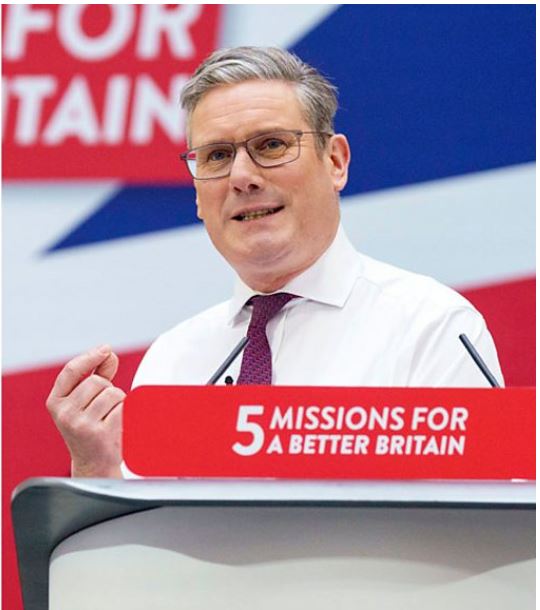
With under 700 days to the next UK general election, political parties are busy developing their manifesto documents.  In February, Labour leader Keir Starmer made a major speech laying out his “five missions for a better Britain”.   How do these five missions relate to local government?  And is the turn to “mission driven” government likely to work?

The five missions vary in their level of specificity and challenge.  Securing “the highest sustained growth in the G7, with good jobs and productivity growth in every part of the country…” is a little vague but likely to be difficult, especially given we are currently ranked 6 out of 7 in terms of output per worker.  Mission #2, “make Britain a clean energy superpower”, accelerating the move to zero-carbon electricity from 2035 to 2030, is specific but very challenging.  Mission #3, reform of health and social care and reducing health inequalities, will require a re-focus from secondary (hospital) care to social care and addressing the social determinants of health.  Mission #4 is about community safety, and likely to involve more community policing.  Finally, mission #5 is to “break down the barriers to opportunity at every stage” through reform to the childcare and education systems.

Local government potentially has important roles in each of the five missions.  Local education, skills and economic development functions will be critical to improving productivity.  On energy, Net Zero requires at least a doubling of electricity generation by 2050, from decarbonised sources.  Decarbonisation strategies need to be place-based, taking account of the geography, building types, energy infrastructure, energy demand, resources and urban growth plans.   We’ve recently argued here for the key roles of councils in this area. 

Turning to health and care services, local government clearly has leading roles – including ensuring place-based planning to address the social and behavioural causes of health inequalities.  Analysis by the Liverpool and Lancaster Universities Collaboration for Public Health Research in 2021 concluded: “investment across the whole of local government is needed to level up health including investment in housing, children’s, leisure, cultural, environmental, and planning services”.  Similarly community safety, child care and education are areas where local government could be enabled to have much greater positive impact.

Perhaps as important as the specific “missions” is the approach to governing which the party is proposing.   Labour’s document characterises this as a move from top-down, target-led, short-term, siloed approaches, to government which is more “agile, empowering and catalytic”, working across the public and private sectors, and civil society.  This, it argues, requires organising government around a shared vision, focusing on real world outcomes, concentrating on ends with flexibility and innovation concerning means, devolving decision making from Westminster, increasing accountability including central and local data transparency, and adopting long-term preventative approaches including greater financial certainty for local areas. 

In some ways the idea of mission-driven government echoes the 1990s thinking of Ted Gaebler and David Osborne’s book “reinventing government”, which argued for a more entrepreneurial approach to the delivery of government.  Their work pointed to entrepreneurial companies setting overall missions and goals, and then leaving managers to figure out how best to deliver these – for example, by providing an overall budget for a service rather than detailed line-by-line budgets which disappear if not spent by year end.  The focus on managers rather than considering the perspective of politicians is one of the problems identified in subsequent evaluations of the reinventing government model, together with difficulties in sustaining the approach.

Mission-driven policies addressing ‘grand challenges’ of society are increasingly common, for example in the UN Sustainable Development Goals and various EU policies.  Mazzucato et al recently argued that addressing such challenges requires strategic thinking about: the desired direction of travel, the structure and capacity of public sector organisations, the way in which policy is assessed, and the incentive structure for the private, public (and I would add community) sectors. Labour’s paper makes a start (albeit at a very high level) on thinking through these areas. The litmus test, though, will be in developing the detail and how far this engages with local areas.   

Over the next few months, we will be contributing to the debate on the upcoming party manifestos with some research-informed thoughts on a variety of local government related policy areas.  If you would like to be involved in developing these, please get in touch

Jason Lowther is the Director of INLOGOV. His research focuses on public service reform and the use of “evidence” by public agencies.  Previously he worked with West Midlands Combined Authority, led Birmingham City Council’s corporate strategy function, worked for the Audit Commission as national value for money lead, for HSBC in credit and risk management, and for the Metropolitan Police as an internal management consultant. He tweets as @jasonlowther

Picture credit: BBC

Local government should welcome Gordon Brown’s private bills proposal

Phil Swann

Streamlined access to local legislation must be available to help struggling councils to improve rather than rewarding those that have already done so, writes a PhD candidate in central-local government relations at INLOGOV and former director of Shared Intelligence.

In 1926 Winston Churchill, then chancellor of the exchequer, successfully opposed a private bill promoted by Bristol Corporation to establish a municipal bank in order to stop “all kinds of incompetent town councils”, particularly “socialistic” ones, from running banks. He did so despite the fact that the bill was supported by his Conservative colleague and former mayor of Birmingham Neville Chamberlain, who argued that Birmingham’s municipal bank had encouraged thrift and home ownership.

It is interesting to reflect on this dispute (not the last between these two political Titans!) in the context of the move by Gordon Brown’s Commission on the Future of the UK to promote the use of private bills by local councils. Raising the prospect of “the great cities of England” exerting similar powers to the Scottish and Welsh governments, the commission recommends a new, streamlined process enabling councils to initiate local legislation in parliament. This, the commission argues, would give councils an ability to secure the powers they need and to have a direct relationship with Parliament.

Evading centralising tendencies

It is undoubtedly the case, as the commission argues, that private legislation provided a vehicle for innovation in Victorian local government in the face of the social, economic and physical impacts of the industrial revolution. 

The genesis of public health lies in local legislation as does the creation of public utilities to provide gas, electricity and public transport. It was the ability of local corporations to promote private legislation that fuelled Joseph Chamberlain’s ambition to turn Birmingham Corporation into “a real local parliament”. Private acts were also used by enterprising councils to evade the centralising tendencies of successive governments in the second half of the 19th century.

It is also the case, however, that by the inter-war period private legislation had become a feature of the tensions in central-local government relations rather than necessarily being a solution to them. The resources and ambition required to draft and promote private legislation reinforced a growing divide between “advanced” or “progressive” councils on the one hand and “backward” or “penny-pinching” councils on the other hand. This reinforced differences between the major cities and smaller towns and rural areas. The widespread use of private legislation also contributed to the ad hoc and complex structures and powers of Victorian local government.

Significantly these trends were reflected in the justification for increasing central government intervention in local politics. In the 19th century there was a shift in ministerial focus from corruption to efficiency and action to bring “backward” councils up to the standard of the “progressive”. The first half of the 20th century saw a financially driven move to rein in the most innovative councils and drive improvement in the poorly performing ones. The dispute between Churchill and Chamberlain over the Bristol bank bill is an example of this.

Clause acts and adoptive acts

Despite these warning notes from history, the ambition of the Brown commission to enable local leaders to have access to a streamlined process to initiate local legislation should be welcomed. Many of the problems that emerged when private legislation was a common feature of local government could be overcome if it was explicitly seen as a way of testing new legislative powers prior to wider adoption – genuine pioneering.

Two other legislative devices deployed in the Victorian period could help to secure this approach if they were refreshed alongside a revival of local legislation. The first device is a clauses act, the prime example being the Town Improvement Clauses Act 1847. It brought together the provisions most commonly inserted in and effectively deployed through local legislation. Clauses acts, each of which would relate to a particular service area or initiative, would both streamline the legislative process and avoid unhelpful adhockery.

The second device, which takes this a step further, is the adoptive act. This is a piece of legislation which has been through the parliamentary process but which comes into effect only when it is adopted by individual local authorities. Acts of this type could make powers that have been successfully adopted by one authority available to be adopted by others without requiring local drafting or taking up parliamentary time.

Earned autonomy?

One other issue which requires attention is whether there should be a link between an ability to initiate local legislation and a council’s perceived performance. A sustained thread running through central-local government relations since the 1830s is the view that that councils should not benefit from new powers or responsibilities until they have met certain conditions or achieved a certain standard.

Joseph Chamberlain, who made extensive use of private legislation in Birmingham, took a different view. In 1877 he argued that “whatever the defects” of a council “I defy you to make a better one for the place except by gradually increasing its functions and responsibilities and so raising its tone.” No earned autonomy for Chamberlain!

If the increased use of local legislation is to help achieve the ambition set out by Brown and his commissioners, it is essential that streamlined access to local legislation is available to help struggling councils to improve rather than as a reward for having done so.

This article first appeared in the Local Government Chronicle on 13th December 2022.

Phil Swann is researching a PhD on central-local government relations at INLOGOV

Integrated Care Boards – a new frontline in localism?

Jason Lowther

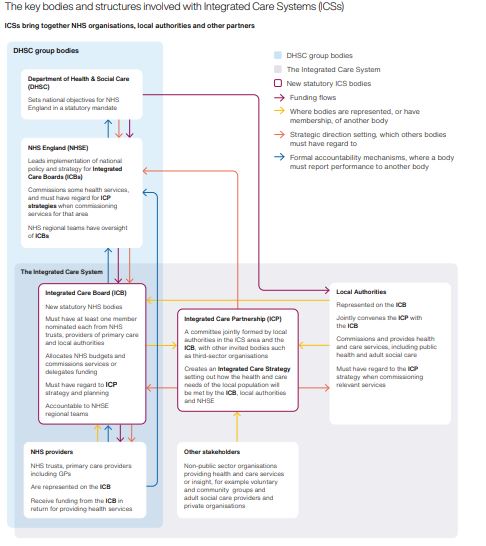
As the government once again kicks down the road decisions on vital reforms and funding for social care, local areas are establishing the Integrated Care Boards which will lead the new Integrated Care Systems (ICS), bringing together the NHS, local government and partners to plan and deliver integrated services to improve the health of the local population.  Building on the progress made since many public health responsibilities transferred back to local government in 2013, this is a great opportunity to address the determinants of health and issues around health inequality.  Might ICSs at last lead to an effective local voice in our over-centralised, top-down healthcare system?

Each ICS is supposed to plan at three levels: the neighbourhood (an area of around 40,000 people), the ‘place’ (often a LA area), and the (ICS) system (covering around 2 million people).  Working at the neighbourhood level is likely to be somewhat informal, often using a social prescribing approach and developing multi-disciplinary teams including third sector partners.  The approach to ‘place’ looks set to vary between areas, with some ICSs devolving significant responsibility (and funding) whilst others centralise these at ‘system’ level.  Meanwhile at ‘ICS system’ level, Integrated Care Partnerships (joint LA and health committees) will develop an Integrated Care Strategy to meet the assessed health and social care needs of their population identified in the Joint Strategic Needs Assessments and Wellbeing Strategies prepared by local Health and Wellbeing Boards.

Beyond the formal planning process, the success of local ICSs will partly depend on the quality of local collaborative (managerial and political) leadership – across statutory partners and with the third sector.  It will be a tough job to balance the priorities of the national health service and issues of local places, but many local authorities will be able to offer helpful experience , for example from moves to more networked governance approaches.

The National Audit Office recognises the potential but appears dubious on current prospects.  Last month it published a review, Introducing Integrated Care Systems: joining up local services to improve health outcomes, finding:

NHSE has a detailed regime to monitor performance against core NHS objectives but … it is less clear who will monitor the overall performance of local systems, and particularly how well partners are working together and what difference this new model makes…

The report notes that, whilst government is asking ICSs to set out local priorities and make progress against them, there is no protected funding and few mechanisms to ensure this happens.  This leads, as the NAO politely puts it, to “a risk that national priorities, and the rigorous oversight mechanisms in place to ensure they are delivered, crowd out attempts at progress on local issues”.  The report also identifies five “high risk” elements of effective integration: clarity of objectives, resourcing, governance and accountability (such as how ICSs will function alongside existing local government Health and Wellbeing Boards and how accountability differences between NHS and local authority bodies will be resolved), and the capacity to balance priorities other than national NHS targets. These urgently need to be addressed if ICSs are to begin to meet their potential.

At one of Inlogov’s “Brown Bag Lunch” discussions earlier this month we agreed on the importance of issues around how ICSs develop, particularly in terms of developing effective system leadership and planning, collaborating with community organisations, and links to wider devolution processes. I’d be interested to hear about experiences in local areas as these develop. 

Jason Lowther is the Director of INLOGOV. His research focuses on public service reform and the use of “evidence” by public agencies.  Previously he worked with West Midlands Combined Authority, led Birmingham City Council’s corporate strategy function, worked for the Audit Commission as national value for money lead, for HSBC in credit and risk management, and for the Metropolitan Police as an internal management consultant. He tweets as @jasonlowther

Picture credit: National Audit Office

Is Government Giving Value For Money?

Jason Lowther

When money is short, how we spend it becomes even more important. As central government reheats its arguments for austerity following the chaos of the last few weeks, I’ve been reflecting on the contents of the 2021 budget (just a year ago).  The 2021 budget set out not just spending plans, but also a souped up approach to measuring outcomes and cost-effectiveness of government spending. How are these playing out, and will they survive the No 10 merry-go-round?

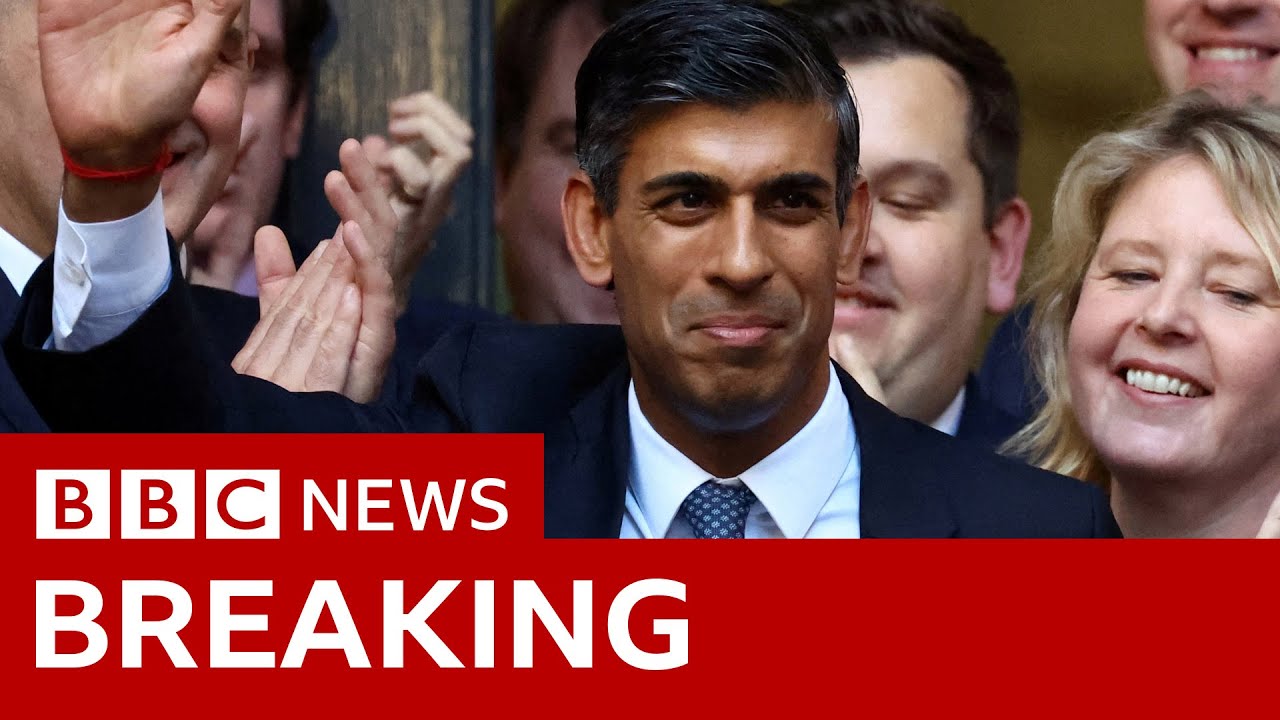
Rishi Sunak, then eight months into the job as Chancellor, noted that government borrowing was relatively high after the pandemic, warned of the public finances’ exposure to rises in interest rates, and outlined how spending was being linked to the delivery of outcomes alongside across the board ‘efficiency savings’:

The fiscal impact of a one percentage point rise in interest rates in the next year would be six times greater than it was just before the financial crisis, and almost twice what it was before the pandemic…

Decisions have been based on how spending will contribute to the delivery of each department’s priority outcomes, underpinned by high-quality evidence. The government has also taken further action to drive out inefficiency; SR21 confirms savings of 5% against day-to-day central departmental budgets in 2024-25. (page 2)

The “priority outcomes” are the latest in a long line of attempts to prod government spending into delivering effectively on political priorities, rather than blindly increasing/decreasing by x % compared to last year.  A 2019 report from the Institute for Government helpfully outlines many of these earlier initiatives (summary from the House of Commons Library) including:

  • “Scrutiny programmes” and the Financial Management Initiative (FMI), introduced under Thatcher.
  • The Cabinet Office and Treasury set up the Financial Management Unit (FMU) in 1982 to help with creating plans under the FMI.
  • The “Next Steps” report, published in 1988, which recommended the establishment of executive agencies to carry out the executive functions of government.
  • Tony Blair’s administration developed a greater focus on performance targets and Public Service Agreements (PSAs) which put these targets on a formal basis.
  • In 2001, Blair’s government also set up the Prime Minister’s Delivery Unit (PMDU), which was intended to coordinate PSAs and bring them under more central control.
  • Under the coalition government in 2010-15, PSAs were abolished and replaced with Departmental Business Plans (DBPs). These shifted the focus from targets to actions – in other words, they listed what each department would do and by when, rather than what they sought to achieve.
  • Under the Conservative government in 2016, DBPs were renamed to Single Departmental Plans (SDPs), which were themselves renamed to Outcome Delivery Plans (ODPs) in 2021. According to the NAO, SDPs (and by extension, ODPs) are supposed to be “comprehensive, costed business plans”.

As well as having to write down what outcomes they want to achieve, and how they will know whether that is happening, under the SDP system departments were also required “to assess progress in delivering their priority outcomes [and] … share regular performance reports with HM Treasury and the Cabinet Office”. 

In the 2021 spending review, the departmental outcomes were spruced up to reflect the (now last-but-one) PM’s five priorities of levelling up; net zero; education, jobs and skills; recovering the NHS; and reducing the volume and harm of crime.  

This blog’s audience may be interested in “Where does local government fit in this compendium of key priorities?”  The answer is a little depressing: on the last line of the last page (page 30 of 33), just before the devolved government departments. The relevant outcome is inspiring enough: “A sustainable and resilient local government sector that delivers priority services and helps build more empowered and integrated communities”, albeit with the reassuringly non-SMART measure that “the department will provide narrative reporting on progress for this outcome”.  Of course I exaggerate, because local government has critical inputs to very many of the earlier outcomes too, but it’s hard not to conclude that local services and communities were not yet at the top of the ministerial attention list.

Will the “priority outcomes” survive the whirlwind of ministerial movements and unforced economic missteps?  After the last seven weeks, I’m not going to make predictions – but we should know in the next month, and alongside the financial figures they could be our best hint yet on where a Sunak government is heading.

Picture credit: https://www.youtube.com/watch?v=Du_6mRV8Hm8

Jason Lowther is the Director of INLOGOV. His research focuses on public service reform and the use of “evidence” by public agencies.  Previously he worked with West Midlands Combined Authority, led Birmingham City Council’s corporate strategy function, worked for the Audit Commission as national value for money lead, for HSBC in credit and risk management, and for the Metropolitan Police as an internal management consultant. He tweets as @jasonlowther