The meetings of the North West London Joint Health Scrutiny Committee, which I Chair, don’t usually set the pulses racing but the recent one was an exception.
My committee’s job is to keep a friendly but critical eye on how the NHS North West London Integrated Care Board (ICB) delivers its budget of over £4 billion to the 2.4 million population of the eight NW London boroughs.
What made my committee’s recent meeting special was that information had leaked revealing ICB plans for major changes in GP ‘same day’ services, replacing the system of individual practice reception staff passing calls on to GPs with a new system in which far fewer “hubs” would pass 93 percent of calls to other staff, with only 7 percent to be handled by GPs. The ICB had planned to introduce the hubs by April 1 as part of its ‘single offer’ local enhanced service, with practices obliged to sign up to access the funding — effectively mandating the hubs. They were forced to delay by a storm of protest from GPs and our residents.
While my committee meetings are held in public, the members of the public aren’t usually allowed to speak at meetings, but on this occasion, I thought it right to ask Merril Hammer, a Hammersmith resident, Robin Sharp, a Brent resident, and Dr Vishal Vala, a local GP, to set the scene.
Merril spoke eloquently about the risks of triage or assessment in hubs by care co-ordinators or others who were not qualified or experienced GPs. The lack of any analysis of the impact on different groups and of proper risk assessment and of any reports from pilots was also of great concern.
Robin stated that Brent Patient Voice had urged patient involvement in any trials when the pilots were first mentioned, but the ICB had failed to listen. What had emerged to be implemented without any consultation with GPs had caused a great surprise and undermined the role of GPs as established since the NHS began.
When members of my committee gave voice to their questions and concerns, there was heavy criticism of the way in which the scheme had been developed by management consultants behind closed doors and without any prior engagement with the local government. There was concern that only long-term patients with complex needs would be referred to their GPs, when practices were made up of patients of all ages with needs that varied from time to time.
The ICB has now apologised for ‘poor communications’, arguing there had been ‘misunderstandings’ about triaging. They now talk of “co-production” with residents and local government at local level. So we look forward seeing the ICB’s plan for this and for wider engagement with the public as a revised scheme is developed.
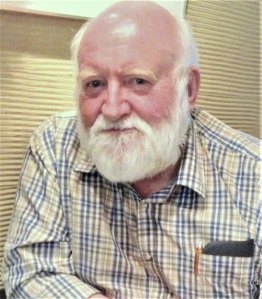
Cllr Ketan Sheth chairs the North West London Join Health Scrutiny Committee
It’s little consolation to the ‘powers that were’ in Birmingham Council House, but the past several months’ headlines about “Europe’s Largest Local Authority” going bankrupt have done wonders for my personal online social networking. From the BBC and Financial Times to the World Socialist International Trotskyists, that headline has made us Brummies suddenly globally famous as citizens of ELLA.
I’ve been emailed by erstwhile colleagues and ex-students I’ve not seen or heard from for years, now back home in Australia and South Africa, Japan and Kazakhstan, wanting to know whether Birmingham really is Europe’s Largest Local Authority – like it boasts on its Website Awards page – and, if so, why didn’t I make more of it while they were students here.
Yes, they’re curious about the bankruptcy bit, which I also have to try to explain, but it’s the ELLA boast that really fascinates them – because they recall their travels around Britain and Europe, and clearly blame me for their not having been able to boast about temporarily residing in the continent’s LLA. The clever-dick ones even add, “What about Kent?” Or “Didn’t you say it was East Lindsey in Lincolnshire?”.
And they’re not wrong, of course. Take the real ‘biggies’. In population, Kent is nowadays just one of the ‘Big 3’ of the 36 non-metropolitan or shire counties – its 1,858,000 fractionally behind Essex and Hampshire, and all roughly half as large again as Birmingham City Council’s 1.15 million. However, those counties’ local governments are, of course, two-tiered – counties and districts, each responsible for different functions and services. And – spoiler alert – it’s single-tier or unitary authorities, responsible for providing all principal local government services in an area, that count here.
County councils provide services covering the whole county – education, adult social care, waste disposal, etc. More local services, like refuse collection, environmental health, and leisure facilities, are provided – as I’d certainly have pointed out – by, in Kent’s case, 12 smaller district councils.
Sounds straightforward, doesn’t it? In fact, it’s anything but, and, if you were a class of students, I’d have had to at least mention the bizarre distinctions between ceremonial and historic counties, Lord-lieutenants (Lords-Lieutenant?) and High Sheriffs. Suffice it here to stress that it’s the two-tier structure and the ‘county’ bit that bar these bodies from challenging Birmingham’s status as ‘Largest’.
We do, of course, have a West Midlands Combined Authority, headed currently by Mayor Andy Street, but that’s entirely different and its 18 local authorities cover a far larger regional area than the old West Midlands County Council that Margaret Thatcher abolished in 1986. It’s an increasingly important, and influential, regional and national voice, but definitely not a local authority.
And East Lindsey? I honestly can’t remember ever mentioning this. If I did, I’d guess it was to encourage some overseas students to visit Skegness, as somewhere ‘different’ but inherently English and off the proverbial tourist track. It’s a pleasant seaside resort with a rather splendid clock tower – which tells the time, unlike, for apparently a further several weeks, the UoB’s Old Joe – that probably happened then to be the largest town in England’s geographically largest local government district – East Lindsey – and five or six times the area of Birmingham.
We’ve fully established, then, that Birmingham’s ‘Europe’s Largest Local Authority’ claim has nothing to do with either population or geographical size, but everything to do with the UK’s uniquely large-scale, or ‘non-local’, local government structure and the gradual disappearance of devolution to more local units of government.
Put another way, it’s a question of NUTS. Yes, there’s plenty about our local government system that doesn’t make much sense – not least its sheer non-localness – but here we’re actually talking about the Nomenclature of Territorial Units for Statistics, which both sounds better in the original French and produces an easily memorable acronym.
It’s statistical shorthand for the EU’s hierarchical way of standardising the different ways in which the hugely varying EU states administratively structure their sub-central governments – regardless, if necessary, of the institutional reality. A statistical harmonisation exercise, therefore, rather than an aid to serious cross-national local government comparison.
The NUTS classification subdivides every member country into three principal levels, NUTS 1 to 3, to which large countries can add further levels by subdividing NUTS 3 into LAU (Local Administrative Units). Very roughly, then, the currently 92 NUTS 1s are major socio-economic regions or groups of regions of relatively larger states – Germany’s 16 Länder, France’s 14 Régions, Poland’s 7 Makroregiony. And the UK, were we still EU members, would have 12: West Midlands and the eight other English regions, plus Scotland, Wales and Northern Ireland.
The 240 NUTS 2s are basic regions or regional groupings for the application of regional policies – Austrian Bundesländer, Belgian, Dutch and France’s former Provinces – and in the UK 40 conveniently grouped counties, London ‘districts’, and in the West Midlands its seven boroughs.
The 1,164 NUTS 3s tend to be sub-divisions of regions, provinces, counties, or groupings of municipalities for specific purposes, rather than individual local authorities. But such is the UK’s exceptional non-local scale that it takes nearly one-sixth of that total (174), with many councils qualifying for their own, including all seven West Midlands boroughs.
Even forgetting the UK’s large slice, that 1,164 doesn’t sound that many for a whole continent, does it? Hence those Local Administrative Units – over 92,000 of them which constitute the overwhelmingly biggest columns in the main NUTS table. In our case LAU 4s would be the upper tiers of our traditionally two-tier system of county and district councils, and LAU 5s the lower tiers – or, rather, would have been, the two levels having since been merged.
I hate that LAU term. It’s misleading bureaucratese: a seriously disparaging label for what most European countries’ residents would first think of when asked to identify their elected local governments. To pick some examples: France’s LAU 4s were/are its nearly 35,000 Communes, Germany’s its 10,775 Gemeinden, Italy and Spain their 8,000 Comuni and Municipios – with, obviously, what we would consider mostly modest-sized populations to match.
At which point I admit my age and recall Mr Spock’s immortal response to Star Trek’s Captain Kirk: “It’s life, Jim, but not as we know it”. And yes, I know it was from a later song, rather than the TV series, but it fits. Because for a Brit those sizeable NUTS/LAU numbers could easily be described as representing “Real Local Government, Jim, but not as we know it.”
Chris Game is an INLOGOV Associate, and Visiting Professor at Kwansei Gakuin University, Osaka, Japan. He is joint-author (with Professor David Wilson) of the successive editions of Local Government in the United Kingdom, and a regular columnist for The Birmingham Post.
My sister lives in the Netherlands. I saw her at the weekend. She’s planning her return to the UK, and so our conversation inevitably turned to “the state of the UK”. To my surprise, the first thing she raised was the parlous state of Local Government. It’s not a topic that usually cuts through to the general public. Has it got that bad?
The slant that I take on this topic (and all others to be fair) is different from most people’s. I’m Alice Watson, part of the team that created the ScrutinyCounts app, which provides easy access to parliamentary debates. So every day I use the app to check what’s been said in the House, and I dip into any debates that look of particular interest.
And as luck would have it, recently (1st Feb 2024) there was a debate about Local Authorities in Financial Distress. And a few days before that there was one about Somerset Council’s difficulties, and the week before that there was one about Transparency in Local Government, and the week before that there was one about the potential merits of the Four Day Working Week….and the list goes on. There isn’t a shortage of topical content.
People groan when I say I read Parliamentary Debates. They assume they are like PMQ’s (a pet hate of mine), which they aren’t.
Here’s a quote from the recent debate about Local Authorities in Financial Distress. It’s a reply from a Labour MP (Clive Betts) to a Conservative MP (Bob Blackman):
It’s a cheering thought. Cross party select committees working collaboratively to explore problems and find solutions.
And what else did I learn from the debate? That the woes of some councils are self-inflicted, but not all. That the various mixed pots of funding available to councils makes for a patchy funding pattern geographically. That the three main spending challenges are Social Care, Special Educational Needs, and Homelessness.
There are two big benefits to reading a parliamentary debate on this (and any other) topic. Firstly, you get to read all sides of the political argument, which is good for the soul regardless of where you sit politically. And secondly, you get a sense of how different regions are affected. By way of example, Bradford’s problems stem from the high cost of Children’s Services in the Borough. The Trustees running Children’s Services have demanded a sum equivalent to about 50% of the council’s budget. Very different from the much-reported Equal Pay claims at Birmingham.
There are hundreds of other topics that are equally interesting and relevant to people who spin in the world of Local Government. On 11th January 2024 there was a debate about SEND Provision and Funding. As is often the case, MP’s volunteered personal stories which adds conviction and context to their contributions. Read this quote from David Davis (Conservative) about his granddaughter, Chloe:
I won’t try and precis this, or any other debates here. Because with every precis, comes editorial judgement, and the whole point of ScrutinyCounts is that we don’t edit, summarise, filter or distort. We have created summary charts that enable you to navigate quickly to items that are of interest. Then you click through to the original debate and text. Our screen designs are optimised for speed reading so you can jump to contributions that interest you, and scroll up and down fast.
So what did I say to my sister about the parlous state of Local Government? I told her not to believe everything she reads in the news, but to look on ScrutinyCounts, read about it for herself, and make her own judgement!
Alice Watson is a Director of Hinc Ltd, the provider of the ScrutinyCounts mobile app. Having trained as an Engineer (Bath Uni), she established Porge (a data insight company), which she successfully grew and subsequently sold. ScrutinyCounts is her latest chapter. It sprung from her belief that people need an easy way of following politics, undistorted by echo chambers or soundbites. More information about ScrutinyCounts can be found here – https://www.scrutinycounts.co.uk/ or follow us on Twitter/X @ScrutinyCounts
In the intricate tapestry of European local governance, local councillors stand as pivotal figures, linking citizens to decision-making processes that shape their daily lives. Their interactions within communities, councils, and broader public administration are the bedrock of modern democracy. Last week, alongside colleagues from the University of Bristol, Cardiff University, and Ghent University, we embarked on an ambitious endeavour: an email survey reaching over 19,100 councillors across England, Scotland, Wales, and Northern Ireland.
The survey is part of a broader European effort, with a single shared survey being rolled out with spans twenty-eight European countries driven by a broad collaboration of academics emerges from extensive international research network dedicated to conducting surveys with local political actors to understand local and national political dynamics. Over two decades their comparative work has shed light on the councillor, council leader and mayor roles of local government, administrative intricacies, civic cultures, and political practices across Europe, enriching both academic and practical understanding.
Our latest research now refocuses on local councillors, probing fundamental questions about democracy, their perceptions of their roles, views on local government, challenges within the institutional environment, and policy priorities. The survey also aims to understand councillors’ experiences with aggression and abuse and the influence of such encounters on their council activities and public engagement.
But this survey is more than just academic curiosity; it’s about amplifying the voices of local representatives. Councillors are the conduits between citizens and power, entrusted with articulating community aspirations and championing collective interests. They face mounting external pressures—from austerity to centralisation—and grapple with balancing economic growth, development, and environmental concerns, alongside the existential threat of rising social care costs as more and more councils face financial distress.
Unlike previous paper-based iterations, this survey employs electronic questionnaires sent to individual councillors across England, Wales, Scotland, and Northern Ireland, with the survey lasting around 15 minutes, we are keen that councillors both start and finish the survey, so have enabled them to complete it over multiple sittings if required via simply clicking on the email invitation.
As the survey unfolds across 28 countries, we urge councillors to join the dialogue and lend their voices to the study. Personalised emails have been sent directly to councillors’ inboxes, and follow-ups will continue over the coming month. Any councillors unable to access the survey can reach out to the project team using the contact details provided below.
We are calling on all councillors to check their inbox for our survey! Your voices are crucial to use better understanding the challenges and priorities in your role. This is the first time we have delivered the survey across England, Scotland, Wales, and Northern Ireland so we are really keen to ensure that all voices are represented across political parties, different tiers of local government, and geographies. Let’s ensure all your voices are heard loud and clear.
Dr Thom Oliver is a Senior Lecturer in Politics at the University of the West of England, Bristol. Thom completed his PhD at INLOGOV in 2011. Along with Dr David Sweeting (Bristol), Prof Colin Copus (Gent), and Dr Bettina Petersohn (Cardiff), he is leading the Return of the Councillors study in England, Wales, Scotland, and Northern Ireland. Thom leads the Qualitative Election Study of Britain, and is a co-investigator on the Bristol Civic Leadership Project.
Keir Starmer’s shadow ministerial team has now started the access talks with the civil service which Prime Ministers traditionally permit in the run-up to a general election. These talks are designed to help the civil service familiarise itself with both shadow ministers and the potential policies of a new government, and to help shadow ministers understand the mindset of senior civil servants.
Not all shadow ministers transition to the same policy role in government, of course. Tony Blair’s former chief of staff, Jonathan Powell, revealed in his 2010 book The New Machiavelli how in their access talks, they had to arrange for one Permanent Secretary to meet two different shadow ministers – the one who currently had the portfolio, and the one they intended to do the job if New Labour won the election.
There is no manual on how to be a minister, and new ministers have often found themselves taking time to adapt to their new roles, aided by their private offices whom they meet on their first day after their appointment. Interviews contained in the Ministers Reflect archive of the Institute for Government, now almost 150-strong, confirm the centrality of the private office to a new minister’s life. They help them settle in, introduce them to the routines and artefacts of ministerial life, and prepare them for their first performances in the role. But private offices are double agents, warns former Conservative Cabinet Minister Ken Clarke, feeding information to ministers on the running of the department and feeding information back to the Permanent Secretary on the new minister.
The civil service is not, most former ministers believe, a conspiracy designed to stop ministers carrying out their objectives. Most praise the support they had from civil servants. But there is a genuine tension between the activist desire of ministers to ‘make a difference’ and the long-established processes of the civil service machine. My research in the Ministers Reflect archive suggests that over the last quarter-century, ministers have taken a stronger interest in issues of delivery and implementation, and ministers from all parties have come to express frustration with the delivery capacity of the civil service.
The interest in delivery and implementation has been driven from the centre of government: the Prime Minister’s Office, the Cabinet Office and also the Treasury. New Labour established a Prime Minister’s Delivery Unit. The Coalition abolished it – a mistake, admitted David Cameron and his fixer Oliver Letwin later – and then created an Implementation Unit to take things forward. Ministers developed their own techniques for checking their department’s delivery performance. Of course, an interest in delivery does not itself mean delivery has got better!
Traditionally ministers were appointed to leadership roles without any formal training. Learning was something you did on the job., Ministerial training is now on the agenda, and there have been training sessions organised both informally outside the government machine and more recently within it. But former ministers tend to believe it is their prior political activity which gets them appointed as ministers, while it is their prior work experience which helps them navigate their roles.
Ministers are appointed to positions of leadership by prime ministers and first ministers. Of course, it is what they do with that position that matters, and not simply their possession of authority deriving from appointment. Former Conservative Cabinet Minister Eric Pickles tells new ministers ‘don’t occupy the post, do something with it’. Former Labour Home and Foreign Secretary Jack Straw reminds them ‘you’re not just a place-holder’ .
Ministers perform a range of forms of leadership work. Their leadership identity – their ministerial mindset – necessarily develops over time as they work to understand their role. Their leadership takes a number of forms – collective, as members of a ministerial or Cabinet team; departmental, in a dual leadership role with their Permanent Secretary, Director General of divisional director; or as system leaders (for example in Education or Health). They perform as leaders publicly and privately; they take leadership decisions; they carefully manage their time as leaders. At some point, for whatever reason, they exit the leadership stage.
Will we see a new set of UK ministers soon? Are some now set for the exit? Time will tell. But time spent learning from the experience of former ministers is never wasted. After the minister is appointed, there’s little time left for learning….or life outside the job, come to that.
Leighton Andrews is Professor of Practice in Public Service Leadership at Cardiff Business School and teaches and researches government and leadership. Formerly Minister for Education and Skills and Minister for Public Services in the Welsh Government from 2009-16, he was Assembly Member for the Rhondda from 2003-16. www.leightonandrews.live
If you wanted some serious reader attention for something West Midlands local governmenty, you really, really wouldn’t have chosen this past November. The war in Gaza was seriously hotting up, there were the COP 28 talks in Dubai, Christmas was coming, and Aston Villa were en route to becoming the Premier League’s “foremost home team”, whatever precisely that means.
Serious distractions, but competition for headlines was only part of the challenge facing the Resolution Foundation’s early November release of its In Place of Centralisation report setting out a proposed and far-reaching Devolution Deal for London, Greater Manchester, and the West Midlands. There were other diversions and potential confusions too.
It was barely a month since Birmingham City Council – the principal West Midlands local authority involved in this proposed ‘Devo Deal’ – had issued not one but two Section 114 notices, reportedly declaring itself doubly “bankrupt”, unable to meet the Council’s financial liabilities relating to Equal Pay claims and an in-year financial gap within its budget, and handing over its governance to Communities Secretary Michael Gove’s appointed Commissioners.
And, if that wasn’t potentially complicating enough – for those directly affected as well as onlookers – in that same previous month representatives of the West Midlands Combined Authority (WMCA) had ratified the “Deeper Devolution” aka “Trailblazer” deal announced in the Chancellor’s March Budget.
That deal, comparable to that agreed by Greater Manchester back in March, but relatively little of which we’d heard in the meantime, would devolve more powers to ‘Metro-Mayor’ Andy Street (or, given the May Mayoral elections, potentially his successor), the 30 WM local authorities (7 met boroughs, 4 unitaries, 19 districts) and their 6 million population, and simplify funding arrangements, with £1.5 billion to spend on long-term infrastructure projects and services such as transport, skills, housing and regeneration. A key element is a single block grant negotiated with the Government, like a central government department, as part of next year’s Spending Review.
Key ‘highlights’ include:
A ‘landmark’ housing deal worth up to £500 million, offering greater flexibility to drive brownfield regeneration and funding to deliver “affordable housing at pace”;
Greater control over local finance, including retention of an estimated annual £45 million of business rates for the next decade [hold on to that version of ‘local financial control’!];
Up to six ‘levelling up zones”, backed by £25-year business rate retention, with an estimate total value of at least £500 million, to target investment and encourage regeneration in areas agreed with the Government;
Measures to tackle digital exclusion, including greater influence over high-speed broadband investment across the region and a £4 million fund to get more people online.
In anywhere other than one of the most centralised governmental systems in the developed world, describing this package as ‘trailblazing’ would be wildly OTT. Here, though, it was rightly welcomed as constituting serious devolutionary progress, and Mayor Street, not surprisingly, was enthusiastic, seeing it as “marking the beginning of the end of … the ‘begging bowl culture’ where we must regularly submit bids for various pots of money on a piecemeal basis.”
Here’s the thing, though – well, two things, actually. First, the really rather big thing. The leading West Midlands council in this new ‘Trailblazer’ era is currently, following the issuing of those Section 114 notices, (a) in severe financial straits, and (b) being run until quite possibly 2028 not by elected councillors, but by Lead Commissioner Max Caller, his associate commissioners and political advisors – none of whom have ‘Trailblazing’ as a core part of their brief.
The second and, in Birmingham’s current circumstances, almost other-worldly thing, is the Resolution Foundation’s In Place of Centralisation report which is, incidentally, not the first RF report to be covered in these pages. It’s other-worldly too in the sense that it’s just one, albeit important, product of a bigger, wider-ranging academic project: The Economy 2030 Inquiry – a Nuffield Foundation-funded collaboration between the Resolution Foundation, an independent think-tank, and the LSE’s Centre for Economic Performance.
UK economic growth is their primary project – not boosting local democracy – one persistent obstacle to the attainment of which they identify as “the decades of underperformance of the big cities of Manchester, Birmingham, and more recently London” – the key cause being, they reckon, the centralisation of the British state. No startling news to INLOGOV blog readers, but a contrasting starting point to, say, that of the authors of Trailblazer deals, and their prescriptions go a good deal further.
They start (p.4), unsurprisingly, from a different array of statistics, demonstrating the extreme centralisation of the British state.
Only 5 per cent of the UK’s tax revenues in 2019 were collected by local government, compared to 14 per cent in France, 23 per cent in Japan, and35 per cent in Sweden. Accordingly, local government relies ongrant funding,with only 19 per cent of all local spending in the UK funded locally, comparedto 37 per cent in the average OECD unitary state.
They concede that “recent advances in devolution have begun to unwind this”, but, following a decade of austerity, significantly further fiscal devolution is required to improve growth without increasing inequality – in the form of a ‘triple deal’ negotiated between the Government and the Mayors of Greater Manchester, the West Midlands, and London as a trio, going “beyond the recent ‘trailblazer’ deals” and into which other mayors would be able to opt in the future.
The core of the triple deal would be fiscal devolution, “which would help to end the centrally-imposed local government funding crisis for the three cities by widening the local tax base, and resourcing improvements in the local economy.” Everyone would be a winner – the mayors, borough and Exchequer all benefiting from a new revenue-neutral fiscal settlement, including (pp.4-5):
A local share of income tax receipts, with Greater Manchester and West Midlands keeping a larger share than London;
Complete retention of business rates, and control over the ‘multiplier’;
A single grant to the mayors distributed on a per person basis;
The ability for mayors to reform council tax.
It would then be up to the mayors, in negotiation with the boroughs, to distribute this revenue across local government’s various responsibilities across their city. And in the medium-term?
Well, big IF … but the higher growth in the three cities that would be “likely”, if this fiscal devolution were accompanied by other policy changes, would then translate into higher local tax revenues for the mayors – with, by 2038, Greater Manchester raising between £49 million and £230 million, and the West Midlands between £40 million and £187 million beyond their current level of funding.
That was from p.5 of what is a 64-page report, so there’s a very great deal more explanation and explication. But the key, and hopefully obvious, point of this blog is to enable you, if it crops up in conversation, to disabuse anyone of the notion that the Resolution Foundation’s contribution to this debate is just ‘Trailblazer deals’ writ large.
Our view is that the current local government finance system is bust. Business rates penalise high street shops, the council tax is regressive with hopelessly outdated valuations, and councils spend too much energy chasing central government largesse through competitive funding pots. Democratically elected councils rely on a begging bowl and lack basic revenue raising powers that are commonplace internationally. We will be saying more on this as the General Election approaches…
Chris Game is an INLOGOV Associate, and Visiting Professor at Kwansei Gakuin University, Osaka, Japan. He is joint-author (with Professor David Wilson) of the successive editions of Local Government in the United Kingdom, and a regular columnist for The Birmingham Post.
Jason Lowther is Director of the Institute for Local Government Studies (INLOGOV) and Head of the Department of Public Administration and Policy at the University of Birmingham.