The impact agenda and political agency

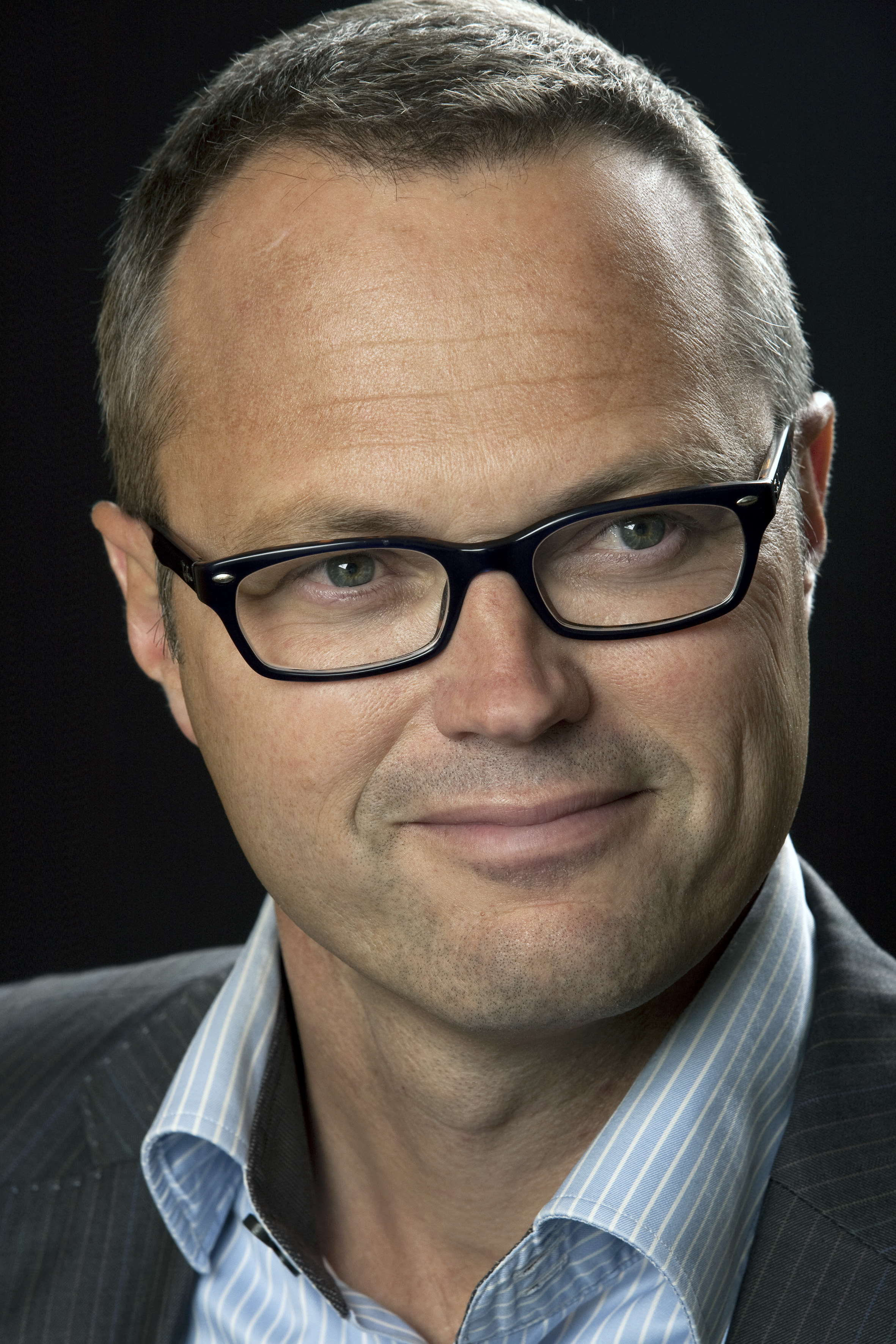
Matthew Wood

Why should we, as political scientists, ‘bother’ with impact? My answer is that as social actors we cannot avoid ‘impacting’ on society in one way or another, just like any other profession. The question is how we should choose to influence society. As British political scientists our choices are, thankfully, quite broad. Our discipline in this country is eclectic, our research agendas are diverse. Critically, our jobs also allow us significant autonomy to shape our individual identities, practices and relations with the outside world. The crucial thing is how we choose to shape that autonomy. Put in satisfyingly theoretical terms, it’s about how we exercise our political agency. This is why impact appeals to me and why I think it should appeal to others. In this blog I’m going to suggest how we, as researchers, might think about shaping our agency despite some of the problems with the current impact agenda.

The Trouble with Impact

The trouble, as Helen Turton demonstrates, is that there are significant pressures out there that seek to shape our agency as researchers in particular ways, narrow our research agendas and stop us speaking truth to power. Paradoxically, this includes the ‘impact agenda’ itself: everything from the REF’s ‘impact case studies’ to the Lib-Con Coalition’s fetish for behavioural psychology and the suspiciously parochial ‘nudge’. When academics look at this ‘agenda’, they understandably balk about being pushed into a positivistic straight jacket. Though I have yet to come across anyone at conferences who disagrees with the idea of ‘impact’, broadly constituted, many harbour an understandable distaste towards how it is currently being implemented.

So we are faced with a struggle over how to define what we mean by impact – broad or narrow. If we interpret it narrowly, then we risk curtailing our political agency. If we interpret it broadly, then we open up a lot more opportunities. I think we should interpret impact broadly, but the question is how do we do this while still acknowledging there are problems with the existing agenda? There are, I think, two ways we can think about impact, and they involve being reflexive about a few scholarly myths about epistemology and thinking about our communication with the outside world.

Epistemology

Firstly, we should question the myth that ‘positivist’ research, the development of universal laws of politics that can be implemented by policymakers, is somehow the holy grail of ‘impactful’ research. While it is certainly true that policymakers like graphs, stats, and anything that makes a claim to being authoritative, they also prefer research that is easily accessible and straightforwardly communicated, rather than a set of complex regression tables and formulae. The de-funding of political science programmes in the US is evidence enough that a hermetically sealed discipline concerned with establishing causal laws of political life will not wash with a practically focused policy world.

Similarly, we should challenge the myth that post-modern or constructivist research, or theoretically-driven work, is ‘non-impactful’. This clearly isn’t the case. Just take interpretive theory, deliberative theory, postcolonialism, eurocentrism, feminism, etc. These deal with weighty real-world issues of crucial societal importance, and to deny this is to cede ground to those who would cut funding for this kind of work.

The point is we should recognise the value of the full spectrum of political research, and never seek to close down our ontological, epistemological or methodological positions because we think the public will think the findings are less ‘relevant’. The topics we research almost always have connection to relevant societal issues. Often, it’s how we talk about our research to others that matters, and this leads me to the issue of communication.

Lost in Translation?

It’s somewhat of a hackneyed cliché that academics are poor communicators, stuck in an ivory tower talking pretentious gobbledygook. We can easily take umbrage at this, but can also see it as an opportunity for reflecting and improving the language we use. My own doctoral research was on ‘depoliticisation’, a concept with a fairly scholastic lineage, and I find it useful when thinking about communicating my work to do two things.

Firstly, I remind myself that academia has specialist language for a reason. We should cherish our ability to be creative in addressing our research topics, and remember that research starting out in relative theoretical obscurity can become publicly salient. Concepts are also identified with academic career trajectories (if you ‘invent’ a concept then you get a lot of credit for it), and we should never draw an arbitrary barrier at a point where we have ‘enough concepts’ and shut a generation of researchers out from having the potential to be identified with new ideas.

However, as Matt Flinders suggests, the ‘art of translation’ is a good way of thinking about how we can get across the interesting and creative concepts and ideas we come up with to different audiences that speak different languages. So, secondly, I think about how to explain my research in a way that, say, a bus driver or a doctor would understand. This is not me trying to ‘dumb down’ but to reflexively think about how my research would be understood or interpreted by a range of different people. This, I find, is useful not only for getting my research across to the ‘outside world’ on an everyday level, or in blog posts, but also feeding back into my academic work as a fresh perspective. Crucially, if our research is better understood by different audiences, then we have a better chance of getting the insights of our research noticed.

It’s perhaps important to remember that not all the barriers to impact are of our own making. Funding streams, government agendas, etc. are all oriented towards a particular ‘impact’ agenda that is, as Helen and Katie make clear, problematic. The important thing though is that impact is on the agenda, and therefore the potential is there for us as researchers to broaden our capacities for ‘agency’, which we should celebrate and engage with. After all, I began researching Politics because I thought I could change the world for the better by helping our understanding of it. That may be stupidly naïve, but it’s what I keep coming back to.

mattwood2

Matt is a Postdoctoral Research Fellow at the University of Sheffield Department of Politics, and Deputy Director of the Sir Bernard Crick Centre for the Public Understanding of Politics. He is currently researching ‘everyday politics’ and solutions to political disengagement in advanced liberal democracies.

Reclaiming the impact agenda: making impact work for you

Helen Louise Turton

When encountering the ‘impact agenda’ the ease of engagement is often dependent upon your discipline and/or the type of research being conducted. Certain forms of research don’t lend themselves to be easily compatible with the requirements of the impact agenda as it is currently defined. Given the pressures placed on academics to bring in external resources and to conduct research that has ‘impact’ academics (especially early career researchers) may then find themselves in a situation where they feel the need to morph their future research in order to meet such expectations. The parameters of the current impact agenda as it currently stands have created a situation where certain forms of research could become marginalised, devalued, and ‘unpopular’ unless we, as academics, exercise our agency and become active in defining impact.

Working in the discipline of International Relations I have experienced first-hand a number of different obstacles and challenges with regards to demonstrating the’ impact’ of my research. For instance;

1) Within IR the issues and topics that we are researching are rarely of local resonance as our research is focused on the ‘international’ level. While I believe that the ‘personal is the international, and the international is the personal’ when it comes to demonstrating the impact of my research on the local level it is difficult, for I cannot claim a causal relation to areas within the UK as demanded by the Research Excellence Framework. For example, if one is researching women’s representation in Rwandan politics it is highly unlikely that such research will “contribute to the economy, society and culture within the UK” (REF, 2012).

2) IR research is often not applicable to certain audiences such as parliamentary committees for example. For instance,  I have researched the sociology of knowledge within the discipline of IR, and the chances of presenting my work to civil servants, or being called to give evidence to a parliamentary select committee, or my being asked to speak to local government forum on this topic are largely improbable.

3) IR theory is a very large subfield within the discipline; however you are part of this prominent research community meaning that your work is theoretically inclined, it is very difficult to demonstrate your impact on a non-academic community. Even though I adopt the view that theory is praxis, theory development and theoretical research is not always evidently applicable to a policy audience and not always accessible to the public.

These obstacles and challenges present us with a danger, that the drive for impact could discourage researchers from focusing on certain issues and theory. The pressures academics are facing to demonstrate their impact could result in scholars trying to make their research fit with the impact agenda by changing the direction of their research. This fear is echoed by Dr Guy Redden, he argues that the narrowly defined criteria for research impact can result in “academics eschew[ing[ worthwhile kinds of work they are good at in order to conform”. The current emphasis on impact, and the way it is becoming locked in to employment, career progression, and grant success could lead to researchers modifying their behaviours and research in order to adapt to the demands of impact. According to Dr Peter Lawrence, the drive for impact has resulted in academics focusing more on their careers and less on understanding and theorising problems.

Do the difficulties and dangers generated mean that we should abandon the impact agenda? Whilst I remain wary and critical of broader changes within academia that the impact agenda is a product of – such as the marketization of knowledge, the corporatization of the university, and the adoption of marker-like behaviours within the academy – I don’t think we should abandon the call for impact per se but we should abandon impact as it is currently defined.

As academics we have a responsibility to share our knowledge and make it readily available and we should be encouraged to publically engage, but the way impact is currently defined is incredibly narrow and tends to orientate primarily around being policy relevant (especially within IR). Rather than making our research fit the impact agenda, we should be making the impact agenda fit with our research. We should be focusing on and thinking about what we want impact to look like. We need to be developing new forums and being more imaginative in the way we approach impact. Crucially, we need to remember that we are not passive in the process, and we should be taking more control over the impact agenda, in order to broaden its definition to prevent excluding certain forms of research. In other words we need to reclaim the impact agenda and define it in our own terms.

turton

Helen Turton is a University Teacher in International Politics and Security Studies at the University of Sheffield. Helen is also the co-convener of the British International Studies Association working group IR as a Social Science. She is currently organising a one-day workshop titled ‘The Impact of IR as a Social Science’ and will be presenting a paper on the relationship between ‘impact’ and IR Theory at the forthcoming International Studies Association’s annual convention in Toronto, March 2014.

Three problems with the impact agenda

Katherine Tonkiss

In a recent post for the LSE Impact of Social Sciences Blog, I argued with Catherine Durose that while the idea of delivering policy relevant research is positive, too often our claims to relevance do not deliver genuine impact. A couple of weeks ago I had the opportunity to revisit this issue when I spoke on the PSA Postgraduate Network impact panel, and here I reflect on some of the themes that emerged.

‘Impact’ is a response to the perception that academic work suffers from a relevance gap – that research is not relevant beyond academia and that therefore we should work to address this problem by producing research which has an impact on the wider world. This claim of a relevance gap has been critiqued on the grounds that it may not be true – many disciplines including feminism, and many policy-relevant academic departments (such as INLOGOV) have long had impact beyond their academic niche.

Despite this critique, the imperative to create impactful research is not necessarily something to be avoided. Not all research has to create impact, but it is a good thing that some research does, and maybe more research should do. Impactful research drives a democratisation of knowledge, enabling wider society to challenge and press for change.

There are, however, three key problems with the impact agenda.

1. Privatisation of knowledge

Impact is intended to democratise academic knowledge – to allow it to reach wider audiences. However, as Martin Eve has argued, the need for impact has arisen because of the privatisation of higher education which is privatising knowledge and therefore giving rise to the need for impact. Discussion at the PSA impact panel centred on how, for many, their biggest impact came from teaching but that this form of impact is, in their view, being curtailed. This is not an argument against impact, but rather the narrow way in which having an impact is understood.

2. Quantifying impact

Yesterday, Kate Dommett described in her blog post the various ways in which the impact of academic work is being measured. The problem with this is that, by demanding that impact must be quantifiable and suited to specific measures, we may miss quite a lot of the benefit and value of our research. Again, this is not an argument against impact, but rather what counts as impact. This is particularly evident in how we treat activities such as blogging and engaging with the media. As I argued with Catherine Durose, too often we count hits and retweets as measures of impact, rather than the less quantifiable and more long term dialogue that is opened up by engaging with these media. As such, we are performing claims to relevance rather than genuinely being relevant.

3. Doing research faster

Patrick Dunleavy has recently stated that research should be ‘shorter, better, faster, and free’, and that this should have implications for how research projects are constructed. Dunleavy wants information available to policymakers as quickly as possible and critiques social scientists still ‘trundling on’ doing three year studies and not getting results to policymakers in time for them to be relevant.

Rethinking how we construct large research projects is to be welcomed. However, the claim that this should mean producing research more quickly potentially undermines the quality and rigour of our academic work, as well as the depth that we are able to reach. Rather than thinking about how to shorten projects and deliver results more quickly, a more fruitful avenue may be to think about how to include those affected by the research in that research as it happens. This means co-designing research projects with participants and working with them closely throughout. In an article we wrote for Political Insight, Kate Dommett and I have described how we have taken this approach in the research project that we are currently working on.

Despite the three problems I have described, I do think that there is value in research which creates impact – that is, where it involves participants in the research process and aims to stimulate dialogue beyond the ivory tower. We need to avoid thinking about impact solely as fast research and performances of claims to relevance, but genuinely impactful research can have a positive effect.

tonkiss

Katherine Tonkiss is a Research Fellow in INLOGOV. She has research interests in normative and empirical questions surrounding migration, citizenship and identity, particularly in the UK. Her first book, Migration and Identity in a Post-National World, was published in 2013. Follow Katherine on Twitter @ktonkiss.

Embarking on impact: why do it and what to consider

Katharine Dommett

The impact agenda has emerged as a prominent component of academic life. Over the last few years alongside the pressures of writing, teaching and administration scholars have been encouraged (if not expected) to conduct impact and public engagement activities. The origins of this agenda are manifold but derive in the main from the Research Excellence Framework which assesses academic departments on their ‘impact case studies’ and ‘environment statement’ as well as research. In an era of austerity it is being made clear to academics that high quality research is no longer enough, scholars must also demonstrate the public value of their work and the return produced on public money.

This logic has permeated the ethos not simply of evaluation but also of research grant capture. As a statement from the Research Councils UK website says:

‘The impact of a piece of research is a key determinant of its value to a university department given the difference between a 3* impact rating and a 4* impact rating can mean as much as an £80K difference in its annual income. In addition, the impact element has also been fully recognised by each member of the Research Councils UK (RCUK) so the potential impact of research is now a significant factor in assessing whether a funding bid will be successful’

In this context Universities are directing increased resources towards impact activities and training, particularly targeting ‘enthusiastic’ early career academics likely to embrace and pursue publically engaged research. Yet, in spite of these developments few opportunities have been provided for early career academics to engage in debates about the underlying questions of:

  1. Why they should engage with these activities (beyond the need to fulfil REF requirements and gain research grants) and
  2. How they can do so in the most meaningful way possible.

This assertion does not deny the ever increasing online debate about impact (not least on the LSE impact blog) but rather highlights how within departments and specifically PhD training there are few opportunities to explore these issues.

Following this logic a recent roundtable event held by the PSA post-graduate network at the University of Birmingham sought to encourage young PhD scholars to critically consider the impact agenda. The three speakers, Dr Helen Turton, Dr Katherine Tonkiss and Dr Matthew Wood, each have different research backgrounds and perspectives on the impact agenda and provided thoughtful and personal experiences of their early career engagement with impact. Each speaker presented their own account of what they thought impact was, whether they thought it was beneficial and how it could be delivered in practice.

Through critical analysis of this agenda and the sharing of personal experiences each speaker made the audience think about the virtues and vices of the impact agenda, and offered tips to help scholars make conscious choices about whether, why and how to engage with the impact agenda in the future.

In the wake of this conference our three speakers have written up their thoughts and ideas as blog posts aimed at continuing the debate and stimulating ongoing discussion about why to engage and what to consider when dealing with impact. These will be posted here over the course of the next week.

kateDommett

Katharine Dommett is a Research Fellow at the University of Sheffield. She recently convened and chaired the workshop at the University of Birmingham entitled ‘Why Bother with Impact’. She has also written about her experiences of impact with her colleague Dr Katie Tonkiss for PSA’s Political Insight Magazine. Katharine is currently developing training for academics on how to do impact in her role as Deputy Director of the Sir Bernard Crick Centre for the Public Understanding of Politics at the University of Sheffield. For any questions contact [email protected]

Migration, citizenship and diversity: questioning the boundaries

Katherine Tonkiss and Nando Sigona

In recent decades, a significant transformation in the meanings, practices and experiences of membership in contemporary Western democracies has taken place. These transformations have challenged traditional conceptions of state membership which have typically assumed the existence of a nation-state, with a burgeoning line of scholarship challenging the significance of the nation-state in determining membership and endowing rights. This literature argues that recent trends in globalisation, human rights and multiculturalism have made state borders less important.

In this context, several questions emerge about the interplay between forms of contemporary membership, migration governance, and the politics of belonging:

  • What is the position of the non-citizen in contemporary immigration and emigration states?
  • How can the nexus between human mobility, immigration control and citizenship be best conceived?
  •  How can we resolve the tension in policy and practice between coexisting traditions and regimes of rights; and the intersection of ‘race’ and other social cleavages and legal status?

We invited four speakers to participate in a seminar series at the University of Birmingham earlier this year, to explore these issues through a focus on the boundaries between migration, citizenship and diversity. Each speaker brought a distinctly different perspective, yet some common themes emerged.

Our first speaker was Phillip Cole (University of the West of England). Phillip’s talk was on ‘unreason’ in the UK immigration debate – that is, the reluctance of people to abandon myths about immigration despite the prevalence of evidence that shows these myths to be false. He described how much of the immigration debate is imbued with ‘Heimat’ – a nostalgic idea of belonging to the nation based on an imaginary ideal of the past. Immigration is problematized because it is seen to bring change which pulls us further from this imaginary past.

Phillip’s seminar contributed insights into the politics of belonging and how emotional belonging intersects with the processes of immigration to shape migration governance. Here, such emotional belonging is seen to affect the emergence of different regimes of migration governance as a result of its effects on the political debate.

In her talk, Madeleine Reeves (University of Manchester) explored the boundaries between immigrant ‘legality’ and ‘illegality’ in the context of the territory of the former Soviet Union. Her presentation provided a rich account of migration and immigration governance in what is to date an under researched region in migration studies. By focusing on passports and papers, she drew attention to the hyper-documentation of so called ‘undocumented’ migrants. Her contribution to the debate on ‘illegality’ is especially valuable because it questions assumptions around the significance of legal documents and the role of the state. By shifting the focus, Madeleine reveals the legal and historical production of ‘illegality’ and its significance in the everyday lives of migrants in contemporary Russia.

In her talk, Agnieszka Kubal (University of Oxford) examined the criminalization of migration and migrants and how the incorporation of criminal law into the immigration domain serves to demonstrate government’s firm grip over immigration. But how do migrants respond to this increasing conflation between criminal and immigration domains in the wider social context?  Drawing on in-depth interviews with 270 return migrants, Agnieszka demonstrated how migrants’ responses to the stigmatizing force of criminalisation do not always mean resistance, but quite often are placed on a continuum between the contestation and the reproduction of the stigma.

Sarah Neal (University of Surrey) was the final speaker of the series. Her talk focused on the everyday experience of superdiverstity; specifically, how do people live and negotiate cultural difference? Sarah drew particular attention to the apparent absence of ‘race’ in contemporary discussions of superdiversity, and demonstrated through her own research how race has a continued presence as a construct that shapes social relations.

Drawing on her research on ‘living multicultures’ in different urban contexts, Sarah’s talk explored some of the complexities surrounding the relationship between migration and other social cleavages such as race, and during the discussion we also focused on class as another often absent dynamic in debates about diversity. Challenges may arise when we talk about ‘cohesion’ because this fails to capture the enduring complexities of superdiverse communities.

The talks in this series, jointly organised by the Institute for Research into Superdiversity (IRiS) and the School of Government & Society, raised important and timely questions of the changing relationship between migration and citizenship, and between the alien and the citizen. They revealed the power and limitations of the law, the impact of migration myths and the roots of widespread anti-immigration sentiments. They also highlighted the importance of paying attention to national, regional and neighbourhood contexts in order to understand how immigration regimes operate and intersect other spheres of public life at different scales and in different locales.

tonkiss

Katherine Tonkiss is a Research Fellow in INLOGOV. She has research interests in normative and empirical questions surrounding migration, citizenship and identity, particularly in the UK. Her first book, Migration and Identity in a Post-National World, was published in 2013. Follow Katherine on Twitter @ktonkiss.


??????????????????????????

Nando Sigona is Birmingham Fellow and Lecturer in the Institute for Research into Superdiversity (IRiS) and the School of Social Policy at the University of Birmingham. He is Research Associate at the Refugee Studies Centre and Centre on Migration, Policy and Society, both at the University of Oxford. Nando is co-author of Sans Papiers. The social and economic lives of undocumented migrants, Pluto Press 2014 (forthcoming) and co-editor of the Oxford Handbook on Refugee and Forced Migration Studies, Oxford University Press 2014 (forthcoming) and of the special issue of Identities: Global Studies in Power and Culture on ‘Ethnography, diversity and urban space’, 2013. Follow Nando on Twitter @nandosigona and on http://nandosigona.wordpress.com.

Can local government govern in the digital age?

Paul Hepburn

The digital age continues to bring policy challenges for local government. From harnessing ‘big data’ for the public good to developing  ‘smart’ cities the policy expectation is that local authorities will deliver appropriate governance without which, it is argued, urban life in the 21st century is likely to be rendered more complicated, fragmented , unequal and potentially dystopian through ad hoc technological fixes.

All very well and Hobbesian but ‘good’ or ‘smart’ governance in this context is one where the citizen is centrally involved in the decision making process. It is questionable then if the local government institution is fit for this assigned purpose given that many commentators view it as having failed to meaningfully engage citizens during the well-funded e-government programme run by the previous New Labour government.

Since that time the social web and apps development, to name but two, have opened new opportunities for local policymaker wishing to involve citizens in the policy making process.  My article, based on empirical research into the online activity associated with the Manchester Congestion Charge Referendum, illustrates the political difficulties local government faces in turning these opportunities into effective online engagement and in doing so suggests some remedial policy responses.

The local online influence of the sad, the bad and the very rich

The promise of e-democracy is that it will renew the democratic process and enable ‘ordinary’ citizens’ voices to be heard above those that have traditionally dominated politics. This proved not to be the case during the Congestion Charge Referendum and analysis of the related hyperlink network and interviews with actors prominent in this network revealed how powerful economic businesses offline were dominating the political narrative online. Evidence collected here showed how these businesses used their offline political connections to diminish the online voices of those that opposed them.

Along with the influence of the very rich online engagement on this issue was often characterised by angry, offensive and anonymous postings which served to deter people from participating or sharing information. It also reinforced the belief of some policy-makers in the superiority of traditional forms of communication.

Local government and the online network

The role of local government during the referendum was to ensure that all relevant information was made available to the voting public and to attempt to engage them on the issue. Of course they used online media in this process but their engagement was hampered by a toxic mix of institutionalised  ‘silos’ of information, a prevailing culture of anxiety about the new media and an inability to assign any real political value to online engagement. As a consequence their tepid interventions online were often counter-productive and helped to fuel a lack of trust amongst the public in the information they were trying to impart.

Remedial policies

Some of these obstacles to more effective online intervention by local government are more straightforward to resolve than others. The modernisation of local government needs to be driven forward and the institutional structures, culture and prevailing perceptions of citizenship need to be aligned with the requirements of the digital age. How far and how fast local government will change is contingent upon a number of factors, countering the online influence of the sad the bad and the very rich is probably dependent upon how far local government climbs Arnstein’s ladder of participation.

A full account of this research can be found in my recent article ‘Local Democracy in a Digital Age: Lessons for Local Government from the Manchester Congestion Charge Referendum’, Local Government Studies.

hepburn

Dr Paul Hepburn is a Postdoctoral researcher at the Hestletine Institute for Public Policy and Practice, University of Liverpool His work explores the potential of the new digital media to enhance local democracy and local governance. He uses methods and tools for analysing and explaining the structure of online political networks. Paul previously worked in local government where he implemented an e-government programme.