The role of scrutiny in navigating our new health and care economy

Picture credit: https://www.gponline.com/deadline-extended-gp-access-cover-england-brought-forward/article/1456385

Cllr Ketan Sheth

Mortality rates during the pandemic laid bare the health inequalities that exist across the country. Behind these figures lie human stories and grieving families that should remind us of the urgency and importance of understanding and addressing these inequalities.

In Brent, an ethnically diverse North West London borough, we recently set out to do just that.

Systems thinking

We know that Brent residents, who are from ethnic minority communities, disabled, or who are in poverty, experience significant health inequalities; but what does that look like in practice? How are our healthcare systems contributing to and/or compounding inequality? And what can be done to resolve this challenge?

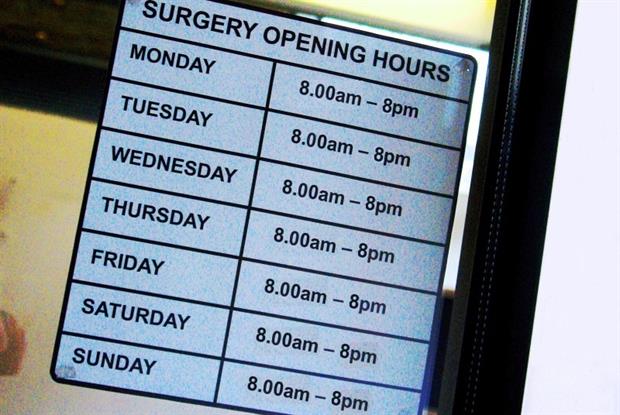
Usually, GPs are the first point of call when someone is not feeling quite right. They ought to help everyone to access timely and safe healthcare. Therefore, reviewing access to GP services is critical and we decided to focus a dedicated scrutiny task group for eight months to report.

By giving ourselves time to understand this complex area in detail, we developed a deep comprehension of the landscape we were going to scrutinise. Patient voices are at the heart of our work, and we worked closely with Brent Healthwatch to ensure those from communities that have been under-represented in these conversations in the past, as well as those experiencing the worst health outcomes, were able to articulate and share their experiences.

Also, the task group held a number of evidence sessions over the course of six months, which were attended by stakeholders across Brent’s health economy. This included council officers, local commissioners and service providers.

All of this enabled the team to make a number of practical recommendations to  Brent Council and NHS partners.

Our work focused on three pivotal areas: Demand, Access and Barriers

With the dynamics of our healthcare and well-being landscape changing locally as well as nationally, it is more vital than ever to ensure all our residents have equality of access and consumption of healthcare services.

We found repeatedly that some groups of patients experience significant, and unnecessary, barriers, specifically:

• Patients of low-income

• Patients with a disability

• Older patients

• Patients whose first language is not English

• Children and young people

• Refugees and asylum seekers

• Patients who cannot access digital technology

Knowing this, GP services must seek to reduce and resolve the barriers experienced by patients, with a focus on deprivation, ethnicity, disability, and other protected characteristics as described in the Equalities Act 2010, if we are to execute our duties under the Act.

We recognise that rising demand, changing patient expectations and workforce retention issues continue to place pressures on primary care. Therefore, it is essential that the NHS continues to plan for this and uses the expertise of healthcare professionals across the system.

The digital transformation to healthcare, brought about by the pandemic, although helpful to some, introduced additional barriers for other people and communities.

In acknowledging the varying levels of ease in which patients access GP service, we strongly believe an access and treatment standard ought to be developed. This will ensure that Brent residents experience consistent and high levels of service: whether their requests are routine or urgent, focused on physical or mental wellness; or made via the telephone, online or in-person.

Our work has been conducted in the spirit of cooperation and partnership, and particularly, we look forward to continuing our dialogue and work with our partners across Brent’s health economy to evolve our shared vision of GP access across Brent.

Cllr Ketan Sheth is Chair of Brent Council’s Community and Wellbeing Scrutiny Committee

Can drama “Help” social care?

Jason Lowther

Photo credit: https://www.youtube.com/watch?v=5Z2ufAl2lko

Fresh from winning the Grand Jury Prize at the Banff Rockie Awards on Monday, Channel Four’s drama Help was yesterday nominated for Best Drama in the Edinburgh TV awards, with its lead actor Jodie Cromer also nominated for Best Actor.  The drama was one of the most watched on the channel, bringing to millions of viewers the plight of care homes and their residents during the pandemic.  Whilst the Help storyline is fictional, it is based on hard and devastating facts.

In my view, Help could be criticised for its farfetched ending and sometimes unsympathetic rendering of the care home manager, however its characterisation of care home staff and residents is both caring and revealing.  Clearly emotionally affected researching the programme, writer Jack Thorn said: “hearing the stories of those at the frontline, having people break down in tears on zoom in front of us has been incredibly moving and galling”.   

My two favourite parts of the programme (no spoilers) are the endless recorded message of a hopelessly over-run “NHS 111” call centre in the background for several minutes, and Jodie Cromer’s wrenching speech to camera (1:34 on the video) demanding “…underlying health conditions, eh?  When did all lives stop being worth the same?”  The programme ends highlighting some stunning research findings: 40% of Covid deaths in the early pandemic (from March to June 2020) were in care homes; the average wage of a care home worker is £8.50 per hour; whilst government provided 80% of PPE needs for the NHS, it only met 10% of adult social care’s needs. 

This last claim is based on the National Audit Office analysis published in November 2020, which found that the adult social care sector received approximately 331 million items of PPE from central government between March and July (10% of their estimated need) whereas NHS trusts received 1,900 million items sent to NHS trusts (80% of estimated need).  Whilst both fell significantly short of what was required, there is an apparent imbalance here.  Data collected by the Care Quality Commission (CQC) showed that, throughout April and May 2020, more than a fifth of domiciliary care providers had no more than a week’s supply of PPE. 

This situation was well known to the Secretary of State, not least because the LGA and the Association of Directors of Adult Social Services wrote stating “we continue to receive daily reports from colleagues that essential supplies are not getting through to the social care front-line. Furthermore, national reporting that equipment has been delivered to providers on the CQC-registered list does not tally with colleagues’ experience on the ground”.  Nevertheless, in a scene included in Help, during a Downing Street press conference on 15 May, 2020, Mr Hancock said: “right from the start, it’s been clear that this horrible virus affects older people most. So right from the start, we’ve tried to throw a protective ring around our care homes”, repeating in the House of Commons on 18 May that “we absolutely did throw a protective ring around social care”. 

Understanding the human costs of these central government failures is difficult, with the effects on staff, residents and their family impossible to measure objectively.  Help does a good job in illustrating some of the pressures on care staff and the pain of relatives unable to visit dying residents, made all the more poignant now that we know some of the behaviour during the pandemic of senior central government actors such as Hancock’s affair and Johnson’s multiple parties forensically examined in Sue Gray’s recent report

Perhaps the most basic measure is in human lives.  Last year researchers used the national death registry of all adult (aged ≥18 years) deaths in England and Wales between January 1, 2014, and June 30, 2020 to compare daily deaths during the COVID-19 pandemic against the expected daily deaths.  They estimated that during the early pandemic, about 26,000 excess deaths (almost half of the total excess deaths) occurred in care homes and hospices.  This is likely to be an underestimate since early in the pandemic, testing of suspected cases was available only in the hospital, whereas routine testing of staff and residents in care homes was not implemented until May 2020.

The latest ONS statistics, issued in February 2022, suggest that since the beginning of the coronavirus (COVID-19) pandemic, there have been over 274,000 deaths of care home residents (wherever the death occurred) registered in England and Wales; of these, 45,632 involved COVID-19 accounting for 17% of all deaths of care home residents. 

Intriguingly, The Lancet reported in March that “COVID-19 has had a disproportionate impact on the mortality of care home residents in England compared to older residents of private homes, but only in the first wave. This may be explained by a degree of acquired immunity, improved protective measures or changes in the underlying frailty of the populations.” Meanwhile, last month the Care Quality Commission finally published data on deaths in each care home during the first year of the pandemic (April 2020 to March 2021).

Whatever the precise figures, it’s clear that adult social care residents and staff were badly let down by central government, far from the Secretary of State’s “protective ring” narrative. This despite the best efforts of care managers, local commissioners and councils discussed in Luke Bradbury’s blog here last week.  Help does a fantastic job of showing the impact of these critical central failures – and recognising the incredible work care staff did in such difficult circumstances with so little financial reward.

‘The Great Parliamentary Resistance’ – some of the outcomes

Chris Game

Back in early February, I wrote a blog dissecting one of two big and controversial Government Bills involved in what I slightly hyperbolically termed the “historic Monday evening of the Great Parliamentary Resistance” – Monday, 17th January, when the Elections Bill received its Third Commons Reading, while across the way the Lords were savaging the ‘flagship’ Police, Crime, Sentencing and Courts Bill by defeating the Government a Parliamentary record 14 times in the same sitting[1].

Both Bills, in being big and controversial, were fiercely contested throughout their Parliamentary progress and significantly amended – to the extent that my initial idea of highlighting and summarising such amendments in two linked blogs in, say, February and March, proved ludicrously unrealisable. Not least because neither received their Royal Assent until 28th April.

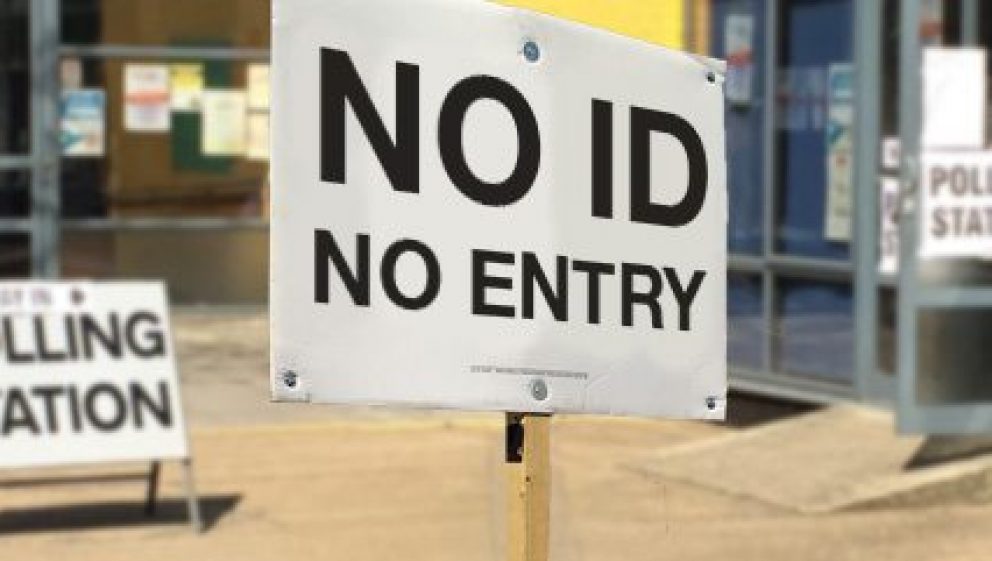
On the ball, as ever, Jason Lowther blogged immediately about the particular aspects of the now Elections Act with which he had been particularly concerned – the Government’s ‘solution’ to the undemonstrated ‘problem’ of ‘personation’, of having in future to show counter-signed photo ID at UK Parliamentary and English local and PCC elections.

This single blog, therefore, will attempt two ludicrously daunting tasks: (a) to at least mention some of the additional, less publicised, measures in or out of the Elections Act, and (b) similarly, but even more summarily, for the considerably more complex Police, Crime etc. Act.

There were two key and particularly controversial Elections Act proposals, that went down to the proverbial wire at the so-called Ping pong stage of the Parliamentary process (pp.79ff. of the H/Commons Library briefing noted by Jason).

First, obviously, the several proposed age-discriminatory and non-photographic forms of ID that had been in and out of the Bill throughout – mentioned again here frankly as a pretext for reminding anyone who needs it of just how long and how implacably opposed the PM himself has been to ID cards of any description, and accordingly what we can presumably look out for come Election Day.

election1

The other long-running dispute concerned the Act’s provision for the Government to set a “strategy and policy statement” for the constitutionally independent Electoral Commission.  Some suspicious Parliamentarians suggested this might go beyond scrutiny and accountability, and “potentially into providing guidance about how [the Commission carries out its] functions on a day-to-day basis”.

They wanted it “not bound by” the Government’s “statement”, but apparently they were guilty of a “mischaracterisation” of the Government’s intentions, and the relevant amendments were defeated.

The Government’s listing of the Act’s additional benefits appears, of course, on the relevant Gov.UK page – summarised under the comfort blanket of the several “greater protections” it provides for voters, and also for candidates and campaigners.

Protection from fraud through photo ID, of course, but also from intimidation at the ballot box – the latter by fines, up to 5-year bans, and even imprisonment for offenders convicted of attempting an extended definition of ‘undue influence’.

Voters with disabilities must in future be provided with specialist equipment, and may be accompanied by an adult.  And the 15-year limit on the voting rights of British ex-pats, retired or working abroad, will be removed. An estimated 3 million potential voters are currently affected by the limit, and – read into this what you will – it fulfils a pledge in three recent Conservative manifestos.

Finally – although it was actually the first bit of the legislation I blogged about, back last April – the Act will change the voting system for both Mayoral and Police & Crime Commissioner elections from the ‘transferable’/choice-extending Supplementary Vote to First Past The Post – on the basis of “no other plausible argument” than it might fractionally reduce the numbers of rejected ballots”.

I have views – as doubtless do Mayors Tracy Brabin (Lab – West Yorkshire), Ben Houchen (Cons – Tees Valley) and Andy Burnham (Lab – Greater Manchester), all recently elected after transfers – but not here.

And so to the Police, Crime, Sentencing and Courts Act – a real pantechnicon of a Bill/Act, highly technical in places, with even the ‘short’ and definitely the ‘long’ (150-word) titles signalling how impossible it is seriously to summarise.

It makes major changes across the criminal justice system, significantly extending police powers and the treatment of suspected, arrested, charged and convicted offenders. Again, there is a substantial (100+ pages) Commons Library summary of the whole legislative process; also a detailed House of Lords account – presented, slightly disconcertingly, in reverse chronological order – covering the fate of at least some of the Lords’ 17th Jan. amendments.

I was never keen on listing Wiki on student reading lists, but in this case I might well make an exception.  For this blog, though, I have borrowed (sounds so much better than plagiarised!) the content of the next few paragraphs from the BBC’s summary –mainly because it focuses, as many of those Lords motions did, on the implications for and threats to the right to protest.

Until now, it has generally been the police’s responsibility, if they want to restrict a protest, to show it may result in “serious public disorder, property damage, or disruption to the life of the community” (emphasis added). They can also change/restrict the routes of marches. For major events, like the COP26 protests, details are typically agreed with the organisers weeks in advance.

The new Act enables particular measures to be designed for ‘static protests’, like those of Extinction Rebellion, whose modus operandi is to force governmental action on the “climate and ecological emergency” through non-violent civil disobedience, the occupation of roads and bridges, etc.  Start and finish times and noise limits will now be set, even for protests involving just one person, with fines up to £2,500.

Edward Colston, the C18th merchant/slave trader whose statue was pushed into Bristol docks gets his own clause, with damage to memorials earning up to 10 years’ imprisonment.

Shadow Home Secretary Yvette Cooper has described the “rushed” legislation as creating “incredibly widely drawn” powers …”, allowing the police to stop and search anyone in the vicinity of a protest, including passers-by, people on the way to work and peaceful protesters.”

The Government/Home Office/Police viewpoint is set out in a Home Office Policy Paper.

[1] It appeared on 4th February, at the start of what proved a particularly active blogging month, with the consequence that, to access it, you may need to key ‘Older Posts’ at the end of the February 2022 selection.

Photo

Chris Game is an INLOGOV Associate, and Visiting Professor at Kwansei Gakuin University, Osaka, Japan.  He is joint-author (with Professor David Wilson) of the successive editions of Local Government in the United Kingdom, and a regular columnist for The Birmingham Post.

Developing our team

INLOGOV is entering an exciting phase of development.

Building on our rich history of research addressing the institutional and political life of local government and public management, our research now reaches beyond these traditional structures and actors to address governance, democracy, leadership, participation, policy-making and service delivery at and across multiple scales and issues. This month’s REF results showed over 80% of our research is world-leading or internationally excellent.

We have simplified and enhanced our teaching programmes, delivering an exciting range of postgraduate degree programmes, with a thriving doctoral research community.  Our postgraduate programmes include a full-time on-campus Public Management MSc, an on-line Master of Public Administration, a blended Executive Apprenticeship in Public Leadership and Management, MOOCs and micro-credentials, and postgraduate research degrees.

With over 50 years of experience working with local and (inter)national governments and the public sector, INLOGOV creates new thinking with public practitioners and is the leading UK centre for the study of public management, policy and governance. 

INLOGOV is part of the School of Government, one of the largest in the United Kingdom – home to more than 80 full-time academic staff, more than 1,200 undergraduate and taught postgraduate students, and more than 70 doctoral researchers. The School is intellectually vibrant with an excellent record in both research and teaching.

We are therefore looking for new colleagues who can undertake pioneering research, develop exciting and intellectually stimulating teaching, and develop significant impact in local government. In return, INLOGOV provides a supportive and collegial environment, enabling colleagues to engage internationally, strengthen networks and deliver excellent teaching, research and impact. We also have a lovely campus in one of the youngest, most diverse and exciting cities in the country.

If you would like to join us, please take a look at our advertisements (links below). We will be taking a first look at applications at the end of June, so please apply early. We welcome informal discussions and visits, our contact details are in the adverts below.

Links to adverts for: Chair and Associate Professor

After austerity, comes the reckoning

Jason Lowther

The publication last month of the Institute for Government’s report on the impact of cuts in local services during the decade of austerity has revealed to the public what has been obvious in the sector for years – austerity was hugely unfair and hit the poorest hardest. 

Neighbourhood services under strain is written in IfG’s usual forensic style, and its conclusion is all the more brutal because of it: the most deprived areas received the biggest grant cuts, resulting in bigger reductions in local services such as libraries and recycling.  Central government grants were cut more in deprived areas because of the way cuts to grant funding were distributed ignoring councils’ different degree of dependency on this income source.  Because of the central cuts and pressures such as the increasing demand for social services, councils have been forced to cut preventative and universal services like children’s centres and housing programmes to help vulnerable people to live independently.

The report’s detailed analysis of changes in spending reported to DHCLG concludes that most councils chose to protect similar services.  ‘Relatively protected’ services included environment and regulatory services, homelessness and public transport.  At the other extreme, most councils applied higher than average spending cuts in housing, cultural, and planning services (figure 1 below).  This mirrors earlier analysis by the National Audit Office (which also highlighted the protection of social care services).

Figure 1: Local authorities that disproportionately cut, relatively protected, or increased neighbourhood services spending between 2009/10 and 2019/20, by category

Source: Institute for Government analysis of DLUHC, Local authority revenue expenditure and financing in England: individual local authority data – revenue outturn 2009/10 and 2019/20.

The IfG report hints at the innovative ways different councils responded to these pressures, from contract renegotiation and the use of new technology, to service redesign and rationalisation.  For a more detailed exploration of this, I recommend Alison Gardner’s excellent thesis on how local councils responded to austerity – including strategic asset management, shared services, commercialisation, co-production and demand management.  Whatever methods were used, however, it’s clear that by the second half of the decade of austerity the cuts were no longer into ‘fat’ but into ‘flesh’.

These new findings add to a growing library of research on the effects of the UK government choice to pursue austerity policies, including a BMJ study in October 2021 which suggested that the constraints on health and social care spend during this period of ‘austerity’ have been associated with 57,550 more deaths than would have been expected had the growth in spend followed trends before 2010.  Considering cuts to local government funding specifically, a July 2021 study in The Lancet estimated that cuts in funding were associated with an increase in the gap in life expectancy between the most and least deprived quintiles by 3% for men and 4% for women between 2013 and 2017. Overall reductions in local government funding during this period were associated with an additional 9,600 deaths in people younger than 75 years in England. Well before the pandemic, the UK was seeing a rapid slowdown in life expectancy gains in the 2010s and, although a number of other high income countries also saw such slowdowns, of large populations only the USA experienced a more severe slowdown/reversal and the magnitude of the slowdown in the UK was more severe than other large European populations.

Perhaps the most damning finding of the IfG report is that central government lacks the information to know what the impact of its spending cuts are on local services.  This echoes the assessment of the Nuffield Trust and Health Foundation back in 2014 which warned government was making decisions with ‘no comprehensive way to quantify the impact that social care cuts are having on their health and wellbeing’ and were therefore effectively ‘flying blind’.  Having abolished the Audit Commission in 2010, the government was left with no comparable performance statistics for two-thirds of local services.  Some may believe that this was quite convenient, given what we are now learning about the effects of that government’s spending policies.

80% of councils directly involved (again) in delivering housing

Chris Game

If you’re an academic – either a genuine intellectual, theorising one, or a more lecturing, popularising one like what I was – there’s a good chance that the week before Easter is Conference Week.

It’s easy to mock, and knock, academic conferences. Too many delegates reading, rather than ‘presenting’, their papers; no time for proper interrogation, discussion and debate; mediocre university campus food. And for overseas conferences, add in climate threatening CO₂ emissions.

However, I like them – conferences, that is.  Indeed, this recent Easter week I racked up a full half-century of attending, at least intermittently, PSA (Political Studies Association) conferences.

Like most such events nowadays, this one was ‘hybrid’ – with panels attended partly in person, partly digitally via Zoom. Which makes genuine discussion additionally problematic, and emphasises the importance of the written papers addressing subjects that ideally are appealing, topical and even newsworthy.

Happily, in the Local Politics Specialist Group this is almost the norm. And this year one paper especially – in addition, obviously, to that of the INLOGOV’s Director, Jason Lowther (from ‘Birminham’, according to p.25 of the evidently un-proof-checked programme!) – struck me as both sufficiently important and timely to bring it to the attention of a couple of slightly wider audiences⃰.

Timely because we’re fast approaching the May 5th local council elections, and, if these councils’ controlling parties choose to draw voters’ attention to it, many could boast something they might well not have been able to even four years ago when these same seats were last collectively contested.

Specifically, over four in every five should be able to claim that they are genuinely and actively involved in the business of delivering social housing.  And if that doesn’t grab you, or you’re thinking: “well, isn’t that one of the main things councils are supposed to do?” – or maybe, as a Birmingham resident, you’ve heard of the 4,000+ homes built by the Birmingham Municipal Housing Trust, the City Council’s housebuilding arm, and assume that it’s fairly typical, rather than really exceptional – then I politely suggest you’ve rather lost the plot in recent years.

When I used to lecture to particularly overseas students about housing in England or the UK, I would use a couple of very basic graphs, similar to those illustrated here. The first showed the changing relative importance of our main housing tenures since 1919 – private rented, owner occupied, local authority, and housing association.

Tenure1

At the end of the First World War, the ‘big picture’ was straightforward: roughly 90% of housing stock was privately rented, 10% owner occupied. Councils were empowered to build ‘corporation housing’, but few did.  But the War changed everything. PM Lloyd George promised not just houses, but “Homes Fit for Heroes’, and the 1919 Addison (Housing, Town Planning, &c.) Act facilitated it. Council housing committees sprung up, generous subsidies were provided, and council estates mushroomed.

By 1939 over 10% of the population lived in council homes, and the numbers increased steadily post-war, with the Labour Government’s Town and Country Planning and New Towns Acts. At their 1950s peak, under Conservative Governments, councils were building nearly 200,000 houses a year – one completion every three minutes, if you were wondering.

By the 1970s over a third of England’s housing stock was ‘council’. Private renting had plummeted to below 20%, with owner occupation over 50% and rising, and housing associations just beginning to take off.

The 1980s Thatcher Governments’ priorities, though, were very different: a “property-owning democracy”, with successive ‘Right to Buy’ policies – requiring, rather than allowing, councils to sell off their housing stock, if tenants, particularly of larger, better-quality properties, wished to purchase.

Coupled with Treasury restrictions on councils borrowing money for capital expenditure, there began the long-term shift from council housing to housing associations or ALMOs (Arm’s-Length Management Organisations): from 7% of all social housing in 1980 to over 60% today, including virtually all new social housing.

On my second graph, of ‘Housebuilding Completions’ – albeit scaled for dramatic effect – the local authority line by the mid-1990s was barely distinguishable from the horizontal x-axis. Council house building on any significant scale virtually stopped, new homes countable in the hundreds, rather than hundreds of thousands – until, if you peer extremely closely, you can just see the space between line and axis opening up in 2018.

Housebuilding

Sales meanwhile averaged well over 100,000 a year, re-boosted by increased discounts from the Coalition Government following the 2007/8 financial crisis. That same Coalition – or its Treasury – also imposed tightly restrictive ‘caps’ on councils’ ability to borrow against their own Housing Revenue Accounts in order to build affordable homes.

True, the 2011 Localism Act and other changes gradually empowered councils to work both like and with private sector companies. But it was really only when, several years later, Theresa May announced to her October 2018 Party Conference that she would ‘ditch the cap’ that councils’ widespread re-engagement with housing provision seriously took off.

There were and still are significant hurdles: tenants’ right to buy, planning constraints, the need for more grant funding. But the climate has indisputably changed, and at least some of the circulating local election manifestos will surely contain the evidence.

The reason I’m confident of this is that one of the York conference sessions I attended was presented by Bartlett School of Planning’s Professor Janice Morphet, who, with her colleague Dr Ben Clifford, recently completed the third of their series of biennial surveys of councils’ engagement in the provision of affordable housing.

I was aware of this work, but frankly had no real idea of its scope, depth, rigour or even of the sheer quantity of data the surveys produced and made available, in both the respective main reports and the separate desk survey reports. Seriously impressive – and obviously impossible to do any kind of justice to here.

Hence the focus on what has been one of the surveys’ particularly key and consistent findings, summarised here in a couple of quotes: first from Morphet herself, then from the recent third survey’s Executive Summary:

“The third wave of research shows how local authorities are directly engaging in housing provision [and] that this has moved from a marginal to a mainstream issue.”

“From the desk survey, we found that in comparison with 2017 and 2019, the number of councils with [housing and/or property] companies … has increased from 58% in 2017, 78% in 2019 to 83% in 2021 … From the direct survey, we have found that 80% of local authorities now self-report that they are directly engaged in the provision of housing, a notable increase from the 69% … in our 2019 survey … and the 65% from the 2017 survey.”

Who said academic conferences are an indulgent waste of time?

________________________

⃰ A slightly abbreviated version of this blog – “Candidates will be homing in on a growing council priority” – appeared in the Birmingham Post on April 28th –  https://www.pressreader.com/uk/birmingham-post/20220428/281951726382871

Photo

Chris Game is an INLOGOV Associate, and Visiting Professor at Kwansei Gakuin University, Osaka, Japan.  He is joint-author (with Professor David Wilson) of the successive editions of Local Government in the United Kingdom, and a regular columnist for The Birmingham Post.