Local government should welcome Gordon Brown’s private bills proposal

Phil Swann

Streamlined access to local legislation must be available to help struggling councils to improve rather than rewarding those that have already done so, writes a PhD candidate in central-local government relations at INLOGOV and former director of Shared Intelligence.

In 1926 Winston Churchill, then chancellor of the exchequer, successfully opposed a private bill promoted by Bristol Corporation to establish a municipal bank in order to stop “all kinds of incompetent town councils”, particularly “socialistic” ones, from running banks. He did so despite the fact that the bill was supported by his Conservative colleague and former mayor of Birmingham Neville Chamberlain, who argued that Birmingham’s municipal bank had encouraged thrift and home ownership.

It is interesting to reflect on this dispute (not the last between these two political Titans!) in the context of the move by Gordon Brown’s Commission on the Future of the UK to promote the use of private bills by local councils. Raising the prospect of “the great cities of England” exerting similar powers to the Scottish and Welsh governments, the commission recommends a new, streamlined process enabling councils to initiate local legislation in parliament. This, the commission argues, would give councils an ability to secure the powers they need and to have a direct relationship with Parliament.

Evading centralising tendencies

It is undoubtedly the case, as the commission argues, that private legislation provided a vehicle for innovation in Victorian local government in the face of the social, economic and physical impacts of the industrial revolution. 

The genesis of public health lies in local legislation as does the creation of public utilities to provide gas, electricity and public transport. It was the ability of local corporations to promote private legislation that fuelled Joseph Chamberlain’s ambition to turn Birmingham Corporation into “a real local parliament”. Private acts were also used by enterprising councils to evade the centralising tendencies of successive governments in the second half of the 19th century.

It is also the case, however, that by the inter-war period private legislation had become a feature of the tensions in central-local government relations rather than necessarily being a solution to them. The resources and ambition required to draft and promote private legislation reinforced a growing divide between “advanced” or “progressive” councils on the one hand and “backward” or “penny-pinching” councils on the other hand. This reinforced differences between the major cities and smaller towns and rural areas. The widespread use of private legislation also contributed to the ad hoc and complex structures and powers of Victorian local government.

Significantly these trends were reflected in the justification for increasing central government intervention in local politics. In the 19th century there was a shift in ministerial focus from corruption to efficiency and action to bring “backward” councils up to the standard of the “progressive”. The first half of the 20th century saw a financially driven move to rein in the most innovative councils and drive improvement in the poorly performing ones. The dispute between Churchill and Chamberlain over the Bristol bank bill is an example of this.

Clause acts and adoptive acts

Despite these warning notes from history, the ambition of the Brown commission to enable local leaders to have access to a streamlined process to initiate local legislation should be welcomed. Many of the problems that emerged when private legislation was a common feature of local government could be overcome if it was explicitly seen as a way of testing new legislative powers prior to wider adoption – genuine pioneering.

Two other legislative devices deployed in the Victorian period could help to secure this approach if they were refreshed alongside a revival of local legislation. The first device is a clauses act, the prime example being the Town Improvement Clauses Act 1847. It brought together the provisions most commonly inserted in and effectively deployed through local legislation. Clauses acts, each of which would relate to a particular service area or initiative, would both streamline the legislative process and avoid unhelpful adhockery.

The second device, which takes this a step further, is the adoptive act. This is a piece of legislation which has been through the parliamentary process but which comes into effect only when it is adopted by individual local authorities. Acts of this type could make powers that have been successfully adopted by one authority available to be adopted by others without requiring local drafting or taking up parliamentary time.

Earned autonomy?

One other issue which requires attention is whether there should be a link between an ability to initiate local legislation and a council’s perceived performance. A sustained thread running through central-local government relations since the 1830s is the view that that councils should not benefit from new powers or responsibilities until they have met certain conditions or achieved a certain standard.

Joseph Chamberlain, who made extensive use of private legislation in Birmingham, took a different view. In 1877 he argued that “whatever the defects” of a council “I defy you to make a better one for the place except by gradually increasing its functions and responsibilities and so raising its tone.” No earned autonomy for Chamberlain!

If the increased use of local legislation is to help achieve the ambition set out by Brown and his commissioners, it is essential that streamlined access to local legislation is available to help struggling councils to improve rather than as a reward for having done so.

This article first appeared in the Local Government Chronicle on 13th December 2022.

Phil Swann is researching a PhD on central-local government relations at INLOGOV

Professor John Stewart – a personal tribute

Emeritus Professor John Raine

My first encounter with John was in 1978 while I was working as a public finance researcher at the Department for the Environment’s Building Research Establishment.  John had recently served as a member of the Layfield Committee on Local Government Finance, and was subsequently commissioned by the Department as one of four leading thinkers to prepare scenarios for the future of local government in England & Wales – John’s assigned subject being the future financing of local government.  The four commissioned scenarios were then presented and discussed at a special conference to which I was privileged to attend, and where John delivered one of the most fascinating and inspiring talks that I had ever heard.  I followed up by reading a number of John’s academic and practitioner-oriented journal articles, all of which I found really thoughtful, elegantly written and refreshingly original. 

So, when in Summer 1979 I happened to spot an advertisement for a lectureship in public policy at the Institute of Local Government Studies, University of Birmingham, (and knowing this to be the department of which John was Head, and with it now becoming clear that the future for public policy research within government would be more limited under the new Thatcher government at Westminster), I had no hesitation in preparing my application.  I was pleased to be shortlisted and all the more so when, on entering the interview room, I found that my Appointments Board would indeed be chaired by JDS.  He led the interview process in his typically gentle, respectful but deeply interested and enquiring manner, and that evening I was absolutely delighted to be offered the post – one that seemed such a perfect fit for me – focused on the interface between theory and practice in public policy and administration, and particularly dedicated to the local level.  Indeed, INLOGOV proved to be an institution in which I quickly felt much ‘at home’, and where I happily spent the succeeding thirty-six years of my career – including eight as head of department, (and where I continue to enjoy helping out on a part-time basis after formally retiring in 2015). 

Very shortly after my induction at INLOGOV came the new Conservative government’s ‘Local Government, Planning and Land Bill, 1980’, a huge piece of legislation and one which heralded a number of significant changes to the financial arrangements for local government, though sadly not those that John and the Layfield Committee had so carefully advocated.  Instead, the new Parliamentary Bill sought to introduce a raft of new strictures and restrictions on local authorities, including on council direct labour organisations, their town and country planning powers, their financial powers and much more besides.  Being the new member of staff, John asked if I might organise and lead a series of seminars and conferences on the new legislation around the country.  And this I did, commencing with a major conference in London, with the then Secretary of State, Rt Hon. Michael Heseltine, as the key-note speaker.  Undoubtedly, however, the high note of the conference was the contribution made by John himself, who delivered a masterly critique of the Bill’s proposals, greatly appreciated by the packed conference hall, and surely providing the Secretary of State with a very clear message about the reaction of local government to the changes he was intending to make. 

Thereafter, and once the Bill had become an Act of Parliament, INLOGOV became hectically busy running courses and seminars on the new legislative requirements and providing consultancy support around the country as local authorities began instituting the various changes now expected of them.  It was, for INLOGOV both an exciting, and financially very positive, time, although for local government it could only be seen as a significant lurch in the direction of a new, more centralist, era.  John, however, remained characteristically cheerful and positive – continuing to present the case for localism, and with an increasingly large evidence-base that he was now accumulating from all his visits to local authorities around the country and further afield. 

John was always very proud of the Institute he had founded at Birmingham and cared deeply about its fortunes, his staff and their work.  His office door was rarely shut, and he walked the corridors on a daily basis engaging in depth with everyone whose door happened to be open or whom he encountered in the corridors or in the kitchen area.  He actively encouraged staff to drop into his office for chats and to stay and talk with him for as long as they could.  He maintained a deep interest in all the work of staff and in their welfare, and he was always able to make helpful suggestions as to policy issues on which they might wish to pick up, about papers they might like to write, or seminars they might perhaps take a lead in arranging.  In my experience, so often his conversations would begin with him asking ‘Well, how’s John?’ and then followed on with ‘And how’s the Institute?’ – genuine questions that reflected his on-going affection and care for the organisation he had founded and for the team he had brought together to share in his mission. 

He was indeed an inspiration not only to all his staff but to the thousands of individuals in local (and central) government with whom he interacted, whether as teacher, researcher, consultant, adviser or simply friend.  For his lectures he would typically position himself on the corner of a desk at the front of the room, with his script invariably comprising a single sheet of A4 with perhaps just three or four key words scribbled in one corner as his prompt.  His time management was immaculate.  He always managed to pitch his talks superbly for his different audiences, always leaving plenty of time for discussion and debate – for his responses to questions were always as inspiring and thought-provoking as the preceding input. 

He also greatly enjoyed his travels around the UK, visiting almost every local authority (by train, for he did not drive), and then, after each visit, preparing and circulating to all Institute staff as well as his visit hosts a summary paper of all that he had learned and reflected upon as good and less good practice and about the key issues for further consideration and reflection.  Moreover, his productivity in writing for publication (often as co-author with his longstanding academic colleague, Professor George Jones at LSE) was hugely impressive, with regard to both the scholarly and professional journals, as well as through his considerable output of single and joint-authored books.  Indeed, he provided a model for us all at INLOGOV in balancing so effectively his commitment to the pursuit of scholarship in public administration with the other important role for the department in promoting better practices and increased effectiveness within our public service organisations. 

At a personal level, I was also especially appreciative of all John’s support and encouragement when, at a time of crisis for the Institute, in 1995 – following the sudden and untimely death of Professor Kieron Walsh, who had only very recently assumed the Directorship of INLOGOV – I was invited to take his place as Director of this most special of Institutes.  In the subsequent five years, John was a wonderfully inspiring mentor for me, and someone to whom I often turned for his wise counsel and judgement on organisational leadership issues.  May he rest in peace and may INLOGOV continue to flourish and cherish his legacy.

John is Emeritus Professor at Inlogov.

Professor John Stewart: the nation’s teacher of local democracy

Jason Lowther

Everyone in or with links to the Institute of Local Government Studies was saddened this week to learn of the death of Professor John Stewart, who from 1966 developed Inlogov to focus on UK local government and made an enormous and lasting contribution to the development of local government, local governance and public administration scholarship over several decades.

I had the good fortune to meet John last year when, following the death of his wife, Councillor Theresa Stewart, he kindly offered his research library to the department.  We had a lovely afternoon recalling the earlier days of Inlogov, developing the first courses, contributing to the insightful Layfield Commission on Financing Local Government, travelling all over the country to review training and development needs in hundreds of councils, and leading thinking on the sector through articles in both the scholarly and professional journals. 

John was a strong advocate of local government as community leadership at the heart of a vibrant democracy – rather than a mindless channel of central government’s directives or a mere provider of various local public services.  He and his co-authors often led the thinking in key areas.  In the 1970s, he promoted the development of corporate planning and management in local authorities bringing synergy to the various service areas.  In the 1980s, he asserted the value of the public good in the face of New Public Management’s push to convert public service into private consumption.   He argued that developing Quangos for specific services was creating a late twentieth-century version of the fragmented local public service world of the Victorian era.  In the 1990s, he challenged the narrow consumerist Citizen’s Charter approach and instead asserted the importance of citizens’ rights, participation and accountability.

In 2014, John published his reflections on the past four decades in local government.  He argued that the problems facing the economy, society and the environment need effective local responses:

Local government can draw on its own and its citizens’ ideas and aspirations, but this genuine localist approach cannot be achieved in fragmented and imperfectly accountable structures over-controlled by central government. The lesson of the last 40 years is the need for a learning government that welcomes diversity. All can learn from the relative successes and failures of diversity, whereas too often centralism builds uniformity from which all that may be learnt is general failure.

As well as research, John developed a strong teaching capacity in Inlogov.  He created residential courses, held at Wast Hills House outside Birmingham, which had been given to the University by the Cadbury family.  It was adapted as a residential facility with 25 bedrooms and a range of teaching rooms.  These courses became the essential preparation for local government officers with ambitions to become chief executives.  Much of the work on the courses was in small groups, which led to many lasting friendships between future senior local government officers and chief executives across the country – providing an essential support network for those in these tough roles.  The Local Government Training / Management Board later commissioned John to visit almost all English local authorities and many in Scotland and Wales, assessing their capacity and recommending approaches to develop this further.

In addition to his remarkable 36-year writing partnership with LSE’s late Professor George Jones, John nurtured and collaborated with successive generations of scholars including Bob Hinings, Royston Greenwood, Stewart Ranson, Rod Rhodes, Kieron Walsh, Chris Skelcher, Steve Leach and many more.  A few weeks ago, I invited some of his former colleagues to contribute some reflections for a potential collection of some of John’s works.  I was delighted by the speed and warmth of the responses, typical examples including:

John was the nation’s teacher of local democracy. He was a remarkable man, a gifted and inspiring leader at the Institute and across local government

John Stewart was the most significant British thinker on local government in the last half of the twentieth century. He was the key influence on several generations of local government workers

He argued that the narrative that users of public services should be treated as self-interested customers ignored their role as citizens with a wider interest in the welfare of their community

His wonderful insight helped so many people to be massively more effective than many of us thought possible

The most negative thing I ever heard him say about an idea was ‘I don’t think we can make that a priority’”

I’ve not known such intellect, such tolerance, generosity and encouragement from a mentor. This must have been the same for many who have come under his giant but gentle wings

John and George [Jones] formed a partnership whose writings proclaimed the case for local government for almost forty years. They were doomed, like Cassandra, to have their warnings ignored. But John’s influence on the management of local authorities endures.

Outside his professional life, John was a loving husband, father and grand-father.  Following his death this week, his grandson Henry published a lovely thread on Twitter outlining some of John’s achievements and recollections from friends and colleagues. 

It is immensely humbling to inherit the guardianship of one of John’s creations, Inlogov.  I will close with another quotation, from my colleague Emeritus Professor John Raine this week:

His legacy in shaping the policy and practice agenda of local government in the UK, as well as on the development and sustainment of INLOGOV as the premier research and teaching centre for local governance, will surely endure.

Jason Lowther, Director – Inlogov

25th November 2022

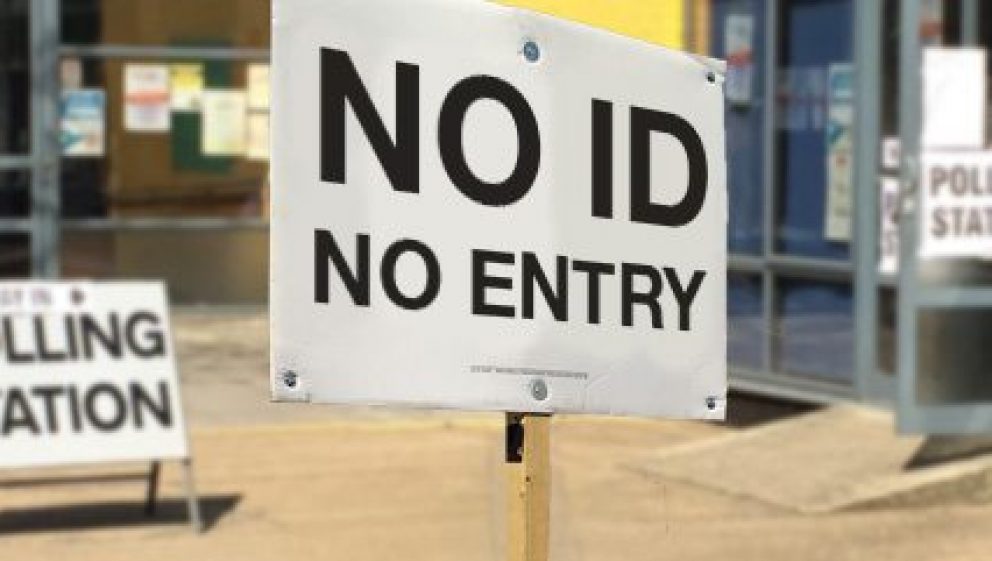
Voter ID – in theory, practice and mirrors

Picture credit: https://www.electoral-reform.org.uk/why-the-governments-mandatory-voter-id-plans-are-a-terrible-idea/

Chris Game

“ID cards for polls are nothing more than suppression of voters” – D Butler. I’d forgotten precisely when and where I first read this pronouncement – May 2021 in The Times, as it turned out – shortly after the Government’s Elections Bill, now Act, was published. But I certainly remembered it.

Partly the phrasing, as personally I’d have gone for “nothing less than”, if I was hoping to galvanise readers into outraged protest. The seriously striking bit, though, was obviously the author.

Since first becoming fascinated by elections and electoral studies – thanks initially to Prof Richard Rose at the Univ of Manchester, then the late Prof Tony King at Essex – there has only ever been one D Butler in that file of my academic consciousness. Populariser of the Greekish word ‘psephology’ for the study of elections, and original authority figure in the BBC’s General Elections coverage: Nuffield College, Oxford’s Sir David Butler, who died earlier this month, aged 98.    

I knew him – distantly, but sufficiently to know he’d never have uttered anything resembling that strongly opinionated opening sentence – and, of course, ’twas not he. Rather, as I almost immediately realised, it was Dawn Butler: recent candidate for Deputy Labour Party Leader and, it so happens, MP for the London Brent constituency in which I first voted – shortly before she was born.

All of which might have excused a quickish blog return to the contentious Voter ID issue – within weeks of its last coverage – even if it hadn’t once more been prominently in the news this past fortnight, with Parliament finally getting its first full sight of the Government’s Voter Identification Regulations and the Electoral Reform Society leading the call for a parliamentary inquiry into its implementation.

The Elections Act requires voters, from next May, to produce photo ID at UK Parliamentary and most English local elections. And now, a mere six months or so later, we – and the local election officials required to implement them – finally have the Government’s list of acceptable forms of ID and proposed guidelines governing initially next May’s council elections: Coronation permitting, in most English councils – though not Birmingham, to save you checking.

The guidelines run to just the 344 pages, taking effect probably in January. Leaving already pressured election officials with minimal time (and as yet undetailed costs, beyond a ‘ballpark’ £180 million per decade) to process and issue electoral identity documents for those who gradually discover they don’t have acceptable forms of photo ID. Plus the near certainty that at least some would-be, and quite likely upset, voters will be turned away at their polling stations – which could add to the fun for the small army of volunteer poll workers.

At which point I should indicate my personal viewpoint. Instinctively – and certainly predating Birmingham’s own 2004 embarrassment of six Labour councillors getting elected through what was judicially described as a “massive, systematic and organised” postal voting fraud campaign – I’ve long broadly supported, in principle, stronger election integrity rules in general and photo voter ID specifically.

And I have recounted in these columns the reactions of some of my overseas students to the frankly casual ID confirmation procedures they’ve observed when accompanying me to the polling station. Their surprise at the staff’s indifference to whether I’ve brought my poll card identification; and almost shock as I ‘helpfully’ point on the register to what I claim is my name and address.

So why my support in principle for photographic ID – as well as nowadays that of a substantial majority of voters themselves and the conditional backing of the independent Electoral Commission?  Simples!  Elections are the engines of our democratic system. They should be seen by all as important, and that perceived importance is diminished by not having visibly more robust voter identification procedures – like virtually all other ‘democratic’ nations.

On the Crime Prevention Research Center’s database of Europe’s nearly 50 such countries, “only the United Kingdom” does not require government-issued photo voter ID to vote in national elections.

Correction!  Not the UK, just GB. Northern Ireland introduced voter ID nearly 20 years ago, and now has numerous forms of acceptable photographic ID – including, as well as passports and driving licences, a free Electoral Identity Card, plus senior, disabled and blind persons’ ‘SmartPasses’.

Since when, the Electoral Commission has found that, far from prompting polling day protest riots, voters’ confidence that elections are well-run has steadily increased to at least match the levels in other UK regions[1]. The demonstrable message has been not that we elsewhere in the UK are uniquely virtuous and trustworthy – though even Ministers concede that fraud levels are minimal, if not invariably seen as such. Rather, it’s that for us – and successive Governments – voting has been seen as less big a deal than, say, collecting a parcel at a post office.

Until now, that is, following a decade of quite dramatic change in the voting behaviour of particularly our 18 to 24-year-olds. Their turnouts are invariably lower than the average, but still high enough to hurt. In the 2010 General Election these mostly fledgling voters split equally across the Conservatives, Labour and Lib Dems, roughly 30% for each. By 2019, almost overlooked in the Conservatives’ overwhelming win, it was Labour 52%, Conservatives 28%, Lib Dems 11%.

That’s what evidently prompted the rush – not ‘personation’ or fraud, which for polling station voting are acknowledged as negligible. Rather, a possible early General Election campaign in which the Conservatives don’t start way ahead of the field. It also explains why the apparently generous range of 21 acceptable forms of ID is clearly weighted towards the better paid and over-60s. Older Person’s Bus Pass, Oyster 60+ card, Freedom Pass (66+), Scottish National Entitlement Card (60+), etc. – all welcome. Those particularly applicable to younger people, like Student ID cards or Railcards, remain “unacceptable”, as in the original legislation.

Yes, as in Northern Ireland, free ‘Voter Authority Certificates’ will be available – including online – and a public awareness campaign will remind you and your selfie to apply in time.  And no, none of this remotely approaches the legalised voter suppression we saw in some of this November’s American state elections. But – to coin a dreadful cliché – it’s from the same partisan playbook.

As are the £1.3 million-worth of 40,000 mirrors and privacy screens – one of each per polling station – that desperately cash-strapped councils must provide to check on would-be voters with religious face coverings. But they may well prove worth a blog of their own sometime before next May.

_______________________

A slightly publisher-edited version of this blog appeared in The Birmingham Post, 17th November – https://www.pressreader.com/uk/birmingham-post/20221117/textview


[1] Examples from the Electoral Commission’s ‘Winter Tracker’, Jan/Feb 2022:

   “Elections are affected by fraud/corruption?”  Total agree: 37%; W Midlands 37%; NI 30%.

Those “not confident that elections are well run: Some people have difficulties registering to vote”:                                          
Total agree: 20%; W Midlands 18%; NI 10%.

Chris Game is an INLOGOV Associate, and Visiting Professor at Kwansei Gakuin University, Osaka, Japan.  He is joint-author (with Professor David Wilson) of the successive editions of Local Government in the United Kingdom, and a regular columnist for The Birmingham Post.

Integrated Care Boards – a new frontline in localism?

Jason Lowther

As the government once again kicks down the road decisions on vital reforms and funding for social care, local areas are establishing the Integrated Care Boards which will lead the new Integrated Care Systems (ICS), bringing together the NHS, local government and partners to plan and deliver integrated services to improve the health of the local population.  Building on the progress made since many public health responsibilities transferred back to local government in 2013, this is a great opportunity to address the determinants of health and issues around health inequality.  Might ICSs at last lead to an effective local voice in our over-centralised, top-down healthcare system?

Each ICS is supposed to plan at three levels: the neighbourhood (an area of around 40,000 people), the ‘place’ (often a LA area), and the (ICS) system (covering around 2 million people).  Working at the neighbourhood level is likely to be somewhat informal, often using a social prescribing approach and developing multi-disciplinary teams including third sector partners.  The approach to ‘place’ looks set to vary between areas, with some ICSs devolving significant responsibility (and funding) whilst others centralise these at ‘system’ level.  Meanwhile at ‘ICS system’ level, Integrated Care Partnerships (joint LA and health committees) will develop an Integrated Care Strategy to meet the assessed health and social care needs of their population identified in the Joint Strategic Needs Assessments and Wellbeing Strategies prepared by local Health and Wellbeing Boards.

Beyond the formal planning process, the success of local ICSs will partly depend on the quality of local collaborative (managerial and political) leadership – across statutory partners and with the third sector.  It will be a tough job to balance the priorities of the national health service and issues of local places, but many local authorities will be able to offer helpful experience , for example from moves to more networked governance approaches.

The National Audit Office recognises the potential but appears dubious on current prospects.  Last month it published a review, Introducing Integrated Care Systems: joining up local services to improve health outcomes, finding:

NHSE has a detailed regime to monitor performance against core NHS objectives but … it is less clear who will monitor the overall performance of local systems, and particularly how well partners are working together and what difference this new model makes…

The report notes that, whilst government is asking ICSs to set out local priorities and make progress against them, there is no protected funding and few mechanisms to ensure this happens.  This leads, as the NAO politely puts it, to “a risk that national priorities, and the rigorous oversight mechanisms in place to ensure they are delivered, crowd out attempts at progress on local issues”.  The report also identifies five “high risk” elements of effective integration: clarity of objectives, resourcing, governance and accountability (such as how ICSs will function alongside existing local government Health and Wellbeing Boards and how accountability differences between NHS and local authority bodies will be resolved), and the capacity to balance priorities other than national NHS targets. These urgently need to be addressed if ICSs are to begin to meet their potential.

At one of Inlogov’s “Brown Bag Lunch” discussions earlier this month we agreed on the importance of issues around how ICSs develop, particularly in terms of developing effective system leadership and planning, collaborating with community organisations, and links to wider devolution processes. I’d be interested to hear about experiences in local areas as these develop. 

Jason Lowther is the Director of INLOGOV. His research focuses on public service reform and the use of “evidence” by public agencies.  Previously he worked with West Midlands Combined Authority, led Birmingham City Council’s corporate strategy function, worked for the Audit Commission as national value for money lead, for HSBC in credit and risk management, and for the Metropolitan Police as an internal management consultant. He tweets as @jasonlowther

Picture credit: National Audit Office

What are the career backgrounds of city managers in the United States?

Wesley Meares, Beth M. Rauhaus and William Hatcher

In our recent Local Government Studies article, we report the career paths of city managers from a nationwide survey of 345 chief administrative officers leading cities throughout the United States (U.S.). We sought to understand who the chief administrative officers are, how they arrived in their current position, and the significant challenges they face. Exploring these topics helps us describe the composition of local government managers, and knowing the career paths of these public administrators helps our field in preparing future managers for their service. While these topics have been researched in the past, for example, by Watson and Hassett (2004) and Folz and French (2005), an updated view of chief administrative officers of U.S. cities was needed. To explore these questions, a survey was sent to chief administrative officers of small, medium, and large cities throughout the U.S. From our survey, we learned three key takeaways.

Who: The Make-Up

Local government management in the U.S. needs to diversify. Most survey respondents reported being white males, with nearly half being 55 or older and only slightly over 18% reporting as female. Public administrators must reflect and mirror the communities they serve, and local government management in the U.S. does not represent the nation’s diverse population. Thus, diversity needs to be a focus of the field in the future. There will soon be an opportunity with the impending retirements of many in local government management – what the ICMA has labeled a “silver tsunami.” This oncoming wave shows up in our survey’s findings. Over 50% of those surveyed indicated they intended to retire in the next ten years, and 30% said they would retire within five years. The need to hire the next generation of local government managers is an excellent opportunity to increase gender and racial diversity in local government.

How: Career Pathways

Local government management is more stable than in the past. Of those surveyed, the average tenure in their current positions was a little over seven years. One career pathway to local government management is having prior work experience in the area. Most of those surveyed were hired into their current positions as external candidates, often making lateral moves in their careers. Another career pathway to local government is having experience in budgeting and planning. City managers identified developing negotiation skills, having a mentor, and earning an MPA as other critical pathways to local government management.  

What: Major Challenges

Local government management is more concerned with technical aspects of the job (time management, leading teams, human resource actions, etc.) than political conflict and relations with the public. This is a surprising finding. On the one hand, it is positive that city managers are concerned with the nuts and bolts of their jobs. However, on the other hand, many of the challenges they face will surround issues of politics. For our field of public administration to advance democratic governance, we need public administrators to be concerned about politics and community outreach.

With the fast-approaching retirement of many within local government, there is an opportunity for U.S. cities to diversify their workforce, particularly those leading cities. Our study’s data on career pathways provide a roadmap to help public administration scholars and instructors help achieve effective, efficient, and equity in local government management.

Wesley L. Meares is an Associate Professor of Public Administration in the Department of Social Sciences at Augusta University, where he serves as the graduate program director for the Master of Public Administration program. His research focuses on housing policy, community development, sustainability, and local government administration.

Beth M. Rauhaus is an Associate Professor of Public Administration and the MPA Program Coordinator in the Department of Social Sciences at Texas A&M University, Corpus Christi. Her research explores issues of gender and diversity in the public sector.

William Hatcher, Ph.D. is a professor of public administration and chair of the Department of Social Sciences at Augusta University. His research explores the intersections of public administration and healthy policy, public administration education, and public budgeting.

References:

Folz, D. H., & French, P. E. (2005). Managing America’s small communities: People, politics, and performance. Rowman & Littlefield.

Watson, D. J., & Hassett, W. L. (2004). Career Paths of City Managers in America’s Largest Council‐Manager Cities. Public Administration Review, 64(2), 192-199.

Picture credit:Luis Marina