Mission Possible? 

Jason Lowther

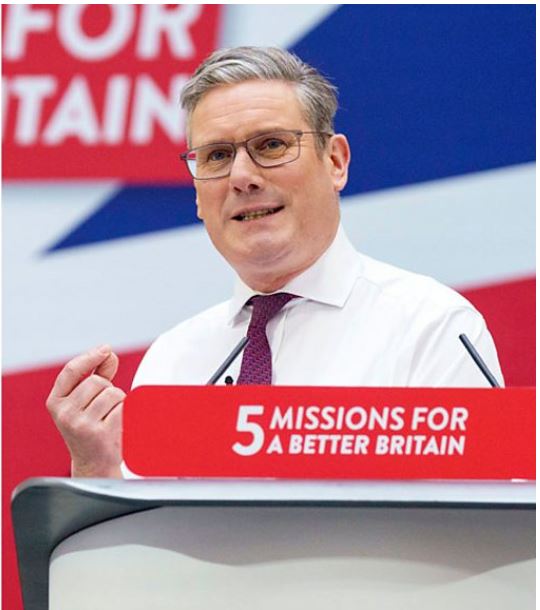
With under 700 days to the next UK general election, political parties are busy developing their manifesto documents.  In February, Labour leader Keir Starmer made a major speech laying out his “five missions for a better Britain”.   How do these five missions relate to local government?  And is the turn to “mission driven” government likely to work?

The five missions vary in their level of specificity and challenge.  Securing “the highest sustained growth in the G7, with good jobs and productivity growth in every part of the country…” is a little vague but likely to be difficult, especially given we are currently ranked 6 out of 7 in terms of output per worker.  Mission #2, “make Britain a clean energy superpower”, accelerating the move to zero-carbon electricity from 2035 to 2030, is specific but very challenging.  Mission #3, reform of health and social care and reducing health inequalities, will require a re-focus from secondary (hospital) care to social care and addressing the social determinants of health.  Mission #4 is about community safety, and likely to involve more community policing.  Finally, mission #5 is to “break down the barriers to opportunity at every stage” through reform to the childcare and education systems.

Local government potentially has important roles in each of the five missions.  Local education, skills and economic development functions will be critical to improving productivity.  On energy, Net Zero requires at least a doubling of electricity generation by 2050, from decarbonised sources.  Decarbonisation strategies need to be place-based, taking account of the geography, building types, energy infrastructure, energy demand, resources and urban growth plans.   We’ve recently argued here for the key roles of councils in this area. 

Turning to health and care services, local government clearly has leading roles – including ensuring place-based planning to address the social and behavioural causes of health inequalities.  Analysis by the Liverpool and Lancaster Universities Collaboration for Public Health Research in 2021 concluded: “investment across the whole of local government is needed to level up health including investment in housing, children’s, leisure, cultural, environmental, and planning services”.  Similarly community safety, child care and education are areas where local government could be enabled to have much greater positive impact.

Perhaps as important as the specific “missions” is the approach to governing which the party is proposing.   Labour’s document characterises this as a move from top-down, target-led, short-term, siloed approaches, to government which is more “agile, empowering and catalytic”, working across the public and private sectors, and civil society.  This, it argues, requires organising government around a shared vision, focusing on real world outcomes, concentrating on ends with flexibility and innovation concerning means, devolving decision making from Westminster, increasing accountability including central and local data transparency, and adopting long-term preventative approaches including greater financial certainty for local areas. 

In some ways the idea of mission-driven government echoes the 1990s thinking of Ted Gaebler and David Osborne’s book “reinventing government”, which argued for a more entrepreneurial approach to the delivery of government.  Their work pointed to entrepreneurial companies setting overall missions and goals, and then leaving managers to figure out how best to deliver these – for example, by providing an overall budget for a service rather than detailed line-by-line budgets which disappear if not spent by year end.  The focus on managers rather than considering the perspective of politicians is one of the problems identified in subsequent evaluations of the reinventing government model, together with difficulties in sustaining the approach.

Mission-driven policies addressing ‘grand challenges’ of society are increasingly common, for example in the UN Sustainable Development Goals and various EU policies.  Mazzucato et al recently argued that addressing such challenges requires strategic thinking about: the desired direction of travel, the structure and capacity of public sector organisations, the way in which policy is assessed, and the incentive structure for the private, public (and I would add community) sectors. Labour’s paper makes a start (albeit at a very high level) on thinking through these areas. The litmus test, though, will be in developing the detail and how far this engages with local areas.   

Over the next few months, we will be contributing to the debate on the upcoming party manifestos with some research-informed thoughts on a variety of local government related policy areas.  If you would like to be involved in developing these, please get in touch

Jason Lowther is the Director of INLOGOV. His research focuses on public service reform and the use of “evidence” by public agencies.  Previously he worked with West Midlands Combined Authority, led Birmingham City Council’s corporate strategy function, worked for the Audit Commission as national value for money lead, for HSBC in credit and risk management, and for the Metropolitan Police as an internal management consultant. He tweets as @jasonlowther

Picture credit: BBC

How the MSc Public Management course has helped me professionally: A graduate’s experience one year on

Luke Bradbury

In December 2021, I had my graduation ceremony at the University of Birmingham having completed the MSc Public Management course run here at INLOGOV. It was a very enjoyable experience but was also sadly, due to COVID-19, one of only two occasions in which I had the pleasure to visit the campus. Seeing as it’s now been over a year since my graduation, I thought it would be a good time to share my experiences so far as a Birmingham graduate.

Specifically, I want to reflect on how the Public Management course has played a role in some of my professional endeavours since last year. I’d love to say that I walked straight into a graduate job the day after graduating; indeed, many of my fellow course mates were already working as professionals in the public sector and I’ve no doubt that their successes on the course will have paid off tremendously in their continued career progressions.

In my case, I was not yet certain what the future would hold. Since 2018, I had done a mixture of part-time and ‘bank’ work as a housekeeper for my local care home which was always handy during holiday periods and in-between my undergraduate and postgraduate study but was also a job I genuinely enjoyed. It also provided an important area of study for my postgraduate dissertation which I have spoken more about in a previous blog. While of course this healthcare role did, by its very nature, overlap with some of the research themes of the Public Management course – for example, the notion of ‘street-level bureaucracy’ or the role of front-line workers in policy-making and public service delivery – I was keen to see how the material I had learnt about transcends across other areas of the public sector.

I soon found myself in my first graduate role as an Evaluation Advisor for the Office for National Statistics (LinkedIn also helped a lot in securing this position for any new graduates reading!) The primary responsibility of this role is to support the work of analysts – that is, those advising on evidence-based policymaking in government – by ensuring that the best methods and data are used for informing important decision-making processes. Within the first few days of starting the position, I found that the skills I had learned and utilised during the Public Management course were already proving useful. For instance, I was asked to assist in identifying and reviewing existing cases of good practice for a piece of government guidance written by the Analysis Function – a sort of ‘literature review’ if you will, and akin to the necessary steps taken when completing a final dissertation project as expected on the Public Management course. I remember thinking, “Hey, I’ve done this before!”.

But this was just one of several transferable skills I had learned about and used during my time at INLOGOV, and which were also proving applicable to this graduate role. Leadership is a fundamental ‘behaviour’ that is essential to the role. In its broadest sense, this means being able to set direction and to motivate a team to work collaboratively with other government departments and stakeholders to establish common practice based on robust analytical methods. I would argue that this firstly reflects some of the themes of the leadership theories covered in the Public Leadership syllabus (for example, setting shared group objectives in behavioural leadership theory and the emphasis placed on encouraging and inspiring others in transformational leadership theory). But secondly, these leadership skills reflect the aims and objectives for students undertaking the Public Management course which, amongst many other things, involve building the knowledge and skills necessary for leading in a public capacity. That is, to be able to take some of the concepts of these leadership theories and apply them in practice.

Certainly, the ability to link theory to practice and having a strong capacity for critical enquiry are attributes which are central to the research ethos of INLOGOV but have also greatly informed my practice as an Evaluation Advisor where I am often tasked with reviewing evaluation concepts and methodologies and critically analysing their applicability to the wider strategic goals of the Analysis Function. This also relies heavily on the ability to communicate strategy to the team and can therefore often be a test of public speaking skills. Looking back, I remember a seminar for the Public Management and Governance module in which we were encouraged as a class to engage in group discussions, to reflect on our reading of the literature and to exchange knowledge with peers. As well as providing the opportunity to critically engage collectively with the course material, this session really aimed at boosting our self-confidence in public speaking which has certainly been an invaluable skill both academically and in the workplace.

To sum up, the skills which are taught on the Public Management course are qualities which are not only designed to help you successfully complete the course, but they are also transferable life skills which will be advantageous in all your future career endeavours as I found myself soon after graduating. I look forward to seeing how these skills will continue to have value long into my career.

Luke Bradbury graduated from the MSc Public Management in 2021 and is now Evaluation Adviser for the Office for National Statistics.

Further information on the MSc Public Management and part-time programmes are available here: https://www.birmingham.ac.uk/schools/government/departments/local-government-studies/courses/masters.aspx

Information on the Executive Apprenticeship in Public Leadership and Management is available here:
https://www.birmingham.ac.uk/schools/government/departments/local-government-studies/courses/pml-apprenticeship.aspx

Pushing experts under a big red bus?

Picture source: https://paulcairney.wordpress.com/2020/07/08/covid-19-policy-in-the-uk-did-the-uk-government-follow-the-science-reflections-on-sage-meetings/
Jason Lowther


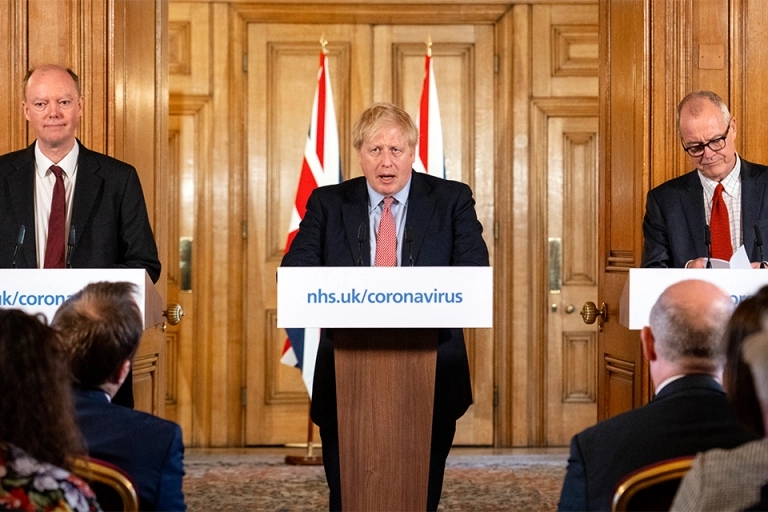
Politicians have a complex relationship with experts and the evidence the latter provide.  Back in May 2020, I reflected in the Municipal Journal on how Michael Gove’s statement in the Brexit campaign that ‘people in this country have had enough of experts’ had turned 180-degrees.  With the arrival of Covid, the PM told his 9th March 2020 press conference ‘we are doing everything we can to combat this outbreak, based on the very latest scientific and medical advice’ and this line was consistently reiterated by other ministers.  Thirty months on, Rishi Sunak (Chancellor in 2020) railed against the government’s main Science Advisory Group for Emergencies expert group (SAGE) saying ‘If you empower all these independent people, you’re screwed’. 

Sunak’s argument, presented in an interview with the right-leaning Spectator magazine, seems to be that the SAGE experts failed to consider any non-health impacts of Covid control measures (particularly lockdowns) and refused to show politicians their workings.  In the article he’s quoted as saying ’I was like: “Summarise for me the key assumptions, on one page, with a bunch of sensitivities and rationale for each one”, in the first year I could never get this’.  This doesn’t seem to match with the published SAGE ‘consensus statement’ on school closures issued in February 2020, which very clearly sets out its assumptions and explicitly states:

As well as the large economic and educational costs of school closures, including increased levels of workforce absence in the health and care system and elsewhere, school closures could have adverse consequences: As infections appear to be more severe in older people, putting children in the care of their grandparents may result in a higher number of severe cases. Once schools are reopened, the number of cases may increase again, with the overall attack rate not being reduced.
(SPI-M-O: Consensus view on the impact of mass school closures on 2019 Novel Coronavirus, Feb 2020)

Later, when facing the December 2021 Omicron variant, Sunak is said to have used his own alumni and private sector analyses to challenge SAGE advice for further lockdowns with the PM and in cabinet.  He argues that the scientific evidence failed to provide a balanced analysis of lockdown decisions, saying ‘I would just have had a more grown-up conversation with the country’.  Sunak also claimed that dissenting voices in SAGE discussions were edited out of the minutes, an assertion he supported by describing a Treasury official sitting in on the discussions and reporting disagreements and uncertainties back to him. 

SAGE scientists see this differently.  Former SAGE member Prof Ian Boyd from the University of St Andrews commented: ‘It is nonsense to suggest that Sage was insensitive to the issue of the long-term effects of lockdowns – a whole subgroup dedicated itself to trying to understand what this might look like. Sage was discussing the topic of excess deaths in detail in April 2020.  Those who attended Sage meetings were acutely aware of the trade-offs associated with implementing specific actions, such as closing schools. To the extent that it was possible with the information available at the time, these deals were included within the uncertainty expressed in the advice provided to politicians. It is simply unacceptable to rewrite history, by blaming scientists, to save a political class that has systematically failed to respond to the messages that scientists have been providing to them for many, many years’.

There are valid reasons to criticise elements of the advice system the government put in place during the pandemic.  The limitations of ‘a model in which a specialist committee produces consensus statements that spare policy makers any requirement to make choices on matters in which they have no competence’ have been demonstrated in analysis by Lawrence Freedman of the intelligence failings relating to the UK entry to war with Iraq as well as the Covid pandemic.   His analysis recommends a model with more opportunities for policy makers to engage with the experts as both the advice and the policy is developed.   The editor of the Lancet, Richard Horton, argued that expertise around public health and intensive medical care should have been in the SAGE discussions.  I argued in the MJ piece that having practical knowledge from local councils and emergency planners could help avoid recommendations that prove impossible to implement effectively, since esteemed experts can still make recommendations which are impossible to implement in practice.  But it’s simply wrong to suggest that SAGE ignored key evidence on non-health effects of Covid control measures or sought to silence dissenting views.  If the trade-offs and assumptions were not considered by the Cabinet, the blame for that lies not with the scientists but with the politicians.

This article appeared in the Local Area Research Intelligence Association newsletter on 27 Sept 2022

Jason Lowther is Director of the Institute for Local Government Studies (INLOGOV), University of Birmingham

T

Decarbonising Transport: How Can we Work Together to Make an Impact?

Dr Louise Reardon

With the COP26 climate change conference only days away, the media is awash with pieces on the challenge we face and the policy options available (or not) for us to meet our net-zero commitments. One of the areas needing significant attention is transport.

Transport contributed 28% of total domestic Green House Gas emissions in 2018, making it the UK’s largest emitting sector. To date the sector is proving a tough nut to crack, with transport emissions 4% higher now than they were in 2013 and only 3% lower than in 1990. To be on track we need an annual rate of emissions reduction of at least 6%. We therefore need bold and significant action.

While electric vehicles have been the primary focus of central government attention and are an important part of the policy mix, many experts have highlighted how they alone will not be enough to achieve the sustainable transition we need. We also require significant behaviour change (shifting from car use to walking and cycling for example) and less travel full stop.

Easier said than done. Our current CREDS research is identifying the multitude of different ways organisations are (and can) work together to decarbonise transport at the city level and their views on the barriers and opportunities for affecting change. Some of the issues arising are cultural (the car as a status symbol for example), some are institutional (lack of capacity to focus on decarbonisation, for instance), and others political (will the electorate support this?).

Whatever the issues, no two towns and cities will have the same mixture of challenges, solutions and therefore pathways to a more sustainable transport system. Moreover, the reasons why we travel in the first place (and the means of doing so) are a result of complex intersections of social, economic and political factors. To change this system therefore requires a multitude of coordinated interventions, including action from individuals and a diverse range of institutions all pushing in the same direction.

With that said, it can be hard to know where to start. While the climate change challenge is global, there is real opportunity and need to act locally on transport to make significant progress. While many rightly turn to their local authority for action, it is unrealistic to think they can act alone, especially when many of the changes we need to make may be potentially controversial (at least for some).

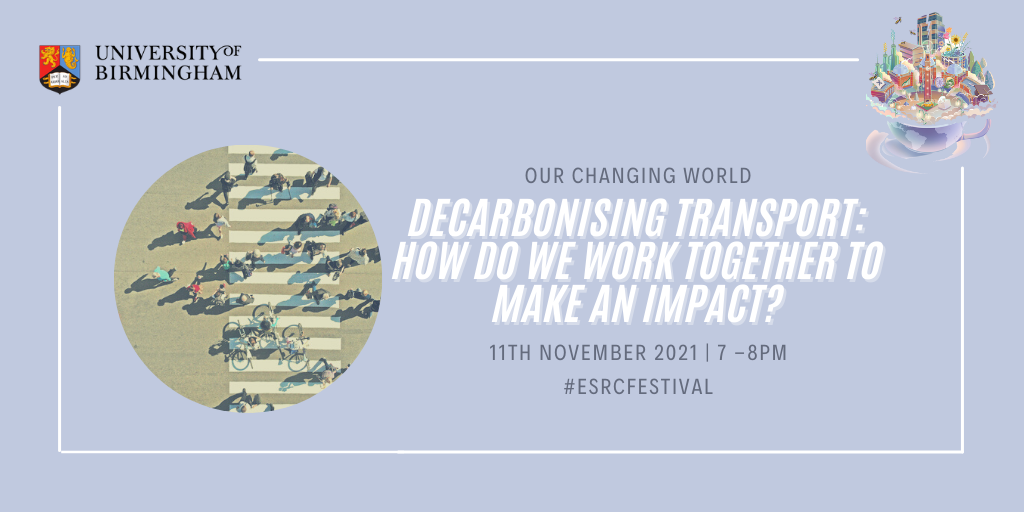
To help identify ways forward we will be hosting a webinar (on 11 November) as part of the ESRC’s Festival of Social Science. Two inspirational panellists – Karen Creavin (CEO, The Active Wellbeing Society) and Chris Todd (Director, Transport Action Network) – will join us. Both of whom, in their different ways, have sought to transform our transport system to a more sustainable and fair one and have plenty of insights to share.

The session will be interactive, aiming to get a real conversation going about the strategies we can employ to make sustainable transport a reality. It’s free to attend and we’d love to hear your views and insights. You can register here. Do join us!

Louise Reardon is Associate Professor of Governance and Public Policy at INLOGOV and currently leading the CREDS funded project Facilitating Policy Change towards Low-Carbon Mobility, in collaboration with INLOGOV Lecturer Timea Nochta and Li Wan, University of Cambridge. You can also follow Louise on Twitter @LouiseReardon1

Research to Help Rebuild After Covid-19

Jason Lowther

Last month Sir Patrick Vallance, Chief Scientific Adviser to the UK Government, met (virtually) with over 100 researchers and policy officers to discuss the output of a six-month programme looking at some of the fundamental challenges to our society, economy and ways of living.  Commissioned by the Government Office for Science, the Rebuilding a Resilient Britain programme aims to help government with medium- and long-term challenges relating to the challenges of Covid-19, captured under nine themes including “vulnerable communities”, “supporting services”, and “local and national growth”.


The overall programme was led by Annette Boaz and Kathryn Oliver, two experienced social scientists whose work focusses on the use of evidence.  In their recent LSE article, they explain the background to the programme and how plans were upturned in March with the introduction of Lockdown in the UK.  

I was particularly involved in the “supporting services” theme, convening the work around local government.  It is an exciting initiative to be involved with, not just because of its scope and pace, but also because of the range of people engaged: researchers and academics, government policy and analysis officers, and funders.  What I found particularly interesting was how different Government departments and different academic disciplines were often looking at very similar issues but framing them from distinct perspectives and using diverse language to describe them.  This highlights the need to develop shared definitions of issues and ways to address these – considering “problem-based issues” in the round.

As well as summarising the existing research evidence around each of the identified themes, the work identified several “gaps” in the extant evidence base and opportunities for new research, policy/research dialogue, and knowledge exchange.

Within the Local Government theme, we recognised that LG’s role proved critical in the first stage of the pandemic, for example in supporting vulnerable and shielded people, enabling voluntary community groups, freeing up 30,000 hospital beds, housing over 5,000 homeless people, and sustaining essential services such as public health, waste collection, safeguarding and crematoria.  This role is likely to increase in future stages of the pandemic, with more responsibility for local surveillance testing and tracing, implementing local lockdowns, economic development, contributing to a sustainable social care system, and supporting further community mutual aid.

There is already a good evidence base showing how local government is playing vital roles in responding to and recovering from the pandemic.  We identified four main themes: empowering local communities, delivering and supporting services, devolution and localisation, and funding.
For each issue we considered the key policy and practice implications of existing evidence, the evidence gaps and the ways in which gaps might be filled.  

Around empowering local communities, for example, evidence showed that LAs responded quickly to the pandemic, and well-functioning local systems emerged to tackle the immediate crises in many parts of the UK.  Areas adopted a range of strategies in partnership with local communities. But informal community responses can lack coordination, resources, reach and accountability; and some groups face barriers to involvement.  Further evidence is required on what works in strengthening community support networks, empowering different types of communities, and co-producing public services.  Councils also need to understand better how staff, councillors and the institutions themselves can change to empower communities.

There has already been some important learning from this work, such as recognising the treasure trove of useful knowledge contained in existing evidence and expertise.   We need to get much better at using evidence from, for example, the evaluation of past policy initiatives.  The programme is helping to strengthen relationships across government, including some new and more diverse voices, and will be useful as government departments revisit their Areas of Research Interest post-Covid.  The thematic reports are due to be published in coming weeks.

I will be exploring the findings for other areas of interest to Local Government in future articles.

[This article also appeared in the Local Area Research and Intelligence Association December newsletter]

Jason Lowther is Director of the Institute for Local Government Studies at the University of Birmingham.

Central Government, Evidence and Short-Term Strategies in the Support to Businesses and Local Economic Recovery in the Age of Covid

Tom Collinson

If there has been one mantra by which government policy has claimed to have lived by during the COVID-19 crisis, it is that it has been led by, guided by or that it is following the science. Intended to strike a reassuring tone, the claim to evidence was routinely emphasised by the government as either the Prime Minister or a deputy was flanked by a member of SAGE. When questioned on his previous disavowal of experts by Sky News at the beginning of the crisis, the Chancellor of the Duchy of Lancaster, Michael Gove, noted that these were economists he had referenced in the past, it was not established medical facts; suggesting that this time was different and that this science was different.

One article by the New York-based magazine The Atlantic even went so far as to claim that ‘Britain Just Got Pulled Back from the Edge’ as ‘the institutions and positions of state were…clicking into gear.’ While it appeared to be a rosy picture at the start, with the government publishing the scientific advice online, with a gesture that it would continue to do so, this tone quickly unravelled as the Guardian reported that non-scientists seemed to be advising government; there was no list of who exactly was in the SAGE group and why there were no (publicly available) minutes of the meetings and government advice was no longer transparent. Some of this has now changed.

All this has provoked an interesting question of the relationship between science, evidence and data-analysis with policy-making in the UK. How does one affect the other? Is it possible for one to distinguish between various forms of evidence in the policy-making process and make a judgement on which is the most appropriate? To distinguish between mathematical modelling, so-called evidence-based policy-making (that which traditionally elevates the role of Randomised Controlled Trials) and place-and-people contextualised policy? Is it possible to have what Kant called a constitutive judgement in public-policy? (I.e. a judgement which is not based on any further assumptions, hypothetical conditions or suppositions, such as values, narratives and aesthetics). For the past decade or so, there has been a growing literature on all of these questions and the urgency of the current pandemic has enlivened them.

These questions are of increasing interest to academics, journalists and opposition parties in the Anglosphere. With regards to the United Kingdom, the establishment of an ‘Independent SAGE group’ has been indicative of some dissent from the government’s claim to scientific unity.

For local government, these issues have taken on another interesting dimension, one that examines the relationship between governance and the collection and application of evidence in policy responses. In a report on the global picture of city-governments, the OECD has distinguished between two types of evidence-led responses. The first discusses local governments as instruments or ‘implementation vehicles of national measures such as confinement’. The second acknowledges the experimentation of ‘more bottom – up, innovative responses while… building on their unique proximity to citizens.’

Building on this insight, we can begin to describe a temporal framework, which provides further detail to the OECD’s report on the times when local government have been able to articulate their own evidence-based response and when the information and decision-making lies more in the hands of central government.

While it is still unclear where we are on the timescale of the virus or the response to it – which indeed make the articles in this post preliminary – this framework can be outlined on the basis of the short, medium and long term response to the epidemic. Such an approach is based on how councils themselves are articulating a response (using similar language such as the ‘rescue’, ‘recovery’, ‘rebuild’ or, ‘hammer’, ‘dance’ and ‘reconstruction’ as distinct phases in the plans).

Categorising policy responses in this way has a lot of precedent in the field of economics. With regards to the economics of a crisis, the same typology has been outlined by Professor Andy Pike, who’s presentation to the ‘Major Economic Shocks Workshop’ at the What Works Centre for Local Economic Growth addresses the types of policy responses available with regards to the local economy, businesses, supply chains and labour markets in the three different time periods. The important point here is that in the short-term responses are direct, and contingent on the problem, whereas long-term responses are open-ended and rely on change. Short-term employment issues for example are addressed through subsistence allowances, while (re)training and entrepreneurship should be leveraged in the long-term. The same applies to supply chains; the short-term goal is to secure capacity and jobs through say refinancing, while in the long-term diversification and innovation is required.

Focussing on short-term strategies during the current epidemic and lockdown, the measures taken have exhibited the direct qualities that Pike addresses. However, these have often been delivered by way of decisions and information collected in the devolved governments and Downing Street. While there have been ongoing efforts by local authorities to assess immediate likely impacts – as seen in Cardiff and the West Midlands – the role of councils has largely been to act as something of a lightning rod (or courier, depending on how you judge their efficiencies) for UK government policies. While there has been some contestation around these matters from local councils, for example in the early closure of parks, the wide picture has been one of convergence throughout the country in a number of areas of practice, including areas of communication and awareness rising, social distancing, confinement and taking targeted measures to help vulnerable groups. In many cases, this has been guided by national government regulations and the ‘dos and donts’ policy responses, financial backing of £3.2bn to be awarded to councils in England to ensure a continuation of services, as well as some financial restrictions or ring-fencing.

The reliance on central government publications and financial backing has characterised the issue of supporting businesses and economic recovery too, where councils are in the front line for conducting policies made primarily in London but also Cardiff, Edinburgh and Belfast. While there may be some differences between the England and the devolved assemblies – for example on the differences in the administration of business support in Wales and England, or the degree of discretion councils are exhibiting when it comes to business support, the general theme of subsistence pay to employees, business relief and grant funding through councils has taken the same shape throughout the country, as we can see from the following examples:

  • In England, the business relief announced by the Chancellor is being paid for by councils through the Small Business Grants Fund and the Retail, Hospitality and Leisure Grant Fund, and reimbursed to local authorities should the guidance published by the MHCLG be followed.
  • There is £6 billion in local authority payments of the Central Share of retained business rates that were due to be made over the next three months.
  • A £500 million Hardship Fund ‘of new grant funding to support economically vulnerable people and households in their local area’ administered through existing ‘local council tax support schemes’.
  • In Wales, the Welsh Government are offering a years relief on business rates to shops, leisure and hospitality businesses, and also offering small grants. Local councils are calculated to have distributed £508m to 41,000 businesses by the end of April.
  • In Scotland, Local Authorities are administering Small Business Support Grants as well as Retail, Hospitality, Leisure Support Grants of up to £10,000 and £25,000 respectively.
  • Similarly, in Northern Ireland a grant scheme of £25,000 for Retail, Hospitality, Tourism and Leisure has been offered, should the criteria outlined by the Northern Ireland Executive be followed.

In one of the foundational texts of modern political science, Alexis de Tocqueville describes the governance structure of the ancien regime, whereby all administrative corridors in French political life led back to the King. Intendants hired by a King to administer a province in-turn hired a sub-delegate to administer canons, where the happiness or misfortune of individuals depended entirely on ‘the whole operation of the central government’. The argument for arranging matters in this centralised manner was a financial one – to levy taxes in order to guarantee the State’s safety. But this ultimately led to the downfall of the regime itself. While I’m not comparing the UK Government to the House of Bourbon, modernity offers a number of examples where centralisation – justified because of finance and security – tends towards political and social disintegration. Further examination will do well to determine whether there is a different path forward in the long-run response to this crisis.

 

Tom is a postgraduate researcher with an MA in Political Thought and a BSc in Economics and Politics from the University of Exeter. His main research interests are in modern political thought, with particular expertise in the political philosophy of Hannah Arendt and Karl Jaspers, on whom he wrote his thesis, rethinking the concept of political participation and civic action in modernity. Tom is now researching the role of local and central government responses to the Covid-19 pandemic, inspecting how they complement and contrast one another. He tweets at @tzcll.