Cotswold District Council elections – more interesting than you imagined?

Chris Game

I’ve literally just finished watching the LGIU’s promotion of its new Future Local Lab – asking me personally, albeit rhetorically (“Chris, are you ready?”): “How are we going to survive climate?”, “Will there be enough houses?”, “What can we use Artificial Intelligence for?” and a dozen other similar teasers. If this is the kind of thing you’re into, please skip this blog entirely. It’s right at the other end of whatever scale the LGIU is operating on.

I was emailed over the weekend by an erstwhile colleague who, driving back to Birmingham through the Cotswolds, noticed that there is a local by-election this week for Cotswold District Council. Interesting, eh? No, if you’re still there, don’t go away just yet – there’s a bit more to it.

No, not control of the council. Historically Independent, then Conservative, Cotswold DC is nowadays comfortably Lib Dem: 20 Lib Dems, 9 Conservatives, 2 Greens, 2 Independents. So, even though it’s a Lib Dem member who’s resigning, the politics of the council won’t change. The real issue is: for how long will there be a Cotswold DC, or, for that matter, any of the other five Gloucestershire DCs – following Deputy PM Angela Rayner’s White Paper announcement that all England’s district councils will be abolished, with regional mayors and unitary councils to be introduced in all areas?

A council which in Gloucestershire’s case would currently be odds-on to be no longer, after two decades, Conservative, but, like Cotswold DC, Lib Dem. Or would it? The general assumption following the Government’s December White Paper seems to have been that in counties like Gloucestershire all six of the district councils would merge with the county council to produce, well, a pretty large and definitely non-local Gloucestershire Unitary Council.

To which prospect, as I assume is happening quite widely across England, there has been adverse reaction. Gloucestershire would be just in the top third largest counties (by population), and in its case five of the county’s MPs have recently written to the Minister of State for Local Government and English Devolution, Jim McMahon, proposing instead something on at least a slightly less ginormous scale. In this case, that two unitary councils be created – covering, in this instance, the Forest of Dean, Gloucester and Stroud in the West, and Cheltenham, Tewkesbury and the Cotswolds in the East. The area is simply too large to be covered by one council, they argue, although, probably unsurprisingly, the County Council would disagree.

Indeed, it has been looking at how Gloucestershire could enter into an even bigger Combined Authority with neighbouring counties: variously joining Herefordshire and Worcestershire to the north, becoming part of the West of England Authority around Bristol to the south, or joining with Oxfordshire, Berkshire, Reading and Swindon to the east. I’m guessing similar deliberations are happening across the country.

Whatever – it’s not exactly ‘local government’ as my emailing ex-colleague and I once knew it! Yes, back to him, and indeed the prompt for this blog. His main reason for emailing about this week’s Cotswold Council by-election was that he knew we would both recall what was almost certainly the last time one of those was in the news – the national news, that is.

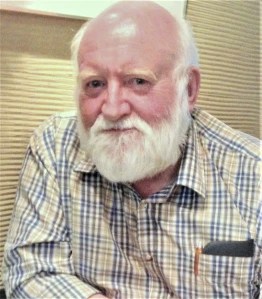
It was in May 2023, when the Lib Dems strengthened their control of Cotswold DC, thanks in part to a Chris(topher) Twells taking the Tetbury with Upton ward from the Conservatives. Yes, the same Cllr Twells who was at the time and continued for a further year to be also a member of Salford City Council, 160 miles away, just west of Manchester.

As it came to be public knowledge, it was, of course, controversial – with initially, in some circles anyway, some uncertainty about its legality, not helped by the fact that apparently even the local leadership of his new party group had been unaware of the situation. All of which seemed barely credible, since even I could have told them about the legality bit, without even checking. Anyway, soon after his Cotswold election he was suspended by his own party, “to enable a complaint to be assessed”, which had prompted my weekend emailer to contact me. But I decided even I couldn’t pad it out into a blog – until now!
Double-Cllr Twells’ own self-justification was clear enough, but didn’t do him any great favours. Most obviously it was legal because “your qualifications to stand for election can be based on occupying property or work”. Correct. Working for himself gave him the “flexibility” to attend all necessary meetings of both councils. OK. The councillor sitting on two authorities 150 miles apart had no problem fulfilling all his duties because an elected member’s workload “is not enormously onerous”. Hmm – not guaranteed to make you many friends.

And the killer punch: “I don’t want to worry anyone, but I’m technically qualified to stand for up to five districts in England and Wales”. I don’t think he meant contemporaneously, but it’s a good way of remembering just what the law says.

Chris Game is an INLOGOV Associate, and Visiting Professor at Kwansei Gakuin University, Osaka, Japan.  He is joint-author (with Professor David Wilson) of the successive editions of Local Government in the United Kingdom, and a regular columnist for The Birmingham Post.

Dusting down the cautious welcome: Initial reflections on the devolution white paper

Phil Swann

When I was director of strategy and communications at the LGA I was frequently criticised, by the late professor John Stewart among others, for issuing press releases “cautiously welcoming” one Blairite initiative or another.

The criticism was probably justified, but I would definitely have deployed that phrase in response to the government’s recently published devolution white paper.

There is undoubtedly a lot to welcome, not least the stated commitment to devolution, the additional powers for metro mayors, the revival of strategic planning, its reference to struggling small unitary councils and the focus on audit and standards.

There are, however, at least four reasons to be cautious.

First, every serious reformer of local government since George Goschen in the 1860s has argued that local government finance and structures should be reformed together. No government has ever had the political will or energy to do so. This government has also ducked the opportunity. As a result, this white paper will not fulfil its potential.

Second, the current mess and confusion in the structure of English local government is the result of incremental change. Just think of Peter Shore’s “organic change” and Michael Heseltine’s ill-fated Banham Commission. There is a real danger that this government will run out of restructuring energy or time. The contrast with Scotland and Wales, where local government was reorganised in one go, could not be starker.

Third, the effectiveness of the structures being proposed will depend on the quality of the relationships between mayors and councils, between councils and parishes and between ministers and mayors, councils and parishes. In England we are not good at relationships like these and there is precious little in the white paper to signal the trust, effort and imagination that will be needed to make these relationships work better than the previous ones did.

Finally, key to the revival of local government and effective devolution is a revival of citizen engagement in local politics and local governance. Word has it this will be addressed in a forthcoming white paper, but it should be central to this one.

So, a very cautious welcome it is.

Phil Swann is studying for a PhD on central-local government relations at INLOGOV.

Local Democracy in Crisis?

Peter Hetherington

Battered by fourteen years of austerity, is local government losing its once-proud standing and status? Probably. For a start, It’s no longer as ‘local’ as it should be. And it certainly isn’t ‘government’ as we once knew it.


These days, we sometimes tend to lump ‘democracy’ and ‘crisis’ together in a global context, forgetting that close to our doorsteps – in countless civic centres, town and county halls – there’s another crisis: restoring faith in local democracy, while sustaining councils literally facing insolvency.

At a hybrid event, organised by the Centre for Urban and Regional Studies at Newcastle University, we asked a simple question at the start: Do we need a new, positive direction for once-powerful towns and communities where meaningful democracy has disappeared as local government has withdrawn?

We attracted a great range of speakers putting, broadly, two cases: first for a new local government structure in England based on economic geography embracing combined authorities for big city areas alongside large county-wide single purpose unitary authorities, underpinned by a more equitable funding formula; and, secondly, for varying degrees of town and parish governance, sustained by participatory democracy, including citizens assemblies, with powers – parks, libraries, leisure facilities for instance – devolved from existing larger authorities. Often, such an asset transfer is born out of necessity because larger councils can’t afford to keep them anyway and parishes/towns can raise money through a council tax precept while sometimes creating stand-alone community interest companies.

The case for a genuine new ‘localism’ appeared strong. That’s because, currently, a continuing process of abolishing councils to create larger units with few, if any, local roots has created a sense of powerlessness, a collective loss of identity with little or no attachment to people and places. Fifty years’ ago England had almost 1200 councils, from the smallest urban/rural district to the largest city. “We were run by our own,” recalled the writer, broadcaster and ultimate polymath Melvyn Bragg, in his 2022 memoir ‘Back in the Day’. Born in Wigton, Cumbria, his small town had a rural district council (which I knew well): “We could challenge the elected councillors who made the decisions” Bragg continued. “They were not a separate cadre…they were just people you had been to school with…(approach) on the street…to whom you could write a personal letter knowing it would be read, considered, answered.”

No longer. His council disappeared in 1974. Today, after several rounds of ‘reorganisation’ under the dubious label of efficiency – although there’s little concrete evidence of cost saving – that number has been reduced to 317, with little if any public debate. A forthcoming devolution White Paper is expected to advocate more reorganisation and even fewer councils in a country where local authorities already cover much larger areas than in mainland Europe.

Against this background, it’s probably no surprise that Carnegie UK, in its recent ‘Life in the UK’ index, reports that a lack of trust in politics and government is undermining collective well being. Three-quarters of people, says Carnegie, feel they can’t influence decisions. Surely reconnecting them begins locally. But how local?

If the government’s approach so far is a broad definition of ‘taking back control’, could an over-arching contradiction be emerging? Will the apparent obsession with more all-purpose councils, the prospect of an all-unitary England – similar to the structure in Scotland and Wales – make people feel even more distant from power, disaffected? Carnegie insists that restoring faith in democracy should be the Government’s ‘mission of missions’.

If that’s one challenge, there’s another, interlinked: the crisis of financing local government, with 7 councils theoretically insolvent and many more heading that way; legally, they can’t go bust and have been forced to borrow the equivalent of pay-day loans on a mega-scale to stay afloat, adding to a debt mountain. Now Conservative-run Hampshire has said issuing a section 114 notice – prelude to technical insolvency – is “almost inevitable”, with a sting of others close behind. And as Prof Andy Pike, and Jack Shaw have outlined in their recent excellent, but chilling paper (‘The geography of local authority financial distress in England’) 96% of English councils won’t balance their books by 2026-27.

Of course, alongside that unparalleled financial crisis in local government, we’re also facing an alarming democratic challenge nationally with the lowest turnout ever recorded in the recent general election; almost half the electorate didn’t vote! Surely, the place to renew trust in the democratic process begins at the grass roots, perhaps reviving some of the 10,000 town and parish councils, some of which want to take over functions from larger authorities (some are obliging out of necessity). Could this – call it double devolution – provide one small way forward?

I’m aware there’s a danger that events, like the latest one at CURDS addressing the crisis in local democracy, can produce a combination of hand-wringing and hot air. But, hopefully, we concluded with a practical, positive outcome. As Professor Jane Willis, geographer and champion of community empowerment – now in Cornwall- noted: “It’s not all gloom and doom – there is good news.” In her county, communities are taking back control, again out of necessity – a really positive story and a lesson for elsewhere? Willis advocates a new social contract under a layered system of local government to “re-franchise” people.


In the meantime, the chair of the event urged those present to make their views known to MPs, and the government, as the forthcoming devolution White Paper foreshadows a pre-legislative consultation process. As Professor Andy Pike, of CURDS, noted in summing up, one leading question needed answering above all: “What is local government for, and how to fund it?”


All we know so far is that the White Paper, according to the Treasury, will include …“working with councils to move to simpler structures that make sense of their local area with efficiency savings from council reorganisation helping to meet the needs of local people…”. Contradictory or otherwise – will more larger councils “make sense” of local areas? – we must surely intensify a campaign for a genuine new ‘localism’, embracing places, communities, towns and some cities now without any form of local government. That doesn’t necessarily mean sidelining the case for a new – and/or revised – local government structure in England tied to a ‘needs’-based funding formula. The current one favours the richer parts of the country and penalises the poorest with the lowest tax bases.


But the time for national government to act is during the first year or so of a new administration. It assuredly won’t go down well with the ‘middle England’ target readership of – say – the Daily Mail. There’ll be howls of protest. But it must be a priority to bring a sense of fairness to a deeply unequal country and, equally importantly, deliver some hope to voters in the so-called ‘red wall’ seats who either returned to Labour at the last election or voted for an ascendant Reform. We live in a fragile democracy. Restoring faith in government, local and national, begins in community, neighbourhood parish and town. We need the Labour government to think big and act local. We haven’t much time.

Peter Hetherington is a British journalist. He writes regularly for The Guardian on land, communities, and regeneration.  He is also a vice-president, and past chair of the Town and Country Planning Association, former regional affairs and northern editor of The Guardian and the author of the 2015 book, Whose Land is Our Land? The use and abuse of Britain’s forgotten acres, and the 2021 book, Land Renewed: Reworking the Countryside.

When paradiplomacy becomes a performative act: Istanbul’s Imamoglu and his quest against competitive-disharmony

Dr. Ahmet Cemal Erturk & Dr. Nur Sinem Kourou

Paradiplomacy involves multi-level actors in global politics and allows for local governance even within strict unitary state borders. These borders are sharper when regional or sub-national entities diverge from the central government’s policy position. Moreover, political constraints can be intimidation tactics, with authoritarian measures tightening control over municipal autonomy. Therefore, sub-national entities may adopt various strategies to bypass these limitations. Paradiplomacy could become a way out. Sub-national actors may take paradiplomacy as an outlet to counter political pressure and push back against central government authoritarianism. The opportunities created through paradiplomacy also bring local leaders to the forefront of foreign policy. Post-2019 Turkey stands as a benchmark for analysing this issue.

It would not be wrong to describe paradiplomacy as the lifeline of some local governments not aligned with Turkey’s ruling party after the 2019 local elections. Let us look at the background of the situation. AKP’s leading position in national and local governments since its first elections (2003 national, 2004 local) was shaken by the loss of metropolitan municipalities such as Istanbul and Ankara to the main opposition CHP in the 2019 local elections. Since then, a competitive-disharmony phase has opened between the CHP municipalities and the AKP government. In a pattern of competitive-disharmony, local leaders turn foreign relations into a political performance on stage. By strategically communicating and leveraging foreign ties for political gain, sub-national entities can demonstrate their ability to fulfill the needs of both domestic constituents and international partners, thereby positioning themselves to compete with the central government effectively.

The most notable politician in this respect has been Ekrem Imamoglu, the Mayor of Istanbul. This is not only because İmamoğlu is a skilful leader. In the absence of the backing of the national government to run a Megapolis like Istanbul, he has had to pursue other possibilities, making him the actor of paradiplomacy. Disharmony naturally emerges in these relationships, driven by state officials viewing sub-national authorities as existential threats. In centralized and authoritarian contexts, paradiplomacy within competitive-disharmony emerges in two critical areas of foreign policymaking: economic and political. Local leaders build reputations by overcoming these constraints while forging their path through diplomacy. In a sense, they endeavour to become actors in the game to avoid appearing as mere recipients of international actors. By doing so, they become the legitimate, albeit unofficial, government representative in the vacant areas.

The most recent example of this occurred last summer. President Erdoğan’s decision not to attend the 2024 Paris Olympics provided a diplomatic opening for İmamoğlu, who has consistently expressed his desire to host international events like the Summer Olympics. Riding the momentum of his victory in the March 2024 local elections, İmamoğlu travelled to Paris with nearly all CHP district mayors, supporting the national athletes and carving out a new space for diplomacy as he sets his sights on bringing the 2036 Olympics to Istanbul. Imamoğlu’s intention and diplomatic endeavours are also physically present in Paris under the name ‘İstanbul House.’ ‘İstanbul House’ was founded to showcase Istanbul’s sporting and cultural heritage and share the city’s future vision with the world. İmamoğlu’s high-profile involvement in the Paris Olympics and the opening of ‘Istanbul House’ was criticized as a ‘wasteful’ effort by people in Turkey who have struggled with the current economic crisis, yet from a diplomatic perspective, it was another step in the paradiplomacy he has been pursuing in since 2019.

Since the beginning of İmamoğlu’s tenure, instances such as the example of Paris have been evident. Economically, his first term has been marked by a persistent pursuit of external funding, with a focus on leveraging foreign sources such as Deutsche Bank and the French Development Agency. This strategy was designed to bypass the obstacles imposed by domestic funding authorities. Politically, İmamoğlu has also tested the limits of competition with the central government. In a highly unprecedented move in Turkish political history, he appeared as a guest speaker at the 2022 Munich Security Conference, where he outlined an agenda that directly challenged the government’s official foreign policy stance. His speech highlighted the growing democratic regression both domestically and globally, transforming his address into a cautionary narrative for those in attendance.

Although İmamoğlu still has four years remaining as Istanbul’s mayor, experts widely agree that his ambitions extend far beyond his current position. These aspirations are clearly reflected in his approach to paradiplomacy. While the volatility of Turkish politics leaves little room for certainty, one expectation remains clear: the longstanding tension between Erdoğan’s increasingly centralized government and İmamoğlu’s municipality is unlikely to dissipate. Considering the ambitious goals of both parties—one driven by a quest for power, the other by an insatiable pursuit of total hegemony—it is reasonable to expect that competition between the two will persist over the coming half-decade.

This blog post is based on Ertürk, A.C. and Kourou, N.S., 2024. Unlocking pathways in constrained local governance: exploring paradiplomacy under competitive-disharmony through the case of Istanbul. Local Government Studies, pp.1-22. Available here: https://www.tandfonline.com/doi/pdf/10.1080/03003930.2024.2377223

Dr. Ahmet Cemal Erturk is an Assistant Professor of International Relations at Istanbul Kultur University. He completed his Bachelor of Science degree in International Relations at Middle East Technical University, followed by a Master’s degree from the the University of Manchester and a second Master’s degree from the London School of Economics. Dr. Erturk further pursued his academic journey by obtaining a Ph.D. from the European Institute of Marmara University. Dr. Erturk’s research focuses on pivotal areas such as EU-Turkey relations, sustainable transport policies within the EU framework, and the process of Europeanization in Turkey.

Dr Nur Sinem Kourou is a lecturer at Istanbul Kültür University. She conducts research on the relationship between gender and politics, gender opposition, and women’s political participation in Turkey. Kourou completed Ph.D at Boğaziçi University in 2022. During their doctoral studies, she was a visiting researcher at Yale University. In 2022, Kourou received the Dicle Koğacıoğlu Article Award from Sabancı University’s Center for Gender and Women’s Studies Excellence, ranking first. Currently, she is a Postdoctoral Researcher on a research project supported by the British Academy

We have to talk about OFLOG

Jason Lowther

It’s been an exciting month in government, nationally and locally, since the General Election on 4th July.  As the new Labour administration finds its feet, somewhere on Ministers’ “to do” list will be local government performance and (the department formerly known as) DLUHC’s attempts to improve this through the establishment of OFLOG, the Office for Local Government.

The election marked the exact anniversary of Michael Gove’s statement setting up OFLOG through the policy document, Understanding and supporting local government performance.  Its remit was “to provide authoritative and accessible data and analysis about the performance of local government and support its improvement”. 

Gove was at pains to stress “this is not about recreating the Audit Commission”.  With that point at least, I agree.  Whereas the Audit Commission was fiercely independent, often willing to criticise government policy where it was a factor in poor performance, OFLOG was established as an office of the department within the DLUHC department itself.  Whereas the Audit Commission developed comprehensive performance measures which were rigorously audited to assure consistency, OFLOG picked 27 PIs and published these.  Whereas the Audit Commission provided detailed national studies to inform best practice in local services, sometimes leading to wholesale systems change such as around youth justice services, with the local implementation of recommendations then supported by local specialist value for money auditors, the nascent OFLOG offered to “continue a programme of webinars to share best practice”.

An early product of OFLOG, in July 2023, was its “Local Authority Data Explorer”, which now brings together PIs on waste management, planning, adult social care, roads, and corporate and financial issues.  For each service, users can select three comparison councils to produce scatter charts like Figure 1, which compares my local council’s waste management with that of three other big cities.  This led to some rather uninformed press commentary and a response from the LGA. One may also say this is perhaps not the most compelling presentation of data in the world, arguably significantly less clear or flexible than the LGA’s excellent Inform tool which has been freely available for several years and includes thousands of published metrics.  

Caution should be applied to OFLOG’s position within a ministerial setting and the potential for politicians to be selective in how they use data for judging local authorities that are not of their political persuasion.  Whilst some may argue that the former Audit Commission may have been too powerful, it did provide a greater degree of transparency and objectivity at interpreting performance data.
 
Figure 1:  Waste management


As my colleague in Inlogov, Dr Philip Whiteman, has recently argued, the new government should ensure that OFLOG is independent of government with a remit to focus on:

  • Working with the sector to identify councils at risk of failure to ensure that support can be provided from within the sector, minimising the need for government intervention.
  • Collecting, analysing, and reporting data to enable individual councils, groups of councils and the sector nationally to make progress with shared priorities agreed with government.
  • Developing intelligence from on-going engagement with councils.
  • Supporting improvement in local services and councils’ contribution to national outcomes through researching, synthesising, and disseminating good practice.
  • Working with academic institutions such as Inlogov to incorporate key lessons from existing and future research.

We can be confident that local government performance overall is strong, and sector-led improvement has demonstrated our collective commitment to continuous improvement.  But with so much of the new government’s ambitious “Missions” depending on highly effective local government, we need to take a fresh look at how OFLOG can be further developed to identify and propagate good practice across the sector.

Jason is Director of the Institute of Local Government Studies (INLOGOV) at the University of Birmingham and was employed by the Audit Commission from 1994 to 2004.  This article was first published in the August 2024 LARIA Newsletter. Email [email protected]

INLOGOV’s new report, Equipping Local Government to Deliver National and Local Priorities, is available here.

ELECTED MAYORAL GOVERNMENT – SOME INLOGOV ANGLES

Chris Game

This blog was prompted partly by Vivien Lowndes’ and Phil Swann’s recent INLOGOV blog giving “Two cheers for combined authorities and their mayors”. Substantively, anyway, although the decisive stimulus was the realisation that most, if not all, of those present at the relevant ‘Brown Bag’ session would probably have been unaware that seated among them was the co-author of almost certainly the most comprehensive examination of this topic by any INLOGOV colleague over the years.

I refer to the appropriately labelled ‘long-read’, also masquerading as an INLOGOV blog and entitled Briefing Paper: Elected Mayors, published shortly before the 2017 elections of what I think of as the second generation of elected mayors – and produced by Prof Catherine Staite and a Jason Lowther.

Catherine, nowadays an Emeritus Professor of Public Management, had recently stepped down as Director of INLOGOV, in which capacity she had, among numerous other initiatives, both launched and regularly contributed to our/her blog. And, while I certainly recalled reading the Briefing Paper, I confess that, with his name meaning little to me at the time, I’d forgotten her co-author. Apologies, Jason.

He claimed, moreover, that he himself had “forgotten” it (email, 14/5), which I didn’t, of course, believe … until, a few days later and following some ‘research’, I discovered one of my own INLOGOV blogs, on the Magna Carta and 800 years of Elected Mayors, which I really had totally forgotten. Whereupon I realised too that I couldn’t actually recall much of what Catherine, I and other colleagues contributed to that decade of debate on elected mayoral evolution.

So, the remainder, the structure, and – I fear – the length of this blog were prompted, yes, by much of the media coverage of this month’s elections, and the sense that the spread and substance of mayoral government over the past decade aren’t fully recognised even by those who supposedly follow these things; and also by the notion that it would be a pleasing mini-tribute to Catherine to do so by identifying and italicising particularly some of her and colleagues’ INLOGOV blog contributions on these mayoral matters over the years.

We start, however, for the benefit of comparatively late arrivals, at the beginning of not the blog, but the concept. Mayoral government is a postulation you might expect to have found a supportive, even enthusiastic, reception in an Institute of Local Government Studies and it mainly did, albeit with perhaps a certain reservation. Directly elected mayors (DEMs) had played a fluctuating role in the Blair Government’s local government agenda from the outset. London, noted in Labour’s 1997 manifesto as “the only Western capital without an elected city government”, would have a “new deal”. Which took the form in 2000 of the creation of the Mayor-led Greater London Authority – in the manifesto, so no referendum required. Probably no reminder required either, but they’ve been: Ken Livingstone (Ind/Lab; 2000-08), Boris Johnson (Con; 2008-16); Sadiq Khan (Lab; 2016- ).

The Local Government Act 2000 then provided all English and Welsh councils with optional alternatives to the traditional committee system. Chiefly, following a petition of more than 5% of their electorate, they could hold a referendum on whether to introduce a directly elected mayor plus cabinet. There were 30 of these referendums in 2001/02, producing 11 DEMs – plus Stoke-on-Trent’s short-lived mayor-plus-committee system – three in London boroughs, but most famously Hartlepool United’s football mascot, H’Angus the Monkey, aka Stuart Drummond (Indep).

Ten referendums over the ensuing decade produced a further three mayors, prompting the now Cameron-led Conservatives to pledge in their 2010 manifesto to introduce elected ‘Boris-style’ mayors for England’s 12 (eventually 11) largest cities, with significant responsibilities including control of rail and bus services, and money to invest in high-speed broadband.

These DEM referendums eventually took place in May 2012 – three months after the launch of the INLOGOV blog – and provided a natural topic for early blogs by Catherine and colleagues (Ian Briggs). The referendums followed protracted Whitehall battles over mayoral powers (CG) – as revealed by the then Lord Heseltine in a UoB Mayoral Debate (CG) – a combination of ministerial indecision and interference (CG) against a backdrop of opposition from most of the respective councils’ leaderships, with Bristol the only one of the 12 cities voting even narrowly in favour (Thom Oliver).  

Birmingham voted 58% against, despite Labour’s having in Liam Byrne a candidate raring to go, and Coventry 64% against. There was speculation over whether the addition of a well publicised mayoral recall provision (CG) might have swung some of the lost referendums. But it was what it looked: an overdue, and to some welcome (Andrew Coulson), end of an episode (Karin Bottom);arguably the wrong solution to the wrong problem (Catherine Durose).

Since then, the referendums successfully removing elected mayors (Stoke-on-Trent, Hartlepool, Torbay, Bristol) have exceeded those creating new ones (Copeland, Croydon) – though, in fairness, those four removals were more than matched by five retention votes.

A ‘mayoral map’ at the end of that first decade would have looked something like the inset in my illustration of in fact the first 20 years of referendum results – numerous splotches of red for Reject, a few smaller green specks for Accept, and overall a patchy, somewhat arbitrary, experiment that on a national scale never really took off.  

The mayoral concept, though, had also generated interest outside local government – the Institute for Public Policy Research (IPPR), for instance, advocating Mayors for Greater Manchester, the West Midlands, and Liverpool City Region to take the required ‘big’ decisions on housing, transport, and regional development. Prime Minister David Cameron too was a ‘city mayors’ fan, although what scale of ‘city’ wasn’t initially clear, until in 2014 what became known as the first ‘devolution deal’ (Catherine Needham) was announced with the Greater Manchester Combined Authority. Headed by an elected ‘metro-mayor’ (CG), comparable to the Mayor of London, the GMCA would have greater control over local transport, housing, skills and healthcare, with “the levers you need to grow your local economy”.  

New legislation – the Cities and Local Government Devolution Act 2016 – was required, allowing the introduction of directly elected Mayoral Combined Authority or ‘Metro Mayors’ (Vivien Lowndes & Phil Swann) (+ Catherine Staite) in England and Wales, with devolved housing, transport, planning and policing powers.

The Combined Authority elections were held in May 2017 – not coinciding with the General Election (CG) as PM Theresa May had contemplated but, in contrast to Rishi Sunak, chickened out of – with perhaps usefully split results (CG). Elected were Andy Burnham (Lab, Greater Manchester), Steve Rotheram (Lab, Liverpool City Region), Ben Houchen (Cons, Tees Valley), Andy Street (Cons, West Midlands), Tim Bowles (Cons, West of England), and James Palmer (Cons, Cambridgeshire & Peterborough) – followed in 2018 by Dan Jarvis (Lab, Sheffield City Region). The map had started to change – even within the first hundred days (CG) – stutteringly under the less committed Theresa May and/or in several cases where groups of local authorities failed to agree – but eventually dramatically, as evidenced in the larger illustrated map. The Staite/Lowther ‘Briefing Paper’ was well timed.

A few years on, mayoral devolution has trailblazed across the country (CG) to a greater extent than even some commentators on this year’s local elections seemed to have difficulty grasping. As of March 2024, devolution deals had been agreed with 22 areas, covering 60% of the English population – most recently, in late 2022, North of Tyne, Norfolk/Suffolk, East Midlands, York & North Yorkshire; in 2023 Cornwall, Greater Manchester and West Midlands (‘Trailblazers’), Greater Lincolnshire, Lancashire, Hull/East Yorkshire; and so far in 2024 Buckinghamshire, Warwickshire and Surrey.  

From next year, if you draw a straightish line from, say, Ipswich in South Suffolk up through about Alvechurch in South Birmingham, heading for Shrewsbury, at least five-sixths of the bits of England to your north will be under mayoral devolution. Which, to me anyway, seems pretty dramatic news, and considerably more interesting than the endless General Election Date speculation that passed this May for ‘Local Elections’ reporting.

Picture credit: https://en.wikipedia.org/wiki/Mayor_Quimby

Chris Game is an INLOGOV Associate, and Visiting Professor at Kwansei Gakuin University, Osaka, Japan.  He is joint-author (with Professor David Wilson) of the successive editions of Local Government in the United Kingdom, and a regular columnist for The Birmingham Post.