Preaching to the choir: reflections on key leadership skills for local authority chief executives – part 2: charm

Catherine Staite

If Brian Tracy and Ron Arden are right when they say the deepest craving of human nature is the need to feel valued and valuable. The secret of charm is therefore simple: make others feel important – then charm must be a crucial attribute for leaders.

staite 1

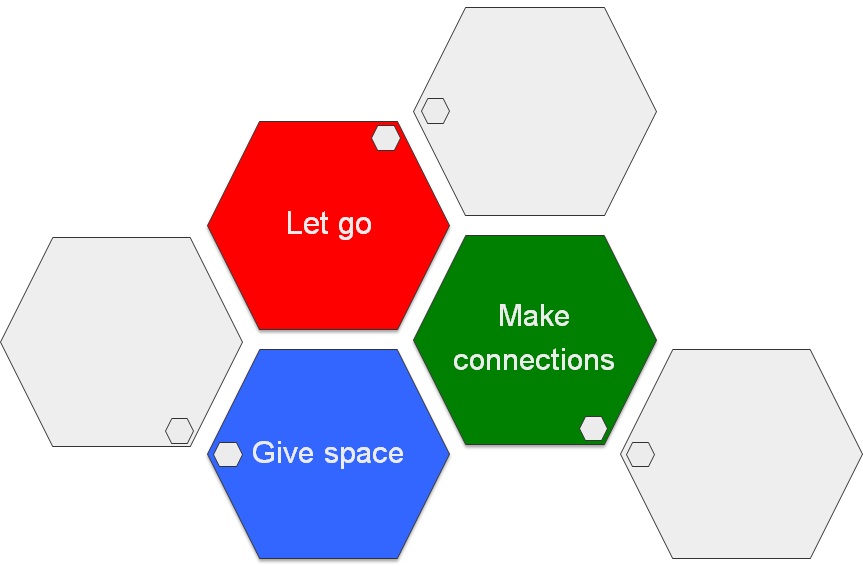
Charm is shorthand for a sophisticated set of skills which enable you to make new connections and solve old problems. Charm is about much more than being nice in a superficial way – otherwise known as ‘smarm’. If you don’t have real charm then just be gruff and honest. Everyone will understand. Smarm, on the other hand, will simply breed distrust.

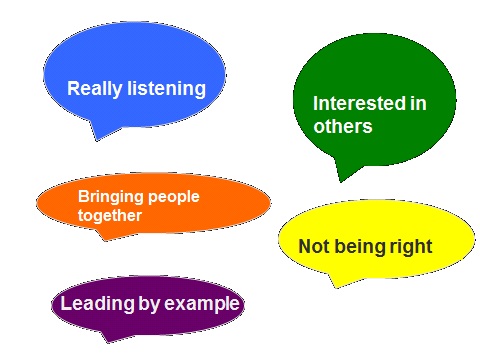
The truly charming have notable skills. They are interested in others. They pay them real attention and give them positive regard – as opposed to the barely controlled irritation demonstrated by some powerful people in their dealings with underlings. Even if they attempt to catch you with a bright idea when you are en route to the toilet, don’t snap – suggest they catch you on the way back, when you can give them your full attention. You need all the bright ideas you can get.

Charming leaders also know how to listen, not just to what the people you lead are saying but what they perhaps feel they can’t say to you. A leader who doesn’t listen won’t have access to all the facts, no-one will tell them the unvarnished truth and they won’t hear when people are trying to tell them they may just be wrong. The failure to listen renders leaders about as effective – and as potentially dangerous – as a blindfolded driver. You may have had experience of a leader who doesn’t listen. Remember how awful that was and don’t case that level of distress to your staff.

staite 1

Charming leaders seek to bring people together and that has never been more important for local government. Albert Camus observed that charm is a way of getting the answer ‘yes’ without ever having asked a clear question. You need a lot of people to say ‘yes’ to a lot of things they may not necessarily like if you are going to effect real change.

There is so much good work going on around collaboration for the benefit of the people we all serve but there are still so many terrible instances of people in senior positions who perpetuate old feuds and personalize organizational battles, to the point where there is no way out for anyone. A history of corrosive, destructive pettiness endlessly repeats itself.

I am sometimes obliged to listen to a range of grievances going to back to 1974 and it’s no fun. The petty disputes I observe range from being mere energy vampires to the evidence of utter moral failure. Those disputes are about the past and you have to get beyond them – and encourage your members to do the same. You are leading in the present to build a better future and you’ll need all your energy and charm to do that. That behavior will shape your organizational culture and ripple through external relationships to the point where no-one can articulate or even want to remember why this country doesn’t co-operate with that district or vice versa. That will have an impact across your area and beyond – so your charm is a force for real good.

It’s amazing how pervasive and powerful an influence the chief executive and top team have on the culture of their council. When the people I pass in your corridors are smiling – in spite of all the challenges – I know their leaders have charm and their councils will survive and thrive.

Catherine Staite

Catherine Staite is the Director of INLOGOV. She provides consultancy and facilitation to local authorities and their partners, on a wide range of issues including on improving outcomes, efficiency, partnership working, strategic planning and organisational development, including integration of services and functions.

Preaching to the choir: reflections on key leadership skills for local authority chief executives – part 1: creativity

Catherine Staite

I have called this blog series ‘preaching to the choir’ as it is dedicated to local authority chief executives and they already know a great deal about leadership. They wouldn’t survive and thrive in their posts if they didn’t.

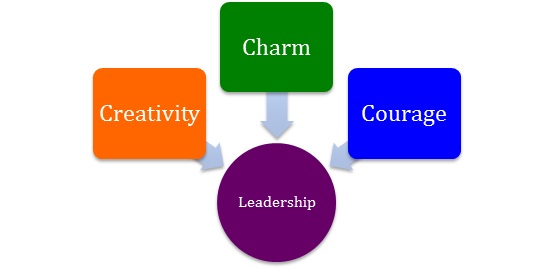
They already know that heroic leadership is only useful in the case of fire and flood and that leadership of organisations in giving way to leadership of whole systems – which is a whole lot harder. Instead, I’d like to focus on three aspects of leadership which are talked about less often but are absolutely crucial to effective and sustainable leadership, in complex systems and in difficult times. They are: creativity, charm and courage.

staite 1

So what is creativity and why do leaders need it so much?

We hear a great deal about the need for change and innovation – which implies creativity. However, so much which is described as innovation is nothing of the sort. Adam Smith introduced us to lean thinking in The Wealth of Nations in 1776. The Hanseatic League demonstrated the benefits of collaboration and shared services in the 17th century. We could and should learn from the past, but too often old ideas are re-labelled and sold on as new, not as a coherent element of a new way of solving problems but as a ‘one size fits all’, ‘but this and all will be well’, single focus solution.

So if creativity isn’t just about endlessly recycling the ideas of previous eras, what is it? Steve Jobs said creativity is just connecting things. How simple, and how true.

staite 2

We are subject to constant but superficial change. The ink hasn’t dried on one paradigm before it’s shifted. But we’re in a time of evolution not revolution, no matter how apocalyptic the environment feels at times. Not withstanding the 24/7 networked digital revolution we all still meet in rooms – not cyberspace. Joseph Chamberlain could come back from the dead and find his way round Birmingham City Council. Not only is the décor much as he left it, members and officers are focusing on the successor problems to those that were the focus of his attention. Both he and they are attempting to achieve the same outcomes – better lives for the people of Birmingham.

We really need creativity – not to create a new universe but to unstick the current one. In mental health services in the 1990s we were innovating to create an integrated care system, including diverting mentally disordered offenders from inappropriate custody. The evidence was clear. Early diversion from the criminal justice system and multi-disciplinary support wrapped around the person saved a lot of money for services and a lot of damage for people with severe mental health problems who committed minor offences. 25 years later not much has changed. Why is that? Perhaps it’s because, in spite of the enthusiasm and commitment of the champions of change, episodic creativity and short term collaboration does not penetrate the roots of organizational silos and professional conservatism. As Albert Einstein said, we can’t solve problems by using the same kind of thinking we used when we created them.

So what can leaders do to help convert short-term creativity into long-term benefits? According to Albert von Szent-Gyorgy, discovery consists of seeing what everyone has seen and thinking what nobody has thought. Leaders can make the space for creativity as well as bringing people together, allowing time, encouraging risk and forgiving failure. Creativity is often about seeing opportunities to bring together different ideas and new ways of thinking. Leaders can also help to embed new thinking by challenging some of the entrenched interests rather than colluding with those who say that change is ‘too difficult’. As Thomas Edison put it, with admirable brevity, there’s a better way to do it – find one.

Catherine Staite

Catherine Staite is the Director of INLOGOV. She provides consultancy and facilitation to local authorities and their partners, on a wide range of issues including on improving outcomes, efficiency, partnership working, strategic planning and organisational development, including integration of services and functions.

Local government: keepers of the moral compass?

Catherine Staite

Barry Quirk’s excellent article in the Local Government Chronicle highlighted the often overlooked role of local government as the guardian of public ethics.

Public ethics happen in the space where the state, in all its manifestations, civil society and the individual meet.  That space is highly contested and consequently difficult to navigate. We need a very good moral compass to find the right course through all the arguments, often fuelled by ignorance and blurred by misunderstanding, about who takes precedence – the majority or the minority? As we attempt to protect minorities are we inadvertently discriminating against them by failing to hold them to account?

There are no easy answers but examples like the child sexual exploitation in Rotherham highlight what happens when local government and its partners mislay their collective moral compass and lose their way.

What causes such failures? The fragmented nature of local government is both a blessing and a curse.  Councils are so different: their geographies, challenges, politics, culture and finances vary much more than the many over-simplified, generic journalistic, references to ‘town halls’ would suggest. The blessings stem from local knowledge, closeness to communities and relative agility – at least compared to national bodies. The curses lie in cultural isolation.

There is a lot of collaboration, integration and sharing of best practice and new ideas across the local government family but there is also quite a lot of  inward looking, ‘not invented here syndrome’ as well.  It is in that self-referential, parochial, isolation that the moral compass can be lost without anyone noticing. That isn’t a problem which is confined to local government – the ‘institutional racism’ of the Metropolitan Police and the unspeakable cruelty of Mid Staffordshire demonstrate how the lack of a moral compass can lead to the normalisation of moral and ethical failure.

So how do organizations maintain their moral compasses in good working order? It’s far too easy to place our faith in that mythical answer to all our problems: ‘leadership’.  All good leaders know that they are nothing without good followers. Old fashioned heroic leadership required unquestioning followers and that is a recipe for disaster. The most vulnerable leader is the one whom to whom nobody dare say ‘you are wrong’. Good followers are not sheep, they are engaged and challenging – not least because they know so much about what is good and bad in their organisation.  Good leaders and good organisations treasure and reward good followers.

Is external scrutiny the answer? The Audit Commission became a bit of a bête noir for local government before its demise but some of that reaction was generated by it doing its job well and challenging bad practice and groupthink.  It will certainly be re-invented at some form in the future because of a growing recognition of the need for positive and supportive external challenge. The Local Government Association makes a good fist of sharing good practice and its peer reviews offer some gentle challenge to those who invite it but it is a political organization and it’s not its job to be both advocate and enforcer.

One of the consequences of the Scottish Referendum is a reinvigorated debate about devolution in England.  As you’d expect, this has quickly resolved itself into discussions about structures and institutions but those discussion are missing the point. Successful devolution requires the explicit transfer of both powers and duties and one of those duties is responsibility for the moral compass.  The need for effective local guardians of public ethics has never been greater.

Catherine Staite

Catherine Staite is the Director of INLOGOV. She provides consultancy and facilitation to local authorities and their partners, on a wide range of issues including on improving outcomes, efficiency, partnership working, strategic planning and organisational development, including integration of services and functions.

Under what conditions are decisions best made? Football managers and the public sector

Ian Briggs

I am not much of a football follower, but I am becoming increasingly bemused by the fascination for premiership clubs in becoming so closely associated with their managers. You can hardly fail to notice that the headlines stories on the back pages of newspapers concentrate a great deal on the relative merits of the approaches taken by the current crop of managers. Am I alone in thinking that they get more attention now than the players?

Their very personalities are so great that they now appear to be at least as important as the club itself. Success or failure on the pitch is often put down to the decisions of the manager and less on the relative performance of the players. Sir Alex Ferguson leaving Manchester United and Jose Mourinho becoming so much intertwined with Chelsea has got me thinking about our assumption that consensual decision-making is an absolute necessity within the public services – when compared to the unilateral decisions made by football club managers that are viewed as key factors in match results.

The committee system that we have lived within in local government for so many years, albeit often under a charismatic chairperson, is the very embodiment of consensual decision-making. A problem is placed within the political arena and through open discussion and challenge a decision is arrived at that is seen to be within some level of agreement and indeed consensus to be an appropriate means of doing business. For quite some time we have concentrated upon inter-agency partnership working where bringing together expertise from a range of organisations implies that the benefits of consensual decision-making are a necessity to cope with the complexity of delivering public services.

So, whilst on the one hand we have an acceptance of bringing together a group to concentrate on an issue of public interest either within management teams, committees or a partnership, on the other hand we are experimenting with non-consensual decision-making of certain prominent leaders in public life. Witness the debate over the relative merits of executive Mayors in local government (at best an unresolved argument) and the singular independent role of Police and Crime Commissioners as examples.

When things go wrong we may want to have a ‘head to roll’; if a football club is not winning then the supporters call for the sacking of the manager – even in some cases hiring aeroplanes to fly over the football ground with messages flapping from their tails to that effect. How different is this to occasional lurid tabloid newspaper headlines calling for the removal of a senior manager or politician if there is perceived poor performance in a public sector organisation. In some cases they could perhaps do the honourable thin and fall on their swords if the consequence of a bad decision (even if it is a decision they have merely endorsed rather than made themselves) has challenging or inappropriate and unintended consequences. All this leads to a gradual shift towards the public needing to have a strong, singular individual making decisions – eschewing consensus.

So under what conditions are decisions best made? In open, consensual arenas (even if committees often operate behind closed doors) or through a singular, individual focal point around a decision as in the case of football club managers?

Since Rittel and Webber formally described wicked problems in the early 1970s, we have debated what they mean for those who are in public management and leadership and are facing issues where there is little agreement over the exact nature of the problem. This has opened up much debate on the benefit of bringing together a wide range of stakeholders to focus their attention upon complex problems – and let’s face it, the list of these things seems to be growing! Is it because we see more and more ‘wicked’ issues and we have a relative lack of success in solving them that we are now becoming drawn towards a less consensual form of decision-making?

In his highly provocative book If Mayors Rules the World, Benjamin R. Barber offers the view that large nation-states with complex democratic consensual decision-making processes are poorly placed to deal with the complex and wicked issues faced today. If we were to place decision-making and leadership into the hands of one individual then the scope for clear direction setting and making brave and original decisions may increase and therefore be favourable to placing decisions in the hands of committees and stakeholder groups which often lead to stasis, mass avoidance and confusion. The subtext here is that we need to place a higher value on charismatic and visionary leadership; however, have not some of the most dangerous individuals in history conformed to this typology? As I am no student of football neither am I a student of history, but when Europe was a collection of small nation and city states this did seem to lead to war and violent competition!

To complicate matters a little further we might have degrees of consensuality in decision-making. Last week after the second reading of the hybrid bill for HS2, Parliament endorse the decision to press ahead with the project. Having all party agreement is important on a problem that has wicked characteristics such as this one. The next stage could be to ‘sell’ the decision to the public and the wider stakeholder community on the basis that it is a better decision because it has this degree of consensus. HS2 could be seen as valid in the public eye as it has this right level of political and stakeholder consensus, while it we had a football club style manager making the decision alone on HS2 there would be uproar.

So where does this leave us? Are we exploring the limits of consensual decision-making? The advent of new governance arrangements in health is perhaps a good current example of where through bringing together groups of stakeholders an assumption is made that the consensual approach to decision-making is most appropriate. However, the dynamics of bringing together multiple parties has disadvantages as well as assumed benefits. Successive studies suggest that when things get complicated (for this read ‘wicked’) and more and more perspectives and opinions are introduced into groups, then the more likely it is that an incidence of ‘multiple-uncertainty’ will occur. In short, there are too many holes in the process of deciding for any potential solution to fall into and be subsequently forgotten.

To avoid this inefficiency, decisions could be placed in the hands of one responsible and accountable person. The football team has not lost because the specialist coach who deals with the players in attacking roles has not done their job properly, nor is it because the players on the opposing side were better on the day. It is because the one individual at the top of the pecking order has failed to apply the correct strategy and not motivated the players well enough to win. In the post-match review, conducted usually in the full glare of the media spotlight, it is the manager who gets it in the neck because his (and remember it usually is a ‘his’) decisions were not deployed effectively during the game. On the specific issue of gender, it is worth noting that there are multiple studies which suggest that most women will be more effective than men in complex situation as they display a preference for consensual decision-making.

So, should we be concerned about whether decisions are best made in consensual or non-consensual arenas? Are we right to assume that the most effective way of leading through wicked decision is through strong individualised leadership that downplays where other stakeholders have differing ideas and preferences for solutions? In the end it may not matter and ultimately be down purely to contingency and circumstances – in some circumstances we must take others with us and in differing circumstances we need to have stand out leadership that prospers or fails on the basis that they deploy non-consensual decision-making and have the robustness and capacity to live with the public ridicule and criticism that this can bring. But we do seem to have conflicting approaches: local democracy was founded upon an add mixture of the checks and balances of consensual devision-making, yet we seem to be seeking new heroes and heroines. The committee was the place for shared and distributed responsibility, but remember that even a committee has a chairperson – their role might not be to just endorse the decision the majority comes to but also to create the conditions that are required to make a good decision.

I am a little shocked that as someone who has only a passing interest in football at best, I can now rattle off the names of managers and the clubs they lead. If top class football is a place where non-consensual decision-making is being played out with some success then we should step back and think about our approaches to open consensual decision-making in the world of public services. Would we be better served if we did have less of this and more of the singular, individualist decision-making here as well? My discomfort with this though of the potential benefits of the hero and heroine decision-makers who dismiss consensual mechanisms is equally by my bemusement at why I am interested in football after years of boredom with the game. But it seems that the football managers of today are at least asking questions of our understanding of the best approaches to decision-making in complex situation. Fancy a new job, Sir Alex?

briggs

Ian Briggs is a Senior Fellow at INLOGOV, and sits on a rural Parish Council in Warwickshire. He has research interests in the development and assessment of leadership, performance coaching, organisational development and change, and the establishment of shared service provision.
Building public trust in policing? The contribution of Police and Crime Commissioners, one year on

John Raine

The ‘Plebgate’ saga, which has now drawn apologies to Andrew Mitchell from three chief constables, has once again raised questions about police integrity and dented public trust and confidence in policing more generally. Building such trust was, of course, one of the Coalition Government’s arguments for introducing Police and Crime Commissioners (PCCs) – and, as the first anniversary of those elections is now close upon us; it seems timely to consider what difference PCCs have so far made.

It was, we all remember, an inauspicious start; with an embarrassingly low electoral turn-out (averaging less than 12 per cent) because of poor advance publicity on the new PCC role; failure to provide most voters with candidate election leaflets, and choice of a November polling date when no other local or national elections were taking place. Moreover, matters seemed to get worse in subsequent months with critical media headlines concerning the appointment of deputy commissioners and youth commissioners; reports of disagreements and discord with chief constables, and discontent over policy priorities and budget decisions.

But one year on, with PCCs becoming established in their roles, the picture has begun to look rather more settled. It is, for sure, too soon to assess the impacts – beneficial and otherwise – of the new police governance framework. But a recent round of ‘stock-take’ interviews with a small sample of PCCs (including Conservative, Labour and Independent office holders), has highlighted at least two key respects in which the directly-elected model of governance already seems distinctly different from the previous regime of Police Authorities.

First: the new PCCs are giving much more priority to public engagement – they are out and about on a near daily basis, presenting themselves and taking feedback at council meetings, in open public meetings, and indeed, in shopping precincts and market squares around their (very large) patches. They are also all actively exploiting the potential of Facebook, Twitter and other social media in reaching-out and communicating and handling considerably more direct correspondence (email and post) and telephone calls from citizens. Their public profile is already much higher than that of Police Authorities.

Second: there is a stronger sense of ‘local leadership’ to their work. The Home Office has admirably resisted the temptation to try to drive the new system and impose its own perspectives and priorities on PCCs. Although cuts in all police budgets have been driven by reductions in Home Office grants, Westminster and Whitehall have generally allowed PCCs to get on with the job locally as each considers best. As a result, there is more diversity between the PCCs with regard to their approach and priorities in the role than was previously apparent with Police Authorities.

Relationships and accountabilities with chief constables and with other criminal justice and local governance agencies are intriguingly variable, as each PCC brings their own personality and preferred style to the role. Indeed, it is clear that the different career backgrounds and experiences of each PCC are colouring and shaping their approach to the role and their priorities.

By the time of the next PCC elections – scheduled for May 2016 – it will be interesting to gauge the significance and durability of these early signs of change towards stronger democratic engagement and local accountability, and to see what, if any, are the implications for public trust and confidence in policing. At least a more lively public debate and much higher turn-out are surely to be expected next time.

raine

John Raine is Professor of Management in Criminal Justice at INLOGOV. He has been involved in criminal justice research, consultancy and teaching at Birmingham for some twenty-five years and has a strong track record of commissions for the Home Office, Lord Chancellor’s Department/Department for Constitutional Affairs/Ministry of Justice on aspects of policy and practice within the criminal (and civil) justice sectors.

The managerial-political interface: strong relationships prosper in difficult times

Andrew Muter

The Chief Executive’s leadership position in Local Government operates in a different context to simple hierarchies. We all manage at the political interface – what some have termed a grey area between the hurly-burly of big P Politics and the general management of the organization. And the relationship at the core is that between the Leader and Chief Executive.

Much has been written and said about these relationships over the years. In particular, Simon Baddeley’s research has provided a fascinating insight into the way that Leaders and Chief Executives describe the way they work together. One of the recurring themes is the way that strong leadership relationships are under-pinned by shared reflections about the way the partnership works. It’s the ability to describe, express and check-back on what is happening that helps to define the relationship and build trust.

The Leader / Chief Executive relationship can come under the greatest of strain even in the best of times. Where trust hasn’t been built, or is undermined, the consequences are huge. So you might have expected that the impact of the harsh financial climate for local government over the last five years would have placed an increasing strain on that crucial interface between politics and the organization.

I doubt that the answer is so simple. In fact, it’s perhaps more likely that strong relationships will prosper in difficult times. The pressures of shrinking resources, transformational change and spiraling demand call for leaders to raise their games. This is a test for the relationship but it’s also an opportunity for synergistic co-leadership.

In our pre-recession world, the managerial-political interface was sometimes illustrated through the development of policies. The dividing line was that although the development and discussion of policies engaged senior managers and politicians, it was the politicians who decided. In today’s world, this may be no less true. But choices have narrowed and the pace and direction of change is relentless and unforgiving. Political and managerial careers may not have been planned around this destination, but we are where we are.

That relationship between Leaders and Chief Executives has been tested in this grave new world. Local government’s performance in handling the reductions in finance, showing that we are fleet of foot in comparison with almost every other area of public service, suggests that we might be optimistic about the resilience of our political and managerial leaders.

In a recent meeting I watched a Leader and Chief Executive of another council explaining how they were planning to deal with the challenges ahead. Their explanation was clear, compelling and seamless. The tone and content of their sentences melded with one another into a seamless narrative. They had not rehearsed their approach – they had lived it, breathed it.

In time, we may have a new academic analysis which sheds light on the stresses and strains of leadership during the austerity years. Here’s hoping it shines a light on strong and successful leadership relationships forged in the heat of battle.

muter

Andrew Muter is the Chief Executive of Newark and Sherwood District Council.