New course for public sector leaders on growing your place

Ian Bancroft

Place Growth and Leadership is growing in importance for public bodies and public sector leaders, yet as a discipline with a set of core skills it is not well defined or supported through programmes of learning and development.

This is something I realised during my time as a Chief Executive of a growing city, Wrexham. No one advised me about how to steer the place journey of Wrexham, or about convening common purpose conversations, creating a shared vision, coaching other local leaders, overseeing the city’s master planning, encouraging inward investment, connecting with other places on similar journeys in the USA, promoting Wrexham as an international brand, and working with Hollywood stars.

Yet this is the journey I traversed, with a number of like minded local leaders to achieve city status, grow tourism and the local economy, attract inward investment including £450m philanthropic funding from the USA and a £160m investment zone, as well as being a runner up in the UK City of Culture competition for 2025.

During a conversation early in 2025 with Jason Lowther the Director of INLOGOV we discussed place growth and leadership and formed the early ideas of this unique course. We both had a similar view, that while systems leadership, visioning, public narrative are becoming more commonly taught these are not pulled together with an emphasis on using these skills to grow the place we serve. We also recognised INLOGOV with its history at being at the heart of innovative learning in Local Government was ideally placed to host such a course.

At roughly the same time I was approached by Solace (UK) to contribute to their Power of Place report, describing my journey in Wrexham, and bringing together a number of case studies by people leading place-based work across the UK. This report is a critical best practice resource for place leaders and practitioners. The Power of Place | Solace

Jason and I were delighted that after discussions with Solace (UK) that they wanted to collaborate on the course to ensure the Power of Place report is utilised fully as a learning resource.

INLOGOV in collaboration with Solace (UK) are now launching this new course ‘Place Growth and Leadership’ and are recruiting for the first cohort early in 2026. I am delighted that under the umbrella of my new company Traverse Leadership Consulting Ltd Ian Bancroft that I will be leading delivery of the course and be able to give back and share my learning with other skilled practitioners. This will include two days at the beginning and end of the course based at the UoB campus in Birmingham learning about place growth and leadership skills, considering case studies from the UK and USA including an in depth look at Wrexham and Syracuse from New York State, USA which has attracted one of the largest private sector investments into its locality in US history.

But the course will be more than this. It will provide four action learning sets, once a month, giving participants the opportunity to work through their place-based issues and opportunities with other leaders. The course will also result in further research and articles to build on the existing Power of Place report.

So, if you are a Place based leader at Director, Chief Officer, Head of Service or lead practitioner level this course is ideal for you. Those involved in Local Government Reorganisation or Devolution will recognise the importance of developing their place-based skills to improve their employability.

As a public servant wanting to make a real impact for the benefit of the people and place I served was always my overriding motivation. It is now a privilege to be able to be part of a team enabling others to grow and lead their place.

For more information and to book on the first cohort in 2026, before the end of November, click on the following link Place-based growth and leadership Tickets, Multiple Dates |   Eventbrite  or use the QR code below. Alternatively, please contact Ian Bancroft at [email protected] or on 07946 765398.

Ian is an Associate at INLOGOV and is Director of his own company Traverse Leadership Consulting (TLC). With over 35 years of experience in Local Government and 6 years as a Chief Executive Ian now harvests his learning to give back to the sector. His particular areas of expertise include: Place Growth and Leadership; Systems Leadership; Executive Coaching; Sports and Cultural Sector.

Implementing Asset Based Community Development (ABCD) in a transformative way

Jonathan Hayes

Asset Based Community Development (ABCD) is an approach to community development and service provision that seeks to ‘reorient theory and practice from community needs, deficits, and problems to a focus on community assets, strengths, and power’. It has become a popular concept in public sector policy, but can too easily be used as mere rhetoric, rather than resulting in actual, transformative practice. Furthermore, the existing ABCD literature tends to focus on the steps involved in implementing the approach, rather than giving insights into how organisations can enable frontline staff to implement it successfully. The dissertation involved a case study in a large Metropolitan District Council in the north south of England, concerning a Council-wide transformation project aiming to develop work with local communities to more of an asset-based approach.

Key points
• The Asset-Based Community Development (ABCD) approach emphasizes community strengths rather than deficits.
• Implementing an ABCD approach requires that frontline workers operate in very different ways from their traditional professional and institutional norms.
• Adopting and adapting ABCD at the frontline involved conscious use of the ABCD ‘brand’ and acknowledging issues of power.
• The support of both the political leadership and the senior officer leadership of the Council is critical in adopting an ABCD approach and then being given the time and resources to make it successful.
• Local residents can be resistant to losing dependency on services and may be suspicious about ‘ulterior motives’ such as cutting budgets.

Background
Local Authorities in England have a statutory responsibility for education and have a duty to ensure there are sufficient school places to meet the needs of the population now and in the future. Traditionally, mitigating strategies adopted to provide additional pupil places generated by proposed new housing will involve either the provision of an entirely new school setting or an expansion to an existing provision. However, where appropriately located land is available, some councils are starting to consider a third option of relocating and expanding an existing school to a new site (school relocation).
The financial impact is particularly pertinent as councils are currently only able to request developer contributions to fund the additional places required to mitigate the impact of the development, whereas re-provision of existing places must be met by council borrowing.

What we knew already
The Asset-Based Community Development (ABCD) approach, championed by John Kretzman and John McKnight, emphasizes community strengths rather than deficits. Their research in North American neighbourhoods revealed that low-income communities, despite challenges, had inherent assets. In their foundational work, ‘Building Communities from the Inside Out,’ they rejected the view of these neighbourhoods as needy and problematic. Instead, they highlighted community assets like solidarity and local groups.
In the UK and Ireland, Cormac Russell’s book, ‘Rekindling Democracy,’ emphasises starting with community strengths to address issues. Russell traces ABCD’s roots to social critic Ivan Illich, who challenged institutionalism, who argued that communities must perform essential functions independently, without undue institutional interference. Illich argues that the ABCD approach requires a major shift in thinking as well as in practice, involving a re-orientation to ‘start with what’s strong, not what’s wrong’.
Implementing an ABCD approach requires that frontline workers operate in very different ways from their traditional professional and institutional norms. For example, Russell (2020) argues that the role is one of ‘community builder’, and he introduces the idea of ‘stepping back’ meaning that instead of taking a key role in, or worse control of, a community initiative, the worker must instead know when to ‘step back’ from being too closely involved and allow the gifts and skills of local people to move the initiative forward.
Whilst the concepts and challenges of the ABCD approach are clearly defined, where the existing ABCD literature is lacking, is in understanding how frontline workers can be enabled to make the necessary shift in their thinking and practice, so as to be able to successfully implement an ABCD approach in a transformative way.
This research involved qualitative interviews in a case study local authority identified as exemplary practice in ABCD. Interviews were held with the Community Development Team Leader, their service manager, and four community development practitioners.

What this research found
Theme 1: Adopting and adapting ABCD at the frontline
Frontline workers adopted and adapted aspects of the ABCD policy initiative so that it had meaning and applicability to the situations and challenges that they faced. First, they used the opportunities that the introduction of a new policy initiative gave them to implement it in a way that they felt would be most effective. Second, they had to adapt this to ways of working that were most appropriate to the communities they work in. Third, they used it to try and achieve outcomes that they are committed to, but which may not have been the original intention of the policy.
Some interviewees felt that proponents of ABCD have rediscovered community development and re-branded it as ‘ABCD’, in a way which was helpful to regain the trust and belief of politicians and senior officers in community development as a way of working in communities. However, some frontline workers felt they were not remaining true to the ‘pure’ spirit of ABCD and were, on occasion, doing things, if not ‘to’, then definitely ‘for’, people in the community.
ABCD was seen as using in addressing issues of ‘power’. Interviewees felt that the naming of power and getting people (residents, colleagues and politicians) to think about how power operates in their community is a key element of the ABCD approach. This is reflected in their multi-agency training course on ABCD being called ‘Growing the power of communities’, when they could have called it ‘An introduction to ABCD’.

Theme 2: Enablers to implementing ABCD
All of the interviewees mentioned the support of both the political leadership and the senior officer leadership of the Council as a key factor in them being able to both adopt an ABCD approach and then being given the time and resources to make it successful. Whilst not mentioning ABCD specifically, the Corporate Strategy had as one of its five ‘building blocks’ that the Council will “develop people, places and partnerships . . . releasing the expertise and resources of empowered communities”. The level of investment that has been made by the Council was also mentioned as an indicator of the high level of institutional support, not just in terms of the community development team but also in training for Council and other agency staff and the commitment to the Voluntary and Community Sector (VCS) in terms of grants, training and learning circles that are all focussed on working in an asset-based way.
The setting up of a dedicated team of community development professionals within the Council’s Neighbourhood Service appears to have been key to the success of this approach. Furthermore, the fact that they were given two years to train, develop and reflect upon their practice as a team without any pressure to achieve performance targets or specified outcomes helped them to deeply embed the ABCD approach into their way of working. Implementing ABCD successfully required both a certain amount of faith and a lot of time.


Theme 3: Barriers or challenges to implementing ABCD
Interviewees felt that the resistance they encountered from local residents was primarily due to the ‘dependency on services’ that had arisen from ‘fifty years of people depending on the system’, encouraged by previous ‘you said, we did’ approaches. There were also citizen concerns about ‘ulterior motives’ such as cutting budgets.
Interviewees suggested that some council staff want to help people starting from a council agenda, rather than building community capacity starting from theirs. Another institutional barrier can be silo working, where each service or department carries on with their own work without sufficient thought of, or communication with, other services/departments.
The tendency towards needs-based thinking and practice can be a further barrier to ABCD, particularly experienced from colleagues at a strategic level.
The attitudes and activities of elected Councillors can present a number of challenges in the implementation of an ABCD approach, such as a tendency to ‘fix and solve’ problems for citizens.

Conclusions
The successful implementation of an ABCD approach in a transformative way requires a shift in both thinking and practice that operates at three different levels: institutional, professional and personal.
Institutionally, senior politicians and managers must provide clear commitment to being a ‘development’ council, which is reflected in the Corporate Strategy. Councils should consider investing in a distinct community development team, with suitable training for these and other staff and residents. Allowing that team to have two years to embed its approach, to spend significant amounts of time in reflective practice and not burdening it with the expectation of meeting set targets, also appears to have had a significant effect.
Professionally, the key success factor here appears to have been the bringing together of a team of professionally qualified community development practitioners who have the skills to implement an ABCD approach, can see the benefits of working in that way, and recognise it as a sustainable way of working with communities. However, their previous needs-based practice and temptation to do things ‘for’ people have had to be ‘unlearned’.
At the personal level, the CD workers needing to have ‘faith’ in the approach they were being asked to implement. This is a departure from previous ways of working. It also demands great patience and a willingness to let go and let others lead.


About the project
This research was a Master’s dissertation as part of the MSc in Public Management and Leadership, completed by Jonathan Hayes and supervised by Dr Koen Bartels.

5 reasons why we need a new female leadership paradigm for the public sector

Catherine Mangan

As it’s International Women’s Day, I’m reflecting on the fabulous women I have the privilege to work with as part of the national leadership programmes we convene. One recurring question I’m asked by women (and one that I often ask myself) is whether they ‘fit’ the prevailing paradigm of a leader in the public sector. They have often been told (typically by male colleagues) that they need to act more like a leader – be more assertive, more confident, and speak up more in meetings – in other words, told to act more like current male role models.

This seems to me an outdated view of leadership, which is no longer fit for the complex world of public service. And on International Women’s Day I’m feeling empowered and provocative and (putting aside for the moment the debate about whether male and female styles of leadership map onto being men and women) I’m going to suggest that we need a new, more female paradigm of leadership for public services.

There are (at least) 5 reasons why:

  1. Female leaders, in my experience, not only talk to their staff, and residents, but they actively listen to them. They gather ideas and opinions from others, are genuinely interested in what different people have to say, and create a better solution from working with others. They are also prepared to change their minds. This is not a weakness, but a strength.
  2. They say ‘Come with me’ rather than ‘Do what I tell you’. They take time to explain to people why changes are necessary and offer encouragement and sense making. This is not a lack of direction, but an approach which recognises that change is difficult for people.
  3. They don’t view their role as a competition with other leaders. Rather, they have a level of humility that helps them to understand that it’s not about who can take the credit for the new initiative, it’s about whether it makes life better for their residents. This is not a sign of selling out, or not protecting the interests of your organisation. It’s effective systems leadership.
  4. They don’t think that they know the answer to everything. They recognise the complexity of the world in which they are working and understand that they can’t do everything on their own and need to collaborate with others rather than shying away from revealing a lack of knowledge. Asking others to help come up with potential solutions is the only way to tackle the wicked issues public services deal with.
  5. They have self-doubt about their abilities. This means they ask for feedback, they check out the impact of their approach, and are reflective practitioners who learn from their own practice.

So I say to all those women who think they don’t fit the mould of a leader – don’t try and shape yourself to fit an outdated mould – let’s re-shape the leadership paradigm so it looks a lot more like us.

mangan-catherineCatherine Mangan is Director of INLOGOV, co-convenes the Win Win network at the University of Birmingham, and facilitates national leadership programmes including Total Leadership, Aspiring Directors of Public Health and the National Graduate Development Programme

Being able to say ‘I’m sorry’ is a sign of strength – not of weakness

Catherine Staite, Director of INLOGOV

Yesterday was a remarkable day in many ways. We heard a passionate but thoughtful debate in the House of Commons.  There wasn’t much of the usual ‘yah boo’ and name calling. Some very good speeches, including by Margaret Becket and Hilary Benn reminded us of the power of argument.  They also reminded me that, while there is so much to criticize in the way this country is led, I am lucky to live in a democracy where a Prime Minister cannot rely on positional power but who needs to persuade MPs both of the moral and strategic arguments for the things he wants to do. In spite of the common perception of MPs as powerless lobby fodder, it was clear yesterday that many were demonstrably acting according to their consciences, led by their reason. In many ways it was a good day for democracy, respect for differing opinions and the exercise of collective leadership.

In other ways yesterday demonstrated some of the ways in which passion, conscience and reason can be subverted to justify the worst possible behaviour.  The problem of bullying, of all sorts of people, in all walks of life, has become part of our understanding of how the world works. Perhaps the word ‘bully’ has lost some of its power because we have applied it so often to such a wide range of behaviours.  Maybe we should move away from the generic to the specific and talk about the terrible psychological damage done by ‘insults’, ‘assaults’ and ‘attacks’.  The old saying ‘sticks and stones may break my bones but words can never hurt me’ is the opposite of the truth. Sometimes words hurt because they exclude – ‘you aren’t one of us’, they vilify – ‘you are one of them’ or they threaten – damage to reputations and careers.

We often look to leaders to set standards, to model good behaviour and hold bullies to account. It’s hard for them to do that when they indulge in that sort of behaviour themselves or fail to deal with it in others.  Jeremy Corbyn seems to me to be a gentle, principled man but some of his more extremely left wing colleagues are using his popular support to justify criminal behaviour.  To what extent is this his responsibility?  He is the leader of his party so it’s absolutely his responsibility. Modelling good behaviour is a necessary but not sufficient element of effective  leadership. Action is also required.  If Jeremy Corbyn’s sins are of omission, David Cameron’s are definitely of commission. His words about ‘terrorist sympathisers’ makes him a bully because he was seeking both to exclude and to vilify.  We’d find that behaviour reprehensible in a child in the the playground and it is utterly unacceptable in the holder of the highest political office.

However, leaders are only human. Everyone makes mistakes under pressure, even leaders.  Its what they do then that indicates the extent to which they are really good leaders.  Willingness to admit mistakes and to apologise for them demonstrates self-knowledge and humility and those are very attractive attributes in a leader. If someone says they were wrong, we’ll trust them next time they tell us they really are right. If someone tells us they are sorry when they are in the wrong we’ll trust them next time they say they really are in the right.

Refusal to admit mistakes or to apologise for them undermines our trust in leaders. It also give followers a clear message ‘Look at me…I bullied and I got away with it. You can bully and get away with it too’. Nice work Mr Cameron. You won the vote but you diminished your moral authority. Moral authority is the currency of leadership and you’ve squandered yours in support of a vote you would have won anyway. Will that be remembered long after we’ve finished bombing in Syria?

Catherine Staite

Catherine Staite is the Director of INLOGOV. She provides consultancy and facilitation to local authorities and their partners, on a wide range of issues including on improving outcomes, efficiency, partnership working, strategic planning and organisational development, including integration of services and functions.

Preparing future leaders: The Total Leadership Programme

Daniel Goodwin – Senior Associate Fellow

The leadership and management challenges faced by local government have never been greater. Budget constraint, population change, and the need to respond to heightened expectations present future leaders with lots to grapple with. People thinking about taking up the top roles in public service will need a solid foundation of thinking and a great support network to turn challenge into opportunity.

The Total Leadership Programme is an exciting new venture which is designed to help senior local government managers prepare themselves for a chief executive role. It’s a partnership between INLOGOV and SOLACE (The Society of Local Government Chief Executives and Senior Managers), which fills a serious gap in provision nationally. It is open not only to directors in councils but also to people at a similar level within private sector firms who work in the public sector and who might be considering such a move too.

The programme will be delivered by a combination of INLOGOV Faculty members and Associates with significant management education development expertise, practicing chief executives and senior politicians, and experts in particular leadership fields.

Participants will develop a deeper understanding of the local government leadership space which will inform their future thinking in the remainder of the programme. They’ll consider how they will personally develop relationships of trust across the whole system locally and also how they might start to develop a national profile as an ambassador for place. The programme will help them feel at ease with ideas of complexity, collaboration, agency and leverage, and be able to use them to develop further learning.

Through an examination of local government in a non-UK context, participants will come away with reflections on the way local leadership happens in a different but comparable system. They will have thought about what we can learn about the way in which challenges are perceived and addressed. They will also have considered whether there are identifiably different strategies and approaches which might have an impact on their future work. In a module on entrepreneurial leadership, participants will gain a deeper appreciation of the perspectives of those they commission and explore what entrepreneurialism means in the local public sector context.

Finally, participants will consider how to create a positive public leadership narrative which helps them to engage with how people to see them as a leader. They will explore how to offer their leadership to people through a narrative that they can relate to. This will include exploring how engagement with digital media changes and shapes that approach.

All of the modules will be informed by the latest thinking on key cross-cutting issues, including community development and participative social media led democracy, demand management, ‘digital by design’ and new organisational forms.

Participants will have an input into the development of the modules through a design day in June and through ongoing discussions and reflection. They’ll also have access to INLOGOV’s distance learning materials and will be encouraged to engage in learning and networking between the modules. And of course they will also be able to learn hugely from each other, the groups will be kept at an optimal size of around 12-15 people to help develop a strong peer learning network.

The deadline for applications to the first cohort is 31st May and the modules start in September. Demand is high and the programme is already two thirds full. Confirmed participants include directors from a wide range of authority types from across the UK.

To find out more follow this link: www.solace.org.uk/tl

Know your local Councillor Photographs - St Albans - May 2008

Daniel Goodwin’s career has mainly been in local government, starting in libraries and cultural services and progressing through policy and corporate services. He is particularly interested in policy into practice issues, largely relating to local leadership and the politics of communities and place, and is a regular contributor to journals, conferences and seminars.

Preaching to the choir: reflections on key leadership skills for local authority chief executives – part 3: courage

Catherine Staite

Leadership is not a sprint – it’s a marathon. You are in it for the long haul and that is why courage is so important.

Maya Angelou argued that courage is the most important of all the virtues because without courage you can’t practice any other virtue consistently and that is certainly evident in the role of chief executive. Not only do you need to keep yourself going through challenging times, you also need to be able to demonstrate courage to your staff and members. If you falter, so will they.

staite 1

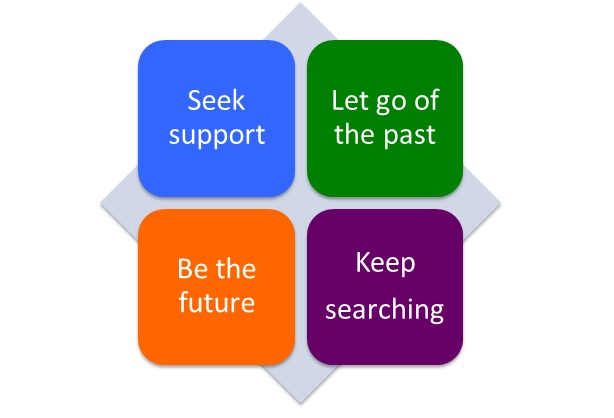
Don’t make the mistake, though, of thinking that you have to go it alone. True, it can be lonely at the top and you can sometimes feel that you should keep your doubts, fears and frustrations to yourself. That’s a big mistake – and so many leaders make it. You are only human – very clever human, but human nonetheless.

Not only do you need support, you also need someone to tell you when you are wrong. If you isolate yourself in your leadership castle, you could be very wrong without knowing it. There’s a saying that ‘a lawyer who acts for himself has a fool for a client’ and that is just as true of chief executives who only take their own advice. You need a critical friend you can turn to, someone who will help you focus, learn from your mistakes and laugh about the sometimes crazy world that you inhabit.

Some chief executives have really strong relationships with their Leaders and each can be a good critical friend to the other. For others, their Leader is the source of many of their troubles. They definitely need to go elsewhere for support.

You need all your energy to be a strong and courageous leader, so don’t waste energy on what you can’t change. Do let go of the past. Only look back to learn from your mistakes, not to wallow in nostalgia for a misremembered past. Times may seem particularly hard –but then they always do when you are living through them. As Heraclitus said, the only thing that is constant is change. I observe the very different ways that chief executives respond to change, from seeing it as a threat to greeting it as an opportunity. The best at using the prevailing challenges of austerity to make the sort of bold changes that would never have been possible in times of plety.

Focus on building a better future for your Council and the people you all serve. To do that you should keep searching for better ways of doing things. Support your staff to do that now and they’ll carry on doing it when you are no longer there. The more talent you can develop in others, the more support you can draw on now and the better the legacy of your leadership.

staite

Catherine Staite
Catherine Staite is the Director of INLOGOV. She provides consultancy and facilitation to local authorities and their partners, on a wide range of issues including on improving outcomes, efficiency, partnership working, strategic planning and organisational development, including integration of services and functions.