Catherine Needham
If you live in Birmingham, like I do, you could be forgiven for feeling slightly green-eyed at what is going on in Manchester at the moment. After the unprecedented devolution package that the city secured at the end of 2014, it has today been announced that Greater Manchester will be given complete control of its £6 billion NHS budget.
This means that Greater Manchester, led by a directly elected mayor, will have control of the budgets for social care; GP services; mental health; and acute and community care, as well as public health. There is clearly enormous potential here for the Manchester region to make integrated health and social care a reality. Whilst the dust settles on the details of the new arrangements, there are a few issues to consider:
- There are increasing calls for integration to be at the level of the individual rather than the system, to avoid some of the problems of previous attempts at structural integration such as Care Trusts. Further structural reorganisation will also be resisted by local NHS bodies, still recovering from the Lansley reforms. Can the region be imaginative in its approach to integration, and learn lessons from what has worked and not worked in the past?
- A new Greater Manchester Health and Wellbeing Board is being created to oversee the budget. Health and Wellbeing Boards are increasingly seen as the host for tackling all sorts of complex health and social care issues, and researchers at the University of Manchester have warned of placing ‘unrealistic expectations’ on the ability of boards to deliver on these agendas.
- Will the notoriously centralised Department of Health really be willing to let go control on such a grand scale? Who will bear the reputational risk when problems occur?
- The success of directly elected mayors has been distinctly mixed where they have been tried elsewhere in the UK. In the Greater Manchester context, where a mayor has been forced on the region by Whitehall, how likely it is that there will be sufficient public interest and support for the role to make the holder of the office a dynamic political force?
- Does the announcement signal the end of the National Health Service, and if so should we mourn its passing? Local political control is very attractive in what has previously been such a centralised state, and is clearly in line with what is happening in Scotland and Wales already. However fragmentation brings the inevitability of postcode lotteries and the need for a robust political response to such differences, but it may also create new entry points for other political agendas, such as an increase in privatisation.
It must be a very exciting time to live in Manchester, although the role of pioneer can also be a rather exposed and risky place. Let’s hope that Birmingham and the other core cities can watch, learn from what’s worked and what hasn’t, and be ready soon to work with their own near neighbours to secure more local control.
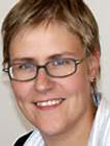
Catherine Needham is Reader in Public Policy and Public Management at the Health Services Management Centre, University of Birmingham, and is developing research around public service reform and policy innovation. Her recent work has focused on co-production and personalization, examining how those approaches are interpreted and applied in frontline practice. Follow Catherine on Twitter: @DrCNeedham.
This blog can also be found here on the Health Services Management Centre’s website

 INLOGOV Blog