When Alice Paul came to Birmingham University

Chris Game

On August 18th, much of America celebrated the centenary of women finally gaining the vote, when Tennessee became the decisive 36th state to ratify the US Constitution’s 19th Amendment.

With some property-owning women in the Northern colonies having been voting before the United States was created – then having that right removed by the new all-male state legislatures – it took a long, sometimes bitter and unedifying, battle, but one absolutely worth commemorating.

Some perspective: that eventual 19th Amendment had been first introduced to Congress in 1878, seven years before one of the most militant and mostly admirable leaders of the final struggle was even born. I refer to Alice Paul, around whom PBS America’s excellent recent TV documentary, ‘The Vote’, was structured.

Paul was joint founder in 1916 of the National Woman’s Party – with her friend and equally radical contemporary, Lucy Burns – and its leader for decades. She/they instigated countless laws furthering women’s equality, secured equal rights guarantees in both the UN Charter and 1964 Civil Rights Act, and drafted the Equal Rights Amendment, which could theoretically have been the US Constitution’s 20th.

It doesn’t sound outlandish for a supposed democracy: equality of rights under the law shall not be denied or abridged by the US or any state on account of sex.  Yet, introduced in 1923, it took 49 years for Congress to approve it, then a further 49 for Virginia to become, in January this year, the required 38th state to ratify it.

Now, in football parlance, it seems likely to be ruled ‘aaet’ – after ‘after extra time’ – a sad, if in no way diminishing, postscript to Alice Paul’s long and exceptional campaigning career.  Back quickly, then, to that career’s start, for her suffragette epiphany, her radical realisation, owed everything to her brief stay in her early twenties in Birmingham.  No, not the Alabama one. Our Birmingham.

Alice – no, I’m not at all sure she’d excuse the familiarity – came from New Jersey, near the Quaker state of Philadelphia. Bright eldest daughter of a successful businessman/gentleman farmer and college-educated mother, she was raised as a Hicksite Quaker – same Orthodox Quaker emphasis on simplicity, perseverance and social improvement, less on the Bible, much more on gender equality.

Despite, or possibly because of, a first degree in biology, she was increasingly attracted to applied social work. This prompted a Master’s thesis entitled ‘Towards Equality’, followed in 1907 by a one-year fellowship at the Woodbrooke Quaker Study Centre in Selly Oak.

Recently founded by George Cadbury as – still, I believe – Europe’s only Quaker study and training centre, Woodbrooke also had links almost from the outset with the University of Birmingham, and Alice would certainly at least have attended lectures there.

But here’s the tricky bit.  A summation of the numerous available accounts would be that the totally transformative event in Alice’s early life was attending a Women’s Suffrage meeting in Birmingham. There she heard the ‘charismatic’ Christabel Pankhurst – also still in her twenties – lucidly putting the case for militant action for women’s suffrage, and dealing simultaneously with a predominantly male, hostile, abusive audience. Following which – sometime, somewhere – Alice met Christabel personally and was, apparently, “converted, heart and soul” to the militant Suffragette cause.

But where exactly?  And, assuming it did happen, could that key personal meeting and Alice’s Pauline/Damascene conversion have taken place in the University of Birmingham, a retrospective highlight of its early Edgbaston years?

Most accounts, unsurprisingly, are vague, obviously embellished, or demonstrably inaccurate. One seemingly indisputable fact, though, is that Christabel Pankhurst and her mother, Emmeline, did speak and were heckled at a Women’s Social and Political Union (WSPU) meeting at Birmingham Town Hall on November 20th, 1907.

That had to be it, surely.  Besides, that is the occasion extensively described in former Boston Globe journalist Tina Cassidy’s recent full, if florid, Alice Paul biography – Mr. President, How Long Must We Wait?  – from the opening pages of which I apologise in advance for quoting at appallingly self-indulgent length, partly because it’s loosely evidential, but mainly because it’s such fun.

November 20, 1907 – Birmingham, England.  Alice Paul finished dinner with classmates at Woodbrooke [and] excused herself …  Gathering up her long, heavy skirt, she mounted a rented bike and began the four-mile pedal … through the fog to Town Hall in Birmingham.

Hundreds of people were inside.  Many were male students from the University of Birmingham, where Paul was taking classes. She was the first and only woman enrolled in the University’s Department of Commerce. She was fearless among them; unabashed, she strove for what she wanted.

Paul had come to listen to a mother-daughter team talk about their Votes for Women campaign. The men, however, had a different agenda …  Like most of their peers, they believed women belonged at home … and that these Pankhurst women needed to be silenced … they began to shake rattles, ring bells, and blow whistles and toy trumpets.

Unfazed by the chaos, Christabel Pankhurst stepped on to the stage with striking poise. She seemed effortlessly confident … the men, however, were not softened by her affect.  They roared for several minutes, waving their hats, sticks and handkerchiefs provocatively as she patiently endured.

“We have come to explain our tactics,” Christabel asserted, trying to pierce the pandemonium.  The crowd hushed briefly before someone hurled a dead mouse into the air, causing the hall to erupt into hysteria as the rodent was squeamishly caught and tossed like a hot potato.

Inspired and disturbed, Paul was riveted … until her senses were suddenly overwhelmed by the offensive odour of rotten eggs. Someone had released a hydrogen-sulfide (sic) stink bomb, creating an atmosphere so foul that the room emptied within seconds … Paul climbed back on her bicycle and returned to Woodbrooke.  She felt the electricity in her body. It was unlike anything she had felt before.”

Clearly no one-to-one meeting there.  But anyway, why would Christabel be chatting to, say, a university student seminar when venues like the Town Hall were available to her?

The answer, I tentatively suggest, is to be found in another quite recent American account – this time from Clark Edwards, a former graduate student at an Indiana liberal arts college, who, searching for a possible thesis topic, discovered his paternal grandmother had been appointed legal guardian of Alice Paul’s papers.  Nice one!

Among other ‘goodies’, Edwards reveals that Sir Oliver Lodge, distinguished physicist and Birmingham University’s first Chancellor, concerned by his students’ role in Christabel’s earlier hostile reception, invited her back – this time to the University – “to give a second speech, apologised and required all students to attend and listen.”

It’s not exactly unassailable evidence, but it satisfies me personally that the two young women did meet meaningfully at ‘my’ University, and that the encounter inspired or re-inspired Alice’s conversion to the Suffragettes’ militant campaign methods.

Delaying her planned return to the US, she joined the Pankhursts and became one of the most dedicated militants. She marched, protested, physically attacked leading politicians, smashed Parliamentary windows, got arrested (seven times), imprisoned (three times), sentenced to ‘hard labour’, went on hunger-strike, was forcibly fed through her nostrils (55 times) – all before even starting on amending the US Constitution. Exceptional woman!

Photo

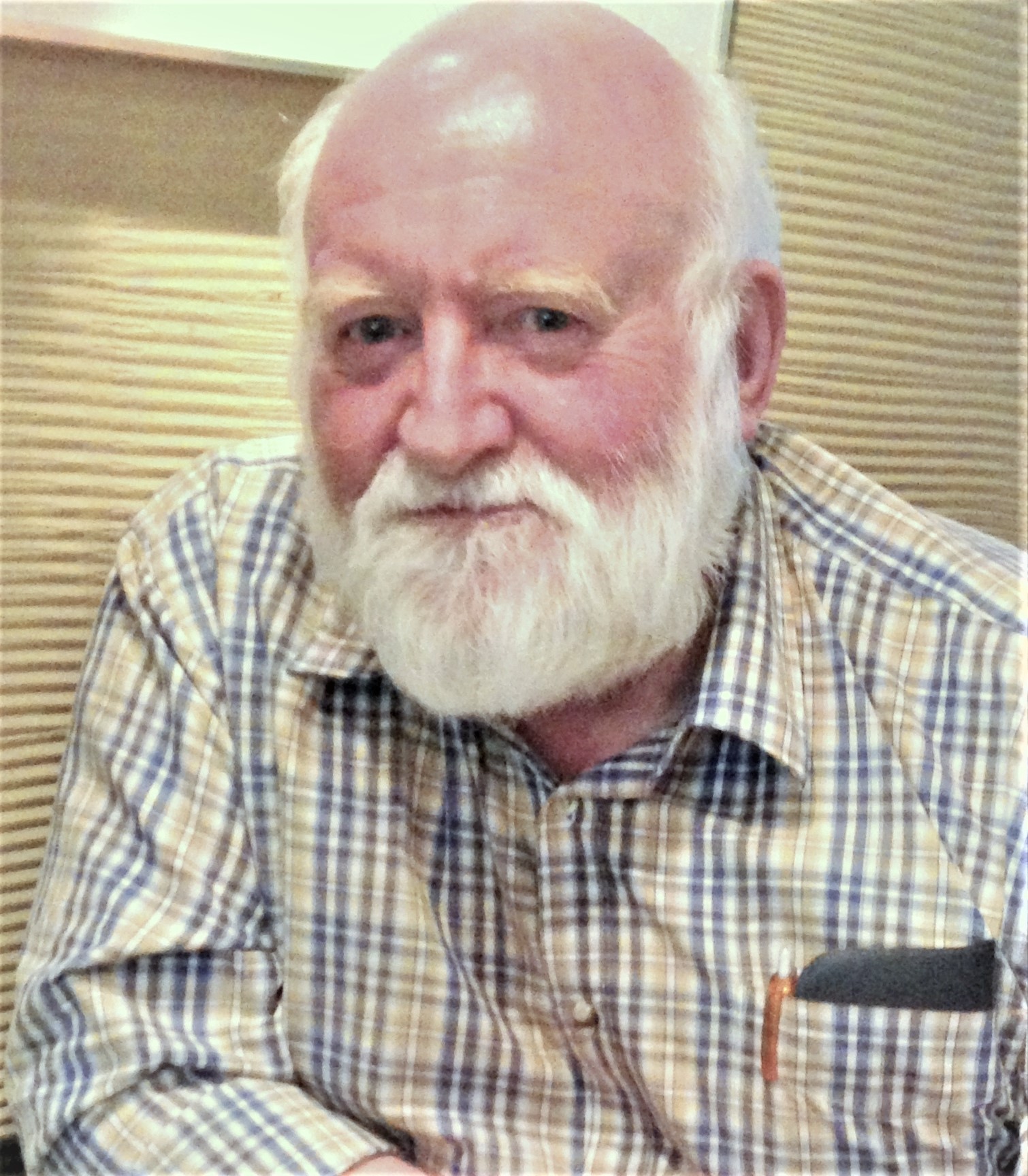
Chris Game is an INLOGOV Associate, and Visiting Professor at Kwansei Gakuin University, Osaka, Japan.  He is joint-author (with Professor David Wilson) of the successive editions of Local Government in the United Kingdom, and a regular columnist for The Birmingham Post.

Exploring corruption risks in local government planning decisions

Teddy Marks, Transparency International UK

Anyone who’s lived near or been involved in a major planning application knows they are a magnet for controversy and tension. This is exactly why the decision to grant or reject permission is given to local representatives – to ensure there is some form of accountability. Yet recent examples have shown how planning decisions can go wrong. Even without the existence of wrongdoing, the perceptions of impropriety can undermine millions, if not billions, of pounds of investment in new homes.

A new report from Transparency International UK, Permission Accomplished, sought to find out why these scandals have happened and how lessons can be learnt. To do this we began by reviewing 13 major cases where alleged or proven impropriety by councillors had affected planning decisions across England. From this, we identified three key areas of risk and how local authorities could mitigate them. Most of the proposals are based on existing recommendations from the Local Government Association (LGA) and the Committee on Standards and Public Life (CSPL).

To see how local authorities were applying these in practice, we looked at the policies and procedures of 50 councils (representing 15 per cent of English planning authorities) and scored them against our recommended good practice standards. To make sure we were being fair and consistent, we developed a scoring matrix from 100 (meets good practice) to 0 (poor), and invited councils to comment on their draft findings and methodology. We also subjected the results to robust internal review and a standardisation process to ensure we assessed all councils equally.

Worryingly, not one council scored higher than 55, and the average score was 38 out of 100. Clearly, local authorities have a lot of room for improvement.

So what are the main corruption risks facing councillors in planning decisions, and how have well have councils addressed them? I’ve provided some highlights below.


Councillors’ engaging external stakeholders

Putting forward one’s view is not in and of itself a bad thing, and is an important part of the planning process. But lobbying behind closed doors and providing excessive gifts and hospitality to decision makers are real red flags. At best, this can present the view of councillors in hock with wealthy developers. At worst, they can suggest complicity in criminal conduct.

Both Transparency International UK and the LGA propose local authorities require all meetings between councillors and developers (and their representatives) for major developments to be minuted and available for public inspection. Yet just 44 per cent of councils in our sample required this, and only 12 per cent explicitly stated that they be published. We also both recommend there should be an official present in these meetings, but only 30 per cent do this.

As for gifts and hospitality, councillors must be prohibited from accepting any that risk undermining the integrity of the planning process. Only 26 per cent in our sample had any such ban.


Managing conflicts of interest

Conflicts of interest occur where a holder of public office is confronted with choosing between the duties and demands of their position, and their private interests. Councillors are elected to serve the public, but some companies employ existing and former councillors to help them get planning consent. When councillors are employed to do so whilst still in public office, it can create a direct tension between their civic duties and private interests.

In a brief search, we found 72 existing councillors across 50 local authorities who are, or used to be, employed by companies working in the housing and/or planning industry whilst they were holding public office. Currently, 32 of these councillors across 24 councils hold critical decision-making positions; for example, as members of a planning committee.

Although some councils stopped councillors from acting as agents, not one had explicitly prohibited them from lobbying on behalf of paying clients or providing paid advice on how to influence councils.


Regulating councillors’ conduct

Weak oversight, especially when combined with poor codes of conduct and decisions with lots of money at stake, almost encourages misconduct. Yet local authorities do not have the legal right to suspend or disqualify councillors for serious breaches of the councils’ codes – a robust measure recommended by the Committee on Standards in Public Life (CSPL) and available to councils in other parts of the UK.

Additionally, while the majority of councils in our sample had proactive standards committees to provide oversight on councillors’ ethical conduct, 22 per cent of local authorities either had inactive standards committees or they didn’t have one at all.


Moving forward

Most councillors serve their communities with integrity, but our findings show that the existing system is open to the perception, and also the reality, of abuse. To mitigate these risks and strengthen democracy, we provide ten detailed recommendations in our report, which can be summarised into three key themes:

  • Increase transparency over councillors’ engagement with developers and their representatives to prevent the perception or reality of undue influence.
  • Tighten rules governing the conduct of councillors to protect the planning process from abuse for personal gain.
  • Strengthen oversight over councillors’ conduct to deter behaviour that would bring the integrity of the planning process into question.


Transparency International is the UK’s leading independent anti-corruption organisation:  https://www.transparency.org.uk/

Teddy Marks, Research Officer

Teddy joined the UK Anti-Corruption Programme in January 2020. His work focuses on corruption risks in planning and housing decisions both at the national and local level. Previously, Teddy interned at Transparency International’s Defence and Security Programme after gaining professional experience in political risk. He holds a Masters in International Relations at the LSE, and a Bachelors in Politics and Quantitative Research Methods at Bristol University.


Prime Minister, remember when you weren’t hell-bent on infantilising local government?

Chris Game


I should just have returned from Limpopo, northernmost South African province and home to a substantial chunk of the famous Kruger National Park.  I, however, would have been there not for the wildlife, or even the wild life, but for the eminently respectable annual conference of IASIA, the International Association of Schools and Institutes of Administration, of which I’ve been a participative, though non-officeholding, member for the past quarter-century.

And now, after opening two sentences with a first-person singular pronoun, I should issue a READER ALERT!  There is, I promise, a serious point underpinning this blog. The first part, though, will contain more of those F-PS pronouns than even my average blog – sorry, but you have been warned.

Coincidentally, my very first IASIA conference, in 1996, was also in South Africa – in Durban, in the newly created province of KwaZulu-Natal, shortly after its first, violence-delayed, post-apartheid municipal elections had finally taken place.  The conference and the whole visit constituted a huge learning experience – and one acquired almost fortuitously.

For, despite INLOGOV being almost a model of the kind of institution IASIA/IIAS seeks to embrace – “involving both public service and academe”, whose interests and activities “target the education and training of public administrators and managers” – it always seemed colleagues in the then Development Administration Group, now the International Development Department, were the more active participants.

Anyway, it certainly gave me insights, opportunities and contacts I would never otherwise have had. That first Durban conference, for example, led fairly directly, if years later, to my involvement in a research project for the South African Municipal Demarcation Board on the relationship between size of municipality and efficiency of service delivery in the ‘new’ South Africa.

More recently, an exceptionally successful and in its way historic Ramallah conference in the immediate aftermath of the Grenfell Tower tragedy led to a paper (and subsequent blog) on how the new generation of elected Palestinian women mayors might have responded rather more impressively than Kensington & Chelsea’s politicians had managed.

Appreciation expressed, indulgent paragraphs over – thanks for your patience.  One thing I’m not really sorry to have missed with the Limpopo cancellation would have been the almost limitless curiosity of delegates – most following UK politics from several thousand miles’ distance – about the antics of the man who, for many, is our still relatively new Prime Minister. It would have been wearing, but I’d have borne it valiantly, not least because those with decent memories might well recall when I too had had positive things to say about the two-term Mayor of London – an office generally presumed abroad to be more powerful and prestigious than it is here.

Johnson never made it easy. Many delegates, whether or not they knew anything of his chaotic public and personal life, could certainly recall the man celebrating Britain’s first London 2012 Olympic gold medal by limply waving a Union Flag while stuck embarrassingly on a zip-wire.

It could sometimes be a tough gig, therefore, trying to persuade a predominantly overseas academic audience that, as London Mayor, the man had a record of some genuine achievement, if not on the scale of his hugely more experienced predecessor, Ken Livingstone.  But I tried, always starting with the headline statistics of his very election: twice, with over a million votes, to a post no other Conservative politician has come near to winning.

Evaluating his policy accomplishments was tougher, but, thanks to eventually effective delegation, there were, alongside the self-serving vanity projects, several tick-worthy boxes.  London’s homicide rate did fall dramatically between 2008 and 2016, by even more than it did nationally.  More so-called ‘affordable’ homes were built than during Livingstone’s two terms – though, in London especially, that A word is always debatable.

London Underground usage increased significantly, though ticket office closures continued and, by the time his planned night service finally arrived, he had gone. And it was bye-bye to fare-dodger-friendly ‘bendy buses’, hello again to environmentally friendly, double-decker Routemasters, albeit it at huge cost and some passenger discomfort.

Then there were the ‘Boris Bikes’ – nowadays the posher-sounding Santander Cycles – which, while not operating at the promised zero taxpayer cost, now constitute, I believe, Europe’s largest cycle hire scheme.

And, of course, like Paris for Bergman and Bogart in ‘Casablanca’, Boris will always have those undeniably memorable 2012 Olympics – notwithstanding that the idea and groundwork were Livingstone’s, the cost wildly over budget, and the legacy still debatable.

Over the years, then, I’ve felt able to talk – reasonably dispassionately, I hope – with international delegates about these things. But the topic I’ve always most emphasised, particularly in conference papers, has been finance: using London as a kind of headline illustration of how devolved government in the UK generally is centrally over-controlled and under-funded, compared to many of their countries’ systems.

In this I was much helped, unwittingly, by the man himself, who, as Mayor, professed similar concerns. For in 2012/13 he established a London Finance Commission, chaired by LSE Professor and finance expert, Tony Travers, which swiftly produced a neatly entitled report – Raising the Capital – with some seriously radical content.

Impossible here to summarise satisfactorily, the Commission’s conclusions were that London’s growing and changing population placed increasingly acute pressure on local services, while its existing sub-national governments lacked the financial powers to provide effective solutions.

A few illustrative stats: under 7% of tax paid by London residents and businesses was redistributed directly by locally elected bodies; 74% of London’s funding came through central government grants – compared with Berlin’s 25%, Paris’s 17%, and Tokyo’s 8%.

Taxation powers were merely one important part of the required reform.  But the Commission recommended (p.11) that “the full suite of property taxes” – council tax, business rates, stamp duty land tax, capital gains property development tax – be devolved to London government (GLC and/or boroughs), which should have responsibility for setting tax rates, revaluation, banding and discounts.

There was plenty more in the same vein – freedom to impose modest tourism and environmental taxes, planning fees and charges, and so on. My concern here, though, is less the Commission than the CommissionER.

Ever the catchy phrasemaker, Johnson launched his report by referring to tax-enfeebled London as “an economic and political giant but a fiscal infant …”.  However, while it was obviously the London Mayor’s Commission, making London proposals, the Mayor himself seemed more ambitious.

So, come the 2013 Conservative Party Conference in Manchester, there he was, leading a cross-party campaign with the London Councils and Core Cities Groups, arguing that England was much too centralised and calling for a comparable suite of fiscal reforms for England’s largest cities. An “historic and significant move …a partial but practical answer to the conundrum of English devolution … good not just for the cities involved, but for the country at large” … etc. etc.

Of course, nothing much changed substantively. London could still be tagged a “fiscal infant”, as could our whole local government system.

What changed was the man and his career: his personal political ambitions, the gift of Brexit, and the Johnson/Cummings project of running apparently the most unaccountable, centralist government of our age, in which the biggest city councils are mere marginisable infants.  A conference paper title for Limpopo 2021 perhaps?

Photo

Chris Game is an INLOGOV Associate, and Visiting Professor at Kwansei Gakuin University, Osaka, Japan.  He is joint-author (with Professor David Wilson) of the successive editions of Local Government in the United Kingdom, and a regular columnist for The Birmingham Post.

Public Inquiries, Public Value?

Justine Rainbow

Public inquiries are a frequent element of democracy in the UK: yet the way that media and public view them can be contradictory.  For some, they are the pinnacle of independent investigations and calls for inquiries almost inevitably follow any tragedy or scandal.  For others, they represent an enormous drain on public funds whilst delivering little tangible benefit.

I recently completed research considering the value of public inquiries from the viewpoint of those running them, examining whether government control over nominally independent inquiries is too great, and assessing the effectiveness of inquiries through the lens of public value theory, championed by Mark Moore in his 1995 book on creating public value.  My research began with analysis of the literature, including earlier reviews of inquiries by – among others – the Institute for Government, the National Audit Office and a select committee investigation into the impact of the Inquiries Act.  Picking out a number of common themes, I tested their validity among a small group of interviewees including current and former inquiry secretaries and solicitors, panel members, and a handful of other senior staff.

My research identified two main areas in which inquiries delivered less value than they should: in the start-up phase, and in the implementation of their recommendations.  All my interviewees agreed that the first months of an inquiry are harder than they should be.  Government, perhaps keen to demonstrate non-interference, can be slow to provide support and guidance on how to run an inquiry.  Lessons learned reports – written by secretaries at the end of each inquiry – tend to be lost in government recordkeeping systems.  Despite persistent calls for a centralised support unit for inquiries, from inquiry insiders and outsiders alike, have been resisted by successive governments for two decades until last year when a small unit was finally established.

The other main area of limited effectiveness is at the other end of the inquiry’s lifespan, often once the inquiry itself has ceased to exist.  Recommendations are non-binding: both public and private organisations can reject or ignore recommendations; those that are accepted can be allowed to quietly fade away once public and media interest wanes. A lack of monitoring means that the impact of inquiries is invisible to most.  Non-implementation of recommendations is perhaps the main area of ineffectiveness and public value failure for too many inquiries.

Public value theory provided a framework for analysing the extent of government control over inquiries.  Its concept of the ‘strategic triangle’ – developed by Philip Heymann in the late 1980s and refined by Moore – suggests three elements that should make an effective organisation: mission, external support and operational capacity.  Criticism arises in the literature that government has too much control over the scope of inquiries (their mission) and can close an inquiry (withdraw their external support) at any time.  However, the officials I interviewed found neither of these to be a significant problem and therefore not a barrier to delivering effective public value. Scope is discussed and agreed with the independent chair, and a minister is highly unlikely to close an inquiry that they have established, particularly when support from victims and the wider public is high.

However, interviewees were concerned over implementation of recommendations, which can be rejected by public and private sector organisations alike, with little transparency of reasoning.  Some felt there should be a dedicated body or bodies responsible for monitoring implementation and enforcing transparency; others felt monitoring mechanisms already exist – Parliamentary Select Committees for example – but are poorly utilised.

Operational capacity also tends to rest – initially – with government.  Many inquiries are staffed by officials with no prior inquiry experience and my interviewees had generally found it difficult to work out ‘how to do it’.  Guidance issued by the Cabinet Office is out of date and provides limited assistance.  Commercial frameworks to assist inquiries with procuring their specific needs, such as hearing centres or evidence management systems, do not exist.  Ultimately, new inquiries have to rely on the willingness of other inquiries to help them get started; indeed my research found that inquiries could be much more proactive in disseminating guidance and helping new organisations establish themselves rapidly.

But on the subject of government control, public value theory argues that it is right for inquiries – with their typically high expenditure – to remain within the control of elected politicians, even if this blurs the lines of independence.  With the beginnings of a centralised support unit for inquiries and an evolving network of intra-inquiry knowledge transfer, the problems around start-up may diminish in the future.  Monitoring recommendations is a trickier subject – the main difficulties being the identification of an appropriate body with the authority to demand responses from both public and private sector organisations.

For those of us running inquiries, we naturally believe that they deliver value.  Most critically they provide a degree of catharsis for victims and their families.  The information made available by inquiries also allows the public to assess facts for themselves. But we also recognise that the early steps could be much more efficient and that recommendations don’t always make the impact we hope for.  The apparently simple steps needed to improve these two elements (more support from government and establishment of a monitoring body) are in fact complicated but I look forward to the future of inquiries with some confidence – things are improving and there is a drive in the inquiries community to lobby for and work towards better things.


References

Moore, M. (1995) Creating Public Value: Strategic Management in Government (Harvard University Press: Cambridge, Massachusetts).

National Audit Office (2018). Investigation into Government-Funded Inquiries (House of Commons: London).  Available at https://www.nao.org.uk/wp-content/uploads/2018/05/Investigation-into-government-funded-inquiries.pdf,

Norris, E & Shepheard, M. (2017) How Public Inquiries Can Lead to Change. Available at: https://www.instituteforgovernment.org.uk/sites/default/files/publications/Public%20Inquiries%20%28final%29.pdf

Parliament. (2014) House of Lords Select Committee on the Inquiries Act 2005 The Inquiries Act 2005: post-legislative scrutiny, London: The Stationery Office Ltd. Available at:  https://publications.parliament.uk/pa/ld201314/ldselect/ldinquiries/143/143.pdf


Justine Rainbow is Head of Information Management at the Independent Inquiry into Child Sexual Abuse.  Ten of her twenty years as a civil servant have involved working with or for public inquiries.  During her MPA with the University of Birmingham, her dissertation focused on the public value of inquiries.


Social care reform – comprehensive is good, but comprehensible vital

Chris Game

Cllr Ketan Sheth’s recent blog on ‘Local Government and the NHS Integrated Care System’ was, as he explained, timely for him personally – as an elected London borough councillor about to take on a novel scrutiny role in a new ICS.

For us Midlands readers it was timely too, for reasons most easily conveyed by the King’s Fund’s recent highly colourful Map 1 of ICSs so far established – highly colourful, that is, for some parts of England, including Cllr Sheth’s London, but bleak grey for others, like the whole of the Midlands, with merely our at least slightly more localised Sustainability and Transformation Partnerships (STPs).

This blog is not directly about either STPs or ICSs, which have only a late walk-on role. It is, though, about the future of social care and local government’s involvement in, or marginalisation from, that future, and it opens with one of Boris Johnson’s first Prime Ministerial broken pledges, in his very first speech as PM, to “fix the crisis in social care once and for all with a clear plan we have prepared”.

The ‘clear prepared plan’ bit was obvious fiction, and confirmed as such in the Conservatives’ December election manifesto.  60 pages, nearly 1,000 days working on a promised but still undelivered Green Paper, and no sniff of a plan.  One un-costed pre-condition (p.23) – that nobody should have to sell their home to pay for care – and a slightly desperate hope to build cross-party consensus on reform.

But last week, just eight months on, jostling with daily lockdown bulletins and courtesy mainly of The Guardian newspaper, saw a sudden small flurry of tantalising leaks. First came Ministers’ “radical plans for everyone over 40 to contribute towards the cost of social care in later life” – paying more in tax or national insurance, or insuring themselves against “hefty care bills when they are older”.

Broadly resembling the German and Japanese funding systems, it is variously labelled a ‘comprehensive’ and ‘compulsory’ insurance model, both of which, to be effective, it surely has to be.

But an even bigger question, I suggest in the blog’s title, is surely whether it can become a comprehensible and comprehended model, and pretty quickly – because the evidence is that our collective understanding of even the existing system is worryingly low.

With coincidental but near-perfect timing, the New Statesman magazine recently commissioned a poll by Redfield & Wilton Strategies asking a sample of 2,000 GB adults about their awareness of how social care is currently funded and organised. Its findings, for a topic dominating news headlines for several months now, were concerning.

Fewer than one in eight felt they were “significantly aware”, under half even “moderately aware”, and nearly a quarter “not aware at all”. They were then asked which of (1) the NHS, (2) private operators, and (3) my local council, they thought were currently providing community care in their locality.  Being a GB-wide sample, there are no precisely right or wrong answers, and ‘providing’ makes it almost a trick question – which personally I’d have opposed phrasing in this way. Still, there are better and worse guesses.

“My local council”, chosen by 55%, is a decent pick – if, by providing, you mean paying for.  But not, for decades now, if you mean actual care home beds.  As Covid has tragically demonstrated, funding is nowadays effectively separated from extremely fragmented provision, with only some 3% of beds directly provided by councils and at least 80% in over 11,000 homes by for-profit private companies, local organisations and charities.

As for payment – roughly £600 per week here in the West Midlands – just over one-third of residents have their fees met by their local authority; one in eight pay top-up fees, but the biggest fraction must find the full fees themselves.  Which, given our apparently limited understanding of the present-day system, must frequently come as a serious shock.

Exactly half the poll respondents ticked the “private operators” option. However, virtually as many (48%) nominated the NHS, which, note the authors, is nowadays “a very small player” indeed in providing social care.  It’s not totally wrong, but close – and that, in the proverbial nutshell, is Ministers’ social care problem.

The public generally have low understanding of how even the present care home system works, of how literally dis-integrated it has become, with home care provision twice as fragmented and considerably more expensive. But they love, clap for, and think they know ‘their’ NHS.

It was even more starkly highlighted in the crunch question: “Which of three options for the future of social care comes closest to your own view?”  Exactly half the respondents selected the ‘NHS model’ that many had just demonstrated they seriously misperceived: “Social care should be free at the point of use, regardless of whether individuals contributed taxation into the system during their working lives”.

Just over one-third preferred the ‘pension’ or ‘compulsory insurance’ model referenced in the Guardian story – or, rather, first story.  For, the following day, it reported Government plans to in effect merge health and social care services, taking the latter away from local councils altogether and handing them and their £22.5 billion annual funding over to the NHS.

The Department of Health and Social Care issued a routine denial, but the PM’s long awaited ‘plan’ appears, currently, to be that care services would be commissioned by, and funded through, the new NHS regional Integrated Care Systems (ICSs) gradually unrolling across England – although not, as yet, the Midlands, where we’re still in the Sustainability and Transformation Partnership phase.

I conclude with what seems a bit of a personal dilemma. Having worked for over half my life for an ‘Institute of Local Government Studies’, I instinctively deprecate both the fact and implications of elected and accountable local authorities losing a major function for so long integral to their existence.

On the other hand, if that’s what most people reckon they want, and the Government fundamentally misunderstands, distrusts, and already wants to diminish and/or abolish local councils ….   The question is: would the public be prepared to pay the cost of NHS-style “social care, free at the point of use”, largely unaddressed in the New Statesman questionnaire?  But that’s for another blog.


Photo

Chris Game is an INLOGOV Associate, and Visiting Professor at Kwansei Gakuin University, Osaka, Japan.  He is joint-author (with Professor David Wilson) of the successive editions of Local Government in the United Kingdom, and a regular columnist for The Birmingham Post.

Can democratic renewal help us ‘build back better’ from the COVID-19 crisis? Key recommendations from the Newham Democracy and Civic Participation Commission

Elke Loeffler and Nick Pearce

Newham has seen one of the highest rates of COVID 19 mortality in England and Wales. Being one of the 10% most deprived areas in the UK (according to 2019 deprivation indices) the crisis has exposed wider social and economic inequalities – in health, housing, access to services and income – particularly for the Black and Minority Ethnic population.

At the same time, Newham has also seen a flowering of community support and creativity in response to the crisis. The local council has pioneered new ways of working with the voluntary and community sector. A new COVID-19 Health Champions network has been launched to empower thousands of Newham residents to remain up to date on the latest advice about COVID-19, and a new digital initiative  ‘Newham Unlocked Community Broadcasts’ showcases the creativity of local artists.

Newham is also one of a relatively small number local councils in the UK which have a directly elected Mayor. In 2018 Rohksana Fiaz took over from Sir Robin Wales, after his 23 years in the post, as London’s first directly-elected female mayor. In her election manifesto Fiaz promised to hold a referendum on the direct elected mayoral system before the end of her third year as Mayor (i.e. 2021), although the impact of the COVID-19 pandemic will affect this timeline.

The Democracy and Civic Participation Commission

In this context the Mayor and the Council of Newham set up an independent Commission in autumn 2019 to examine both the Council’s current directly elected Mayor system of governance and the alternative approaches that exist in English local government, and to make recommendations on the best system of governance for Newham’s future, and to explore ways in which local residents can become more engaged and more fully involved in local decision-making and the Council’s work.

The Commission was led by Professor Nick Pearce. Extensive evidence gathering took place between November 2019 and February 2020.

A key concern of the six Commissioners was to make bold recommendations to reduce inequalities in public participation and bring citizen power into the Council to improve public services and the quality of life of local people. The COVID-19 crisis, which occurred during the latter stages of the Commission’s work, gave a dramatic glimpse of the huge potential resources in the community and the willingness of local people to make a contribution to improve the quality of life in their neighbourhood.

The “Newham Model” for more inclusive public participation

The resulting “Newham Model” aims to provide checks-and-balances to the way in which Newham is governed. It provides new participatory governance mechanisms. In particular, the Commission Report proposes the creation of a permanent Citizens’ Assembly, selected like a jury – the first of its kind in England. It suggests strengthening the accountability of the executive Mayor to local people and the main stakeholders of the Council, while also limiting the mandate of the executive Mayor to two terms, so that there is a frequent impulse for innovation and creative thinking at the centre of the Council.

Other key recommendations for strengthening public participation and co-production of public services and outcomes with local people are:

  • Extension of participatory budgeting – an increase in the resources allocated to areas or neighbourhoods for expenditure which is determined by local people from the current level of £25,000. The aim should be to spend a minimum of 20% of the Community Infrastructure Levy (CIL) resources through neighbourhood or area-based participation.
  • A new framework for area-based decision-making – allowing powers to be drawn down to the most local level – along with the piloting of an ‘urban parish council’ in one of Newham’s communities.
  • A new “Mayor’s Office for Data, Discovery and Democracy” to provide expertise and leadership on the democratic use of data, digital tools for resident engagement, and learning from digital champions such as the government of Taiwan.
  • Wider use of co-production with residents and people accessing services, including area regeneration, which means that the local council needs to become much better at mapping what local people are doing, and want to do in the future.
  • Enabling local councillors to play the increasingly important role of ‘community connectors’, mobilising local people and their enthusiasms.
  • Support for an independent, community-owned local media organisation.

The Report of the Commission was launched on 6 July 2020 in a virtual public meeting, with presentations from the Commissioners, followed by responses by the Mayor and Vice-Mayor on behalf of the Council. Newham Council’s cabinet members will formally consider the commission’s report and recommendations at a later meeting.

Clearly, councils need to adapt the ‘Newham Model’ to fit their local circumstances, while simultaneously learning from democratic innovators in the UK and internationally.  Moreover, research institutions such as INLOGOV have an important role in sharing learning on new local governance models to help local government to ‘build back better’ from the COVID-19 crisis.


Nick Pearce is Director of The Institute for Policy Research (IPR) and Professor of Public Policy at the University of Bath. He was formerly director of the Institute for Public Policy Research (IPPR), as well as Head of the No 10 Downing St. Policy Unit between 2008 and 2010.

Elke Loeffler is a Senior Lecturer at Strathclyde University, and INLOGOV Associate. She is author of ‘Co-Production of Public Services and Outcomes’ and co-editor of ‘Palgrave Handbook of Co-Production of Public Services and Outcomes’, both of which will be published in autumn 2020.