Citizen Assets Transfer in Barcelona: the role of the commons in democratising public administration and public service delivery

Dr Marina Pera from Autonomous University of Barcelona is presenting a critical analysis of the asset transfer policies in Barcelona at our next INLOGOV seminar, which starts at noon on Thursday 30th November at our Edgbaston campus.

Marina will examine opportunities and risks raised by citizen management of municipal assets, taking a community empowerment perspective.

Barcelona is a city with a long tradition of neighbourhood associations, community and cultural centres run by citizens. Since the 1970s, in response to citizens’ demands, a number of municipal assets have been transferred to local non-profit organisations with economic support from the City Council.

The transfer of these assets was decentralised to the administrative districts, which in some cases led to practices of co-option and clientelism. In 2015, the Bases de gestió cívica (civic management legal basis) was collaboratively designed and approved: a local regulation that standardises the allotment of assets, increasing transparency on asset transfers. However, the Bases of gestió cívica did not solve some of the challenges that had emerged from the collaboration between the local state and community actors. One of the main challenges was the insufficient adaptation of regulations and administrative procedures to the idiosyncrasies of grassroots organisations with low levels of professionalisation. These place a huge burden on these community groups, who had to invest time and resources in bureaucratic procedures, hindering their original mission and accelerating their de-politicisation. 

In 2016, with the rise of a progressive government in the city of Barcelona, an ambitious policy was approved, the Citizen Assets Programme (CAP). This policy aimed to recognise, support, and consolidate urban commons: spaces and facilities rooted in the community that were apt to be transferred to non-profit organisations in order to be managed democratically. The CAP thus aimed to empower the community and promote citizen participation. This policy entailed greater transparency and legitimacy surrounding the process of asset transfer and the accountability of grassroots and non-profit groups. However, the Citizen Assets Programme has been facing a number of challenges in terms of legal issues, resistance by public officials and scepticism by non-profit organisations.

Despite the difficulties involved in the implementation of the Citizen Assets Programme, it has presented an opportunity for collaboration between the City Council and the commons. The efforts to create an environment of trust and mutual learning among public officials and community groups has allowed the development of innovative administrative instruments that recognise the transformative work of the commons, through innovative public-commons partnerships. This seminar therefore aims to analyse alternative forms of asset management beyond public direct and outsourcing management, engaging in current debates on collaborative culture in public administration, the dismantling of the welfare state and community empowerment.

Seminar details

The re-arranged seminar will run 4-5pm on Thursday 7th December at the University of Birmingham Edgbaston campus in Muirhead room G15. 

Further information, link to attend and registration can be found at the eventbrite. 

Zooming in on Public Service: Remote Working

Dr Dave McKenna

Maybe you love it, maybe you hate it, maybe you are somewhere in between. Either way you know that remote working is here to stay. Should we be happy with how it’s going though? Are public services adapting or struggling with this new normal?

A lasting legacy of the pandemic, the expansion of remote working is definitely seen a good thing by many public servants. Less travelling, a chance to keep an eye on things at home and a chance to stick the washing on. You can have your work space exactly how you want and, when so many public services are looking to save money on costly office accommodation, it helps with that as well.

Of course, it doesn’t work for everyone. Unwanted interruptions, not having a good space to work in and missing those ‘water cooler’ conversations are all negatives. Also, isolation, professional and social, can take its toll and affect mental health. It’s no fun taking a distressing call in your own home with no-one around to talk to about it afterwards.

Three years on from the first shock of the pandemic, a more complex picture of remote working is starting to emerge – something that we are picking up as part of refreshing the 21st Century Public Servant research 10 years on (link in the comments).

For example, is there something concerning about the way that remote working can divide teams? After all, when Joe is working at home the rest of us are left to answer the office phones or respond to the people turning up the front desk – and Jane is worried that Joe might not be really working at all. He certainly seems invisible.

There are also worries about people who joined their teams during lockdowns and formed their relationships with co-workers over Zoom. How might starting a job in ‘virtual limbo’ affect people when they finally start to meet their team in person?

We’ve also come across the idea that long term remote workers form stronger relationships with virtual co-workers and find it easier to distance themselves from work relationships they see as negative – perhaps withdrawing from their teams in a way that office-based staff might not. 

And what about citizens? On the one hand public servants can be more accessible and might have more time due to less travel but is the quality of their interactions affected? When public servants are being asked to be more relational in their work can this be achieved in the same way through Teams or Zoom?

The challenge for public servants, it seems, is to adapt to remote working, or perhaps more accurately, to hybrid workplaces. To maintain the benefits of remote working while staying connected to co-workers and to the communities they serve.

We think it’s an intriguing topic of research and we are looking to learn more…

Dr Dave McKenna is an independent consultant and researcher who helps councils and other public bodies with training, research and improvement work. He is part of the research team currently updating our 21st Century Public Servant framework.

Is this fair? – a PhD on fairness in local government

Clive Stevens

A year’s gone and I’ve been given the OK to start year two of my PhD, but what have I achieved? Three passes in the taught modules on social science research and piles, nay heaps of reading.

And have I learned anything? That fairness is a complex subject. It is one of a number of moral behaviours that humans (and some other animals) have evolved over deep time to improve cooperation within groups. It’s innate, like language ability, and like language ability conceptions of fairness can differ depending on upbringing and life experiences. You can change your notions of it too although the chances of that recede as you grow older.

Does any of this relate to local government? I plan to look at councillors’ views on fairness; to see how they vary within and across persons in reaction to different case examples, ones they might typically come across in their daily interactions; all treated with confidentiality of course.

Opinions on fairness are usually made very quickly, within a second, and in any group of councillors (past and present) you can be sure that some will react one way and some another.

There are many realms on planet fairness: equality, merit, equity, opportunity, process, power and rights to name a few. Each has different sensitivities and opportunities for disagreement. My working model is that people will respond differently to the same situation due to their diverse backgrounds or assumptions; some will immediately fly off to one realm whereas others will jump to another. Some will be talking merit and just deserts whereas others will be thinking equality. This can lead to profound divergence over perceptions of fairness of a proposed policy or decision.

In local government much emphasis is placed on fairness of process. Areas of responsibility like social care, licensing and planning for example will have policy, and a decision based on policy is deemed fair if due-process has been followed; meaning no bias and a right to hear about and state one’s case. Public acceptance relies on a ‘fairness heuristic’, a natural mental shortcut, where one assumes fair treatment as long as the process followed is fair. Most research studies, but not all, show this heuristic. But is this fair? Firstly, local government policy can be set many years earlier, in different economic or political times, long before it is used to guide decisions. And secondly, was the policy making itself fair or was it dominated by large organisations or outdated assumptions.

The academic study of fairness has extra complexities…the term ‘equity’ is understood differently by those working in psychology (and business) to those in education and health. To the former it means merit; with rewards and punishments proportional to effort and input. To the latter it means giving a helping hand to those that need it. As humans we engage with both meanings.

Fairness is a field rich with research opportunity – too much for me to test them all. So in the coming year, once I have finished the readings, I need to discuss which areas might be of interest to councillors and create some examples for discussion in interviews and focus groups.

This is all with an aim to do what? That’s dictated by the results. For example, if it is discovered that there are some fairness situations which are more likely to trigger discord then, perhaps, adding more context and creating opportunity for discussion and reflection before councillors take a view might lead to better, fairer and more efficient decision making; especially when discussing mitigation of harm to affected residents or businesses.

Clive was a Bristol City Councillor and author of the book of his experiences, After The Revolution. He is entering Year 2 of a PhD at the University of Bristol. He blogs at https://sageandonion.substack.com/ and can be contacted at [email protected]

Lessons from literature for local government

Professor Catherine Staite LLB, MBA, FRSA

No man is an island entire of itself: every man is a piece of the continent, a part of the main;

If a clod be washed away by the sea, Europe is the less, as well as if a promontory were,

As well as any manner of thy friends or of thine own were.

Any man’s death diminishes me because I am involved in mankind,

And therefore, never send to know for whom the bell tolls;

It tolls for thee.

John Donne

When every week seems to bring news of yet another major failure of governance in a local authority, some members and officers in other councils will be fearful that the same fate will befall their own council before too long, while others will be confident that all will be well for them.

When we look at the notable governance failures that have occurred in recent years, we see a very complex picture. Causes of failure are many and varied, ranging from the absence of the most basic controls to ambitious but risky money-making schemes. Some patterns are visible in all the complexity, including, failure to listen to officer advice, engaging in commercial activities without the requisite skills and knowledge, weak financial controls and opaque decision-making processes.

Councils need both strong rules, about finance and behaviour and strong public service values. Constant vigilance and honest collective self-reflection are vital to ensure that decision makers are independent, transparent, accountable, behave with integrity, have a sense of shared purpose and focus on outcomes. Ask yourself – are our informal and formal governance arrangements fit-for-purpose? If not, where might the weaknesses lie? Look at your structures. Are your Constitution, Codes of Conduct and Standing Orders up-to-date? Is your organizational structure robust? Are your s151 officer and Monitoring Officer on the senior management team and do they report directly to the Chief Executive? Then look at your systems. Are decision making processes clear? Can projects be started without the right sign-off? Can officers exceed their authority without consequences? Last, but by no means least, take a long hard look at organizational behaviour. How do leading politicians and officers respond to being challenged? Is bad behaviour rife but undiscussable?

It’s important to avoid complacency. Most of the members and officers leading and managing councils that have failed to uphold the best standards of good governance either thought what they were doing was fine, or that they could get away with it. Sometimes those who are part of an organization are the last to notice how the patterns of weak governance and bad behaviour, which have become so familiar that they cease to be noticed, will eventually lead to their downfall. Even when officers can see that their council is not going to able to balance its books or manage its risks, it can be difficult to speak up if members do not want to listen and it can be career limiting when a bullying culture prevails. Although statutory officers have statutory powers and duties, they are will not be protected from retaliation if they are perceived to be raining on the parade of colleagues and members who, because of ambition or political expediency, have lost sight of what good governance looks like. The statutory protections that attach to senior roles are not proof against bullying or actions amounting to constructive dismissal. The power imbalance between members and officers remains significant because while members may lose positions of power, or even their seats, officers risk losing their livelihoods and even their careers.

Those members and officers who consider themselves safe from failure may take some guilty pleasure from the failure of another council, especially if its run by another party. Councils have been encouraged to compete with each other for funding and kudos, so perhaps it’s natural to feel that the standing of better run councils goes up when the reputations of failing councils go right down. That’s a big mistake, for two very strong reasons; failure of one local authority reduces public confidence in local government as whole and it gives central government convincing reasons for not delegating resources and power to a local level. For all that we refer to ‘sovereign’ councils, no council is ‘an island, entire of itself’ and the failure of one diminishes all. When we open the LGC or MJ, to see for ‘whom the bell tolls’ we should hear the message that ‘it tolls for thee’.

Picture credit: Maggie Meng https://www.flickr.com/photos/snowfish2014/

Catherine is a researcher, consultant and coach who specialises in strengthening leadership, improving governance and supporting senior politicians and managers.  She is an independent consultant with Darlingburn, a small consultancy practice and is working with Grant Thornton on local government audit, specializing in governance. She was the Director of the Institute of Local Government Studies (INLOGOV) at the University of Birmingham from 2011 to 2017.

Mission Possible? 

Jason Lowther

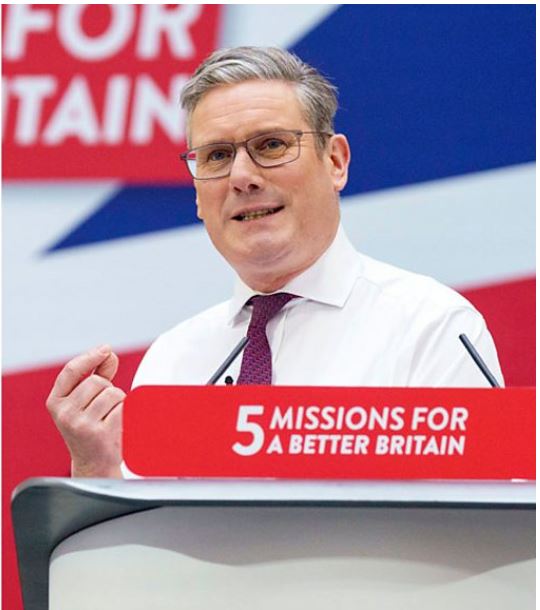
With under 700 days to the next UK general election, political parties are busy developing their manifesto documents.  In February, Labour leader Keir Starmer made a major speech laying out his “five missions for a better Britain”.   How do these five missions relate to local government?  And is the turn to “mission driven” government likely to work?

The five missions vary in their level of specificity and challenge.  Securing “the highest sustained growth in the G7, with good jobs and productivity growth in every part of the country…” is a little vague but likely to be difficult, especially given we are currently ranked 6 out of 7 in terms of output per worker.  Mission #2, “make Britain a clean energy superpower”, accelerating the move to zero-carbon electricity from 2035 to 2030, is specific but very challenging.  Mission #3, reform of health and social care and reducing health inequalities, will require a re-focus from secondary (hospital) care to social care and addressing the social determinants of health.  Mission #4 is about community safety, and likely to involve more community policing.  Finally, mission #5 is to “break down the barriers to opportunity at every stage” through reform to the childcare and education systems.

Local government potentially has important roles in each of the five missions.  Local education, skills and economic development functions will be critical to improving productivity.  On energy, Net Zero requires at least a doubling of electricity generation by 2050, from decarbonised sources.  Decarbonisation strategies need to be place-based, taking account of the geography, building types, energy infrastructure, energy demand, resources and urban growth plans.   We’ve recently argued here for the key roles of councils in this area. 

Turning to health and care services, local government clearly has leading roles – including ensuring place-based planning to address the social and behavioural causes of health inequalities.  Analysis by the Liverpool and Lancaster Universities Collaboration for Public Health Research in 2021 concluded: “investment across the whole of local government is needed to level up health including investment in housing, children’s, leisure, cultural, environmental, and planning services”.  Similarly community safety, child care and education are areas where local government could be enabled to have much greater positive impact.

Perhaps as important as the specific “missions” is the approach to governing which the party is proposing.   Labour’s document characterises this as a move from top-down, target-led, short-term, siloed approaches, to government which is more “agile, empowering and catalytic”, working across the public and private sectors, and civil society.  This, it argues, requires organising government around a shared vision, focusing on real world outcomes, concentrating on ends with flexibility and innovation concerning means, devolving decision making from Westminster, increasing accountability including central and local data transparency, and adopting long-term preventative approaches including greater financial certainty for local areas. 

In some ways the idea of mission-driven government echoes the 1990s thinking of Ted Gaebler and David Osborne’s book “reinventing government”, which argued for a more entrepreneurial approach to the delivery of government.  Their work pointed to entrepreneurial companies setting overall missions and goals, and then leaving managers to figure out how best to deliver these – for example, by providing an overall budget for a service rather than detailed line-by-line budgets which disappear if not spent by year end.  The focus on managers rather than considering the perspective of politicians is one of the problems identified in subsequent evaluations of the reinventing government model, together with difficulties in sustaining the approach.

Mission-driven policies addressing ‘grand challenges’ of society are increasingly common, for example in the UN Sustainable Development Goals and various EU policies.  Mazzucato et al recently argued that addressing such challenges requires strategic thinking about: the desired direction of travel, the structure and capacity of public sector organisations, the way in which policy is assessed, and the incentive structure for the private, public (and I would add community) sectors. Labour’s paper makes a start (albeit at a very high level) on thinking through these areas. The litmus test, though, will be in developing the detail and how far this engages with local areas.   

Over the next few months, we will be contributing to the debate on the upcoming party manifestos with some research-informed thoughts on a variety of local government related policy areas.  If you would like to be involved in developing these, please get in touch

Jason Lowther is the Director of INLOGOV. His research focuses on public service reform and the use of “evidence” by public agencies.  Previously he worked with West Midlands Combined Authority, led Birmingham City Council’s corporate strategy function, worked for the Audit Commission as national value for money lead, for HSBC in credit and risk management, and for the Metropolitan Police as an internal management consultant. He tweets as @jasonlowther

Picture credit: BBC

Is Government Giving Value For Money?

Jason Lowther

When money is short, how we spend it becomes even more important. As central government reheats its arguments for austerity following the chaos of the last few weeks, I’ve been reflecting on the contents of the 2021 budget (just a year ago).  The 2021 budget set out not just spending plans, but also a souped up approach to measuring outcomes and cost-effectiveness of government spending. How are these playing out, and will they survive the No 10 merry-go-round?

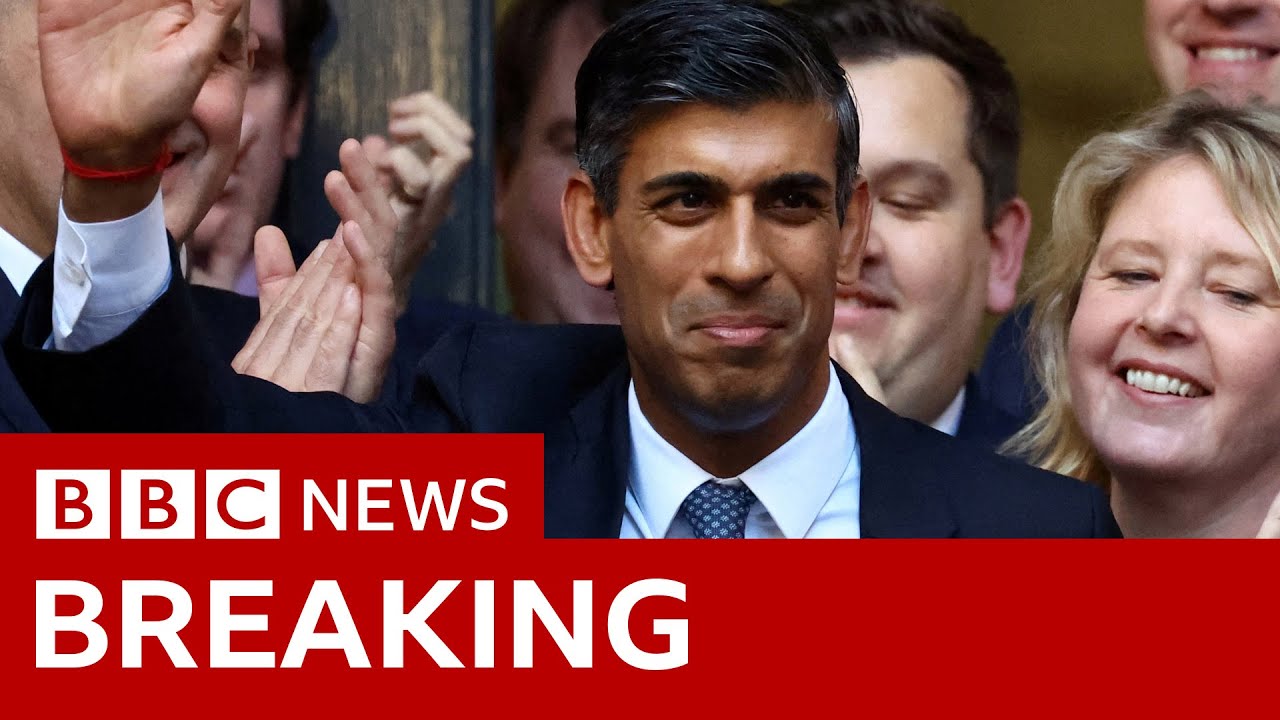
Rishi Sunak, then eight months into the job as Chancellor, noted that government borrowing was relatively high after the pandemic, warned of the public finances’ exposure to rises in interest rates, and outlined how spending was being linked to the delivery of outcomes alongside across the board ‘efficiency savings’:

The fiscal impact of a one percentage point rise in interest rates in the next year would be six times greater than it was just before the financial crisis, and almost twice what it was before the pandemic…

Decisions have been based on how spending will contribute to the delivery of each department’s priority outcomes, underpinned by high-quality evidence. The government has also taken further action to drive out inefficiency; SR21 confirms savings of 5% against day-to-day central departmental budgets in 2024-25. (page 2)

The “priority outcomes” are the latest in a long line of attempts to prod government spending into delivering effectively on political priorities, rather than blindly increasing/decreasing by x % compared to last year.  A 2019 report from the Institute for Government helpfully outlines many of these earlier initiatives (summary from the House of Commons Library) including:

  • “Scrutiny programmes” and the Financial Management Initiative (FMI), introduced under Thatcher.
  • The Cabinet Office and Treasury set up the Financial Management Unit (FMU) in 1982 to help with creating plans under the FMI.
  • The “Next Steps” report, published in 1988, which recommended the establishment of executive agencies to carry out the executive functions of government.
  • Tony Blair’s administration developed a greater focus on performance targets and Public Service Agreements (PSAs) which put these targets on a formal basis.
  • In 2001, Blair’s government also set up the Prime Minister’s Delivery Unit (PMDU), which was intended to coordinate PSAs and bring them under more central control.
  • Under the coalition government in 2010-15, PSAs were abolished and replaced with Departmental Business Plans (DBPs). These shifted the focus from targets to actions – in other words, they listed what each department would do and by when, rather than what they sought to achieve.
  • Under the Conservative government in 2016, DBPs were renamed to Single Departmental Plans (SDPs), which were themselves renamed to Outcome Delivery Plans (ODPs) in 2021. According to the NAO, SDPs (and by extension, ODPs) are supposed to be “comprehensive, costed business plans”.

As well as having to write down what outcomes they want to achieve, and how they will know whether that is happening, under the SDP system departments were also required “to assess progress in delivering their priority outcomes [and] … share regular performance reports with HM Treasury and the Cabinet Office”. 

In the 2021 spending review, the departmental outcomes were spruced up to reflect the (now last-but-one) PM’s five priorities of levelling up; net zero; education, jobs and skills; recovering the NHS; and reducing the volume and harm of crime.  

This blog’s audience may be interested in “Where does local government fit in this compendium of key priorities?”  The answer is a little depressing: on the last line of the last page (page 30 of 33), just before the devolved government departments. The relevant outcome is inspiring enough: “A sustainable and resilient local government sector that delivers priority services and helps build more empowered and integrated communities”, albeit with the reassuringly non-SMART measure that “the department will provide narrative reporting on progress for this outcome”.  Of course I exaggerate, because local government has critical inputs to very many of the earlier outcomes too, but it’s hard not to conclude that local services and communities were not yet at the top of the ministerial attention list.

Will the “priority outcomes” survive the whirlwind of ministerial movements and unforced economic missteps?  After the last seven weeks, I’m not going to make predictions – but we should know in the next month, and alongside the financial figures they could be our best hint yet on where a Sunak government is heading.

Picture credit: https://www.youtube.com/watch?v=Du_6mRV8Hm8

Jason Lowther is the Director of INLOGOV. His research focuses on public service reform and the use of “evidence” by public agencies.  Previously he worked with West Midlands Combined Authority, led Birmingham City Council’s corporate strategy function, worked for the Audit Commission as national value for money lead, for HSBC in credit and risk management, and for the Metropolitan Police as an internal management consultant. He tweets as @jasonlowther