The role of scrutiny in navigating our new health and care economy

Picture credit: https://www.gponline.com/deadline-extended-gp-access-cover-england-brought-forward/article/1456385

Cllr Ketan Sheth

Mortality rates during the pandemic laid bare the health inequalities that exist across the country. Behind these figures lie human stories and grieving families that should remind us of the urgency and importance of understanding and addressing these inequalities.

In Brent, an ethnically diverse North West London borough, we recently set out to do just that.

Systems thinking

We know that Brent residents, who are from ethnic minority communities, disabled, or who are in poverty, experience significant health inequalities; but what does that look like in practice? How are our healthcare systems contributing to and/or compounding inequality? And what can be done to resolve this challenge?

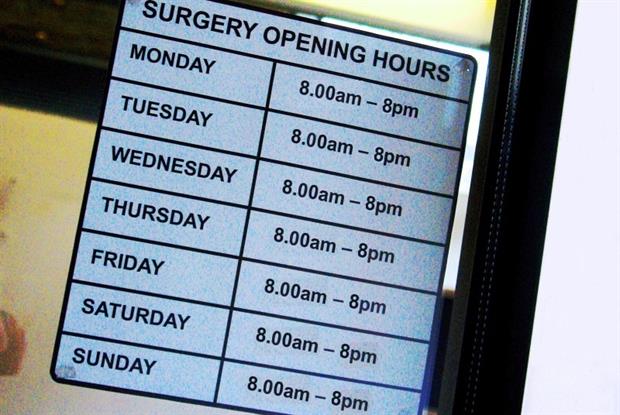
Usually, GPs are the first point of call when someone is not feeling quite right. They ought to help everyone to access timely and safe healthcare. Therefore, reviewing access to GP services is critical and we decided to focus a dedicated scrutiny task group for eight months to report.

By giving ourselves time to understand this complex area in detail, we developed a deep comprehension of the landscape we were going to scrutinise. Patient voices are at the heart of our work, and we worked closely with Brent Healthwatch to ensure those from communities that have been under-represented in these conversations in the past, as well as those experiencing the worst health outcomes, were able to articulate and share their experiences.

Also, the task group held a number of evidence sessions over the course of six months, which were attended by stakeholders across Brent’s health economy. This included council officers, local commissioners and service providers.

All of this enabled the team to make a number of practical recommendations to  Brent Council and NHS partners.

Our work focused on three pivotal areas: Demand, Access and Barriers

With the dynamics of our healthcare and well-being landscape changing locally as well as nationally, it is more vital than ever to ensure all our residents have equality of access and consumption of healthcare services.

We found repeatedly that some groups of patients experience significant, and unnecessary, barriers, specifically:

• Patients of low-income

• Patients with a disability

• Older patients

• Patients whose first language is not English

• Children and young people

• Refugees and asylum seekers

• Patients who cannot access digital technology

Knowing this, GP services must seek to reduce and resolve the barriers experienced by patients, with a focus on deprivation, ethnicity, disability, and other protected characteristics as described in the Equalities Act 2010, if we are to execute our duties under the Act.

We recognise that rising demand, changing patient expectations and workforce retention issues continue to place pressures on primary care. Therefore, it is essential that the NHS continues to plan for this and uses the expertise of healthcare professionals across the system.

The digital transformation to healthcare, brought about by the pandemic, although helpful to some, introduced additional barriers for other people and communities.

In acknowledging the varying levels of ease in which patients access GP service, we strongly believe an access and treatment standard ought to be developed. This will ensure that Brent residents experience consistent and high levels of service: whether their requests are routine or urgent, focused on physical or mental wellness; or made via the telephone, online or in-person.

Our work has been conducted in the spirit of cooperation and partnership, and particularly, we look forward to continuing our dialogue and work with our partners across Brent’s health economy to evolve our shared vision of GP access across Brent.

Cllr Ketan Sheth is Chair of Brent Council’s Community and Wellbeing Scrutiny Committee

Collaborative management in the face of government response to COVID-19? Evidence from care home staff and stakeholder experiences in West England.

Luke Bradbury

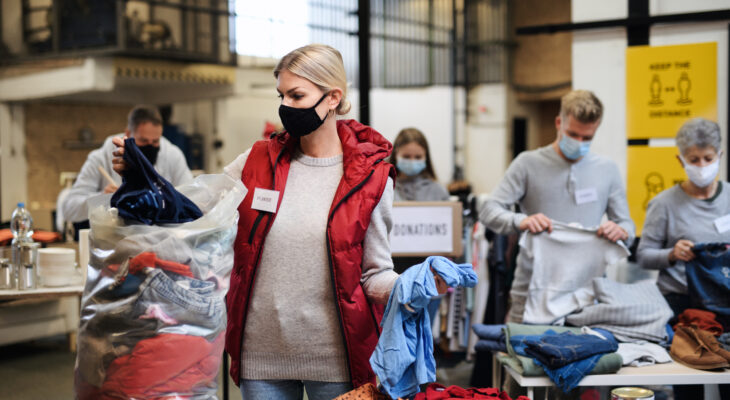
Picture credit: https://socialvalueportal.com/support-national-effort-covid-19/resources/news/social-value-in-action/support-national-effort-covid-19/

As a student on the MSc Public Management course at INLOGOV and having worked part-time in care for a number of years, I felt my final dissertation project was an opportunity to investigate the impact of COVID-19 on adult social care and the implications of government intervention. The works of organisations such as SCIE (Social Care Institute for Excellence) have already shown that inaccurate government guidance – combined with years of underfunding – resulted in the sector being ill-prepared for dealing with a pandemic and that care policy and practices had to rapidly adapt to unforeseen circumstances with limited support.

This case study aimed to explore this in the context of two care homes in West England during the early months of the pandemic. It was also interested in the role of collaborative management between care homes and their surrounding communities including local authorities, charities, businesses etc. ‘Collaboration’, in this context, took some influence from Helen Sullivan and Chris Skelcher’s conceptualisation of a collaborative agenda governing the (often mutually) beneficial cooperation between different public bodies and community agencies. One might consider how care homes may have banded together with their own local communities to ensure they still had the means to provide quality care in the face of COVID-19. Indeed, recent research by Fiona Marshall et al. has shown that, where government support was scarce, many care homes formed resource networks with external stakeholders such as local businesses, dentists, veterinaries, and domiciliary care agencies to source vital materials including personal protective equipment (PPE), electronics, toiletries, bedding and even food.

This study used semi-structured interviews and recruited five participants via a combination of snowball and non-probability purposive sampling. This included two deputy care home managers representing two different care homes in West England as well as a carer, a local parish councillor, and a co-owner of a local chemicals firm. The latter two participants were recruited as active members of the local community for one of the two participating care homes (or ‘external stakeholders’). Thematic analysis and grounded theory-based coding was then used to interpret the data.

The analysis firstly uncovered a strong dissatisfaction with the central government response to COVID-19 amongst all participants. Care staff spoke about how the implementation of the Coronavirus Act forced them to take on extra patients from hospital without an effective COVID-19 testing system in place and that inconsistencies between government guidance and company policy led to confusion amongst managers. Practices were forced to adapt; for example, adhering to stricter infection control measures and taking on extra care duties such as virtual GP consultations. External stakeholders also spoke about how these circumstances encouraged some level of collaboration within the community and a desire to assist local care organisations; for instance, a parish council was enabled to collaborate with the local chemicals firm and local school to source PPE such as goggles and hand sanitizer which could then be distributed to care providers.

Despite this opportunity to establish a resource network, collaboration between the two care homes and their surrounding communities was not evidenced as Marshall et al. had found previously. This was attributed to two main reasons. Firstly, resource dependency was less prevalent because effective internal management within both care homes meant they already had a sufficient supply of PPE. As one of the deputy managers recalled, the manager for her home made the decision to stock up on PPE and to lockdown early, therefore minimising the spread of the virus. The second reason was down to external circumstances that aided both care homes. Since both operate within rural areas of West England, they occupy less densely populated regions than care homes within inner city locations and therefore surrounding transmission rates remained relatively low. The implication is that locality largely eliminated the need to establish support networks with external stakeholders because they were not experiencing the same level of devastation seen in many other care homes. This was corroborated by staff who felt ‘fortunate’ compared to what they were seeing on the news.

These findings indicate the importance of effective management but also the extent to which contextual circumstances may or may not have necessitated collaborative networking between care homes and their surrounding communities during the early months of the pandemic. Whilst collaboration was less necessary here, the background coordination of parish council and local actors to produce a ‘safety net’ of resources did highlight the potential of localised collaboration and intervention in times of crisis. Perhaps, had such coordinated localised governance been enabled within the surrounding communities of less fortunate care homes, they may have been spared some of the devastations of the pandemic. Regardless, there is certainly a strong call for greater support towards the care sector for government and policymakers to consider – particularly in terms of clearer guidance, increased funding, and enabling localised governance to support care organisations.

Luke Bradbury graduated from the MSc Public Management in September 2021.

‘The Great Parliamentary Resistance’ – some of the outcomes

Chris Game

Back in early February, I wrote a blog dissecting one of two big and controversial Government Bills involved in what I slightly hyperbolically termed the “historic Monday evening of the Great Parliamentary Resistance” – Monday, 17th January, when the Elections Bill received its Third Commons Reading, while across the way the Lords were savaging the ‘flagship’ Police, Crime, Sentencing and Courts Bill by defeating the Government a Parliamentary record 14 times in the same sitting[1].

Both Bills, in being big and controversial, were fiercely contested throughout their Parliamentary progress and significantly amended – to the extent that my initial idea of highlighting and summarising such amendments in two linked blogs in, say, February and March, proved ludicrously unrealisable. Not least because neither received their Royal Assent until 28th April.

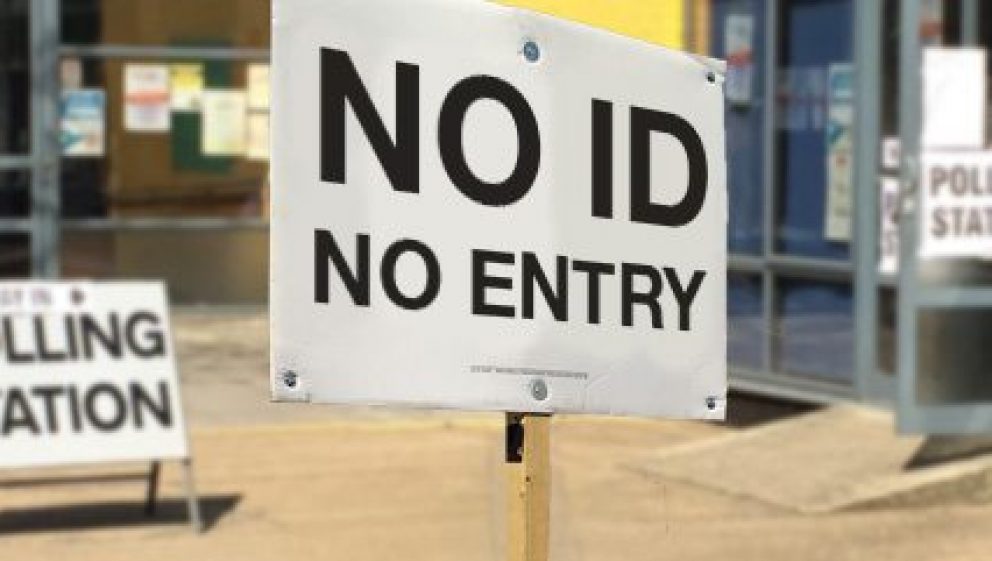
On the ball, as ever, Jason Lowther blogged immediately about the particular aspects of the now Elections Act with which he had been particularly concerned – the Government’s ‘solution’ to the undemonstrated ‘problem’ of ‘personation’, of having in future to show counter-signed photo ID at UK Parliamentary and English local and PCC elections.

This single blog, therefore, will attempt two ludicrously daunting tasks: (a) to at least mention some of the additional, less publicised, measures in or out of the Elections Act, and (b) similarly, but even more summarily, for the considerably more complex Police, Crime etc. Act.

There were two key and particularly controversial Elections Act proposals, that went down to the proverbial wire at the so-called Ping pong stage of the Parliamentary process (pp.79ff. of the H/Commons Library briefing noted by Jason).

First, obviously, the several proposed age-discriminatory and non-photographic forms of ID that had been in and out of the Bill throughout – mentioned again here frankly as a pretext for reminding anyone who needs it of just how long and how implacably opposed the PM himself has been to ID cards of any description, and accordingly what we can presumably look out for come Election Day.

election1

The other long-running dispute concerned the Act’s provision for the Government to set a “strategy and policy statement” for the constitutionally independent Electoral Commission.  Some suspicious Parliamentarians suggested this might go beyond scrutiny and accountability, and “potentially into providing guidance about how [the Commission carries out its] functions on a day-to-day basis”.

They wanted it “not bound by” the Government’s “statement”, but apparently they were guilty of a “mischaracterisation” of the Government’s intentions, and the relevant amendments were defeated.

The Government’s listing of the Act’s additional benefits appears, of course, on the relevant Gov.UK page – summarised under the comfort blanket of the several “greater protections” it provides for voters, and also for candidates and campaigners.

Protection from fraud through photo ID, of course, but also from intimidation at the ballot box – the latter by fines, up to 5-year bans, and even imprisonment for offenders convicted of attempting an extended definition of ‘undue influence’.

Voters with disabilities must in future be provided with specialist equipment, and may be accompanied by an adult.  And the 15-year limit on the voting rights of British ex-pats, retired or working abroad, will be removed. An estimated 3 million potential voters are currently affected by the limit, and – read into this what you will – it fulfils a pledge in three recent Conservative manifestos.

Finally – although it was actually the first bit of the legislation I blogged about, back last April – the Act will change the voting system for both Mayoral and Police & Crime Commissioner elections from the ‘transferable’/choice-extending Supplementary Vote to First Past The Post – on the basis of “no other plausible argument” than it might fractionally reduce the numbers of rejected ballots”.

I have views – as doubtless do Mayors Tracy Brabin (Lab – West Yorkshire), Ben Houchen (Cons – Tees Valley) and Andy Burnham (Lab – Greater Manchester), all recently elected after transfers – but not here.

And so to the Police, Crime, Sentencing and Courts Act – a real pantechnicon of a Bill/Act, highly technical in places, with even the ‘short’ and definitely the ‘long’ (150-word) titles signalling how impossible it is seriously to summarise.

It makes major changes across the criminal justice system, significantly extending police powers and the treatment of suspected, arrested, charged and convicted offenders. Again, there is a substantial (100+ pages) Commons Library summary of the whole legislative process; also a detailed House of Lords account – presented, slightly disconcertingly, in reverse chronological order – covering the fate of at least some of the Lords’ 17th Jan. amendments.

I was never keen on listing Wiki on student reading lists, but in this case I might well make an exception.  For this blog, though, I have borrowed (sounds so much better than plagiarised!) the content of the next few paragraphs from the BBC’s summary –mainly because it focuses, as many of those Lords motions did, on the implications for and threats to the right to protest.

Until now, it has generally been the police’s responsibility, if they want to restrict a protest, to show it may result in “serious public disorder, property damage, or disruption to the life of the community” (emphasis added). They can also change/restrict the routes of marches. For major events, like the COP26 protests, details are typically agreed with the organisers weeks in advance.

The new Act enables particular measures to be designed for ‘static protests’, like those of Extinction Rebellion, whose modus operandi is to force governmental action on the “climate and ecological emergency” through non-violent civil disobedience, the occupation of roads and bridges, etc.  Start and finish times and noise limits will now be set, even for protests involving just one person, with fines up to £2,500.

Edward Colston, the C18th merchant/slave trader whose statue was pushed into Bristol docks gets his own clause, with damage to memorials earning up to 10 years’ imprisonment.

Shadow Home Secretary Yvette Cooper has described the “rushed” legislation as creating “incredibly widely drawn” powers …”, allowing the police to stop and search anyone in the vicinity of a protest, including passers-by, people on the way to work and peaceful protesters.”

The Government/Home Office/Police viewpoint is set out in a Home Office Policy Paper.

[1] It appeared on 4th February, at the start of what proved a particularly active blogging month, with the consequence that, to access it, you may need to key ‘Older Posts’ at the end of the February 2022 selection.

Photo

Chris Game is an INLOGOV Associate, and Visiting Professor at Kwansei Gakuin University, Osaka, Japan.  He is joint-author (with Professor David Wilson) of the successive editions of Local Government in the United Kingdom, and a regular columnist for The Birmingham Post.

80% of councils directly involved (again) in delivering housing

Chris Game

If you’re an academic – either a genuine intellectual, theorising one, or a more lecturing, popularising one like what I was – there’s a good chance that the week before Easter is Conference Week.

It’s easy to mock, and knock, academic conferences. Too many delegates reading, rather than ‘presenting’, their papers; no time for proper interrogation, discussion and debate; mediocre university campus food. And for overseas conferences, add in climate threatening CO₂ emissions.

However, I like them – conferences, that is.  Indeed, this recent Easter week I racked up a full half-century of attending, at least intermittently, PSA (Political Studies Association) conferences.

Like most such events nowadays, this one was ‘hybrid’ – with panels attended partly in person, partly digitally via Zoom. Which makes genuine discussion additionally problematic, and emphasises the importance of the written papers addressing subjects that ideally are appealing, topical and even newsworthy.

Happily, in the Local Politics Specialist Group this is almost the norm. And this year one paper especially – in addition, obviously, to that of the INLOGOV’s Director, Jason Lowther (from ‘Birminham’, according to p.25 of the evidently un-proof-checked programme!) – struck me as both sufficiently important and timely to bring it to the attention of a couple of slightly wider audiences⃰.

Timely because we’re fast approaching the May 5th local council elections, and, if these councils’ controlling parties choose to draw voters’ attention to it, many could boast something they might well not have been able to even four years ago when these same seats were last collectively contested.

Specifically, over four in every five should be able to claim that they are genuinely and actively involved in the business of delivering social housing.  And if that doesn’t grab you, or you’re thinking: “well, isn’t that one of the main things councils are supposed to do?” – or maybe, as a Birmingham resident, you’ve heard of the 4,000+ homes built by the Birmingham Municipal Housing Trust, the City Council’s housebuilding arm, and assume that it’s fairly typical, rather than really exceptional – then I politely suggest you’ve rather lost the plot in recent years.

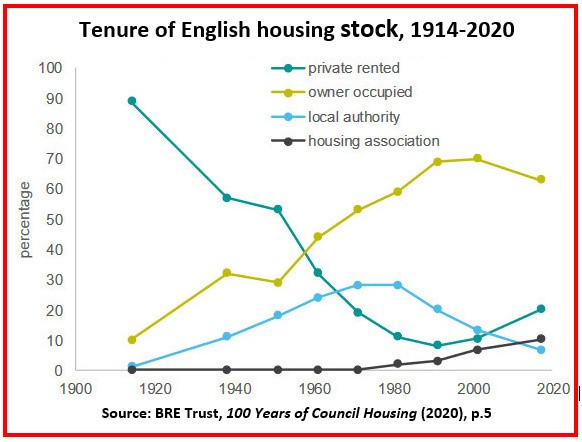
When I used to lecture to particularly overseas students about housing in England or the UK, I would use a couple of very basic graphs, similar to those illustrated here. The first showed the changing relative importance of our main housing tenures since 1919 – private rented, owner occupied, local authority, and housing association.

Tenure1

At the end of the First World War, the ‘big picture’ was straightforward: roughly 90% of housing stock was privately rented, 10% owner occupied. Councils were empowered to build ‘corporation housing’, but few did.  But the War changed everything. PM Lloyd George promised not just houses, but “Homes Fit for Heroes’, and the 1919 Addison (Housing, Town Planning, &c.) Act facilitated it. Council housing committees sprung up, generous subsidies were provided, and council estates mushroomed.

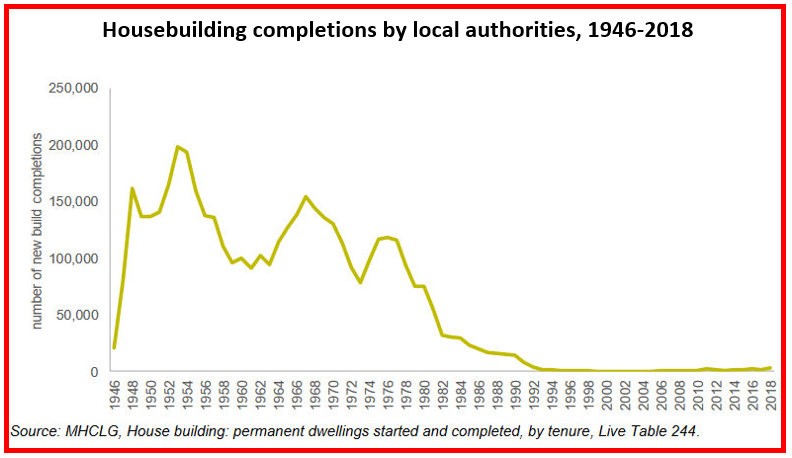
By 1939 over 10% of the population lived in council homes, and the numbers increased steadily post-war, with the Labour Government’s Town and Country Planning and New Towns Acts. At their 1950s peak, under Conservative Governments, councils were building nearly 200,000 houses a year – one completion every three minutes, if you were wondering.

By the 1970s over a third of England’s housing stock was ‘council’. Private renting had plummeted to below 20%, with owner occupation over 50% and rising, and housing associations just beginning to take off.

The 1980s Thatcher Governments’ priorities, though, were very different: a “property-owning democracy”, with successive ‘Right to Buy’ policies – requiring, rather than allowing, councils to sell off their housing stock, if tenants, particularly of larger, better-quality properties, wished to purchase.

Coupled with Treasury restrictions on councils borrowing money for capital expenditure, there began the long-term shift from council housing to housing associations or ALMOs (Arm’s-Length Management Organisations): from 7% of all social housing in 1980 to over 60% today, including virtually all new social housing.

On my second graph, of ‘Housebuilding Completions’ – albeit scaled for dramatic effect – the local authority line by the mid-1990s was barely distinguishable from the horizontal x-axis. Council house building on any significant scale virtually stopped, new homes countable in the hundreds, rather than hundreds of thousands – until, if you peer extremely closely, you can just see the space between line and axis opening up in 2018.

Housebuilding

Sales meanwhile averaged well over 100,000 a year, re-boosted by increased discounts from the Coalition Government following the 2007/8 financial crisis. That same Coalition – or its Treasury – also imposed tightly restrictive ‘caps’ on councils’ ability to borrow against their own Housing Revenue Accounts in order to build affordable homes.

True, the 2011 Localism Act and other changes gradually empowered councils to work both like and with private sector companies. But it was really only when, several years later, Theresa May announced to her October 2018 Party Conference that she would ‘ditch the cap’ that councils’ widespread re-engagement with housing provision seriously took off.

There were and still are significant hurdles: tenants’ right to buy, planning constraints, the need for more grant funding. But the climate has indisputably changed, and at least some of the circulating local election manifestos will surely contain the evidence.

The reason I’m confident of this is that one of the York conference sessions I attended was presented by Bartlett School of Planning’s Professor Janice Morphet, who, with her colleague Dr Ben Clifford, recently completed the third of their series of biennial surveys of councils’ engagement in the provision of affordable housing.

I was aware of this work, but frankly had no real idea of its scope, depth, rigour or even of the sheer quantity of data the surveys produced and made available, in both the respective main reports and the separate desk survey reports. Seriously impressive – and obviously impossible to do any kind of justice to here.

Hence the focus on what has been one of the surveys’ particularly key and consistent findings, summarised here in a couple of quotes: first from Morphet herself, then from the recent third survey’s Executive Summary:

“The third wave of research shows how local authorities are directly engaging in housing provision [and] that this has moved from a marginal to a mainstream issue.”

“From the desk survey, we found that in comparison with 2017 and 2019, the number of councils with [housing and/or property] companies … has increased from 58% in 2017, 78% in 2019 to 83% in 2021 … From the direct survey, we have found that 80% of local authorities now self-report that they are directly engaged in the provision of housing, a notable increase from the 69% … in our 2019 survey … and the 65% from the 2017 survey.”

Who said academic conferences are an indulgent waste of time?

________________________

⃰ A slightly abbreviated version of this blog – “Candidates will be homing in on a growing council priority” – appeared in the Birmingham Post on April 28th –  https://www.pressreader.com/uk/birmingham-post/20220428/281951726382871

Photo

Chris Game is an INLOGOV Associate, and Visiting Professor at Kwansei Gakuin University, Osaka, Japan.  He is joint-author (with Professor David Wilson) of the successive editions of Local Government in the United Kingdom, and a regular columnist for The Birmingham Post.
Women in (West Midlands) Governance: A patchy metamorphosis

Chris Game

Yes, I did blog really rather recently on the topic of ‘Women in local and national governance’; and yes, I did conclude it by pledging to “retire gracefully from this particular field of research”.

But that was before I found myself fruitlessly upending my flat for anything conceivably useful to the Ukrainian refugees for whom one of my ward councillors was commendably collecting. Finding virtually nothing I could honourably offer, it was cash to the Disasters Emergency Committee, who assured me the UK Government would double my donation.

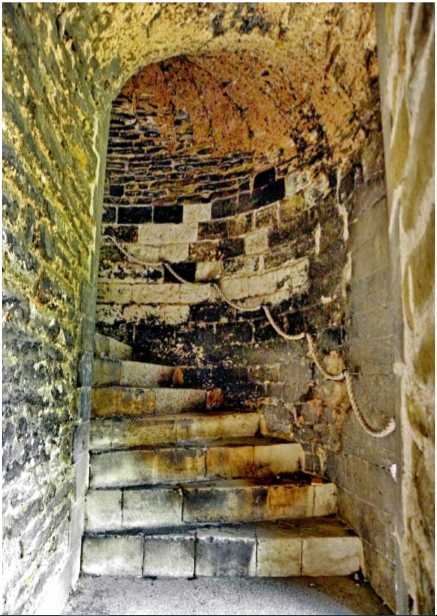
However, among the dust-covered treasures I’d totally forgotten, and spared the Ukrainians, was my 1975 Municipal Year Book (MYB) – a hefty, royal blue tome of 1,400-plus extremely closely printed pages, taking up over three inches of shelving.

myb

In pre-computer decades, when I joined INLOGOV, it was the proverbial local government bible – the 1975 MYB listing all 564 of the UK’s so-called principal local authorities plus, individually, their 26,467 councillors and further thousands of principal officers.

Several years later a thoughtful colleague, Ray Puffitt, bequeathed me his signed personal copy, possibly in exchange for my not pressing him to lecture to my undergraduate students.

Thoughtful because 1974/75 was, of course, the year of large-scale local government restructuring – or, in MYB-ese, ‘re-organization’. There were now far fewer councils and councillors, but these were the ‘new’ and therefore more relevant ones – which explains how I acquired my edition, though obviously not why it wasn’t binned decades ago.

Anyway, having discovered this 1975 stash of raw research data, I thought I’d share with you (and Birmingham Post readers) how much statistically women’s presence and visibility in our West Midlands local governments have changed in the past nearly half-century.

My earlier blog concluded by noting how Paulette Hamilton’s recent by-election victory for Labour in the Birmingham Erdington by-election had taken the proportion of women MPs over 35% for the first time. Moreover, that she and the six other women by-election winners since 2019 had – another first – made the Commons more gender-representative than our elected local governments, whose UK-wide proportion of women councillors has seemingly become stuck in the low 34%s.

Internationally, both percentages would get us, just, into the top quarter of the respective rankings. In educational lingo, though, it would be a “disappointing, could surely do better”.

If the Parliaments of Cuba, Mexico, New Zealand, Iceland and all Scandinavia can have more than 45% of elected women, why can’t we – or, more precisely, why doesn’t our huge Conservative Party majority comprise even a quarter? Similarly, if local government in countries as diverse as Bolivia, Tunisia, Iceland, Uganda, Namibia and Mexico can attract at least 45% of women elected members, why can we barely manage one in three?

At least, though, the picture has changed, or improved, hugely in the past half-century, which is what the rest of this blog is about – focusing on the metropolitan West Midlands.

I hadn’t moved to Birmingham in 1974/75, but I reckon that even without research I could probably have named the incumbent West Midlands’ women MPs – because, though few, they were all exceptional and established national reputations.

One, indeed, would have me as an Edgbaston constituent for the latter part of her elective parliamentary career: Jill (later Dame Jill) Knight, MP from 1966 to 1997.

The other three were all Labour: in West Bromwich another Dame-in-Waiting, Betty Boothroyd (1973-2000), latterly Speaker of the Commons. In Coventry West was Audrey Wise, and in Wolverhampton NE Renée Short. A formidable quartet.

Their successors are, necessarily, impressive too, and the reason I couldn’t immediately name them all is not just my ageing memory, but that there’s a full dozen of them. Eight Labour – including all three of Coventry’s – and four Conservatives out of West Midlands’ 28, or 43%.

Yardley’s Jess Phillips is, I’m guessing, probably best known, and she is one of just two of Labour’s eight who aren’t from minority ethnic backgrounds. Overall, another massive change from the mid-70s.

What about councillors?  Would the MYB’s council listings actually identify women members, and, if so, how?  Fortunately, they all risked the accusations of chauvinism and did – though in differing ways.

Birmingham, for example, gave first names – of all women members, while initialising the men. Then, as now, it was a Labour-dominated Council, 21 (17%) of whose 126 Members were women, including two Fredas, two Marys, and an exotic-sounding Carmen from Coleshill Road, B16. Oh yes, and a future Leader of the Council, Birmingham Lord Mayor, and wife of a Professor John Stewart.

bcccllrs

The other councils preferred marital status: almost always Mrs, with the very occasional Miss. Across the seven West Midlands councils Labour members outnumbered Conservatives by two to one, which was broadly reflected in women’s representation, with comfortably Tory Solihull managing just one woman out of 51 members.

However, the gender blend on Labour-run Coventry and Walsall Councils wasn’t that much better – four women on councils of well over 50, and one can only imagine how, on occasion, they must have been treated.

And no point whatever seeking empathy from senior women officers – because quite simply there weren’t any. Sorry, not strictly true. Of the 101 listed Principal Officers in the seven WM Councils, Miss H Clark, Wolverhampton’s Housing Manager, was the sole woman.

It’s here that the culture has changed most dramatically. Today, try counting the number of women in the senior managements of the seven West Midlands metropolitan councils, and the very first name you’d encounter would be Birmingham City Council Chief Executive: Deborah Cadman OBE – heading a 13-strong team of service Directors, including four more women.

Remarkably, though, that 38% female senior management puts Birmingham at the foot of this particular league table, which is headed by Dudley and Solihull with 75% and 67% women senior managers respectively, followed by Walsall with 57%, headed by CE Dr Helen Paterson. In this sphere of local government at least, there has indeed been a metamorphosis.

Photo

Chris Game is an INLOGOV Associate, and Visiting Professor at Kwansei Gakuin University, Osaka, Japan.  He is joint-author (with Professor David Wilson) of the successive editions of Local Government in the United Kingdom, and a regular columnist for The Birmingham Post.
_________

A version of this blog – ‘Equality progress – but room for improvement’ – was published by the Birmingham Post, March 24th, 2022 https://www.pressreader.com/uk/birmingham-post/20220324/textview

Women in local and national governance: the balance (at least in the UK) has shifted

Chris Game

One thing I’d expect most of this blog’s readers broadly to agree on is that UK ‘local’ government should really be given what grammarians call doubt quotes. It ceased long ago to be meaningfully local, decades before the next generation of county-based levelling-up deals.

So, I thought, where better to start this International Women’s Day (IWD) overview of women’s elected presence in local and central governance than at the other extreme: Barbuda, the alphabetically secondary part of Antigua and Barbuda, the Caribbean country comprising these two Leeward Islands plus several enticingly named even smaller ones: Great Bird, Prickly Pear, etc.

Constitutionally almost just like us, A & B is a unitary, parliamentary, representative democratic monarchy: a two-House Parliament, with only the lower House directly elected, but Labour faring rather better than they have done here lately. Here’s the thing, though. The two main islands are wildly unbalanced – Antigua with over 97% of the nearly 100,000 population, Barbuda barely 2%.  Yet Barbuda is the one, for 45 years now, with the local democratic smarts: its directly elected Barbuda Council.

The island of Antigua is run by – yes, you guessed – ‘The Ministry’; in this case MESYGA, the Ministry of Education, Sports, Youth and Gender Affairs. Barbuda has not only its elected 11-member Council, but, as you’ll see from its Barbudaful website, a majority of women members and a woman Chair.

Such councils anywhere are rare, which is why – I could sense you wondering – Barbuda’s is deservedly up front on IWD, or in UoB’s case the start of International Women’s Month.  And the remainder of this blog will draw on some of the other amassment of data in surely THE most fitting sourcebook for the day.  Entitled, with needless modesty, a ‘Working Paper’, it’s UN Women’s  Working Women’s Representation in Local Government: A Global Analysis, authored chiefly by Ionica Berevoescu and Julie Ballington, published December 2021 – and it’s a treasure trove.

The overview of new local-level data that ideally should constitute the core of this blog is inevitably pretty summary, but needs to be made even more so by at least a brief reference to the subject’s overall political context and importance. Women’s rights to equal political participation at all levels of government have for the past quarter-century been variously asserted, affirmed, and endorsed in proclamations of international goals, most importantly in the 2030 UN Agenda for Sustainable Development Goals (SDGs) – Target 5.5 being to “ensure women’s full and effective participation and equal opportunities for leadership at all levels of decision-making in political, economic and public life” (emphasis added).

It’s that new indicator – extended to women’s representation in the world’s local governments, or at least 133 of them in early 2020 – that this blog was going to be primarily about.  It got kind of overtaken, though, by the even bigger question: Are women worldwide, as has long been the case in Britain, better represented in local than in national governments?

Given the nature of local governments’ usually major service responsibilities and expenditures, my personal feeling was that it would be rather regrettable if they weren’t – the more so if I was wrong on the UK figures, and, instead of simply getting closer by the year, they could be shown statistically finally to have crossed over.

SPOILER ALERT!  However, since, and probably even before, last Thursday’s Birmingham Erdington parliamentary by-election – in which Labour’s Paulette Hamilton became the seventh woman victor in this Parliament’s eight by-elections and the fifth to replace a male predecessor, bringing the total of women MPs to a record, and statistically significant, 225 – I WAS wrong.

p1

Here’s how. Thanks to the Inter-Parliamentary Union’s annual tabulations, we’ve been able to track that part of the international picture for decades.  In the 1990s the top women-friendly countries were notably Euro-dominated, though with no help from us.  In !997, for instance, the only five Lower Houses internationally to have more than 30% women memberships were Sweden, Norway, Finland, Denmark and the Netherlands. New Zealand, the Seychelles, Argentina and Mozambique were trying, but the UK was down in an embarrassing 50th place and unable to manage even double figures. Ahead, admittedly, of France and Greece, but that was about it.

Ten years on, thanks considerably to the arrival of variously legislated or voluntary gender quotas, the overall picture had improved, and Rwanda had crashed the 50% barrier, with 45 (56%) women in its 80-seat Chamber of Deputies. Cuba and Argentina were over 40% … and the UK, though still just ahead of France, was down to 60th, struggling now to reach 20%.

Today – or, more precisely, in last month’s IPU Parline rankings – the global picture has become more variegated still. The top 15, with around 45% or more women, currently comprise five countries from each of Europe (Iceland, Andorra, Sweden, Finland, Norway) and Latin America (Cuba, Nicaragua, Mexico, Bolivia, Argentina), two African (Rwanda, of course, and South Africa) and one each from Asia (United Arab Republic), Australasia (New Zealand), and the Caribbean (Grenada).

And the UK?  Up to a hardly glorious 45th alongside Dominica – with just over the one in three, which at least is better than the House of Lords’ 28.6%.

So … the big question was: Is our local government today – still, as always hitherto – more gender representative than our national elected legislature?

As you may sense, I wasn’t bringing absolute researcher detachment to this exercise. It was posed in the hope/expectation that it would prove to be what Latin scholars call a ‘nonne’ or affirmative question, expecting the answer ‘Yes.’  Of course there’d be a higher proportion of women councillors than women MPs – wouldn’t there?

I knew the 2019 General Election stats: 220 women MPs, including, obviously for the first time, majorities of both Labour and Lib Dem Members. Congrats, obviously, to them, but, with the Conservatives’ massive majority comprising under a quarter of women, local government would still have at least a narrow percentage lead – wouldn’t it?

But then began, as noted above, the striking trend of victorious women by-election candidates replacing former male MPs, and when Paulette Hamilton did her thing last Thursday, I was getting seriously nervous.  225/650 is 34.6%; rounded up becomes 35% – an all-time record, which is obviously a ‘good thing’, but worryingly close to what I reckoned the local government figure to be.

To cut a potentially tedious story short: if, as we relatively rarely do, we compare the whole of UK local government – as opposed to that of England, or sometimes England and Wales – it currently makes the decisive difference.  For the first time, authoritative, genuinely compiled and comparable statistics showed there to be proportionately more women MPs than women councillors.

p2

I shall now retire gracefully from this particular field of research and address something perhaps more rewarding – like whether being a plurinational, rather than merely multinational, state somehow boosts women’s electoral prospects.

p3

Photo

Chris Game is an INLOGOV Associate, and Visiting Professor at Kwansei Gakuin University, Osaka, Japan.  He is joint-author (with Professor David Wilson) of the successive editions of Local Government in the United Kingdom, and a regular columnist for The Birmingham Post.