Jo Moore was right – councillors’ pensions finally are bad news

Chris Game

There’s an album track by the heavy metal band, Skyclad, inspired by the most infamous civil service email ever – the ‘good day to bury bad news’ message by Jo Moore, special adviser to Local Government Minister, Stephen Byers, at 2.55 p.m. on September 11th 2001, an hour after al-Qaeda terrorists crashed their hijacked jets into the twin towers of New York’s World Trade Center. I’m no metalhead anyway, but there are two things about the track that especially grate.

First, the title, which, presumably in the interests of scansion, is mangled into ‘A good day for to bury bad news’. Oh dear! Even more distressingly, it’s all stuff about the West waking up to a terror attack, but having the muscle to give it all back. Not one mention of councillors’ pensions – which was, of course, the toxic news on Jo’s mind when she actually typed: “It is now a very good day to get out anything we want to bury. Councillors’ pensions?”

You must admit, it’s intriguing. Not just that anyone should think that the most embarrassing thing New Labour was up to was contemplating pensions for councillors, but that at the time Ministers themselves intended it to be, if anything, good news. Following some unenthusiastic reports of the early months of executive-based local government, they were looking for ways of making council service seem a more attractive prospect to existing and, even more, to potential members.

In the consultation paper published the next day, there were proposals for councils to determine their own travel and subsistence allowances and, if their independent remuneration panels recommended, to pay pensions to those councillors – executive members and chairs of overview and scrutiny committees – whose special responsibility allowances would be likely to qualify them to join the council employees’ Local Government Pension Scheme (LGPS).

To repeat, it was definitely not Labour’s initial intention to extend the acknowledgedly generous and secure LGPS to all councillors, for most of whom, the consultation paper suggested, the Government’s recently introduced employer-sponsored Stakeholder pension scheme would be more appropriate. The consultation, however, changed all that.

The Local Government Association (LGA) and its Pensions Committee were opposed in principle to any differentiation of councillors based on work patterns and remuneration levels, seeing it as untenable, discriminatory and unhelpful to the cause of attracting and retaining councillors. They wanted the LGPS open to all councillors.

Somewhat to their surprise, however, they were also advised by OPRA – no, not Lance Armstrong’s chosen inquisitor, but the Occupational Pensions Regulatory Authority – that, for pension law purposes, all councillors should indeed be treated as employees, and therefore entitled to join the LGPS. Which meant that if, as proposed, most councillors were ruled ineligible for the LGPS, they would also lose access to Stakeholder pensions, and could take legal action against Ministers for introducing discriminatory legislation.

It was only at that later point that Ministers must have realised that their strictly limited-scale sweetener was turning into something approaching Cadbury World – too late, politically, to turn back, so they didn’t.  When the snappily titled Local Government Pension Scheme and Discretionary Compensation Regulations (Local Authority Members in England) Regulations came into operation in May 2003, the discretion exercised by councils’ remuneration panels applied to all members. A review promised in 2008, when the rest of the LGPS was significantly revised, never happened, and so that’s essentially where we are today.

Whether you describe the LGPS as ‘gold-plated’ depends probably on the newspaper you read, but it’s undeniably attractive, and popular. It’s a tax-approved, career-average scheme – in contrast to the final salary scheme for full-time employees – with benefits based, for councillors, on years in the scheme and average pay over those years, in basic and special responsibility allowances. Contributions are 6% of allowances, and additional benefits include a tax-free lump sum on retirement at 70, optional earlier retirement and ill-health retirement at any age, ability to increase pension by paying Additional Voluntary Contributions, a death in service lump sum of two times career-average pay, index-linking of benefits, and, certainly not least, the security of all this being changeable only by Act of Parliament.

The TaxPayers’ Alliance (TPA) uses Freedom of Information requests to gather and publicise such data that the rest of us can’t be bothered to, and it found that in 2010/11 over 4,500 or one in five UK councillors were enrolled on the LGPS – at an estimated annual cost, now quoted authoritatively by Ministers, of £7 million .

The 4,500 were in fact drawn from only about 240 participating councils. The bulk of non-participating authorities, as would be expected, are smaller shire districts, but by no means all. There are county, unitary and London borough councils that have chosen, with plaudits from the TPA, not to extend their LGP schemes to councillors, including – taking our own region of the West Midlands as an example – Coventry and, almost completely, Worcestershire. By contrast, nearly 90% of Warwickshire members were signed up, 54 in Birmingham, 28 in Sandwell, 22 in Solihull, 19 in Dudley, and 12 each in Walsall and Wolverhampton.

Not, however, for much longer. In a kick’em-while-they’re-down footnote to December’s finance settlement, Local Government Minister, Brandon Lewis, announced that from April 2014 councillors would no longer be eligible to join or accrue further benefits from the LGPS – though provocatively the bar does not cover London Assembly Members, Police and Crime Commissioners, and, to the particular irritation of full-time council leaders, elected mayors.

It’s a ministerial, not party, policy. Conservative councillors and leaders have been as vocal in their protests as their Labour counterparts, although it is the latter who reportedly are contemplating judicial review. Lewis, however, insisted that Ministers in this Government “take a fundamentally different view to the last Administration. We do not believe taxpayer-funded pensions are justified.” Rather, they are “a corrosive influence on local democracy and independent thought, blurring the distinction between council staff and councillors. Councillors are volunteers undertaking public service; they are not professional, full-time politicians, nor should they be encouraged to become so”.

In other words, don’t tell me that senior councillors are, in practice, full-time; that the National Census of Councillors shows one in five working over 36 hours a week. That’s their choice, as it is for other, though unpaid, volunteers – like scout troop leaders, the comparison used by Conservative Chairman, Grant Shapps, on Thursday’s BBC Today programme. So, just in case it crossed their avaricious little minds, don’t even think of it: there’s “absolutely no case for increasing councillor allowances to compensate”.

As it happened, it was allowances that prompted Shapps’ remark. He was facing Clive Betts, Chair of the Commons Communities and Local Government Committee, who have just produced a report on the role of the modern councillor, Councillors on the Front Line.  There’s an important section of the report on Support and Training directly relevant to some of the Institute’s work with councillors, but it was allowances that the Today programme wanted to know about.

The Committee identifies three key barriers to people becoming and remaining councillors: the time involved, the unsupportive view taken by many employers of their staff becoming councillors, and the levels of allowances: “high enough to offend the public, but not high enough to encourage any sane person to give up their career and earning capacity to take it on” (para.76).

Because of the public controversy involved, “few councillors will vote themselves higher allowances, even if there is a legitimate reason for doing so”, such as attracting more and a greater diversity of people to stand for election. Councils therefore, recommended the Committee, should be given the power to transfer decisions about allowances to independent bodies, with councillors themselves no longer having the final say, as they do at present with the recommendations of remuneration panels.

There must have been select committee proposals with even less prospect of being swiftly implemented than this one, but just at present I can’t think of many.


game

Chris is a Visiting Lecturer at INLOGOV interested in the politics of local government; local elections, electoral reform and other electoral behaviour; party politics; political  leadership and management; member-officer relations; central-local relations; use of consumer and opinion research in local government; the modernisation agenda and the implementation of executive local government.

To what extent is it reasonable to profit from the public purse?

Ian Briggs

By 1830 the East India Company had grown in size and influence to be a government in all but name. It had control over a population that was at the time ten times greater than that covered by the British Crown and amounted in economic terms to over one third of the then British economy. The power of the company was such that it has led to a deep seated suspicion of the profit motive in the private sector and individuals that has remained in national and local government ever since – whichever political party has been in control.

By the end of the first decade of the twenty first century concern over public expenditure and a fear that ‘our’ money is not being spent with our interests at heart remains. The thousands of FOI requests now received by governmental organisations from both individuals and organised groups such as the Taxpayers’ Alliance may seem like an unreasonable challenge to the primacy of those who are our elected representatives and their agents. Yet, as seemingly no stone is being unturned in the search to lift the UK economy from recession, the question remains: what is reasonable profit to make from public sector activity?

The government is increasingly convinced that contracting with commercial and voluntary providers with payment by results (PBR) is a mechanism to ensure that positive social outcomes are achieved through stimulating the motivation to succeed. This has now extended to the Probation Service where providers will increase their revenue through meeting or exceeding performance targets. While it is clear the new innovative approaches such as this needs to be tried, what is unclear in this process is the means by which we decide whether the targets have been achieved or not, who has the power to decide, and what access to information they have.

The nature of contracts between governments and commercial providers can be said to be at best murky and if history is a good teacher then we should remain sceptical of the means by which performance is judged. To evidence this we have to look at the alternative method – that is where there are penalties within contracts that limit profitability to a commercial provider. For any regular rail traveller this game is all too readily apparent. Careful management of standing time at stations – often for what are termed operational reasons – can be seen as a means of ensuring that there is conformity with published performance expectations. However, for one regular journey I take, if the train were to leave a station at its published time it would have covered the distance from its last stop in a time that would mean speeds far in excess of that permitted for the line. Such quirks in the timetable exist to ensure that this train is never late at its destination and thus distorting the annually published performance report.

So if creative methods are employed to circumvent disincentives that detract from profitability, should we be equally sceptical of achieving positive results with a profit incentive that will always work in the public interest? In the same way that disincentives could have issues within power imbalances and transparency in contracting, so might profit maximisation incentives. No matter how robust a contact is, it will always bring into conflict differing interests and have certain power imbalances built in. Undoubtedly what the East India Company achieved was as much in the interests of the British Government of the time as it was in the interests of those who invested in it, but if we are to offer increased potential profitability to commercial interests through PBR mechanisms we have to be ready to have robust and open debate as to how those payments are justified.

For the Probation Service, social outcomes are at the very centre of its purpose – reducing recidivism is crucial to society but performance contracting is complex. We should perhaps remember the experience of the East India Company, becoming such a monster power at the same time that nearly all Transportation to the Colonies was undertaken on behalf of Government by private contractors. Those very contractors were well rewarded but once out of sight of land they behaved in a fashion that was more about maximising their income than meeting the contractual need established by Government. This was exemplified by the selling off of unused victuals for the journey to increase income – for them the answer was easy – starve the convicts!

So – to what extent is it reasonable to profit from the public purse? And are we putting in place a robust enough mechanism to ensure the interests of civil society are maintained?

briggs

Ian Briggs is a Senior Fellow at the Institute of Local Government Studies.  He has research interests in the development and assessment of leadership, performance coaching, organisational development and change, and the establishment of shared service provision.

Disability Hate Crime: An Agenda for the New PCCs?

Chris Game

One thing about the BBC that really irritates me – up there with its inane Diamond Jubilee reporting, expensively inept management, and the Today programme’s ‘Thought for the Day’ – is its pathetic practice of basing programmes on what it claims are new, exclusively revealed and/or cunningly researched data, when in fact they are nothing of the kind.

There was a typical example last Thursday morning, as the otherwise admirable Victoria Derbyshire devoted a section of her Radio 5 live (actually, that title annoys me too) programme to the tricky but important topic of disability hate crime. The interviews with hate crime victims and their relatives were moving, and the item overall genuinely informative. My only gripe was that none of the statistics that introduced it were, as was repeatedly implied, specially produced or provided for the programme. On the contrary, all were published back in September and October and have been available to all of us ever since – so why the charade of pretending otherwise?

In this instance, the statistics actually structured the story – a fact I remember well, because they appeared during the election campaign for Police and Crime Commissioners and I briefly considered blogging about them myself. I didn’t then, but I will now.

The police have monitored hate crimes – those motivated by hostility towards the victim’s race, religion/faith, disability, gender identification or sexual orientation – for several years now, with annual statistics of recorded crimes in each victim category published by the Association of Chief Police Officers (ACPO). Last year the Home Office officially took over publication of the 2011/12 figures, but, for comparative purposes, the slightly differently based ACPO figures were published alongside – both on September 13th.

Both sets showed the total number of hate crimes, which represent just over 1% of the 4 million police-recorded crimes in England and Wales each year, falling in 2011/12 by roughly 10% – from around 48,000 to 44,000. Promising news, on the face of it, with four of the five victim categories showing falling numbers, including race, which alone accounts for four-fifths of the total. However, two big qualifications are required – one general, one specific.

The general qualification, necessary in any serious discussion of the incidence of crime, is that police records are only one source of criminal statistics in the UK. The other and complementary source is the British Crime Survey (BCS), a face-to-face victimisation survey in which household residents recount their personal experience of crime over the preceding 12 months, and which therefore picks up particularly offences like hate crimes that for various reasons may not be reported to or recorded by the police. The BCS’ 2010/11 estimate of hate crime incidents is nearly six times higher (260,000) than the number recorded by the police, which puts even a fall of 4,000 recorded crimes into a somewhat different light.

The specific and distinctly untimely qualification to the recorded crime statistics, arriving as they did immediately after the Paralympics, is that, within the overall fall, ACPO’s figure of 1,937 disability hate crimes was up by 23% from 2010/11 and by 50% from 2009/10. With Government policies demonstrably fuelling ‘benefit scrounger’ rhetoric, these big increases may not surprise, but they still make sobering reading.

As do the records of West Midlands Police – those in which I take most personal interest – and which were broadly similar. The 2011/12 total of 2,939 hate crimes was down by 6%, but disability hate crimes were up by 24%. Obviously, some of the raw numbers here are relatively small: 33 disability hate crimes recorded in 2010/11, rising to 41 in 2011/12 – or 46 in the Home Office tables. But, looking at the bigger picture, these small figures prompt questions in themselves of what is, after the Met, the second largest police force in the country.

BCS figures suggest that a quarter of all hate crimes involve disabled victims: 65,000 in 2010/11, an average of 1,250 each week, which proportionately would mean roughly 60 per week across the metropolitan West Midlands. Yet less than one disability hate crime per week is being recorded.

Referring not to the BCS, but using “figures seen by this programme” (and by anyone else consulting the Home Office website), Victoria Derbyshire picked on the contrast between South Yorkshire’s recorded total of just 9 disability hate crimes and neighbouring West Yorkshire’s 137. Disparities in the West Midlands aren’t as glaring, but they raise essentially similar issues.

Excluding the Met, the West Midlands Police recorded the second highest totals of race (2,531) sexual orientation (210) hate crimes – behind Greater Manchester, but otherwise ahead of the field, as might be expected, given the size of the force and the region’s population.  In the disability league table, however, their modest 46 recorded hate crimes ranked 11th, well adrift not only of other metropolitan forces, but of several county forces a fraction of their size, like Suffolk (130), Norfolk (120), and Avon & Somerset (113).

Interestingly, given the media’s normal excitement over any local differences that can be presented as a ‘postcode lottery’, these inter-force variations were not the chief concern of this particular programme. Rather, it was some other figures, from the Crown Prosecution Service’s 2011/12 hate crime report, also published in October, and they did indeed present a remarkable picture.

In headline terms, pretty well everything’s down. Number of hate crime cases referred by the police to the CPS: down by 5% from about 15,500 in 2010/11 to 14,800. Number of cases prosecuted: down 7%. Disability hate crime referrals from the police: down by 7% from 690 to 643. Completed hate crime prosecutions: down by 15% from 726 to 621.

Again, at first glance, you might almost suppose that these falling totals reflected a transitory problem that had peaked and that the police and CPS between them now had satisfactorily in hand. Until, that is, you note that successful prosecutions were also down: for all hate crimes by 7%, for disability hate crimes by 17%; and you recall those British Crime Survey projections – 260,000 hate crime incidents per year; 65,000 disability hate crime incidents – and the hugely varying police force returns.

All of which suggest precisely the reverse conclusions. First, hate crimes generally, and disability hate crimes especially – which are currently increasing proportionately faster than other categories – are massively under-counted in police-recorded statistics and almost certainly under-prosecuted. Second, many, perhaps most, police forces appear from their own statistics to be giving no priority to improving their awareness, their recording, or their CPS-referral of disability hate crimes. If Police and Crime Commissioners are looking for ways of demonstrating their usefulness both to us and to the forces they are now responsible for holding to account, this might, I’d suggest, be one beneficial place to start.

game

Chris is a Visiting Lecturer at INLOGOV interested in the politics of local government; local elections, electoral reform and other electoral behaviour; party politics; political  leadership and management; member-officer relations; central-local relations; use of consumer and opinion research in local government; the modernisation agenda and the implementation of executive local government.

Welcome to the Neighbourhood? Participation and Inclusion at a Local Level

Katherine Tonkiss

Earlier this month, a group from the Birmingham Social Inclusion Process (People Key Line of Inquiry) held a one day workshop with representatives from across the voluntary and community sectors in the city, to explore the notion of ‘welcome’.  As part of its Social Inclusion Inquiry (Giving Hope, Changing Lives), the partnership is considering options for making local communities more welcoming to new entrants (anyone moving into a neighbourhood), in a drive to improve levels of social inclusion.  I was invited to facilitate a session on the meaning of welcome, and participants were asked to brainstorm as many factors that they could think of that characterised, for them, a good welcome.

The results showed a three-pronged definition of a good welcome:

  1. Basic Needs: unsurprisingly, the image of a smiling face and a warm greeting was invoked by the majority of participants – as well as a warm, safe and welcoming environment.
  2. Inclusion, Help and Support: Knowing about the local neighbourhood, having access to facilities, sharing problems and communicating with neighbours was also viewed as a source of support that could contribute to feeling welcome.
  3. Interest, Recognition and Participation: Recognition of the individual and the provision of opportunities to participate and contribute were linked to feelings of being wanted and useful, which was also seen as key being welcome and included.

The particularly interesting aspect of the findings from this session is the division between inclusion as support, and inclusion as participation.  The two are related, in that the need for help and support for new entrants is likely to be more immediate – and in obtaining that help and support new entrants find themselves in a position to participate more fully in their community.  Yet the analysis does highlight that viewing new entrants such as international migrants as passive receivers of help and support as they adjust to their new surroundings is clearly problematic.  In effect, participation is central to inclusion because it involves taking part in a group activity, and helping to shape the local community.

One of the reasons that the ‘passive’ viewpoint is problematic is in how it conceives of integration.  The definition of integration here is one-sided, in that it is something that the newcomer does in order to be included into their new community.  Integration as a two-way process, with the community itself adjusting to reflect its new entrants as much as its existing demographic, is more conducive to the inclusion of new entrants.  Enabling the participation of new migrants, as I have demonstrated previously, means that local neighbourhoods can be shaped by those new voices.

However, the notion of integration as a two-way process is quite absent from national level politics, and this has a real impact at the local community level.  As I have argued elsewhere, the rhetoric of the Government on immigration and community cohesion[i] has reflected a traditionally conceived British culture into which migrants are expected to assimilate.  Further, Government discourse on human rights also reflects an inherent emphasis on a fixed notion of British identity and culture, where this discourse is utilised to reinforce traditional British citizenship and identity.  At a community level, this impacts on the inclusion of new entrants who often fall outside of the ascribed definition of the collective ‘we’ and are left relatively excluded from opportunities to participate and shape their local surroundings.

Being ‘welcoming’ might seem, on the surface, quite a straightforward idea.  Yet we are not talking about welcoming a guest – rather, the issue at stake is how to welcome a potential co-citizen, and the challenges here are considerably more complex.  Catherine Durose’s recent blog defined citizenship as practice, and the idea of participation as inclusion is certainly consistent with such a viewpoint.  Yet facilitating this form of participation is reliant on a wider transformation in how we conceive of inclusion and integration more broadly.

me

Katherine Tonkiss is a Research Fellow in INLOGOV.  She is currently working on a three year, ESRC funded project titled Shrinking the State, and is converting her PhD thesis, on the subject of migration and identity, into a book to be published next year with Palgrave Macmillan.  Her research interests are focused on the changing nature of citizenship and democracy in a globalising world, and the local experience of global transformations.  Follow her Twitter feed here.


[i] Tonkiss, K. (forthcoming 2013) Post-National Citizenship without Post-National Identity?  A Case Study of UK Immigration Policy and Intra-EU Migration.  In press, Journal of Global Ethics.

Bring Me the Head of George Ferguson: Is Bristol the Last Stand for Elected Mayors?

Thom Oliver

The ultimate Zombie Idea of Local Government lives on in the West of England but will budgetary and party political challenges spell an end for the directly elected mayoral model?

Proposals for an elected mayor model first emerged in a Department of the Environment consultation paper in 1991 as part of another comprehensive review of local government. It was part of that same review that led to the replacement of the ‘community charge’ with the council tax and the creation of the Local Government Commission.  Whilst given little attention at the time ‘The Internal Management of Local Authorities in England’ consultation gave us the first mentions of cabinets in local government, council managers and directly-elected mayors. Since then the idea of directly elected mayors has been dealt near fatal blows but still emerges as one of the battery of central government medications to cure the ills of local government.

I get knocked down but I get up again

The policy ideal of elected mayors has been advocated by a range of politicians of different hues, each of whom have championed the idea only to find themselves confronted with new setbacks. First up, of all the responses to the 1991 consultation from county councils, district councils, London and metropolitan boroughs not one was in favour of elected mayors. Labour under Blair grabbed hold of the idea and in government legislated for elected mayors through the Local Government Act 2000. However when offered the option of a move away from committee based structures, few opted for a directly elected mayor and cabinet model with the majority choosing the leader and cabinet model. Whilst the Act succeeded in moving councils away from the committee system, very few referendums were held to move to elected mayors. As the tide ebbed back to committees, plans for directly elected mayors were seemingly left high and dry.

That was until the Localism Act 2011 and the mandated referendums of May 2012 when directly elected mayors became the solution again. The voters of Birmingham, Manchester, Newcastle, Nottingham, Sheffield, Wakefield, Coventry, Leeds and Bradford all kicked the idea to the long grass. However the policy ideal lives on, and eyes are on Bristol and its newly elected independent mayor. But what are the prospects for success for both the man and the idea, and just how has this idea survived such a tumultuous ride in the face of significant and regular challenges to its worthiness and legitimacy?

The challenge for the newly elected mayor of Bristol

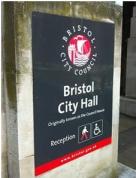
bristol

George Ferguson, architect, entrepreneur and purveyor of red trousers, is the man tasked with carrying forward the brow beaten ideal of directly elected mayors and championing a cause in the face of numerous challenges.

Whilst there are hopes of an independents revolution as argued by Martin Stott following George’s cannibalism of votes from the Lib Dems, Conservatives and Labour, party politics seemingly lives on and has surfaced abruptly as he tries to form his Rainbow cabinet. Surprising some by offering a composition based on vote proportions in the mayoral vote all parties were offered a place at the table (3 for Labour whose candidate Marvin Rees had come in a solid second place, 1 Liberal Democrat, 1 Conservative and 1 Green). George invoked a game of party political unpluralist ping pong. The Greens, Conservatives and Liberal Democrats moved to embrace the ‘new mood’ but Labours decisions were more protracted. First the local party voted against their councillors sitting on the cabinet, next up the council group voted by a small margin that they would join George only to be denied later through being overruled by Labours National Executive Committee. A flurry of press releases, resignations and regretful declines of cabinet offers later, George has been left with a cabinet of three and three empty seats, the vacant cabinet posts being taken on by Ferguson himself.

At first look it would seem a politically expedient option for Labour to not sit at George’s table as he makes a prospective £36million worth of cuts. However some have stressed they have misread the mood of the city. The pre-Ferguson Lib Dem administration through star chambers and cross party working had steered through over £55million worth of cuts impressively without drawing protests onto the streets of the city. Labour has seemingly chosen to sit back in ‘constructive opposition’ remaining untainted by Ferguson’s budget and potentially riding back in as white knights to join George once the budget has been passed.

It remains to be seen whether Ferguson will ask other parties to fill the Labour gaps or whether he will issue a now or never ultimatum for them to join now or remain out of the cabinet for the considerable future.

Killing the zombie?

The challenge for George as an Independent in the party political world is hard but if he fails would that be the end of the line for the idea of elected mayors? All eyes will be on Bristol. The yes to mayor vote in Bristol and the election of George Ferguson showed there was an appetite for something different, if not for elected mayors.

The idea of directly elected mayors has survived this long as the model hasn’t proved itself but it hasn’t been disproved. A recent guardian piece posited much hope for George in Bristol but if George and his rainbow cabinet in Bristol don’t succeed, it may be the final straw in killing the Zombie.

… Or perhaps Michael Heseltine will re-awaken the zombie idea of British Local Government:

I was disappointed that more cities did not choose to opt for a mayor. It confirmed my fear that relatively few would vote and that party loyalties would determine the outcomes. I believe this issue needs to be revisited to give our cities the influence and leadership commonly found in similar economies.

thom

Dr Thom Oliver is a Postdoctoral Research Fellow at Oxford Brookes Business School.  He completed his PhD, exploring the representative role of councillors on appointed bodies, at INLOGOV in 2011. He currently lives in Bristol and has recently rejoined INLOGOV as an Associate.  Follow his Twitter account here, and read his own blog here.

An Arsène Wenger perspective on West Somerset

Chris Game

In her recent blog on financially distressed councils in general and West Somerset DC in particular, Catherine Staite suggested that we should be talking more about “streamlining the machinery of local government … merging smaller councils”, and in effect institutionalising some of the multiplying numbers of apparently cost-saving shared service and shared staffing arrangements

Hardly had Catherine’s blog hit the page, however, than things had moved on – certainly for hapless West Somerset. Despite its being a key recommended solution of both the LGA and the former Local Government Minister, Bob Neill, it seems West Somerset may not after all be one of the smaller councils destined for oblivion by merger. Instead, Neill’s successor, Brandon Lewis, has come up with a cunning plan to – as it’s put in the report going to the full council this Wednesday – “retain the ‘sovereignty’ of the Council as the local democratic accountable body in West Somerset” (p.34).

It’s good that ‘sovereignty’ word is encased securely in the kind of quotation marks used for unfamiliar or ironic usage – because it’s not one generally considered applicable to any UK local authority, and there certainly doesn’t seem a whole lot of it in the plan for West Somerset. Rather, it takes on almost the exact opposite of its usual meaning: namely, following to the letter the Minister’s lengthy list of demands and conditions, in exchange for which it has the unique ‘opportunity’ (my quotes, this time) to create a new model of operation by becoming a ‘Commissioning Authority’.

No, sorry, a solely Commissioning Authority, for in this case the Council would commission other service providers, mainly neighbouring councils, to provide all the services it decides West Somerset residents require, retaining only a skeleton staff to manage the arrangements and monitor performance. Yes – the minimalist council, once merely a gleam in the mind’s eye of Thatcherite Environment Secretary, Nicholas Ridley, has finally arrived. Remember the punchline to his vision of a council meeting just once a year, to hand out contracts for its various services: “I wouldn’t mind paying those councillors attendance allowances”.  How we laughed.  I wonder if West Somerset members will see the joke, as they learn the details of – to use a term that seems not to feature in Wednesday’s council report – their ‘virtual authority’: not physically existing as such, but made to appear to do so by software, or in this instance Ministerial soft-soap.

I want to return, though, to Catherine’s blog and her exhortation to talk about these things, and mergers in particular, before they reach the stage of Ministerial intervention. Here at the uni we’re all for more talk and critical inquiry – can’t get enough of them. So, in the interests of helping things along, I thought I’d perform an Arsène Wenger role and add a bit of perspective to the discussions.

The French-born Wenger, for those unfamiliar with Planet Football, is the longest serving and most successful manager of the English Premier League side, Arsenal. Despite his outstanding record, he is currently getting flak from both the media and club supporters after, by Arsenal’s recent standards, a poor start to the season. Wenger’s understandable response is to call for less emotion and more perspective, claiming that the club is in fact “in fantastic shape”.

No, I’m not about to claim that West Somerset, or indeed any other authority in these stressful times, is in fantastic shape. I do wonder, though, what it says about our system of LOCAL government that it apparently cannot accommodate a principal council of the size and with the potential resources of West Somerset, and when its own representative Association declares it “not viable as a unit of local democracy and governance over the longer term”. Why are we – a modest 80th among the territorially largest countries in the world – so desperately keen to have its largest-scale and least-local local government?

First, a few stats. The currently 28-member West Somerset DC was created in 1974 from a merger of two urban and two rural district councils (95 councillors in all), at least one of which – Minehead, a largely self-contained historic coastal town of just over 10,000 – would undoubtedly still be a principal council in its own right in many European countries.  West Somerset’s population is 35,000, with the oldest average age in the UK and spread across an area of 740 km² (290 mls²), including much of Exmoor, and the Quantock and Brendon hills. The result is a population density or sparsity of 48 people per km², compared to the UK average of nearly 400. Unfortunately, such extremes count for little when arguing grant settlement figures with London-based civil servants inclined to dismiss all such ‘special case’ bids as ‘that’s what they all say’.

Media reports of West Somerset invariably attribute its alleged unviability to its – meaning presumably its 35,000 population – being so ‘small’ or even ‘tiny’.  Which it is – but only by the UK’s extraordinary, Brobdingnagian standards.  Among EU countries, as shown in the table below, it is more than six times the average size of the lower-tier authorities in what are mostly two- or three-tier systems (Wilson and Game 2011, p.275). If, notwithstanding this being a Wengerian perspective, we take out the distorting influence of the Lilliputian-scale French communes, it’s still well over four times the average size. Try putting the figures on a graph, and the UK not only goes off the end of the horizontal axis; it would require a whole second page for itself

Image 1 Wilson and Game, Local Government in the United Kingdom, 2011, p.275(Source: Wilson and Game 2011: 275).

Dexia CEMR Image 2

(Source: Dexia-CEMR, page 6)

Most of these other EU countries’ municipalities, though generally much smaller than English districts, also have a constitutional power of general competence, and, even more relevantly in the present context, access to a number of different local taxes and tax bases – as can be seen in another graph from the same Dexia/CEMR publication (p.15). On average among the EU 27, the proportions of local revenue coming from central government grants/subsidies and from local/shared taxation are roughly equal; the UK ratio is 6 to 1. Across the EU, local taxes account for between 35 and 40% of local government revenue and between a fifth and a quarter of total tax revenues. Corresponding UK figures in 2011 were 12.7% and 6.2%  (Source: CCRE).

Dexia CEMR Image 3(Source: Dexia-CEMR, page 15)

West Somerset is simply an extreme example of UK local government’s general financial weakness and central dependency. It currently has, if I read the figures correctly, the lowest council tax base of any English district, minimal reserves on which to draw, and is facing a reduction in its revenue support grant both more savage and more immediate even than that for which it was already budgeting. Its alleged unviability is not, as the LGA described it, as a unit of local democracy and governance, but purely financial.  It is the victim of a rigidly centralist funding system being screwed down so tightly that the representative body of a sizable local area and population can no longer do the job for which it was elected.

One final point. Catherine Staite referred in her blog to Denmark’s recent municipality merger programme as one that might have lessons for this country: “councils joined together voluntarily with their neighbours until they achieved the best possible combination of size and geography to deliver economies of scale and locally accessible services”. As it happens, other Nordic countries and/or their citizens have resisted the Danish/British ‘bigger must always be better’ thesis – Norway and Sweden almost completely, Finland and Iceland considerably – but that is not my concern here.

The Danish structural reforms, if not the mergers themselves, were strongly centrally driven, incentivised, and extensive. The number of municipalities was cut by nearly two-thirds, from 271 to 98, the number of councillors by 45%, and the average population size increased from under 20,000 to 56,000 (see table above). However, there still remain 7 municipalities with populations of under 15,000 – the ‘special cases’ that our system seems unable, or unwilling, to accommodate.

It was actually suggested a couple of years ago that this should be the Government’s approach to West Somerset’s exceptional and increasingly dire situation: focus on the nature and needs of relatively small councils, rather than insisting on their adoption of a model designed for much larger councils. They could be allowed ‘flexibilities’, like lighter regulation, and not having to produce separate corporate, improvement and service plans. Above all, though, the Government might consider increasing, rather than cutting, their grant funding and allowing a council tax increase in excess of the then 3% cap.

And which hare-brained, ivory tower academic came up with that notion? None, actually – it was Bill Roots, ex-Westminster Chief Executive, and author of one of the first independent reports on West Somerset. A pity no one listened.

game

Chris is a Visiting Lecturer at INLOGOV interested in the politics of local government; local elections, electoral reform and other electoral behaviour; party politics; political  leadership and management; member-officer relations; central-local relations; use of consumer and opinion research in local government; the modernisation agenda and the implementation of executive local government.