Democracy in The Circle: a route to reconnection and engagement?

Frank Hendriks

One of the theme’s at INLOGOV’s 2014 summer symposium is “Strengthening democracy and participation: routes to re-connection and engagement.” One of the possible routes is tellingly sketched in Dave Eggers’s recent novel The Circle (2013).

I will not try to summarize this rich, dystopian novel which is in the tradition of Orwell’s 1984 and Huxley’s Brave New World, brimming with ideas as well as fears. The vision of democracy presented in The Circle is what I focus on here. It is called ‘demoxie’, and it might be a better prediction of future democracy than many theorists would think.

In the book, demoxie is quite typically introduced as a hitherto unthought-of ‘next step’ in a development process. It starts with the idea to make everyone with a Circle account automatically a registered voter. In the brave new world of The Circle, virtually everyone has such an account, as it is the merger of all other accounts. Think of Google, Twitter, Facebook, and all that coming together in one big company, with a monopoly on the internet and all connected data. One of the company founders, Bailey, first sees this as an opportunity to perfect electoral democracy, to close ‘the circle’ between electors and elected so to speak. “Now think,” he says at a company meeting, “if we can get closer to full participation in all elections (…) As we know here at the Circle, with full participation comes full knowledge. We know what Circlers want because we ask (…) if we observe the same model nationally, electorally, then we can get very close, I think, to 100 percent participation. One hundred percent democracy.”

There is applause, but the fatal heroine of the book, Mae Holland, has a brainwave and suggests to take the whole thing one step further. Why not oblige everyone to vote? “Everyone would agree that 100 percent participation is the ideal.” Until the requested vote has been cast, a circle account will simply be blocked. “And then we can take the temperature of everyone at any time.” The developers at the firm are so excited that within a week they have a beta version of what now is called ‘demoxie’ – “It’s democracy with your voice, and your moxie. And it’s coming soon.” The first try-out question is “Should we have more veggie options at lunch?” In no time the demoxie result appears: “75% of respondents want more veggie options. More veggie options will be provided.” The company’s founders are excited, they want more of these direct votations and promise to implement the majority ‘moxie’ within a day. Demoxie would be the best shot at ‘pure’, direct democracy the world ever had.

Is this unreal ‘science-fiction’, completely detached from our world? I don’t think so. Like everything in The Circle, demoxie is a radical extrapolation of developments already visible. It’s actually quite close to what the Five Star Movement, one of Italy’s biggest parties nowadays, envision. It’s very close to what pirate parties around the world call ‘liquid feedback’ – heeding the voice of constituencies on a permanent basis, feeding it back directly to political processes at hand. It’s an extrapolation of consumer polls, internet surveys, facebook counts, and the like, now with the promise of swift take-up, and response rates that can hardly be ignored.

I see ‘demoxie’ as a radicalized version of what I call, less poetically, ‘voter democracy’. I tried to give it due attention in my book ‘Vital Democracy’, but quite honestly it needs much more. Democratic theory is traditionally focused on the distinction between Westminster (indirectly-aggregative) and consensus (indirectly-integrative) democracy. More recently the attention has been extended to communicative and deliberative democracy of the directly-integrative type. Surely, these are routes to re-connection and engagement, and we should continue to study them. However, we should also realize that these routes are followed more often in theory than in practice. Democratic theorists are intrigued by experiments with mini-publics, deliberation days, and the like, but the wider public quite often just prefers to quickly vote, and see their votes aggregated directly and efficiently.

There is not only a popular pull in this direction, but also a strong technological push, which are two reasons to take this other, directly-aggregative, route to re-connection and engagement more seriously than we do. Because whether we like it or not as democratic theorists, it is here to stay and it is bound to grow.

COPYRIGHT WWW.TONTOEMEN.COM

Frank Hendriks is full professor and research director at the Tilburg School of Politics and Public Administration, and co-director of the Demos-Center for Better Governance and Citizenship at Tilburg University. His current research is focused on the design and quality of democratic governance – on political leadership and active citizenship, on public decision-making and participation, on reform and innovation in democratic institutions – at the level of the city and the state at large. Frank is also a Fellow at the Montesquieu Institute in the Hague and Visiting Fellow at St Edmunds College, Cambridge University.

Building communities to bridge the gap

Daniel Goodwin

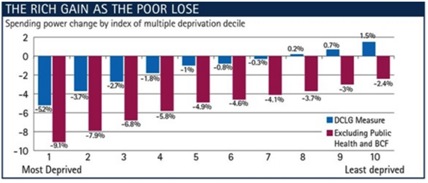
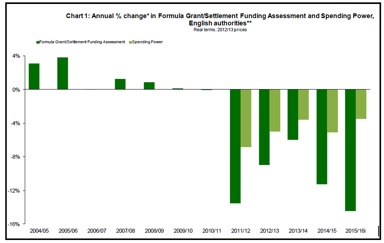
England is around halfway through significant reductions in public expenditure and heading for a ‘new normal’ at much lower levels, whilst seeing demographic and other pressures rise. Local Government is currently projected to see a £10.5bn funding drop between 2010
and 2020. Pressures on services are projected to rise by around £6bn, resulting in a £16.5bn total gap, under-resourcing services by around 30%. This average masks a wide variation – the LGA predicts that some of the poorest areas are projected only to be around 55% funded by 2020, whilst some shire districts will be 100% funded.

This shortfall is highly unlikely to be closed by efficiencies, voluntary redundancies, shared services, linking up with other parts of the public sector, outsourcing, or other changes on the supply side alone. New ways of thinking about the demand for public services are therefore needed. This challenge is political because it derives from what politicians and the media consider to be an acceptable level of taxation and the public service priorities of the national government; and it is cultural because it reflects the changing assumptions that people make about what it means to be a citizen, our overlapping roles as patients, taxpayers and citizens, and the ability of public service institutions to completely reconsider how they operate.

For ‘the gap’ is actually in the operation of society as a whole and what constitutes public service need. In looking to unlock resources to bridge the gap we should not just think of local government finance, but of the wide range of financial, logistical and human capital resources available in the public, private and civic spheres of society. That means that we cannot consider local government, or even public services in isolation, but we need to think more widely about the social contract and to look at what everyone’s contribution ought to be to the community. It’s a clear choice: personal tax to pay for services or time spent to build more resilient communities that need lower public service levels.

The big question for the future is therefore not simply about public services. In fact, there is a range of questions we need to answer about the deal between people and state. Who is really talking about it? How does it translate into personal, household, neighbourhood, city, regional or societal rights, responsibilities and realities? What are the respective (and respected) mandates of politicians at the national, regional and local level? How does all this relate to ideas of a good life in a good community in a good place? If it works at the individual level why should I engage at all? Isn’t that what politicians should be stewards of? Can we use the democratic system and the resources of the community to change the point at which publicly funded services intervene? Are we scared of having a view about what ‘good’ means, or of having a debate in a pluralist culture on what our underpinning societal values are?

Local government has a vital role to play in shaping this debate. For the responsibility for the development of a new discourse on the strengths, warp and weft of a community and its public service needs (and responsibilities) must surely be with its leaders and set within the political mandate. I consider that this mandate should logically extend to all public services and other activities that impinge on the locality.

Such a mandate also carries with it the responsibility to ensure that a community is in turn playing its part in wider society. A traditional view of the role of the politician is one of holding public services to account on behalf of the community. And yet the value of what people should be bringing through their own strengths and abilities, to benefit the common good, suggests that there is a need for politicians to engage in new ways and to develop a dialogue with the community to hold it to account too. That is the trickier dimension of the political mandate, one which is perhaps understated. It is a very tall order for the many politicians of goodwill who came into local politics to sort out bad planning decisions or because they were the only one prepared to be a communication link with the council.

These thoughts point me towards some new form of social settlement based upon ideas of community and prosperity, which is adaptive, emergent, co-produced, strength- or asset-based, and where local government is not a byword for the dead hand of bureaucracy. This cannot be a technocratic solution – it requires astute political and managerial leadership which helps to form truly meaningful communities that play their part in national life, and public services which support the development of social strengths rather than papering over the gap.

Know your local Councillor Photographs - St Albans - May 2008

Daniel Goodwin’s career has mainly been in local government, starting in libraries and cultural services and progressing through policy and corporate services. He is particularly interested in policy into practice issues, largely relating to local leadership and the politics of communities and place, and is a regular contributor to journals, conferences and seminars. Daniel was chief executive of St Albans City & District Council for 2006 to 2012 where he oversaw significant corporate improvements and budget reductions. He was Executive Director of Finance & Policy at the Local Government Association from January 2013 to March 2014, where he oversaw the LGA’s Rewiring Public Services campaign and the refinement of its public finance strategies. He is currently on sabbatical having decided to return to an operational leadership role and is pursuing personal projects, consultancy assignments and writing. He plans to return to a chief executive role in 2014.


Towards a people-centred language of demand management

Gavin Jones

I’m regularly asked to make presentations to groups of people (the last one being to 22 Deputy Lord Lieutenants!) to set out the issues and opportunities facing local government in the light of increasingly painful budget cuts. Of the pictorial slides I use to tell the story, the one guaranteed to have the greatest impact and make people hold their heads in their hands and mutter depressing words of despair is my ‘motivational’ slide that alarmingly shows demand outstripping resources at a frightening pace – often known as the ‘’ or ‘Map of Misery’.

I’ve often thought that the word demand in this context seems very impersonal and almost dehumanising, whereas what lies behind much of this demand are real people, many of whom are vulnerable and in need of our help. When I am in need (and it is possible my time will come) will I simply be an input to someone’s demand curve? An unhelpful driver of financial pressure? Or instead could I be seen and valued as a human being with capabilities but also in need of some help and support? This, I believe, is the danger of expressing difficult financial circumstances in impersonal corporate speak. Too often the emotionless language of costs and reducing budgets facilitates a culture that ignores or forgets that at the heart of this technically phrased conundrum are human beings – increasing numbers of whom find themselves at the heart of diminishing resources.

This use of de-personalised language, with the current issues often only framed as a financial problem, creates enormous and unnecessary organisational conflict which puts the bureaucrats (tasked with the corporate objective of cutting spend) at odds with the service professionals. One sees it as a financial problem, the other a social one. A dangerous knock-on effect of this is the internal friction that is caused with the resentment of other Council departments that see themselves as financial victims of ‘uncontrolled’ spend by the demand-led services.

I’m not for a minute suggesting that bureaucrats (financial or otherwise) are any less caring or empathetic towards the plight of vulnerable people, but a more intelligent use of language and a considered framing for tackling the issue of rising demand and reducing resources, is more likely to build a sense of organisational collaboration to tackle real issues of how public services can continue to help people to cope with vulnerability with more dignity and independence.

Doesn’t it feel better to talk about the need for organisational change in terms of how a smaller state can be more creative in helping people to age well and to retain their dignity and capability, rather than with a negative rhetoric of cuts and declining spend? I think the former is so much more engaging and invites us to think creatively and positively as opposed to the more defeatist approach of reducing spend and squashing demand.

At the end of the day, using a more people-centred language and approach to ‘managing demand’ is far more likely to result in the design of collaborative sustainability solution to support an ageing population that ‘how do we get the money out and fast?’!

jones

Gavin joined Swindon Borough Council (SBC) in 2004, having previously worked in a variety of private sector organisations and market sectors and has been Chief Executive since 2006. Gavin was listed as one of the top 50 New Radicals in the Sunday Observer’s national campaign for Britain’s most innovative leaders and voted one of the most influential leaders in Local Government. Gavin is a Board Member of the national think tank the New Local Government Network, (NLGN), a Trustee of the Prospect Hospice, a Board Director of Forward Swindon Ltd and a Board Director of SOLACE Enterprises,.

Gerrymandering in Northern Ireland local government? Surely not.

Chris Game

It seemed obvious from the outset that Gerry Adams’ arrest in connection with the 1972 murder of Jean McConville was a momentous event with potentially massive implications: long-term, short-term, north and south of the border. So I was slightly surprised the following morning to hear a Sinn Fein spokesperson, protesting about the timing of the arrest, highlight its impact specifically on the Northern Ireland local elections. Still, with the subject having been raised, I couldn’t help recalling the gerrymandering – or even Gerrymandering – controversies that were the chief reason why these elections on 22nd May for 11 new, larger and somewhat strengthened councils hadn’t taken place, as planned, in 2011.

The postponement was regrettable, given that the process of replacing the 1973 structure of 26 emasculated district councils had already been going on for years. The NI Executive had started a comprehensive review of NI public administration in 2002, shortly before its longest period of suspension. In 2005 Secretary of State Peter Hain announced a scheme for seven politically balanced ‘super-councils’ – three nationalist-controlled, three unionist, with Belfast and its politically mixed electorate swinging between the two – which did succeed in uniting most of the parties, except Sinn Fein, but unfortunately only in opposition to the whole idea.

In 2008 the restored Executive split the difference between Sinn Fein and the unionists’ generally preferred 15-council structure by opting for 11, with a significant transfer of powers from central to local government, and the additional virtue of recognizable, if convoluted, place names, instead of vapid compass points: Armagh, Banbridge & Craigavon rather than ‘South’, and so on. The first elections would take place in May 2011 – or should have done, had it not been for the arguments over boundaries.

game

Traditional NI political wisdom has it that, if you want more than about, say, seven areas with roughly equal populations, no matter what number you choose, slightly more than half will have a unionist majority, and virtually all the remainder a nationalist majority. Changing demography is challenging this axiom, as may well be demonstrated in the compositions of the new councils. But, if the last elections to the old councils in 2011 had been contested on the new district boundaries, the best guesstimates are that the DUP would have been the largest party on six councils – those in the north and east, with the exceptions of Belfast and Newry, Mourne & Down – and Sinn Fein the largest party on the other five.

In one sense, these things have mattered less than might be supposed, partly because of councils’ limited powers, but also because a majority of them have long operated under similar responsibility- or power-sharing principles as the NI Assembly in, for example, their proportional allocation and rotation of committee places and chairmanships. No amount of responsibility-sharing, though, was able in 2012-13 to defuse the incendiary issue of flying the Union flag on town halls. Nor, as the details of the new districts emerged in 2008-09, did it prevent heated disputes about the proposed boundaries – particularly in, though certainly not confined to, Belfast, with its sheer size, centrality, and changing religious and political make-up.

Over the years the city’s electorate has shrunk and, like NI as a whole, has become steadily more nationalist. As a result, the once strongly Protestant council has become politically more balanced – the current make-up being 24 nationalists (Sinn Fein + SDLP), 21 unionists (Democratic, Ulster and Progressive), and 6 Alliance – although the unreformed ward structure means that it took roughly 1,700 votes to elect each nationalist member, against 1,500 for each unionist.

Almost any proposed configuration of larger reformed councils, therefore, would have been likely to produce a more nationalist Belfast.  Predictably enough, though, when it appeared actually to do, so too did the headline accusations of gerrymandering, particularly over the extension of the city’s southern boundaries.

game

In fairness to the relevant sub-editors, at least they were using the provocative term in more or less its correct sense – manipulating electoral boundaries for partisan advantage – even though, as the map shows, no new improbably shaped districts, resembling salamanders or any other tetrapods, were involved. In fact, the map is possibly slightly misleading, for the main added areas – parts of Lisburn in the west and of Castlereagh in the east – are mostly quite densely populated and represent an increased population of over 50,000 or nearly one-fifth, bringing the city’s total to 334,000. There was undoubtedly an argument, on the basis of the existing built-up area, for pushing the boundaries significantly further in both directions and possibly also in the north – but not one with anything like enough political traction to gain it serious consideration.

With the religious affiliation of all the city’s wards and electoral areas being available down to decimal places – from 94%+ Protestant along the Shankhill and Crumlin Roads to 97%+ Catholic in the Upper and Lower Falls, perhaps the easiest way of describing the significance of the city’s actual expansion is in the same terms. The three wards that revert from Lisburn to Belfast – Poleglass, Twinbrook and Dunmurry – are between 80 and 95% Catholic and are also larger than the two transferred wards from Castlereagh – Gilnahirk and Tullycarnet – which are 81 to 86% Protestant. These two wards are situated due south of the Stormont Parliament (see the red star on the second map) and are part of the Belfast East Parliamentary constituency – as, a little further east along Upper Newtownards Road, are Dundonald and the Ballybeen housing estate. The 8,500 Ballybeen residents, however, who constitute three wards on their own, all overwhelmingly Protestant, are not being transferred.

The gerrymandering accusations, though, that contributed most to the three-year postponement of the introduction of the new councils were made across the other side of the city, in respect of the village of Dunmurry and the multi-hatted Edwin Poots: DUP Member of the NI Assembly, Minister (in 2009) for the Environment and responsible therefore for local government, and a longstanding member of Lisburn City Council.

In a nutshell, Councillor Poots claimed the administration of which Minister Poots was a member was ‘Gerrymandering’ to the advantage of Sinn Fein in Belfast. He proposed that said Minister Poots use his authority to make what Councillor Poots claimed would be a “modest adjustment” to the recommendations of the independent Local Government Boundary Commissioner and allow Dunmurry residents to remain within what would become a comfortably unionist Lisburn & Castlereagh – a proposal that, not surprisingly, some commentators also saw as gerrymandering.

Dunmurry was not the only boundary dispute, and boundaries were not the only matters of contention. But it was key sticking point. For, until Poots and his unionist colleagues eventually backed down, there could be no final settlement of district boundaries, and no progression to the determination of ward boundaries or, unique to NI because of the requirements of proportional representation, to the grouping of wards into District Electoral Areas. In the end it seemed to come as no great surprise when in June 2010 it was announced that the 2011 local elections would be to the existing authorities – which is perhaps itself unsurprising in a state whose very existence, many would say, is a product of gerrymandering.

Chris Game - pic


Chris Game is a Visiting Lecturer at INLOGOV interested in the politics of local government; local elections, electoral reform and other electoral behaviour; party politics; political leadership and management; member-officer relations; central-local relations; use of consumer and opinion research in local government; the modernisation agenda and the implementation of executive local government.
 

The impact agenda and political agency

Matthew Wood

Why should we, as political scientists, ‘bother’ with impact? My answer is that as social actors we cannot avoid ‘impacting’ on society in one way or another, just like any other profession. The question is how we should choose to influence society. As British political scientists our choices are, thankfully, quite broad. Our discipline in this country is eclectic, our research agendas are diverse. Critically, our jobs also allow us significant autonomy to shape our individual identities, practices and relations with the outside world. The crucial thing is how we choose to shape that autonomy. Put in satisfyingly theoretical terms, it’s about how we exercise our political agency. This is why impact appeals to me and why I think it should appeal to others. In this blog I’m going to suggest how we, as researchers, might think about shaping our agency despite some of the problems with the current impact agenda.

The Trouble with Impact

The trouble, as Helen Turton demonstrates, is that there are significant pressures out there that seek to shape our agency as researchers in particular ways, narrow our research agendas and stop us speaking truth to power. Paradoxically, this includes the ‘impact agenda’ itself: everything from the REF’s ‘impact case studies’ to the Lib-Con Coalition’s fetish for behavioural psychology and the suspiciously parochial ‘nudge’. When academics look at this ‘agenda’, they understandably balk about being pushed into a positivistic straight jacket. Though I have yet to come across anyone at conferences who disagrees with the idea of ‘impact’, broadly constituted, many harbour an understandable distaste towards how it is currently being implemented.

So we are faced with a struggle over how to define what we mean by impact – broad or narrow. If we interpret it narrowly, then we risk curtailing our political agency. If we interpret it broadly, then we open up a lot more opportunities. I think we should interpret impact broadly, but the question is how do we do this while still acknowledging there are problems with the existing agenda? There are, I think, two ways we can think about impact, and they involve being reflexive about a few scholarly myths about epistemology and thinking about our communication with the outside world.

Epistemology

Firstly, we should question the myth that ‘positivist’ research, the development of universal laws of politics that can be implemented by policymakers, is somehow the holy grail of ‘impactful’ research. While it is certainly true that policymakers like graphs, stats, and anything that makes a claim to being authoritative, they also prefer research that is easily accessible and straightforwardly communicated, rather than a set of complex regression tables and formulae. The de-funding of political science programmes in the US is evidence enough that a hermetically sealed discipline concerned with establishing causal laws of political life will not wash with a practically focused policy world.

Similarly, we should challenge the myth that post-modern or constructivist research, or theoretically-driven work, is ‘non-impactful’. This clearly isn’t the case. Just take interpretive theory, deliberative theory, postcolonialism, eurocentrism, feminism, etc. These deal with weighty real-world issues of crucial societal importance, and to deny this is to cede ground to those who would cut funding for this kind of work.

The point is we should recognise the value of the full spectrum of political research, and never seek to close down our ontological, epistemological or methodological positions because we think the public will think the findings are less ‘relevant’. The topics we research almost always have connection to relevant societal issues. Often, it’s how we talk about our research to others that matters, and this leads me to the issue of communication.

Lost in Translation?

It’s somewhat of a hackneyed cliché that academics are poor communicators, stuck in an ivory tower talking pretentious gobbledygook. We can easily take umbrage at this, but can also see it as an opportunity for reflecting and improving the language we use. My own doctoral research was on ‘depoliticisation’, a concept with a fairly scholastic lineage, and I find it useful when thinking about communicating my work to do two things.

Firstly, I remind myself that academia has specialist language for a reason. We should cherish our ability to be creative in addressing our research topics, and remember that research starting out in relative theoretical obscurity can become publicly salient. Concepts are also identified with academic career trajectories (if you ‘invent’ a concept then you get a lot of credit for it), and we should never draw an arbitrary barrier at a point where we have ‘enough concepts’ and shut a generation of researchers out from having the potential to be identified with new ideas.

However, as Matt Flinders suggests, the ‘art of translation’ is a good way of thinking about how we can get across the interesting and creative concepts and ideas we come up with to different audiences that speak different languages. So, secondly, I think about how to explain my research in a way that, say, a bus driver or a doctor would understand. This is not me trying to ‘dumb down’ but to reflexively think about how my research would be understood or interpreted by a range of different people. This, I find, is useful not only for getting my research across to the ‘outside world’ on an everyday level, or in blog posts, but also feeding back into my academic work as a fresh perspective. Crucially, if our research is better understood by different audiences, then we have a better chance of getting the insights of our research noticed.

It’s perhaps important to remember that not all the barriers to impact are of our own making. Funding streams, government agendas, etc. are all oriented towards a particular ‘impact’ agenda that is, as Helen and Katie make clear, problematic. The important thing though is that impact is on the agenda, and therefore the potential is there for us as researchers to broaden our capacities for ‘agency’, which we should celebrate and engage with. After all, I began researching Politics because I thought I could change the world for the better by helping our understanding of it. That may be stupidly naïve, but it’s what I keep coming back to.

mattwood2

Matt is a Postdoctoral Research Fellow at the University of Sheffield Department of Politics, and Deputy Director of the Sir Bernard Crick Centre for the Public Understanding of Politics. He is currently researching ‘everyday politics’ and solutions to political disengagement in advanced liberal democracies.

Reclaiming the impact agenda: making impact work for you

Helen Louise Turton

When encountering the ‘impact agenda’ the ease of engagement is often dependent upon your discipline and/or the type of research being conducted. Certain forms of research don’t lend themselves to be easily compatible with the requirements of the impact agenda as it is currently defined. Given the pressures placed on academics to bring in external resources and to conduct research that has ‘impact’ academics (especially early career researchers) may then find themselves in a situation where they feel the need to morph their future research in order to meet such expectations. The parameters of the current impact agenda as it currently stands have created a situation where certain forms of research could become marginalised, devalued, and ‘unpopular’ unless we, as academics, exercise our agency and become active in defining impact.

Working in the discipline of International Relations I have experienced first-hand a number of different obstacles and challenges with regards to demonstrating the’ impact’ of my research. For instance;

1) Within IR the issues and topics that we are researching are rarely of local resonance as our research is focused on the ‘international’ level. While I believe that the ‘personal is the international, and the international is the personal’ when it comes to demonstrating the impact of my research on the local level it is difficult, for I cannot claim a causal relation to areas within the UK as demanded by the Research Excellence Framework. For example, if one is researching women’s representation in Rwandan politics it is highly unlikely that such research will “contribute to the economy, society and culture within the UK” (REF, 2012).

2) IR research is often not applicable to certain audiences such as parliamentary committees for example. For instance,  I have researched the sociology of knowledge within the discipline of IR, and the chances of presenting my work to civil servants, or being called to give evidence to a parliamentary select committee, or my being asked to speak to local government forum on this topic are largely improbable.

3) IR theory is a very large subfield within the discipline; however you are part of this prominent research community meaning that your work is theoretically inclined, it is very difficult to demonstrate your impact on a non-academic community. Even though I adopt the view that theory is praxis, theory development and theoretical research is not always evidently applicable to a policy audience and not always accessible to the public.

These obstacles and challenges present us with a danger, that the drive for impact could discourage researchers from focusing on certain issues and theory. The pressures academics are facing to demonstrate their impact could result in scholars trying to make their research fit with the impact agenda by changing the direction of their research. This fear is echoed by Dr Guy Redden, he argues that the narrowly defined criteria for research impact can result in “academics eschew[ing[ worthwhile kinds of work they are good at in order to conform”. The current emphasis on impact, and the way it is becoming locked in to employment, career progression, and grant success could lead to researchers modifying their behaviours and research in order to adapt to the demands of impact. According to Dr Peter Lawrence, the drive for impact has resulted in academics focusing more on their careers and less on understanding and theorising problems.

Do the difficulties and dangers generated mean that we should abandon the impact agenda? Whilst I remain wary and critical of broader changes within academia that the impact agenda is a product of – such as the marketization of knowledge, the corporatization of the university, and the adoption of marker-like behaviours within the academy – I don’t think we should abandon the call for impact per se but we should abandon impact as it is currently defined.

As academics we have a responsibility to share our knowledge and make it readily available and we should be encouraged to publically engage, but the way impact is currently defined is incredibly narrow and tends to orientate primarily around being policy relevant (especially within IR). Rather than making our research fit the impact agenda, we should be making the impact agenda fit with our research. We should be focusing on and thinking about what we want impact to look like. We need to be developing new forums and being more imaginative in the way we approach impact. Crucially, we need to remember that we are not passive in the process, and we should be taking more control over the impact agenda, in order to broaden its definition to prevent excluding certain forms of research. In other words we need to reclaim the impact agenda and define it in our own terms.

turton

Helen Turton is a University Teacher in International Politics and Security Studies at the University of Sheffield. Helen is also the co-convener of the British International Studies Association working group IR as a Social Science. She is currently organising a one-day workshop titled ‘The Impact of IR as a Social Science’ and will be presenting a paper on the relationship between ‘impact’ and IR Theory at the forthcoming International Studies Association’s annual convention in Toronto, March 2014.