Mission Possible? 

Jason Lowther

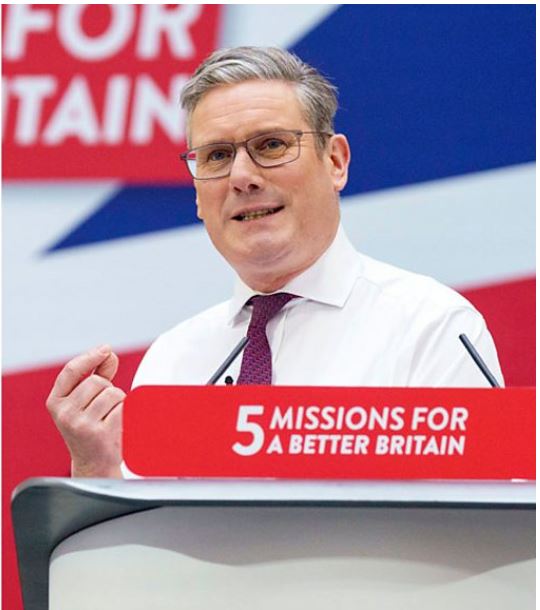
With under 700 days to the next UK general election, political parties are busy developing their manifesto documents.  In February, Labour leader Keir Starmer made a major speech laying out his “five missions for a better Britain”.   How do these five missions relate to local government?  And is the turn to “mission driven” government likely to work?

The five missions vary in their level of specificity and challenge.  Securing “the highest sustained growth in the G7, with good jobs and productivity growth in every part of the country…” is a little vague but likely to be difficult, especially given we are currently ranked 6 out of 7 in terms of output per worker.  Mission #2, “make Britain a clean energy superpower”, accelerating the move to zero-carbon electricity from 2035 to 2030, is specific but very challenging.  Mission #3, reform of health and social care and reducing health inequalities, will require a re-focus from secondary (hospital) care to social care and addressing the social determinants of health.  Mission #4 is about community safety, and likely to involve more community policing.  Finally, mission #5 is to “break down the barriers to opportunity at every stage” through reform to the childcare and education systems.

Local government potentially has important roles in each of the five missions.  Local education, skills and economic development functions will be critical to improving productivity.  On energy, Net Zero requires at least a doubling of electricity generation by 2050, from decarbonised sources.  Decarbonisation strategies need to be place-based, taking account of the geography, building types, energy infrastructure, energy demand, resources and urban growth plans.   We’ve recently argued here for the key roles of councils in this area. 

Turning to health and care services, local government clearly has leading roles – including ensuring place-based planning to address the social and behavioural causes of health inequalities.  Analysis by the Liverpool and Lancaster Universities Collaboration for Public Health Research in 2021 concluded: “investment across the whole of local government is needed to level up health including investment in housing, children’s, leisure, cultural, environmental, and planning services”.  Similarly community safety, child care and education are areas where local government could be enabled to have much greater positive impact.

Perhaps as important as the specific “missions” is the approach to governing which the party is proposing.   Labour’s document characterises this as a move from top-down, target-led, short-term, siloed approaches, to government which is more “agile, empowering and catalytic”, working across the public and private sectors, and civil society.  This, it argues, requires organising government around a shared vision, focusing on real world outcomes, concentrating on ends with flexibility and innovation concerning means, devolving decision making from Westminster, increasing accountability including central and local data transparency, and adopting long-term preventative approaches including greater financial certainty for local areas. 

In some ways the idea of mission-driven government echoes the 1990s thinking of Ted Gaebler and David Osborne’s book “reinventing government”, which argued for a more entrepreneurial approach to the delivery of government.  Their work pointed to entrepreneurial companies setting overall missions and goals, and then leaving managers to figure out how best to deliver these – for example, by providing an overall budget for a service rather than detailed line-by-line budgets which disappear if not spent by year end.  The focus on managers rather than considering the perspective of politicians is one of the problems identified in subsequent evaluations of the reinventing government model, together with difficulties in sustaining the approach.

Mission-driven policies addressing ‘grand challenges’ of society are increasingly common, for example in the UN Sustainable Development Goals and various EU policies.  Mazzucato et al recently argued that addressing such challenges requires strategic thinking about: the desired direction of travel, the structure and capacity of public sector organisations, the way in which policy is assessed, and the incentive structure for the private, public (and I would add community) sectors. Labour’s paper makes a start (albeit at a very high level) on thinking through these areas. The litmus test, though, will be in developing the detail and how far this engages with local areas.   

Over the next few months, we will be contributing to the debate on the upcoming party manifestos with some research-informed thoughts on a variety of local government related policy areas.  If you would like to be involved in developing these, please get in touch

Jason Lowther is the Director of INLOGOV. His research focuses on public service reform and the use of “evidence” by public agencies.  Previously he worked with West Midlands Combined Authority, led Birmingham City Council’s corporate strategy function, worked for the Audit Commission as national value for money lead, for HSBC in credit and risk management, and for the Metropolitan Police as an internal management consultant. He tweets as @jasonlowther

Picture credit: BBC

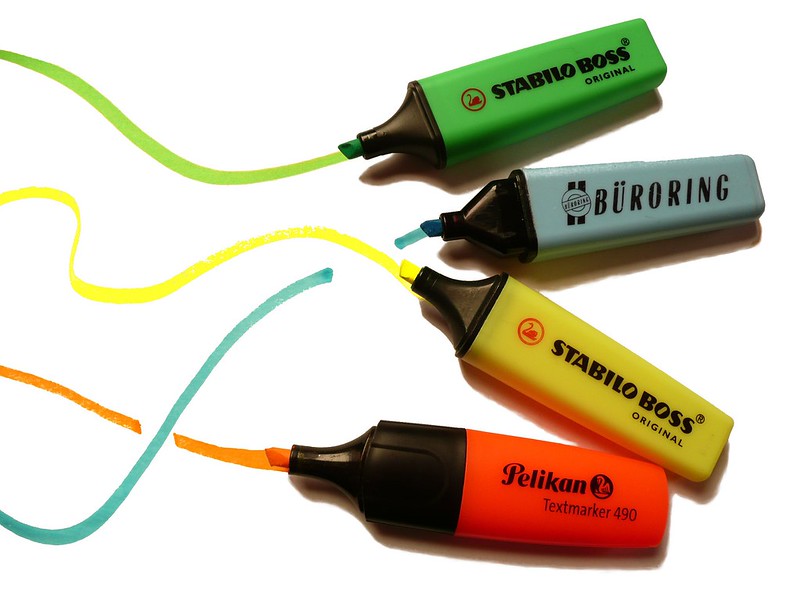
Making friends with a highlighter pen

Anon

In this final blog of our series, one of our former apprentices reflects on how they grew in confidence through the process and offers some advice for anyone considering studying for a senior leader apprenticeship.

Picture: Photosteve101 https://www.flickr.com/photos/42931449@N07/

In 2019, my manager informed me our organisation had partnered with INLOGOV at the University of Birmingham, meaning an opportunity to enrol on their Senior Leader Apprenticeship programme. It seemed almost too good to be true to think that this opportunity would be fully funded. Never one to shy away from a challenge I decided to apply. Brave.  I was further surprised to be accepted onto the course and began my journey somewhat naively without quite appreciating what lay ahead.

It is fair to say that I had underestimated the time I would need to complete the learning, reading, assignments and portfolio preparation. It was a steep learning curve but I soon developed strategies to manage my time. I preferred to read in the evening.  Many an evening was spent sitting in the car reading journal articles while my daughters were at various clubs. The time I was investing was becoming more and more worthwhile as I learned to apply new skills and ways of thinking to my work, as well as receive pleasing grades for my assignment.  I started to think perhaps I could do this after all.

The onset of Covid-19 meant that additional challenges of remote learning and home-schooling my daughters had to be managed alongside other pressures, but I carried on, and with amazing support from my family, work colleagues (and some very understanding tutors) I managed to continue working through the assignments and the intense phase of my project.

I won’t pretend this was easy, but the more I became engrossed in my project the more determined I became that I would complete the course.  Completion meant both personal pride and a final project which would be beneficial to my work and team.  Compiling my portfolio gave me a great opportunity to reflect on some of my work achievements, and to identify areas where I needed to improve and demonstrate my skills. This culminated in a project showcase and professional discussion that allowed me to show how my learning had improved working practices.

If you are interested in a course like this my top five tips/reflections are:

  • It sounds corny, but if you want to achieve something, and have the right support to do so, then you can achieve it.
  • Commit to the process.
  • It will probably be more work than you imagine, but the personal and professional rewards are worth it.
  • Buddy up with someone else on the course so you can support one another – this was invaluable to me.
  • Onenote and highlighters will become your best friends!

INLOGOV’s Senior Leader Apprenticeship 101

Picture credit: https://www.pexels.com/@startup-stock-photos/

Stephen Jeffares

All this week we are celebrating INLOGOV’s Senior Leader Apprenticeship. In this short blog we are offering an overview of the programme, it builds on yesterday’s post about why we launched an apprenticeship for public service leaders.

In a nutshell – public servants enrol on a two-year programme where they study online and on campus, and develop the knowledge, skills and behaviours expected of a senior leader. That’s it really.

The ideal student is someone who has around 5 or more years’ experience as a manager and ambition to become a senior leader in public service.

The programme is made up of six modules. For each of the two years there’s one module in the Autumn, one in Spring and one in early summer.  Modules are blended, which means 6 weeks of online learning and then coming together for two days on campus.

The online learning is structured so you can choose when in the week you want to work on it. There’re usually 2 or 3 papers to read, a set of pages with course content to work through and a discussion board. This board is where you connect with others on the programme – responding to a question, posting to the board and commenting on the posts of others. This is where you find out what happens in other organisations, something our apprentices really value.

The modules are designed and led by research active academics and lecturers with first-hand public service experience: public management and governance, leadership, digital era public policy, evidence and policy, performance strategy and challenge, and commercialisation. The modules are assessed with two written assignments. These are submitted online and feedback is received after 15 days.

In the weeks between modules there is time to spend undertaking activities to develop and evidence competency as a senior leader. This activity is documented in a portfolio.  Once a term you meet with your practice tutor who helps review progress and identify priorities, opportunities, and next steps.

Once the taught modules are complete you undertake a special workplace project to develop a Strategic Business Proposal. This is a 12-week project and designed to demonstrate your acquired knowledge, skills and behaviours expected of a senior leader in public service.

The final piece of the puzzle is to undertake a 2-hour oral assessment, one to one with an independent assessor. For the first half you will present and respondent questions about your business proposal. The second half is a professional discussion led by the contents of your portfolio.

All being well the process is completed in two years and two months. The qualification is a Senior Leader Apprenticeship, but in addition the CMI grant chartered manager status and the University awards you with a Postgraduate Diploma in Public Management and Leadership. After completion you are invited to upgrade your PG diploma to a full MSc by completing a dissertation without further costs.  This invitation is offered to all apprentices who successfully complete the programme.

If you’d like to speak one to one please email me and we can set up a call [email protected]

Dr Stephen Jeffares is Associate Professor in Public Policy and Digital Government at the Institute for Local government studies. He is also Director of INLOGOV’s Public Management and Leadership apprenticeship programme and author of three books: Hybrid Governance, Hashtag Politics and the Virtual Public Servant.

What have apprenticeships ever done for us?

Picture credit: https://www.pexels.com/@fauxels/

Dr Stephen Jeffares

It is national apprenticeship week! This year’s theme is “skills for life”. We thought it an opportunity to celebrate the public servants on INLOGOV’s somewhat unique apprenticeship programme that seeks to build the future generation public service leaders.

I can’t blame you if you tend to glaze over when you read about apprenticeships.  The world of modern apprenticeships is mired in jargon which can be daunting if not off-putting to those new to it. It was certainly a steep learning curve for colleagues when we first set about designing the programme back in 2016. But please read on.

There are now many universities and other education providers delivering the Senior Leader apprenticeship. But from the beginning we wanted to explore how we could take what a somewhat generic set of management competencies and translate into a vision for the future of public service.

There were moments in 2016 and 2017 where we were starting to regret embarking on that journey but it all fell into place on the morning we welcomed our first cohort to the campus. The energy in the room is always life affirming and reminds you that managers in public service are not the faceless bureaucrats as often portrayed, they are clever, creative, curious and dedicated to their local communities. On top of that, working with groups of public servants is what we do, what we have always done since our formation in the mid 1960s.

Leading and managing public services is a tough job, there is no typical week and work is rarely confined to 9-5. When the financial crash bit in 2009-2010 and the austerity budgets took hold making cuts to the development of public sector leaders was perhaps the easiest and most popular cut to make. Since then, our public servants have had to continually adapt and innovate and adjust to new ways of working, with reduced budgets and higher expectations.  As we emerge from the latest chapter of the global pandemic our local authorities are looking to new ways to support local communities. To succeed we need to develop our leaders.

You could say the apprenticeship levy and programmes like the Senior Leader apprenticeship has thrown management development a lifeline – it offers a means for local authorities to foster the next generation of public service leaders by giving them time away from their day-to-day work, an opportunity to develop new knowledge and skills, build networks with colleagues from across the country and learn from world leading academics in some of the finest research intensive universities.

There are three unique features of an apprenticeship programme that distinguish it from your regular part time postgrad qualification. The first is time. Learners are given 20% of their regular working hours a year to dedicate to their studies and development. This puts the student at a huge advantage as all too often part time qualifications have to be completed in evenings, weekends and holidays. This can be jarring to line managers however – they can often be somewhat surprised, horrified even, to consider letting their brightest and best be away for a 5th of a time. But they soon realise it does not mean losing somebody a day a week, that learning can be flexible and fit around major projects, furthermore that off-the job means undertaking special projects and much needed energy and capacity.

The second feature is commitment – The funding is structured to ensure that all parties -learner, line manager and programme leader are committed to each and every apprenticeship. It is this focus that means we can be sure people are on the right programme at the right time and that they are going to be supported through. All too often postgraduate study is undermined by a lack of commitment. It can seem pedantic to have tripartite commitment statements, but it matters and it works.

Third is support – we have always supported our postgraduate learners with academic tutors / dissertation tutors, welfare tutors etc, but apprentices get a dedicated practice tutor who meets with apprentice and line manager regularly to identify priorities, and discuss progress.

This programme is arguably the most demanding programme we have ever delivered.  Not only do our students have to complete 6 taught modules but they have to complete a portfolio evidencing their competencies as a senior leader, a strategic business proposal, a project presentation and a professional discussion with an external assessor. But with the time, commitment and support in place we are seeing first hand it is possible to succeed.

This week we’ll be taking over the INLOGOV blog. Tomorrow we’ll offer an overview of the programme – its structure and expectations.

Later in the week you can read some accounts of some recent apprentices – what motivated them to do an apprenticeship at this stage in their career, their experiences and their tips for anyone considering applying to the Senior Leader programme.

If you’d like to speak one to one please email me and we can set up a call [email protected]

Dr Stephen Jeffares is Associate Professor in Public Policy and Digital Government at the Institute for Local government studies. He is also Director of INLOGOV’s Public Management and Leadership apprenticeship programme and author of three books: Hybrid Governance, Hashtag Politics and the Virtual Public Servant.

In (Climate) Emergency Break The Mould 

Paul Joyce, Philip Whiteman and Jason Lowther

Cities must be at the heart of a successful response to the climate crisis. Hundreds of local authorities in the UK are acting responsibly by taking the climate crisis seriously, whether it is by setting net zero targets or proclaiming a climate emergency. But they will be hampered in their endeavours for a number of reasons, including the significant capacity constraints that contradict their aspirations, even though national government in the UK has also set a net zero target.  

Support for local government action could increase if government ministers listen to the recommendations of a report by the Rt Hon Chris Skidmore  Environmental Audit Committee (EAC) Chairman, who issued a report on  how the UK could better meet its net zero commitments.  It’s an impressive piece of work, reflecting over 1800 written submissions as part of the official Call for Evidence.  Central to its recommendations is the need for central government to empower regions, local government and communities to play a greater role.    

We should acknowledge that on some measures the UK is already performing relatively well on environmental issues, particularly in reducing greenhouse gas emissions.  The UK was placed joint second in Yale’s global Environmental Performance Index 2022, with Finland and behind Denmark.  It achieved the fastest improvement of the three countries (and third best globally) in the last decade. Between 1990 and 2020, the UK reduced emissions by almost 50%, driven in part by a reduction in the use of coal and toward natural gas and renewables.  Some of this success stems from historic decisions such as the 2008 Climate Change Act, which committed the UK to reaching 80% emissions reductions by 2050, and actions such as the introduction of a carbon price floor in 2013 and investments in solar and wind energy.   

It may become more difficult for the UK to keep performing well as new, more challenging actions are needed.  The EAC report is clear that local government is critical to developing and implementing the necessary actions, and that this requires a fundamental change in its relationship with central government.  We highlight four essential changes. 

First, simplify net zero funding arrangements.  The report is clear that “current central government funding arrangements are standing in the way of effective local action”.  The funding landscape is disjointed, unfair, and expensive for local authorities because of its complexity and reliance on short-deadline competitive bidding.  

Secondly, trust local government.  The report recognises that “to achieve a place-based, place-sensitive, locally-led transition to net zero, Government must place its trust in local leaders and communities to deliver”.   Analysis by UKRI found that a “place-specific” approach to decarbonisation costs 70% less and delivers 90% more benefits than one which is “place-agnostic”.  The report recommends a high-level framework and an agreement to close future partnership working between central and local government. 

Thirdly, allow local communities to determine their priorities and approach within the national framework.  The report recommends a new statutory duty on local authorities to take account of UK net zero targets.  Disappointingly, government is asked to back only “at least one” Trailblazer Net Zero city, local authority and community, with the aim for these places to reach net zero by 2030.   

Finally, align the planning system with net zero ambitions.  The current framework sometimes stands in the way of councils insisting on high standards.  And cumulative cuts to planning department budgets mean many councils lack the staff to deliver effective planning inputs quickly.  As the report says: “Reforming the relationship between central and local government on net zero will empower local authorities to deliver place-based, place sensitive action and unlock the high levels of local net zero ambition that we have across the UK. Unblocking the planning system and aligning it more closely with net zero will enable widespread pro-growth, net zero development” (p.189).  

In our discussions with local councils, we often find strong aspirations to address the environmental agenda.   To turn green aspirations into reality, we need city and town governments that are properly empowered and resourced to achieve this.  One of our concerns is that while the local authorities in the towns and cities are positive about cooperating with central government to promote sustainable development, their capacity is limited by comparison with European counterparts such as Sweden, Germany, The Netherlands, Norway, and Denmark.  In consequence, the centralised approach to public governance in the UK has produced little “depth” to sustainable development by public authorities.   Furthermore, we note that whilst may local authorities aspire to improve the environmental agenda, there is often a lack of specific or explicit connectivity to international targets, comparing less favourably to local authorities in other countries.

It is time to empower local government to become a powerful means of transformation of UK society, to give them much more fiscal autonomy, and to give them a strong mandate for sustainable development of cities and towns.  This needs to be effective not just for the biggest cities, but also for smaller cities and towns where the capacity is sometimes more limited.  Chris Skidmore’s report has recognised many of these issues, we now need to break the mould and give local government the mandate, capacity and collaborative approach it needs to succeed. 

Paul Joyce is an Inlogov associate.  Paul has a PhD from London School of Economics and Political Science. His latest book is Strategic Management and Governance: Strategy Execution Around the World (Routledge, 6 June 2022). He is a Visiting Professor in Public Management at Leeds Beckett University.

Philip Whiteman and Jason Lowther are Inlogov staff members.

Japan’s Coming of Age Day

Picture credit: Dick Thomas Johnson

Chris Game

A sentence or so of explanation. This blog was going to be an evaluation of the Government’s stuttering, end-of-year progress on levelling up.  However, I’d barely started it when I realised that Japan’s Coming of Age Day – Monday 9th to be precise – had crept up on me and was already being celebrated by Japanese municipalities while I’d been looking the other way. It’s a far more inspiring topic, deserves to be better known about than it is here in the UK, and, with this being a particularly significant year, I’d resolved to write something about it. Hence the dramatic handbrake turn and the absence of further mention of levelling up … at least the concept of which will still be with us in the months to come.

As a nation, the UK’s recognition of Coming of Age – a young person’s transition from child to adult – is staggered, complicated and, perhaps consequently, downplayed. In this we are not alone, although our ‘celebration’ of it is at the crappier end of any world scale. Nor is it primarily what this blog’s about, but here are a few signpost reminders, mostly applying UK-wide, but some England-specific.

Age 10 – full criminal responsibility; Age 12 – 12A category films without an adult; sign your own passport; Age 14 – part-time employment OK, but ‘light work’ only; seat belt-wearing your responsibility; Age 16 – since 2008, the UK-wide “age of (sexual) consent”; the term itself rarely features in statutes, but it covers pretty well anything, with anyone, so long as partner(s) too are 16+ and do indeed consent. You can also buy aerosol paint, non-alcoholic drinks and liqueur chocs, join the armed forces – with parental/guardian consent – change your name and leave home without consent.

Age 17 – donate blood, drive cars, small goods vehicles and tractors. Age 18 – the biggie: you’ve officially “come of age” and are now an adult, as opposed to, legally, an ‘infant’. It’s THE ‘Age of Majority’ since the 1969 Family Law Reform Act reduced it from 21. You can do or have virtually the lot, from alcohol and the armed forces to tattoos, weapons and gender change – including, of course, VOTING, thanks to the remarkably pioneering 1969 Representation of the People Act, and, since the 2006 Electoral Administration Act, actually standing for and becoming an MP, mayor or councillor.

The two key concepts, as emphasised, are the Age of Consent and the Coming of Age, both of which have changed within my adult lifetime and also vary considerably from country to country, even across Europe. Ireland’s age of consent, for instance, is 17, Turkey’s 18, and Italy’s 14, or 13 if your partner is under 18.  Japan’s – remarkably, although it’s not what this blog is primarily about – remains, at least for the present, at 13, as it has done since 1907, when women’s life expectancy was 44 and legal marriageable ages were 17 for men, 15 for women. These latter ages, however, were raised in 1947 to 18 and 16, again in 2022 to 18 for both, and it seems likely the age of consent will soon be raised nationally to 16, rather than leaving it entirely to the interpretation of the 47 prefectures.

What has already changed in Japan, however, and what prompted this blog is coming of age, and consequently its celebratory Coming of Age Day. One of the many striking contrasts between Japan’s culture and ours has been their 7-year gap between Age of Consent (13) and Coming of Age (20), and our 2-year gap. It started to narrow in 2018, when Japan lowered the age of adulthood from 20 to 18, to take effect from April 2022 – which brings us to Japan’s exceptional Coming of Age traditions and ceremonies, dating back apparently to the 700s.

Exceptional to us, that is. Numerous cultures have broadly equivalent but culturally particular Coming of Age celebrations – Jewish Bar and Bat Mitzvahs, American legal-car-driving parties, and of course Ethiopian Naked Bull Jumping (it’s a real thing, check it out!). The Japanese seem at least fairly unusual, though – and the reason for my bothering you with it – in the formal involvement of their local municipalities/prefectures in these ceremonies and celebrations. 

On what since WWII has been a national holiday, each municipality will organise and issue formal invitations to a Coming of Age Day ceremony/celebration in the city hall, community centre, or other suitably sized venue for the local young women, wearing very formal (montsuki) kimono, and young men, mostly nowadays in formal western suit and tie. This will be followed typically by a family visit to a local shrine and prayers for success in the young people’s new adulthood – see the fine selection of pix in the Guardian’s World Gallery, with plenty of mentions of this year’s Tokyo Temple and Yokohama Arena ‘ceremonies’, though not really of the respective municipalities’ core roles in their organisation.

Back in 2000 that organisation was made slightly more straightforward by the change in the January dates of Coming of Age Days – from the 15th, whichever day of the week it was, to the second Monday, whatever the date. The reason, possibly guessable by anyone familiar with the more charming (or perhaps imitative) aspects of Japanese culture, is Happī Mandē Seido – the ‘Happy Monday System’, aimed explicitly to place as many public holidays as possible on Mondays, in order to give those five-day-week working citizens more three-day weekends – modelled on the 1968 Uniform Monday Holiday Act in the US. So now the Japanese not only have a ‘Respect for the Aged Day’, but make it easier for the forgetful elderly by having it always on the third Monday in September – this year the 18th.  

This year, however, that slight Coming of Age simplification has been massively outweighed by the complication of the afore-mentioned lowering of the age of adulthood from 20 to 18 coming into effect – trickier enough even at first sight, but even more so in practice. It’s not just the considerably bigger numbers; even more so the fact that the newly qualified 18- and 19-year olds are in the middle of tedious stuff like taking university admission exams, applying for jobs – oh yes, and emerging from a nationwide Covid lockdown.

My impression, and that’s all it is, is that municipalities have done their own thing: some retaining the traditional ceremonials for the 20-year olds, others having three, with separate ones for the 19- and 18-year olds later in the year. And, having comfortably exceeded 1,000 words, and just hoping that was a bit more fascinating than levelling up, I shall now close, Forrest Gump-style: That’s all I have to say about that!

Chris Game is an INLOGOV Associate, and Visiting Professor at Kwansei Gakuin University, Osaka, Japan.  He is joint-author (with Professor David Wilson) of the successive editions of Local Government in the United Kingdom, and a regular columnist for The Birmingham Post.