Simon Clarke – first his speech goes, then him

Chris Game

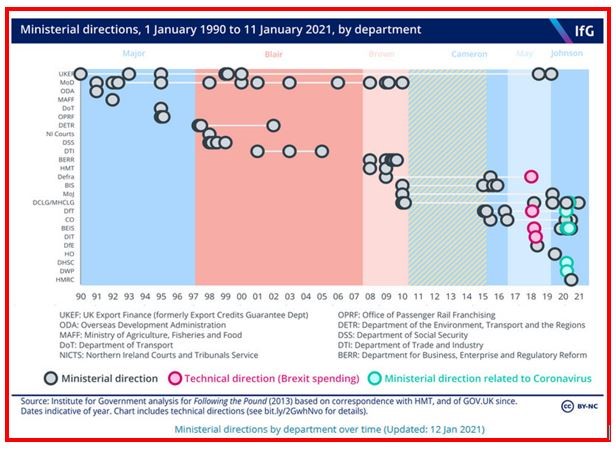
Boris Johnson didn’t start the modern trend of hyper-rapid ministerial turnover, but he did ratchet it up.  His election last July produced a larger ministerial cull than in any other recent transition between ministers of the same party, the Ministry of Housing, Communities and Local Government being no exception.

So, were you paying attention?  Can you recall who was the minister specifically responsible for English local government on the first day of Boris Johnson’s Premiership, and how many there have been since?

For a department not traditionally one of the most sought-after steps on the ministerial promotion ladder, 18 months in Marsham Street evidently did Rishi Sunak no lasting career damage. For he it was who was junior Local Government Minister when Johnson arrived and was promoted by him to Chief Secretary to the Treasury.

The number of Sunak’s successors is less straightforward, as, following Simon Clarke’s recent resignation, he is replaced by Luke Hall, the man he himself at least formally succeeded in the role barely six months ago. This was interesting, as back in February it had apparently been necessary for an MHCLG “spokesperson” to dismiss as “nonsense” rumours that Hall was being “quietly moved aside” because Secretary of State Robert Jenrick “does not rate him”.

Interesting, but marginal, for this blog, although again featuring MHCLG in a key role, is about Clarke’s resignation and its possible policy ramifications. In the BBC’s rather odd choice of library photo he himself looked positively delighted.  But his letter to the PM cited “purely personal reasons”, so, if distressing circumstances are involved, one must obviously sympathise.

I don’t know Clarke, but from a distance he seemed one of the more committed, interested and listening Local Government ministers (as opposed to Secretaries of State) we’ve had recently.  And, given the limited options, I felt reasonably positive about his taking lead responsibility for the local government part of the Government’s anticipatedly radical ‘Devolution and Recovery’ White Paper, long expected sometime this month, but now at the Conservatives’ virtual annual conference in early October – possibly, or possibly not.

I wasn’t expecting to like what the White Paper had/has in store for the future gargantuan structure of what we could once meaningfully call local government. Clarke, though, almost from the outset, enthused – talking of producing a “genuinely seminal document … helping the process of unlocking devolution everywhere and empowering communities on a scale never seen before.”

The ”everywhere” and “communities” seemed perhaps that bit more meaningful, given Clarke’s having apparently made a point of meeting personally with the National Association of Local Councils, acknowledging the role parish and town councils had played in responding to Covid, and talking of strengthening that role in the future – along, albeit, with the extensive unitarisation.

His departure does, therefore, leave several question marks.  First, the resignation’s sheer hint-less suddenness.  Second, Clarke’s personal – and very recently well publicised – centrality to both the content and presentation of the White Paper.  And third, almost inevitably, the ‘Was he pushed, or at least nudged?’ conspiracy theory – and ‘The Mystery of the Disappearing Speech”.

The Local Government Chronicle (LGC) recalled Clarke’s ‘ground-breaking’ July speech to a Northern Powerhouse audience, promising “a roadmap for establishing a series of new mayors within the next ten years – representing the greatest decentralisation of power in our modern history.”

The speech duly appeared on the Ministry of Housing, Communities and Local Government website … then suddenly disappeared.  A manifestly crass piece of business, whatever the motive, and, of course, guaranteeing immensely greater interest and speculation than it initially attracted.

Happily, therefore, LGC was able to satisfy this ramped-up curiosity by publishing the full speech on its website (see preceding link).  Which means, if any pushing from No.10 were involved in Clarke’s resignation, we can at least speculate about possible prompts.

“A new deal for the North”?  A £5 billion ‘New Deal’, rebuilding public infrastructure, creating thousands of new jobs, helping our regions “build back and bounce forward” – no, that rallying vagueness is almost straight Boris.

“New mayoral devolution”?  “Responsible and effective mayors representing 100% of the north of England.”  Again, Johnson playbook stuff.  He proved Londoners would elect a Conservative mayor, despite most boroughs being Labour-run, as have Andy Street in the West Midlands and Ben Houchen in Tees Valley.

Remember in December how voters in those North and Midlands ‘red wall’ – now ‘blue wall’ – constituencies elected Conservative MPs for the first time?  They should have a similar chance next April to elect a Conservative metro mayor in the new but traditionally very Labour West Yorkshire Combined Authority.

This is the Government’s apparent strategy: abolishing – sorry, combining – large numbers of already big city, borough and district councils into, by any traditional and international standards, huge unitary ‘Combined Authorities’ headed by directly elected and hopefully Conservative mayors, thereby simultaneously saving money and providing more ‘streamlined’, if hardly local, government.

All of which leaves at least as many questions as it answers.  Why the apparent rush, mid-Covid?  This seems best explained by the Winston Churchill/Rahm Emanuel injunction to “Never let a good crisis go to waste”.  Councils have been hit massively by Covid, with County Finance Directors especially warning throughout the summer of budget shortfalls and the looming necessity to issue Section 114 (Bankruptcy) Notices.

Housing, Communities and Local Government Secretary, Robert Jenrick, made it clear from the start that he saw no “long-term future” for two-tier local government and especially for all those pesky ‘lower tier’ Labour councils. Unitary councils with directly elected mayors would be “strongly preferred” by the Government in considering devolution deals – the major issue for debate being the preferred and maximum permitted size of said unitaries.

Minimum size seems likely to be 300,000.  The arguments will be over the maximum: the District Councils Network’s preferred 500,000; the 1 million+ that whole-county unitaries could involve; or something in between?  Clarke’s position seemed flexible, but not that flexible: definitely closer to the former than the latter.

These things are already under vigorous discussion, but, if elections to new authorities are to be held as early as 2022 or even 2023, the legislation needs to be in place by summer 2021. Without even mentioning the Br…. word, and Covid clearly not going away any time soon, could the departure of the key minister signal at least a slowing-down of the timetable?  Which would also postpone the point at which, along with all those Labour district councillors who would lose their seats, there would be plenty of disgruntled Conservatives.

On the other hand, and returning to the ‘Missing Speech Conspiracy’, could it be that Clarke was going just a touch too far for ultra-centralisers Johnson/Cummings and had started seriously to believe in his “greatest decentralisation of power in our modern history”?

Photo

Chris Game is an INLOGOV Associate, and Visiting Professor at Kwansei Gakuin University, Osaka, Japan.  He is joint-author (with Professor David Wilson) of the successive editions of Local Government in the United Kingdom, and a regular columnist for The Birmingham Post.

Control freakery: Understanding who really gets to take control

Steve Rolfe

When Michael Gove reiterated the Brexiteers’ mantra of ‘taking back control’ at the recent Conservative Party Conference there was a strong sense of déjà vu about the whole performance. And not just because we’ve all heard the ‘taking back control’ message over and over again in the last 18 months. The repeated rhetoric of control also has strong echoes of an earlier Conservative policy idea – the notion of a ‘Control Shift’ at the heart of Localism and the Big Society. And the parallels go further. Just as campaigners have questioned what it might mean to ‘take back control’ after Brexit and who ends up in control, so my Local Government Studies paper, ‘Divergence in Community Participation Policy: Analysing Localism and Community Empowerment Using a Theory of Change Approach’ questions the policies which ostensibly aim to give power and control to communities.

Back in the early days of the Coalition government (remember those innocent pre-EU-referendum days?), the ideas of the ‘Big Society’ and shifting control to communities through Localism were big news, even if nobody could really work out what David Cameron meant by the Big Society. A whole raft of ‘new community rights’ were created, giving communities opportunities to challenge and take over public services, buy local assets, create their own Neighbourhood Plans and even develop local housing. Alongside this, the Localism Act aimed to ‘strengthen accountability’ of public sector organisations through directly elected mayors and Police and Crime Commissioners, plus referenda on ‘excessive’ council tax increases. At the same time, the Scottish Government were using similar language to set out their Community Empowerment agenda, giving communities rights to participate in service improvement and extending rights relating to control and ownership of land and assets. Both these policy frameworks are still in place, shaping community participation across England and Scotland, albeit that anything non-Brexit gets very little media attention these days.

On the surface, Localism and Community Empowerment seem to share many common features. Both see community voices as an important tool to improve public services, and community action as a means to fill some of the gaps between such services. Moreover, the language of ‘devolving power to communities’ sounds very similar on both sides of the border. However, as I try to argue in my paper, a more detailed look at the assumptions underlying Localism and Community Empowerment suggest that the UK and Scottish Governments have quite different ideas about how communities should participate and how they should relate to public sector agencies.

Crucially, the Scottish Government’s agenda emphasises a positive-sum conception of empowerment, where communities and public sector agencies each gain power by working together collaboratively. By contrast, most of the elements within Localism operate on a zero-sum basis, focusing on taking power away from the local state to give it to communities. Clearly there are risks in both approaches. In the Scottish partnership approach local authorities may simply hang on to power and refuse to collaborate – the evidence from decades of community work in Scotland provides many examples of intransigent bureaucrats, although also many tales of productive cooperation. In England, analysis of the policy detail suggests there are more complex and subtle risks involved. Hidden beneath the rhetoric of community rights are mechanisms which turn communities into ‘market-makers’, forcing local authorities to put services out to tender and challenging limits on house-building. Hence control is not so much shifted to communities, but rather handed to the free market and private businesses.

Interestingly, however, the more recent evidence about the use of Localism’s ‘new community rights’ suggests that communities are savvier than David Cameron perhaps expected. The Community Right to Challenge (the most blatantly market-focused element) has been hardly used in the six years since it was instituted. And whilst Neighbourhood Planning has proved very popular across England, most communities are attempting to use it to exert some control over the local housing market, rather than letting it rip.

So perhaps those fans of Brexit who continue to trumpet the idea of ‘taking back control’ may need to reflect a little on who is actually gaining control as we leave the EU. The evidence from community participation policy suggests not just that the rhetoric may be concealing the intended winners in the process of shifting control, but also that such processes are often unpredictable as multiple actors attempt to impose their own notions of control.


Steve%20Rolfe%20pic.jpgSteve Rolfe is a Research Fellow at the University of Stirling. His research interests include community participation and empowerment, social enterprise and housing. Before entering academia, he worked in local government for 15 years in a range of community development and policy roles.

Business models in local government?

Lasse Oulasvirta & Ari-Veikko Anttiroiko


Business models in local government?

Since the 1960s a range of business management models have been introduced in the public sector, including accrual accounting, management information systems, activity-based cost management, human resource management, customer relationship management and the like, which in most cases are in line with the tenets of New Public Management (NPM). One of the newcomers in this list is comprehensive risk management, known as Enterprise Risk Management (ERM) in the private sector. This normative risk management model, of which the most well-known version is COSO ERM, developed by the privately run Committee of Sponsoring Organizations of the Treadway Commission (COSO), has been promoted widely to all organisations, local governments included. Using survey data, our article in Local Government Studies describes and explains the diffusion and adoption of comprehensive ERM in local government in Finland.

Untitled.png


(Source: Kuntajohtajan johtajasopimus (”Director contracts for municipal chief executive officers”), a publication of the Finnish Association of Local and Regional Authorities, 2016, p. 20)

What explains local governments’ reluctance to buy the idea of comprehensive risk management? 

Our survey results support the argument that if comprehensive risk management is not obligatory, it is not widely used in local government. Our statistical analysis reveals that financial constraints explain to some extent the existence of comprehensive management in municipalities, while structural factors such as the size of municipalities do not, even though risk management is slightly more advanced in larger cities than in smaller local governments.

This compels us to ask whether the slow adoption is because of the special nature of RM as a managerial innovation. Such considerations direct our attention to the kind of intuitive cost-benefit assessment public managers are likely to go through when evaluating the needs and preconditions for the introduction of a comprehensive risk management model. Our assumption is that as a managerial innovation ERM lacks immediate benefit when assessed against the efforts and costs of its introduction and maintenance. It seems that the risk environment and institutional characteristics of public sector entities, including persisting silo mentality, do not provide a particularly strong incentive neither for politicians nor public managers to pursue voluntarily the adoption of such a model.

A need for tailored solutions

The question is not only about the nature of comprehensive RM as such (and the COSO ERM model in particular). We claim that part of the slow adoption is due to the insensitivity of the developers of such models and consequently also their models and tools to the needs and realities of public sector organisations. Thus, if business management models are not sufficiently tailored to the factual needs of local governments, their voluntary adoption is likely to be meagre.

This observation relates to the interplay between developers, consultants and local authorities, and points to private sector parties in particular, who should do their homework before rushing their potential clients in the local government.

Local choice matters

Lastly, our research implies that providing a condition for proper local choice may produce system level benefits, for local politicians, public managers and the front-line staff are in the best position to assess the suitability and benefit of each business model. In the case of comprehensive RM, for example, representatives of local government may see that this particular models is not cost-effective or may even appear to be insignificant in terms of its added value. This hints that new business models and management tools should not be too lightly imposed by the legislature on local governments – spontaneous evolution is as a rule better for creating cost-effective and resilient solutions. We may conclude that local government organisations, when given a general competence to decide on the conduct of local affair, are generally more rational and selective in adopting business models than generally assumed.


untitledq


Lasse Oulasvirta is Professor of Financial Administration and Public Sector Accounting in the University of Tampere, School of management. His research interests include public sector financial management, budgeting, accounting and auditing. He holds PhD (Administrative Sciences) and M.A. (Business Economics) degrees.


untitledr


Ari-Veikko Anttiroiko is an Adjunct Professor based in the School of Management, University of Tampere, Finland. He holds a PhD (Administrative Sciences) and MPhil and Licentiate (Philosophy) degrees. His main research areas include local governance, local economic development, smart cities, creative cities and public sector innovations.

Do ‘sticky’ institutions always survive? The demise of the Audit Commission

Katherine Tonkiss

The Audit Commission played a central role in the audit, inspection, performance improvement and regulation of local authorities (and other public service providers) in England for over thirty years. Operating at arm’s length from government, it thrived under the efficiency and performance improvement agendas of successive Conservative and Labour governments, growing into a large and powerful public body. Yet those familiar with the history of the Audit Commission may note that antipathy towards the institution among local authorities and other stakeholders grew at the same time its powers were being expanded, and when the Coalition Government came to power in 2010 the Commission had lost considerable popular support. Yet few – and least of all the Audit Commission itself – anticipated the announcement of its abolition in August 2010.

The academic literature on the reform of arm’s length bodies doesn’t account for the relative ease with which the decision to abolish the Audit Commission was accepted and progressed. This literature tends to highlight how abolitions of large and powerful bodies which are deeply embedded in the public institutional architecture of the state (as the Audit Commission was) are very contested and difficult to implement. The literature refers to the ‘institutional stickiness’ often displayed by such bodies, denoting their capacity to survive even where there is considerable will to abolish. The Audit Commission appears to buck this trend – why?

This is the question we sought to tackle in our recent article on the abolition of the Audit Commission, published in Local Government Studies. In our article we apply a form of ‘argumentative discourse analysis’ to a large qualitative dataset which we collated on the abolition. This approach enabled us to focus on the ways in which narratives and storylines expressed by different actors framed the Audit Commission and the decision to abolish. As a result, we are able to demonstrate how discourse is an important medium through which administrative reform is negotiated.

In our analysis we identified that there was a strong pro-abolition discourse which focused on the idea that the Audit Commission had become bureaucratic, inefficient and burdensome; that it was not delivering a regulatory function in the public interest; and that change was needed to rectify these problems to deliver full accountability for public audit. This discourse was underpinned by a range of storylines which focused on areas such as accountability, localism, inefficiency and the desirability of open market competition for audit contracts. These storylines were uttered by a wide range of considerably powerful actors such as the government, conservative MPs, the right-wing press and the Local Government Association, and in a range of public settings including parliamentary debates, evidence to select committees, press briefings and ministerial statements.

By contrast the anti-abolition discourse was far weaker. It focused on the Audit Commission as providing a high quality independent audit function and sought to challenge narratives about it being inefficient and wasteful. The key storylines were uttered by the left-leaning press, the Audit Commission itself, some third sector organisations, some Labour MPs and a trade union, making use of select committees, responses to the government consultation on the decision to abolish, and open letters. Yet this discourse was not overtly anti-reform. It focused more on preserving the key functions of the Audit Commission, such as the independence of public audit, more than it did on the preservation of the Commission itself.

What our analysis shows, therefore, is that a strong ‘discourse coalition’ formed around the pro-abolition position which provided a solid basis for the newly elected government – aided by a popular mandate, legislative capacity and executive authority – to move forward with abolition. The influential actors involved were able to access various institutional settings which ensured that these storylines would be reported in the media. Timing and time were also important factors – the proposal was developed in secret, and the Audit Commission was only notified a few hours ahead of the abolition statement in the House of Commons. Such timing prevented the Audit Commission from formulating and seeking to build a strong discourse coalition around its own anti-abolition storyline.

The Audit Commission’s ability to survive was also hindered by deep institutional norms which prevented it from seeking its own preservation. This can help to explain why it refrained from launching a full defence, focusing only on the preservation of its functions rather than of the organisation. The discursive resources open to the Audit Commission were constrained by the deep norms which come with accepting appointed office, including not criticising its own abolition or political decisions concerning administrative reform. Without this defence, and without substantial stakeholder opposition to the proposals, the abolition was relatively straightforward.

Our analysis, therefore, helps to explain why, contrary to the literature on institutional stickiness and to other parallel cases of public body abolition at the time, the Audit Commission’s abolition was relatively simple and unopposed. Isolated and bound by institutional norms not to criticise its own abolition, the Audit Commission and its few supporters were placed in a weak position by a powerful pro-abolition discourse coalition.

This post is based on the following article: Tonkiss, K. and Skelcher, C. (2015) Abolishing the Audit Commission: framing, discourse coalitions and administrative reform. Local Government Studies. DOI: 10.1080/03003930.2015.1050093.

Katherine Tonkiss is a Lecturer in Sociology and Policy at the School of Languages and Social Sciences, Aston University. Prior to this she was a Research Fellow at INLOGOV working on Shrinking the State, a project examining the abolition of public bodies under Coalition Government.

Katie Tonkiss

The journey to the common: what is the role of the voluntary sector?

Anna Coleman and Julia Segar

A recent publication by the New Local Government Network (NLGN) looked at how local councils are preparing for the future and suggests depressingly that “there is simply no way that local government can reach 2018 let alone 2020 while still delivering the full range and quality of services currently on offer”(p6).

Simply put, we have an ageing population, with associated increasing demand for care services and draconian cuts in council budgets. The NLGN suggest we could be facing a future of “private affluence and public squalor”. However, it is not all doom and gloom. Perhaps austerity can be a strong stimulus for innovation? How would this work I hear you ask?

They suggest a new model being discussed around the country. The idea would be to mix technology, preventative investment, integration of council services with those of the NHS and others, alongside the creation of new partnerships between local government and local populations.

The NLGN report suggests three possible ‘landscapes’ for councils of the future. Firstly, a wasteland – a world of poorly prepared councils forced to cut services dramatically. Secondly, the wild meadow – councils provide core functions and rely on spontaneous public contributions to replace dwindling services. Finally, the common – the focus moves away from the council to places where it shares responsibility jointly with communities and businesses. This latter approach is seen as optimistic and would need to build on a strong social and voluntary economy.

This idea is timely for us as about a month ago Anna chaired, and Julia attended, a briefing event in the NW of England on Health and Wellbeing Boards (HWBs) and how (if at all) they were engaging with local voluntary organisations and local Healthwatch. Speakers at the event came from a local Healthwatch, a local overarching voluntary organisation and someone associated with Regional Voices. Speakers described their organisations and their relationships with their HWBs. They reflected on what could be done to improve these interactions to benefit all involved. So could we tap into some of these ideas for helping to build the idea of a common?

The official vision for HWBs from the Department of Health emphasised: joint local leadership between Clinical Commissioning Groups (CCGs) and local authorities; key roles for elected councillors, clinicians, and directors of public health, adults and children’s services; the enablement of greater local democratic legitimacy of commissioning decisions, and provision for opportunities for challenge, discussion, and the involvement of local representatives. However, HWBs have no formal powers, and their ability to influence others will depend upon their success in building relationships and interacting with other organisations locally. See our previous blog (Coleman 2014) for further detail on HWBs.

On paper, then, HWBs look like ideal forums for enabling the growth of both vision and action for building local commons. Speakers at the NW event, suggested that a shift in emphasis needs to take place before such a vision can begin to be realized. They argued that a tokenistic place on a HWB is of little value either to the HWB itself or to voluntary sector organisations. The voluntary sector together with Healthwatch, can provide valuable information about needs, concerns and available assets from a range of voices within a local community, with evidence varying between robust data to insightful patient stories (National Voices 2014). In Manchester alone, there are over 3000 voluntary organisations delivering a wide range of services to diverse groups. The estimated worth of the sector in 2012 was £477 million drawing on the work of over 94,000 volunteers (Dayson et al 2013). So HWBs should consider carefully who might sit on (or with) the HWB, and at what level (Board or sub-group) to represent the views of the voluntary sector and how these individuals should be chosen.

It was suggested that HWBs are missing a trick if they don’t engage effectively with local Healthwatch (who have a seat on HWBs) and voluntary organisations (who may be invited to sit on HWBs).These organisations have valuable knowledge, local intelligence and capacity at community level. The speakers indicated that very rigid structures and ways of working do not always work and that having a seat at the table does not guarantee that organisations are heeded. In order to develop new ideas and innovative solutions for complex local health and wellbeing needs, HWBs need to devote time and attention to voluntary organisations and to Healthwatch. In the current state of austerity sharing resources, skills and information is vital and good practice both locally and nationally.

This briefing event asserted the role of the voluntary sector in improving the health and wellbeing of local populations. The contributions that they could make in helping realise the landscape of the common is also clear. Step one on this path is to see, hear and listen to these organisations on HWBs.

Now read:

Anna and Julia’s article Joining it up? Health and Wellbeing Boards in English Local Governance: Evidence from Clinical Commissioning Groups and Shadow Health and Wellbeing Boards is published in Local Government Studies.

coleman

Anna Coleman is a Research Fellow in the HIPPO team (Health policy, politics and organisation groups), part of the Institute for Population Studies at the University of Manchester. HiPPO also constitutes, jointly with researchers from The London School of Hygiene and Tropical Medicine and the University of Kent, the Department of Health Policy Research Unit in Commissioning and the Healthcare System (PRUComm). PRUComm provides evidence to the Department of Health to inform the development of policy on all aspects of health-related commissioning.

Julia Segar

Julia Segar is a qualitative researcher in the Centre for Primary Care at the University of Manchester. Her previous projects were concerned with telehealthcare and with changes in the healthcare system. Julia part of the Health, Policy, Politics and Organisation (HiPPO) research group within the Centre.

Disclaimer: The research for referenced paper is funded by the Department of Health. The views expressed are those of the researchers and not necessarily those of the Department of Health.

Can smart maps improve local government?

Walter T. de Vries

Local governments are increasingly making use of internet-based applications and social media to provide services and to interact with citizens. As these applications can operate on smart phones, it is possible for any citizen to upload their wishes and complaints directly. Some of these applications use digital maps, such as google maps, which makes it possible for citizens to upload a report on a specific location and to see if their contribution has been dealt with. In addition, the reports allow local governments to visualize and analyze spatial patterns of citizens’ contributions. This can be used by governments to verify where problems occur regularly, and by citizens to follow up on where a local government is actively addressing their problems.

Are these applications however really helping local governments? At first one would say: yes, they are. Ideally the uptake of mapping applications and the cheap acquisition of data would make local government more efficient in cost and time and more effective in acting on reported problems . Our recent article in Local Government studies, The Contradictory Effects in Efficiency and Citizens Participation when Employing Geo-ICT Apps within Local Government , evaluates to which extent this is true. Do citizens really voluntarily contribute to such systems, and is it really useful for local governments?

The study relies on the usage of the mobile application called the “verbeterdebuurt” (http://www.verbeterdebuurt.nl ) (a Dutch term and application which translates as “improve my neighborhood”), in Enschede (a city of nearly 160,000 inhabitants in the east of the Netherlands).   The application which relies on ‘voluntary’ contributions of citizens compliments a centralized internal system used at the municipality to handle reports on public space, such as complaints about maintenance of city roads, greenery, street and traffic lights, waste and sewerage, amongst others. By law, the Enschede local government has a responsibility to act on the reported problems within a defined deadline. In order to act appropriately, it is however crucial to obtain relevant information about the type and location of the problem.

Statistics of the past year reveal that in Enschede many people discovered the website and are increasingly uploading reports through the mobile app. One could conclude that this provides clear evidence that such mapping applications can help local governments in locating and addressing problems. However, the mapping facility is not decreasing the number of problems nor is it increasing the quality of the reports. On the contrary, numbers have increased rapidly and the quality varies considerably. The key question is why. When evaluating the reports more closely, there is a greater portion of trivial complaints, such as litter which could be easily picked up by the one who reported the problem. Furthermore, the facility also created opportunities for a kind of opportunistic behavior. A number of private construction companies started to frequently report problems that only they themselves could solve. The intentions of the technical design were thus overshadowed by unexpected consequences.

In sum, there is more work to do for developers of mapping applications, before local governments can increase their efficiency and effectiveness in the management of public space. Countering unintended behavior requires further attention before achieving more transparency and accountability of local governments.

de vriesWalter Timo de Vries ([email protected]) is Assistant Professor, land information governance and organization; and course coordinator, land administration, at the Faculty of Geo-Information Science  and Earth Observation of the University of Twente in Enschede, the Netherlands. Walter researches how, why and when agencies cooperate and coordinate to align (geo-)ICT and (geo-)information services within the public sector.