Women in (West Midlands) Governance: A patchy metamorphosis

Chris Game

Yes, I did blog really rather recently on the topic of ‘Women in local and national governance’; and yes, I did conclude it by pledging to “retire gracefully from this particular field of research”.

But that was before I found myself fruitlessly upending my flat for anything conceivably useful to the Ukrainian refugees for whom one of my ward councillors was commendably collecting. Finding virtually nothing I could honourably offer, it was cash to the Disasters Emergency Committee, who assured me the UK Government would double my donation.

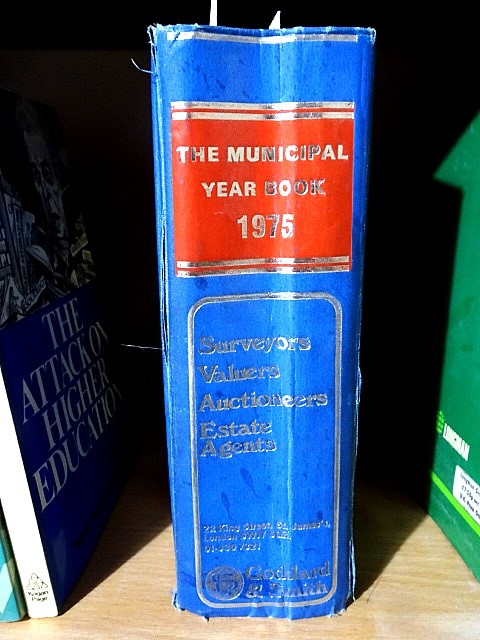
However, among the dust-covered treasures I’d totally forgotten, and spared the Ukrainians, was my 1975 Municipal Year Book (MYB) – a hefty, royal blue tome of 1,400-plus extremely closely printed pages, taking up over three inches of shelving.

myb

In pre-computer decades, when I joined INLOGOV, it was the proverbial local government bible – the 1975 MYB listing all 564 of the UK’s so-called principal local authorities plus, individually, their 26,467 councillors and further thousands of principal officers.

Several years later a thoughtful colleague, Ray Puffitt, bequeathed me his signed personal copy, possibly in exchange for my not pressing him to lecture to my undergraduate students.

Thoughtful because 1974/75 was, of course, the year of large-scale local government restructuring – or, in MYB-ese, ‘re-organization’. There were now far fewer councils and councillors, but these were the ‘new’ and therefore more relevant ones – which explains how I acquired my edition, though obviously not why it wasn’t binned decades ago.

Anyway, having discovered this 1975 stash of raw research data, I thought I’d share with you (and Birmingham Post readers) how much statistically women’s presence and visibility in our West Midlands local governments have changed in the past nearly half-century.

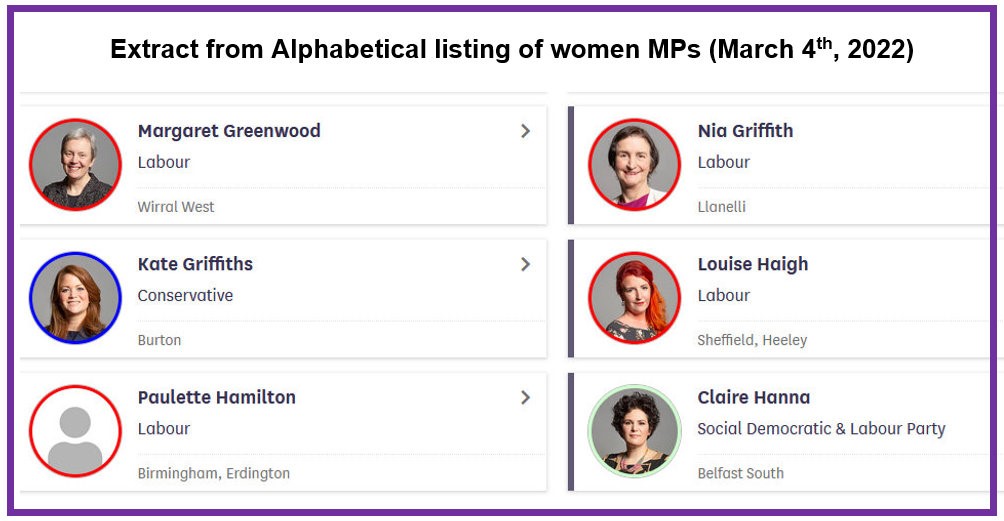
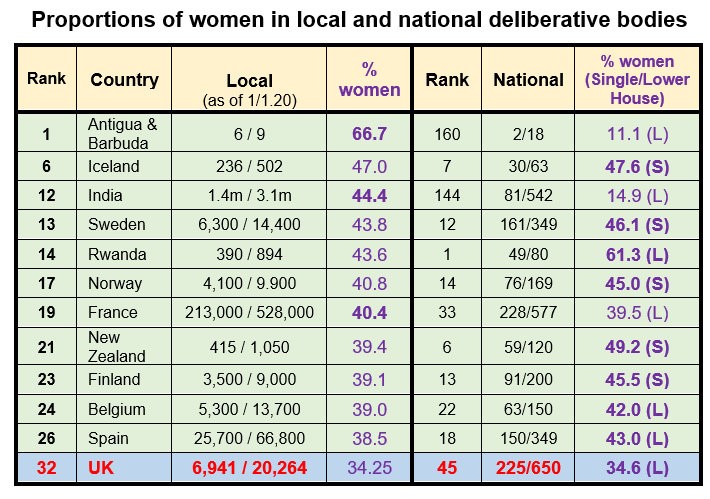
My earlier blog concluded by noting how Paulette Hamilton’s recent by-election victory for Labour in the Birmingham Erdington by-election had taken the proportion of women MPs over 35% for the first time. Moreover, that she and the six other women by-election winners since 2019 had – another first – made the Commons more gender-representative than our elected local governments, whose UK-wide proportion of women councillors has seemingly become stuck in the low 34%s.

Internationally, both percentages would get us, just, into the top quarter of the respective rankings. In educational lingo, though, it would be a “disappointing, could surely do better”.

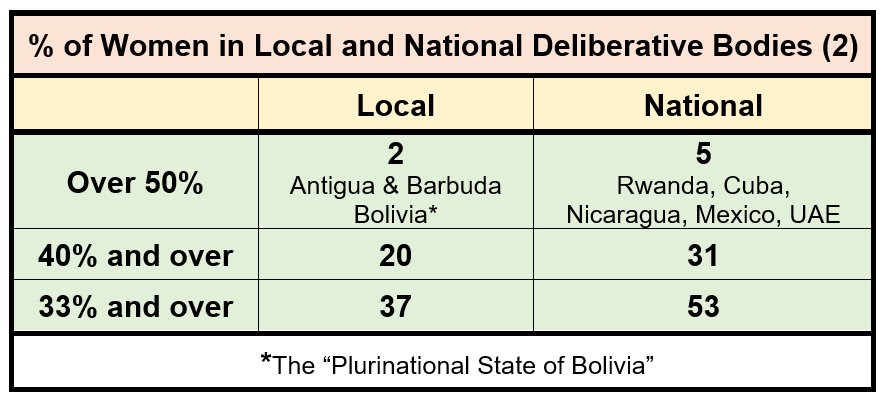
If the Parliaments of Cuba, Mexico, New Zealand, Iceland and all Scandinavia can have more than 45% of elected women, why can’t we – or, more precisely, why doesn’t our huge Conservative Party majority comprise even a quarter? Similarly, if local government in countries as diverse as Bolivia, Tunisia, Iceland, Uganda, Namibia and Mexico can attract at least 45% of women elected members, why can we barely manage one in three?

At least, though, the picture has changed, or improved, hugely in the past half-century, which is what the rest of this blog is about – focusing on the metropolitan West Midlands.

I hadn’t moved to Birmingham in 1974/75, but I reckon that even without research I could probably have named the incumbent West Midlands’ women MPs – because, though few, they were all exceptional and established national reputations.

One, indeed, would have me as an Edgbaston constituent for the latter part of her elective parliamentary career: Jill (later Dame Jill) Knight, MP from 1966 to 1997.

The other three were all Labour: in West Bromwich another Dame-in-Waiting, Betty Boothroyd (1973-2000), latterly Speaker of the Commons. In Coventry West was Audrey Wise, and in Wolverhampton NE Renée Short. A formidable quartet.

Their successors are, necessarily, impressive too, and the reason I couldn’t immediately name them all is not just my ageing memory, but that there’s a full dozen of them. Eight Labour – including all three of Coventry’s – and four Conservatives out of West Midlands’ 28, or 43%.

Yardley’s Jess Phillips is, I’m guessing, probably best known, and she is one of just two of Labour’s eight who aren’t from minority ethnic backgrounds. Overall, another massive change from the mid-70s.

What about councillors?  Would the MYB’s council listings actually identify women members, and, if so, how?  Fortunately, they all risked the accusations of chauvinism and did – though in differing ways.

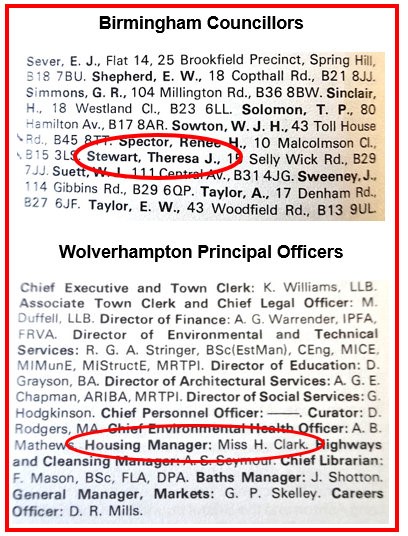
Birmingham, for example, gave first names – of all women members, while initialising the men. Then, as now, it was a Labour-dominated Council, 21 (17%) of whose 126 Members were women, including two Fredas, two Marys, and an exotic-sounding Carmen from Coleshill Road, B16. Oh yes, and a future Leader of the Council, Birmingham Lord Mayor, and wife of a Professor John Stewart.

bcccllrs

The other councils preferred marital status: almost always Mrs, with the very occasional Miss. Across the seven West Midlands councils Labour members outnumbered Conservatives by two to one, which was broadly reflected in women’s representation, with comfortably Tory Solihull managing just one woman out of 51 members.

However, the gender blend on Labour-run Coventry and Walsall Councils wasn’t that much better – four women on councils of well over 50, and one can only imagine how, on occasion, they must have been treated.

And no point whatever seeking empathy from senior women officers – because quite simply there weren’t any. Sorry, not strictly true. Of the 101 listed Principal Officers in the seven WM Councils, Miss H Clark, Wolverhampton’s Housing Manager, was the sole woman.

It’s here that the culture has changed most dramatically. Today, try counting the number of women in the senior managements of the seven West Midlands metropolitan councils, and the very first name you’d encounter would be Birmingham City Council Chief Executive: Deborah Cadman OBE – heading a 13-strong team of service Directors, including four more women.

Remarkably, though, that 38% female senior management puts Birmingham at the foot of this particular league table, which is headed by Dudley and Solihull with 75% and 67% women senior managers respectively, followed by Walsall with 57%, headed by CE Dr Helen Paterson. In this sphere of local government at least, there has indeed been a metamorphosis.

Photo

Chris Game is an INLOGOV Associate, and Visiting Professor at Kwansei Gakuin University, Osaka, Japan.  He is joint-author (with Professor David Wilson) of the successive editions of Local Government in the United Kingdom, and a regular columnist for The Birmingham Post.
_________

A version of this blog – ‘Equality progress – but room for improvement’ – was published by the Birmingham Post, March 24th, 2022 https://www.pressreader.com/uk/birmingham-post/20220324/textview

Do shared services improve resilience?  Mixed evidence from district councils during the Covid-19 pandemic

Dr Thomas Elston and Dr Germà Bel

Inter-municipal collaboration, often referred to as ‘shared services,’ has gained a significant foothold in English local government over the last 10-15 years, bringing England into line with much of mainland Europe and the USA. 

This model of jointly providing public services across two or more local jurisdictions, whether through a ‘joint committee’ or ‘lead authority’ model, or by joint commissioning of a private contractor, was primarily intended as an efficiency measure through which cash-strapped councils might attain new economies of scale during the ‘age of austerity.’  Limited evidence to date unfortunately suggests that councils’ large cost-saving aspirations have not tended to be been matched by achievements, though more research is needed.

Nonetheless, when councils and management consultants were preparing their ambitious shared service business cases, typically in the early 2010s, improved service quality and better resilience in the face of unexpected adversity were also named as advantages of the shared services approach, alongside efficiency.  Since efficiency and resilience are often regarded as mutually incompatible (e.g., slack resources are inefficient but protective against shocks), and given that there are few if any empirical tests of the relationship between shared services and business continuity in existing literature, we set out to investigate.

Taking the first Covid-19 lockdown during the spring of 2020 as the sudden and severe ‘adversity’ against which local government resilience was tested, we compared levels of service disruption in collaborating and autonomous councils compared against pre-covid performance, controlling statistically for potential alternative explanations.  Our analysis focuses on revenues and benefits departments in district councils, since a significant proportion of these (ca 30% at the onset of Covid-19) are operated collaboratively.  And we focus on the administration of Housing Benefit specifically, for which robust, high-frequency (monthly and quarterly), and multi-dimensional (speed, quality and cost) performance data is available.

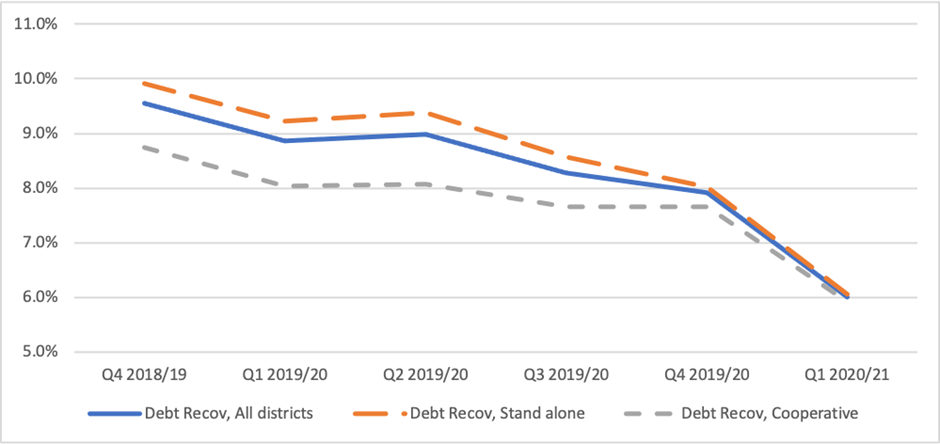
Our study found that disruption of Housing Benefit application processing speeds during lockdown was unrelated to mode of service provision.  For both shared and autonomous arrangements, performance worsened slightly during lockdown, before resuming its pre-pandemic trajectory over the summer of 2020.  However, collaborating councils did show less of a decline in service accuracy objectives during lockdown, measured as both the identification of new debt owing to benefit overpayments (not shown) and, particularly, the recovery of such debt from claimants (shown in the graph below).  These mixed results – no effect on speed, partial protection for accuracy – proved robust to various different econometric specifications.

Average value of debt recovered from Housing Benefits claimants as percentage of total debt outstanding, comparing ‘stand alone’ and collaborative provision, Q4 2018–19 to Q1 2020–21

There are a variety of possible explanations for this pattern. 

First is that the apparent resilience in debt identification and recovery is simply an artifact of the performance differential between shared and autonomous revenues and benefits departments pre-pandemic.  As the graph above indicates, and contrary to business-case predictions, shared services (grey dashed line) appear to be consistently associated with less debt recovery prior to COVID, meaning that autonomous councils simply had ‘further to fall’ during the emergency, producing their appearance of reduced resilience. 

Second, and more substantively, is that high-performing organizations can fall into ‘success traps’ or ‘competency traps.’  According to existing literature on organizational resilience, the low level of challenge facing high-performing organizations during ‘normal’ times can leave them complacent and ill-equipped to deal with unexpected adversity; whereas less-successful organizations are more familiar with confronting and managing adversity in their everyday operations, and thus better rehearsed for managing crises.

Third is that there genuinely is something about the shared services model – be it the increase in operating scale, the balancing of peaks and troughs in demand and resourcing across different partners, the greater experience of remote working prior to COVID, or the lock-in effects that arise when service operations are specified in contracts or service-level agreements – that enables collaborative arrangements to better withstand the challenges of service delivery during lockdown.

Finally, it is interesting to consider why the partial resilience revealed in our data is concentrated on debt identification and recovery, rather than speed – recognizing that bureaucracies often face a trade-off between speed and accuracy of decisions.

Studies of goal conflict suggest that organizations can cope with such split objectives by prioritizing those that are most valued by their largest or loudest constituency.  Benefit claimants and their landlords favour speedy service, whereas central government (which funds Housing Benefit) advocates accuracy.  But perhaps Whitehall overseers pursued this agenda less forcefully during the pandemic, when many distractions arose and when preservation of life and livelihoods was clearly better served by providing speedy financial support to vulnerable populations than by auditing prior applications.

Alternatively, goal conflict can also be address by sequencing – addressing one goal first, and then another. Whereas poor timeliness of benefit processing cannot be subsequently rectified (once a payment is late, it is late), poor accuracy can be corrected subsequently through greater attention to and resourcing of debt collection later in the year or in future years. The debt will still be owed, albeit the risk of debt write-off will be higher. Future research will be able to test this ‘catch-up’ hypothesis once data on debt identification and recovery during subsequent quarters of the pandemic is released.

Overall, then, in contrast to the questionable financial benefits of shared service adoption in the English context, this study has indicated that possible advantages may be gained in terms of service resilience.  We have just secured a research grant to replicate and expand this research agenda into additional service areas and over a longer time frame.

This blog is based on research recently published in Public Management Review.

Dr Thomas Elston is Association Professor of Public Administration at the Blavatnik School of Government, University of Oxford.  His research focuses on the organisation of public services, and particularly on questions of performance, resilience, reform and democratic control.  His work on shared services has been published in JPART, Public Administration, Public Management Review, and Public Money & Management.

Dr Germà Bel is Professor of Economics and Public Policy at the University of Barcelona.  His research deals with the reform of the public sector, with a special focus on privatization, regulation, and competition. His research pays particular attention to local public services, transportation, and infrastructure. His work on shared services has been published in JPART, Public Administration, Public Management Review, Local Government Studies and Urban Affairs Review.

Women in local and national governance: the balance (at least in the UK) has shifted

Chris Game

One thing I’d expect most of this blog’s readers broadly to agree on is that UK ‘local’ government should really be given what grammarians call doubt quotes. It ceased long ago to be meaningfully local, decades before the next generation of county-based levelling-up deals.

So, I thought, where better to start this International Women’s Day (IWD) overview of women’s elected presence in local and central governance than at the other extreme: Barbuda, the alphabetically secondary part of Antigua and Barbuda, the Caribbean country comprising these two Leeward Islands plus several enticingly named even smaller ones: Great Bird, Prickly Pear, etc.

Constitutionally almost just like us, A & B is a unitary, parliamentary, representative democratic monarchy: a two-House Parliament, with only the lower House directly elected, but Labour faring rather better than they have done here lately. Here’s the thing, though. The two main islands are wildly unbalanced – Antigua with over 97% of the nearly 100,000 population, Barbuda barely 2%.  Yet Barbuda is the one, for 45 years now, with the local democratic smarts: its directly elected Barbuda Council.

The island of Antigua is run by – yes, you guessed – ‘The Ministry’; in this case MESYGA, the Ministry of Education, Sports, Youth and Gender Affairs. Barbuda has not only its elected 11-member Council, but, as you’ll see from its Barbudaful website, a majority of women members and a woman Chair.

Such councils anywhere are rare, which is why – I could sense you wondering – Barbuda’s is deservedly up front on IWD, or in UoB’s case the start of International Women’s Month.  And the remainder of this blog will draw on some of the other amassment of data in surely THE most fitting sourcebook for the day.  Entitled, with needless modesty, a ‘Working Paper’, it’s UN Women’s  Working Women’s Representation in Local Government: A Global Analysis, authored chiefly by Ionica Berevoescu and Julie Ballington, published December 2021 – and it’s a treasure trove.

The overview of new local-level data that ideally should constitute the core of this blog is inevitably pretty summary, but needs to be made even more so by at least a brief reference to the subject’s overall political context and importance. Women’s rights to equal political participation at all levels of government have for the past quarter-century been variously asserted, affirmed, and endorsed in proclamations of international goals, most importantly in the 2030 UN Agenda for Sustainable Development Goals (SDGs) – Target 5.5 being to “ensure women’s full and effective participation and equal opportunities for leadership at all levels of decision-making in political, economic and public life” (emphasis added).

It’s that new indicator – extended to women’s representation in the world’s local governments, or at least 133 of them in early 2020 – that this blog was going to be primarily about.  It got kind of overtaken, though, by the even bigger question: Are women worldwide, as has long been the case in Britain, better represented in local than in national governments?

Given the nature of local governments’ usually major service responsibilities and expenditures, my personal feeling was that it would be rather regrettable if they weren’t – the more so if I was wrong on the UK figures, and, instead of simply getting closer by the year, they could be shown statistically finally to have crossed over.

SPOILER ALERT!  However, since, and probably even before, last Thursday’s Birmingham Erdington parliamentary by-election – in which Labour’s Paulette Hamilton became the seventh woman victor in this Parliament’s eight by-elections and the fifth to replace a male predecessor, bringing the total of women MPs to a record, and statistically significant, 225 – I WAS wrong.

p1

Here’s how. Thanks to the Inter-Parliamentary Union’s annual tabulations, we’ve been able to track that part of the international picture for decades.  In the 1990s the top women-friendly countries were notably Euro-dominated, though with no help from us.  In !997, for instance, the only five Lower Houses internationally to have more than 30% women memberships were Sweden, Norway, Finland, Denmark and the Netherlands. New Zealand, the Seychelles, Argentina and Mozambique were trying, but the UK was down in an embarrassing 50th place and unable to manage even double figures. Ahead, admittedly, of France and Greece, but that was about it.

Ten years on, thanks considerably to the arrival of variously legislated or voluntary gender quotas, the overall picture had improved, and Rwanda had crashed the 50% barrier, with 45 (56%) women in its 80-seat Chamber of Deputies. Cuba and Argentina were over 40% … and the UK, though still just ahead of France, was down to 60th, struggling now to reach 20%.

Today – or, more precisely, in last month’s IPU Parline rankings – the global picture has become more variegated still. The top 15, with around 45% or more women, currently comprise five countries from each of Europe (Iceland, Andorra, Sweden, Finland, Norway) and Latin America (Cuba, Nicaragua, Mexico, Bolivia, Argentina), two African (Rwanda, of course, and South Africa) and one each from Asia (United Arab Republic), Australasia (New Zealand), and the Caribbean (Grenada).

And the UK?  Up to a hardly glorious 45th alongside Dominica – with just over the one in three, which at least is better than the House of Lords’ 28.6%.

So … the big question was: Is our local government today – still, as always hitherto – more gender representative than our national elected legislature?

As you may sense, I wasn’t bringing absolute researcher detachment to this exercise. It was posed in the hope/expectation that it would prove to be what Latin scholars call a ‘nonne’ or affirmative question, expecting the answer ‘Yes.’  Of course there’d be a higher proportion of women councillors than women MPs – wouldn’t there?

I knew the 2019 General Election stats: 220 women MPs, including, obviously for the first time, majorities of both Labour and Lib Dem Members. Congrats, obviously, to them, but, with the Conservatives’ massive majority comprising under a quarter of women, local government would still have at least a narrow percentage lead – wouldn’t it?

But then began, as noted above, the striking trend of victorious women by-election candidates replacing former male MPs, and when Paulette Hamilton did her thing last Thursday, I was getting seriously nervous.  225/650 is 34.6%; rounded up becomes 35% – an all-time record, which is obviously a ‘good thing’, but worryingly close to what I reckoned the local government figure to be.

To cut a potentially tedious story short: if, as we relatively rarely do, we compare the whole of UK local government – as opposed to that of England, or sometimes England and Wales – it currently makes the decisive difference.  For the first time, authoritative, genuinely compiled and comparable statistics showed there to be proportionately more women MPs than women councillors.

p2

I shall now retire gracefully from this particular field of research and address something perhaps more rewarding – like whether being a plurinational, rather than merely multinational, state somehow boosts women’s electoral prospects.

p3

Photo

Chris Game is an INLOGOV Associate, and Visiting Professor at Kwansei Gakuin University, Osaka, Japan.  He is joint-author (with Professor David Wilson) of the successive editions of Local Government in the United Kingdom, and a regular columnist for The Birmingham Post.
Notwestminster: Writing the future of local democracy

Dave McKenna

Next month, Notwestminster takes place again after a year off.  

It’s an event that we love here at INLOGOV and have been delighted to support
previous events as well as go along and share some of our work such as the 21st
Century Councillor research

If you haven’t heard of it before, it’s perhaps best described as a mini
festival of all things local democracy – an informal mix of workshops and
speakers that takes place in Huddersfield. This year it’s taking place in
the hallowed halls of Huddersfield University on Saturday 26th February.

What makes it really rock is the mix of people – volunteers, citizens, council
officers, councillors and yes, even academics, all mix together to discuss a
shared (and sometimes nerdy) appreciation of all things local democracy.

Here’s a section of the workshops to give a flavour:

• Pirates, Citizens and the future of local government

• Zines for democracy

• Creating 100 ideas for the North

• Dramatic Communication Strategies

• How can measuring political literacy help to improve local democracy?

• Fair and equal voting rights for young people across the UK

So, if you’re up for the challenge of renewing our democracy, please join in
for a day of workshops, quick-fire talks, conversations and inspiration in
Huddersfield. Notwestminster is a free event and everyone is welcome to
take part.

You can find out more and sign up here:

https://notinwestminster.wordpress.com/notwestminster-2022/

Hope to see you there.


Dave McKenna is a Research Fellow in INLOGOV.

How can we nurture urban transformation?

Dr. Catherine Durose

The complex, rapidly changing, increasingly precarious nature of cities has highlighted the limits of a traditional ‘top down’ master governance plan. How then can we shape and transform cities in order to address the challenges we face as a society, from sustainability to social cohesion?

Rather than attempting to discipline the urban governance environment, academics are increasingly trying to use different ways of thinking about the urban environment in order to work with its messiness, focusing on contingency, emergence and interaction. In our recent research, we have embraced this approach, but sought to develop it by also acknowledging the role of human agency in shaping and nurturing urban transformation.  Our work has given a sustained focus on how different people – those working on the front-line of public services, or in voluntary, community or social enterprise organisations, activists, and residents – can create change in urban neighbourhoods. Our new research places those working for change at the centre of debates on how cities transform.

We conducted a 30 month study in neighbourhoods in Amsterdam, Birmingham, Copenhagen and Glasgow. With local partners, we identified individuals who had a reputation for making a difference. We interviewed and observed them, and created spaces for them to come together to reflect on what they do, how they do it and why it matters. Our research discovered examples of how people made use of and nurtured four common resources:

  • Vision: a set of ideas to bring people together and offers a collective narrative for the future.
  • Relationships: ongoing engagement with a range of different people, often across cultural, economic or organisational boundaries.
  • Different ways of knowing: from professional knowledge to local.
  • Materials: from buildings to human bodies.

Living Lab in Birmingham

Examples included: how a mobile bakery in Amsterdam brought people together to take action, how historic buildings were re-purposed in Glasgow to offer a different future for the neighbourhood, how healthy lifestyle opportunities in Birmingham helped women from under-served communities realise their potential, and how resources were re-used and shared in Copenhagen to build a sustainable neighbourhood food economy. 

Seen together these examples begin to demonstrate a different way of thinking and showing how cities may be transformed:

First, how transformation may come from giving meaning to action and a pathway to a more liveable neighbourhood. 

Second, nurturing rather than extracting resources.

Third, engaging with people as community members to foster a sense of belonging and solidarity.

Finally, recognising and valuing different kinds of knowledge and harnessing them to respond creatively to social problems.

These practices did not begin with, focus upon, or end with those formal institutions that govern a city. Indeed, they often reflected institutional limits. Instead, they were guided by a belief in fostering power in communities towards a shared vision of a different future. 

The understanding of change expressed here, brings together a recognition of the role of people in catalysing urban transformation by bringing together different resources in a way that is purposeful, but also allows for a process of becoming that emerges over time. The work and resources we draw attention to here were often precarious, hidden, unvalued and yet hard to replace. Opportunities to experiment, to nurture, to fail, to reflect were all crucial, but we should acknowledge are also under severe pressure.

Our research brings together the history of different urban neighbourhoods, and their potential, and recognised the actual whilst considering the possible. We hope these insights contribute to ongoing learning and critical imagination in how we can approach the future of cities differently. Our article, ‘Working the urban assemblage: a transnational study of transforming practices’ by Catherine Durose, Mark van Ostaijen, Merlijn van Hulst, Oliver Escobar and Annika Agger has now been published in Urban Studies, and is available open access.

Catherine is Reader in Policy Sciences at INLOGOV, with a specific interest in urban governance and public policy.

What? You want to be a senior councillor AND a mother?

Chris Game

Brigid Jones, currently to be seen on YouTube promoting Birmingham City Council’s customer access strategy, and incidentally the city’s bus lanes, is a UoB alumna – though sadly having preferred to study Physics, rather than gain an invaluable early insight into the workings of local government through INLOGOV’s undergrad Public Policy degree.

Happily, she somehow overcame this early career hiccup, was elected as a Labour councillor to Birmingham City Council in 2011, impressively quickly became the Cabinet Member for children, families and schools, and since 2017 has been the Council’s Deputy Leader.

B Jones

It was in that Cabinet role, though – five years ago almost exactly – that Cllr Jones first attracted significant national as well as local attention, by noting that, despite being the “very proud corporate parent” of the nearly 2,000 children then in the Council’s care, accountable for a £1.2 million budget and thousands of staff, if she herself wished to start a family, she – as a councillor with a taxed £25,000 cabinet allowance – had been told she would “most likely have to step down from my council position”.

Because, although the Council’s (male) Chief Executive was reportedly “working on a policy”, it was yet to be considered by the Cabinet, or probably anyone else. The apparent rationalisation – “we haven’t had a pregnant Cabinet member in Birmingham for a very long time” – revealed as much about the recruitment and societal representativeness of councillors as about their financial remuneration.

The CE sounded suitably embarrassed, for, however few UK councils would have been in significantly more considered and supportive positions, for the biggest of them all, that was surely no refuge.  Still, barely 20 months later, the Council produced a policy – not merely, to coin a phrase, ‘oven-ready’, but fully baked.

The Birmingham Post/Mail could report that Birmingham councillors – all councillors, note, not just Cabinet members – “will for the first time be entitled to maternity and paternity pay”. Councillors would continue to receive their basic allowance for at least six months of maternity leave, and senior councillors with additional responsibilities would get 90% of their Special Responsibility Allowance for the first six months and at least a basic allowance up to week 39. Better terms, apparently, than for staff – prompting, understandably, calls for council workers’ maternity terms to be improved too.

Thanks substantially no doubt to Cllr Jones’ work ‘behind the scenes’, Birmingham’s present Members’ Allowances Scheme and particular the Maternity, Paternity and Adoption Pay sections, could, in my albeit limited experience, serve as at least a baseline model for UK councils generally.

A few examples: Members on maternity leave continue to receive full allowances for six months, possibly extendable; adoptive parents ‘newly matched’ with a child by an adoption agency ditto; shared parental leave negotiable for one or two parents, including same sex.

There’s nothing in the Scheme that’s obviously either exceptional or exceptionable – just reasonable modern-day practice for a public organisation conscious of the difficulty it demonstrably has attracting a representative quota of younger and particularly female members.

On the other hand, you may recall the row back in February when the Government rushed through Parliament a law-change allowing Cabinet ministers – specifically the then eight-months pregnant Attorney General, Suella Braverman – to have six months’ maternity leave on full pay plus salary costs for a temporary replacement.

Back at work recently, Braverman was understandably grateful for the uniquely tailored special treatment – unavailable to ‘ordinary’ backbenchers such as Labour MP Stella Creasy, who four months later, like others before her, had had her request for full locum cover for her second child rejected, on the almost too-good-to-be-true grounds that it was “misconceived” – the request, apparently, not the actual child. Either way, she was, as they say, contemplating legal action.

If our national Parliament acts in this rushed, last-minute, blatantly discriminatory fashion, it would perhaps be surprising if local government’s record were strikingly better – and the evidence shows it isn’t.

The good news: statistically overall there appears little explicit Parliament-style discrimination between senior cabinet-level councillors and ‘ordinary’ councillors. Bad news: three-quarters of councils seem to have no councillor maternity/paternity policies at all.  Broadly encouraging news: just two years ago, that three-quarters was 93%.

The statistics come from an admirably comprehensive study based on responses from over 90% of English councils to Freedom of Information requests from the Fawcett Society, the campaigning charity for gender equality and women’s rights.

There seemed no obvious reason why West Midlands councils should be statistically exceptional, and they aren’t. Just two – Birmingham and Wolverhampton – have formal policies in place for maternity, paternity, adoption and kinship care for all councillors. Coventry claimed ‘informal’ policies, Walsall didn’t respond, leaving Dudley, Sandwell and Solihull with apparently no policy at all.

Nationally, roughly a quarter of English councils reported having maternity or paternity policies in place for their ‘ordinary’ and/or senior councillors, perhaps the most positive feature of which figures being that just two years ago they were 7% and 8% respectively.

Some way to go, evidently. And the same – relatedly, the Fawcett Society would suggest – goes for women’s representation on councils generally. Across England as a whole, it found just 35% of all councillors are women – less than a 1% increase since the 2019 elections.

Which means, “at that rate of change, we won’t see gender parity in local councils until 2077 – over 50 years away”.  Hence, it would argue, the importance of maternity and paternity policies, in addition obviously to their intrinsic merits.

However, such projections depend on your baseline.  And, as a seriously boring, nerdy person, I happen to know that exactly 50 years ago, in 1971, the proportion of English women councillors was just 12% [J.Z. Giele & A.C. Smock (eds.), Women: Roles and Status in Eight Countries (1977), p.17].  From which starting point today’s 35% reaches 50% by – wow! – 2055.

Either way, it’s effectively a working lifetime’s wait – and more possibly for some, like the North Yorkshire district with just 3 women councillors out of 30 and an Anglo-Saxon name whose modern-day meaning is ‘lack of courage’: Craven.  The Fawcett study found 10 councils in all with under 20% of women members, the others in ascending order being West Berkshire, Swale, Ashfield, Hambleton, Cherwell, Castle Point, Huntingdonshire, Essex County, and Wycombe.

To finish, though, on at least a relatively high note, these 10 are outnumbered by the 14 councils with over 50% women members, a selection striking too for its obvious diversity. This time in descending order: Brighton & Hove (56%), Cambridge, Islington, Nottingham, East Cambridgeshire, Havant, Manchester, Norwich, South Oxfordshire, Gateshead, Kingston upon Thames, South Kesteven, South Tyneside, and Liverpool.

Which, returning home as it were, begs the question: if councils as diverse as these can achieve 50%+, why is it Birmingham can manage barely one in three? Cllr Jones, your work is far from done!

An earlier version of this blog was published in the Birmingham Post on 23rd September

Photo

Chris Game is an INLOGOV Associate, and Visiting Professor at Kwansei Gakuin University, Osaka, Japan.  He is joint-author (with Professor David Wilson) of the successive editions of Local Government in the United Kingdom, and a regular columnist for The Birmingham Post.