Understanding Mayoral Accountability: Insights from Japan and the UK

Jason Lowther

What makes a directly elected mayor genuinely accountable to the public? How do contrasting political and administrative systems shape the conduct, choices, and leadership styles of those entrusted with substantial local authority? These questions were central to a recent Inlogov seminar led by Akinari Takehisa, former mayor of Setouchi City in Japan, and as part of his PhD studies at Kwansei Gakuin University in Japan, visiting researcher at Nottingham Business School. Drawing on a rare combination of long mayoral experience and rigorous academic research, Aki offered a compelling comparative exploration of how accountability is constructed and enacted within Japan and the United Kingdom.

Aki’s work centres on executive mayors, leaders who uniquely embody both political and managerial authority. Unlike council leaders or ministers, who operate within more layered decision-making structures, executive mayors face the dual responsibility of providing political direction and ensuring the effective, lawful, and ethical delivery of public services. This dual role offers the promise of coherence and visibility in leadership, while simultaneously demanding a careful balance between responsiveness, organisational discipline, professional values, and legal boundaries.

Why Compare Japan and the UK?

Although Japan and the UK represent different political traditions, their local government systems share notable similarities. Both countries are advanced democracies with historically strong central oversight of municipal administration. Both have grappled with questions of local leadership and experimented with models aimed at enhancing the authority and public visibility of mayors.  Japan has adopted the directly elected mayor model across all of its 1,718 municipalities, embedding it deeply into local governance. The UK, by contrast, has applied the model selectively, introducing executive mayors in just 13 principal local authorities since 2002. This contrast creates a rich basis for comparison: one system fully institutionalised, the other still evolving.

But the most significant insights emerge from how each country structures accountability. Japan’s governance arrangements involve vertically layered responsibilities shared between national, prefectural and municipal governments. This can foster helpful coordination, but it can also confuse responsibility when things go wrong. The UK, meanwhile, relies heavily on arm’s-length accountability mechanisms, with statutory roles such as Section 151 Officers and Monitoring Officers acting as key guardians of financial integrity and legal compliance. These institutional safeguards create clearer boundaries around mayoral authority.

Three Core Questions

Aki’s research explores three interrelated questions. The first concerns how institutional environments in Japan and the UK shape mayoral accountability. The second looks at how personal characteristics (leadership styles, professional backgrounds, and the use of performance information) influence accountable behaviour. The third examines the behavioural traits that support or undermine accountability, identified through interviews and narrative analysis.

To address these questions, Aki conducted extensive fieldwork: interviews with 15 mayors and six key stakeholders in Japan, and with six mayors and six stakeholders in the UK. This qualitative evidence was supplemented with a literature review and advanced comparative techniques, including fuzzy-set Qualitative Comparative Analysis (fsQCA), which allows researchers to understand complex relationships across multiple cases.

What the Early Findings Reveal

A first major insight concerns the impact of institutional contexts. In Japan, accountability reforms have unfolded gradually since the 1990s, driven by incremental devolution and efforts to improve transparency. The use of performance information has grown, though its uptake varies significantly between municipalities. In the UK, accountability has evolved in more dramatic cycles. Reforms associated with New Public Management in the 1980s, followed by the Best Value regime in the late 1990s and 2000s, significantly expanded performance oversight before many national requirements were rolled back during the austerity era after 2010.

A second key finding arises from the fsQCA analysis. Mayors who demonstrated consistently high levels of political, hierarchical, professional and legal accountability were far more likely to sustain long and stable careers. By contrast, those whose professional or legal accountability was weak were more likely to experience short or troubled terms, particularly in Japan where mayors enjoy substantial personal discretion. Interestingly, extensive use of performance information did not necessarily correlate with stronger accountability. Its effectiveness depended on how thoughtfully and transparently it was applied.

Aki also found that behavioural characteristics play a decisive role. Inclusive leadership, transparency, ethical judgement, and constructive collaboration with professional officers strengthened accountability in both countries. Conversely, secrecy, impulsive or populist decision‑making, and blurred boundaries between political campaigning and administrative neutrality frequently undermined it. Japan and the UK each demonstrated examples of positive “synergies” between political and managerial roles, such as the ability to commit to long‑term policies or communicate strategy clearly to the public. But both also exhibited negative synergies when these roles clashed or overlapped in unhelpful ways.

Conclusions

Aki’s emerging conclusions highlight the importance of recognising accountability as a multidimensional and dynamic practice. Japan continues to advance its approach through gradual decentralisation, while the UK contends with the legacies of shifting reform agendas. Yet in both countries, the success of directly elected mayors rests not only on the formal powers they hold, but on the quality of leadership they exercise and the institutional structures that guide and constrain them.

The research offers valuable lessons for policymakers, practitioners and scholars. It suggests that accountability must be intentionally designed and continuously reinforced. Clear institutional roles, better training and development for mayors, and stronger professional support structures can all contribute to more effective local leadership. As debates about mayoral systems continue in both countries, the insights from Aki’s work provide a timely and thoughtful contribution to understanding what truly makes local democratic leadership accountable.

You can view the whole (50 mins) seminar here:
https://bham.cloud.panopto.eu/Panopto/Pages/Viewer.aspx?id=76530fc7-ce2a-4884-964a-b3fd00c80704&start=1315.148058

Jason Lowther is director of Inlogov, the Institute of Local Government Studies, at the University of Birmingham

Job half done, it’s time to tackle council tax

Jason Lowther

It’s hard to deny that the local government finance settlement this month marks big achievements for the ‘new’ (now almost two years old) government.  Labour’s manifesto promised that “to provide greater stability, a Labour government will give councils multiyear funding settlements”, and the new finance settlement duly covers three years.  By the end of this multi-year Settlement in 28-29, Core Spending Power will have increased by over 24% compared to 2024-25, equivalent to £16.6 billion.  And this increased amount is distributed in line with a new formula designed better to match resources to needs (albeit with £440m last minute tinkering).  There is much to celebrate here, which should give the government confidence to tackle another elephant in local government’s room: council tax.

Everyone knows that the council tax system is bad.  It’s outdated (based on 1991 values, before an eighth of current housing was built), highly regressive (people in cheaper homes often pay a higher proportion of their property value than those in expensive homes), regionally unfair (a recent article in the i newspaper found 292 council areas across England paying higher rates of council tax than they would in the wealthy Royal Borough of Kensington and Chelsea), and over centralised.

As Inlogov recommended to last year’s Select Committee on The Funding and Sustainability of Local Government Finance, the Government should start to improve council tax by amending council tax bandings and giving discretion on the details of the scheme’s design locally, such as the rates in each band and discount/subsidy arrangements.  The committee’s chair commented that “councils are trapped in a straitjacket by central government, with local authorities lacking the flexibility or control to devise creative, long-term, preventative solutions which could offer better value-for-money”.

There are already tentative moves to reform Council Tax in the different nations of the UK.  The Scottish Government no longer caps council tax increases but leaves this decision to local elected representatives.  This year’s Scottish Government budget also funded a revaluation of the highest value properties, with higher bands for properties valued over £1m (compared to the current highest band of £212,000), a change expected to affect around 1% of properties.  This is less radical than most of the options considered in the IFS report the Scottish Government commissioned to inform its decision.  In Wales, properties were revalued in 2003 and an additional council tax band above the highest band in England introduced.  In Northern Ireland, domestic rates are based on 2005 prices and a percentage rate applied.

In the long term major transformation of local government funding is required, as the Select Committee concluded:

In the long term, only true transformation, supporting a clear vision of what the role of local government should be, can make the local government funding system fair and effective. Beyond mere stabilisation, the Government must consider approaches to strengthen the system, including allowing councils to set their own forms of local taxes such as tourist levies, and placing stronger responsibility on central government to fund the services it requires local authorities to deliver. Central government, so used to its tight control of local government’s purse strings, must learn to ease its grip and let councils have more power to control their own affairs, accountable not to Westminster, but to their own local electorates.

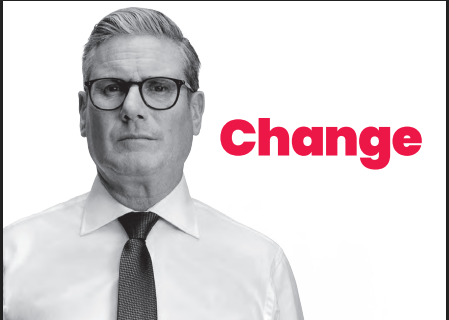
As the government enters its third year, agreeing long term plans for local taxes could make a big contribution to the “change” they promised and turbo charge the real devolution we need.

Dr Jason Lowther is director of the Institute of Local Government Studies (INLOGOV) at the University of Birmingham. He was previously Assistant Director (Strategy) at Birmingham City Council and has worked at the West Midlands Combined Authority, Audit Commission and Metropolitan Police.

Are deferred local elections the real threat to UK democracy?

Jason Lowther

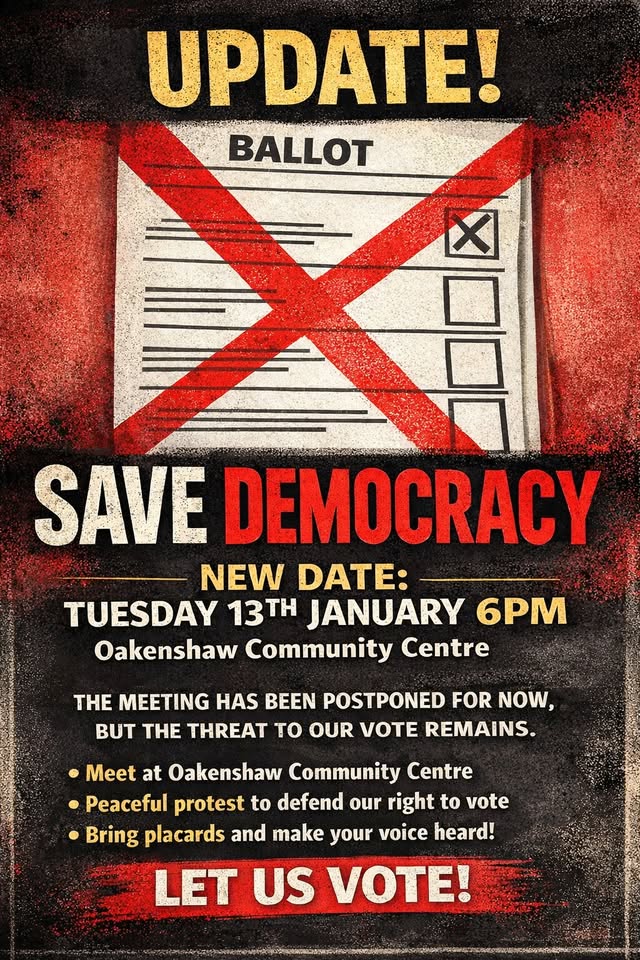
With dozens of English councils and hundreds of councillors facing delays to this year’s May elections, opponents claim the move could undermine public trust in democracy.  History shows deferral of elections in similar circumstances is rare but not exceptional.  There are however far bigger threats to the UK’s democracy.

Media reports today are suggesting that more than a third of eligible English councils have requested to delay their planned May 2026 local elections, potentially requiring around 600 councillors to serve an additional year.  These councils state that the Government’s ongoing local government restructure makes it difficult to run the polls effectively at the planned dates, and central government claims holding elections for councils that are soon to be abolished would waste time and money.  

But the delays have sparked criticism, and even led to unrest at this week’s Redditch council meeting. Opponents argue the move weakens democratic accountability.  Reform UK leader Nigel Farage denounced the proposal as “monstrous”, claiming that “denying elections is the behaviour of a banana republic” and threatening a judicial review.  Conservative and Liberal Democrat MPs have also criticised the move.  The Electoral Commission’s chief executive said: “As a matter of principle, we do not think that capacity constraints are a legitimate reason for delaying long planned elections. Extending existing mandates risks affecting the legitimacy of local decision making and damaging public confidence.”

Delays to local elections in England have occurred previously.  During the Second World War, all local elections were suspended between 1939 and 1944, making this the most extensive postponement in modern history.  In peacetime, delays have largely been tied to local government reorganisation, most notably in the 1990s, when Parliament approved major structural reforms that abolished counties such as Avon, Cleveland, and Humberside and created 46 new unitary authorities.  These reforms led to altered or cancelled election dates to align with the establishment of new councils and avoid electing councillors to authorities that were about to be dissolved.  In 2025, nine councils had their elections delayed by one year to support transitions to new unitary structures.

But even though there are clear precedents for the current electoral postponements, there are other longer-term, more significant and worrying trends which risk seriously undermining our democracy.  Academic commentary shows growing concern among constitutional scholars that the UK’s democratic safeguards have weakened in recent years.  

Scholars at the UCL Constitution Unit  warned in 2022 that the UK faced a real risk of “democratic backsliding,” defined as a gradual erosion of checks and balances, growing executive dominance, attacks on civil liberties and the weakening of political norms that traditionally safeguarded constitutional stability.  Their analysis emphasised that democratic decline can occur incrementally through the actions of elected leaders, especially in systems like the UK’s where constitutional rules are flexible and can be rapidly altered.  

Further alarm was raised by Professor Alison Young at the University of Cambridge, who described the UK as standing on a “constitutional cliff‑edge.”  In her 2023 book, she argued that a series of constitutional changes and executive‑centric reforms have strengthened government power while weakening the political and legal checks that previously constrained it.  Young warned that without reforms to reinforce accountability, transparency, and oversight, the UK risks drifting towards “unchecked power,” eroding the democratic norms that underpin good governance.  

Last year, Dr Sean Kippin of the University of Stirling argued that recent Conservative governments engaged in “democratic backsliding” by deploying what he calls an “illiberal playbook,” using both lawful and legally dubious tools to weaken institutional checks, restrict protest rights, and compromise the independence of the Electoral Commission. His research concludes that “between 2016 and 2024, the Conservatives used power to diminish, weaken, and compromise Britain’s already imperfect democracy”.

There have been some positive moves by the ‘new’ Labour government to improve the functioning of our democratic system, such as the widening of voter ID criteria and promises to lower the voting age to16. However, overall there hasn’t yet been commitment to fundamental reforms to address the issues identified in the above reports, such as the impact of donations on political impartiality, and there have been some worrying developments, for example around civil liberties and the right to protest

A year’s deferral of elections to a disappearing council doesn’t fundamentally undermine our democracy, but failing to address the longer term and serious issues of democratic backsliding could prepare the way for those who will.

Dr Jason Lowther is director of INLOGOV (the Institute of Local Government Studies) at the University of Birmingham.  

References

Kippin, S., 2025. Democratic backsliding and public administration: the experience of the UK. Policy Studies, pp.1-20.

Russell, M., Renwick, A. and James, L., 2022. What is democratic backsliding, and is the UK at risk. The Constitutional Unit Briefing.

Young, A.L., 2023. Unchecked power?: How recent constitutional reforms are threatening UK democracy. Policy Press.

Picture credit: https://www.facebook.com/events/898249983102646/

Empowering People with Learning Disabilities

Cllr Ketan Sheth

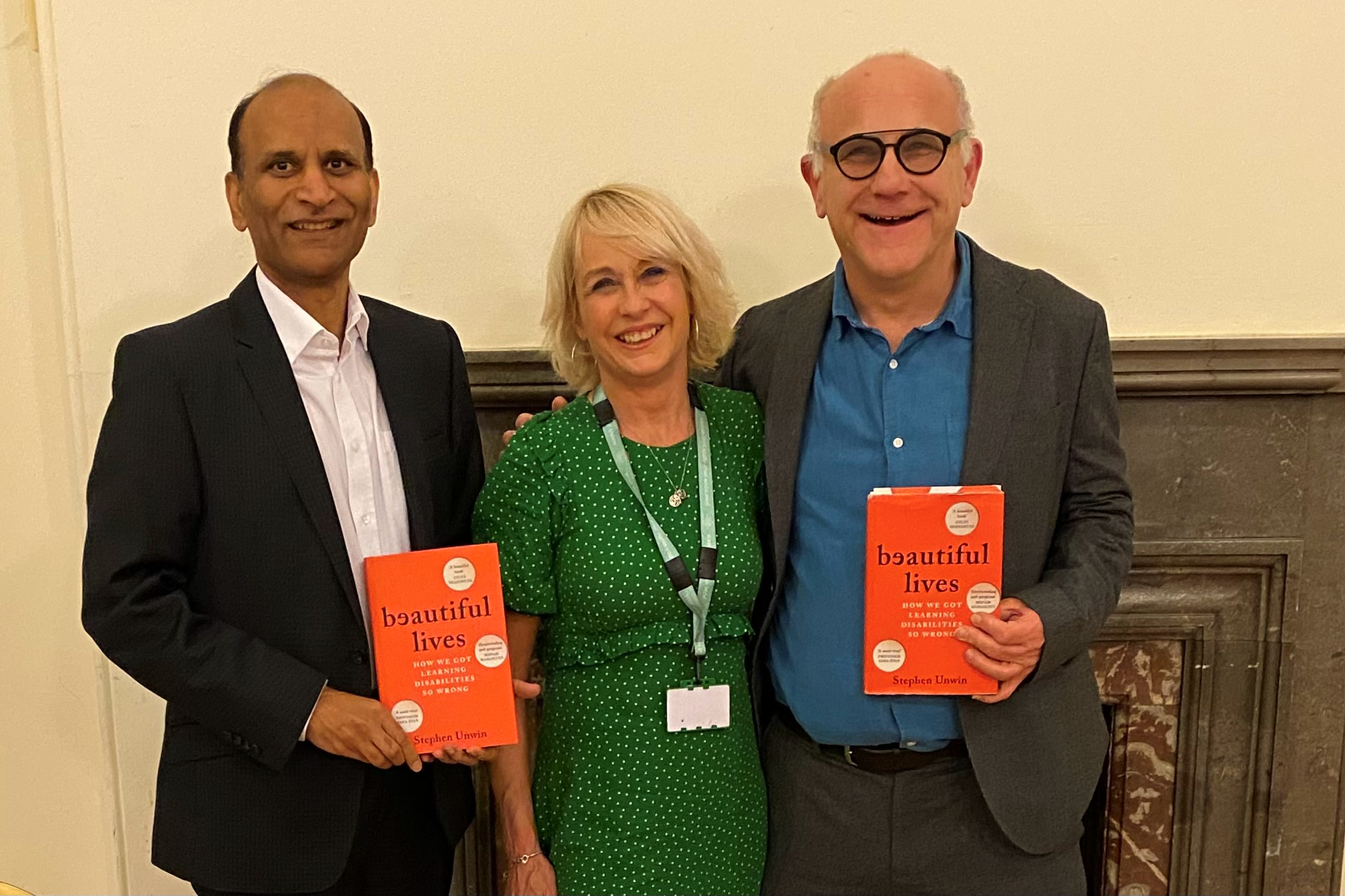
I recently chaired a landmark event hosted by The Advocacy Project, where community leaders, local government officers, NHS representatives, and voluntary sector partners converged at Hampstead Old Town Hall to confront a pressing issue: the systemic inequalities faced by people with learning disabilities. This event was more than a conversation – it was a catalyst for change.

Acclaimed playwright Stephen Unwin shared insights from his poignant book, ‘Beautiful Lives: How We Got Learning Disabilities So Wrong’, inspired by his son Joey’s experiences. Unwin’s words laid bare the dark history of societal attitudes towards people with learning disabilities, exposing the stark reality that despite progress, these individuals remain disproportionately disadvantaged in healthcare, social services, education, and beyond.

The discussion illuminated the critical role local government plays in shaping inclusive policies. By leveraging commissioning powers, local authorities can ensure services are co-designed with people with learning disabilities, prioritising their needs and preferences. This can address the stark health inequalities highlighted in the Learning Disabilities Mortality Review (LeDeR) programme, which revealed concerning disparities in healthcare outcomes.

Katherine Shaw, CEO of The Advocacy Project, underscored the imperative of confronting this history and committing to a future where dignity, equality, and human rights are non-negotiable. The Advocacy Project’s work with local government exemplifies this commitment, amplifying the voices of those with lived experience to inform responsive, respectful, and community-rooted services.

Through user involvement projects and partnerships, The Advocacy Project demonstrates the power of collaboration. For example, their work with local authorities has led to more accessible community services, improved mental health support, and increased participation in local decision-making. These tangible outcomes show that when people with learning disabilities are involved in shaping services, communities become more inclusive.

Local government’s role in education, housing, employment, public health, and adult social care is crucial. By promoting inclusive policies and supporting initiatives like person-centred planning and supported internships, local authorities can break down barriers and foster resilient communities. This can help tackle loneliness, improve mental health, and ensure economic participation for people with learning disabilities.

Moreover, local authorities can learn from The Advocacy Project’s approach to co-production, ensuring that services are designed and delivered with people with learning disabilities, rather than for them. This shift in approach can lead to more effective, person-centred support. By adopting this approach, local authorities can ensure that services are tailored to meet the unique needs of individuals, promoting greater independence and autonomy.

As local government leaders, policymakers, and community advocates, we are tasked with a profound responsibility – to listen, learn, and act. Let us strengthen partnerships, centre lived experience, and forge a more inclusive future for all. The Advocacy Project’s work is a beacon for this change, highlighting the importance of inclusive policies. Indeed, it’s essential to recognise the long-term benefits of such policies, including economic benefits, improved health outcomes, and increased social cohesion. By working together, we can create a more inclusive and equitable society, where people with learning disabilities are valued and supported to reach their full potential, contributing to a richer, more diverse community.

In conclusion, the event reinforced that inclusion is a collective responsibility. Local government’s leadership and partnerships are vital in driving this agenda forward. Let us heed the call to action, champion the rights of people with learning disabilities, and work tirelessly towards a more equitable society.

Councillor Dr Ketan Sheth is Chair of the Community and Wellbeing Scrutiny Committee at Brent Council

Forget the temperature, for councillor discretion, look north!

Photo by Michael D Beckwith on Pexels.com

Chris Game

You may just possibly have seen the recent report: “Oldham councillors must repay overpaid allowances due to payroll error”.  And thought: “Mmm – sounds a bit tough; surely councillors don’t organise their own payments?” 

Surely it would be the Council Treasurer’s responsibility, or his/her staff – probably his, given that the senior echelons of the local government treasury profession are around three-quarters male?  After all, they’re the ones who ran the faulty allowances system and must have, repeatedly, made the faulty calculations. 

You might indeed suppose so, but it’s not what happened here. Those 82 Oldham councillors were, it seems, overpaid a (combined!) total of £104,000 due to a systemic error, or rather errors, repeated apparently over at least three financial years.

The error was acknowledged as an administrative one, by council staff, and the salaries of those responsible are being docked accordingly; in particular the Director of Finance, whose six-figure salary (of, coincidentally, £104,000!  No, I’m totally guessing that bit!) could at least bear it. You might suppose?

However, that’s NOT at all how our local government division of responsibilities between elected councillors and salaried officers works. Here the whole £110,000 is having to be repaid by the innocently benefitting councillors – who most certainly don’t get dockable salaries.

So what are actually being ‘docked’ here are the relevant councillors’ basic and ‘Special Responsibility’ allowances, the latter being for those in various leadership positions: cabinet members, chairs of committees, party group leaders, and suchlike. 

Oldham is generally a Labour-led council and currently ‘ordinary’ council members receive a Basic Allowance of roughly £12,000. Other Member Allowances include the Council Leader £43,000, Deputy Leader £26,000, Executive Members £22,000, the Mayor £17,000, Chairs of various Scrutiny Boards – Licensing, Planning, Children & Young People, Health & Wellbeing, etc.- £11,000. It’s hardly megabucks.

In short, elected councillors are being made to pay, from their modest responsibility allowances, for ‘administrative errors’ made over several years by the council’s administrators – the clue’s in that adjective!

It seems wrong in principle, and it’s also horribly mistimed, coming as it does when some genuine efforts are being made to increase the perceived attractiveness of the councillor role and thereby extend the range of socio-economic backgrounds from which our local representatives are drawn.

Just a few weeks ago, for instance, at Labour’s party conference, Communities Secretary Steve Reed – a council Leader himself before becoming an MP – announced that he would be restoring councillors’ access to pensions through the Local Government Pension Scheme that the Conservative Government had removed. There is also talk of improving parental leave and reviewing the allowances system.

And not before time. For few in local government seriously doubt the deterrent impact on councillor recruitment of the 2012 removal of pension entitlement by the then Minister for Communities and Local Government, Eric (now Lord) Pickles.

Former Leader of Bradford Council, Pickles knew exactly what he was doing, as he increased councils’ financial discretion, while cutting considerably the funding over which to exercise it, and his patronising ’50 money-saving tips’ were contributing to the dire financial straits so many councils have found themselves in since.

At which point – in the distant past, when I was lecturing regularly and having to produce student ‘handouts’ – I’d probably have referred to a few overseas examples, showing how relatively demanding the English councillor’s role is and how under-compensated our councillors generally are.  

First, and most obviously, there’s the potential workload, very crudely illustrated by the average number of electors per councillor: 120 in France, 250 in Sweden, 2,350 in Ireland … and (currently) 2,600 in the UK as a whole.

Then the councillor payment systems: England – a basic allowance of, typically, £10,000 – £12,000 p.a., plus a bit extra for ‘Special Responsibilities’, and (wow!) expenses for travel and childcare.

By comparison, or contrast: the USA – highly variable, obviously, but an average US councillor’s salary is currently around $51,000 (£39,000), rising in New York, where everything’s gross, to $148,000 (£113,000).

Back in the real world, at the other end of the spectrum, are Norway/Sweden, where the councillor role is still generally considered voluntary, with councillors receiving ‘modest’ allowances to cover costs.  

They’re quite fun, but these international comparisons/contrasts aren’t terribly helpful in considering the future of English local government. Or necessary, as, on the proverbial doorstep we have sensible Scotland, where, nearly 20 years ago now, they switched from our patronising, cheeseparing ‘allowances’ system to actual councillor salaries – of currently, and precisely, £25,982.

That’s the basic salary. Senior councillors will generally receive a higher salary, up to perhaps around £50,000 for a Council Leader, with councils themselves having the ‘grown-up’ discretion of paying senior councillors up to 75% of the Leader’s pay.

And there’s more. Scottish councillors are eligible to join their Local Government Pension Scheme, to payment of allowances for subsistence and travel, and reimbursement of expenses incurred when undertaking council duties – a regular source of dispute ‘darn Sarf’.

Which brings me to my closing thought. Oldham, where we started, is almost exactly midway between London and Edinburgh, and local authorities in both England and Scotland are financially, in my view, heavily over-dependent on their respective central governments. But, if a student asked me in which country I’d prefer to be an elected councillor, I’d say: “Never mind the temperature, choose the occupational discretion”  

This post appeared initially in The Birmingham Post edition of Thursday, December 11th.

Chris Game is an INLOGOV Associate, and Visiting Professor at Kwansei Gakuin University, Osaka, Japan.  He is joint-author (with Professor David Wilson) of the successive editions of Local Government in the United Kingdom, and a regular columnist for The Birmingham Post.

Local Government in the Czech Republic During Two Recent Crises

Dr Paul Joyce

A recent book on local government in Czechia offers valuable lessons for anyone involved in local governance, emergency planning, or public sector reform. The book, edited by Balík and Špaček, explores how local government responded to two major crises: the COVID-19 pandemic and the influx of refugees following the Russian invasion of Ukraine.

The editors describe Czechia’s  local government as “fragmented”. By this, they do not mean fragmented in terms of lack of coordination. Instead, they use the term in a structural and territorial sense: the country has a very large number of small municipalities. In fact, there are over 6,000 municipalities in Czechia, and the median size is fewer than 500 residents.

At first glance, this sounds like a recipe for weakness. However, the book tells a very different story. During both crises, support and coordination from the national government was widely experienced as slow, inconsistent and, at times, chaotic. By contrast, local mayors often stepped forward quietly and decisively to support their communities. As Balík and Špaček put it:

“Mayors of small municipalities rarely speak of crisis management in systemic terms; instead, they focus on immediate, practical solutions to specific problems… Small local governments tackled emergencies as they came with the capacities they had… The ability of small municipalities to adapt quickly and provide personalised assistance was critical in the early stages of both crises…” (2026, p.177)

In many places, local government was really the only consistent source of stability. One of the key strengths highlighted in the book is social capital – the trust, relationships, and local knowledge embedded in communities. This proved crucial, particularly during the refugee crisis:

“The strength of small municipalities was in the individual commitment, personal ties, and local knowledge—knowing who to turn to in case of problems and how to solve specific issues” (Balík and Špaček, 2026, p.176).

Even in very small towns and villages in Czechia, local government is present and visible. Mayors and councillors are highly trusted, far more than national politicians, and citizens see them as accessible, familiar, and reliable. In crisis conditions, this trust enabled rapid mobilisation of volunteers, associations, fire brigades, community groups and informal support networks.

Interestingly, the book also notes that although inter-municipal cooperation is voluntary and not financially incentivised by national government, over 80% of Czech municipalities are involved in some form of collaboration. During the crises, some mayors consulted colleagues in neighbouring areas, shared information, and worked through voluntary municipal networks.

However, and this is an important point, the book does not show that there was a large, coordinated, systematic collaborative governance response at national scale. There is no hard data indicating how widespread or effective inter-municipal cooperation was during the crises. What the authors do state is that cooperation was informal, uneven, and dependent on existing relationships and trust.

In fact, they emphasise that local responses were often “highly individualised”. In other words, municipalities generally acted on their own initiative, using their own judgement, knowledge and resources to solve immediate problems. Horizontal networks sometimes supported this, but they did not replace largely autonomous decision-making.

What stands out most during the crises is vertical incoherence: poor communication, unclear leadership, and constant change in guidance from central government. Mayors described regulations changing “three times a day”, written in legal language that nobody understood, and official information arriving after the media had already reported it. In the early stages of both COVID-19 and the refugee crisis, national guidance was often described as vague, delayed or non-existent.

As a result, mayors relied heavily on their own judgement and “common sense”. Why? Because they had to respond to reality as it unfolded in front of them. This leads to an important conclusion: Czechia was not “saved by collaborative governance” in a formal, system-wide sense. Instead, it was held together by local leadership, strong relationships, deep community knowledge, and trust.

Implications for UK local government

For those working in or with UK local government, the Czech experience raises important questions.

For years, public sector reform has often focused on scale, efficiency, and consolidation. We tend to assume that bigger organisations are stronger, more capable, and more resilient. The Czech case challenges this assumption. It suggests that in times of crisis, small, trusted, locally embedded structures can be incredibly powerful.

This does not mean the UK should “fragment” its local government system. But it does suggest that structural reforms aimed purely at efficiency can come at a hidden cost: the loss of proximity, trust, responsiveness, and local knowledge that make rapid, context-sensitive action possible.

The Czech experience also highlights the risks of poor vertical coordination. When national guidance is unclear or incoherent, the pressure falls heavily on local government. In those moments, what really matters is not the size of the organisation, but:

•           The quality of relationships

•           The level of trust

•           The strength of civic networks

•           The confidence of local leaders

•           The use of local knowledge

For the UK, the message may be this: alongside reform for efficiency and scale, we need to invest in robust governance, that is, in communication, trust, community capacity, and strong vertical relationships between central and local government.

Reference: Balík, S. and Špaček, D. (eds.) (2026) Fragmented Local Government Systems and Crises: Experiences from Czechia. Governance and Public Management Series. Cham: Palgrave Macmillan / Springer Nature Switzerland AG. https://doi.org/10.1007/978-3-032-01897-7

Paul Joyce is an Associate at INLOGOV, University of Birmingham, a Visiting Professor in Public Management at Leeds Beckett University, and Publications Director of the International Institute of Administrative Sciences (IIAS) which is headquartered in Brussels, Belgium. He has a PhD from London School of Economics and Political Science