Forging an alliance with the NHS

Cllr Ketan Sheth

If local councils and the NHS do not work together as trusted equal partners, our residents are the ones that lose out.

In Brent, our local communities were among those most affected by the first and second waves of the Covid-19 pandemic, with the local hospital, Northwick Park, making the national headlines having been caught in the eye of the storm, which acutely demonstrated the terrible impact of health inequalities on real lives.

We are, of course, particularly reliant on our NHS partners to provide emergency services, planned elective care, and a full and complex mix of outpatient and specialist services, including mental health and community services.

Likewise, NHS staff are reliant on local councils (and other local partners) playing their part in delivering a seamless patient pathway, that can go from a first GP visit right through to a tailored social care package.

Delivering high quality, equitable health services take detailed planning and a solid grasp on the needs of local communities.

In Brent, we have seen increasing levels of partnership working with the local NHS trust. Collaboration is made easier because London North West University Healthcare NHS Trust (LNWH) shows a refreshingly genuine commitment to gaining a deep appreciation of the views, concerns, and perspectives of our local populations. This is reflected in the development of the trust’s new five-year strategy

In addition to undertaking vast analysis of public health, demographic and other data relating to our communities, LNWH sought engagement right from the start. The trust co-created a strategy with the help of almost 900 local community members and 40 representatives from local authority and partner organisations. Over 2,300 staff also contributed, many of who live locally and reflect the diverse population of our local communities and are frontline NHS staff who know all too well the importance of good partnership working.

I hosted one of the open forums for the trust where the local residents had an opportunity to say what they felt should be the trust’s priorities. Working in partnership with local communities and improving the quality of care came out as key themes.

This is not surprising. In Brent, our communities experience significant health inequalities when compared with regional and national levels. Local councils like Brent can only provide so much support to address these issues, so we must work with NHS partners to combat health inequalities right across our health and social care system. Indeed, we are now seeing an increased trust present at place-based and neighbourhood meetings.

One of the biggest challenges facing LNWH is the level of emergency activity. As a local council, we must work collaboratively to address systemic issues like this that the trust cannot resolve alone. Indeed, the emergency pathway is a key touchpoint for the most deprived people in Brent and partnership working presents us with a real opportunity to connect them earlier with more appropriate support in the community.

The trust’s discharge processes are perhaps the most reliant on partnership working — the NHS isn’t just its hospitals. It’s vital that we work collaboratively across organisations — the rest of the local NHS like GPs, district nursing, mental health and social care — to help the trust improve the flow of patients through its hospitals.

LNWH has called its new five-year strategy ‘Our Way Forward’. It sets out a welcome commitment to local authorities, communities, and people. We must take joint responsibility for Our Way Forward, because by working together we will forge a far better health outcomes for our residents than we can alone.
Cllr Ketan Sheth is Chair of North West London Join Health Scrutiny Committee
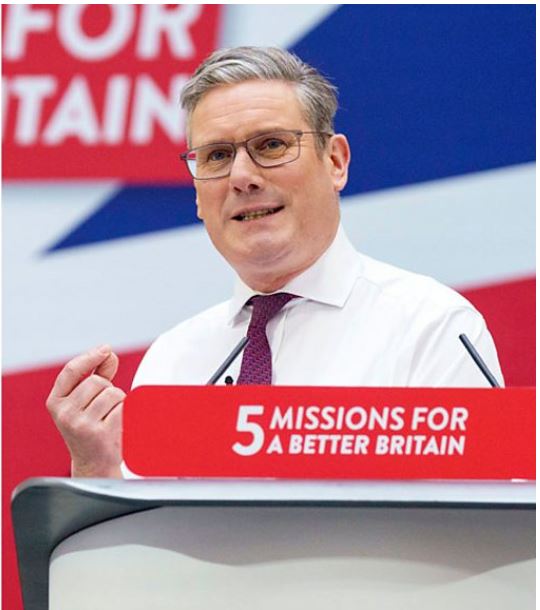
Mission Possible? 

Jason Lowther

With under 700 days to the next UK general election, political parties are busy developing their manifesto documents.  In February, Labour leader Keir Starmer made a major speech laying out his “five missions for a better Britain”.   How do these five missions relate to local government?  And is the turn to “mission driven” government likely to work?

The five missions vary in their level of specificity and challenge.  Securing “the highest sustained growth in the G7, with good jobs and productivity growth in every part of the country…” is a little vague but likely to be difficult, especially given we are currently ranked 6 out of 7 in terms of output per worker.  Mission #2, “make Britain a clean energy superpower”, accelerating the move to zero-carbon electricity from 2035 to 2030, is specific but very challenging.  Mission #3, reform of health and social care and reducing health inequalities, will require a re-focus from secondary (hospital) care to social care and addressing the social determinants of health.  Mission #4 is about community safety, and likely to involve more community policing.  Finally, mission #5 is to “break down the barriers to opportunity at every stage” through reform to the childcare and education systems.

Local government potentially has important roles in each of the five missions.  Local education, skills and economic development functions will be critical to improving productivity.  On energy, Net Zero requires at least a doubling of electricity generation by 2050, from decarbonised sources.  Decarbonisation strategies need to be place-based, taking account of the geography, building types, energy infrastructure, energy demand, resources and urban growth plans.   We’ve recently argued here for the key roles of councils in this area. 

Turning to health and care services, local government clearly has leading roles – including ensuring place-based planning to address the social and behavioural causes of health inequalities.  Analysis by the Liverpool and Lancaster Universities Collaboration for Public Health Research in 2021 concluded: “investment across the whole of local government is needed to level up health including investment in housing, children’s, leisure, cultural, environmental, and planning services”.  Similarly community safety, child care and education are areas where local government could be enabled to have much greater positive impact.

Perhaps as important as the specific “missions” is the approach to governing which the party is proposing.   Labour’s document characterises this as a move from top-down, target-led, short-term, siloed approaches, to government which is more “agile, empowering and catalytic”, working across the public and private sectors, and civil society.  This, it argues, requires organising government around a shared vision, focusing on real world outcomes, concentrating on ends with flexibility and innovation concerning means, devolving decision making from Westminster, increasing accountability including central and local data transparency, and adopting long-term preventative approaches including greater financial certainty for local areas. 

In some ways the idea of mission-driven government echoes the 1990s thinking of Ted Gaebler and David Osborne’s book “reinventing government”, which argued for a more entrepreneurial approach to the delivery of government.  Their work pointed to entrepreneurial companies setting overall missions and goals, and then leaving managers to figure out how best to deliver these – for example, by providing an overall budget for a service rather than detailed line-by-line budgets which disappear if not spent by year end.  The focus on managers rather than considering the perspective of politicians is one of the problems identified in subsequent evaluations of the reinventing government model, together with difficulties in sustaining the approach.

Mission-driven policies addressing ‘grand challenges’ of society are increasingly common, for example in the UN Sustainable Development Goals and various EU policies.  Mazzucato et al recently argued that addressing such challenges requires strategic thinking about: the desired direction of travel, the structure and capacity of public sector organisations, the way in which policy is assessed, and the incentive structure for the private, public (and I would add community) sectors. Labour’s paper makes a start (albeit at a very high level) on thinking through these areas. The litmus test, though, will be in developing the detail and how far this engages with local areas.   

Over the next few months, we will be contributing to the debate on the upcoming party manifestos with some research-informed thoughts on a variety of local government related policy areas.  If you would like to be involved in developing these, please get in touch

Jason Lowther is the Director of INLOGOV. His research focuses on public service reform and the use of “evidence” by public agencies.  Previously he worked with West Midlands Combined Authority, led Birmingham City Council’s corporate strategy function, worked for the Audit Commission as national value for money lead, for HSBC in credit and risk management, and for the Metropolitan Police as an internal management consultant. He tweets as @jasonlowther

Picture credit: BBC

Integrated Care Boards – a new frontline in localism?

Jason Lowther

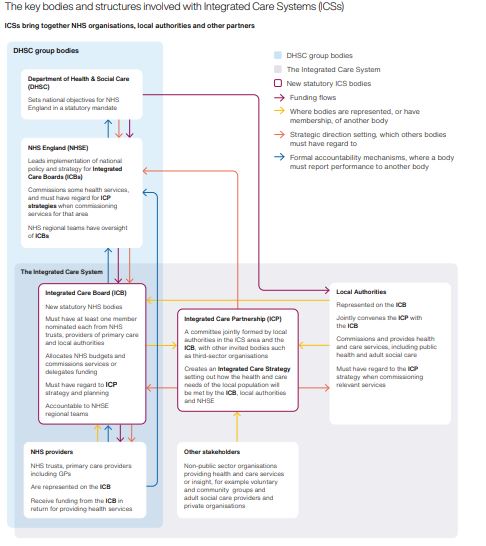
As the government once again kicks down the road decisions on vital reforms and funding for social care, local areas are establishing the Integrated Care Boards which will lead the new Integrated Care Systems (ICS), bringing together the NHS, local government and partners to plan and deliver integrated services to improve the health of the local population.  Building on the progress made since many public health responsibilities transferred back to local government in 2013, this is a great opportunity to address the determinants of health and issues around health inequality.  Might ICSs at last lead to an effective local voice in our over-centralised, top-down healthcare system?

Each ICS is supposed to plan at three levels: the neighbourhood (an area of around 40,000 people), the ‘place’ (often a LA area), and the (ICS) system (covering around 2 million people).  Working at the neighbourhood level is likely to be somewhat informal, often using a social prescribing approach and developing multi-disciplinary teams including third sector partners.  The approach to ‘place’ looks set to vary between areas, with some ICSs devolving significant responsibility (and funding) whilst others centralise these at ‘system’ level.  Meanwhile at ‘ICS system’ level, Integrated Care Partnerships (joint LA and health committees) will develop an Integrated Care Strategy to meet the assessed health and social care needs of their population identified in the Joint Strategic Needs Assessments and Wellbeing Strategies prepared by local Health and Wellbeing Boards.

Beyond the formal planning process, the success of local ICSs will partly depend on the quality of local collaborative (managerial and political) leadership – across statutory partners and with the third sector.  It will be a tough job to balance the priorities of the national health service and issues of local places, but many local authorities will be able to offer helpful experience , for example from moves to more networked governance approaches.

The National Audit Office recognises the potential but appears dubious on current prospects.  Last month it published a review, Introducing Integrated Care Systems: joining up local services to improve health outcomes, finding:

NHSE has a detailed regime to monitor performance against core NHS objectives but … it is less clear who will monitor the overall performance of local systems, and particularly how well partners are working together and what difference this new model makes…

The report notes that, whilst government is asking ICSs to set out local priorities and make progress against them, there is no protected funding and few mechanisms to ensure this happens.  This leads, as the NAO politely puts it, to “a risk that national priorities, and the rigorous oversight mechanisms in place to ensure they are delivered, crowd out attempts at progress on local issues”.  The report also identifies five “high risk” elements of effective integration: clarity of objectives, resourcing, governance and accountability (such as how ICSs will function alongside existing local government Health and Wellbeing Boards and how accountability differences between NHS and local authority bodies will be resolved), and the capacity to balance priorities other than national NHS targets. These urgently need to be addressed if ICSs are to begin to meet their potential.

At one of Inlogov’s “Brown Bag Lunch” discussions earlier this month we agreed on the importance of issues around how ICSs develop, particularly in terms of developing effective system leadership and planning, collaborating with community organisations, and links to wider devolution processes. I’d be interested to hear about experiences in local areas as these develop. 

Jason Lowther is the Director of INLOGOV. His research focuses on public service reform and the use of “evidence” by public agencies.  Previously he worked with West Midlands Combined Authority, led Birmingham City Council’s corporate strategy function, worked for the Audit Commission as national value for money lead, for HSBC in credit and risk management, and for the Metropolitan Police as an internal management consultant. He tweets as @jasonlowther

Picture credit: National Audit Office

Black History Month

Picture source: https://www.evertonfreeschool.com/2020/10/06/black-history-month-2/

Cllr Ketan Sheth

Black History Month creates a moment when we can step back and reflect together, as well as individually, on  the immense contribution of Black, Asian and minority ethnic communities whose rich history, culture, and experiences, have shaped Brent and beyond.

The NW London Joint Health Scrutiny Committee comprises 8 NW London boroughs. As Chair, I know we simply could not function without the dedication, the skills, and above all, the compassion that thousands of people from our diverse communities contribute to the NHS, day in and day out.

The difference this makes to all our lives, is immeasurable. Black History Month affords us an opportunity to acknowledge and thank them for the important work they do: their continuing contribution to the care, the culture, the shaping, and well-being of Brent.

The colour of someone’s skin should not determine how they are perceived, considered, and treated – positively or negatively – but the impact of the pandemic has highlighted many disturbing features of inequality in our communities. Many of these problems are not new. They have existed for far too long.

Black, Asian and minority ethnic communities are more likely to be affected by life-changing diseases like diabetes, prostate cancer, and sickle cell than people from other backgrounds.  Living  in less-affluent areas, they are more  greatly affected by poor housing as well as poor air quality from the busy urban roads that run through their neighbourhoods. There is a big gap in life expectancy between richer and poorer areas irrespective of race, but these communities are disproportionately affected. 

To tackle these inequalities, the North West London Integrated Care System is launching a  joint initiative between the local NHS and NW London boroughs, which will seek to build real understanding of what matters to our residents, how we can work with them to remove barriers to health equality to deliver healthier neighbourhoods and better outcomes. 

This initiative is the first tangible benefit I have seen emerge from the  new Integrated Care System, which has health services and local authorities coming together to address many of the challenges that impact our well-being. That is, health and care services, employment, education, housing, and the environment we live in.

We might perhaps reflect for a moment on the work of the great poet, James Berry OBE, who never avoided the difficult issues of injustice in history, or in the present, but always sought for mutual understanding. His poem, “Benediction,” stresses the need for us truly to hear one another, and truly to see, and through so doing, to understand. He said:

Thanks to the ear that someone may hear

Thanks to seeing

that someone may see

Thanks to feeling

that someone may feel

Thanks to touch

that one may be touched…

Black History Month is a reminder to us to truly hear and see one another, to celebrate our heroes and tell the stories that, for so long, have been hidden or forgotten. It is also a reminder that the evils of the past have resonance today, reflected in the impact of poverty and institutional racism that many in our communities experience as part of their daily lives. Ultimately, it is an opportunity to continue to learn, understand and come together to pull down these barriers and build healthier and fairer neighbourhoods.

Cllr Ketan Sheth is Chair of Brent Council’s Community and Wellbeing Scrutiny Committee

Pushing experts under a big red bus?

Picture source: https://paulcairney.wordpress.com/2020/07/08/covid-19-policy-in-the-uk-did-the-uk-government-follow-the-science-reflections-on-sage-meetings/
Jason Lowther


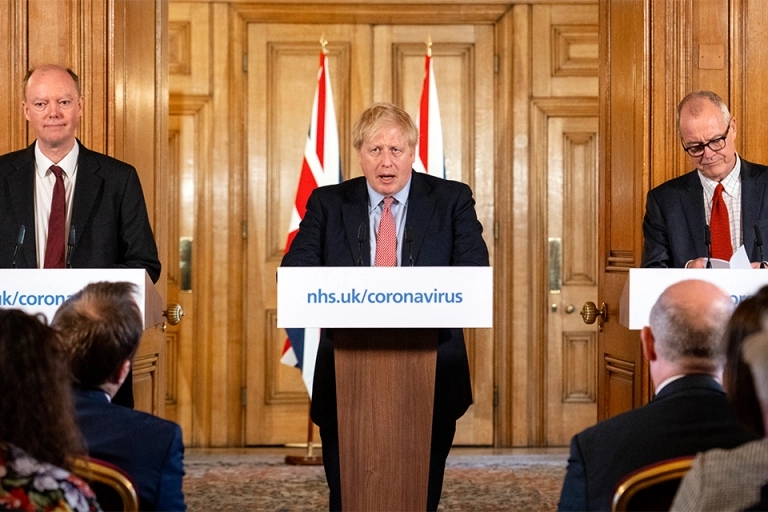
Politicians have a complex relationship with experts and the evidence the latter provide.  Back in May 2020, I reflected in the Municipal Journal on how Michael Gove’s statement in the Brexit campaign that ‘people in this country have had enough of experts’ had turned 180-degrees.  With the arrival of Covid, the PM told his 9th March 2020 press conference ‘we are doing everything we can to combat this outbreak, based on the very latest scientific and medical advice’ and this line was consistently reiterated by other ministers.  Thirty months on, Rishi Sunak (Chancellor in 2020) railed against the government’s main Science Advisory Group for Emergencies expert group (SAGE) saying ‘If you empower all these independent people, you’re screwed’. 

Sunak’s argument, presented in an interview with the right-leaning Spectator magazine, seems to be that the SAGE experts failed to consider any non-health impacts of Covid control measures (particularly lockdowns) and refused to show politicians their workings.  In the article he’s quoted as saying ’I was like: “Summarise for me the key assumptions, on one page, with a bunch of sensitivities and rationale for each one”, in the first year I could never get this’.  This doesn’t seem to match with the published SAGE ‘consensus statement’ on school closures issued in February 2020, which very clearly sets out its assumptions and explicitly states:

As well as the large economic and educational costs of school closures, including increased levels of workforce absence in the health and care system and elsewhere, school closures could have adverse consequences: As infections appear to be more severe in older people, putting children in the care of their grandparents may result in a higher number of severe cases. Once schools are reopened, the number of cases may increase again, with the overall attack rate not being reduced.
(SPI-M-O: Consensus view on the impact of mass school closures on 2019 Novel Coronavirus, Feb 2020)

Later, when facing the December 2021 Omicron variant, Sunak is said to have used his own alumni and private sector analyses to challenge SAGE advice for further lockdowns with the PM and in cabinet.  He argues that the scientific evidence failed to provide a balanced analysis of lockdown decisions, saying ‘I would just have had a more grown-up conversation with the country’.  Sunak also claimed that dissenting voices in SAGE discussions were edited out of the minutes, an assertion he supported by describing a Treasury official sitting in on the discussions and reporting disagreements and uncertainties back to him. 

SAGE scientists see this differently.  Former SAGE member Prof Ian Boyd from the University of St Andrews commented: ‘It is nonsense to suggest that Sage was insensitive to the issue of the long-term effects of lockdowns – a whole subgroup dedicated itself to trying to understand what this might look like. Sage was discussing the topic of excess deaths in detail in April 2020.  Those who attended Sage meetings were acutely aware of the trade-offs associated with implementing specific actions, such as closing schools. To the extent that it was possible with the information available at the time, these deals were included within the uncertainty expressed in the advice provided to politicians. It is simply unacceptable to rewrite history, by blaming scientists, to save a political class that has systematically failed to respond to the messages that scientists have been providing to them for many, many years’.

There are valid reasons to criticise elements of the advice system the government put in place during the pandemic.  The limitations of ‘a model in which a specialist committee produces consensus statements that spare policy makers any requirement to make choices on matters in which they have no competence’ have been demonstrated in analysis by Lawrence Freedman of the intelligence failings relating to the UK entry to war with Iraq as well as the Covid pandemic.   His analysis recommends a model with more opportunities for policy makers to engage with the experts as both the advice and the policy is developed.   The editor of the Lancet, Richard Horton, argued that expertise around public health and intensive medical care should have been in the SAGE discussions.  I argued in the MJ piece that having practical knowledge from local councils and emergency planners could help avoid recommendations that prove impossible to implement effectively, since esteemed experts can still make recommendations which are impossible to implement in practice.  But it’s simply wrong to suggest that SAGE ignored key evidence on non-health effects of Covid control measures or sought to silence dissenting views.  If the trade-offs and assumptions were not considered by the Cabinet, the blame for that lies not with the scientists but with the politicians.

This article appeared in the Local Area Research Intelligence Association newsletter on 27 Sept 2022

Jason Lowther is Director of the Institute for Local Government Studies (INLOGOV), University of Birmingham

T

The role of scrutiny in navigating our new health and care economy

Picture credit: https://www.gponline.com/deadline-extended-gp-access-cover-england-brought-forward/article/1456385

Cllr Ketan Sheth

Mortality rates during the pandemic laid bare the health inequalities that exist across the country. Behind these figures lie human stories and grieving families that should remind us of the urgency and importance of understanding and addressing these inequalities.

In Brent, an ethnically diverse North West London borough, we recently set out to do just that.

Systems thinking

We know that Brent residents, who are from ethnic minority communities, disabled, or who are in poverty, experience significant health inequalities; but what does that look like in practice? How are our healthcare systems contributing to and/or compounding inequality? And what can be done to resolve this challenge?

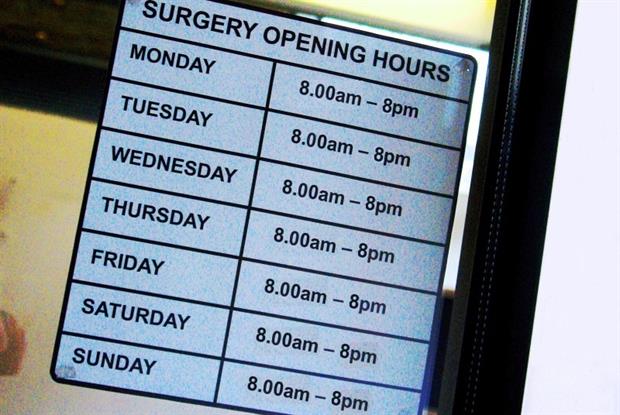
Usually, GPs are the first point of call when someone is not feeling quite right. They ought to help everyone to access timely and safe healthcare. Therefore, reviewing access to GP services is critical and we decided to focus a dedicated scrutiny task group for eight months to report.

By giving ourselves time to understand this complex area in detail, we developed a deep comprehension of the landscape we were going to scrutinise. Patient voices are at the heart of our work, and we worked closely with Brent Healthwatch to ensure those from communities that have been under-represented in these conversations in the past, as well as those experiencing the worst health outcomes, were able to articulate and share their experiences.

Also, the task group held a number of evidence sessions over the course of six months, which were attended by stakeholders across Brent’s health economy. This included council officers, local commissioners and service providers.

All of this enabled the team to make a number of practical recommendations to  Brent Council and NHS partners.

Our work focused on three pivotal areas: Demand, Access and Barriers

With the dynamics of our healthcare and well-being landscape changing locally as well as nationally, it is more vital than ever to ensure all our residents have equality of access and consumption of healthcare services.

We found repeatedly that some groups of patients experience significant, and unnecessary, barriers, specifically:

• Patients of low-income

• Patients with a disability

• Older patients

• Patients whose first language is not English

• Children and young people

• Refugees and asylum seekers

• Patients who cannot access digital technology

Knowing this, GP services must seek to reduce and resolve the barriers experienced by patients, with a focus on deprivation, ethnicity, disability, and other protected characteristics as described in the Equalities Act 2010, if we are to execute our duties under the Act.

We recognise that rising demand, changing patient expectations and workforce retention issues continue to place pressures on primary care. Therefore, it is essential that the NHS continues to plan for this and uses the expertise of healthcare professionals across the system.

The digital transformation to healthcare, brought about by the pandemic, although helpful to some, introduced additional barriers for other people and communities.

In acknowledging the varying levels of ease in which patients access GP service, we strongly believe an access and treatment standard ought to be developed. This will ensure that Brent residents experience consistent and high levels of service: whether their requests are routine or urgent, focused on physical or mental wellness; or made via the telephone, online or in-person.

Our work has been conducted in the spirit of cooperation and partnership, and particularly, we look forward to continuing our dialogue and work with our partners across Brent’s health economy to evolve our shared vision of GP access across Brent.

Cllr Ketan Sheth is Chair of Brent Council’s Community and Wellbeing Scrutiny Committee