Can drama “Help” social care?

Jason Lowther

Photo credit: https://www.youtube.com/watch?v=5Z2ufAl2lko

Fresh from winning the Grand Jury Prize at the Banff Rockie Awards on Monday, Channel Four’s drama Help was yesterday nominated for Best Drama in the Edinburgh TV awards, with its lead actor Jodie Cromer also nominated for Best Actor.  The drama was one of the most watched on the channel, bringing to millions of viewers the plight of care homes and their residents during the pandemic.  Whilst the Help storyline is fictional, it is based on hard and devastating facts.

In my view, Help could be criticised for its farfetched ending and sometimes unsympathetic rendering of the care home manager, however its characterisation of care home staff and residents is both caring and revealing.  Clearly emotionally affected researching the programme, writer Jack Thorn said: “hearing the stories of those at the frontline, having people break down in tears on zoom in front of us has been incredibly moving and galling”.   

My two favourite parts of the programme (no spoilers) are the endless recorded message of a hopelessly over-run “NHS 111” call centre in the background for several minutes, and Jodie Cromer’s wrenching speech to camera (1:34 on the video) demanding “…underlying health conditions, eh?  When did all lives stop being worth the same?”  The programme ends highlighting some stunning research findings: 40% of Covid deaths in the early pandemic (from March to June 2020) were in care homes; the average wage of a care home worker is £8.50 per hour; whilst government provided 80% of PPE needs for the NHS, it only met 10% of adult social care’s needs. 

This last claim is based on the National Audit Office analysis published in November 2020, which found that the adult social care sector received approximately 331 million items of PPE from central government between March and July (10% of their estimated need) whereas NHS trusts received 1,900 million items sent to NHS trusts (80% of estimated need).  Whilst both fell significantly short of what was required, there is an apparent imbalance here.  Data collected by the Care Quality Commission (CQC) showed that, throughout April and May 2020, more than a fifth of domiciliary care providers had no more than a week’s supply of PPE. 

This situation was well known to the Secretary of State, not least because the LGA and the Association of Directors of Adult Social Services wrote stating “we continue to receive daily reports from colleagues that essential supplies are not getting through to the social care front-line. Furthermore, national reporting that equipment has been delivered to providers on the CQC-registered list does not tally with colleagues’ experience on the ground”.  Nevertheless, in a scene included in Help, during a Downing Street press conference on 15 May, 2020, Mr Hancock said: “right from the start, it’s been clear that this horrible virus affects older people most. So right from the start, we’ve tried to throw a protective ring around our care homes”, repeating in the House of Commons on 18 May that “we absolutely did throw a protective ring around social care”. 

Understanding the human costs of these central government failures is difficult, with the effects on staff, residents and their family impossible to measure objectively.  Help does a good job in illustrating some of the pressures on care staff and the pain of relatives unable to visit dying residents, made all the more poignant now that we know some of the behaviour during the pandemic of senior central government actors such as Hancock’s affair and Johnson’s multiple parties forensically examined in Sue Gray’s recent report

Perhaps the most basic measure is in human lives.  Last year researchers used the national death registry of all adult (aged ≥18 years) deaths in England and Wales between January 1, 2014, and June 30, 2020 to compare daily deaths during the COVID-19 pandemic against the expected daily deaths.  They estimated that during the early pandemic, about 26,000 excess deaths (almost half of the total excess deaths) occurred in care homes and hospices.  This is likely to be an underestimate since early in the pandemic, testing of suspected cases was available only in the hospital, whereas routine testing of staff and residents in care homes was not implemented until May 2020.

The latest ONS statistics, issued in February 2022, suggest that since the beginning of the coronavirus (COVID-19) pandemic, there have been over 274,000 deaths of care home residents (wherever the death occurred) registered in England and Wales; of these, 45,632 involved COVID-19 accounting for 17% of all deaths of care home residents. 

Intriguingly, The Lancet reported in March that “COVID-19 has had a disproportionate impact on the mortality of care home residents in England compared to older residents of private homes, but only in the first wave. This may be explained by a degree of acquired immunity, improved protective measures or changes in the underlying frailty of the populations.” Meanwhile, last month the Care Quality Commission finally published data on deaths in each care home during the first year of the pandemic (April 2020 to March 2021).

Whatever the precise figures, it’s clear that adult social care residents and staff were badly let down by central government, far from the Secretary of State’s “protective ring” narrative. This despite the best efforts of care managers, local commissioners and councils discussed in Luke Bradbury’s blog here last week.  Help does a fantastic job of showing the impact of these critical central failures – and recognising the incredible work care staff did in such difficult circumstances with so little financial reward.

Collaborative management in the face of government response to COVID-19? Evidence from care home staff and stakeholder experiences in West England.

Luke Bradbury

Picture credit: https://socialvalueportal.com/support-national-effort-covid-19/resources/news/social-value-in-action/support-national-effort-covid-19/

As a student on the MSc Public Management course at INLOGOV and having worked part-time in care for a number of years, I felt my final dissertation project was an opportunity to investigate the impact of COVID-19 on adult social care and the implications of government intervention. The works of organisations such as SCIE (Social Care Institute for Excellence) have already shown that inaccurate government guidance – combined with years of underfunding – resulted in the sector being ill-prepared for dealing with a pandemic and that care policy and practices had to rapidly adapt to unforeseen circumstances with limited support.

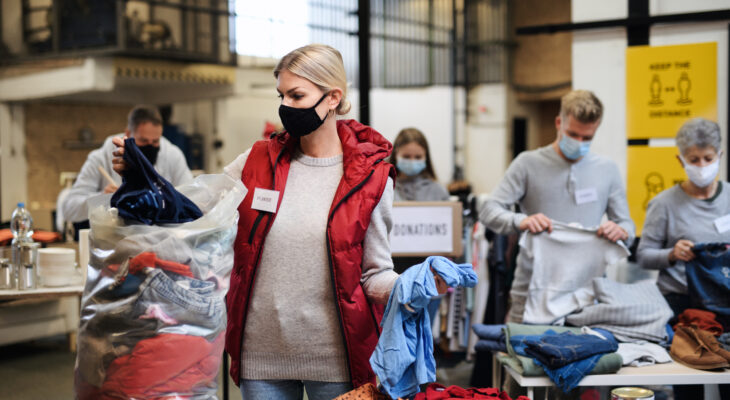
This case study aimed to explore this in the context of two care homes in West England during the early months of the pandemic. It was also interested in the role of collaborative management between care homes and their surrounding communities including local authorities, charities, businesses etc. ‘Collaboration’, in this context, took some influence from Helen Sullivan and Chris Skelcher’s conceptualisation of a collaborative agenda governing the (often mutually) beneficial cooperation between different public bodies and community agencies. One might consider how care homes may have banded together with their own local communities to ensure they still had the means to provide quality care in the face of COVID-19. Indeed, recent research by Fiona Marshall et al. has shown that, where government support was scarce, many care homes formed resource networks with external stakeholders such as local businesses, dentists, veterinaries, and domiciliary care agencies to source vital materials including personal protective equipment (PPE), electronics, toiletries, bedding and even food.

This study used semi-structured interviews and recruited five participants via a combination of snowball and non-probability purposive sampling. This included two deputy care home managers representing two different care homes in West England as well as a carer, a local parish councillor, and a co-owner of a local chemicals firm. The latter two participants were recruited as active members of the local community for one of the two participating care homes (or ‘external stakeholders’). Thematic analysis and grounded theory-based coding was then used to interpret the data.

The analysis firstly uncovered a strong dissatisfaction with the central government response to COVID-19 amongst all participants. Care staff spoke about how the implementation of the Coronavirus Act forced them to take on extra patients from hospital without an effective COVID-19 testing system in place and that inconsistencies between government guidance and company policy led to confusion amongst managers. Practices were forced to adapt; for example, adhering to stricter infection control measures and taking on extra care duties such as virtual GP consultations. External stakeholders also spoke about how these circumstances encouraged some level of collaboration within the community and a desire to assist local care organisations; for instance, a parish council was enabled to collaborate with the local chemicals firm and local school to source PPE such as goggles and hand sanitizer which could then be distributed to care providers.

Despite this opportunity to establish a resource network, collaboration between the two care homes and their surrounding communities was not evidenced as Marshall et al. had found previously. This was attributed to two main reasons. Firstly, resource dependency was less prevalent because effective internal management within both care homes meant they already had a sufficient supply of PPE. As one of the deputy managers recalled, the manager for her home made the decision to stock up on PPE and to lockdown early, therefore minimising the spread of the virus. The second reason was down to external circumstances that aided both care homes. Since both operate within rural areas of West England, they occupy less densely populated regions than care homes within inner city locations and therefore surrounding transmission rates remained relatively low. The implication is that locality largely eliminated the need to establish support networks with external stakeholders because they were not experiencing the same level of devastation seen in many other care homes. This was corroborated by staff who felt ‘fortunate’ compared to what they were seeing on the news.

These findings indicate the importance of effective management but also the extent to which contextual circumstances may or may not have necessitated collaborative networking between care homes and their surrounding communities during the early months of the pandemic. Whilst collaboration was less necessary here, the background coordination of parish council and local actors to produce a ‘safety net’ of resources did highlight the potential of localised collaboration and intervention in times of crisis. Perhaps, had such coordinated localised governance been enabled within the surrounding communities of less fortunate care homes, they may have been spared some of the devastations of the pandemic. Regardless, there is certainly a strong call for greater support towards the care sector for government and policymakers to consider – particularly in terms of clearer guidance, increased funding, and enabling localised governance to support care organisations.

Luke Bradbury graduated from the MSc Public Management in September 2021.

Getting under the skin of council budgets: what does good scrutiny look like?

Cllr Ketan Sheth

It’s a testing but all-too-familiar mix: funding cuts from central government, skyrocketing demand for local services, a growing population, tough choices and communities vulnerable as they recover from the social and economic shocks of the pandemic. As we approach budget setting, our situation in Brent – a NW London borough – mirrors the position of local authorities around the country.

​Against this challenging backdrop, I believe the role of effective Scrutiny is more important than ever, and so too is learning from one another.

This year, I co-chaired Brent Council’s Budget Scrutiny Task Group. It was our job to get under the skin of budget proposals, to grasp their real-world effects, to understand any mitigations, and to make recommendations where we felt the decisions of our Cabinet, and Full Council, could be strengthened.

To bring forward a balanced budget, this year we were called to scrutinise a package of savings totalling £2.7million, alongside Council Tax increases.

A deeper approach to scrutiny

Given the stark financial picture across the country, from the outset, we wanted to make sure that scrutiny was grounded in the complex reality of the difficult decisions that the Cabinet needed to take. We were determined that the scrutiny process must add value.

As a group, we worked with officers to develop a much broader approach than simply reviewing proposed savings. Instead of solely relying on the community consultation undertaken by the Cabinet, we went into detail on the impacts and sought out testimony from people on the ground. We felt we needed to get a deeper understanding of the experience of those who use Brent’s services and the complexity of their situations.

The idea was to test underlying assumptions made in the proposals, in order to give Cabinet and Full Council information and evidence to base their decisions on. We identified a number of areas to probe:

1. Impacts of Covid-19 on income from business rates, Council Tax and rents;

2. The impacts on health inequalities work when grant funding ends;

3. Implications of Covid-19 on the adult social care budget, especially mental health;

4. Pressures within the Dedicated School Grant; and

5. How the council’s £17m Covid-19 recovery package is being spent

The task group agreed a mix of less conventional scrutiny methods to build this holistic view, including focus groups and detailed evidence sessions with people on the ground. From local head teachers to voluntary and community sector partners, teams from our well-being  services, and Brent Hubs staff (Brent Hubs are spaces in the community bringing lots of services together under one roof to improve access for residents with more complex needs).

By taking this approach, we were able to assess the wider financial and service context, identify possible future budget pressures and the likely emerging needs of our communities.

It allowed us to make a number of nuanced, practical recommendations when reporting back. Most focused not on the savings themselves, but on how the Cabinet  might work differently to overcome and address some of those pressures. Helpfully, the group also identified areas where we felt the Council could effectively lobby for more support nationally and regionally. We’ve also put in place mechanisms for pulling insights from these testimonies as well as learnings from this deeper process through to future budget scrutiny cycles. Ultimately, we are all trying to deliver a better outcome for local people, and so I’m a big believer in the power of scrutiny to support good decision-making. I think that this is best realised by being a “critical friend”. The deeper, more contextual approach we took in Brent this year achieved just that, and I look forward to seeing these efforts bear fruit when the budget is taken to Full Council later this month.

Cllr Ketan Sheth is Brent Council’s Chair of Community and Wellbeing Scrutiny Committee and co-chaired its Budget Scrutiny Task Group

As the children return to school in September, the change in Pupil Premium funding will see many schools lose out

Cllr Ketan Sheth

Cllr Sheth on a recent visit to a school

Pupil Premium funding for our most disadvantaged children, based on the number of children eligible for free school meals (FSM) data collated every January, provides critical funding to schools for essential resources, which in turn benefits all children. Each FSM successfully registered increases the funding to schools, a substantial amount of which does not reach schools because not all parents who are eligible apply for FSM for their child.

New Government conditions have seen a change in how it is calculated. By shifting from a January date, for calculation, to the previous October date, a stretched borough, such as Brent, now, will have 900 fewer secondary school pupils eligible, amounting to a loss of £860K in their budget. 

Pupils at primary schools fare a little better in Brent; but the picture elsewhere in the country is less kind – 62,000 fewer eligible pupils in primary schools in England, according to FFT Education Datalab analysis of the Department of Education recent figures.

The need for FSM and eligibility is rising, as are casual admissions all year round, due to changes in family incomes. This change results in £90M missing from budgets when schools have already been under intense pressure with lockdown and are attempting to build-up again as we recover following Covid-19.

The result means that the Government has introduced a detrimental lag in funding, which will introduce a current year saving; but will impact on the much needed essential support for children who have had the greatest challenges of home-learning throughout the pandemic and now beyond.

We are often reminded of the mantra: “every child matters”; if we are serious about levelling-up everywhere then we must rethink this decision and how we best support our children, so no child is disadvantage. The time between September, the start of the school year, and January allows for an accurate reflection of school children in need of FSM; and therefore, schools requirement for Pupil Premium. The timing is essential to promote and ensure effective communication with parents/carers, enabling them to register for FSM.

There is some speculation amongst head teachers that the Government may overhaul or perhaps completely remove the funding – this will be catastrophic and a retrograde step for the levelling-up agenda.

Cllr Ketan Sheth is Chair of the Community and Wellbeing Scrutiny Committee of Brent Council

Help council commissioning to ‘build back better’

Jason Lowther

Local government is digging deep into its financial reserves and hiking council tax bills by double inflation, but still anticipates making further service cuts in 2021–22. The Public Accounts Committee report earlier this month shows how central government support hasn’t matched Covid-related budget reductions. More positively, at the same time, councils and partners are eyeing the improvements made to commissioning and procurement during the pandemic and asking whether these could help balance the budget. Can adding value to local government’s annual procurement spend of £100bn help improve outcomes for citizens, sustain local councils, and build a better recovery?

As NESTA’s recent report, A Catalyst for Change, evidenced, councils’ collaboration with other public sector bodies, citizens and the voluntary and private sectors was at the centre of the response to COVID-19. Local authorities ‘stepped into their role as conveners, leveraged their existing relationships and partnerships, and forged new ones to dynamically address key issues. This allowed organisations to link up volunteers with vulnerable people, support businesses, deliver food parcels or find temporary accommodation for rough sleepers’.

I’ve heard from some of the council managers on INLOGOV’s teaching programmes of the amazing agility and flexibility councils have been able to develop with partners in areas such as social care and housing. Commissioning and procurement processes that in the past were seen as inflexible, slow, risk-averse, price-obsessed and lacking innovation were transformed rapidly in response to the immediate threats of the pandemic. Data was shared in more depth and quickly, enabling better targeting of services. More flexible financial and performance management arrangements opened the door to flexible service delivery.

Now, a major research programme led by Dr. Richard Simmons at Stirling University, called Optimising Outcomes, is looking at the impact of Covid on partnering and procurement. The programme is working with key sector bodies such as CIPFA and SOLACE as well as universities and research councils, to answer key questions such as:

  • How, and how effectively, are local authorities deploying their commissioning and procurement functions to address the challenges posed by Covid-19? What are the successes to be celebrated? Where are the tensions that need to be managed? Where is the system at risk of breaking down?
  • What are the opportunities for improved procurement performance? How do local authorities optimise every aspect of procurement spend?
  • Can local authorities adopt more innovative, strategic, entrepreneurial and relational approaches to strengthen local resilience and avoid a weak and incapacitated system?
  • What role can greater data-analytic capacity play in supporting a more agile and effective response?

As part of this research, council managers have been invited to take part in a survey to capture learning from the many challenges and achievements of the sector during the last year.  The survey is aimed at all UK council managers (there is a separate survey for procurement teams) and takes around 10 minutes to complete.  The closing date for responses is 21st June.

If you are a UK council manager and haven’t yet taken part, please would you complete the survey here.    

This is a great opportunity to ‘build back better’ by applying the lessons and innovations councils and partners have developed over the last 18 months. I’ll report back on the results later this year.

Source: DHSC website

Jason Lowther is Director of the Institute for Local Government Studies (INLOGOV)

The £3 Billion Pound Question

Jason Lowther

The Institute for Fiscal Studies’ latest review of English council finances documents why so many chief executives and treasurers have been having sleepless nights since “whatever it takes to tackle Covid” transformed into “as little as we can get away with giving you”.

On Wilkins Micawber’s “income” side, Covid has hit councils’ commercial activities, notably around retail rents, as well as fees for facilities such as leisure centres, and revenue from local taxes.   On the expenditure side, councils are seeing persistent cost increases.  As Micawber predicted: “result misery”.

In social care alone, expenditure on the care of older people will need to increase substantially and quickly.  Adult social care has faced a combination of pressures arising from demographic change and increased costs, rising need and demand, and short-term funding settlements. 

The IFS recognises the huge uncertainties involved in predicting financial and economic issues at present, addressing this by analysing a range of scenarios.

The bottom line across all council services is a £3bn+ shortfall in 2020–21, with the IFS concluding this may well be an optimistic estimate, and a middle scenario projecting a gap of over £3bn a year by 2024-25.  Not surprisingly they conclude that “without additional funding and/or flexibility over council tax rates, it is highly likely that councils will have insufficient revenues to keep pace with rising spending needs”.

What to do about this?  Aside from yet more austerity, the IFS identifies changing the rules on council tax rises (which would increase inequalities between rich and poor areas), increasing government grants, or giving councils additional tax powers such as new local taxes.

Austerity, the sustained and widespread cuts to government budgets which characterised Britain’s public policy from 2010, has already shrunk the capacity of the local state, increasing inequality between local governments and exacerbating territorial injustice[ii].

Greater local freedom on taxation is well overdue in the UK, where a larger proportion of local government spending is financed through grants from central government, and much less use is made of local and regional taxation than in almost all other European countries[iii]

Although the body of existing academic evidence about the impact of devolving fiscal powers is inconclusive[iv], comparative research on how municipal governments function in a number of major international cities demonstrates that British cities have very low levels of fiscal autonomy[v] and lower productivity than these cities.  There are also positive effects on economic outcomes when powers are held at the appropriate level and when local authorities are incentivised to create pro-growth planning regimes[vi] 

It’s also worth noticing again that much local government funding is still distributed through competitions which place considerable pressures upon local authorities and partners[vii], and result in wasted effort and ineffective use of resources.  And, whilst councils and other public bodies can share resources and pool funds to deliver joint outcomes more effectively and efficiently, there are still legal, cultural, governance and other barriers to this collaboration. 

In the short term, government should cull competitive funding and address the barriers to resource sharing.  They must plug the £3bn+ funding gaps over this and the next few years.  And in the medium term much more local freedom on taxation and autonomy are needed to give local government a sustainable future.

Jason Lowther, Director – Institute for Local Government Studies


[i] Ogden, K. et al, 2020, COVID-19 and English council funding: what is the medium-term outlook?, Institute for Fiscal Studies

[ii] Gray, M. and Barford, A., 2018. The depths of the cuts: the uneven geography of local government austerity. Cambridge Journal of Regions, Economy and Society11(3), pp.541-563.

[iii] Loughlin, J. and Martin, S., 2003. Options for Reforming Local Government Funding to Increase Local Streams of Funding: International Comparisons. Lyons Inquiry into Local Government Funding.

[iv] London Finance Commission, 2013. Raising the capital: The report of the London Finance Commission. London, the Commission.

[v] Slack, E., 2016. International Comparison of Global City Financing: A Report to the London Finance Commission. Institute on Municipal Finance and Governance Munk School of Global Affairs. University of Toronto.

[vi] Cheshire, P.C. and Hilber, C.A., 2008. Office space supply restrictions in Britain: the political economy of market revenge. The Economic Journal118(529), pp.F185-F221.

[vii] Loader, K., 2002. What price competition? The management of competitive funding in UK local government. International Journal of Public Sector Management.