Just how ‘burdensome’ is our tax system?

Chris Game

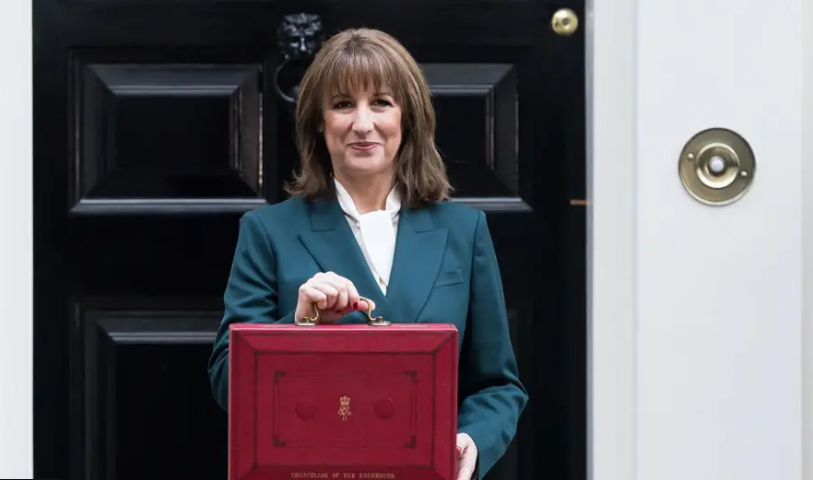
One of the almost unavoidable consequences of being comprehensively retired and with any kind of interest in politics is that you find yourself watching more of the Government’s annual, or biannual, Budget drama than you’d ever felt necessary during your working career. There are everyone’s speculations, the experts’ attempted explanations/simplifications, plus this time the botched premature release of the whole thing by the unfortunately titled (and now former) Chairman of the Office for Budget Responsibility (OBR) some 40 minutes before Chancellor of the Exchequer Rachel Reeves even took to her feet.

Anyway, unlike, I imagine, most of you lot, I actually sat through the whole Budget speech and at least the first bit of ensuing analysis by the ‘experts’. And, having done so, I almost immediately wished I’d counted the number of ‘tax burdens’ I’d heard – rather than, say, ‘tax rates’, which was the term I feel I grew up with, or tax levels, both of which are obviously more neutral and, you might think, more appropriate for a Chancellor of the Exchequer and at least some of her own party supporters.

I’ve no way of proving this, but it’s my strong impression that for most of my life the term ‘tax burden’ is one that would be used not in a Chancellor’s budget speech, but predominantly by slightly disgruntled taxpayers themselves or by Opposition parties and politicians, as a criticism of some specific tax or tax increase that the Government or Chancellor might be contemplating or had actually just imposed.

Gratuitous piece of information: we know that the public’s attitudes towards taxation and spending do fluctuate over time – partly but not entirely in relation/response to actual levels of taxation. Indeed, there’s an actual name for the study of such fluctuations: thermostatic theory, which, when I first learnt of it, I thought was something to do with people being happier when the sun’s out.

Anyway, the two words – tax and burden – are nowadays so closely linked, in the minds apparently of both payers and imposers, that they might as well be hyphenated. Quite early on in Reeves’ speech, therefore, and having acknowledged that freezing tax thresholds would hurt working people, she assured us that her plans were fair and that “the biggest burden would fall on those with the broadest shoulders”.

Not ‘fiscal impact’, ‘tax obligation’, or even ‘tax liability’, emphasising variously the effect on government finances or the legal duty to pay taxes, but that b-word from the outset and for any public expenditure. Nowadays, it seems, any tax increase, indeed any tax at all, is not just attacked as, but presented as, burdensome – a questioning of which, as I hope you’ll be gathering, was this blog’s main prompt. 

For it strikes me as odd, wrong and regrettable in several different ways. For a start, it’s almost certainly not how most of us were first taught about and introduced to taxes and their function. My guess is that explicit links would have been made between the public services with which as young people we would have been becoming familiar and benefitting from – education, healthcare, public safety, transport, waste management, emergency services – and their providers, and how our parents contributed in various ways to their funding, even those of which they weren’t necessarily regular or direct consumers.

No doubt we learned too, maybe indirectly, about their rising costs and the tax increases required to pay for them, but, if ‘burdens’ were mentioned at all, it would have been to explain that that was part of the deal in our advanced society. And, if our teachers were particularly keen, there might be some attempts to compare our levels/burdens with those of at least other European countries.

At which point – following a weekend wondering if I should email Jason and sound him out on whether he felt it would be worth my trying to turn these frankly rather meandering thoughts into an INLOGOV blog – at 10.00 a.m. precisely on Monday morning, there arrived a ResearchGate email announcing that our colleague Catherine Durose had just co-published an article asking “How should policy actors respond to buzzwords? Three ways to deal with policy ambiguity”[1].

It’s obviously impossible to summarise a 16-page article in a single blog paragraph, but the following desperate two sentences convey at least something of Durose and her three co-authors’ concerns. By using the lens of ‘buzzwords’, they “explain how actors in real-world policymaking contexts face ambiguity, then prompt debate on how to respond” (p.4). They focus our attention on “the temporality or the cyclical nature of ideas about better policymaking” … highlighting “the ambiguity that often accompanies these cycles”, and encapsulate “what these dynamics can feel like to policy actors …” (p.5).

Which brings me to my closing paragraphs and my concern about the seemingly incessant use of the ‘tax burden’ phrase – which could easily, it seems to me, make any comparative newcomer or innocent suppose that this ‘burden’ would surely reflect the UK’s position near the top of at least the European overall tax level list.

However, as anyone who has ever spent more than a few minutes ‘researching’ this tax burden question knows well, if anything, the reverse is the case. True, UK tax as a proportion of GDP (Gross Domestic Product) is currently close to its highest since 1945, but for a single worker on an average wage, we have one of the lowest ‘tax burdens’ among both G7 (Canada, France, Germany, Italy, Japan, UK and US) and OECD countries.

Other data sets are, of course available, but if, as would seem most likely, our newcomer/innocent were thinking of personal income tax levels, they’d be pretty comprehensively wrong. In the December 2025 table of ‘Top Statutory Personal Income Tax Rates in 35 Major European Countries’ the UK’s precisely 45% personal income tax rate puts us in 16th place – yes, above halfway, but not by much, and way behind the eight 50% pluses: headed by Finland (57%), Denmark (56%), and France (55%).

So, if 45% warrants the term ‘burden’ pretty well every time it’s mentioned, I wonder what translated nouns citizens of some of these countries use?  And might it not be time for at least our Chancellor (or Chancelloress) of the Exchequer to modify the ‘burden’ references?  Oh yes, and can Durose et al. also please work on a positive buzzword/phrase to substitute for ‘tax burden’?


[1] Richardson, L., Durose, C., Cairney, P. and Boswell, J., 2025. How should policy actors respond to buzzwords? Three ways to deal with policy ambiguity. Policy Sciences, pp.1-16.

Image of chancellor: https://www.bbc.co.uk/news/articles/cewjkv8jylko

Chris Game is an INLOGOV Associate, and Visiting Professor at Kwansei Gakuin University, Osaka, Japan.  He is joint-author (with Professor David Wilson) of the successive editions of Local Government in the United Kingdom, and a regular columnist for The Birmingham Post.

Openness of council finances is key for a functioning democracy

Matty Edwards, Research For Action

Local authorities are under immense pressure to find savings whenever they can. After more than a decade of austerity, the collective deficit in the sector is expected to reach £9.3bn by next financial year. Local authority finances have also become increasingly speculative, as budgets are prepared on the basis of unpredictable grant allocations and single-year financial settlements, sometimes without audited accounts. Pressures to find new sources of income through commercial investments and private sector partnerships have also increased the complexity of council funding.

This creates a challenge: scrutiny of local government finance is more important than ever. Yet even with the best intentions, local authorities struggle to produce open and accessible financial information. 

In a research collaboration between Research for Action and the University of Sussex, we set out to explore how financial information — such as council budgets and accounts — could be made more accessible to the public. Our research found that even experienced researchers, accountants and councillors struggle to find and understand local authority financial information.

We spoke to 26 people from the local government sector over three months this spring to examine barriers to making local authority financial information accessible to councillors and the wider public. Interviewees included councillors from a range of authorities, council officers, academics, accountants, journalists and key sector bodies like CIPFA. 

Our key findings were a lack of standard reporting requirements, strained council capacity after years of austerity and a fragmented data landscape with no standard formats for publishing financial information. These barriers make it difficult to understand a single council’s finances and make comparisons across the sector, hindering effective scrutiny by councillors and journalists, and democratic participation by the public. 

Some interviewees argued that accessibility was less of a priority in the face of a mounting crisis in local authority finances, but in our view, openness is not a luxury. It is key to effective local democracy. 

How to improve open up council finances

Based on our findings, we set out a series of recommendations for greater transparency and openness. 

The government should introduce new data standards for local government to improve accessibility, potentially via a Local Government Finance Act. This should include making financial information machine readable where possible and using accessible file formats. An easy win in this area would be to create a single repository for all local government financial information.

Local audit reforms are also an important piece of the puzzle. The new Local Audit Office (LAO) should be made responsible for local government financial data, including making it publicly available with tools to enable comparison and oversight. A more ambitious idea for the new LAO could be to create a traffic light warning system for the financial health of local authorities based on indicators that are timely and easy to understand, taking inspiration from Japan

Council accounts were highlighted as a particularly technical and opaque part of local government finance. That’s why councils should be mandated to attach a narrative report to their annual accounts, as previously recommended by the Redmond Review.

We think that the Local Government Data Explorer, recently scrapped, should be replaced with a data visualisation that is genuinely accessible and interactive, perhaps taking inspiration from a dashboard created by academics in Ireland. There should also be funding for local open data platforms, because there have been isolated examples of successes, such as the Data Mill North. 

The other part of the problem is that councillors often don’t have the knowledge and skills to properly scrutinise the complicated world of local government finance. That’s why we’re calling for greater support and training for councillors to enable better financial scrutiny, as well as public resources to improve literacy around local government.

While the sector faces great upheaval in the next few years through local government reorganisation and English Devolution, these reforms also present an opportunity to improve transparency – whether that’s at unitary or combined authority level. 

We believe that greater openness will ultimately facilitate better public participation and healthier local democracies.

Matty Edwards is a freelance journalist based in Bristol who also works for Research For Action, a cooperative team of researchers that in recent years has investigated PFI, LOBO loans, the local audit crisis and scrutiny in local government.

Win an election and implement your manifesto – that’s novel!

Image: Emily Sinclair/BBC https://www.bbc.co.uk/news/articles/c367lry5ypxo

Chris Game

First, a reader alert. What follows is in essence an only marginally revised column written for and hopefully published in this week’s Birmingham Post, to which for many years now I’ve been a regular contributor. Thanks, at least in part, to the “many years”, I’m permitted a wide scope of subject matter, but for obvious reasons local government in some form or other is what I tend to resort to most frequently – not least around local election season.

With the Post’s Thursday publication date, this is a mixed blessing, knowing that most readers interested in these matters would very likely have learned the results of the elections before they read one’s prognostications and predictions. What follows here, then, is my third column focused on this year’s local (County/Unitary Council) elections, which were, of course, limited to just 24 of England’s 317 local authorities (plus the Isles of Scilly) and precisely none in, never mind Birmingham, the whole metropolitan West Midlands.

Faced with the alternative option of ignoring the topic altogether, I decided to focus on the four West Midlands County Councils: three with biggish, if declining, Conservative majorities – Shropshire, Worcestershire and Warwickshire – plus STAFFORDSHIRE: Labour for decades, but Conservative since 2009, and, until the May council elections, with 55 Conservative councillors out of 62, almost as Tory as they come.

However … since last July, when the county’s parliamentary constituencies all went Labour, Nigel Farage’s Reform UK Party had been energetically hoping to build in Staffordshire on what statistically had been among its most promising performances. And indeed it did: Reform UK: 49 of the 62 County Council seats, leaving the previously controlling Conservatives with 10, and Labour, Greens and Independents 1 each. The Lib Dems, along with UKIP, the Workers Party of Britain and others, failed to score.

It typified results across the country. On what nationally was an exceptionally quiet election day, Reform UK increased its nation-wide base of just two councillors (both on Hampshire’s Havant Borough Council), to a relatively massive 677 (39% of the total seats contested) and gained majority control of no fewer than 10 of the 23 councils.

One can only speculate at some of the results that a fuller involvement of, say, the 130 unitary authorities, metropolitan districts and London boroughs might have produced. I concluded that Election Day column, though, not with any numerical predictions, but with Farage’s most publicised campaign observation/pledge: “We probably need a DOGE for every single county council in England”.

Which could have sounded a touch presumptuous from the Leader of a party who had approached that Election Day holding just two of the 1,700+ seats ‘up for grabs’ – but not from Farage.

I did wonder, though, what onlookers would make of that DOGE acronym (or, in some versions, D.O.G.E. – that’s how novel it is). Indeed, even Reform candidates, who probably knew at least that it stood for the love child of President Trump and the recently very departed Elon Musk’s Department Of Government Efficiency, trod carefully.

Created, they could possibly parrot, to “modernise information technology, maximise productivity and efficiency, and cut wasteful spending”, but did they have any real idea of how the function and office might work in a UK political context? Or did they possibly assume that, like so many campaign pledges, even if, rather incredibly, a DOGE majority did emerge, it would find itself, at least for the present, on the ‘too hard just now …. we’ve only just elected our Leader’ pile?

Certainly I, while having at least some idea of what county councils having an English DOGE might entail, would definitely NOT have predicted that, within just one month of those county elections, one of England’s biggest and traditionally most Conservative counties, KENT, would be preparing to face an ‘Elon Musk-style’ DOGE audit by a team of technical experts assembled specifically to analyse its £2.5 billion-plus budget spending and assess its financial efficiency.

Since the past weekend, the ‘Elon Musk-style’ bit will possibly have been played down, but not, seemingly, the ongoing implementation. With LANCASHIRE – £1.2 billion budget – already announced as next on the list, this just could prove insightful and potentially serious stuff.

Until May 1st, Kent County Council comprised 62 Conservatives, 12 Lib Dems, 4 Greens, 0 Reform UK.  Since then, it’s been 10 Conservatives, 6 Lib Dems, 5 Greens, and 49 Reform UK. If dramatic change is to be the agenda, Kent seemed an apt and attention-guaranteeing choice. 

By any measure, and almost whatever happens next, that – in my book, anyway – is an impressive achievement. There’s been, predictably enough, ‘Establishment’ outrage – “a superficial response to the deep problems of local government” … “initiating a review of local authority spending misunderstands the circumstances facing local authorities … All councils have been caught in an iron triangle of falling funding, rising demand, and legal obligations to deliver services. In that context every local authority has had to make difficult choices to cut services …” (Institute for Government).

On the other hand, win an election and implement your party manifesto! – a demonstration that turning out and voting in local elections, even in our exceedingly non-proportional electoral system – can produce policy action.

Or, rather, especially in our exceedingly non-proportional electoral system. Two of the new Combined Authority mayors (outside the West Midlands) were elected on under 30% of the votes cast, and obviously a much smaller percentage still of the registered electorate.

This follows the recent ditching of the Supplementary Vote in favour of ‘First-Past-The-Post’, where voters pick just one candidate, and the one with the most votes wins – even if, as this time in the West of England, that percentage was under a quarter of an already very modest turnout.

To me, anyway, it’s arguably even more important in these local/Mayoral elections than in parliamentary ones – for us, the elected Mayors, and democracy generally – that voters can indicate their first AND SECOND Mayoral preferences, thereby ensuring that, however low the turnout, the finally elected winner can claim the support of at least a genuine majority of voters.  Which means electoral reform – but that’s another column/blog.

Chris Game is an INLOGOV Associate, and Visiting Professor at Kwansei Gakuin University, Osaka, Japan.  He is joint-author (with Professor David Wilson) of the successive editions of Local Government in the United Kingdom, and a regular columnist for The Birmingham Post.

Local Democracy in Crisis?

Peter Hetherington

Battered by fourteen years of austerity, is local government losing its once-proud standing and status? Probably. For a start, It’s no longer as ‘local’ as it should be. And it certainly isn’t ‘government’ as we once knew it.


These days, we sometimes tend to lump ‘democracy’ and ‘crisis’ together in a global context, forgetting that close to our doorsteps – in countless civic centres, town and county halls – there’s another crisis: restoring faith in local democracy, while sustaining councils literally facing insolvency.

At a hybrid event, organised by the Centre for Urban and Regional Studies at Newcastle University, we asked a simple question at the start: Do we need a new, positive direction for once-powerful towns and communities where meaningful democracy has disappeared as local government has withdrawn?

We attracted a great range of speakers putting, broadly, two cases: first for a new local government structure in England based on economic geography embracing combined authorities for big city areas alongside large county-wide single purpose unitary authorities, underpinned by a more equitable funding formula; and, secondly, for varying degrees of town and parish governance, sustained by participatory democracy, including citizens assemblies, with powers – parks, libraries, leisure facilities for instance – devolved from existing larger authorities. Often, such an asset transfer is born out of necessity because larger councils can’t afford to keep them anyway and parishes/towns can raise money through a council tax precept while sometimes creating stand-alone community interest companies.

The case for a genuine new ‘localism’ appeared strong. That’s because, currently, a continuing process of abolishing councils to create larger units with few, if any, local roots has created a sense of powerlessness, a collective loss of identity with little or no attachment to people and places. Fifty years’ ago England had almost 1200 councils, from the smallest urban/rural district to the largest city. “We were run by our own,” recalled the writer, broadcaster and ultimate polymath Melvyn Bragg, in his 2022 memoir ‘Back in the Day’. Born in Wigton, Cumbria, his small town had a rural district council (which I knew well): “We could challenge the elected councillors who made the decisions” Bragg continued. “They were not a separate cadre…they were just people you had been to school with…(approach) on the street…to whom you could write a personal letter knowing it would be read, considered, answered.”

No longer. His council disappeared in 1974. Today, after several rounds of ‘reorganisation’ under the dubious label of efficiency – although there’s little concrete evidence of cost saving – that number has been reduced to 317, with little if any public debate. A forthcoming devolution White Paper is expected to advocate more reorganisation and even fewer councils in a country where local authorities already cover much larger areas than in mainland Europe.

Against this background, it’s probably no surprise that Carnegie UK, in its recent ‘Life in the UK’ index, reports that a lack of trust in politics and government is undermining collective well being. Three-quarters of people, says Carnegie, feel they can’t influence decisions. Surely reconnecting them begins locally. But how local?

If the government’s approach so far is a broad definition of ‘taking back control’, could an over-arching contradiction be emerging? Will the apparent obsession with more all-purpose councils, the prospect of an all-unitary England – similar to the structure in Scotland and Wales – make people feel even more distant from power, disaffected? Carnegie insists that restoring faith in democracy should be the Government’s ‘mission of missions’.

If that’s one challenge, there’s another, interlinked: the crisis of financing local government, with 7 councils theoretically insolvent and many more heading that way; legally, they can’t go bust and have been forced to borrow the equivalent of pay-day loans on a mega-scale to stay afloat, adding to a debt mountain. Now Conservative-run Hampshire has said issuing a section 114 notice – prelude to technical insolvency – is “almost inevitable”, with a sting of others close behind. And as Prof Andy Pike, and Jack Shaw have outlined in their recent excellent, but chilling paper (‘The geography of local authority financial distress in England’) 96% of English councils won’t balance their books by 2026-27.

Of course, alongside that unparalleled financial crisis in local government, we’re also facing an alarming democratic challenge nationally with the lowest turnout ever recorded in the recent general election; almost half the electorate didn’t vote! Surely, the place to renew trust in the democratic process begins at the grass roots, perhaps reviving some of the 10,000 town and parish councils, some of which want to take over functions from larger authorities (some are obliging out of necessity). Could this – call it double devolution – provide one small way forward?

I’m aware there’s a danger that events, like the latest one at CURDS addressing the crisis in local democracy, can produce a combination of hand-wringing and hot air. But, hopefully, we concluded with a practical, positive outcome. As Professor Jane Willis, geographer and champion of community empowerment – now in Cornwall- noted: “It’s not all gloom and doom – there is good news.” In her county, communities are taking back control, again out of necessity – a really positive story and a lesson for elsewhere? Willis advocates a new social contract under a layered system of local government to “re-franchise” people.


In the meantime, the chair of the event urged those present to make their views known to MPs, and the government, as the forthcoming devolution White Paper foreshadows a pre-legislative consultation process. As Professor Andy Pike, of CURDS, noted in summing up, one leading question needed answering above all: “What is local government for, and how to fund it?”


All we know so far is that the White Paper, according to the Treasury, will include …“working with councils to move to simpler structures that make sense of their local area with efficiency savings from council reorganisation helping to meet the needs of local people…”. Contradictory or otherwise – will more larger councils “make sense” of local areas? – we must surely intensify a campaign for a genuine new ‘localism’, embracing places, communities, towns and some cities now without any form of local government. That doesn’t necessarily mean sidelining the case for a new – and/or revised – local government structure in England tied to a ‘needs’-based funding formula. The current one favours the richer parts of the country and penalises the poorest with the lowest tax bases.


But the time for national government to act is during the first year or so of a new administration. It assuredly won’t go down well with the ‘middle England’ target readership of – say – the Daily Mail. There’ll be howls of protest. But it must be a priority to bring a sense of fairness to a deeply unequal country and, equally importantly, deliver some hope to voters in the so-called ‘red wall’ seats who either returned to Labour at the last election or voted for an ascendant Reform. We live in a fragile democracy. Restoring faith in government, local and national, begins in community, neighbourhood parish and town. We need the Labour government to think big and act local. We haven’t much time.

Peter Hetherington is a British journalist. He writes regularly for The Guardian on land, communities, and regeneration.  He is also a vice-president, and past chair of the Town and Country Planning Association, former regional affairs and northern editor of The Guardian and the author of the 2015 book, Whose Land is Our Land? The use and abuse of Britain’s forgotten acres, and the 2021 book, Land Renewed: Reworking the Countryside.

Equipping local governments to deliver national and local priorities

Jason Lowther

Today we launched our latest report, Equipping local government to deliver national and local priorities. Local government is critical to the delivery of the new government’s five key missions, and to improving life across the country. We argue that, once a series of critical reforms are in place, government should have confidence to equip local authorities with more power and (when public finances allow) prioritise additional resources there, enabling local and national priorities to be delivered. But critical reforms are needed in financial management, audit and performance management, and in community power and participation.

The new government inherited many challenges. Council budgets per person in England have been cut by 18% in real terms since 2010. Councils are hitting financial crises: twelve have issued section 114 notices in the last six years, compared with zero in the previous 17 years. Representative institutions at all levels of government are suffering from declining legitimacy and increasing polarisation. Local government plays a vital role in increasing democratic relationships and trust.

But councils’ wide remit, local knowledge, democratic accountability, public service ethos, and key roles in working with partners and shaping local places make them critical to the delivery of all five of the government’s key missions. Local governments are best placed to operationalise solutions to interconnected problems, for example, improving public transport and encouraging more cycling and walking helps meet net zero targets. It can also deliver health benefits, reducing the burden on the NHS, as well as increasing productivity by giving businesses access to a wider and healthier workforce.

Action is required to ensure that councils are fit for purpose to make the type of contribution that central government requires of them. Underlying this is a lack of confidence in local government on the part of ministers and civil servants.  We have identified three areas in which the government must be confident if it is to equip the local level with more power: financial sustainability, performance standards, and community power and participation. 

Policy recommendations

Financial arrangements

  1. Provide multi-year funding.
  2. End competitive bidding and deliver a “single funding pot” for each council/ local area that has been allocated fairly and sensitively to the needs and assets of the community.
  3. Abolish council tax capping.


Audit and performance management

  1. Strengthen the evaluation of councils’ performance management.
  2. Make OFLOG independent and extend its remit and approach.
  3. Reintroduce effective management and support of council external audit by independent bodies.


Community power and participation

  1. Strengthen the role of councillors as facilitators and catalysts of community-driven change.
  2. Embed participatory governance to ensure lived experience and marginalised voices drive policy and service delivery.
  3. Develop public-commons partnerships and community-wealth building to support community-driven sustainable economies.

As the Layfield Commission concluded 50 years ago, local government funding should promote responsible and accountable government. Beyond welcome recognition of acute financial challenges and commitment to multi-year funding settlements, there is a pressing need for additional immediate and longer-term action to improve Councils’ financial position and strengthen local accountability.

Local authorities have different needs for funding, depending for example on levels of population and its composition, deprivation, and spatial factors. Central and local government should develop updated funding formulae and funding models which are as simple as practicable whilst capturing the key elements of local need, and as transparent as practical in operation.  There are many reports researching available options for fairer funding, approaches to fiscal devolution, and local government funding options

Local audit, performance regimes and regulation each have a part to play. Both a parliamentary select committee and the Redmond Review into the Oversight of Local Government have sought to investigate the failings in local government audit.  The latter in 2020 critiqued market driven audits, stating that the new audit arrangements have undermined accountability and financial management. 

The adoption of the Redmond Review’s proposal for an Office for Local Audit Regulation would provide oversight on procurement, management, and regulation of external audits of local authorities. The government could extend the oversight of local government performance management processes while avoiding the creation of an overly powerful national regulator, by adopting key recommendations on the future arrangements of OFLOG (the Office for Local Government).

Proximity means that local government can play a crucial role in improving relationships between government and citizens. By creating conditions to mobilise the diverse expertise and resources of communities, local government can ensure that public policies and funding are informed by the assets, priorities and needs of local people and places.  There are already many examples where local government has made progress with innovations such as citizens’ panels and juries, the delegation of power to the hyper-local level and in building inclusive economies

We have over thirty years’ worth of research on deliberative democracy, social innovation, and co-production evidencing the value of collaboration with diverse communities and stakeholders. Participatory governance is less about finding perfect solutions and more about transforming organisations to engage with communities in processes of co-producing mutual understanding, shared solutions, and a sense of collective ownership.  

Our work on the 21st Century Councillor can help with enabling the role of councillors not just as democratic representatives but also as facilitators and boundary spanners between institutions, communities, civil society and local businesses.

Community-wealth building, pioneered in Preston and several London boroughs, can help strengthen the local economy with insourcing, linking public procurement to local cooperatives and social enterprises. These novel forms of governance can be formalised through Public-Commons Partnerships.

Equipping local government to deliver national and local priorities will leave a long-lasting legacy of a well-resourced, effective, accountable, and engaged local government.

The full report is available here

The report was edited by Jason Lowther and Philip Swann, with particular thanks to the following contributors (alphabetically by last name): Dr Koen Bartels, Dr Sonia Bussu, Prof Nicole Curato, Dr Timea Nochta and Dr Philip Whiteman. With thanks to other colleagues and associates in INLOGOV.

Why do philanthropic foundations engage with city governments?

Dr Ruth Puttick

The fact that governments face an array of challenges is a well-rehearsed argument. City governments across the globe are tackling a myriad of social, economic and environmental issues, from trying to reduce homelessness, improving health and wellbeing, or increasing educational attainment.  In parallel, philanthropic foundations’ accumulated wealth and knowledge means they are increasingly welcomed as a government partner in addressing social needs. So why do philanthropic foundations engage with city governments?

The UK Association of Charitable Foundations defines philanthropic foundations as “charities with private, independent, sustainable income that supports individuals and/or organisations” (Pharoah and Walker, 2019, p. 1). In 2015, there were over 10,000 charitable foundations based in the UK and some of these are engaging with city governments.

In the U.S. context, philanthropic foundations have a long history of interacting with the government (Zunz, 2012) They have traditionally funded physical structures like libraries and opera houses, and in recent years, foundations have increasingly working directly with governments to tackle issues as diverse as climate change (Madénian and Van Nest, 2023), gun control, and poverty reduction (Barber, 2014; Nijman, 2009; Moir et al., 2014). Yet, there has been little exploration of this phenomenon in the English context.

Based upon the case study analysis of three contrasting English cities, Bristol, Manchester, and Newcastle, I drew upon qualitative interviews and policy reports to understand the interconnections between foundations and city governments.

Why do city governments and foundations collaborate

Philanthropic foundations can be a capacity-building partner of city government, providing direct funding and non-financial resources to help city governments solve problems.  Philanthropic foundations provide city governments with direct funding and non-financial resources, including data, research, events, and other outputs, such as toolkits.

Foundations are motivated to improve public services, develop new approaches to problem-solving, advocate on policy issues, and fill funding gaps left by austerity. Foundations select city governments based on personal rapport and perceived ease of working.

City governments are motivated to engage with foundations to access resources, for foundations to help amplify the voice of city governments, and because foundations are perceived as less bureaucratic and more trustworthy funders.

Barriers to city government and foundation collaborations

Foundation engagement with city governments is inconsistent. This study found that certain city governments (in this case, Manchester and Bristol) had more partnerships with foundations. The reason is that foundations often will not work with city governments when the city government’s priorities are unclear, if they are hard to engage, or when there is a perceived slow pace of change in city hall.

On the part of city governments, a scarcity of resources can prevent them from seeking foundation resources. With the impacts of austerity still lingering, it may have been surmised that austerity could prompt cities to seek foundation support, instead, this study has found that a lack of internal capacity can prevent the city government from seeking foundation involvement.

Implications for policy and practice

City governments interacting with foundations in England is a relatively nascent and under-explored phenomenon. As well as few academic studies, there is often an opaqueness in the nature of these collaborations. A lack of transparency can hinder scrutiny, which is problematic if city governments and their partners are to be held to account. Going forward, a key facet of city government engagement with foundations should be a commitment to transparency in the nature of the collaboration and an openness to sharing evidence of the impacts of the interactions on the outcomes that the foundation and city governments are trying to achieve.

Areas for future research

As a relatively underexplored topic, more research could usefully explore foundation engagement with city governments across England on a larger scale, particularly to understand the implications for accountability. Futuremore, future research could usefully explore whether philanthropic foundations prioritise collaborating with city governments over different types of organisations, such as charities, and if so, whether this is because city governments enable potentially larger degrees of policy influence than more “marginal” political institutions, such as NGOs or community groups.

To find out more about the research, please contact Dr Ruth Puttick, [email protected]

The full article is available here.

Picture credit: https://www.jolietymca.org/blog/the-significance-and-joy-of-giving/


Dr Ruth Puttick runs a research consultancy and is a Senior Research Fellow at the Institute for Innovation and Public Purpose (IIPP) at University College London. She has over 15 years of practical research experience in the public and private sectors advising on public sector reform, innovation and impact. She served as a Senior Policy Advisor in the UK Government’s Open Innovation Team, and before that, she worked at Tony Blair Associates, a global management consultancy, helping establish the policy and research team in the government advisory practice. Prior to that, she spent six years at Nesta, the UK’s innovation agency. Ruth is on X.com @rputtick and can be contacted at www.ruthputtick.com