Just how ‘burdensome’ is our tax system?

Chris Game

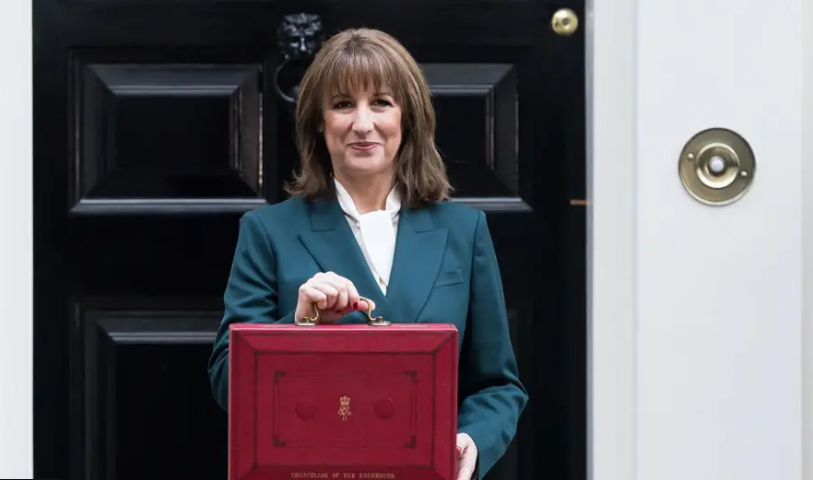
One of the almost unavoidable consequences of being comprehensively retired and with any kind of interest in politics is that you find yourself watching more of the Government’s annual, or biannual, Budget drama than you’d ever felt necessary during your working career. There are everyone’s speculations, the experts’ attempted explanations/simplifications, plus this time the botched premature release of the whole thing by the unfortunately titled (and now former) Chairman of the Office for Budget Responsibility (OBR) some 40 minutes before Chancellor of the Exchequer Rachel Reeves even took to her feet.

Anyway, unlike, I imagine, most of you lot, I actually sat through the whole Budget speech and at least the first bit of ensuing analysis by the ‘experts’. And, having done so, I almost immediately wished I’d counted the number of ‘tax burdens’ I’d heard – rather than, say, ‘tax rates’, which was the term I feel I grew up with, or tax levels, both of which are obviously more neutral and, you might think, more appropriate for a Chancellor of the Exchequer and at least some of her own party supporters.

I’ve no way of proving this, but it’s my strong impression that for most of my life the term ‘tax burden’ is one that would be used not in a Chancellor’s budget speech, but predominantly by slightly disgruntled taxpayers themselves or by Opposition parties and politicians, as a criticism of some specific tax or tax increase that the Government or Chancellor might be contemplating or had actually just imposed.

Gratuitous piece of information: we know that the public’s attitudes towards taxation and spending do fluctuate over time – partly but not entirely in relation/response to actual levels of taxation. Indeed, there’s an actual name for the study of such fluctuations: thermostatic theory, which, when I first learnt of it, I thought was something to do with people being happier when the sun’s out.

Anyway, the two words – tax and burden – are nowadays so closely linked, in the minds apparently of both payers and imposers, that they might as well be hyphenated. Quite early on in Reeves’ speech, therefore, and having acknowledged that freezing tax thresholds would hurt working people, she assured us that her plans were fair and that “the biggest burden would fall on those with the broadest shoulders”.

Not ‘fiscal impact’, ‘tax obligation’, or even ‘tax liability’, emphasising variously the effect on government finances or the legal duty to pay taxes, but that b-word from the outset and for any public expenditure. Nowadays, it seems, any tax increase, indeed any tax at all, is not just attacked as, but presented as, burdensome – a questioning of which, as I hope you’ll be gathering, was this blog’s main prompt. 

For it strikes me as odd, wrong and regrettable in several different ways. For a start, it’s almost certainly not how most of us were first taught about and introduced to taxes and their function. My guess is that explicit links would have been made between the public services with which as young people we would have been becoming familiar and benefitting from – education, healthcare, public safety, transport, waste management, emergency services – and their providers, and how our parents contributed in various ways to their funding, even those of which they weren’t necessarily regular or direct consumers.

No doubt we learned too, maybe indirectly, about their rising costs and the tax increases required to pay for them, but, if ‘burdens’ were mentioned at all, it would have been to explain that that was part of the deal in our advanced society. And, if our teachers were particularly keen, there might be some attempts to compare our levels/burdens with those of at least other European countries.

At which point – following a weekend wondering if I should email Jason and sound him out on whether he felt it would be worth my trying to turn these frankly rather meandering thoughts into an INLOGOV blog – at 10.00 a.m. precisely on Monday morning, there arrived a ResearchGate email announcing that our colleague Catherine Durose had just co-published an article asking “How should policy actors respond to buzzwords? Three ways to deal with policy ambiguity”[1].

It’s obviously impossible to summarise a 16-page article in a single blog paragraph, but the following desperate two sentences convey at least something of Durose and her three co-authors’ concerns. By using the lens of ‘buzzwords’, they “explain how actors in real-world policymaking contexts face ambiguity, then prompt debate on how to respond” (p.4). They focus our attention on “the temporality or the cyclical nature of ideas about better policymaking” … highlighting “the ambiguity that often accompanies these cycles”, and encapsulate “what these dynamics can feel like to policy actors …” (p.5).

Which brings me to my closing paragraphs and my concern about the seemingly incessant use of the ‘tax burden’ phrase – which could easily, it seems to me, make any comparative newcomer or innocent suppose that this ‘burden’ would surely reflect the UK’s position near the top of at least the European overall tax level list.

However, as anyone who has ever spent more than a few minutes ‘researching’ this tax burden question knows well, if anything, the reverse is the case. True, UK tax as a proportion of GDP (Gross Domestic Product) is currently close to its highest since 1945, but for a single worker on an average wage, we have one of the lowest ‘tax burdens’ among both G7 (Canada, France, Germany, Italy, Japan, UK and US) and OECD countries.

Other data sets are, of course available, but if, as would seem most likely, our newcomer/innocent were thinking of personal income tax levels, they’d be pretty comprehensively wrong. In the December 2025 table of ‘Top Statutory Personal Income Tax Rates in 35 Major European Countries’ the UK’s precisely 45% personal income tax rate puts us in 16th place – yes, above halfway, but not by much, and way behind the eight 50% pluses: headed by Finland (57%), Denmark (56%), and France (55%).

So, if 45% warrants the term ‘burden’ pretty well every time it’s mentioned, I wonder what translated nouns citizens of some of these countries use?  And might it not be time for at least our Chancellor (or Chancelloress) of the Exchequer to modify the ‘burden’ references?  Oh yes, and can Durose et al. also please work on a positive buzzword/phrase to substitute for ‘tax burden’?


[1] Richardson, L., Durose, C., Cairney, P. and Boswell, J., 2025. How should policy actors respond to buzzwords? Three ways to deal with policy ambiguity. Policy Sciences, pp.1-16.

Image of chancellor: https://www.bbc.co.uk/news/articles/cewjkv8jylko

Chris Game is an INLOGOV Associate, and Visiting Professor at Kwansei Gakuin University, Osaka, Japan.  He is joint-author (with Professor David Wilson) of the successive editions of Local Government in the United Kingdom, and a regular columnist for The Birmingham Post.

Openness of council finances is key for a functioning democracy

Matty Edwards, Research For Action

Local authorities are under immense pressure to find savings whenever they can. After more than a decade of austerity, the collective deficit in the sector is expected to reach £9.3bn by next financial year. Local authority finances have also become increasingly speculative, as budgets are prepared on the basis of unpredictable grant allocations and single-year financial settlements, sometimes without audited accounts. Pressures to find new sources of income through commercial investments and private sector partnerships have also increased the complexity of council funding.

This creates a challenge: scrutiny of local government finance is more important than ever. Yet even with the best intentions, local authorities struggle to produce open and accessible financial information. 

In a research collaboration between Research for Action and the University of Sussex, we set out to explore how financial information — such as council budgets and accounts — could be made more accessible to the public. Our research found that even experienced researchers, accountants and councillors struggle to find and understand local authority financial information.

We spoke to 26 people from the local government sector over three months this spring to examine barriers to making local authority financial information accessible to councillors and the wider public. Interviewees included councillors from a range of authorities, council officers, academics, accountants, journalists and key sector bodies like CIPFA. 

Our key findings were a lack of standard reporting requirements, strained council capacity after years of austerity and a fragmented data landscape with no standard formats for publishing financial information. These barriers make it difficult to understand a single council’s finances and make comparisons across the sector, hindering effective scrutiny by councillors and journalists, and democratic participation by the public. 

Some interviewees argued that accessibility was less of a priority in the face of a mounting crisis in local authority finances, but in our view, openness is not a luxury. It is key to effective local democracy. 

How to improve open up council finances

Based on our findings, we set out a series of recommendations for greater transparency and openness. 

The government should introduce new data standards for local government to improve accessibility, potentially via a Local Government Finance Act. This should include making financial information machine readable where possible and using accessible file formats. An easy win in this area would be to create a single repository for all local government financial information.

Local audit reforms are also an important piece of the puzzle. The new Local Audit Office (LAO) should be made responsible for local government financial data, including making it publicly available with tools to enable comparison and oversight. A more ambitious idea for the new LAO could be to create a traffic light warning system for the financial health of local authorities based on indicators that are timely and easy to understand, taking inspiration from Japan

Council accounts were highlighted as a particularly technical and opaque part of local government finance. That’s why councils should be mandated to attach a narrative report to their annual accounts, as previously recommended by the Redmond Review.

We think that the Local Government Data Explorer, recently scrapped, should be replaced with a data visualisation that is genuinely accessible and interactive, perhaps taking inspiration from a dashboard created by academics in Ireland. There should also be funding for local open data platforms, because there have been isolated examples of successes, such as the Data Mill North. 

The other part of the problem is that councillors often don’t have the knowledge and skills to properly scrutinise the complicated world of local government finance. That’s why we’re calling for greater support and training for councillors to enable better financial scrutiny, as well as public resources to improve literacy around local government.

While the sector faces great upheaval in the next few years through local government reorganisation and English Devolution, these reforms also present an opportunity to improve transparency – whether that’s at unitary or combined authority level. 

We believe that greater openness will ultimately facilitate better public participation and healthier local democracies.

Matty Edwards is a freelance journalist based in Bristol who also works for Research For Action, a cooperative team of researchers that in recent years has investigated PFI, LOBO loans, the local audit crisis and scrutiny in local government.