Local authorities and climate change: responding to the green challenge

Jon Bloomfield

What lies ahead for local government in 2021? We know the pandemic will continue to loom large. But all the signs are that with the UK hosting the crucial, international climate change conference (COP26) in Glasgow next November, the issue of climate change will be high on the policy agenda.

Over the last 18 months many towns and cities have responded to the growing environmental emergency and declared their commitment to go carbon-neutral. In early December, 38 local authority leaders committed to cut their own carbon emissions to net zero by 2030. Among the leaders to sign the net zero pledge set out by the NGO UK 100 are the metro mayors of Greater Manchester and the West Midlands, plus council leaders in Birmingham, Bristol and Edinburgh. Together the signatories represent almost a third of the U.K. population. A  Zoom virtual conference saw more than 500 council leaders and officers participating.

The international political climate is favourable. Reversing four decades of Washington neo-liberal consensus, the International Monetary Fund has given its seal of approval to public investment strategies irrespective of the rising debt consequence. The national mood music is positive too. Boris Johnson’s 10 point plan for a Green Industrial Revolution recognised that we need a low carbon transition transforming all sectors in the economy. In the lingering shadow of Trumpist climate denialism, it was reassuring. The really tough question is how to make good on these national and local targets. The words are easy: the action is harder.

What is the best pathway to follow? The green recovery should focus on the exploitation of what we already know can fulfil a low carbon, ‘levelling up’ agenda. Here there are three key policy arenas, energy, mobility and buildings and in all three,  local authorities, their staff, community groups and local neighbourhoods have key roles to play.

Take buildings. The country needs a large-scale programme of state investment in the regions to both reduce emissions and create jobs. The quickest and simplest way to do that is to focus on decarbonising our building and housing stock. Renovation works are labour-intensive, create jobs and the investments are rooted in local supply chains.  Central to green recovery should be programmes where budgets are devolved to enable localities to design initiatives appropriate to their needs, in partnership with local stakeholders. That means looking to develop neighbourhood schemes so that entire streets are renovated together, rather than the government’s current green grants to individual householders. A community approach would bring economies of scale; permit accredited programmes with approved contractors; enable retrofit to be undertaken along with boiler replacements and renewable energy installations; introduce smart, digital appliances; and   on-street vehicle charging infrastructure. In other words, a comprehensive approach that takes citizens with you. Neighbourhood renovation and refurbishment offers lots of new jobs across the whole of the UK, with warmer homes, lower fuel bills and plenty of opportunities across the building supply chain. Plus a chance to engage local people in the revitalisation of their own streets and communities. What’s not to like?

But this all requires council officers to have the understanding and grasp of climate change transitions thinking and with the social and participatory skills to engage with neighbourhood and local groups. Climate change policies cannot be simply imposed from above. A huge social challenge won’t be addressed without some friction and tension. As we have seen with the Low Traffic Neighbourhoods policy over the last few months, if people aren’t engaged, then suddenly vocal resistance to these measures can arise.

Addressing climate change means we shall have to alter the ways that we live, move and work. The issues of climate transition are effectively an emerging policy arena. They require an understanding and marshalling of a new combination of skills amongst a wide cadre of local government officers, councillors and engaged citizens. Planners, traffic engineers, housing officers, finance and procurement staff: these and more all need additional skill-sets. Councils can set ambitious targets. But unless they have the staff within their ranks with the competence and skills to tackle them, then they will fall short.

Jon Bloomfield has been involved with the EU’s Climate KIC programme for over a decade, helping to develop educational and training programmes and experimental projects which help companies, cities and communities to make effective transitions to a low carbon economy.
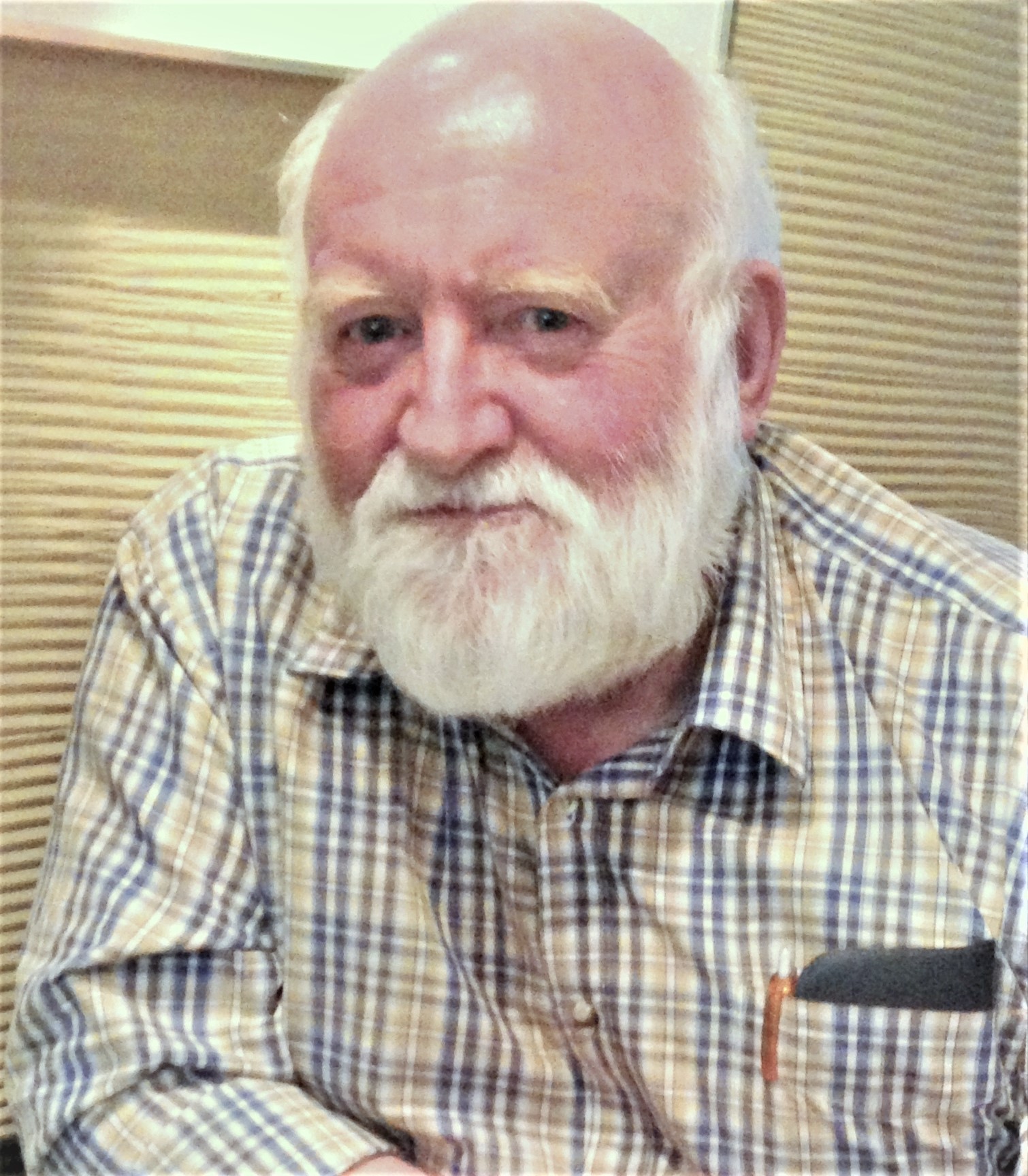

Vice-President-elect Kamala Harris and me

Chris Game

If only Birmingham weren’t in Tier 3 … I could prop up bars in city centre pubs, casually conversing with fascinated fellow-drinkers: “You know that Kamala Harris, the American Vice-President-elect – yeah, the one wearing the Elvis-style white trouser ‘power suit’ for her victory speech.

“Well, I was a professorial contemporary of her Dad, Donald, at California’s prestigious Stanford University, don’t you know?  Thanks, mine’s another Plum Porter.”

Sadly, with Plum Porter purveyors currently closed, I’m driven to search for alternative captive audiences.  However, in contrast to bits of the current series of The Crown, this boast, while it may not ‘ring true’, actually IS true.  Before coming to INLOGOV in 1979 my employers for the previous five years were indeed Stanford – the posh, private, but definitely prestigious university north-westish of Silicon Valley.  

At least, that was Kamala’s Dad’s main workplace – I said ‘contemporary’ not ‘colleague’!  Mine was Stanford’s British Studies Center – note the spelling – at the also posh but less sunshiny Cliveden House on a National Trust estate near Maidenhead, where some hundred or so American students would come to spend two or three semesters of their undergrad years.

And the ‘Professor’ bit?  Well, as everyone knows, almost all US university academics have that generic title. ‘Full’ Professors are the real deal, while my Cliveden colleagues and I were ‘academic personnel’ – but on envelopes from HQ ‘Assistant Professors’.

It’s been mildly disquieting to see some UK universities going down the ‘Assistant Professor’ route – Warwick, for instance – but I’m not in the least bitter. I just regret not saving at least a few of those envelopes, because in four subsequent Birmingham decades I never managed even that.

Jamaican-born former economics Professor Donald Harris is/was at the distant other end of the scale: an Emeritus Professor since retiring early from Stanford after an exceptionally distinguished career and numerous international academic awards.

Here’s the thing, though.  Harris joined Stanford in 1972, yet in my creepily retained 600-page 1974/5 Stanford University Bulletin we Clivedenites and our taught courses all get several individual mentions, yet Donald not one.  Which, for apparently “the first Black person to receive tenure in Stanford’s economics department”, seemed rather odd.

Still, it provides a link to his elder daughter’s string of ‘firsts’ that actually prompted this blog: the first major personal career choice made by the first woman, first African American, and first Asian-American US Vice-President-elect.  California-born – for those, like President Trump, still questioning her Presidential eligibility; and her name, incidentally, pronounced not at all like ‘Pamela’, but ‘Comma-lah’ – from the Sanscrit for lotus flower.

Which is also relevant, because Kamala’s parents divorced when she was just seven, meaning she and her sister, Maya, were brought up largely by their Indian-born mother, Shyamala Gopalan – a bio-medical scientist, whose career in breast cancer research was every bit as outstanding as her husband’s, but who in 2009 would die of cancer herself.

It was her mother’s acceptance of a research post at McGill University Hospital in French-speaking Montreal that chiefly determined that Kamala went first to a French-speaking elementary school.  Then her mother moved the family again, so Kamala could attend Westmount High School, Quebec’s only public school offering so-called Advanced Placement courses for potentially university/college credit.

That university/college choice in by now the early 1980s, though, was definitely Kamala’s. After several majority-white schools, and her parents working in eminent but predominantly white institutions, she sought a wholly different experience. Young, gifted and black, she would live, learn, socialise, and at times protest against South African apartheid, with black students in a black university in a black city.

She would therefore attend one of the hundred or so HBCUs – Historically Black Colleges and Universities – and arguably the most renowned: Howard University in Washington DC, the African American community’s ‘Chocolate City’. And a short subway ride to both her current Capitol Hill workplace in the Senate and her future one in the White House. Back then it was no part of any life plan, but it can serve as a useful putdown today to those who accuse her of being ‘not really black’ or ‘not black enough’.

In the early 1970s Stanford University – students and staff – was unmistakeably Californian and white.  But I remember quite early learning of and being fascinated by the whole HBCU concept – partly because of the then still relatively recent appointment of Thurgood Marshall as the first African American Supreme Court judge.

The HBCU initialism itself – not technically an acronym – is comparatively recent, a product of the historic 1964 Civil Rights and 1965 Higher Education Acts. But the Black Colleges themselves date back in some cases 170+ years to before the Civil War and abolition of slavery.

Even following abolition, certainly in the Southern states, there was a century of institutionalised racial segregation of housing, medical care, employment, transportation and, of course, education.  And even universities and colleges that didn’t completely bar African Americans usually applied tight quotas, with all the other manifestations of discrimination.

One of those barred was future Justice Thurgood Marshall. He had applied to the University of Maryland Law School and been rejected through its segregation policy effectively banning blacks studying with whites.  He therefore attended and graduated with distinction from, yes, Howard University Law School – and later successfully sued Maryland for its discriminatory admissions policy.

Quite a role model, had Kamala been looking for one at the time – just as she surely will be to this and future generations of aspiring university students, female and male.


A version of this article appeared in The Birmingham Post on 26th November 2020.

Photo

Chris Game is an INLOGOV Associate, and Visiting Professor at Kwansei Gakuin University, Osaka, Japan.  He is joint-author (with Professor David Wilson) of the successive editions of Local Government in the United Kingdom, and a regular columnist for The Birmingham Post.

Meeting like this…

Bryony Rudkin

The fieldwork for my PhD has consisted in part in watching and transcribing webcasts of council meetings. This was in the ‘before times’. Councillors like me up and down the country would put on their glad rags once a week or so, tip up at town halls up and do their thing.

Some of them would be filmed doing so and webcasts of meetings put up on council websites. Some recordings would be professionally produced using external platforms with nice little extras such as the relevant papers attached and easily referenced timings making it easy to watch the part of the meeting you were interested without having to wade through matters arising from the last one. Some of them were a little more homespun, filmed on phones and iPads, as one colleague put it, “local government styled by the The Blair Witch Project”.

Audiences for these would vary. Anecdotally, I was told officers would watch meetings in their respective councils to follow how their policy ideas were translated and received by councillors. Planning Committee meetings would get more hits from residents who were unable to attend in person but nevertheless wanted to know about their neighbour’s home extensions. One Chief Executive told me her mum watched and sent notes back on how her hair looked. And then there was me, collecting data with which to test my research questions.

All well and good. Then came the pandemic and lockdown and everyone went online. Whether it’s Zoom or Teams (other providers are available…) everyone from toddlers to great grannies logged on it seems. Quizzes were ubiquitous at the start and my family played some great drawing games (none of us will trouble Hockney). It’s not all been plain sailing though and we’ve all heard tales of Zooms gone wrong. Kids, dogs, nudity and those chat messages sent to all in error. I sat through one where someone, in response to a dull peroration on cycle paths, lifted their foot up and started to scratch it.

My rather niche research field has become a daily reality for most of us. I get regular messages along the lines of ‘you won’t want to miss this one….watch from 29 minutes in!”. I’ve been asked to comment on individual performance and style – “does my bookcase look big in this one?” – and I’ve taken part in virtual peer reviews and given feedback, online of course. I’ve been a participant myself of course and not just in council meetings. I’ve presented to an academic conference, chaired a meeting with a shadow minister interrupted by an ice-cream van outside her house and next month I’m monitoring elections in Bulgaria.

What has all this brought to my research? Well, put simply, meetings held online are a different matter to those held in person and publicly broadcast meetings something else again. Being at home, being alone in a room without colleagues to encourage, moderate or provoke can lead to unguarded moments. ‘Home truths’ are just that sometimes.

The organisation and direction of online meetings is a different process and the outcomes unpredictable. I recently watched two recent meetings in one authority, one calm, the other chaotic but the former was darker in tone and raised issues of bias and the chaos of the latter simply demonstrated a community at ease with itself and its challenges.

How we move on from here is a brave new world. Viewing figures are undoubtedly up and residents are getting more engaged. Hybrid meetings are now a reality. We all have new skills to learn and mute buttons to press. Watch this space….

Cllr. Bryony Rudkin is a PhD student at INLOGOV, Deputy Leader of Ipswich Borough Council and is a member of the UK delegation to the Congress of the Council of Europe. Bryony also works with councils around the country on behalf of the Local Government Association on sector-led improvement, carrying out peer reviews and delivering training and mentoring support.

The Transformative Politics of the European Green Deal

by Jon Bloomfield

COVID 19 has highlighted our fragile relationship to the planet. But it represents a minor challenge compared to the permanent havoc that runaway climate change threatens. Politicians and governments – some at least – are beginning to recognise the scale of the danger. In this article we assess the evolution of policy thinking on how to make climate transitions happen; the potential of the European Green Deal; and how progressives need to shape it and any UK counterpart to meet the challenges of modern society.

The European Green Deal initiative launched in December 2019 arose from a broad coalition spanning the political spectrum. Yet its central thrust of active government offers the prospect of reviving a battered social democracy. Green Deal politics failed to cut through after the 2008 financial crisis. Post COVID19 offers a second chance. There is a greater consensus around the need for active government and public investment to help the economy, underpinned by a recognition of the importance of equity to address issues of inequality and disadvantaged regions. This is moving politics onto traditional social democratic terrain, even when it is German Christian Democracy and French centrism that is taking it there. The politics of climate transition needs to be developed on a broad, cross-party basis but it offers major opportunities for social democracy, if it is able to embrace a pluralist and environmentalist approach suited to the challenges of the 21st century.

So what can a ‘social democracy re-born’ offer?  The starting point has to be a recognition that the climate crisis requires a re-making of everyday politics, on the Left as well as the Right. The 19th and 20th century model of high-carbon, fossil fuel intensive economies where the core task is for ‘man to conquer nature’ has run its course. To safeguard our common future a new low carbon model of sustainable development has to become the ‘common sense ‘of the age. That’s what the policy specialists and architects of the European and the US Green Deal have formulated. Politicians and parties across the spectrum are trying to catch up. The anticipated post-Covid, green recovery programmes in the run-up to COP 26 will show which political forces are best able to translate this thinking into everyday politics and to make low or zero-carbon initiatives the golden thread that runs through their policy proposals.

The elements of active government, collective goods, and social inclusion chime with the social democratic tradition yet it needs to overcome the contradictory baggage of utopianism on the one hand, and industrialism on the other. There are four areas in particular where a shift in social democratic thinking is needed.

Firstly, it needs to adopt a 21st Century modernity. The Green Industrial Revolution should no longer be the metaphor of choice. It speaks to a technocratic, top-down model of traditional Keynesianism.  This conjures images from the past while constricting the imagination of the present and future. The potential of a mix of social innovation and digital revolution to transform ‘soft’ infrastructure needs to be at the heart of green deal proposals.  Currently they play second fiddle to ‘hard’ infrastructure investment. Yet new tech opens new vistas.

Secondly, the potential widespread attractiveness of changes in lifestyle through sustainability transitions should be highlighted.

Thirdly, pluralism has to be at the heart of any effective, green deal movement. Successful sustainability transitions rely on a wide alliance of social actors with a shared vision.

Fourthly, the 21st century world is interdependent. We live in a world where the local and regional overlap and are intertwined with the national, Continental and global.   The interconnections are all the stronger when it comes to tackling a great societal challenge like climate change which is why centralised, top-down methods are not the answer. Rather than reheat an old, mission-driven approach, sustainability transitions need a challenge-led approach where national government specifies the broad direction but acknowledges that experimentation around a diversity of solutions must be nurtured with groups of stakeholders at local and city level.  The classic big national projects find this very difficult. They favour national ‘rollout’ with budgets held in Whitehall and local authorities administering central government decisions. The debacle on the UK’s COVID test and trace programme has served to highlight the limitations of this model of politics. Central to the green deal should be transition programmes which set clear sustainability targets but where budgets are devolved to enable localities to design initiatives appropriate to their needs in partnership with local stakeholders.

Our article indicates the openings here for a pluralist, ecological Left. The run-up to the next global climate conference –COP26- will be a vital period which will show whether parties and governments across the world are prepared to meet the climate change challenge.

Jon Bloomfield HeadDr. Jon Bloomfield. Honorary Research Fellow, Institute of Local Government Studies, University of Birmingham.

Policy Advisor on EU Climate Knowledge Innovation Community (KIC) programme; writes on cities, governance and migration as well as climate change.

NHS that involves and listens to local people is in all our interests

Cllr Ketan Sheth

Readers may be aware that the way in which the local NHS is run is likely to see big changes in the months ahead. Part of the NHS Long Term Plan is for local NHS bodies in each area to work in partnership with local councils as part of an ‘Integrated Care System’ (ICS). In North West London, this will mean a huge partnership across eight boroughs, including Brent – my Local borough. It may also mean a merger of the eight clinical commissioning groups (CCGs) across these areas into a single CCG for North West London (subject to a vote of GPs in each borough).

NHS leaders assure us that this is not a change to services, but to how their staff are organised. They say that any changes that are proposed under the new working arrangements will be subject to the same – or more – consultation and scrutiny. We need to hold them to this promise. The biggest concern for me, as a Brent councillor, is that the voice of Brent residents is not lost in a new system covering a huge geographical area (the North West London ICS and the single CCG would be the biggest in the country).

At a recent Joint Overview and Scrutiny Committee, we had the chance to question managers and GPs about the single CCG merger. There were certainly encouraging words about their future approach to involving local people in shaping health services. They have put in place a new programme, rather grandly called ‘EPIC’ (Engage, Participate, Involve, Collaborate), which they say is a direct response to the challenge of maintaining the voices of local residents in a much bigger system.

Working with local patient groups and Healthwatch organisations, they are co-producing an ‘Involvement Charter’ setting out how the public can get involved and setting standards we can hold them to. They have expressed a commitment to strengthening the current approach and involving more people, reaching deeper into our communities than ever before. They have promised to work with councillors and others to reach the most vulnerable and isolated people, who the NHS does not have a good track record of engaging. And alongside this ‘qualitative’ engagement, they have set up a 4,000-strong Citizens’ Panel, representative of local communities, allowing them to test public opinion through surveys and focus groups on a range of issues.

The programme is ambitious and no one could argue with its stated objectives. But as ever, the proof of the pudding is in the eating. The NHS is facing big challenges right now, not least in getting services up and running again in the wake of Covid-19. Getting public engagement right is going to be more important than ever. If this programme really does see a step change in how the local NHS works with our residents – and most importantly, if it acts on what people tell them – it will have my support. My message to NHS colleagues is simple: the goals you have set out are welcome, but we will need swift and tangible evidence that things are really changing for the better. The National Health Service that involves and listens to local people is in all our interests.


ketan

Cllr Ketan Sheth

Chair, Brent Council Community and Wellbeing Scrutiny Committee

When Alice Paul came to Birmingham University

Chris Game

On August 18th, much of America celebrated the centenary of women finally gaining the vote, when Tennessee became the decisive 36th state to ratify the US Constitution’s 19th Amendment.

With some property-owning women in the Northern colonies having been voting before the United States was created – then having that right removed by the new all-male state legislatures – it took a long, sometimes bitter and unedifying, battle, but one absolutely worth commemorating.

Some perspective: that eventual 19th Amendment had been first introduced to Congress in 1878, seven years before one of the most militant and mostly admirable leaders of the final struggle was even born. I refer to Alice Paul, around whom PBS America’s excellent recent TV documentary, ‘The Vote’, was structured.

Paul was joint founder in 1916 of the National Woman’s Party – with her friend and equally radical contemporary, Lucy Burns – and its leader for decades. She/they instigated countless laws furthering women’s equality, secured equal rights guarantees in both the UN Charter and 1964 Civil Rights Act, and drafted the Equal Rights Amendment, which could theoretically have been the US Constitution’s 20th.

It doesn’t sound outlandish for a supposed democracy: equality of rights under the law shall not be denied or abridged by the US or any state on account of sex.  Yet, introduced in 1923, it took 49 years for Congress to approve it, then a further 49 for Virginia to become, in January this year, the required 38th state to ratify it.

Now, in football parlance, it seems likely to be ruled ‘aaet’ – after ‘after extra time’ – a sad, if in no way diminishing, postscript to Alice Paul’s long and exceptional campaigning career.  Back quickly, then, to that career’s start, for her suffragette epiphany, her radical realisation, owed everything to her brief stay in her early twenties in Birmingham.  No, not the Alabama one. Our Birmingham.

Alice – no, I’m not at all sure she’d excuse the familiarity – came from New Jersey, near the Quaker state of Philadelphia. Bright eldest daughter of a successful businessman/gentleman farmer and college-educated mother, she was raised as a Hicksite Quaker – same Orthodox Quaker emphasis on simplicity, perseverance and social improvement, less on the Bible, much more on gender equality.

Despite, or possibly because of, a first degree in biology, she was increasingly attracted to applied social work. This prompted a Master’s thesis entitled ‘Towards Equality’, followed in 1907 by a one-year fellowship at the Woodbrooke Quaker Study Centre in Selly Oak.

Recently founded by George Cadbury as – still, I believe – Europe’s only Quaker study and training centre, Woodbrooke also had links almost from the outset with the University of Birmingham, and Alice would certainly at least have attended lectures there.

But here’s the tricky bit.  A summation of the numerous available accounts would be that the totally transformative event in Alice’s early life was attending a Women’s Suffrage meeting in Birmingham. There she heard the ‘charismatic’ Christabel Pankhurst – also still in her twenties – lucidly putting the case for militant action for women’s suffrage, and dealing simultaneously with a predominantly male, hostile, abusive audience. Following which – sometime, somewhere – Alice met Christabel personally and was, apparently, “converted, heart and soul” to the militant Suffragette cause.

But where exactly?  And, assuming it did happen, could that key personal meeting and Alice’s Pauline/Damascene conversion have taken place in the University of Birmingham, a retrospective highlight of its early Edgbaston years?

Most accounts, unsurprisingly, are vague, obviously embellished, or demonstrably inaccurate. One seemingly indisputable fact, though, is that Christabel Pankhurst and her mother, Emmeline, did speak and were heckled at a Women’s Social and Political Union (WSPU) meeting at Birmingham Town Hall on November 20th, 1907.

That had to be it, surely.  Besides, that is the occasion extensively described in former Boston Globe journalist Tina Cassidy’s recent full, if florid, Alice Paul biography – Mr. President, How Long Must We Wait?  – from the opening pages of which I apologise in advance for quoting at appallingly self-indulgent length, partly because it’s loosely evidential, but mainly because it’s such fun.

November 20, 1907 – Birmingham, England.  Alice Paul finished dinner with classmates at Woodbrooke [and] excused herself …  Gathering up her long, heavy skirt, she mounted a rented bike and began the four-mile pedal … through the fog to Town Hall in Birmingham.

Hundreds of people were inside.  Many were male students from the University of Birmingham, where Paul was taking classes. She was the first and only woman enrolled in the University’s Department of Commerce. She was fearless among them; unabashed, she strove for what she wanted.

Paul had come to listen to a mother-daughter team talk about their Votes for Women campaign. The men, however, had a different agenda …  Like most of their peers, they believed women belonged at home … and that these Pankhurst women needed to be silenced … they began to shake rattles, ring bells, and blow whistles and toy trumpets.

Unfazed by the chaos, Christabel Pankhurst stepped on to the stage with striking poise. She seemed effortlessly confident … the men, however, were not softened by her affect.  They roared for several minutes, waving their hats, sticks and handkerchiefs provocatively as she patiently endured.

“We have come to explain our tactics,” Christabel asserted, trying to pierce the pandemonium.  The crowd hushed briefly before someone hurled a dead mouse into the air, causing the hall to erupt into hysteria as the rodent was squeamishly caught and tossed like a hot potato.

Inspired and disturbed, Paul was riveted … until her senses were suddenly overwhelmed by the offensive odour of rotten eggs. Someone had released a hydrogen-sulfide (sic) stink bomb, creating an atmosphere so foul that the room emptied within seconds … Paul climbed back on her bicycle and returned to Woodbrooke.  She felt the electricity in her body. It was unlike anything she had felt before.”

Clearly no one-to-one meeting there.  But anyway, why would Christabel be chatting to, say, a university student seminar when venues like the Town Hall were available to her?

The answer, I tentatively suggest, is to be found in another quite recent American account – this time from Clark Edwards, a former graduate student at an Indiana liberal arts college, who, searching for a possible thesis topic, discovered his paternal grandmother had been appointed legal guardian of Alice Paul’s papers.  Nice one!

Among other ‘goodies’, Edwards reveals that Sir Oliver Lodge, distinguished physicist and Birmingham University’s first Chancellor, concerned by his students’ role in Christabel’s earlier hostile reception, invited her back – this time to the University – “to give a second speech, apologised and required all students to attend and listen.”

It’s not exactly unassailable evidence, but it satisfies me personally that the two young women did meet meaningfully at ‘my’ University, and that the encounter inspired or re-inspired Alice’s conversion to the Suffragettes’ militant campaign methods.

Delaying her planned return to the US, she joined the Pankhursts and became one of the most dedicated militants. She marched, protested, physically attacked leading politicians, smashed Parliamentary windows, got arrested (seven times), imprisoned (three times), sentenced to ‘hard labour’, went on hunger-strike, was forcibly fed through her nostrils (55 times) – all before even starting on amending the US Constitution. Exceptional woman!

Photo

Chris Game is an INLOGOV Associate, and Visiting Professor at Kwansei Gakuin University, Osaka, Japan.  He is joint-author (with Professor David Wilson) of the successive editions of Local Government in the United Kingdom, and a regular columnist for The Birmingham Post.