Empowering People with Learning Disabilities

Cllr Ketan Sheth

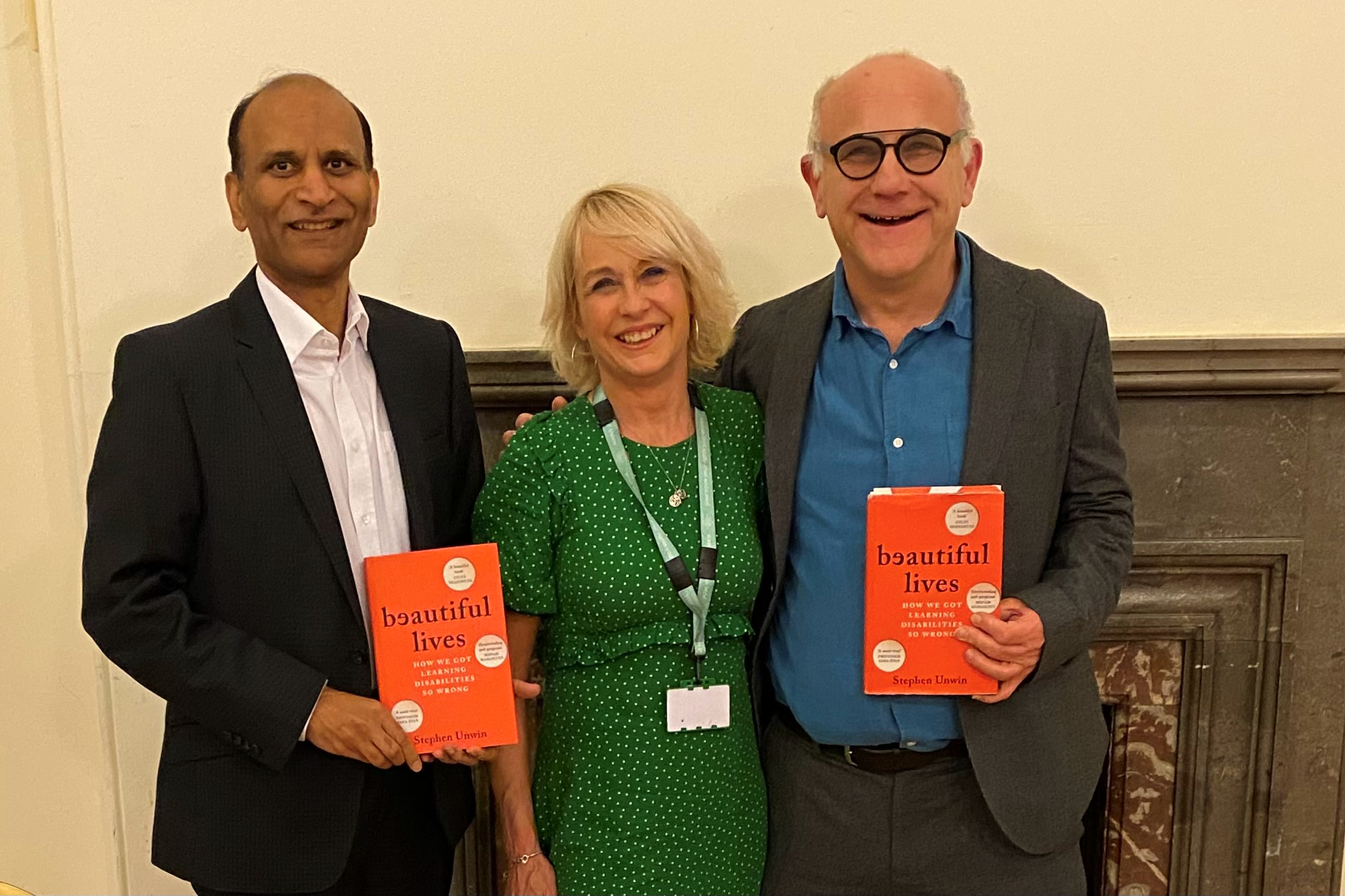
I recently chaired a landmark event hosted by The Advocacy Project, where community leaders, local government officers, NHS representatives, and voluntary sector partners converged at Hampstead Old Town Hall to confront a pressing issue: the systemic inequalities faced by people with learning disabilities. This event was more than a conversation – it was a catalyst for change.

Acclaimed playwright Stephen Unwin shared insights from his poignant book, ‘Beautiful Lives: How We Got Learning Disabilities So Wrong’, inspired by his son Joey’s experiences. Unwin’s words laid bare the dark history of societal attitudes towards people with learning disabilities, exposing the stark reality that despite progress, these individuals remain disproportionately disadvantaged in healthcare, social services, education, and beyond.

The discussion illuminated the critical role local government plays in shaping inclusive policies. By leveraging commissioning powers, local authorities can ensure services are co-designed with people with learning disabilities, prioritising their needs and preferences. This can address the stark health inequalities highlighted in the Learning Disabilities Mortality Review (LeDeR) programme, which revealed concerning disparities in healthcare outcomes.

Katherine Shaw, CEO of The Advocacy Project, underscored the imperative of confronting this history and committing to a future where dignity, equality, and human rights are non-negotiable. The Advocacy Project’s work with local government exemplifies this commitment, amplifying the voices of those with lived experience to inform responsive, respectful, and community-rooted services.

Through user involvement projects and partnerships, The Advocacy Project demonstrates the power of collaboration. For example, their work with local authorities has led to more accessible community services, improved mental health support, and increased participation in local decision-making. These tangible outcomes show that when people with learning disabilities are involved in shaping services, communities become more inclusive.

Local government’s role in education, housing, employment, public health, and adult social care is crucial. By promoting inclusive policies and supporting initiatives like person-centred planning and supported internships, local authorities can break down barriers and foster resilient communities. This can help tackle loneliness, improve mental health, and ensure economic participation for people with learning disabilities.

Moreover, local authorities can learn from The Advocacy Project’s approach to co-production, ensuring that services are designed and delivered with people with learning disabilities, rather than for them. This shift in approach can lead to more effective, person-centred support. By adopting this approach, local authorities can ensure that services are tailored to meet the unique needs of individuals, promoting greater independence and autonomy.

As local government leaders, policymakers, and community advocates, we are tasked with a profound responsibility – to listen, learn, and act. Let us strengthen partnerships, centre lived experience, and forge a more inclusive future for all. The Advocacy Project’s work is a beacon for this change, highlighting the importance of inclusive policies. Indeed, it’s essential to recognise the long-term benefits of such policies, including economic benefits, improved health outcomes, and increased social cohesion. By working together, we can create a more inclusive and equitable society, where people with learning disabilities are valued and supported to reach their full potential, contributing to a richer, more diverse community.

In conclusion, the event reinforced that inclusion is a collective responsibility. Local government’s leadership and partnerships are vital in driving this agenda forward. Let us heed the call to action, champion the rights of people with learning disabilities, and work tirelessly towards a more equitable society.

Councillor Dr Ketan Sheth is Chair of the Community and Wellbeing Scrutiny Committee at Brent Council

Forget the temperature, for councillor discretion, look north!

Photo by Michael D Beckwith on Pexels.com

Chris Game

You may just possibly have seen the recent report: “Oldham councillors must repay overpaid allowances due to payroll error”.  And thought: “Mmm – sounds a bit tough; surely councillors don’t organise their own payments?” 

Surely it would be the Council Treasurer’s responsibility, or his/her staff – probably his, given that the senior echelons of the local government treasury profession are around three-quarters male?  After all, they’re the ones who ran the faulty allowances system and must have, repeatedly, made the faulty calculations. 

You might indeed suppose so, but it’s not what happened here. Those 82 Oldham councillors were, it seems, overpaid a (combined!) total of £104,000 due to a systemic error, or rather errors, repeated apparently over at least three financial years.

The error was acknowledged as an administrative one, by council staff, and the salaries of those responsible are being docked accordingly; in particular the Director of Finance, whose six-figure salary (of, coincidentally, £104,000!  No, I’m totally guessing that bit!) could at least bear it. You might suppose?

However, that’s NOT at all how our local government division of responsibilities between elected councillors and salaried officers works. Here the whole £110,000 is having to be repaid by the innocently benefitting councillors – who most certainly don’t get dockable salaries.

So what are actually being ‘docked’ here are the relevant councillors’ basic and ‘Special Responsibility’ allowances, the latter being for those in various leadership positions: cabinet members, chairs of committees, party group leaders, and suchlike. 

Oldham is generally a Labour-led council and currently ‘ordinary’ council members receive a Basic Allowance of roughly £12,000. Other Member Allowances include the Council Leader £43,000, Deputy Leader £26,000, Executive Members £22,000, the Mayor £17,000, Chairs of various Scrutiny Boards – Licensing, Planning, Children & Young People, Health & Wellbeing, etc.- £11,000. It’s hardly megabucks.

In short, elected councillors are being made to pay, from their modest responsibility allowances, for ‘administrative errors’ made over several years by the council’s administrators – the clue’s in that adjective!

It seems wrong in principle, and it’s also horribly mistimed, coming as it does when some genuine efforts are being made to increase the perceived attractiveness of the councillor role and thereby extend the range of socio-economic backgrounds from which our local representatives are drawn.

Just a few weeks ago, for instance, at Labour’s party conference, Communities Secretary Steve Reed – a council Leader himself before becoming an MP – announced that he would be restoring councillors’ access to pensions through the Local Government Pension Scheme that the Conservative Government had removed. There is also talk of improving parental leave and reviewing the allowances system.

And not before time. For few in local government seriously doubt the deterrent impact on councillor recruitment of the 2012 removal of pension entitlement by the then Minister for Communities and Local Government, Eric (now Lord) Pickles.

Former Leader of Bradford Council, Pickles knew exactly what he was doing, as he increased councils’ financial discretion, while cutting considerably the funding over which to exercise it, and his patronising ’50 money-saving tips’ were contributing to the dire financial straits so many councils have found themselves in since.

At which point – in the distant past, when I was lecturing regularly and having to produce student ‘handouts’ – I’d probably have referred to a few overseas examples, showing how relatively demanding the English councillor’s role is and how under-compensated our councillors generally are.  

First, and most obviously, there’s the potential workload, very crudely illustrated by the average number of electors per councillor: 120 in France, 250 in Sweden, 2,350 in Ireland … and (currently) 2,600 in the UK as a whole.

Then the councillor payment systems: England – a basic allowance of, typically, £10,000 – £12,000 p.a., plus a bit extra for ‘Special Responsibilities’, and (wow!) expenses for travel and childcare.

By comparison, or contrast: the USA – highly variable, obviously, but an average US councillor’s salary is currently around $51,000 (£39,000), rising in New York, where everything’s gross, to $148,000 (£113,000).

Back in the real world, at the other end of the spectrum, are Norway/Sweden, where the councillor role is still generally considered voluntary, with councillors receiving ‘modest’ allowances to cover costs.  

They’re quite fun, but these international comparisons/contrasts aren’t terribly helpful in considering the future of English local government. Or necessary, as, on the proverbial doorstep we have sensible Scotland, where, nearly 20 years ago now, they switched from our patronising, cheeseparing ‘allowances’ system to actual councillor salaries – of currently, and precisely, £25,982.

That’s the basic salary. Senior councillors will generally receive a higher salary, up to perhaps around £50,000 for a Council Leader, with councils themselves having the ‘grown-up’ discretion of paying senior councillors up to 75% of the Leader’s pay.

And there’s more. Scottish councillors are eligible to join their Local Government Pension Scheme, to payment of allowances for subsistence and travel, and reimbursement of expenses incurred when undertaking council duties – a regular source of dispute ‘darn Sarf’.

Which brings me to my closing thought. Oldham, where we started, is almost exactly midway between London and Edinburgh, and local authorities in both England and Scotland are financially, in my view, heavily over-dependent on their respective central governments. But, if a student asked me in which country I’d prefer to be an elected councillor, I’d say: “Never mind the temperature, choose the occupational discretion”  

This post appeared initially in The Birmingham Post edition of Thursday, December 11th.

Chris Game is an INLOGOV Associate, and Visiting Professor at Kwansei Gakuin University, Osaka, Japan.  He is joint-author (with Professor David Wilson) of the successive editions of Local Government in the United Kingdom, and a regular columnist for The Birmingham Post.

Just how ‘burdensome’ is our tax system?

Chris Game

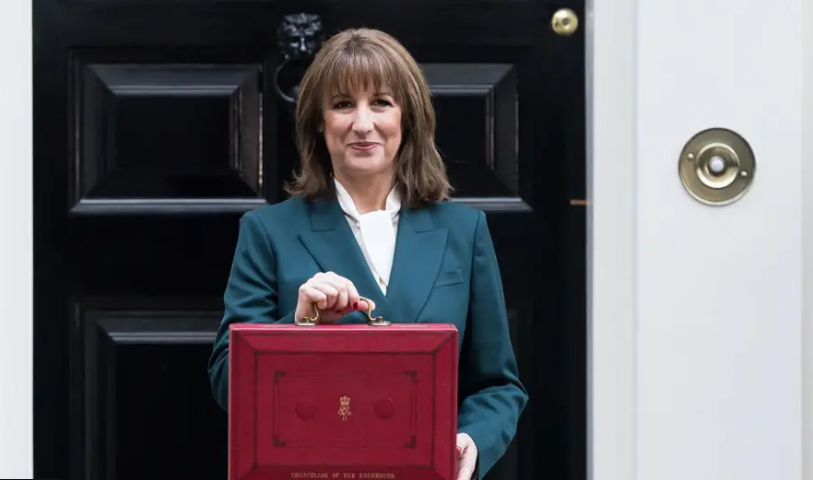
One of the almost unavoidable consequences of being comprehensively retired and with any kind of interest in politics is that you find yourself watching more of the Government’s annual, or biannual, Budget drama than you’d ever felt necessary during your working career. There are everyone’s speculations, the experts’ attempted explanations/simplifications, plus this time the botched premature release of the whole thing by the unfortunately titled (and now former) Chairman of the Office for Budget Responsibility (OBR) some 40 minutes before Chancellor of the Exchequer Rachel Reeves even took to her feet.

Anyway, unlike, I imagine, most of you lot, I actually sat through the whole Budget speech and at least the first bit of ensuing analysis by the ‘experts’. And, having done so, I almost immediately wished I’d counted the number of ‘tax burdens’ I’d heard – rather than, say, ‘tax rates’, which was the term I feel I grew up with, or tax levels, both of which are obviously more neutral and, you might think, more appropriate for a Chancellor of the Exchequer and at least some of her own party supporters.

I’ve no way of proving this, but it’s my strong impression that for most of my life the term ‘tax burden’ is one that would be used not in a Chancellor’s budget speech, but predominantly by slightly disgruntled taxpayers themselves or by Opposition parties and politicians, as a criticism of some specific tax or tax increase that the Government or Chancellor might be contemplating or had actually just imposed.

Gratuitous piece of information: we know that the public’s attitudes towards taxation and spending do fluctuate over time – partly but not entirely in relation/response to actual levels of taxation. Indeed, there’s an actual name for the study of such fluctuations: thermostatic theory, which, when I first learnt of it, I thought was something to do with people being happier when the sun’s out.

Anyway, the two words – tax and burden – are nowadays so closely linked, in the minds apparently of both payers and imposers, that they might as well be hyphenated. Quite early on in Reeves’ speech, therefore, and having acknowledged that freezing tax thresholds would hurt working people, she assured us that her plans were fair and that “the biggest burden would fall on those with the broadest shoulders”.

Not ‘fiscal impact’, ‘tax obligation’, or even ‘tax liability’, emphasising variously the effect on government finances or the legal duty to pay taxes, but that b-word from the outset and for any public expenditure. Nowadays, it seems, any tax increase, indeed any tax at all, is not just attacked as, but presented as, burdensome – a questioning of which, as I hope you’ll be gathering, was this blog’s main prompt. 

For it strikes me as odd, wrong and regrettable in several different ways. For a start, it’s almost certainly not how most of us were first taught about and introduced to taxes and their function. My guess is that explicit links would have been made between the public services with which as young people we would have been becoming familiar and benefitting from – education, healthcare, public safety, transport, waste management, emergency services – and their providers, and how our parents contributed in various ways to their funding, even those of which they weren’t necessarily regular or direct consumers.

No doubt we learned too, maybe indirectly, about their rising costs and the tax increases required to pay for them, but, if ‘burdens’ were mentioned at all, it would have been to explain that that was part of the deal in our advanced society. And, if our teachers were particularly keen, there might be some attempts to compare our levels/burdens with those of at least other European countries.

At which point – following a weekend wondering if I should email Jason and sound him out on whether he felt it would be worth my trying to turn these frankly rather meandering thoughts into an INLOGOV blog – at 10.00 a.m. precisely on Monday morning, there arrived a ResearchGate email announcing that our colleague Catherine Durose had just co-published an article asking “How should policy actors respond to buzzwords? Three ways to deal with policy ambiguity”[1].

It’s obviously impossible to summarise a 16-page article in a single blog paragraph, but the following desperate two sentences convey at least something of Durose and her three co-authors’ concerns. By using the lens of ‘buzzwords’, they “explain how actors in real-world policymaking contexts face ambiguity, then prompt debate on how to respond” (p.4). They focus our attention on “the temporality or the cyclical nature of ideas about better policymaking” … highlighting “the ambiguity that often accompanies these cycles”, and encapsulate “what these dynamics can feel like to policy actors …” (p.5).

Which brings me to my closing paragraphs and my concern about the seemingly incessant use of the ‘tax burden’ phrase – which could easily, it seems to me, make any comparative newcomer or innocent suppose that this ‘burden’ would surely reflect the UK’s position near the top of at least the European overall tax level list.

However, as anyone who has ever spent more than a few minutes ‘researching’ this tax burden question knows well, if anything, the reverse is the case. True, UK tax as a proportion of GDP (Gross Domestic Product) is currently close to its highest since 1945, but for a single worker on an average wage, we have one of the lowest ‘tax burdens’ among both G7 (Canada, France, Germany, Italy, Japan, UK and US) and OECD countries.

Other data sets are, of course available, but if, as would seem most likely, our newcomer/innocent were thinking of personal income tax levels, they’d be pretty comprehensively wrong. In the December 2025 table of ‘Top Statutory Personal Income Tax Rates in 35 Major European Countries’ the UK’s precisely 45% personal income tax rate puts us in 16th place – yes, above halfway, but not by much, and way behind the eight 50% pluses: headed by Finland (57%), Denmark (56%), and France (55%).

So, if 45% warrants the term ‘burden’ pretty well every time it’s mentioned, I wonder what translated nouns citizens of some of these countries use?  And might it not be time for at least our Chancellor (or Chancelloress) of the Exchequer to modify the ‘burden’ references?  Oh yes, and can Durose et al. also please work on a positive buzzword/phrase to substitute for ‘tax burden’?


[1] Richardson, L., Durose, C., Cairney, P. and Boswell, J., 2025. How should policy actors respond to buzzwords? Three ways to deal with policy ambiguity. Policy Sciences, pp.1-16.

Image of chancellor: https://www.bbc.co.uk/news/articles/cewjkv8jylko

Chris Game is an INLOGOV Associate, and Visiting Professor at Kwansei Gakuin University, Osaka, Japan.  He is joint-author (with Professor David Wilson) of the successive editions of Local Government in the United Kingdom, and a regular columnist for The Birmingham Post.

Local Government in the Czech Republic During Two Recent Crises

Dr Paul Joyce

A recent book on local government in Czechia offers valuable lessons for anyone involved in local governance, emergency planning, or public sector reform. The book, edited by Balík and Špaček, explores how local government responded to two major crises: the COVID-19 pandemic and the influx of refugees following the Russian invasion of Ukraine.

The editors describe Czechia’s  local government as “fragmented”. By this, they do not mean fragmented in terms of lack of coordination. Instead, they use the term in a structural and territorial sense: the country has a very large number of small municipalities. In fact, there are over 6,000 municipalities in Czechia, and the median size is fewer than 500 residents.

At first glance, this sounds like a recipe for weakness. However, the book tells a very different story. During both crises, support and coordination from the national government was widely experienced as slow, inconsistent and, at times, chaotic. By contrast, local mayors often stepped forward quietly and decisively to support their communities. As Balík and Špaček put it:

“Mayors of small municipalities rarely speak of crisis management in systemic terms; instead, they focus on immediate, practical solutions to specific problems… Small local governments tackled emergencies as they came with the capacities they had… The ability of small municipalities to adapt quickly and provide personalised assistance was critical in the early stages of both crises…” (2026, p.177)

In many places, local government was really the only consistent source of stability. One of the key strengths highlighted in the book is social capital – the trust, relationships, and local knowledge embedded in communities. This proved crucial, particularly during the refugee crisis:

“The strength of small municipalities was in the individual commitment, personal ties, and local knowledge—knowing who to turn to in case of problems and how to solve specific issues” (Balík and Špaček, 2026, p.176).

Even in very small towns and villages in Czechia, local government is present and visible. Mayors and councillors are highly trusted, far more than national politicians, and citizens see them as accessible, familiar, and reliable. In crisis conditions, this trust enabled rapid mobilisation of volunteers, associations, fire brigades, community groups and informal support networks.

Interestingly, the book also notes that although inter-municipal cooperation is voluntary and not financially incentivised by national government, over 80% of Czech municipalities are involved in some form of collaboration. During the crises, some mayors consulted colleagues in neighbouring areas, shared information, and worked through voluntary municipal networks.

However, and this is an important point, the book does not show that there was a large, coordinated, systematic collaborative governance response at national scale. There is no hard data indicating how widespread or effective inter-municipal cooperation was during the crises. What the authors do state is that cooperation was informal, uneven, and dependent on existing relationships and trust.

In fact, they emphasise that local responses were often “highly individualised”. In other words, municipalities generally acted on their own initiative, using their own judgement, knowledge and resources to solve immediate problems. Horizontal networks sometimes supported this, but they did not replace largely autonomous decision-making.

What stands out most during the crises is vertical incoherence: poor communication, unclear leadership, and constant change in guidance from central government. Mayors described regulations changing “three times a day”, written in legal language that nobody understood, and official information arriving after the media had already reported it. In the early stages of both COVID-19 and the refugee crisis, national guidance was often described as vague, delayed or non-existent.

As a result, mayors relied heavily on their own judgement and “common sense”. Why? Because they had to respond to reality as it unfolded in front of them. This leads to an important conclusion: Czechia was not “saved by collaborative governance” in a formal, system-wide sense. Instead, it was held together by local leadership, strong relationships, deep community knowledge, and trust.

Implications for UK local government

For those working in or with UK local government, the Czech experience raises important questions.

For years, public sector reform has often focused on scale, efficiency, and consolidation. We tend to assume that bigger organisations are stronger, more capable, and more resilient. The Czech case challenges this assumption. It suggests that in times of crisis, small, trusted, locally embedded structures can be incredibly powerful.

This does not mean the UK should “fragment” its local government system. But it does suggest that structural reforms aimed purely at efficiency can come at a hidden cost: the loss of proximity, trust, responsiveness, and local knowledge that make rapid, context-sensitive action possible.

The Czech experience also highlights the risks of poor vertical coordination. When national guidance is unclear or incoherent, the pressure falls heavily on local government. In those moments, what really matters is not the size of the organisation, but:

•           The quality of relationships

•           The level of trust

•           The strength of civic networks

•           The confidence of local leaders

•           The use of local knowledge

For the UK, the message may be this: alongside reform for efficiency and scale, we need to invest in robust governance, that is, in communication, trust, community capacity, and strong vertical relationships between central and local government.

Reference: Balík, S. and Špaček, D. (eds.) (2026) Fragmented Local Government Systems and Crises: Experiences from Czechia. Governance and Public Management Series. Cham: Palgrave Macmillan / Springer Nature Switzerland AG. https://doi.org/10.1007/978-3-032-01897-7

Paul Joyce is an Associate at INLOGOV, University of Birmingham, a Visiting Professor in Public Management at Leeds Beckett University, and Publications Director of the International Institute of Administrative Sciences (IIAS) which is headquartered in Brussels, Belgium. He has a PhD from London School of Economics and Political Science

Intervention 3.0: Designing a Responsive Model for Local Government Support in England

Jason Lowther / Paul Joyce / Philip Whiteman

The arrival of the new UK government looks set to result in a new policy on central government’s intervention powers in local authorities, the third generation of such policies this century.  This article suggests some key lessons from earlier models. 

Intervention 1.0 was facilitated by Best Value legislation that an “authority must make arrangements to secure continuous improvement in the way in which its functions are exercised, having regard to a combination of economy, efficiency and effectiveness” (Local Government Act 1999).  This remains the basis of statutory interventions today.  But the context could not be more different. 

The Blair government commissioned an extensive set of national performance indicators, developed independently by the Audit Commission with a common definition and quality assured through local audits.  The “District Auditor” role maintained in depth contextualised knowledge of each local council, and could identify and flag significant governance or performance issues at an early stage.  As well as diagnosing problems, the Audit Commission’s national studies provided evidence-based recommendations to help improve local services’ economy, efficiency and effectiveness.

The strengths of this model were the comprehensive nature of the evaluation, its collective and mutually supportive use of expert agencies to provide an evidence base, and the sanctions that went with it including transparent public reporting.  Inlogov produced a series of reports diagnosing and explaining the causes of poor performance, analysing recovery planning and strategies for organisational recovery, evaluating various policy instruments for recovery (such as lead officials) and identifying the key developmental mechanisms for recovery. 

Our reports clearly demonstrated that the context for poor performance determines effective mechanisms for recovery: one size definitely does not fit all.  The causes of failure are varied, such as ineffective leadership arrangements and inadequacies in the operating culture. 

Improvement mechanisms need to address issues of cognition, capability and capacity.  Cognition is the council’s awareness and understanding of their performance trajectory, which is often resilient to changes in political control.  Capability concerns the construction and institutionalisation of a change-oriented vision by council leaders.  Finally, capacity is the ability to deliver the required vision and change. The required change mechanisms are both internal (such as leadership change) and external (for example, peer mentors, expert advisors, and funding). 

Intervention 2.0

The arrival of the Coalition government in 2010 brought rapid changes to intervention.  The Audit Commission was summarily discarded, publicly justified by claimed savings of £50m.  In reality, recent research by the Audit Reform Lab at the University of Sheffield suggests that English audits have higher costs and greater delays than in Wales or Scotland (where centralised oversight arrangements were maintained). 

From 2010 to 2020, central government intervention was relatively rare with formal interventions in only four councils.  However, from 2021 this situation changed substantially with interventions in eight councils in three years (none of these councils were controlled by the ruling national party).  In the same three years, there were statutory best value notices in a further nine councils.

It’s fair to describe this phase of intervention as less structured and evidence-based, without robust national data or independent routine inspection of councils.    

There has been limited evaluation of Intervention 2.0 to date.  Our early research findings based on three case studies suggest a five-stage model of intervention: (i) crisis revelation, (ii) delegitimisation, (iii) imposed reforms, (iv) capacity building, (v) restoration or reorganisation.  We conclude that under localism interventions were not merely administrative responses to failure but were deeply political acts that reshaped the legitimacy and capacity of local governance. The Commissioners, acting as technocratic agents of central government, connected central and local government, and had the effect of buffering the political tensions of intervention, while leading a process in which managerial competence rather than local democracy steered intervention.

Where next for intervention?

The raft of interventions related to section 114 notices, the establishment of the new Local Government Outcomes Framework and local audit reform including the Local Audit Office indicate a new phase of intervention and open opportunities to develop a more systematic and evidence-based approach.  More thought is needed on how this should work in future, including the role of peer reviews and inter-council support arrangements.  The centralisation of intervention power and the dominance of technocratic intervention needs to evolve to suit devolution and to provide greater support for local democracy. This could build on the new audit arrangements through a “district auditor” type overview of governance.

The acid test of reforms should be that while central government would still be able to intervene when councils were failing, the intervention process would minimise the suspension of local democracy, do as little damage as possible to the public’s trust in their local council, and foster good local democratic political leadership.

This article first appeared in the Municipal Journal on 16 October 2025 titled “How not to damage democracy”. It is available here: https://www.themj.co.uk/damage-democracy

Dr Jason Lowther is director of INLOGOV (the Institute of Local Government Studies) at the University of Birmingham.  Prof Paul Joyce is an Associate at INLOGOV.  Dr Philip Whiteman is a lecturer on public policy and administration at INLOGOV.

Supporting councillors to thrive: the 21st Century Councillor Revisited

Catherine Needham

In our research on the 21st Century Councillor, we’ve found that elected members are facing a barrage of challenges:

  • Perma-austerity has deepened with sustained underfunding of public services  
  • Complexity of place has intensified, through combined authorities and integrated care systems, alongside local government reorganisation.   
  • Communities are in distress, moving from the pandemic straight into the cost-of-living crisis   
  • Incivility in public life has grown with rising issues of abuse and harassment for councillors in particular 
  • The rising profile of equality, diversity and inclusion has drawn attention to how public services systematically fail some workers and citizens  
  • Remote and hybrid working can enhance individual flexibility but can make it more difficult for councillors to build the relationships they need to function effectively. 

From interviews with councillors, we heard about the strategies they use to cope with these challenges and to support their communities to thrive. They are keeping the system human on behalf of communities. They are zooming in and out, from the micro issues facing residents to the big strategic issues of place. They act as a lightning rod, absorbing hostility whilst keeping themselves grounded and safe. You can read more about the research findings here.

If you’re a councillor – or you work in a role supporting councillors – come and join us in Andover on 4 November to hear more about this research and chat to peers about how best to manage these challenges. You’ll also hear from the Local Government Chronicle about their new campaign to support councillors.

Click here to register: 21st Century Councillors Tickets, Tue, Nov 4, 2025 at 10:00 AM | Eventbrite