When Peter turned 18, he got approval from his local Social Services Department to draw a disability pension. Like others with learning disabilities, Peter lived in a residential care home, not in work and spending his days in a community activity centre (all of which involve high costs for the taxpayer). Peter felt socially isolated, bored and with low expectations of what his life could entail.
However, Peter’s life took a turn for the better. He has the good fortune to live in the municipality of Aalborg (213,589 inhabitants) in Denmark. Aalborg promotes the vision that everyone should feel that they are important to others. To this end the municipality has launched a new service to help people with a disability pension to find what they consider to be meaningful work – called Aalborg AKTIV. The service is non-statutory but people with disabilities are encouraged to call, e-mail or simply drop by the Aalborg AKTIV house to learn more about the programme – users only join Aalborg AKTIV if the user gives their permission. Service users are helped to locate and contact relevant communities, employers and support organisations.
Peter contacted the service and is now working at a construction firm on a subsidised salary. He reports that each morning he goes to work with a bounce in his step and greets his work colleagues with a smile – he feels that he is doing a good job and that his work makes a difference. And in Aalborg Peter is typical, not an exception.
What a difference to the UK! Prof. Sir Michael Marmot argued, as reported by BBC news, that people with learning disabilities in the UK are ‘failed by society’. He said that society needs to take action and points to the need to improve social integration and provide work programmes for people with learning disabilities. Prof. Marmot also identifies social isolation as one of the main reasons why people with learning disabilities die 15-20 years earlier than the general population.
As Peter’s story shows, Aalborg Municipality appears to have found a sustainable way to do what Prof. Marmot suggests. It interacts with its service users as co-producers and builds on their skills and assets to develop their self-confidence. In particular, it helps them realize that they have a place in society and an important contribution to make.
The Aalborg service is part of the municipality’s broader strategic vision for improving the quality of life of people with disabilities. Since the service opened in March 2017 it has helped approximately 250 people with different disabilities to find ‘meaningful work’, such as volunteering at an animal shelter or working a few hours at a café, rather than doing fabricated ‘activities’ in community centres, which for some can feel trivial and demeaning.
Moreover, Aalborg Municipality believes its approach will not only help overcome the social stigma experienced by those with learning disabilities but also contribute to their integration into society, overcoming their social isolation and adding quality years to their lives. Peter’s story is based on a real person, but his name and details has been changed for purpose of this article.
The Aalborg project is being closely monitored in research at Aalborg University, the results of which are expected to be published in 2020. Ph.D. Student Nanna Møller Mortensen from Aalborg University investigates how complex outcomes of co-production initiatives can be evaluated. She is undertaking action research with staff, managers and people with learning disabilities from the aforementioned service as well as other co-production cases in Aalborg Municipality. The aim of her study is to develop a tool to monitor co-production processes and outcomes at a local governance level. Nanna has been visiting INLOGOV since September to exchange findings and research. During her stay she has started working on a comparative study with researchers from INLOGOV, as well as contributed to INLOGOV teaching modules concerning co-production.
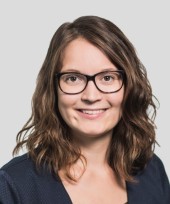 Nanna Møller Mortensen is a PhD student at the research group Capacity Building and Evaluation, at The Department of Learning and Philosophy, Aalborg University. You can get in touch with her via email: [email protected]
Her doctoral dissertation is part of the Industrial PhD program funded by the Innovation Fund Denmark and the project host, Aalborg Municipality.
 Day one was given over mostly to introductory speeches from ministers (France and Spain), the Secretary General of the CoE, regional and local dignitaries and a cultural offer which baffled as much as it entertained. In amongst the usual pleasantries some markers were laid. The Secretary General spoke of how the introduction of gender quotas had changed the culture and behaviour of politics in his native Norway. Personal testimony from a Japanese journalist about rape and violence brought the packed hemicycle to total silence. A Canadian academic spoke of her personal experience of LGBTI, faith and politics. Powerful stuff which set the scene for the debate to come but, in the reaction from some, demonstrated a lack of universal agreement on what issues mattered most and what language to use in explanation and dialogue.
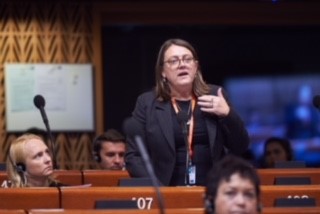 Bryony Rudkin is a PhD student at INLOGOV, Deputy Leader of Ipswich Borough Council and Portfolio Holder for Culture and Leisure. Bryony also works with councils around the country on behalf of the Local Government Association on sector-led improvement, carrying out peer reviews and delivering training and mentoring support.
 Cllr Ketan Sheth is Brent Council’s Chair of the Community and Wellbeing Scrutiny Committee and an Ambassador for the All-Party Parliamentary Group for Diabetes.
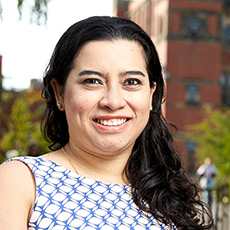 Adriana Algarin C. is a Doctoral Researcher at the Institute of Local Government (University of Birmingham). She also has experience as a research assistant at Universidad del Norte (Colombia) and her research interests include social accountability, local governance and political representation.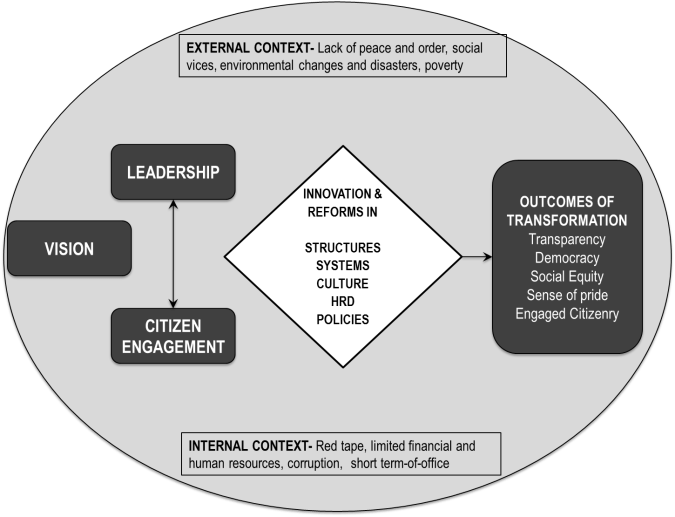
 Mendiola Teng-Calleja is an Associate Professor at the Psychology Department of the Ateneo de Manila University. She is also the Director for Organization Development and Human Resources Solutions of the Ateneo Center for Organization Research and Development. Her research interests include organization psychology, organization development, and humanitarian work psychology.
 INLOGOV Blog