The Treasury’s Long Shadow: Why Local Government Needs Its Own Barber

Philip Swann

The extent to which the Blair government’s delivery unit became the focus of tension between No 10 and the Treasury is a key theme in Michelle Clement’s fascinating history[1] of the unit. It was a product of Tony Blair’s ambition to reform public services and was seen by Gordon Brown as a threat to his dominance of domestic policies generally and his planning mechanism, public service agreements, specifically.

There are striking similarities between the Treasury’s “not invented here” attempted dismissal of the Prime Minister’s Delivery Unit (PMDU) and the treatment of the government’s missions in the recent spending review.

Prime Minister Kier Starmer announced in February 2023 that five missions would form the “backbone” of Labour’s election manifesto. In October 2024 the Cabinet Office announced the establishment of a “mission board” for each mission chaired by the relevant secretary of state.  In December 2025 the government complicated things slightly when it published its Plan for Change: Milestones for Mission-led Government. It set out six targets which, “guided by our missions” would “set clear milestones[2]” to track the government’s progress.

The milestones were: raising living standards in every part of the UK; rebuilding Britain with 1.5m homes in England and fast-tracking planning decisions; ending hospital backlogs; putting police back on the beat; giving children the best start in life; and securing home-grown energy.

The missions were largely ignored in the spending review. Only one of the missions was referred to in Rachel Reeves’ speech and there were only 14 cursory references to missions in the core spending review document. This must mean that the missions were not central to the discussions about the government’s public expenditure priorities. This is so far removed from the way in which missions have been deployed elsewhere, such as by Camden Council. There missions were central to the council’s strategic planning and were used to engage partner organisations and the community in a concerted drive to address the challenges facing the borough.

It is clear from Clement’s book that the first head of the PMDU, Michael Barber, managed to keep the Treasury on board. His unpublished diaries are a key sources for the book, and Clement argues convincingly that, as one of the few senior figures who were respected by both Blair and Brown, he was instrumental in keeping the No 10-led show on the road.

In retrospect it is clear to me that local government suffered as a result of the differences of approach to delivery advanced by No 10 and Treasury. At the time the LGA, where I was director of strategy and communications, made a series of attempts to secure a more collaborative approach with government to the challenges then facing the country.

Local public service agreements (the name gives the game away) and their successors, local area agreements, became entangled in the Treasury’s target-laden bureaucracy and did not benefit from Barber’s more thoughtful “deliverology” which Clement refers to as an art rather than a science. Similarly the LGA’s “shared priorities, an earlier version of missions, got little traction beyond the Office of the Deputy Prime Minister and the then Audit Commission.

I do not recall any significant engagement with Barber, but I am not sure we would have made much progress. Clement refers to local delivery but not to local government and all the evidence suggests that Barber would have shared David Blunkett’s antipathy to the perceived lack of ambition of local education authorities (Barber worked with Blunkett in Blair’s first term).

It is not clear whether the absence of any significant reference to missions in the spending review was an oversight or a reflection of a bigger split between the Treasury and the Cabinet Office. If there is a serious divide we do not know where the Prime Minister stands. What we do know is that local government faces an urgent task in getting the Treasury to give more energy and political capital to the fundamental reform of local government finance. It is also fair to argue that, if taken seriously, the missions provide a good basis for a discussion why that should be a priority for central as well as local government.

One clear message from Clement’s book is that people matter. Local government needs to find its Barber.


[1] Clement, M. 2025 The Art of Delivery. Biteback Publishing


Phil Swann is studying for a PhD on central-local government relations at INLOGOV.
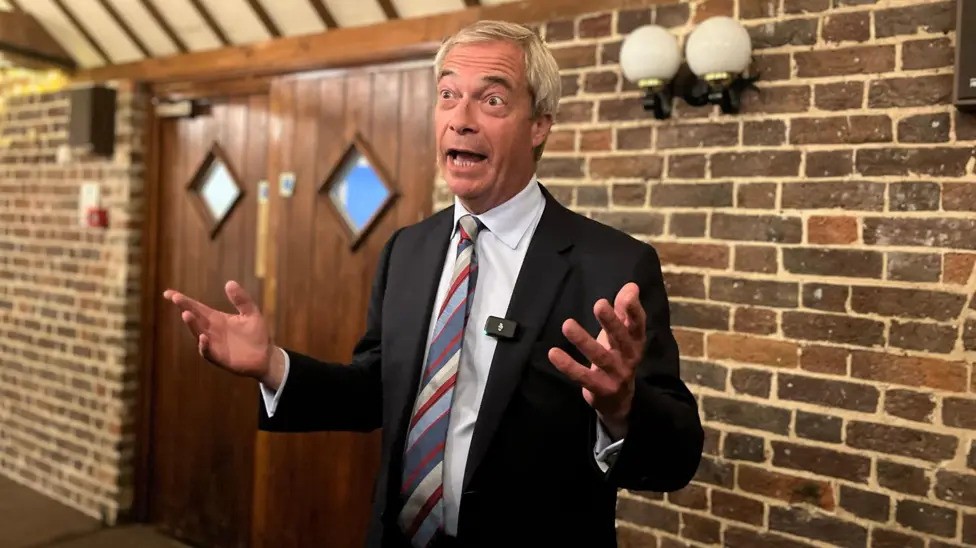
Win an election and implement your manifesto – that’s novel!

Image: Emily Sinclair/BBC https://www.bbc.co.uk/news/articles/c367lry5ypxo

Chris Game

First, a reader alert. What follows is in essence an only marginally revised column written for and hopefully published in this week’s Birmingham Post, to which for many years now I’ve been a regular contributor. Thanks, at least in part, to the “many years”, I’m permitted a wide scope of subject matter, but for obvious reasons local government in some form or other is what I tend to resort to most frequently – not least around local election season.

With the Post’s Thursday publication date, this is a mixed blessing, knowing that most readers interested in these matters would very likely have learned the results of the elections before they read one’s prognostications and predictions. What follows here, then, is my third column focused on this year’s local (County/Unitary Council) elections, which were, of course, limited to just 24 of England’s 317 local authorities (plus the Isles of Scilly) and precisely none in, never mind Birmingham, the whole metropolitan West Midlands.

Faced with the alternative option of ignoring the topic altogether, I decided to focus on the four West Midlands County Councils: three with biggish, if declining, Conservative majorities – Shropshire, Worcestershire and Warwickshire – plus STAFFORDSHIRE: Labour for decades, but Conservative since 2009, and, until the May council elections, with 55 Conservative councillors out of 62, almost as Tory as they come.

However … since last July, when the county’s parliamentary constituencies all went Labour, Nigel Farage’s Reform UK Party had been energetically hoping to build in Staffordshire on what statistically had been among its most promising performances. And indeed it did: Reform UK: 49 of the 62 County Council seats, leaving the previously controlling Conservatives with 10, and Labour, Greens and Independents 1 each. The Lib Dems, along with UKIP, the Workers Party of Britain and others, failed to score.

It typified results across the country. On what nationally was an exceptionally quiet election day, Reform UK increased its nation-wide base of just two councillors (both on Hampshire’s Havant Borough Council), to a relatively massive 677 (39% of the total seats contested) and gained majority control of no fewer than 10 of the 23 councils.

One can only speculate at some of the results that a fuller involvement of, say, the 130 unitary authorities, metropolitan districts and London boroughs might have produced. I concluded that Election Day column, though, not with any numerical predictions, but with Farage’s most publicised campaign observation/pledge: “We probably need a DOGE for every single county council in England”.

Which could have sounded a touch presumptuous from the Leader of a party who had approached that Election Day holding just two of the 1,700+ seats ‘up for grabs’ – but not from Farage.

I did wonder, though, what onlookers would make of that DOGE acronym (or, in some versions, D.O.G.E. – that’s how novel it is). Indeed, even Reform candidates, who probably knew at least that it stood for the love child of President Trump and the recently very departed Elon Musk’s Department Of Government Efficiency, trod carefully.

Created, they could possibly parrot, to “modernise information technology, maximise productivity and efficiency, and cut wasteful spending”, but did they have any real idea of how the function and office might work in a UK political context? Or did they possibly assume that, like so many campaign pledges, even if, rather incredibly, a DOGE majority did emerge, it would find itself, at least for the present, on the ‘too hard just now …. we’ve only just elected our Leader’ pile?

Certainly I, while having at least some idea of what county councils having an English DOGE might entail, would definitely NOT have predicted that, within just one month of those county elections, one of England’s biggest and traditionally most Conservative counties, KENT, would be preparing to face an ‘Elon Musk-style’ DOGE audit by a team of technical experts assembled specifically to analyse its £2.5 billion-plus budget spending and assess its financial efficiency.

Since the past weekend, the ‘Elon Musk-style’ bit will possibly have been played down, but not, seemingly, the ongoing implementation. With LANCASHIRE – £1.2 billion budget – already announced as next on the list, this just could prove insightful and potentially serious stuff.

Until May 1st, Kent County Council comprised 62 Conservatives, 12 Lib Dems, 4 Greens, 0 Reform UK.  Since then, it’s been 10 Conservatives, 6 Lib Dems, 5 Greens, and 49 Reform UK. If dramatic change is to be the agenda, Kent seemed an apt and attention-guaranteeing choice. 

By any measure, and almost whatever happens next, that – in my book, anyway – is an impressive achievement. There’s been, predictably enough, ‘Establishment’ outrage – “a superficial response to the deep problems of local government” … “initiating a review of local authority spending misunderstands the circumstances facing local authorities … All councils have been caught in an iron triangle of falling funding, rising demand, and legal obligations to deliver services. In that context every local authority has had to make difficult choices to cut services …” (Institute for Government).

On the other hand, win an election and implement your party manifesto! – a demonstration that turning out and voting in local elections, even in our exceedingly non-proportional electoral system – can produce policy action.

Or, rather, especially in our exceedingly non-proportional electoral system. Two of the new Combined Authority mayors (outside the West Midlands) were elected on under 30% of the votes cast, and obviously a much smaller percentage still of the registered electorate.

This follows the recent ditching of the Supplementary Vote in favour of ‘First-Past-The-Post’, where voters pick just one candidate, and the one with the most votes wins – even if, as this time in the West of England, that percentage was under a quarter of an already very modest turnout.

To me, anyway, it’s arguably even more important in these local/Mayoral elections than in parliamentary ones – for us, the elected Mayors, and democracy generally – that voters can indicate their first AND SECOND Mayoral preferences, thereby ensuring that, however low the turnout, the finally elected winner can claim the support of at least a genuine majority of voters.  Which means electoral reform – but that’s another column/blog.

Chris Game is an INLOGOV Associate, and Visiting Professor at Kwansei Gakuin University, Osaka, Japan.  He is joint-author (with Professor David Wilson) of the successive editions of Local Government in the United Kingdom, and a regular columnist for The Birmingham Post.