We are delighted to announce the inaugural Autar Dhesi Lecture hosted by our sister school, the Birmingham School of Social Policy and Society at the University of Birmingham on Tuesday 17th June 2025 from 14.00-16.00 at G15, Muirhead Tower, University of Birmingham Edgbaston Campus.
To attend this event, please click on the Eventbrite link – https://www.eventbrite.co.uk/e/how-neighborhoods-shape-perceptions-local-organizations-racial-inequality-tickets-1326266953159?aff=oddtdtcreator
Professor Mario Small, Columbia University, USA

How do neighbourhood environments affect perceptions? This lecture examines how neighbourhood context contributes to racial differences in financial attitudes. Professor Small focuses on alternative financial institutions (AFIs) such as payday lenders, which in the U.S. are overrepresented in predominantly African American neighbourhoods. Based on survey, experimental, and qualitative interview data, it demonstrates that neighbourhood exposure to payday lenders significantly shapes perceptions, resulting in more positive attitudes toward the lenders. The effect operates through three mechanisms: convenience, concrete experience, and comparative assessment, as negative experiences with conventional banks play a role. It explores implications for our understanding of how neighbourhoods matter and how institutional conditions play a role in racial inequality.
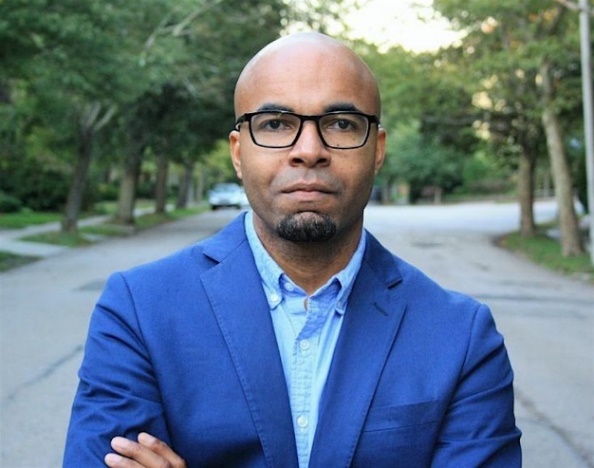
Mario L Small, PhD is Quetelet Professor of Social Science in the Department of Sociology at Columbia University. He has made numerous contributions to research on urban neighbourhoods, personal networks, qualitative and mixed methods, and many other topics. He has shown that poor neighbourhoods in commonly-studied cities such as Chicago are not representative of ghettos everywhere, that how people conceive of their neighbourhood shapes how its conditions affect them, and that local organizations in poor neighbourhoods often broker connections to both people and organizations. Professor Small has demonstrated that people’s social capital—including how many people they know and how much they trust others—depends on the organizations in which they are embedded. His work on methods has shown that many practices used to make qualitative research more scientific are ineffective. Small’s most recent book examines why people are consistently willing to confide their deepest worries to people they are not close to.
WITH THANKS TO THE AUTAR DHESI ENDOWMENT FUND

We are delighted to present the first in our Annual Autar Dhesi Lecture Series. Professor Autar Singh Dhesi graduated from the University of Birmingham with a MSc in National Economic Planning in 1971 and later in 1974 with a PhD in Economics. He then built a distinguished career at Guru Nanak Dev University before being appointed as a consultant to the World Bank, Washington DC, in 1982. He continued his career as Professor at Guru Nanak Dev University and later at the Punjab School of Economics. His major areas of specialisation include economic development and planning, public policy, sustainable development, human and social development, higher education and NGOs. Professor Dhesi has authored over 100 publications in community building, diaspora, social action, modernisation and economic development.
In 2023 Professor Dhesi reconnected with the University of Birmingham to share his philanthropic wish to create an endowed guest lecture in social capital and community building in the School of Social Policy and Society. This gift will enable exchange of knowledge and meaningful exploration; two themes that were exemplified by Professor Dhesi’s career and achievements.
 INLOGOV Blog