Local councils must work harder at enabling women to be councillors

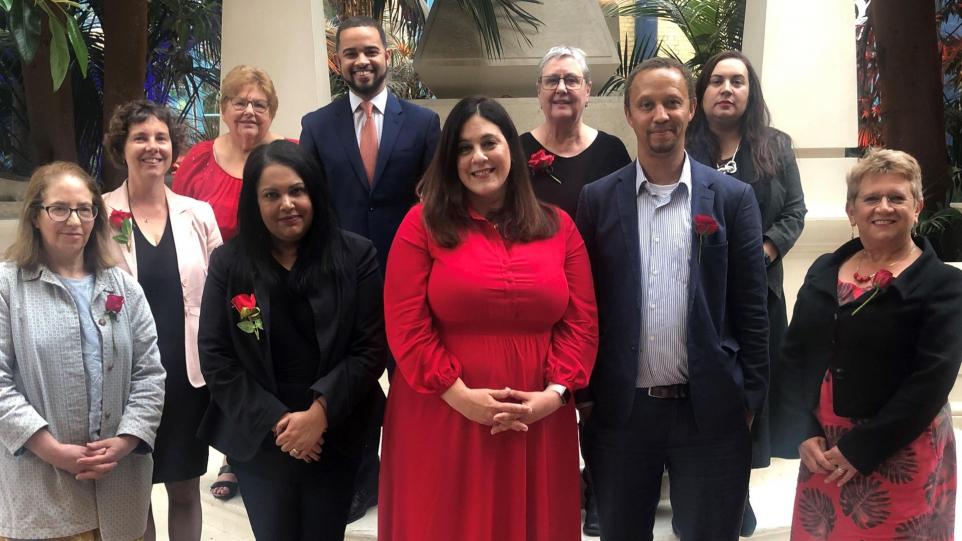
Picture: Haringey Council’s 2022 cabinet

Jason Lowther

Local councils can and must do more to enable women to be councillors. Haringey’s new cabinet shows that this can be done, but fifty years after all government elected officials across the UK were finally elected under universal suffrage, new research shows barely a third of local councillors and MPs are women, whereas earlier research showed less than a quarter of Police and Crime Commissioner (PCC) candidates were women.   This matters not only in terms of democratic fairness, but because politicians’ characteristics impact on public policy.

The research published last week by the Fawcett Society and Democracy Club reflects councillor representation in August 2022 across the UK.  To collect the data, they had to scrape individual council websites since (incredibly) there is no official record of councillors’ gender (or other protected characteristics).  This is because the relevant section of the Equality Act 2010 has still not yet been enacted and in any case as drafted would apply only to candidates in national elections.  This is in contrast to council staff, where the Equality Act applies and has led most councils to capture and publish reasonably detailed assessments of workforce equality issues – as shown by the recent SOLACE / Shared Intelligence report, ‘Understanding and Improving Equality, Diversity and Inclusion in the Local Government Workforce’ which we discussed on the blog last autumn.

The Fawcett Society / Democracy Club results show no party yet has parity of representation between women and men, but some are doing much better than others.   The highest proportion of women is found in the Labour Party (47%) and the lowest in the Conservative Party (29%), the SDLP, DUP, and Ulster Unionist Parties. 
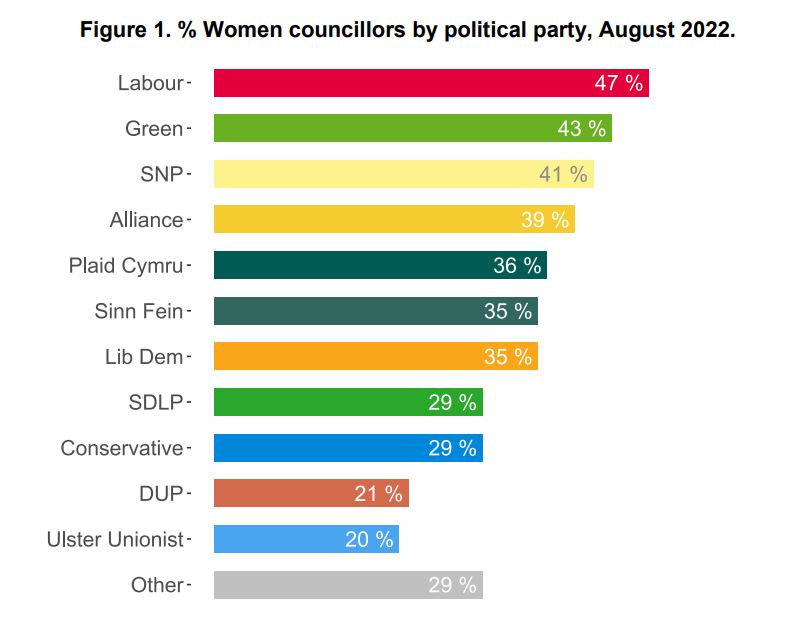
Source: Gender representation on local councils, Fawcett Society and Democracy Club (2022)

At individual council level, the highest proportions of women councillors were found in Haringey (65%), Rossendale (61%), Brighton and Hove (56%), Lewisham (56%), and Southwark (56%).  In contrast, Perth and Kinross, Pendle, Comhairle nan Eileen Siar and West Berkshire each have 15% or less of the council made up of women councillors.

One effect of having fewer women decision makers may be that issues that disproportionately affect women are given insufficient attention.  Policymakers play key roles in promoting status-based policies.

Recent research by Professor Francesca Gains (University of Manchester) and Professor Vivien Lowndes (Inlogov) published in the journal Politics & Gender in 2021 analysed the effect of Police and Crime Commissioner’s gender on policymaking around violence against women and girls (VAWG).  An earlier quantitative phase of their research found that policy prioritisation was linked to Police and Crime Commissioners’ own gender, with female PCCs twice as likely to prioritize VAWG.  Their later research analysed how this difference occurred, identifying ‘seven sets of rules that have shaped policy prioritization in favour of VAWG: the right to make key appointments; the requirement to set policy priorities; the obligation to utilize equalities duties; the power to commit resources; the expectation of partnership working with other agencies; the commitment to hold operational police officers to account; and the maintenance of diverse channels of contact with victims of crime and the wider public’ (Gains and Lowndes, 2022, p. 396).

To improve the situation, the Fawcett Society / Democracy Club report makes recommendations to government, political parties and local councils.  For councils, the key actions are:

  • implement parental leave policies, to make being a councillor more accessible to those with caring responsibilities;
  • ensure that caring and dependency allowances reflect the real cost of childcare and are accounted for separately from ‘main’ members’ allowance;
  • pilot alternative ways of working including online and hybrid engagement mechanisms to enable councillors with caring responsibilities to carry out their duties more effectively; and
  • adopt codes of conduct, based on the model developed by the LGA in 2020

Local councils can only be truly effective when they represent the communities they serve.  The Fawcett Society report is a timely reminder that we have a long way to go, but the first steps are clear and practical.

Jason Lowther is Director of the Institute for Local Government Studies (INLOGOV), University of Birmingham

Reference

Gains, F. and Lowndes, V. (2022) ‘Identifying the institutional micro-foundations of gender policy change: A case study of police governance and violence against women and girls’, Politics & Gender, 18(2), pp. 394-421.
Thinking about the Earthquakes in Turkey: A Call for Local Democracy

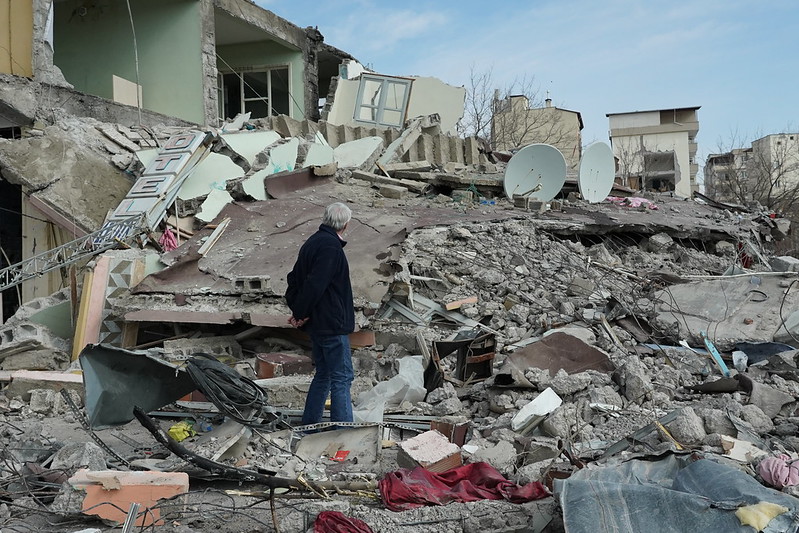
Picture: FCDO/Russell Watkins

Professor Rabia Karakaya Polat

The earthquakes that took place in Maraş province of Turkey on February 6, together with the terrible destruction they caused, also led to the questioning of state institutions and capacity. An important dimension of the subject is the relationship between central and local governments in the country. These earthquakes and what happened afterwards have been instrumental in questioning the overcentralized structure of the state in Turkey[i]. Discussions centered on why the earthquakes were so devastating[ii] as well as the inadequacies in the post-earthquake response[iii].

In Turkey, the authority to issue city planning and zoning permits belongs to the central administration. The authority to carry out urban transformation processes in existing settlements also rests with the Ministry of Environment, Urbanization and Climate Change, which is the relevant ministry of the central government. Therefore, the possibilities of municipalities to make cities earthquake resistant are very limited. The authorities of municipalities, such as controlling and licensing the buildings against earthquakes, are not used effectively enough.

Turkish people have witnessed that the excessively centralized structure also hindered the post-earthquake rescue efforts. It was not possible for local actors to take the initiative and act. The lack of timely mobilization of local capacity increased the loss of life. It is very important that not only local governments, but also civil society mobilize in such crises. However, there was a process in which non-governmental organizations and volunteers carrying out aid campaigns were also targeted[iv]. In a televised speech to the nation, President Erdoğan complained about critical news and declared that he planned to hold critical voices to account. Later, access to Twitter was throttled while rescue operations were still underway. The government claimed that it did so to prevent “disinformation”. Some government actors and their supporters also raised concerns about the extent to which public support and fund-raising has been directed at civil society organizations like Ahbap, rather than the government’s own relief organization, AFAD.

In fact, we have witnessed such challenges to local actors in the face of complex and multiple crises by the central government before. For example, during the coronavirus pandemic, the efforts of the Istanbul Metropolitan Municipality to collect aid were stopped and the donations amounting to 6.2 million liras collected in the bank accounts were confiscated and transferred to the central government bodies[v]. The 3.5 million lira aid collected by the Ankara Metropolitan Municipality was blocked. The solidarity campaigns of municipalities were evaluated by President Erdogan as “the logic of being a state within a state”[vi]. Determining the policies and practices related to the pandemic from a single center instead of being shaped according to local conditions increased the negative effects of the pandemic on the society.

Municipalities were also left alone in the refugee issue, one of the deepest crises Turkey has experienced recently. Even municipalities with a refugee population of up to a quarter of their own population did not  receive a penny of additional support from the central budget[vii]. Moreover, municipalities do not know what to do about refugees, as there is no clear legislation and coherent policy in this area. While the discourse and policy towards refugees shifts from hospitality and religious solidarity to ‘voluntary’ return, municipalities are forced to cope with this uncertainty[viii]. Despite this, they develop and implement creative and entrepreneurial projects in cooperation with civil society to meet the needs of refugees and integrate them into society[ix].

The European Charter of Local Self-Government[x], signed by Turkey in 1992, obliges the parties to implement the basic rules that guarantee the political, administrative and financial independence of local governments. Despite this Charter, which provides for the recognition of the principle of local self-government in domestic legislation and, if possible, in the constitution, trustees appointed from the center serve instead of those elected[xi]. At the local elections on March 31, 2019, the HDP (Peoples Democratic Party) won 65 municipalities in the Kurdish-majority provinces. While six of the elected mayors were not given their certificates of election, trustees were appointed by the central government to 3 metropolitan, 5 provincial, 45 district and 12 town municipalities. While the municipalities are under such tutelage in regions where Kurdish voters are concentrated, a politically motivated judicial process hangs like the sword of Damocles over the head of Ekrem İmamoğlu, Istanbul Metropolitan Municipality’s elected mayor[xii].

Earthquake is one of the realities of Turkey. However, the strict centralist structure and the authoritarian regime, which further increases its negative impact, prevent local initiatives, resilience and solidarity not only in earthquakes but also in all kinds of crises that arise today. Complex crises such as pandemics, mass migration and climate change that we have faced in recent years and will face in the future are far from being problems that a single actor can deal with at a single level. It is not possible to deal with these crises without vertical cooperation between local, national and international levels of government and horizontal cooperation networks between state and non-state actors such as civil society organizations.

Although we can see the damages of over-centralized administration most clearly in times of crisis, the cost of not having resilient and participatory local government that meets local demands is much greater than we think. Local governments cannot be ‘local’ enough because they are financially dependent on the center and because of the arbitrary and partisan practices of the central government. If this earthquake is to be a start, taking big steps to strengthen local democracy should also be a part of it.

Rabia Karakaya Polat is a professor of political science at the Department of International Relations at Işık University (Istanbul). She recently completed a British Academy-funded joint research project, with Prof. Vivien Lowndes, analysing local refugee policies in Turkey. She published numerous articles in journals such as Security Dialogue, South European Society and Politics, Citizenship Studies, Parliamentary Affairs, Government Information Quarterly, Local Government Studies and Journal of Refugee Studies. Currently, she is working on refugee integration policies at the local level.


[i] Cemal Burak Tansel (2020) Reproducing Authoritarian Neoliberalism in Turkey: Urban Governance and State Restructuring in the Shadow of Executive Centralization, Authoritarian Neoliberalism, Routledge, 88-103

[ii] https://www.nytimes.com/2023/02/28/podcasts/the-daily/turkey-buildings-earthquake-construction.html

[iii] https://www.nytimes.com/2023/03/10/opinion/erdogan-turkey-earthquake.html

[iv] https://www.mei.edu/publications/turkeys-government-prioritizing-politics-over-policy-its-earthquake-response

[v] https://www.duvarenglish.com/turkish-govt-confiscated-millions-collected-for-covid-19-victims-by-istanbul-municipality-news-60396

[vi] https://www.al-monitor.com/originals/2020/04/turkey-erdogan-goodness-claims-may-backfire-amid-coronavirus.html

[vii] https://inlogov.com/2021/01/08/no-powers-no-funds-how-municipalities-are-working-creatively-to-address-the-needs-of-syrian-refugees-in-turkey/

[viii] Vivien Lowndes & Rabia Karakaya Polat (2020) How do local actors interpret, enact and contest policy? An analysis of local government responses to meeting the needs of Syrian refugees in Turkey, Local Government Studies, 48:3, 546-569

[ix] Rabia Karakaya Polat & Vivien Lowndes (2022). How does multi-level governance create capacity to address refugee needs, and with what limitations? an analysis of municipal responses to Syrian refugees in Istanbul. Journal of Refugee Studies, 35(1), 51-73

[x] https://rm.coe.int/european-charter-of-local-self-government-eng/1680a87cc3

[xi] https://bianet.org/english/world/259590-council-of-europe-finds-appointment-of-trustees-in-turkey-contrary-to-international-law

[xii] https://www.hrw.org/news/2022/12/14/turkey-court-convicts-istanbul-mayor-ekrem-imamoglu