Is Government Giving Value For Money?

Jason Lowther

When money is short, how we spend it becomes even more important. As central government reheats its arguments for austerity following the chaos of the last few weeks, I’ve been reflecting on the contents of the 2021 budget (just a year ago).  The 2021 budget set out not just spending plans, but also a souped up approach to measuring outcomes and cost-effectiveness of government spending. How are these playing out, and will they survive the No 10 merry-go-round?

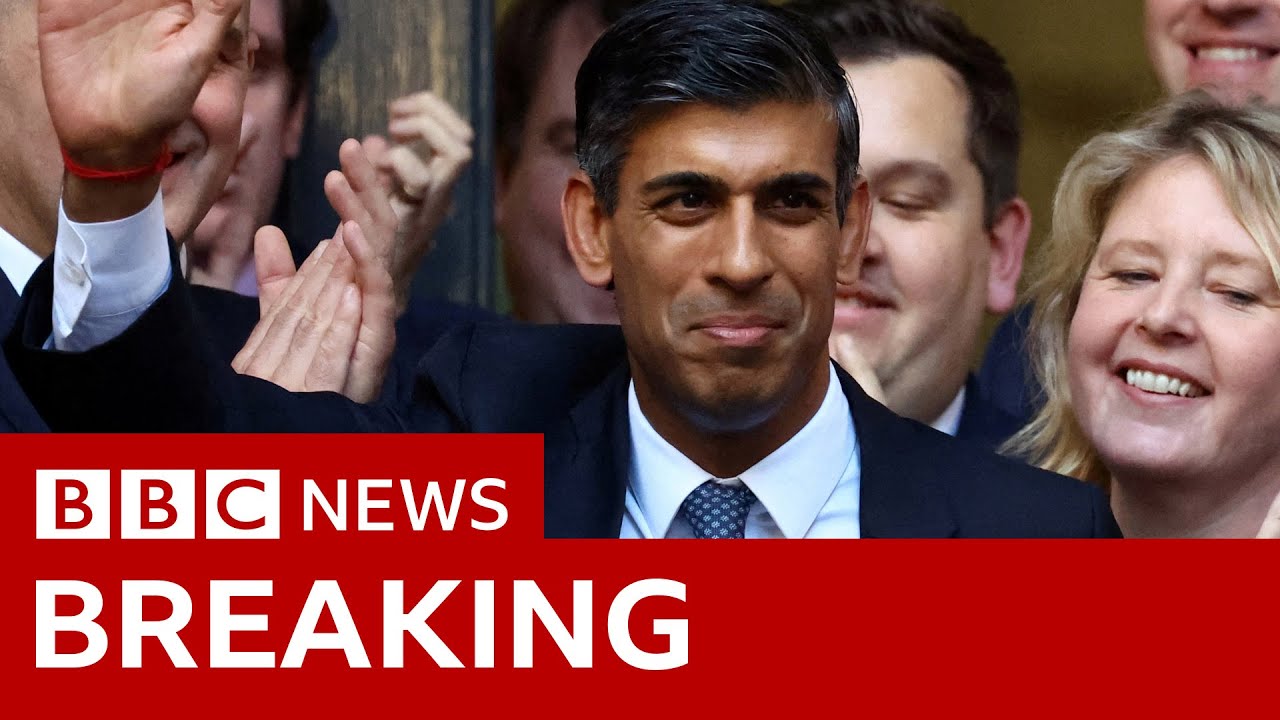
Rishi Sunak, then eight months into the job as Chancellor, noted that government borrowing was relatively high after the pandemic, warned of the public finances’ exposure to rises in interest rates, and outlined how spending was being linked to the delivery of outcomes alongside across the board ‘efficiency savings’:

The fiscal impact of a one percentage point rise in interest rates in the next year would be six times greater than it was just before the financial crisis, and almost twice what it was before the pandemic…

Decisions have been based on how spending will contribute to the delivery of each department’s priority outcomes, underpinned by high-quality evidence. The government has also taken further action to drive out inefficiency; SR21 confirms savings of 5% against day-to-day central departmental budgets in 2024-25. (page 2)

The “priority outcomes” are the latest in a long line of attempts to prod government spending into delivering effectively on political priorities, rather than blindly increasing/decreasing by x % compared to last year.  A 2019 report from the Institute for Government helpfully outlines many of these earlier initiatives (summary from the House of Commons Library) including:

  • “Scrutiny programmes” and the Financial Management Initiative (FMI), introduced under Thatcher.
  • The Cabinet Office and Treasury set up the Financial Management Unit (FMU) in 1982 to help with creating plans under the FMI.
  • The “Next Steps” report, published in 1988, which recommended the establishment of executive agencies to carry out the executive functions of government.
  • Tony Blair’s administration developed a greater focus on performance targets and Public Service Agreements (PSAs) which put these targets on a formal basis.
  • In 2001, Blair’s government also set up the Prime Minister’s Delivery Unit (PMDU), which was intended to coordinate PSAs and bring them under more central control.
  • Under the coalition government in 2010-15, PSAs were abolished and replaced with Departmental Business Plans (DBPs). These shifted the focus from targets to actions – in other words, they listed what each department would do and by when, rather than what they sought to achieve.
  • Under the Conservative government in 2016, DBPs were renamed to Single Departmental Plans (SDPs), which were themselves renamed to Outcome Delivery Plans (ODPs) in 2021. According to the NAO, SDPs (and by extension, ODPs) are supposed to be “comprehensive, costed business plans”.

As well as having to write down what outcomes they want to achieve, and how they will know whether that is happening, under the SDP system departments were also required “to assess progress in delivering their priority outcomes [and] … share regular performance reports with HM Treasury and the Cabinet Office”. 

In the 2021 spending review, the departmental outcomes were spruced up to reflect the (now last-but-one) PM’s five priorities of levelling up; net zero; education, jobs and skills; recovering the NHS; and reducing the volume and harm of crime.  

This blog’s audience may be interested in “Where does local government fit in this compendium of key priorities?”  The answer is a little depressing: on the last line of the last page (page 30 of 33), just before the devolved government departments. The relevant outcome is inspiring enough: “A sustainable and resilient local government sector that delivers priority services and helps build more empowered and integrated communities”, albeit with the reassuringly non-SMART measure that “the department will provide narrative reporting on progress for this outcome”.  Of course I exaggerate, because local government has critical inputs to very many of the earlier outcomes too, but it’s hard not to conclude that local services and communities were not yet at the top of the ministerial attention list.

Will the “priority outcomes” survive the whirlwind of ministerial movements and unforced economic missteps?  After the last seven weeks, I’m not going to make predictions – but we should know in the next month, and alongside the financial figures they could be our best hint yet on where a Sunak government is heading.

Picture credit: https://www.youtube.com/watch?v=Du_6mRV8Hm8

Jason Lowther is the Director of INLOGOV. His research focuses on public service reform and the use of “evidence” by public agencies.  Previously he worked with West Midlands Combined Authority, led Birmingham City Council’s corporate strategy function, worked for the Audit Commission as national value for money lead, for HSBC in credit and risk management, and for the Metropolitan Police as an internal management consultant. He tweets as @jasonlowther

Are councils representing their communities?


Jason Lowther

Fresh from this year’s successful Solace Summit, the organisation this week launched a new report on “Understanding and Improving Equality, Diversity and Inclusion in the Local Government Workforce”.  It’s a challenging but inspiring read raising fundamental issues for the sector where a recent survey found that more than 80% of children’s services directors in English upper-tier local authorities were white British and only 2% identified as black African or Caribbean while Asians were not represented at all. 
[Full disclosure – Inlogov and the LGA supported the research, which was commissioned by Solace, undertaken by Shared Intelligence, and funded by Zurich Municipal].

Many councils are publishing only limited information on the diversity of their workforce.  The Solace research analysed workforce profile reports of the 152 “top tier” local authorities in England.  The research found that just over half (55%) of these councils publish detailed statistics of their workforce in terms of ethnicity and provide the necessary level of information to compare with the local workforce by sub-category of ethnicity. A further 38% only disclosed an overall percentage of BAME employees, and EDI Workforce reports were not found for a dozen councils.  Almost a fifth of the reports were seriously out of date (19% from before 2020).  The best performing area was the West Midlands, with 12 of their 14 councils publishing complete data.  Only about half of the councils nationally provided pay and grade information by ethnicity.  The report recognises that workforce data is often unreliable or out of date.

Some councils are achieving a workforce that reflects their community’s ethnic mix.  Out of 140 councils with complete and partial information, in 49 councils the percentage of BAME employees is greater than the BAME working population. However, outside London and the East Midlands, in each region the council workforce has a lower BAME percentage than the local working population.  The representation of minority ethnic groups appears to drop significantly at senior or leadership positions, and among the top earners. 

The report makes three big recommendations to improve the value of council workforce data.  First, being transparent about the quality and completeness of the information for example by including the response or completion rate for ethnicity data in the council’s HR system.  Secondly, adopting  a consistent categorisation of ethnic groups at sub-category level (in line with the Census 2021).  Thirdly, standardising the data presentation, for example using a standard approach of recording ethnicity at 10,000 pound pay bands and median pay gaps.

Solace has committed to champion diversity.  The Solace launch webinar for the report saw Non-Executive Director Leads on Diversity & Inclusion, Nazeya Hussain and Chris Naylor, discuss Nazeya’s powerful lived experiences and the organisation’s “statement of intent” championing equality, diversity & inclusion across local government.  

In a country where over 20 per cent of the population reports being from a minority ethnic group and yet Black and minority ethnic people are 2.5 times more likely to be in relative poverty than their white counterparts and Bangladeshi men are still 3 times more likely to die from Covid, more councils need to look like their local community.  This report shines an important light on how to get there, and how we can better check whether progress is being made.

Jason Lowther is Director of the Institute for Local Government Studies (INLOGOV), University of Birmingham

Picture credit: EpicTop10.com https://www.flickr.com/photos/182229932@N07/

Black History Month

Picture source: https://www.evertonfreeschool.com/2020/10/06/black-history-month-2/

Cllr Ketan Sheth

Black History Month creates a moment when we can step back and reflect together, as well as individually, on  the immense contribution of Black, Asian and minority ethnic communities whose rich history, culture, and experiences, have shaped Brent and beyond.

The NW London Joint Health Scrutiny Committee comprises 8 NW London boroughs. As Chair, I know we simply could not function without the dedication, the skills, and above all, the compassion that thousands of people from our diverse communities contribute to the NHS, day in and day out.

The difference this makes to all our lives, is immeasurable. Black History Month affords us an opportunity to acknowledge and thank them for the important work they do: their continuing contribution to the care, the culture, the shaping, and well-being of Brent.

The colour of someone’s skin should not determine how they are perceived, considered, and treated – positively or negatively – but the impact of the pandemic has highlighted many disturbing features of inequality in our communities. Many of these problems are not new. They have existed for far too long.

Black, Asian and minority ethnic communities are more likely to be affected by life-changing diseases like diabetes, prostate cancer, and sickle cell than people from other backgrounds.  Living  in less-affluent areas, they are more  greatly affected by poor housing as well as poor air quality from the busy urban roads that run through their neighbourhoods. There is a big gap in life expectancy between richer and poorer areas irrespective of race, but these communities are disproportionately affected. 

To tackle these inequalities, the North West London Integrated Care System is launching a  joint initiative between the local NHS and NW London boroughs, which will seek to build real understanding of what matters to our residents, how we can work with them to remove barriers to health equality to deliver healthier neighbourhoods and better outcomes. 

This initiative is the first tangible benefit I have seen emerge from the  new Integrated Care System, which has health services and local authorities coming together to address many of the challenges that impact our well-being. That is, health and care services, employment, education, housing, and the environment we live in.

We might perhaps reflect for a moment on the work of the great poet, James Berry OBE, who never avoided the difficult issues of injustice in history, or in the present, but always sought for mutual understanding. His poem, “Benediction,” stresses the need for us truly to hear one another, and truly to see, and through so doing, to understand. He said:

Thanks to the ear that someone may hear

Thanks to seeing

that someone may see

Thanks to feeling

that someone may feel

Thanks to touch

that one may be touched…

Black History Month is a reminder to us to truly hear and see one another, to celebrate our heroes and tell the stories that, for so long, have been hidden or forgotten. It is also a reminder that the evils of the past have resonance today, reflected in the impact of poverty and institutional racism that many in our communities experience as part of their daily lives. Ultimately, it is an opportunity to continue to learn, understand and come together to pull down these barriers and build healthier and fairer neighbourhoods.

Cllr Ketan Sheth is Chair of Brent Council’s Community and Wellbeing Scrutiny Committee