Yulei Lei graduated from INLOGOV last year and reflects on the time she had with us…
As I was finishing my undergraduate studies at my university in China, I decided I wanted to go on to further study. My undergraduate was in accounting, but I decided I wanted to study a topic that would broaden my areas of expertise and that I wanted to come to the UK. Then the most exciting thing happened – I received an unconditional offer to study an MSc in Public Management (taught) at the University of Birmingham.
Like that, in September of 2016, I started studying at INLOGOV at the University of Birmingham. I remember the 22nd was the first day I came to INLOGOV. I still remember how excited I was. That day I met all my classmates who were coming from so many different countries. And the lecturers introduced us to many things which were relevant to my time on the Masters; for example, the modules, the career events, and many other activities on campus. As an international student, my favorite part was the BIA English class and Lunch Time English, which were a complimentary offer from the University to support international students in order to improve their English. It was very interesting and useful.
The modules I took at INLOGOV were divided into two different parts: compulsory core modules, which were Public Management, Performance Management, Strategic Management and a dissertation; and three optional modules – I chose Leadership in Public Services, Regulation and Finance, and Community and Local Governance. I enjoyed all these modules to the point that I could not say which one was best, because all of the modules had a fabulous professional lecturer who would not let the course become boring or tedious. My favorite part of class was group discussion. In this part, you were able to express your thoughts and discuss them with your classmates and lecturer, and they always helped me clear my mind and put forward my ideas. This was very helpful to me because I did not have much experience with practical examples, as opposed to the professors and many of my classmates, who had abundant experience from their jobs. Also, the teaching staff in INLOGOV were very friendly and helpful, they are very open to answering your questions and give you a hand on your assignments. It can figuratively be said that it was as if one were ‘standing upon the shoulders of Giants’ (Isaac Newton).
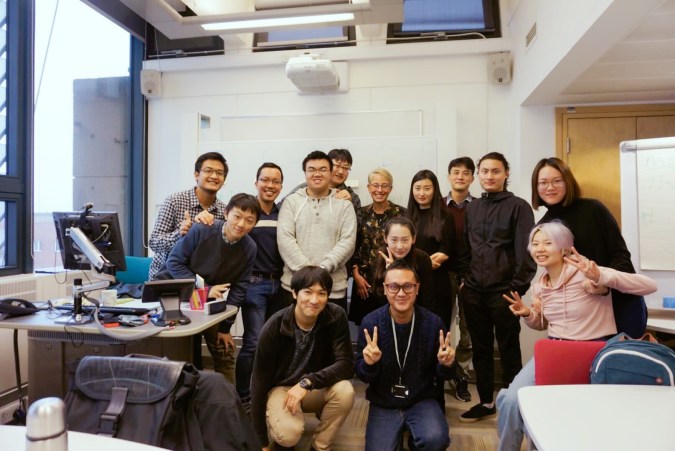
Studying at INLOGOV, what I got was not only a degree, but also many friends from many different countries. We discussed the differences concerning the social situation in our own countries and shared ideas on how to improve things in public management. Then we summarized the good experiences to be used in our own projects. This is a good way to understand optimum outcomes. The module leaders and students can show you different ways of thinking and stimulate your brain to search for and discover many good ways to improve your skills in public services and management. INLOGOV is a department which brings many different cultures together to learn from one and other. Through our group, we exchanged thoughts, expressed ideas and completed projects successfully.
Besides studying, I also took part in some activities with the Student Guild of the University of Birmingham, I met new friends there and learnt new skills, for example how to grow a shrub and how to cut down a tree for gardening management. Moreover, I do love the new 360 sports centre which is the place I also often went to in my spare time. The facilities are new and it has a fabulous swimming pool.
All in all, my year of masters study at the University of Birmingham was very joyful. I met very professional staff and made lovely friends. I acquired lots of new knowledge and learnt lots of skills. I will miss all the things from when I was at INLOGOV, in the University of Birmingham, and in the UK for my Masters journey. Also, I hope I can use what I learnt from INLOGOV in my future career. If possible, I wish to take what I have learnt and apply it in my own country to help to improve the performance management systems in different organizations, not only in the public sector.
 Yulei Lei graduated from INLOGOV in December 2017 with an MSc in Public Management. She is from South West China.
Find out more about our postgraduate programmes here.
 Calum Webb is an ESRC White Rose postgraduate research student at the University of Sheffield’s Department of Sociological Studies. He has recently contributed to the ESRC funded research project ‘Developing a Policy Learning Tool for Anti-Poverty Policy Design and Assessment’ and the Nuffield Foundation funded ‘Child Welfare Inequalities Project’. His PhD research investigates approaches to the longitudinal measurement of multidimensional poverty. Calum tweets using @cjrwebb
 Paul Bywaters is Professor of Social Work at Huddersfield University working in the Centre for Applied Childhood, Youth and Family Research. He has led a series of research projects funded by the Nuffield Foundation and the Joseph Rowntree Foundation which have examined inequalities in the incidence of and responses to child abuse and neglect between and within the four UK countries. For more information can be found
  INLOGOV Blog